
Best mattress for couples with different preferences: Unlock

A lot of couples in Central Florida know this routine. One person wants a mattress that feels sturdy and supportive. The other wants something softer that cushions the shoulders and hips. By the time the lights go out, the main debate is not what to watch before bed. It is whether the bed itself is the problem.
If that sounds familiar, you are not being picky. You are dealing with one of the most common reasons couples struggle to sleep well together. Finding the best mattress for couples with different preferences is less about picking a “perfect” bed and more about understanding why two people can react so differently to the same mattress.
Introduction The Nightly Battle for Comfort
A couple walks into our Longwood area showroom after another rough week of sleep. He says the bed feels too soft and his lower back sinks. She says it feels too hard and her shoulder goes numb when she sleeps on her side. They did what many couples do. They bought a mattress that seemed “somewhere in the middle.”
It worked for almost nobody.
That story is common in homes from Lake Mary to Sanford. One partner rolls toward the center. The other wakes up every time the bed moves. Both assume this is just part of sharing a bed.
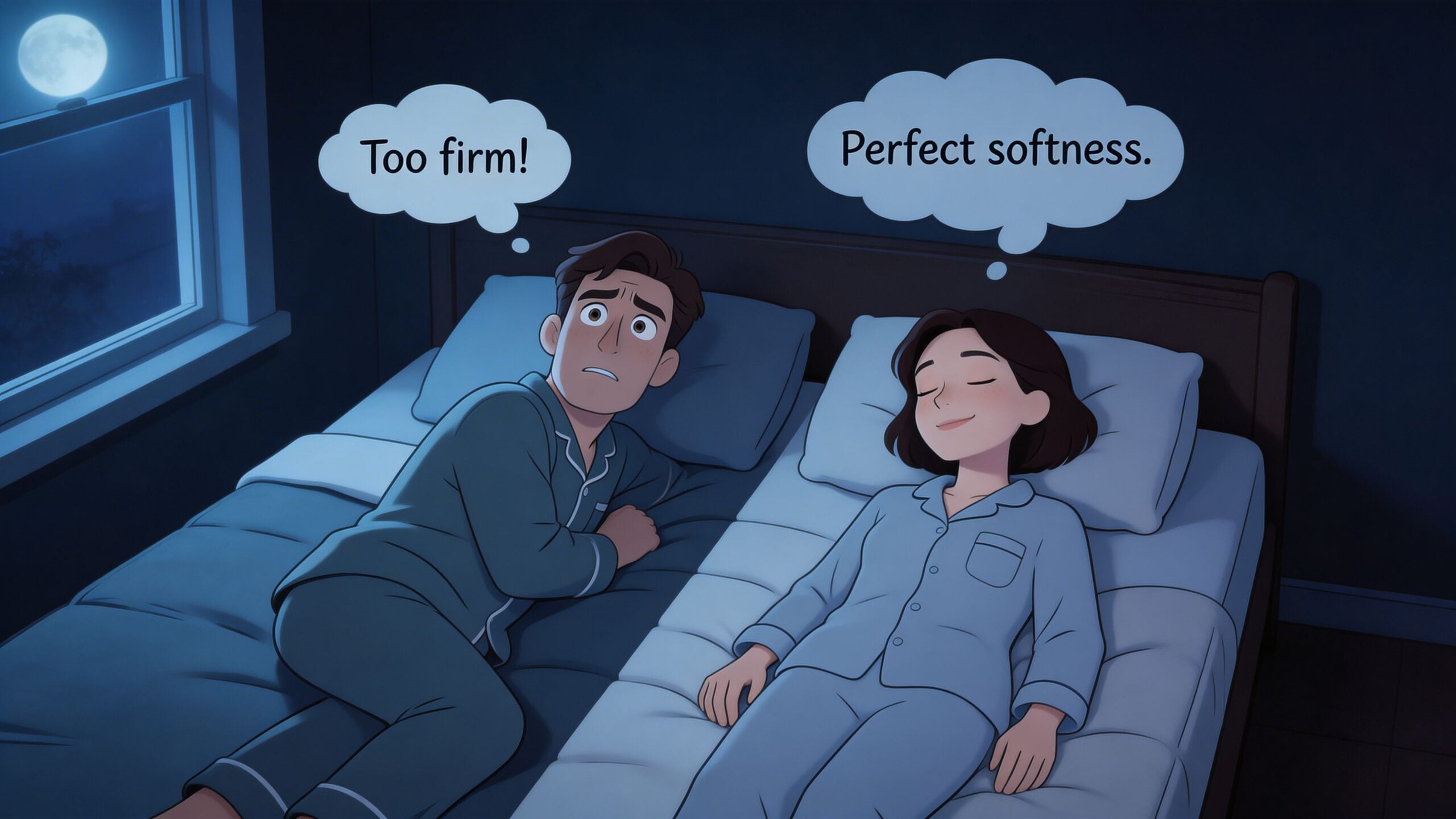
The mismatch is more common than many realize. A Better Sleep Council survey found that preferences for mattress firmness are nearly evenly split between firm and soft, creating a roughly even chance that two partners will want opposite feels. The same Bryte summary also notes that 35% of couples argue specifically about mattress firmness (bryte.com).
That helps explain why mattress shopping as a couple can feel so frustrating. You are not failing to agree. You are trying to solve two different comfort problems on one sleep surface.
Why this feels bigger than “just a bed”
Poor sleep has a way of showing up everywhere else. You feel it in your patience, your morning mood, and how much energy you have for work or family. If you want a deeper look at that connection, this article on how your mattress affects your mood and mental health is worth reading.
A mattress for two should not require one person to “get used to it.” Good shared sleep starts when both people feel supported.
The good news is that this problem is solvable. The right answer might be a better hybrid, a pressure-relieving foam model, a split setup, or an adjustable base. The key is knowing what to test and why it matters before you bring anything home.
Why a Simple Compromise Often Fails
The most common mistake couples make is buying a mattress labeled “medium-firm” and assuming that middle ground will satisfy both people. Sometimes it does. Often, it becomes a polite disappointment.
A compromise feel can miss in two directions at once. It may be too firm for a side sleeper who needs cushion at the shoulder, while still being too soft for a back sleeper who wants stronger support through the midsection.
Motion transfer matters more than couples expect
Motion transfer is what you feel when your partner rolls over, gets up early, or drops into bed late. Imagine ripples in a pond. The more the mattress spreads those ripples, the more likely you are to wake each other up.
This is one of the first things couples notice after purchase, because it does not show up during a quick sit test. A bed can feel comfortable for five minutes and still be a poor match if every movement travels across the surface.
For light sleepers, motion control is the difference between “shared bed” and “shared disruption.”
Firmness and support are not the same thing
This point confuses many shoppers. Firmness is how the bed feels at first contact. Support is how well it keeps your body aligned over time.
A mattress can feel plush on top and still support you well. Another can feel firm at the surface but create pressure in the wrong areas. That is why body type and sleep position matter so much.
If you want to sort out that difference before visiting a store, our mattress firmness guide can help you put better words to what your body is asking for.
Temperature can turn a good mattress into a bad night
In Central Florida, heat matters. Even in an air-conditioned home, some mattress materials hold warmth more than others. Couples also create more body heat than solo sleepers, so a bed that feels fine for one person can sleep noticeably warmer for two.
Signs temperature may be part of your problem include:
- Kicking off covers often: You may be sleeping on a mattress that traps too much heat.
- Waking up sweaty around the back or hips: Dense comfort layers are the culprit.
- One partner sleeps hot, the other does not: You may need better airflow and more responsive materials rather than a softer feel.
Edge support is a daily-use feature
Edge support sounds technical, but its practical benefit is simple. It lets you use more of the bed.
Couples notice poor edge support when they feel like they are rolling off the side, when sitting to put on shoes, or when a queen mattress suddenly feels smaller than it should. If one of you tends to sleep near the perimeter, stronger edges can make the whole bed feel more spacious.
Durability decides whether the mattress still works later
A mattress can feel fine in the showroom and still lose comfort if the materials are not built for repeated use by two people. Shared beds face more stress, more movement, and more concentrated pressure over time.
That matters even more when one partner needs firmer support than the other. Once a mattress starts to sag or soften unevenly, the original mismatch gets worse.
Couples should shop for how a mattress will feel after regular use, not just how it feels in the first two minutes.
A quick way to spot the core problem
When couples say “we need a different mattress,” they are describing one of these patterns:
| What you notice at home | What may be wrong |
|---|---|
| You wake each other up constantly | Motion isolation is weak |
| One person loves it and one hates it | Firmness needs are mismatched |
| You both feel crowded | Edge support or mattress size is lacking |
| You wake hot or sweaty | Airflow and material choice are off |
| The bed felt good at first, then changed | Durability is the issue |
If pain is part of the picture, that can make mattress shopping feel even more urgent. Sometimes people need both a better mattress and short-term symptom management. For readers dealing with discomfort during the day, this guide to best pain relief for back pain can be a helpful companion resource.
A “compromise mattress” fails when it asks both people to accept the wrong tradeoff. Better mattress shopping starts when you identify which tradeoff is hurting your sleep.
Comparing Mattress Types for Couples
Once couples understand what is going wrong, mattress types start to make more sense. The goal is not to memorize industry terms. It is to connect materials to nightly experience.
Memory foam for couples who hate movement
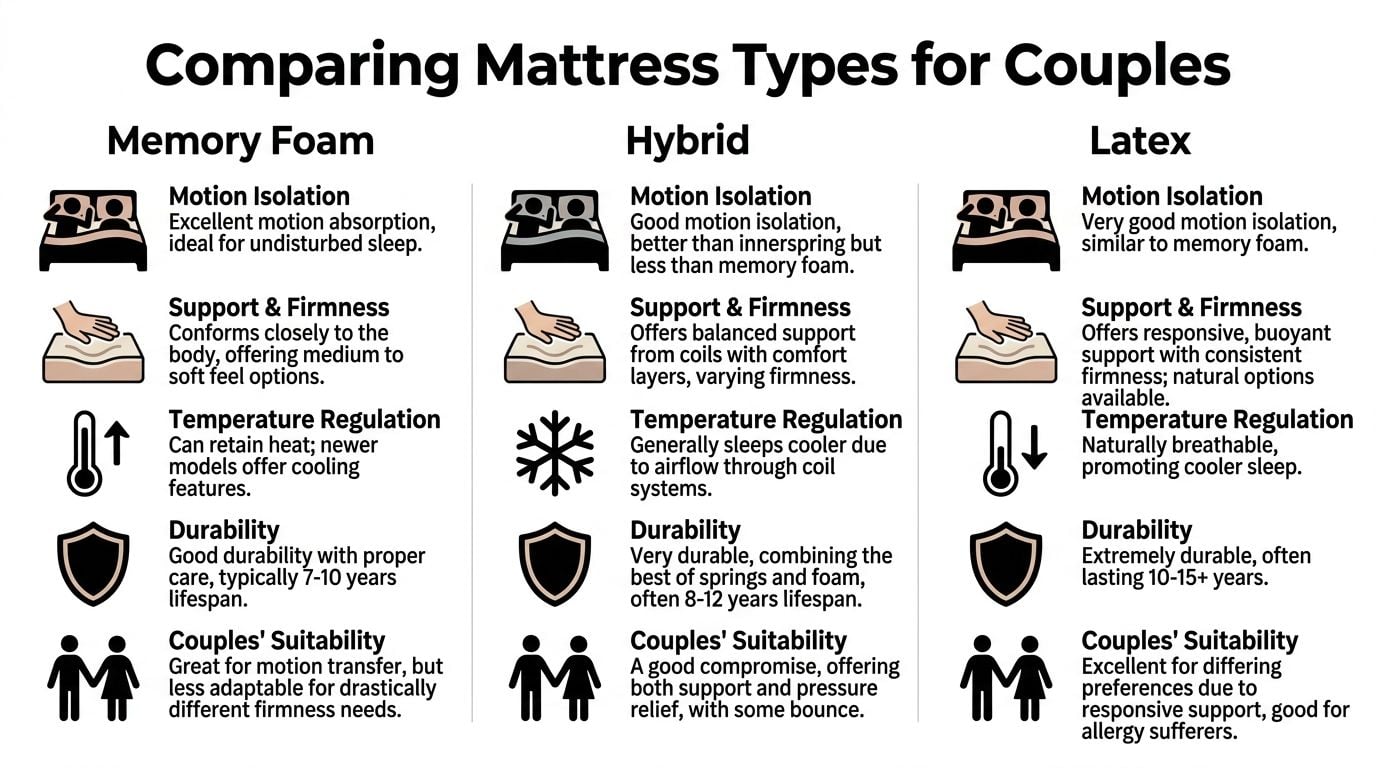
Memory foam is the first stop for couples dealing with motion transfer. If one partner tosses, gets up early, or comes to bed later, foam does a strong job of absorbing that movement before it travels.
It also contours closely to the body. For many side sleepers, that can feel relieving around the shoulders and hips. The tradeoff is responsiveness. Some couples love the “hug” of foam. Others feel like it slows them down when changing positions.
Memory foam can also sleep warmer depending on the model. In an Orlando or Sanford home, that is worth testing carefully, especially if one partner already sleeps hot.
Hybrid mattresses for balanced comfort and support
Hybrids combine foam or similar comfort layers with a coil support system. For many couples, this category lands in the sweet spot because it offers pressure relief without losing bounce and support.
The performance data behind strong hybrids is compelling. According to Sleepopolis, high-quality hybrids have earned motion isolation scores of 4.7/5 and edge support scores of 9.5/10, with individually wrapped steel coils that can reduce motion transfer by over 85% while supporting up to 500 lbs per side without sagging (sleepopolis.com).
That sounds technical, but the everyday meaning is clear. A well-built hybrid can help one partner sleep through movement, make the bed easier to climb in and out of, and keep the edges from collapsing under regular use.
Latex for couples who want buoyant support
Latex feels different from both memory foam and hybrids. It is responsive, supportive, and naturally springier than foam. Instead of sinking in, you tend to feel more lifted.
Couples like latex when they want pressure relief without that slow-moving foam feel. It also tends to sleep cooler and hold its shape well. People who shift positions at night appreciate how easy it is to move on latex.
The catch is feel preference. Some shoppers expect plush softness and are surprised by how buoyant latex feels. It is a good category to test in person rather than guess from descriptions online.
Side-by-side comparison
| Mattress type | Where it tends to shine for couples | Where it may fall short |
|---|---|---|
| Memory foam | Motion isolation, pressure relief | Heat buildup, less bounce |
| Hybrid | Balanced support, airflow, edge support | Slightly more motion than dense foam |
| Latex | Responsive comfort, cooler feel, durability | Feel may be too buoyant for some sleepers |
A good way to narrow the field is to ask one question first. What is the bigger problem in your bedroom right now?
- If the issue is movement: Start with memory foam or motion-focused hybrids.
- If the issue is mixed sleep positions: Hybrids often give the broadest range of support.
- If the issue is heat: Latex and breathable hybrids usually deserve a closer look.
- If the issue is shoulder pressure for a side sleeper: Softer comfort layers matter more than a generic “firm” label.
For readers dealing with shoulder discomfort at night, this resource on relief for side sleepers experiencing shoulder pain gives helpful context on why surface cushioning and sleep position matter so much.
If you want a plain-English breakdown of construction and feel before you start testing models, our guide to mattress types explained makes the differences easier to compare.
The best mattress type for couples is not the one with the most features. It is the one that solves the one or two problems that keep showing up every night.
Advanced Sleep Solutions for Total Personalization
Some couples do not need a better compromise. They need less compromise altogether.
When less compromise is desired, advanced setups become worth serious attention. If one person wants firm support and the other wants a noticeably softer feel, forcing both onto one surface can keep the disagreement alive even if the mattress itself is high quality.
Split king setups
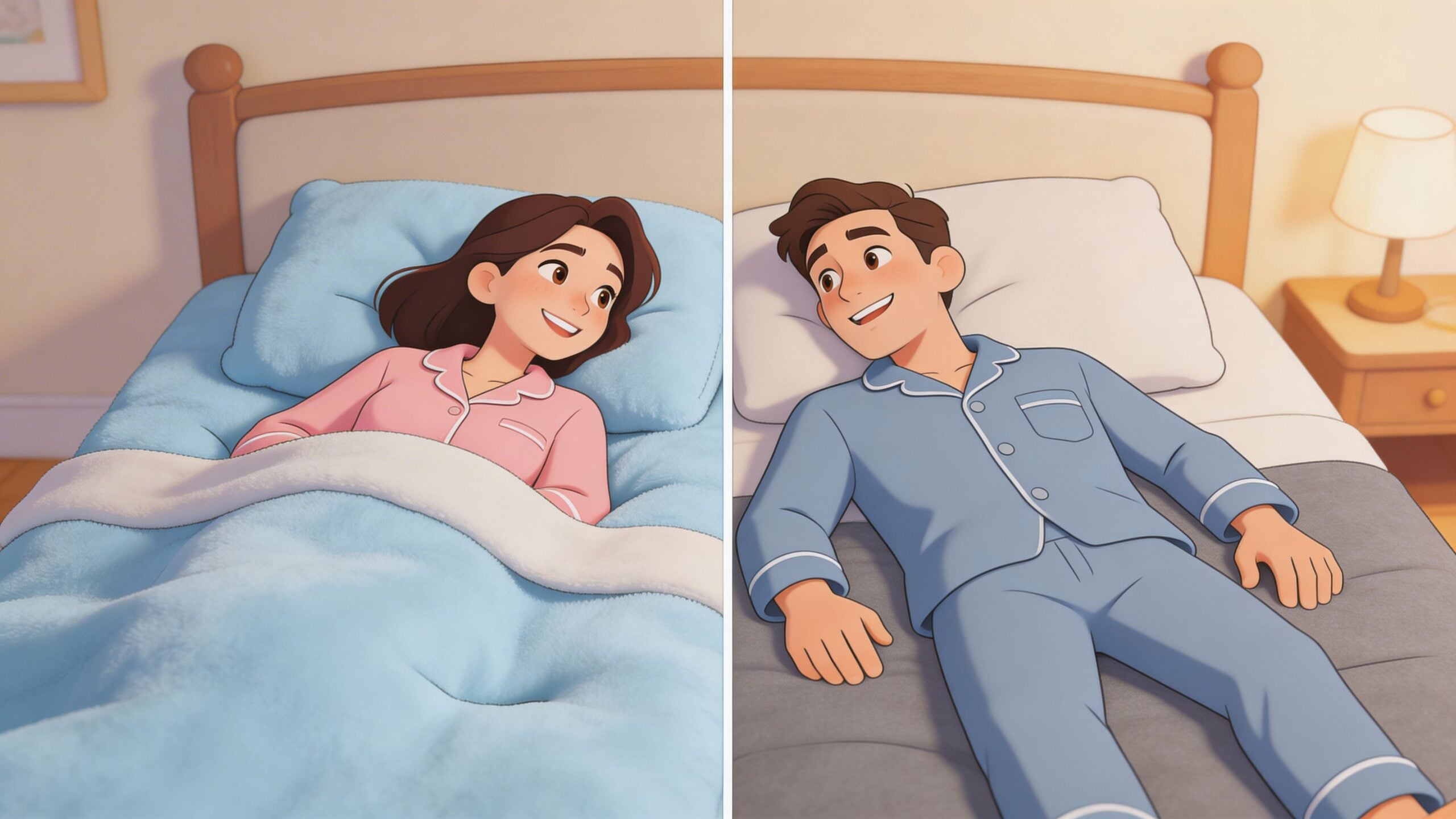
A split king uses two Twin XL mattresses on one king-size frame. In practical terms, each partner gets their own mattress feel while still sharing the bed setup.
This is the cleanest answer when preferences are far apart. One side can feel firmer and more supportive. The other can offer more cushion and pressure relief.
It also opens the door to independent adjustability if each side is paired with the right base.
Dual-firmness designs
Some mattresses are built with different firmness options across each side. This keeps the bed looking unified while addressing two comfort profiles.
Dual-firmness setups can work well when couples want one mattress rather than two separate pieces, but need different surface feels. These options are helpful when the disagreement is specifically about softness versus firmness rather than about bedtime habits or adjustable positioning.
Adjustable bases solve more than comfort
An adjustable base changes how the bed supports your evening routine, not just how it feels at midnight. One partner may want to read with the head elevated. The other may want to lie flat. One may feel better with the legs slightly raised. Another may prefer no adjustment at all.
That kind of flexibility can make a shared bedroom feel more personalized without moving to separate beds. If you want to understand those functions in more detail, this guide on the benefits of an adjustable base and enhance your comfort and well-being is a useful next read.
When these options make the most sense
Advanced personalization deserves a closer look if any of these sound familiar:
- Firm versus plush is a constant disagreement: Split comfort usually works better than ongoing compromise.
- You keep waking each other up: Separate sleep surfaces can reduce shared disruption.
- Your bedtime routines are different: Adjustable positioning helps each person settle in their own way.
- One mattress feels good for one body but wrong for the other: Independent comfort solves that more directly.
One practical local note. For couples who want individualized comfort, Slone Brothers Furniture offers split-queen and split-king mattress options, which can allow each partner to choose a different comfort level while keeping a shared bed setup.
The bigger idea is clear. Many couples shop as if their only choice is “softer, firmer, or medium.” Modern sleep setups give you more room than that. Sometimes the best mattress for couples with different preferences is not one mattress feel at all.
How to Test a Mattress Together in Our Showroom
Online mattress descriptions can only take you so far. Couples learn the most when they test a mattress at the same time, in the positions they sleep in.
That is especially true when your needs are different. One person may notice pressure points right away. The other may be focused on edge support or movement. Both reactions matter.
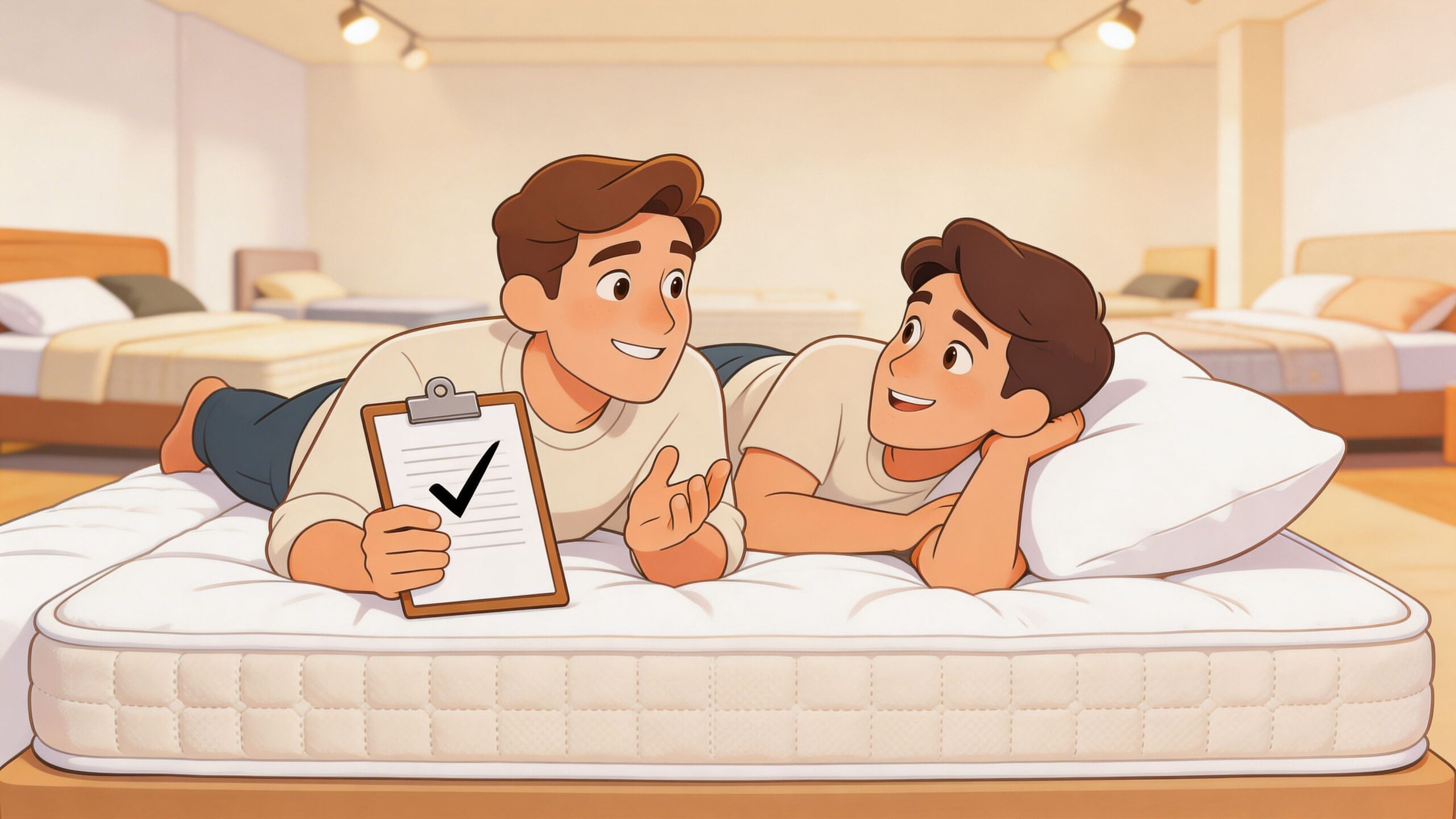
A better in-store checklist
Use this checklist when you visit a showroom in Longwood and test models together:
Start in your real sleep position
Do not just sit on the edge and bounce. If you sleep on your side, lie on your side. If you sleep on your back, test that first.Stay long enough to notice pressure
Initial softness can be misleading. Give your body time to settle and see whether your shoulders, hips, or low back feel supported.Test partner movement on purpose
Have one person roll over, get in and out of bed, or change position while the other stays still. This reveals far more than reading “low motion transfer” on a tag.Use the edge
Sit on the side. Lie near the perimeter. Couples often use more of the mattress than they realize.Compare notes immediately
One partner may say “supportive” when they mean “firm.” The other may say “soft” when they mean “pressure-relieving.” Talking right away helps you separate feel from function.
Questions worth asking each other
A quick store conversation can save weeks of frustration later. Ask:
- Do you feel pushed up or swallowed?
- Can you turn easily without effort?
- Do your shoulders or hips feel compressed?
- Do you notice your partner moving?
- Would you want to sleep on this for a full night?
The best showroom test is not the shortest. It is the most honest one.
If you want a broader primer before coming in, our article on how to choose a mattress gives a helpful overview of the shopping process.
The in-store test should feel practical, not intimidating. Couples from across Greater Orlando arrive with a vague idea of “we need something better,” and leave with clearer language about what better means for each person.
Your Central Florida Solution at Slone Brothers Furniture
Couples do not need more mattress marketing. They need clearer answers.
If you have read this far, you know the biggest lesson. The best mattress for couples with different preferences is not the one that sounds good in a generic online quiz. It is the one that matches how two people sleep, move, warm up, and settle in every night.
That is why local, in-person testing matters in Central Florida. You can feel the difference between a contouring foam and a responsive hybrid. You can check whether the edge holds you up. You can see whether motion stays on one side or travels across the bed. Both partners can react in real time.
What we believe matters most
A useful mattress search should answer four practical questions:
- Will it support both bodies well?
- Will it reduce sleep disruptions?
- Will it stay comfortable over time?
- Can it be personalized if your needs are far apart?
When those answers are unclear, couples tend to buy on feel alone. That is when costly mistakes happen.
Why a curated selection helps
Choice is good. Random choice is not.
According to NapLab, authoritative labs have evaluated 360+ mattresses, and top performers for couples can offer up to 33% less motion transfer than average. The same source notes that models like the Helix Plus are proven to support up to 1,000 pounds while maintaining spinal alignment (naplab.com).
For a couple shopping in Longwood, Lake Mary, or Sanford, that matters because showroom curation should not be random. It should be tied to the problems couples bring in, such as movement, support mismatch, and long-term durability.
Local service still matters in mattress shopping
A family-owned store can approach this differently than an online-only seller. Since 1980, we have worked with Central Florida homeowners who are furnishing primary bedrooms, guest rooms, and whole homes. That broader experience matters because mattresses do not live in isolation. They are part of how a room functions.
Some shoppers are moving into a new home and need help coordinating the bedroom with other spaces. Some want custom-order flexibility. Some are also shopping for American-made and Amish-crafted furniture for the rest of the house, from makers like Stickley, Stressless, Smith Brothers, Bassett, Craftmaster, Amish-crafted, Canadel, Amisco, American Leather, Palasar, and Mavin.
That is where local guidance becomes practical, not abstract.
What couples around Orlando often appreciate
For many shoppers, these are the deciding factors:
- An in-house design perspective: Our Design Team can help think through the whole bedroom, not the mattress alone.
- Custom-order flexibility: If a standard feel is not right, custom options can open better solutions.
- Value without cutting quality: The Low Price Promise and a large clearance outlet help shoppers look for lasting value.
- Reliable delivery: Home delivery makes the process easier once you choose the right setup.
- Support for larger projects: That includes full-home furnishing and commercial furnishing needs.
A simpler way to move forward
If you are a couple stuck between “firm,” “soft,” and “maybe medium,” try this filter instead:
| Your main problem | Better direction to test |
|---|---|
| You wake each other up | Motion-focused foam or hybrid |
| One partner wants plush, the other firm | Split or dual-firmness options |
| You both sleep hot | Breathable hybrid or latex |
| The bed feels smaller than expected | Stronger edges or a larger size |
| You want different positions for reading or resting | Adjustable base compatibility |
The right mattress should make your bedroom calmer. It should not become another nightly negotiation.
For Central Florida homeowners, that solution is easier to find when both people can lie down, test thoroughly, and talk with someone who understands how different materials behave in practice. That is the advantage of shopping locally in Longwood instead of guessing from a box on the porch.
Ready to find the perfect piece for your home? Visit the Slone Brothers Furniture showroom in Longwood, FL, and let our design experts help you get started!