
Bonded vs Genuine Leather: A Guide for Central Florida Homeowners

Choosing the right leather for your Central Florida home can feel overwhelming, but the core difference between bonded vs genuine leather boils down to how they're made, how long they'll last, and their long-term value. As your local furniture experts in Longwood since 1980, we at Slone Brothers want to help you make an informed choice that you'll love for years to come.
Think of it like this: Genuine leather is crafted from a single, solid piece of animal hide, making it a true investment built to last for generations. On the other hand, bonded leather is an engineered product made by bonding leather scraps and fibers together with adhesives. It offers a similar look for a much lower price, but its lifespan is significantly shorter, especially in our humid climate.
Your Quick Guide to Leather Furniture Choices
When you're furnishing your home here in Longwood or anywhere across Greater Orlando, knowing what you're investing in is everything. You'll hear the terms "bonded leather" and "genuine leather" thrown around a lot, but they describe two completely different products.
We like to compare it to the difference between solid, Amish-crafted wood furniture and particleboard—one is an heirloom, while the other serves a more temporary purpose. Making an informed choice now means you'll get the best value and a piece that can stand up to our humid Florida climate.
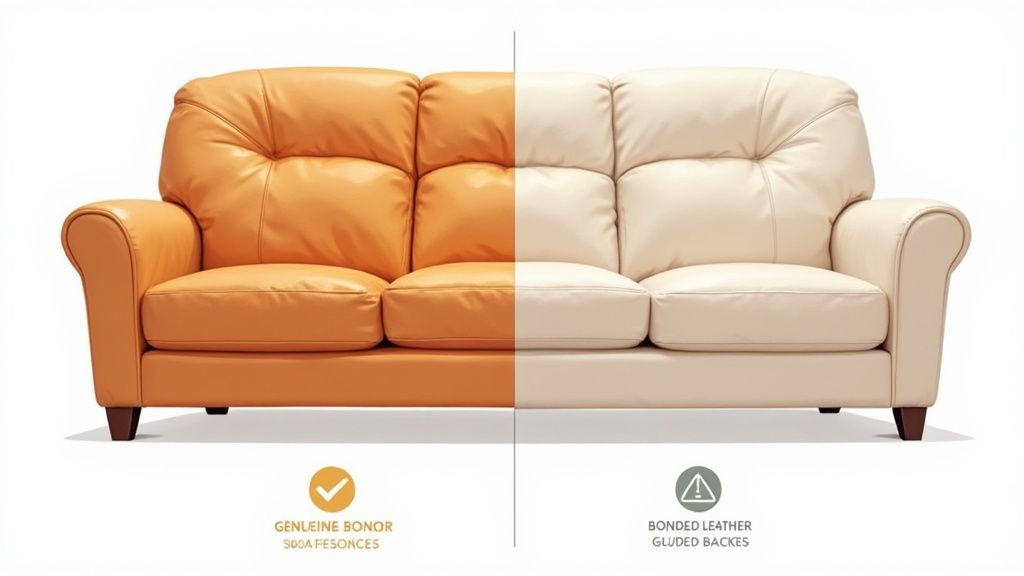
This quick comparison table breaks down the essential differences to get you started. It sets the stage for a deeper look into how each material performs and which one is the smarter choice for your home.
At-a-Glance Bonded vs Genuine Leather Comparison
Here’s a quick summary of the key differences between bonded and genuine leather to help you understand the basics at a glance.
| Attribute | Bonded Leather | Genuine Leather |
|---|---|---|
| Material Composition | Leather scraps and fibers bonded with polyurethane adhesive. | A solid cut of real animal hide. |
| Average Lifespan | Typically 1-3 years before showing significant wear. | Can last for decades with proper care. |
| Durability | Prone to peeling, cracking, and flaking, especially in humidity. | Very durable; develops a natural patina over time instead of wearing out. |
| Feel and Texture | Often feels smooth, uniform, and slightly plastic-like. | Soft, supple, with unique natural grain patterns. Breathes well. |
| Upfront Cost | Lower initial price point, making it seem more affordable. | Higher initial investment, reflecting its quality and longevity. |
| Maintenance | Simple to wipe down but virtually impossible to repair once damaged. | Requires occasional conditioning but can be professionally repaired. |
As you can see, while bonded leather might save you money upfront, genuine leather offers a far superior return on investment through its durability and timeless appeal.
Understanding What Makes Leather, Leather
To really get a feel for the difference between bonded and genuine leather, you have to look at what you’re actually buying. It’s a distinction that goes way beyond the surface; it's all about how each material is made from the ground up. Knowing this is the key to making a smart, long-term investment for your Central Florida home.
Think of it this way: comparing these two is like comparing solid, American-made hardwood to particleboard. One is crafted from a whole, natural source for lasting strength, while the other is an engineered product pieced together from remnants.
The Craftsmanship Behind Genuine Leather
Genuine leather starts its journey as a single, solid animal hide. The process is all about honoring the natural material—preserving the unique grain, character, and even the small imperfections that make every piece truly one-of-a-kind. At Slone Brothers Furniture, the pieces in our Longwood showroom often feature higher grades of genuine leather that offer incredible quality.
You’ll usually hear a few key terms when you’re shopping for high-quality furniture:
- Full-Grain Leather: This is the best of the best. It comes from the top layer of the hide and includes all the natural grain and texture. It's ridiculously durable and develops a beautiful, rich patina over time—a true hallmark of quality.
- Top-Grain Leather: As the second-highest grade, top-grain leather has had its outermost layer lightly sanded or buffed to smooth out any major imperfections. While it's a touch less durable than full-grain, it’s still exceptionally strong, more resistant to stains, and has a lovely, uniform finish.
When you invest in a sofa or chair made from full-grain or top-grain leather, you're buying a piece of furniture that tells a story and is built to become part of your family’s life for decades to come.
As we always tell our customers, "Genuine leather doesn't wear out; it wears in." It adapts to your life, softening and gaining character with each passing year, making it a truly personal and lasting investment.
The Manufacturing of Bonded Leather
Bonded leather is made in a completely different way. It’s an engineered product, not a natural one. The process involves taking leftover leather scraps, shreds, and even dust, then mixing them all together with a polyurethane adhesive.
This pulp-like mixture is then pressed onto a fiber or paper backing cloth. To mimic the look of real leather, the surface is embossed with an artificial grain pattern. The final product usually contains only 10% to 20% actual leather fibers, while the rest is made up of synthetic bonding agents and backing materials.
This manufacturing method creates a product that looks consistent and is cheap to make. But that uniformity comes at a major cost to durability, breathability, and longevity. The adhesive-heavy composition is precisely why bonded leather is so prone to peeling and cracking, especially in the humid Orlando climate. It simply doesn't have the interlocking fibrous structure of a real hide that gives it natural strength. For a deeper look at how different materials hold up, our guide on everything you need to know about upholstery materials offers some great insights.
Ultimately, the choice comes down to what matters most to you. Are you looking for a temporary, budget-friendly piece, or a durable, high-value furnishing that will stand the test of time? We believe understanding how each one is made makes that answer a lot clearer.
How Bonded vs Genuine Leather Performs in the Florida Climate
Living in Central Florida means we get plenty of sunshine and warmth, but it also means our furniture has to stand up to legendary humidity and intense sun. When you're weighing bonded vs genuine leather, our local climate is a huge factor—one that separates a smart investment from a future headache. The way each material handles the Orlando environment will make all the difference in its lifespan and appearance.
For homeowners in Lake Mary, Sanford, and across the region, choosing furniture isn't just about style; it's about resilience. One of these materials thrives here, while the other often fails spectacularly.
Genuine Leather: The Resilient Choice for Florida Homes
Genuine leather has a natural advantage in a humid place like Florida: it breathes. Because it's a natural hide, the material is covered in microscopic pores that allow it to release moisture. This breathability is what helps a genuine leather sofa feel cool and comfortable, even on a sweltering Longwood afternoon. You won't get that sticky, clammy feeling that’s so common with synthetic materials.
This quality also makes it naturally resistant to the kind of damage our humid air can cause. With just a little routine care, genuine leather adapts beautifully to its surroundings.
Of course, the Florida sun is another story. Direct sunlight can cause any material to fade over time, but protecting your investment is straightforward.
- Positioning is Key: If you can, place your leather furniture away from windows that get that harsh, direct afternoon sun.
- Use Window Treatments: Blinds, curtains, or even UV-blocking window films can dramatically cut down on sun exposure and protect your furniture's color.
- Regular Conditioning: A quality leather conditioner applied every 6-12 months will keep the hide moisturized, preventing it from drying out and helping it resist fading.
With this minimal effort, your genuine leather piece won't just survive; it will develop a rich, beautiful patina over time. It's a gentle aging process that adds character and tells the story of its life in your home. It’s a durable choice that fits perfectly with a variety of styles, including the popular designs you'll find when exploring our guide to coastal look furniture.
Why Bonded Leather Fails in High Humidity
Bonded leather, unfortunately, tells a very different story in the Central Florida climate. Its construction—shredded leather scraps glued together and topped with a polyurethane coating—creates a surface that is completely non-porous. It simply cannot breathe.
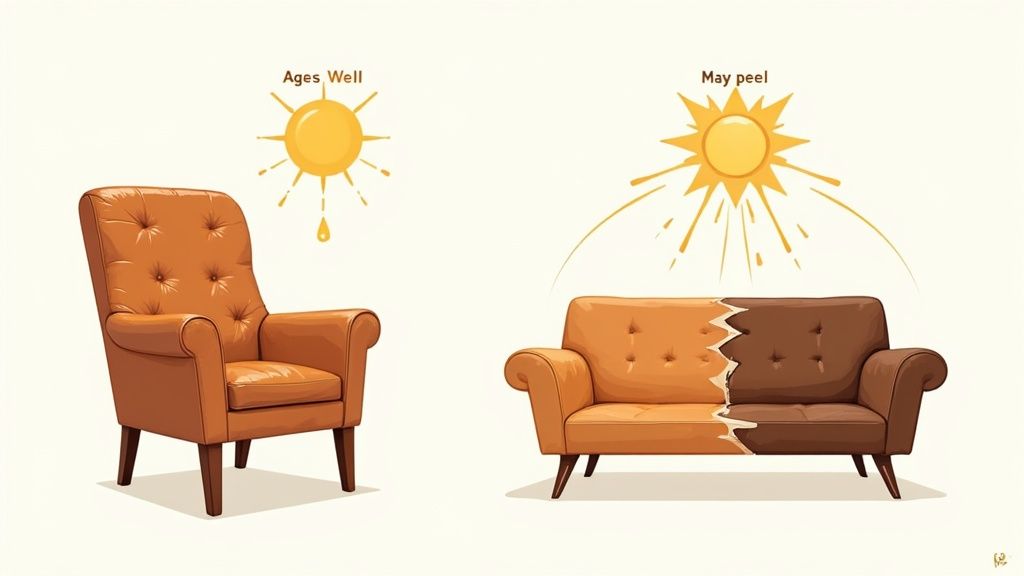
This lack of breathability traps heat and moisture right under that synthetic top layer. In our constant humidity, the adhesive holding it all together starts to break down. This is exactly why bonded leather is notorious for peeling, cracking, and delaminating. What starts as a small bubble or crack quickly flakes away, revealing the ugly cloth backing underneath.
A bonded leather sofa might look great on a showroom floor in a dry state, but after a few Orlando summers, it often begins to peel and degrade. We’ve had countless customers come to us for a replacement after learning this lesson the hard way.
Imagine a bonded leather armchair placed near a sliding glass door in a Sanford home. That combination of morning sun and afternoon humidity creates a perfect storm. Within just a couple of years, the arms and headrest—the areas that see the most contact—start peeling away. Repairing this kind of damage is nearly impossible, which means the whole piece often has to be replaced. This incredibly short lifespan is a key differentiator in the bonded vs genuine leather debate.
The global market reflects this quality gap, with genuine leather holding its own as the benchmark for durability, commanding a leading market share of around 53.6% in leather goods. While bonded leather’s low upfront cost is tempting, its short lifespan, especially in our climate, makes it a poor long-term value. In contrast, a genuine leather piece from us at Slone Brothers is an investment designed to provide comfort and style for decades to come.
Comparing Upfront Cost and Long-Term Value
When you're standing in a showroom, looking at two similar sofas, the price tag is often the first thing that catches your eye. Bonded leather furniture almost always boasts a lower upfront cost, and that can be incredibly tempting. Here at Slone Brothers Furniture, we always encourage our Central Florida neighbors to look past that initial number and think about the total cost of ownership over the years.
A lower price today doesn't automatically mean better value tomorrow. The reality is, a bonded leather sofa might start showing its age and need replacing in as little as two to three years, especially in our humid climate. When you find yourself buying the same piece of furniture three or even four times in the same span a single genuine leather piece would have lasted, those "savings" vanish pretty quickly. This cycle of replacing furniture isn't just tough on your wallet; it's a real hassle.
The Investment Mindset
Think of genuine leather as an investment in your home. Yes, the initial cost is higher, but a well-made leather sofa or chair can last for decades, becoming a cherished part of your family's story. When you divide that initial price over a 15, 20, or even 25-year lifespan, the annual cost often ends up being significantly lower than repeatedly buying and replacing a bonded leather piece. It’s always smart to weigh the long-term benefits of any significant home purchase. For more on this, other local experts offer great insights on understanding the best return on investment for home improvements.
At Slone Brothers, our Low Price Promise isn’t just about the ticket price you see today. It’s our commitment to providing you with exceptional, lasting value. We ensure you're investing in quality that will serve your family beautifully for years to come.
Of course, the appeal of bonded leather's lower cost has fueled its market growth, which is projected to expand as consumers search for affordable alternatives. But despite this trend, the slower-growing but much larger genuine leather market tells a timeless story: quality and longevity never go out of style. We believe true value is found in durability, not disposability.
Making Quality Accessible in Central Florida
We get it—budget is a huge factor for every family. That’s exactly why we're committed to making high-quality, genuine leather furniture accessible to everyone in our community. If you’re a savvy shopper from Sanford or Lake Mary on the hunt for an incredible deal, our Clearance Outlet is a must-visit. You can often find high-end genuine leather pieces at exceptional savings, giving you the best of both worlds: superior material and a fantastic price.
Ultimately, choosing genuine leather is one of the smartest decisions you can make for your home. Investing a bit more now saves you money, time, and frustration down the road. If you'd like to learn more about making smart furniture choices, check out our ultimate guide on how to shop for furniture smartly.
A Practical Comparison of Feel and Maintenance
Beyond the technical specs and durability charts, the real decision between bonded and genuine leather often boils down to your daily life. How does the sofa feel after a long day? How much work is it to keep it looking good? For our customers here in Orlando and across Central Florida, these practical, everyday questions are what truly matter for long-term happiness with a piece of furniture.
When you run your hand across a sofa in our Longwood showroom, the difference is something you feel instantly. One feels like it’s ready to become part of the family; the other feels like a temporary guest.
The Sensory Experience: Feel and Texture
Genuine leather has a rich, supple, and inviting feel that synthetic materials just can’t duplicate. Every hide possesses its own unique grain, with subtle natural variations that give it warmth and character. Over time, genuine leather doesn’t just last; it gets better, softening and becoming more comfortable with each passing year. This is the material that famously “wears in, not out,” adapting to your home and your life.
Bonded leather, on the other hand, typically has a consistent, smooth, and sometimes cool or plastic-like texture. Because the surface is an embossed polyurethane layer, it lacks the natural pores and unique character of a real hide. That uniformity can feel artificial to the touch and doesn't offer the same breathable comfort—a real factor during our warm Florida seasons.
The Reality of Daily Maintenance
How you care for your furniture is another huge point of difference. While both materials need some attention, the kind of care required—and the results you can expect—are worlds apart.
Caring for Genuine Leather
Maintaining genuine leather is less of a chore and more like a rewarding ritual. The whole idea is to preserve the hide's natural oils and protect it from the elements.
- Routine Cleaning: A regular dusting with a soft, dry cloth is usually all it takes. For small spills, use a slightly damp cloth with a mild soap, wipe gently, and dry it right away.
- Conditioning: To fight the drying effects of Central Florida's sun and constant A/C, we suggest conditioning your leather furniture every 6-12 months. This simple step keeps it soft, supple, and resilient.
- Sun Protection: Just like your own skin, keeping it out of direct, prolonged sunlight will prevent fading and drying.
With this straightforward routine, your genuine leather furniture can stay beautiful for decades. For more seasonal upkeep advice, our fall furniture maintenance checklist offers some great tips for protecting your investment.
The Bonded Leather Dilemma
On the surface, bonded leather seems like a breeze to clean; a quick wipe handles most spills. The real maintenance issue, however, isn't about cleaning—it's about the material's inevitable breakdown.
The most crucial maintenance difference is this: Genuine leather can be restored, while bonded leather can only be replaced. Once bonded leather starts to peel, crack, or flake, there's no effective or lasting way to fix it. The damage is permanent, signaling the end of the furniture's life, both functionally and aesthetically.
This inability to be repaired is a massive drawback, turning what seems like a low-maintenance piece into a disposable one. If you're looking for broader tips on keeping your furniture clean, you can find great advice on cleaning your couch upholstery like a pro.
Ultimately, the small amount of effort needed to condition genuine leather is a tiny price to pay for a piece that can last a lifetime, not just a few years.
Making the Right Choice for Your Home
So, you've learned the difference between how bonded and genuine leather are made and cared for. Now, how does that translate to making a smart choice when you walk into our Longwood showroom? It really comes down to knowing what to look for and, just as importantly, trusting your own senses. At Slone Brothers, we've built our reputation on lasting quality, which is why our showroom is filled with beautiful, durable furniture from America's finest craftsmen, including incredible Amish-made pieces.
When you're here, the first thing to do is check the tag. But don't let that be your only guide—this is where your hands and nose come in. Run your hand over the material. Genuine leather feels soft and supple, and you'll notice unique, natural variations in the grain. Bonded leather, on the other hand, usually feels smooth, almost too perfect, and can have a slight plastic-like texture.
Identifying Quality in Person
Knowing how to spot the real deal will give you the confidence to invest in a piece you'll love for years. Here are a few simple tests you can do right here on our showroom floor:
- The Feel Test: Press your hand firmly into the leather. Real leather will wrinkle and stretch a bit, just like your own skin. Bonded leather is often stiffer and won't have that same pliable give.
- The Smell Test: Get close and take a breath. Genuine leather has that unmistakable rich, earthy smell. Bonded leather might have a faint chemical or plastic scent left over from the polyurethane binders.
- Examine the Grain: Look closely at the surface. Do you see tiny, unique imperfections or patterns that don't repeat? That's the signature of a genuine hide. A perfectly uniform, almost printed-on pattern is a tell-tale sign that it was artificially embossed.
This quick visual is a great way to think about the long-term relationship you’ll have with your furniture.
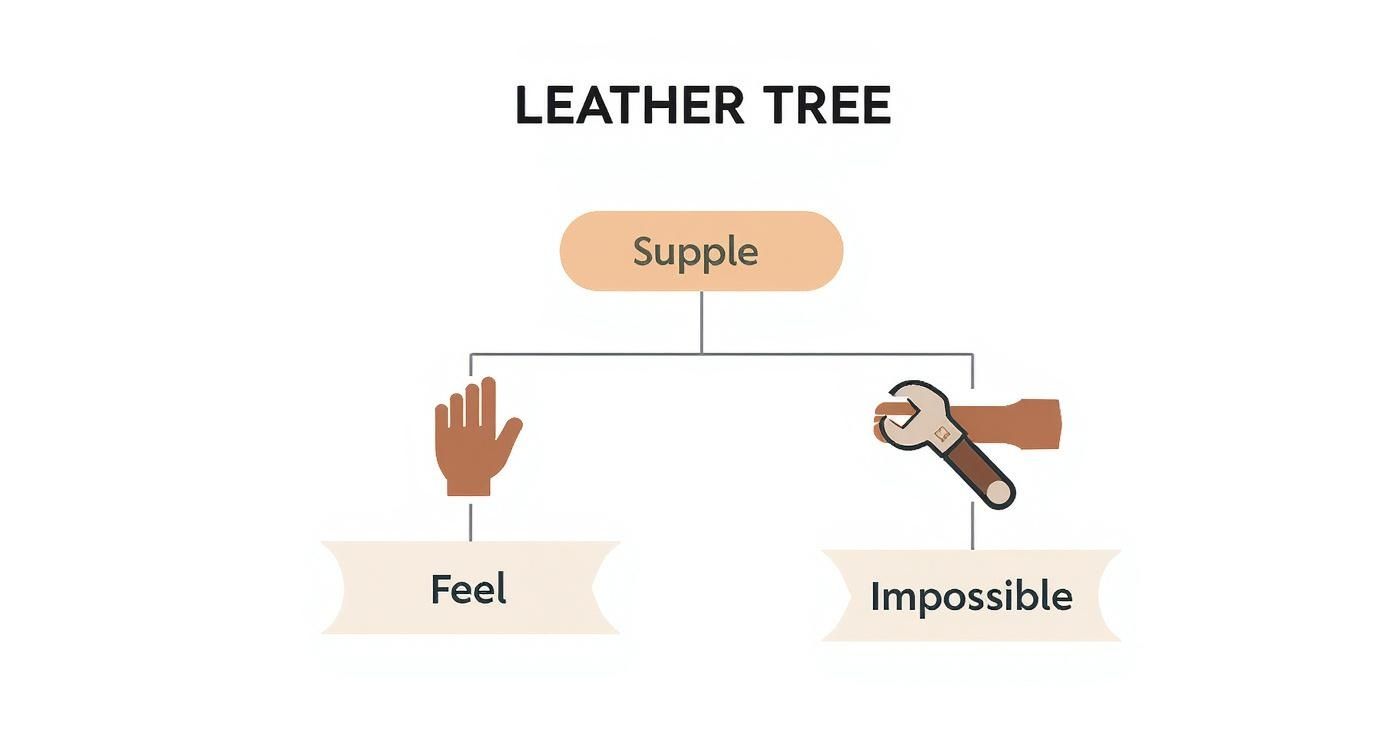
It really boils down to two critical differences: genuine leather is supple and can be cared for, while repairs on bonded leather are often impossible.
Ask Our Design Experts
Sustainability is another big piece of the puzzle. While you might hear bonded leather pitched as "eco-friendly" because it uses recycled scraps, the incredible longevity of genuine leather makes a powerful counterargument. It's no surprise the traditional leather goods market is projected to hit $855 billion by 2032—people recognize and want quality that lasts. You can dive deeper into these market trends and analysis on openpr.com.
Still weighing your options? That's exactly what our in-house Design Team is for. They can walk you through the details of any piece, from its specific leather grade to its frame construction. They can also tell you all about our Custom-Order Program, which lets you hand-pick the perfect genuine leather grade and color to match your vision. And if you're still looking for more ideas, our article on choosing the best sofa for you is a fantastic place to start.
Common Questions We Hear in the Showroom
We’ve been helping families in Longwood and across Central Florida find the perfect furniture since 1980. After all those years, you can bet we’ve heard every question imaginable about the bonded vs. genuine leather debate. To help you feel completely confident in your decision, here are the answers to the questions that come up most often.
Think of this as a quick chat with our experts—clearing up any last bits of confusion so you can choose what’s truly best for your home.
How Can I Tell Real Leather From Bonded in a Showroom?
The easiest way is to just use your senses. Run your hand across the surface—real leather has a soft, supple feel with natural, one-of-a-kind variations in the grain. Bonded leather, on the other hand, often feels a bit like plastic and looks perfectly uniform.
Then, lean in. Genuine leather has that distinct, rich, earthy smell that everyone recognizes. Bonded leather might have a faint chemical scent or no smell at all. When you visit us, don’t ever hesitate to ask our team to point out the differences side-by-side.
Why Does Bonded Leather Peel So Badly in Florida?
This is probably the number one issue we see with furniture here in the Orlando area. Bonded leather is essentially leather scraps glued to a fabric backing and then sealed with a polyurethane topcoat. That plastic-like surface doesn't breathe, so it traps moisture right out of our humid Florida air.
Over time, that trapped moisture causes the adhesives holding everything together to break down. That’s what leads to the peeling, cracking, and flaking you see so often. It’s a problem that simply doesn’t happen with breathable, genuine leather.
Is Genuine Leather a Good Choice for Kids and Pets?
Absolutely. A high-quality genuine leather, especially a top-grain, is incredibly durable and a breeze to clean, making it a fantastic choice for a busy home. It holds up against punctures and scratches far better than bonded leather and most spills can be wiped right up.
What’s more, minor scuffs and marks that come with daily life often just blend into the material, adding to its unique character and patina instead of looking like damage. For more specific advice, our in-house Design Team can help you pick out the perfect, family-friendly leather finish.
Does Bonded Leather Have Any Real Leather In It?
It does, but not much. Bonded leather typically contains only 10% to 20% actual leather fibers. These are leftover scraps that have been shredded and mixed with powerful glues and fillers.
This mixture is then pressed onto a backing material. It’s much more accurate to think of it as a leather-composite product, not a true leather material.
Ready to find the perfect piece for your home? Visit the Slone Brothers Furniture showroom in Longwood, FL, and let our design experts help you get started