
Designing A Living Room Layout That Works For Your Florida Home

Before you fall in love with a stunning American-made sofa or start dragging heavy furniture across the floor, let's talk strategy. Designing a living room layout that truly works for your Central Florida home isn't about following rigid rules; it's about understanding your space and how you live in it.
As your local Longwood design authority since 1980, we’ve seen firsthand how a few minutes of planning can completely change the outcome of a room. This initial phase is your blueprint for success, saving you from costly mistakes and the frustration of a room that just doesn't feel right. We're here to help you get this part right, so everything else—from choosing quality furniture to creating flow—becomes so much easier.
Starting Your Living Room Layout The Right Way
The first step in designing a great living room has nothing to do with furniture. It starts with planning. This means taking precise measurements, noting architectural features, and, most importantly, deciding what you need the room to do for you and your family.
Define Your Living Room's Role
First, ask yourself one critical question: What is this room for? A living room can wear many hats, and its main function will dictate every single layout decision you make down the line.
- Family Hub: Is this the central spot for movie nights and casual get-togethers? If so, your layout should prioritize comfort, durable furniture, and a clear sightline to the entertainment center.
- Formal Entertaining Space: Will you host guests here for conversation and cocktails? The layout needs to encourage interaction, with seating arranged to make conversation easy and natural.
- Quiet Retreat: Is this your peaceful sanctuary for reading and relaxing? You'll want to create cozy nooks with comfortable chairs, like a Stressless recliner, and good task lighting.
- Multi-Functional Zone: In many modern Sanford and Lake Mary homes, the living room also serves as a home office or play area. This requires creating distinct, dedicated zones for each activity.
Measure and Map Your Space
Once you know the room's purpose, grab a tape measure. Don't estimate—get exact dimensions of the room, including the ceiling height. Sketch a simple floor plan and mark the location of permanent features.
Here in Central Florida, it's crucial to note things like large windows that get intense afternoon sun or the placement of ceiling fans, as these will influence where you place furniture for both comfort and preservation. For a more detailed guide, we break down the entire process in our article on how to plan a room layout.
A common mistake we see is underestimating the importance of traffic flow. Your layout must include clear, unobstructed pathways for people to move through the room without weaving around furniture. Aim for at least 30 to 36 inches for major walkways.
Understanding these fundamentals sets you up for success. In fact, many of the same concepts about flow and function apply to the broader principles of how to stage a home for sale. With your room's purpose defined and its dimensions mapped, you're ready to start building a layout that is both beautiful and perfectly suited to your life.
Choosing Your Anchor Furniture And Focal Point
Every great living room layout starts with a hero piece. Before you move a single thing, you need to find the room's main character—its focal point—and then choose the primary piece of furniture that will anchor the entire design. Get this right, and everything else falls into place.
In many Central Florida homes, the focal point is already built-in. It could be a beautiful fireplace, a big picture window looking out onto your Orlando yard, or a wall designed for entertainment. If your room doesn't have an obvious architectural feature, no problem. You can create one with a stunning piece of art or a substantial media console. Once you know where your eye naturally goes, you can start arranging furniture to play it up.
The flowchart below breaks down the first critical steps of planning your layout. It's all about measuring your space and defining how you'll use it before you even think about furniture.
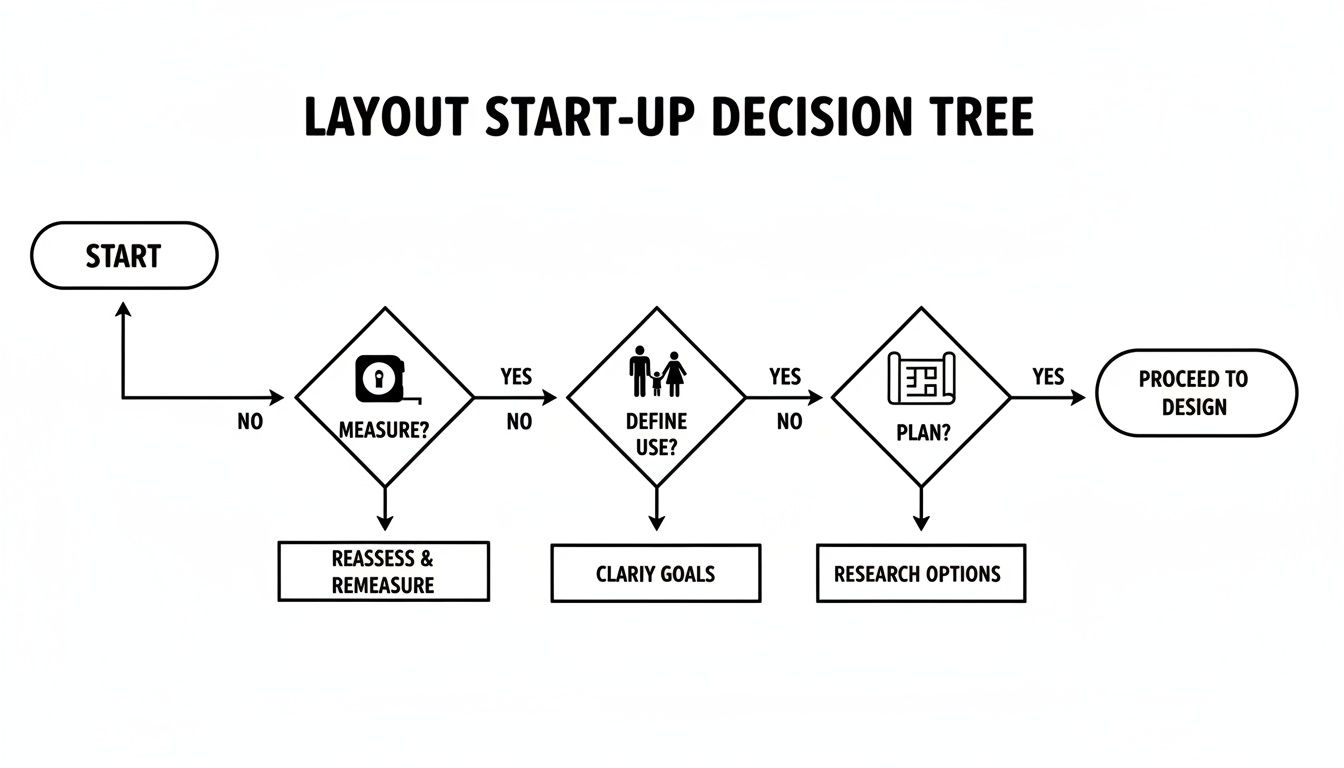
As you can see, a successful layout isn’t about guesswork. It’s built on a solid foundation of understanding your space and your needs before you start shopping.
The Sofa: Your Layout’s Starting Point
Your largest piece of seating, usually a sofa or a sectional, is the true anchor of your living room. It’s the workhorse that dictates the flow, feel, and function of the entire space. Its size, style, and placement will literally determine where accent chairs, coffee tables, and even lamps can go.
When you're making this crucial decision, think about both your lifestyle and the scale of the room. A sprawling sectional might be the perfect command center for family movie nights in a large Lake Mary home. On the flip side, a more compact, elegant sofa could be the ideal fit for a smaller, more formal living space in a historic Sanford bungalow.
The choice between these two power players can be tough, so here’s a quick breakdown to help you decide.
Sofa vs Sectional: Which Anchor Piece Is Right For You?
This quick comparison can help you choose the primary seating that best fits your Central Florida living room layout.
| Consideration | Sofa | Sectional |
|---|---|---|
| Room Size | Best for small to medium spaces; less visually heavy. | Ideal for large, open-concept rooms or defining a zone. |
| Flexibility | Easier to rearrange with other chairs for new looks. | Less flexible; placement is more fixed due to its size. |
| Seating Style | Encourages more formal, face-to-face conversation. | Perfect for casual lounging, family gatherings, and movie nights. |
| Traffic Flow | Offers more pathways around it, keeping flow open. | Can block off corners or create defined walkways. |
| Common Use | Entertaining guests, formal living rooms, smaller families. | Large families, media rooms, creating a cozy "corner." |
Ultimately, the right choice comes down to how you live. Both can be incredible foundations for a beautiful room when selected thoughtfully.
Matching Your Anchor to Central Florida Living
Let's be honest—our climate demands a little more from our furniture. The intense sun and humidity can be brutal on pieces that aren't up to the task. This is exactly where investing in quality and long-term value really pays off.
Keep these factors in mind for a Florida-friendly anchor piece:
- Performance Fabrics: These aren't just a trend; they're a lifesaver. Engineered to resist stains, moisture, and fading, they're a smart choice for homes with kids, pets, and our beautiful Florida sunshine.
- Solid Wood Frames: Look for a sturdy, kiln-dried hardwood frame. The Amish collections we carry, for instance, are built with superior craftsmanship to prevent warping in our humid climate.
- Smart Customization: Have an odd-shaped room or a very specific need? Our Custom-Order Program lets you dial in the perfect configuration, fabric, and finish, ensuring your anchor piece fits your space like a glove.
Once you’ve chosen your sofa and placed it in relation to the focal point, you can build the rest of the layout around it. Nailing this relationship is key to creating a truly comfortable and functional space. By choosing a quality anchor piece and positioning it with purpose, you set the stage for a living room that’s not just beautiful, but perfectly suited to your life here in Central Florida.
Creating Conversational And Open-Concept Layouts
The modern living room has evolved. It’s no longer just a place to line up sofas and chairs to watch television; it's the genuine heart of the home, where real connections happen. When we design a living room layout today, our goal is to foster that interaction, creating arrangements that naturally invite conversation and make the entire space feel open and welcoming.
This means we’re consciously moving away from the old-school model of pointing every piece of furniture at a screen. Instead, we’re focusing on creating more intimate clusters with sofas and chairs—perfect for everything from late-night family chats to hosting friends in your Orlando home.
Encourage Connection With The Right Spacing
The distance between your seating pieces can make or break the social vibe of a room. If they're too far apart, you’ll find yourselves shouting across the space. Too close, and everyone feels cramped and uncomfortable.
You want to hit that sweet spot where conversation flows effortlessly. As a rule of thumb, aim for a distance of no less than 3.5 feet and no more than 10 feet between seating pieces. This allows for comfortable dialogue without invading anyone’s personal space.
Our Design Team Tip: If you have the room, try floating your sofa away from the wall by just 3 to 5 inches. It’s a small adjustment, but that little gap creates a sense of airiness that makes the entire room feel larger and less boxed-in.
This shift toward more fluid, people-centric layouts is a huge trend. It makes sense, considering that many homeowners report spending the most time in their living rooms specifically to feel close to others.
Defining Zones In Open-Concept Homes
So many of our beautiful homes here in Lake Mary and Sanford feature open-concept floor plans, blending the living, dining, and kitchen areas into one large space. While it creates a wonderful sense of connection, carving out a functional living room layout can be tricky. The key is to create defined "zones" without actually putting up walls.
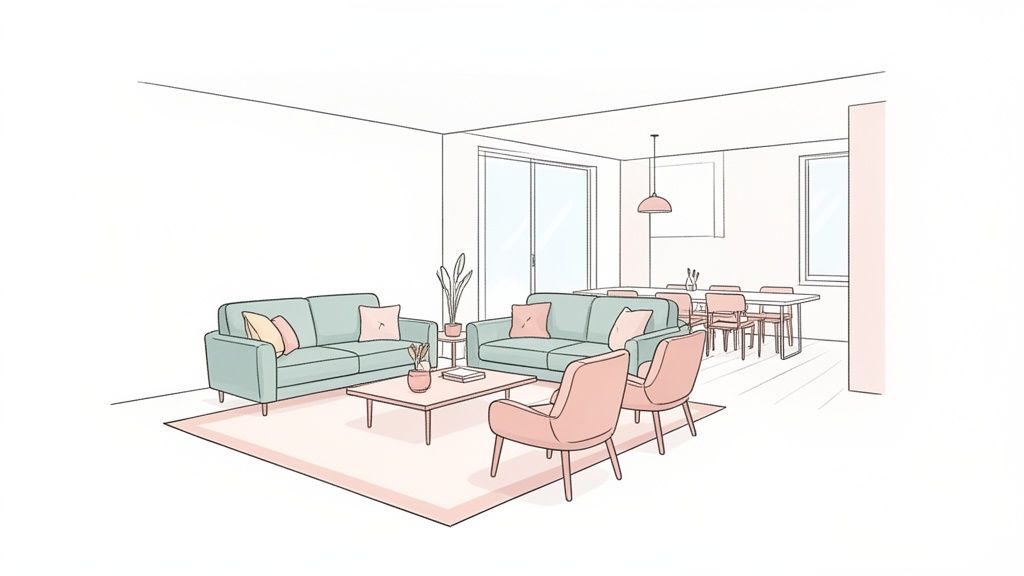
Your most powerful tool for this is an area rug. A properly sized rug can anchor your entire conversation area, creating a clear visual boundary that separates it from the dining space or kitchen. You’ll want a rug that’s large enough for at least the front legs of your sofa and all your accent chairs to rest on it. This simple step makes the whole grouping look unified and intentional.
Another great strategy is using furniture to create subtle boundaries. For instance, placing a sofa with its back to the dining area clearly delineates the living zone. Add a console table behind the sofa, and you've not only reinforced that separation but also gained a stylish surface for lamps or decor. We get into even more detail on these techniques in our guide to decorating open floor plans.
Common Conversational Arrangements
To help you get started, here are a few classic layouts our Design Team loves for fostering interaction in any Central Florida home:
- The Face-to-Face: This is a timeless and elegant setup. Place two sofas (or a sofa and two chairs) directly facing each other with a coffee table in the middle. It’s ideal for more formal living rooms where conversation is the main event.
- The L-Shape: Position a sofa and a loveseat (or two chairs) at a right angle. This layout feels more casual and is incredibly versatile, working well for both conversation and directing attention toward a focal point like a fireplace or a great view.
- The U-Shape: Create a cozy, enclosed "U" by using a sofa with two chairs or loveseats on either side, all facing inward. It's incredibly inviting and perfect for larger families or anyone who entertains often, as it puts everyone in easy conversational range.
By focusing on connection first and using these smart zoning techniques, you can design a living room layout that is both beautiful and perfectly suited to the way you actually live. It’s all about creating a space where your family and friends truly want to be.
Layering Lighting, Rugs, And Accessories
Okay, your main furniture pieces are in place. Now for the fun part—this is where we bring the living room to life. A functional room is great, but a warm, inviting home is the real goal. Layering in the right lighting, rugs, and accessories adds the personality and polish that our Design Team knows makes all the difference. These are the final touches that truly complete a space.
Anchor Your Space With The Perfect Rug
One of the most common challenges we help Central Florida homeowners solve is picking the right size area rug. It’s a make-or-break decision. A rug that's too small can make your entire room feel disjointed and frankly, a lot smaller than it really is. It’s the critical element that anchors the whole seating arrangement.
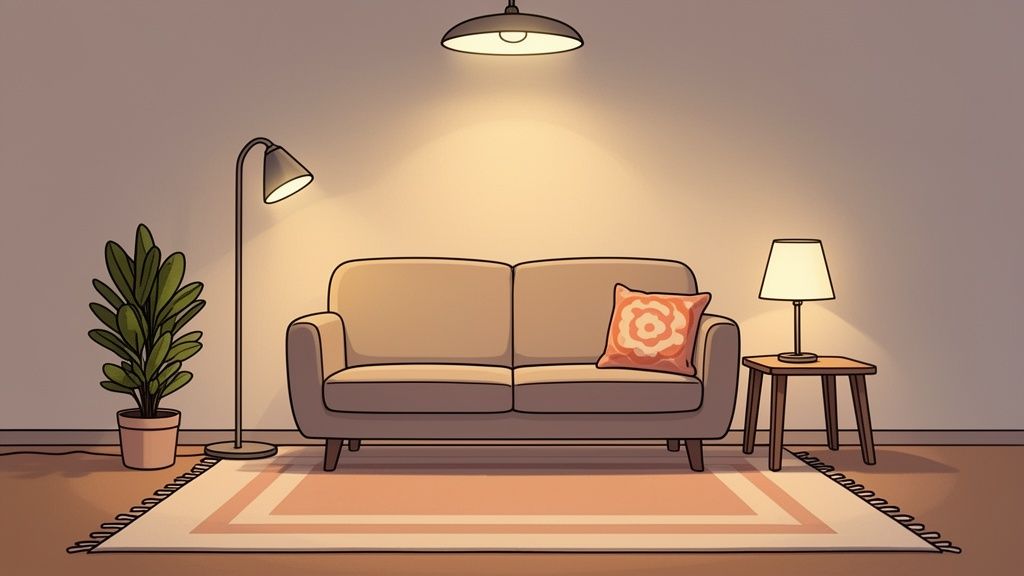
The golden rule here is simple: your area rug should be large enough for at least the front legs of your sofa and all accent chairs to rest comfortably on it. This visually pulls all the pieces together, creating a unified and intentional conversation zone.
In a larger living room, try to leave about 24 inches of bare floor between the rug's edge and the walls. For smaller spaces, a gap of 10 to 18 inches works beautifully.
A well-chosen rug doesn't just add color and texture; it defines the very boundary of your living space. This is especially important in the open-concept homes so popular throughout the Orlando area. Think of it as a powerful tool for creating a cohesive layout.
Illuminate Your Layout With Layered Lighting
Great lighting is never about just one overhead fixture. A well-designed room layers different types of light to create mood, provide function, and highlight key features. Our designers always think of it in three distinct categories:
- Ambient Lighting: This is the overall glow that fills the room, usually from a ceiling fixture or recessed lights. It sets the general tone for the space.
- Task Lighting: This is focused light for specific activities. A floor lamp tucked behind a reading chair or a table lamp on an end table provides direct light exactly where you need it.
- Accent Lighting: This is the "jewelry" of your room. Think of a wall sconce that highlights a piece of art or a small lamp on a console table that adds a warm, decorative touch.
The key is having multiple sources of light you can control. Our guide on how to put your living room in the best light dives even deeper into how our design experts achieve that perfect balance. This layered approach ensures your living room is both functional and atmospheric, ready for anything from a bright family game night to a quiet, relaxing evening.
Place Your Finishing Touches Thoughtfully
Accessories are where your personality really gets to shine. This is everything from accent tables and decor to pillows and throws. The trick is to add these elements in a way that enhances your layout, not clutters it.
An end table should be close enough to the sofa to actually be useful—we usually place them 2 to 3 inches away from the arm—making it easy to set down a drink. For height, it should be no more than a few inches higher or lower than the sofa arm to maintain both visual balance and practicality.
Beyond lamps and decor, don't forget your windows. The right window treatments are a crucial final layer. For instance, custom plantation shutters can dramatically impact your living room's lighting and overall design, offering that classic Florida style with excellent privacy and light control.
By thoughtfully layering these final elements, you're not just decorating; you're completing the story of your living room. You're building upon the strong foundation of your layout to create a space that is comfortable, functional, and uniquely yours.
Why a Cookie-Cutter Layout Just Won't Work in Central Florida
Planning a living room layout in Orlando is a different ballgame. You can’t just pull a generic plan from a design blog and expect it to work, because it won’t account for our unique Central Florida lifestyle, our distinct architecture, and—of course—our climate. The one-size-fits-all approach you’ll find at a national chain often misses the mark entirely because it ignores the realities of living here.
That’s where a local, custom approach from a family-owned business becomes so important. It’s all about creating a living room that doesn’t just look great in a photo, but actually functions for a real Florida family. Since 1980, we’ve been helping our neighbors do just that—crafting layouts that are both stylish and practical, built to handle everything our environment throws at them.
Designing for the Florida Lifestyle
The way we live here directly shapes how our living rooms need to work. Our homes are often the hub for family gatherings, seamlessly blending indoor comfort with a strong connection to the outdoors. This has driven a massive shift toward expansive, open layouts.
For many homeowners in markets like Orlando, the living room is the top spot for relaxation and quality time with family and friends. This means your furniture arrangement has to support that seamless flow. You need to create conversational zones and define different areas without putting up walls, all while keeping that breezy, connected feeling that makes Florida living so special.
Solutions for Our Unique Architecture
Many homes in Longwood, Lake Mary, and across Central Florida have architectural quirks that standard, off-the-shelf furniture just can’t handle. Maybe you have a long, narrow room, a corner fireplace that creates an awkward angle, or huge sliding glass doors that leave you with very little wall space. These aren't problems—they're opportunities for smart, custom solutions.
Instead of trying to shove a generic sofa into a space where it clearly doesn't belong, a custom approach lets you design a piece that fits like a glove. Our Custom-Order Program was created for exactly these kinds of situations.
- Solve Tricky Spaces: You can order a sectional with a specific chaise length or a sofa built to the exact dimensions needed for that narrow wall.
- Maximize Your View: We can help you choose low-profile furniture that won’t block the beautiful view of your lanai or pool.
- Match Your Style: You get to select the perfect fabric, finish, and configuration to create a look that is truly yours and that you won't see in every other house on the block.
Working with our in-house Design Team is a great way to navigate these challenges. We offer complimentary consultations to help you find the perfect solution, making sure your furniture enhances your home’s architecture instead of fighting against it.
Making Climate-Conscious Furniture Choices
Finally, any smart layout plan for a Central Florida home has to account for our climate. The intense sun can fade fabrics in a single season, and the constant humidity can be brutal on poorly made furniture. A custom approach lets you build durability into your design right from the very beginning.
It all comes down to making smart material choices that are engineered for our environment. Think performance fabrics that resist fading and stains, or the solid, kiln-dried wood frames you’ll find in our Amish and American-made collections, which are built to stand up to humidity without warping.
Even small details, like arranging furniture to maximize airflow from a ceiling fan, are crucial things a local expert understands. By tailoring every piece of your living room puzzle—from the furniture’s construction to its final placement—you create a space that not only looks beautiful today but will stay comfortable and strong for years to come.
Common Living Room Layout Questions Answered
Even with the best plan on paper, questions always pop up when you start moving furniture around. In our Longwood showroom, our Design Team has truly heard it all, and we're always here to help you solve the unique layout challenges that come with Central Florida homes.
Here are a couple of the most common puzzles we help people solve, along with our team's go-to advice.
How Do I Handle A Tricky Layout With Multiple Doors?
Rooms with lots of doorways and openings can feel like a nightmare because they chew up all your good wall space. The trick is to stop thinking about the walls and instead create your main conversation area in the largest open part of the room. Use a great area rug to really anchor the space and define its borders.
From there, you can "float" your furniture away from the walls. This simple move creates clear walkways behind your sofa and chairs, preserving the natural traffic flow from one door to another. It keeps people from having to cut right through the middle of your conversation zone.
What Are The Best Tips For A Small Living Room?
Making a smaller living room feel bigger and more inviting is all about creating an illusion of space with smart, intentional choices.
- Go Vertical: Draw the eye upward. Tall, narrow bookcases or drapes hung high and wide make the ceiling feel taller than it is.
- Choose Lighter Colors: Soft, light colors on the walls and bigger furniture pieces bounce more light around the room, making everything feel more open and airy.
- Leggy Furniture: Sofas and chairs with exposed legs are a game-changer. Being able to see the floor underneath creates a genuine sense of spaciousness.
- Use Mirrors: A large, well-placed mirror is the oldest trick in the book for a reason—it can visually double the size of your room.
Our biggest piece of advice for small spaces is to resist the urge to overcrowd. It's better to have fewer, higher-quality pieces that are properly scaled for the room. An apartment-sized sofa and a couple of accent chairs will serve you far better than a massive sectional that swallows the entire floor plan.
Feeling inspired? Stop by our Slone Brothers Furniture showroom in Longwood, FL, and chat with our Design Team for a complimentary consultation.