
How Long Should Furniture Last in Your Central Florida Home?

"How long should my furniture last?" It's one of the first questions we ask when investing in a new piece for our home. The answer isn't always simple, but here at Slone Brothers, we believe a quality sofa should last 7 to 15 years, while a truly solid wood dining table can stick around for 20 years or more.
Knowing these benchmarks helps you set realistic expectations for your current furniture and gives you a sharper eye for what to look for in your next big purchase for your Orlando-area home.
A Central Florida Homeowner’s Guide to Furniture Longevity
Understanding how long your furniture is supposed to last is the key to making a smart, long-term investment. Here in Central Florida, our lifestyle—from daily use and busy families to our famously sunny climate—plays a huge role in how long our furniture keeps its good looks and structural integrity.
Whether it’s the sofa that hosts family movie nights in your Orlando home or the dining set for holiday gatherings in Lake Mary, every item has a general lifespan.
Of course, not all furniture is created equal. The difference between a piece that lasts a few years and one that becomes a family heirloom often boils down to the quality of its materials and craftsmanship. For example, your average upholstered sofa might give you a solid eight years, but a well-constructed piece from Slone Brothers with a solid hardwood frame can easily double that.
Thinking about the true lifespan of a major home purchase is something every homeowner does. It's not so different from wondering about how long roofs last in Florida, especially given our unique climate challenges. The same logic applies indoors: quality materials and proper care are everything.
This chart gives you a quick visual guide to what you can typically expect from common household furniture.

As you can see, there’s a big jump in longevity when you move from standard to high-quality pieces, which really drives home the value of investing in superior construction from the start.
Average Furniture Lifespan at a Glance
For a quick reference, here’s a breakdown of the expected lifespan for common household furniture, comparing standard quality against high-quality pieces that receive good care.
| Furniture Type | Average Lifespan (Standard Quality) | Potential Lifespan (High Quality & Care) |
|---|---|---|
| Sofa / Couch | 7-10 Years | 15+ Years |
| Armchair | 7-10 Years | 15+ Years |
| Dining Table | 5-15 Years | 20+ Years (often generations) |
| Dining Chairs | 5-10 Years | 15+ Years |
| Bed Frame | 10-15 Years | 20+ Years |
| Dresser / Chest | 5-10 Years | 20+ Years |
| Coffee Table | 5-10 Years | 15-20+ Years |
| Mattress | 7-10 Years | 10-12 Years |
This table illustrates just how much extra life you can get out of your furniture when you opt for better materials and craftsmanship. It’s an investment that pays for itself over time.
Setting Realistic Expectations
Knowing what to expect from your furniture helps you plan for the future and spot the signs that a piece is nearing the end of its useful life. Here’s a general breakdown of what you can anticipate from different types of furniture:
-
Living Room Seating: Your sofas and armchairs are the workhorses of the living room. Standard-quality pieces usually give you a good 7-10 years. High-end models, especially those with durable performance fabrics, can easily last 15 years or more.
-
Case Goods (Wood Furniture): This is your hard-working furniture: dressers, dining tables, and bookshelves. Pieces made from particleboard or engineered wood might last 5-10 years before they start to show their age. In stark contrast, solid wood furniture—like the beautiful Amish and American-made collections we carry at Slone Brothers—can last for decades, often becoming cherished family heirlooms passed down through generations.
-
Mattresses: This one is as much about hygiene and support as it is about durability. A mattress should generally be replaced every 7-10 years. Over time, the materials inside break down, which can seriously affect your sleep quality and comfort.
By keeping these timelines in mind, you can better judge the true value of your furniture and make smarter decisions when it's time to repair, replace, or upgrade.
What Really Determines Your Furniture's Durability
Ever wondered why one dresser seems to last forever, while another starts wobbling after just a year or two? As your local furniture experts in Longwood, we can tell you the secret isn't always the price tag—it’s the quality of the craftsmanship and the materials that go into it. Once you know what to look for, you can see beyond the surface and spot the true, lasting value your Central Florida home deserves.
When you're trying to figure out how long furniture should last, the single biggest factor is the material. Is it built to stand up to daily life in a busy Lake Mary household, or will it falter under the pressure? The difference often comes down to solid wood versus its engineered lookalikes.
Solid Wood: The Gold Standard
At Slone Brothers, we’re big believers in the incredible staying power of solid wood, which is why it’s the heart and soul of our Amish and American-made collections. Solid hardwood—think oak, cherry, or maple—is exceptionally strong and has a unique superpower: it can be sanded and refinished multiple times over its life. A minor scratch doesn't spell the end; it's just a simple fix that keeps the piece looking beautiful for generations.
The history of furniture making tells a clear story. For centuries, pieces were handcrafted from solid timber for maximum durability. It wasn't until manufacturing evolved that materials like plywood and fiberboard became common, often prioritizing lower costs over longevity. You can dig deeper into these historical changes in furniture production on Britannica.com.
Understanding Other Materials
While solid wood is the peak of durability, other materials are often used to create more affordable options. It's important to know what you're really buying:
- Veneers: This is a thin layer of real wood glued over a core of something else, like plywood or particleboard. High-quality veneers can be beautiful and hold up well, but cheaper versions can chip or peel, especially in Florida's humid climate.
- Engineered Woods: This category includes materials like particleboard and MDF (medium-density fiberboard). They're made from wood fibers pressed together with adhesive, which makes them a cost-effective choice. The trade-off? They're much more susceptible to water damage and just don't stand up to wear and tear nearly as well as solid wood.
- Upholstery: For sofas and chairs, the frame is just the beginning. The fabric or leather covering it plays a massive role in its lifespan. Top-grain leather is a fantastic, long-lasting choice, but you have to be careful to distinguish it from less durable options. In fact, knowing the difference is so critical that we created a guide to help you understand bonded vs. genuine leather.
Construction Is Just as Crucial
Beyond the raw materials, how a piece is put together is everything. High-quality furniture uses time-tested joinery techniques that create strong, interlocking connections built to last. Look for dovetail joints in drawers and mortise-and-tenon joints for frames—these are the hallmarks of craftsmanship that resist wobbling and loosening over time.
In contrast, lower-quality pieces often rely on staples, glue, and screws, which can fail under the stress of daily use. When you’re shopping in our showroom, we encourage you to get hands-on. Gently wiggle a table or open a drawer—it's the best way to feel the difference for yourself.
Protecting Your Furniture in the Florida Climate
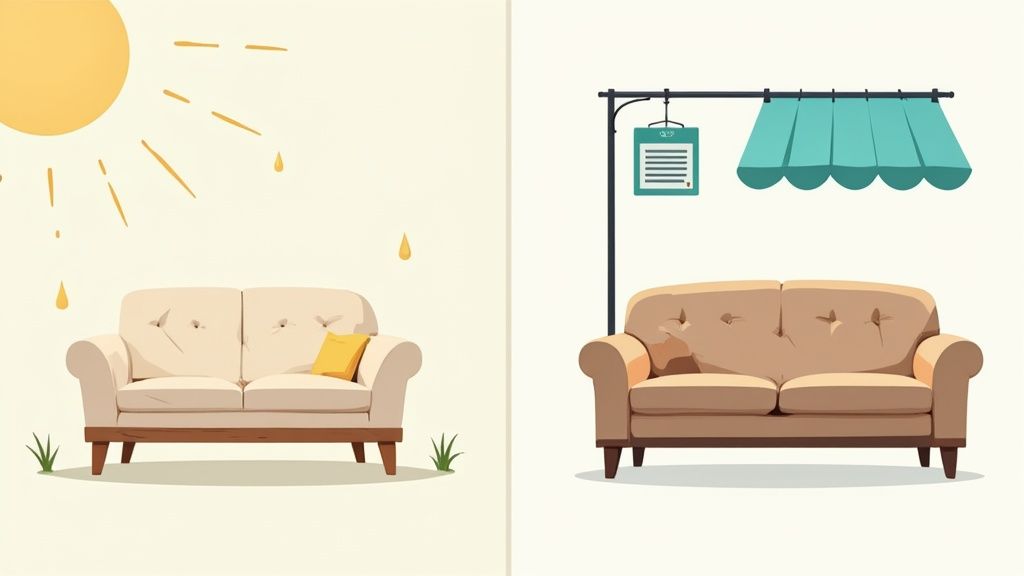
Living in Central Florida is a dream, but our beautiful sunshine and warm, humid air can be tough on furniture. The constant humidity can cause solid wood to swell or warp, while the intense Orlando sun can bleach beautiful fabrics in a single season. Protecting your investment from these elements is key to making sure your pieces last as long as they should.
Here at Slone Brothers, we’ve been helping homeowners combat the Florida climate since 1980. Our design team knows that choosing the right materials from the start and taking a few preventative steps can make a world of difference.
Battling Humidity and Sunlight Indoors
The two biggest culprits affecting indoor furniture in our area are humidity and UV rays. High indoor humidity, a common issue in Lake Mary and Sanford homes, can be especially damaging to high-quality wood pieces.
To protect your investment, the goal is to maintain a stable indoor environment.
- Control Humidity: Try to keep your home's indoor humidity between 45% and 55%. Running a dehumidifier during the muggiest months can stop wood from expanding and contracting, a process that leads to cracks and warped joints over time.
- Block UV Rays: The sun's rays are like a natural bleach for wood finishes and upholstery. Consider using UV-blocking window films, blinds, or curtains on windows that get hit with direct, intense sunlight, especially in the afternoon.
- Strategic Placement: Avoid placing valuable solid wood or dark-upholstered furniture right in a sunbeam. Sometimes, a little thoughtful room planning is all it takes to drastically extend the life of your favorite pieces.
For more detailed advice on preserving your wood pieces, check out our expert guide on how to care for wood furniture.
Choosing Outdoor Furniture That Lasts
Our year-round outdoor lifestyle demands patio furniture that can truly withstand the elements. Not all materials are up to the task of handling Florida's signature mix of rain, sun, and salt air.
Investing in weather-resistant materials from the start is the most effective way to guarantee your patio set sees many seasons. Choosing materials that are inherently durable against moisture and UV rays saves you time and money on replacements down the road.
Poly lumber, for instance, is an outstanding choice for our area. Made from recycled materials, it's engineered to resist fading, cracking, and moisture damage. It can last for 20 years or more with barely any maintenance, making it a smart, long-term solution for any Orlando backyard.
High-quality teak and powder-coated aluminum are also excellent, rust-resistant options that hold up beautifully in our climate. When you choose wisely from the get-go, you ensure your outdoor oasis remains a source of enjoyment for many, many years.
Your Smart Shopper's Guide to Quality Furniture
Walking into a furniture showroom can feel overwhelming, but knowing what to look for is your secret weapon for making a smart investment. When you’re trying to figure out how long a piece of furniture should last, the answers are usually hiding in plain sight—if you know where to look. We want to arm you with the same hands-on knowledge our own Design Team uses to size up a piece's potential.
Think of this as your field guide to furniture shopping. By running through a few quick, simple checks right there on the showroom floor, you can learn to tell the difference between a piece built for a fleeting trend and one designed to be a lasting part of your Central Florida home. This isn't just about spending money; it's about investing in value that pays you back for years.
Hands-On Quality Checks in the Showroom
The absolute best way to judge furniture is to get a little hands-on. Don't be shy—sit on it, give it a little push, and inspect the details up close.
-
The Wiggle Test: This is the easiest and most revealing trick in the book. Gently push on the arms and back of a sofa or chair. Does it wobble or creak? That’s a red flag for a weak frame, likely held together with just staples or glue. A solid, silent frame, on the other hand, points to superior joinery and a sturdy hardwood foundation.
-
Inspect the Joinery: For pieces like dressers, chests, and nightstands, pull a drawer all the way out. You want to see dovetail joints—those interlocking pins and tails that look like a puzzle piece. That's a true hallmark of quality craftsmanship, and something you'll find in our Amish and American-made furniture. It’s a world apart from pieces just glued and stapled together.
-
Check the Cushions: On a sofa, press down firmly on the cushions. How quickly do they bounce back? High-resiliency foam will feel supportive and spring back into shape instantly. If you can, unzip the cushion cover. A separate inner lining is another tell-tale sign of better construction and durability.
To help you remember what to look for, here's a quick checklist that breaks down the key differences between a piece that will last and one that won't.
Quality Checklist Before You Buy
| Feature | What to Look For (High Quality) | Red Flags (Lower Quality) |
|---|---|---|
| Frame | Solid hardwoods (kiln-dried), sturdy feel | Particleboard, MDF, plastic; wobbles or creaks |
| Joinery | Dovetail, mortise-and-tenon joints | Staples, nails, or visible glue only |
| Cushions | High-density foam, springs back quickly | Low-density foam, slow to recover, feels flimsy |
| Springs | 8-way hand-tied or sinuous "S" coils | No springs, or webbing that sags easily |
| Fabric | Tightly woven, aligned patterns | Loose threads, mismatched patterns, thin feel |
| Finish | Smooth, even color, no rough spots | Bumps, drips, or an uneven, thin coating |
Keep this mental checklist handy, and you'll be able to spot genuine quality from a mile away.
Understanding Warranties and Value
A manufacturer's warranty can offer some peace of mind, but it’s crucial to read the fine print. That "lifetime" warranty usually just covers the frame against manufacturing defects for the expected life of the product—not your lifetime. Normal wear and tear on fabrics or cushion flattening from daily use are almost never included.
Here at Slone Brothers, our commitment to value goes beyond a piece of paper. Our Low Price Promise ensures you get a fair price on furniture that’s genuinely built to last, turning your purchase into a savvy, long-term investment. Learning these key indicators is a huge step, and you can find even more advice in our complete guide on how to shop for furniture smartly. With this knowledge, you can confidently choose pieces that will bring style and comfort to your home for many years to come.
Deciding When to Repair or Replace Your Furniture
Every homeowner eventually faces the classic dilemma: is that wobbly dining chair worth saving, or is it time for a fresh start? Knowing when to repair versus when to replace isn't just about saving money—it’s about making a smart investment in your home and keeping it looking its best. The right answer usually comes down to a simple balance of cost, sentimental value, and just how bad the damage really is.
Plenty of minor issues are perfect for a weekend DIY project. Things like tightening up loose legs on a side table, touching up a few scratches, or even giving your upholstery a really deep clean can completely revitalize a piece. These small fixes are easy on the wallet and can add years to your furniture’s life. For more ideas on simple upkeep, our fall furniture maintenance checklist is packed with practical tips to keep everything in top shape.
But some problems go beyond cosmetic fixes, signaling that a replacement is the smarter, and often safer, choice.
When to Consider a Repair
You can almost always save a piece of furniture if it has "good bones" but just needs a little TLC. A repair is probably your best bet if you're dealing with issues like:
- Superficial Damage: Scratches, water rings, or minor fabric tears and snags are usually easy fixes for a handy homeowner or a professional.
- Wobbly Legs or Joints: This often just means a few screws need tightening or a joint needs to be reinforced with some good old-fashioned wood glue and clamps.
- An Outdated Finish: A solid wood dresser with a dated stain isn't a lost cause! It can be completely transformed with a bit of sanding and a fresh coat of paint or a more modern finish.
Telltale Signs It's Time to Replace
Sometimes, a repair just doesn’t make sense from a practical or safety standpoint. It’s time to start looking for something new when you run into serious structural issues that compromise the furniture's integrity.
The thought process is a lot like deciding on other major household investments. For example, knowing the signs for when to replace an air conditioner involves a similar evaluation of cost, performance, and long-term value.
Keep an eye out for these red flags that mean a replacement is your best move:
- A Cracked or Broken Frame: If the main frame of your sofa is fractured or a leg on a heavy table has split, that’s a major safety concern. A proper fix is often incredibly expensive, if not impossible.
- Severe Water Damage: Once a piece made from engineered wood gets soaked, it’s game over. If you see significant swelling or warping from moisture, it simply can’t be repaired.
- Pest Infestations: Any evidence of termites or other wood-boring insects is a dealbreaker. The piece needs to be removed from your home immediately to prevent them from spreading.
- The Repair Costs More Than a Replacement: Get a quote. If reupholstering that worn-out sofa costs nearly as much as buying a new one, it’s a much better value to invest in a replacement that comes with a fresh warranty and brand-new materials.
When a replacement is the right call for your Orlando home, you don’t have to break the bank. Our huge Clearance Outlet in Longwood is the perfect place to find a high-quality, durable replacement at a fantastic price, making the decision to move on an easy one.
Find Furniture Designed to Last Generations
Here at Slone Brothers Furniture, we believe your furniture should be more than just a temporary fixture in your home. It should become a lasting part of your Central Florida family’s story. Since 1980, our family has been dedicated to helping Orlando-area homeowners find pieces built not just for today, but for decades to come. That all starts with choosing quality craftsmanship from the very beginning.
Heirlooms in the Making
Investing in furniture that stands the test of time isn't just a smart choice; it's a growing trend. The global furniture market is expected to hit a staggering USD 878.14 billion by 2032, and a big driver for that is people wanting durable, well-made options. You can read more about this growing demand for quality on fortunebusinessinsights.com.
We see this shift firsthand. There’s a real appreciation for our curated collections of American-made pieces and the timeless appeal of Amish furniture built for Orlando homes. These aren't just tables and chairs; they're future heirlooms, crafted with time-honored techniques and solid hardwoods meant to handle real life.
Your Vision, Built to Endure
Sometimes, the most durable piece is one that’s designed specifically for your life. That's where our Custom-Order program comes in. It gives you the power to select high-performance fabrics and robust finishes, ensuring your new furniture is perfectly suited to your style and your family’s needs.
We invite you to come down to our Longwood showroom to see and feel the difference quality makes. Let us help you find a piece your family will cherish for generations.
Still Have Questions? We Have Answers.
To wrap things up, we’ve put together a few of the most common questions we hear from our neighbors here in the Orlando area. Here are some quick, clear answers from our design team to help you get the most value and enjoyment out of your furniture.
How Often Should I Replace My Mattress for the Best Sleep?
For the best support and hygiene, most sleep experts will tell you to replace your mattress every 7-10 years. Over time, all the materials inside—foam, springs, you name it—start to break down. That leads to less support for your back and can even lead to a buildup of allergens.
If you’re waking up with new aches and pains or you can see a noticeable sag, it’s probably time to stop by our showroom and test out a new one.
Is Leather Furniture a Good Choice for Florida's Humidity?
Absolutely! High-quality, properly treated leather can be an excellent and surprisingly durable choice for Florida. Genuine top-grain leather actually breathes, which helps it stay comfortable even in our warmer climate.
The real key is to keep it out of direct, prolonged sunlight, which can cause fading and cracking over the years. Our design team can show you some beautiful leather options and give you the right care tips to make sure it lasts for years in your Central Florida home.
A common misconception is that a "lifetime" warranty means the furniture will last for your lifetime. In reality, it typically refers to the expected lifespan of the product itself and usually only covers specific manufacturing defects in the frame. It's crucial to read the details to understand what is and isn't covered.
What Does a Lifetime Warranty Really Mean?
A "lifetime" warranty almost never means the furniture will last forever. It’s a bit of industry jargon that typically refers to the expected functional lifetime of the product itself—not your lifetime.
These warranties usually only cover very specific manufacturing defects in core parts, like the frame. Things like normal wear and tear, fabric fading, and the natural compression of cushions from daily use are almost never included. Always read the fine print.
Ready to find the perfect piece for your home? Visit the Slone Brothers Furniture showroom in Longwood, FL, and let our design experts help you get started