
How to Arrange Bedroom Furniture: A Central Florida Guide


Knowing how to arrange bedroom furniture isn't about guesswork; it's about a simple plan that works for your home. Before you even think about moving that heavy dresser, you’ll want to measure your space, find a focal point, and be really clear about the room's primary purpose. Here at Slone Brothers Furniture, we believe this strategic first step is the secret to making every piece work in harmony, creating a functional and restful retreat that fits your Central Florida lifestyle perfectly.
Laying the Foundation for Your Perfect Bedroom Layout
Taking a few minutes to plan before you start rearranging your bedroom can save you hours of back-breaking effort and frustration. Here at Slone Brothers Furniture, our in-house Design Team always begins with this foundational step. It’s how we, as your local furniture experts, create a space that feels intentional, balanced, and perfectly suited to you. Think of it as drawing a roadmap for your ideal bedroom.
This planning phase doesn't need to be complicated. It really just starts with understanding the space you have. And whether you're arranging furniture for your own enjoyment or getting your home ready for the market, these principles are invaluable. Understanding the basics of staging can dramatically boost your bedroom's appeal, offering smart insights into presenting the space at its best. You can learn more about these techniques from helpful guides on how to stage a home for selling to maximize its visual impact.
Define Your Bedroom's Purpose
First, ask yourself a simple question: what is this room really for? For many of us here in the Orlando area, a bedroom is so much more than just a place to sleep. It might double as a quiet reading nook, a makeshift home office, or just a personal sanctuary to unwind after a long day. Nailing down its functions helps you prioritize which furniture pieces are essential and which are just nice-to-haves.
Measure and Map Your Space
Next up, grab a tape measure. Accurately measuring your room is probably the most critical part of any layout project. Jot down the dimensions of the walls, but don't stop there—note the locations of windows, doors, closets, and electrical outlets. Here in Central Florida, it's also vital to find your air vents; you definitely don't want to block that precious cool air with a bulky armoire.
A quick sketch, even on a piece of notebook paper, gives you a bird's-eye view to play around with. For a more detailed walkthrough, check out our guide on how to measure a room for furniture.
A well-measured room is the difference between a layout that 'just fits' and a layout that truly flows. It prevents costly mistakes and ensures every piece has its perfect place.
Identify the Focal Point
Every great room design has a focal point—that one spot your eyes naturally land on when you walk in. In most bedrooms, this is the wall where the bed will live. It’s typically the longest wall without any doors or windows, or simply the first wall you see from the doorway.
Establishing this focal point early gives your entire layout a strong anchor, making it much easier to arrange all the other pieces around it. Once you have these three things clear—purpose, measurements, and focal point—you’re ready to start placing your furniture with confidence.
How to Arrange Bedroom Furniture: Positioning Your Bed
Your bed is the heart of the bedroom. It’s the largest piece in the room, and its placement single-handedly anchors your entire layout, dictating where everything else will go. Here in Central Florida, where our bedrooms are a personal retreat from the sun and humidity, getting this right is non-negotiable for creating a space that feels both restful and functional.
The goal is to find a spot that feels secure, promotes easy movement, and just looks right.
A classic, designer-approved spot is what’s often called the "commanding position." This simply means placing your bed on the wall opposite the door, where you can see who’s entering, but you're not directly in line with the doorway. It’s a placement that provides a subtle sense of security and creates an immediate, inviting focal point as soon as you walk in.
Finding the Best Wall for Your Bed
Of course, not every bedroom in an Orlando-area home has the perfect layout for the commanding position. If that spot isn’t an option, don’t worry. Our Design Team at Slone Brothers has seen it all and has plenty of practical alternatives up our sleeves.
- The Longest Wall: A great secondary option is to center the bed on the longest, uninterrupted wall. This provides a strong visual anchor and usually leaves plenty of room on either side for nightstands and walking paths.
- Between Two Windows: Placing your bed between two windows creates a beautiful, natural symmetry. It frames the bed perfectly and allows you to wake up with soft, filtered light. A well-chosen headboard here can feel like a custom piece of art.
No matter which wall you choose, the key is making the placement feel balanced and intentional.
This simple graphic shows the first steps our designers always take: measure the room, identify the focal point (like the best wall for your bed), and define the room's purpose.
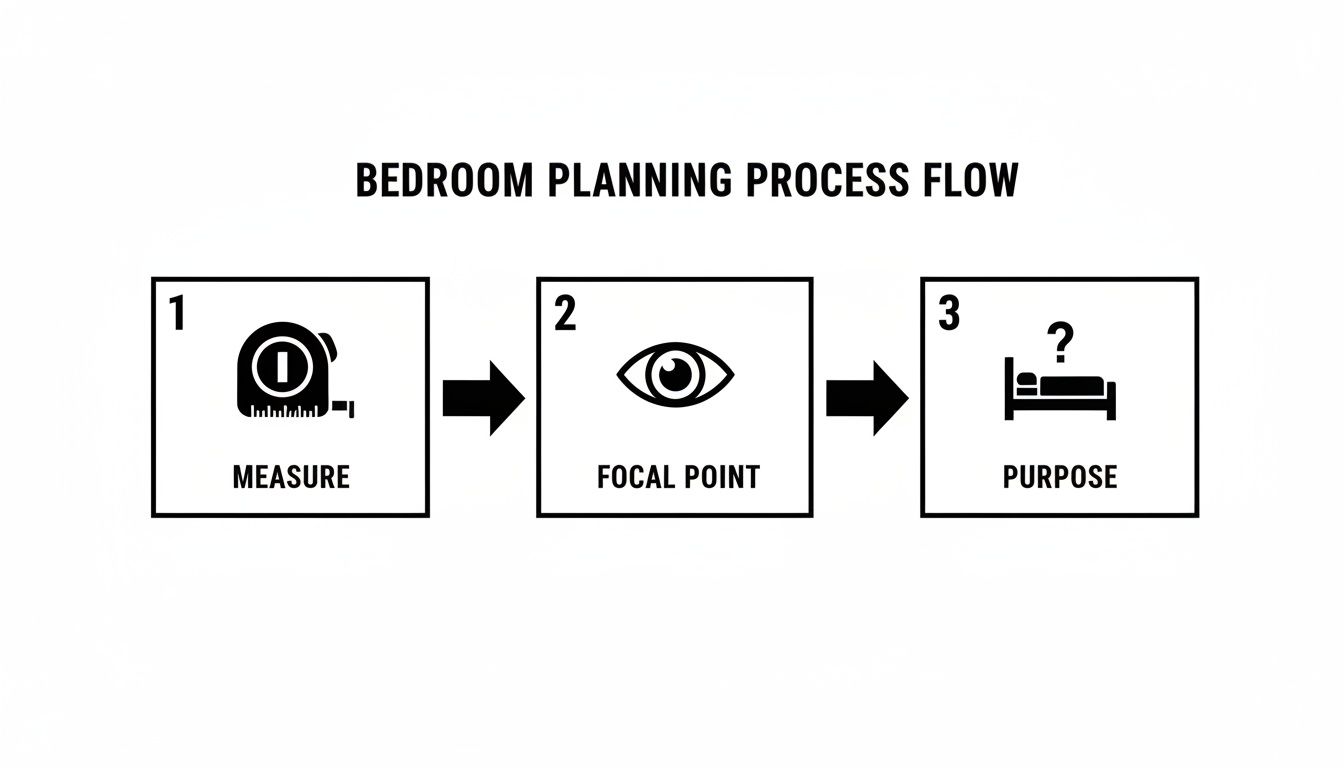
Following this process ensures your final layout is built on a solid, practical foundation before you start doing any of the heavy lifting.
The Golden Rule of Clearance
Once you’ve picked a spot, you need to think about traffic flow. One non-negotiable rule we live by is ensuring adequate clearance. Cramped pathways make a room feel small and frustrating to get around in. Even if you're working with a smaller space, prioritizing movement is key. For more tips on this, explore our guide on finding stylish solutions for small bedrooms.
You should aim for at least 24 to 30 inches of walking space around the sides and foot of your bed. This ensures you can easily make the bed, access closets, and move around without bumping into furniture.
This measurement is the bare minimum for comfortable flow. If you have the space, a little more is always better. By positioning your bed thoughtfully and respecting the need for clearance, you set the stage for a bedroom that is both beautiful and a true pleasure to live in.
Arranging Dressers, Nightstands, and Seating
Once your bed is perfectly positioned, it’s time to bring in the supporting cast. Arranging the rest of your furniture—dressers, nightstands, and any seating—is all about creating a sense of harmony and making the room work for you. It’s not just about filling empty spots. This is where we, as your local Longwood design experts, really get to help homeowners craft a bedroom that feels complete and intentionally designed.
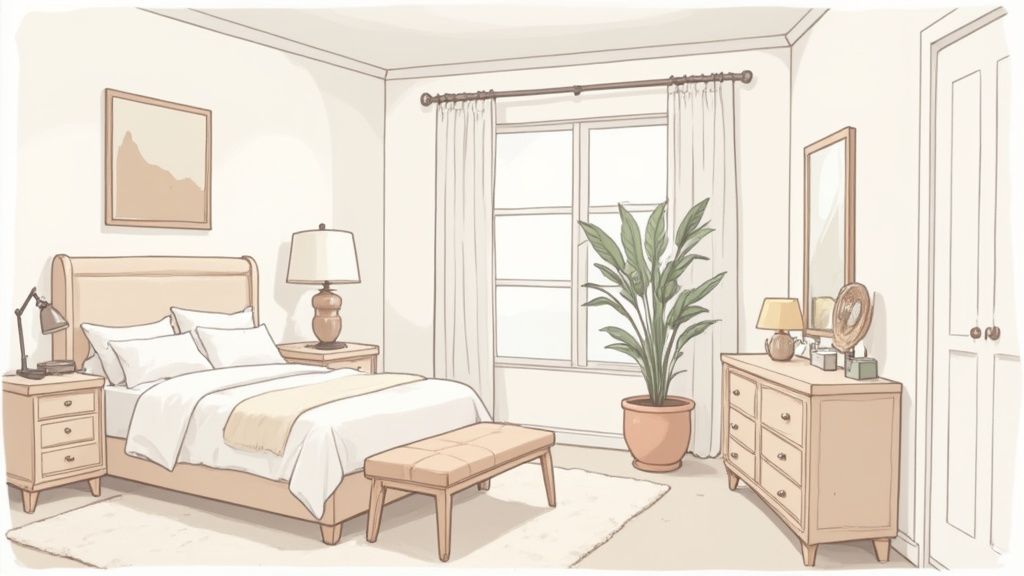
The big idea here is to distribute the visual weight evenly throughout the space. Think of it like a seesaw—you wouldn't pile everything heavy on one side. If you have a tall, dark armoire against one wall, you'll want to balance it with something of a similar perceived weight on the opposite side, like a long, low dresser or even your bed if it has a substantial headboard.
Getting the Scale Right with Nightstands
One of the most common mistakes we see is choosing nightstands that are totally the wrong height. The rule of thumb our Design Team lives by is simple: the top of your nightstand should be roughly level with the top of your mattress. It's a small detail that makes a huge difference when you're reaching for a glass of water or your phone in the middle of the night.
- Too Low: A nightstand that sits far below your mattress looks awkward and is a pain to use.
- Too High: One that towers over the bed can feel imposing and just throws off the whole look.
Getting this scale right creates a seamless visual line from the bed to the nightstand, making the entire setup feel more cohesive and comfortable.
Placing Storage Furniture with Care
When it comes to positioning larger pieces like dressers or armoires, function is every bit as important as form. Always place these items with their main purpose in mind. A dresser, for instance, often works best on the wall opposite the bed. This not only balances the room but also keeps it right where you need it.
Most importantly, don't forget about clearance. Before you settle on a final spot, open all the drawers and cabinet doors completely. You need enough room to stand in front of the piece and actually get to your things without feeling squeezed.
A great layout anticipates your daily routines. Can you open your dresser drawers fully while your partner walks past? This is the kind of practical detail that transforms a good layout into a great one.
For a deeper dive into choosing pieces that are the right size and style for your room, check out our guide on how to select the perfect bedroom furniture for your needs.
Creating a Cozy Seating Area
In the spacious master suites we often see in Central Florida homes, you have the wonderful opportunity to create a private retreat right inside your bedroom. Adding a seating area elevates the room from just a place to sleep into a true personal sanctuary.
Think about placing a comfy accent chair and a small side table in an unused corner to create a perfect reading nook. Another fantastic option is a stylish bench at the foot of the bed—it adds a touch of elegance and gives you a convenient spot to sit while putting on your shoes. This one small addition can make a huge difference, making your bedroom feel much more luxurious and functional for your Orlando lifestyle.
Tackling Common Central Florida Bedroom Layout Challenges
From charming but cozy guest rooms in Sanford to sprawling master suites with odd angles in Lake Mary, every home has its own layout quirks. Having served Central Florida homeowners since 1980, we’ve seen them all. Our Design Team doesn't see these as problems; we see them as opportunities to get creative with your bedroom furniture arrangement.
Many of the older, beautiful homes in our area feature smaller bedrooms that can easily feel cramped. The trick is to think vertically and choose furniture that's properly scaled for the room. A tall, narrow chest of drawers, for instance, makes great use of wall space without gobbling up your precious square footage. In the same vein, floating nightstands or wall-mounted shelves give you a spot for essentials without cluttering the floor.
Handling Awkward Shapes and Features
Long, narrow rooms are another common puzzle we solve. The first instinct is often to line up all the furniture against the walls, which creates a "bowling alley" effect that feels off-balance and impersonal. A better approach is to pull furniture away from the walls and create distinct zones. You could have a small seating area at one end and your bed and dressers at the other, making the room feel wider and much more intentional.
Then there are the architectural oddities—multiple doorways, low window sills, or off-center windows that make placing furniture a real head-scratcher. This is where getting out the measuring tape becomes absolutely critical. Before you fall in love with a piece, make sure you know how to measure a room for furniture so you can be confident everything will fit just right.
An architectural challenge isn't a dead end; it's a starting point for a custom solution. The right piece of furniture can turn a room's biggest quirk into its most charming feature.
This is also a perfect scenario for our Custom-Order Program at Slone Brothers. If a standard-depth dresser blocks a doorway, or a ready-made headboard is just a little too wide for that wall space between two windows, we can help. Our team can work with you to design a piece of high-quality, American-made furniture that fits your unique dimensions perfectly.
Bedroom Layout Solutions for Common Room Types
Thinking through these common issues can help you find the right layout for your specific room. Here's a quick cheat sheet for some of the most frequent challenges we see.
Find expert strategies and key furniture considerations for your specific bedroom shape and size.
| Room Type | Primary Goal | Best Bed Placement | Key Furniture Tip |
|---|---|---|---|
| Small Bedroom | Maximize floor space | Against the longest wall or in a corner. | Use vertical storage and multifunctional pieces. |
| Long, Narrow Room | Create balance and width | Centered in the middle third of the room. | Divide the space into functional zones. |
| Awkwardly Shaped | Work with architecture | On the most practical, uninterrupted wall. | Opt for custom furniture to fit unique nooks. |
By turning a layout challenge into a custom design opportunity, you can create a space that is not only functional but also perfectly tailored to your Central Florida home.
The Finishing Touches: Rugs and Lighting
A great furniture layout is the skeleton of your design; now it's time to add the soul. Rugs and lighting are two of the most powerful tools our Design Team uses to complete a space. They transform a room from just a collection of well-arranged furniture into a sanctuary that feels professionally designed and truly complete. These elements are what bring the warmth, texture, and ambiance that make your bedroom feel like a genuine retreat.
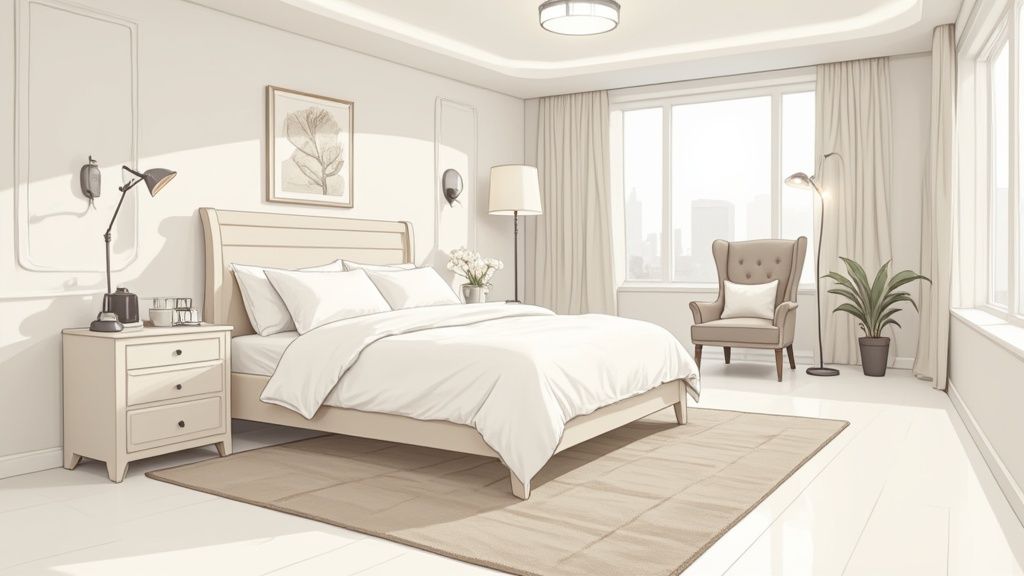
Let's start from the ground up. One of the most common questions we hear in our Longwood showroom is, "What size rug do I actually need for my bedroom?" The goal is simple: anchor the bed and nightstands, creating a cohesive look and giving your feet a soft landing first thing in the morning.
Choosing the Right Size Rug
For that polished, pulled-together look, the rug absolutely needs to extend beyond the sides of the bed. It makes a world of difference. Here are the go-to guidelines we've used for years:
- For a Queen Bed: An 8' x 10' rug is almost always the perfect fit. This size allows the rug to stick out about 18 to 24 inches on either side of the bed, framing it beautifully.
- For a King Bed: You'll want to size up to a 9' x 12' rug to keep things proportional. This ensures the larger bed doesn't swallow the rug, giving you that same comfortable border.
When you place it, the rug should start just in front of your nightstands. This lets the bottom two-thirds of the bed rest on it, creating a visual foundation that ties the whole sleeping area together perfectly.
Creating a Layered Lighting Plan
Great lighting is everything when it comes to setting the right mood, especially when you're working with Central Florida’s incredible natural sunlight. Just relying on a single overhead light can make a room feel flat and harsh. We always recommend a layered approach that blends different types of lighting for a warm, inviting atmosphere.
Layered lighting is all about having the right light for the right task. When you combine ambient, task, and accent lighting, you get total control over your room's mood—from bright and functional for getting ready to soft and relaxing for winding down.
A solid lighting plan should include a mix of these three types:
- Ambient Lighting: This is your room's main light source, like a ceiling fixture or can lights.
- Task Lighting: This is focused light for specific things, like bedside lamps for reading or a desk lamp.
- Accent Lighting: This highlights specific features, like a piece of art or a small lamp on a dresser.
Balancing these sources creates a space that's both dynamic and practical. As you put on your finishing touches, think about incorporating energy efficient lighting options to not only improve the room's vibe but also trim your utility costs. While we're focused on the bedroom here, you can use these same principles to put your living room in the best light too.
Common Questions About Arranging Bedroom Furniture
Our Design Team fields a lot of great questions about how to best arrange bedroom furniture. As your local Longwood furniture experts, we've gathered some of the most common ones we hear from our neighbors right here in Central Florida. Here are our quick, practical answers to help you get the layout just right.
What’s the First Piece of Furniture I Should Place in a Bedroom?
Always, always start with the bed. It's the largest and most important piece in the room, and its position will dictate where everything else can realistically go.
By setting your bed first, you immediately establish the room's main focal point. From there, you can see exactly how much space you have left for walkways and other furniture, which saves you from having to shuffle heavy dressers around later on.
How Much Space Should I Leave Around the Bed?
We always recommend leaving a minimum of 24 to 30 inches of clear walking space on any side of the bed that people will use to get around. This gives you a comfortable amount of room for making the bed and moving through the space without feeling squeezed.
For the foot of the bed, especially if you have a dresser opposite it, try to leave at least 30 to 36 inches. This ensures you can fully open drawers and access everything without a hassle.
Is It Okay to Put a Bed in Front of a Window?
Absolutely! Sometimes, placing the bed in front of a window is the best—or maybe even the only—option for a functional layout. The key is to do it thoughtfully.
We suggest choosing a headboard with a lower profile or a more open, airy design (like one with metal bars or slats) so you don't block too much of that beautiful Florida sunshine.
To really make this placement work, invest in some high-quality window treatments. Good blackout curtains or blinds are practically essential here in the Orlando area for controlling that intense morning light and heat, ensuring you still get a comfortable, restful night's sleep.
What’s the Best Layout for a Really Small Bedroom?
For smaller bedrooms, the strategy is all about thinking vertically and picking multi-functional pieces. A tall, narrow chest of drawers, for example, uses wall height efficiently and frees up precious floor space.
Likewise, a bed with built-in storage drawers can sometimes eliminate the need for a separate bulky dresser altogether. It's also crucial to make sure your furniture is scaled to the room; an oversized bed or dresser will instantly make a small space feel crowded and uncomfortable.
Feeling inspired? Stop by our showroom in Longwood, FL and chat with our Design Team for a complimentary consultation. At Slone Brothers Furniture, we've been helping Central Florida families create beautiful homes since 1980, and we'd be honored to help you create yours.