
How to Arrange Living Room Furniture for Your Central Florida Home

Figuring out how to arrange living room furniture doesn't have to feel like an impossible game of Tetris. It really just comes down to a few core ideas: finding your room's natural focus, making sure people can walk through without tripping, and setting up spots where conversation can actually happen. Here at Slone Brothers Furniture, we've been helping families across Central Florida do just that since 1980. Once you get these concepts down, you're on your way to a layout that looks great and, more importantly, works for your family.
From Cluttered to Comfortable: Our Quick Guide
Your living room is the hub of your Central Florida home. It’s where you unwind after a long day, host friends from across Orlando for the game, and connect with family. But getting the furniture just right is a common struggle. So many of us make the classic mistake of shoving every single piece of furniture flush against the walls. This creates a weird, empty "dance floor" in the middle that feels cold and disconnected.
The real goal is to design a space that feels balanced and encourages people to actually hang out and talk. We've seen it time and time again in our showroom—a few simple adjustments can completely transform a room's energy.
For instance, we worked with a family in Lake Mary whose living area felt cramped and awkward. All we did was pull their sofa off the wall and angle two accent chairs toward their gorgeous bay window. That one small change instantly opened up the room, creating a warm, inviting little conversation nook they use all the time now.
Core Principles for a Great Layout
Before you start dragging that heavy sofa across the room, take a minute to think through these foundational principles. Our Design Team uses these every day.
- Find Your Focal Point: Every room needs a star. It could be a beautiful fireplace, a big window looking out onto your lanai, or your entertainment center. Whatever it is, arrange your biggest piece of furniture (usually the sofa) to face it.
- Set the Stage for Conversation: Arrange sofas and chairs so they face each other, not just the TV. You want to make it easy for people to talk without shouting across the room. A good rule of thumb is to keep seating within about eight feet of each other.
- Don't Forget Traffic Flow: This is a big one, especially in Florida's open-concept homes. You need clear, open pathways for people to walk through the room. Aim for at least 3 feet of walking space so no one is bumping into a coffee table or squeezing past an armchair.
Taking a strategic approach is more important than ever as people continue to invest in making their homes more functional and comfortable. In fact, the global living room furniture market hit a staggering USD 226.5 billion in 2023 and is expected to keep growing. This trend shows a worldwide desire for well-designed, thoughtful living spaces. You can get more details on this growth from a Credence Research market report.
By keeping these simple principles in mind, you can create a layout that feels intentional, spacious, and perfectly suited to your life here in Central Florida.
Living Room Layout Quick-Start Guide
To make things even easier, we've put together a quick-reference table. Think of this as your cheat sheet for the core principles to follow before you start moving pieces in your Orlando-area home.
| Principle | Why It Matters Locally | Slone Brothers Tip |
|---|---|---|
| Establish a Focal Point | Many Florida homes have great views, lanais, or fireplaces. Use them! | If you don't have a natural focal point, create one with a large piece of art or a statement media console from our showroom. |
| Create Conversation Zones | It encourages family connection and makes entertaining guests feel more natural. | Pull furniture away from the walls. "Floating" your sofa in the middle of the room can make it feel larger and more intimate. |
| Ensure Clear Traffic Flow | With open-concept layouts common in Orlando, defining paths is key to avoiding chaos. | Use area rugs to visually anchor your seating zones and naturally guide foot traffic around, not through, them. |
| Balance Scale & Proportion | Oversized furniture can swallow a smaller Longwood bungalow, while tiny pieces get lost in a large Winter Park home. | Measure your room and your furniture before you buy. Our Design Team can help, or you can use a tool like SketchUp to visualize the layout. |
Following these guidelines will give you a solid foundation for any living room, ensuring it’s as functional for your daily life as it is beautiful.
Plan and Measure Your Living Room Layout
One of the biggest design pitfalls we see in homes across Orlando and Sanford is jumping straight to the fun part without laying the groundwork first. Before you even think about buying a new piece or moving your current furniture, grab a tape measure and a notepad. Trust us, a successful layout begins with understanding the space you actually have, not the space you think you have.
Start by sketching a simple floor plan. You don’t need to be an architect—a piece of graph paper or even a blank sheet of paper works perfectly. Just be sure to mark the locations of doors, windows, and any built-in features like a fireplace.
If you want to get a bit more technical, you can easily visualize your furniture arrangement before moving anything heavy. There's some great, user-friendly best interior design software for beginners out there, and many platforms are free to use.
Key Measurements for a Functional Room
Once you have your sketch, it's time to measure everything. Knowing the exact dimensions prevents those all-too-common mistakes, like ordering a beautiful Amish-crafted sectional that completely overpowers your room or an accent chair that gets lost in the corner.
Taking precise measurements is a game-changer. It ensures every piece, from a custom-ordered sofa to a side table from our Clearance Outlet, fits perfectly.
Here are the most critical measurements to keep in your back pocket:
- Traffic Zones: Always leave at least 2 to 3 feet for main walkways. This ensures you can move freely through the room without having to awkwardly squeeze past furniture.
- Coffee Table Clearance: The sweet spot between your sofa's edge and the coffee table is 14 to 18 inches. This is close enough to reach your drink but far enough to give you comfortable legroom.
- Seating Space: For a good conversation flow, chairs and sofas should be no more than 8 feet apart. Any further, and people have to shout.
This simple process flow chart breaks down the foundational steps for planning a living room layout that’s both functional and inviting.
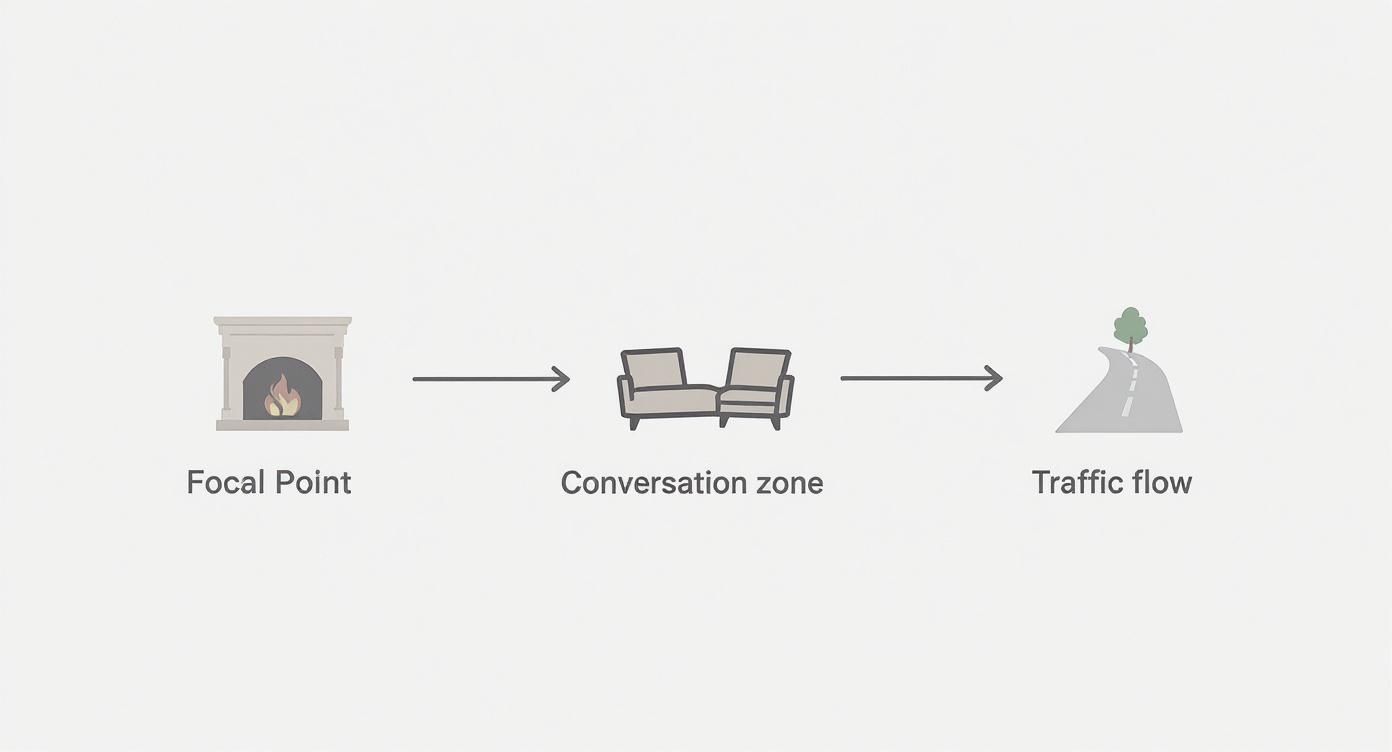
As the visual guide shows, every great layout starts with identifying a focal point. From there, you build your conversation zones around it while always, always preserving clear paths for people to walk through.
Visualize Your Space Before You Buy
Taking these simple steps ensures you're choosing furniture that is properly scaled for your room. You'll avoid the frustration of a delivery day disaster and instead feel completely confident in your choices.
At Slone Brothers, our Design Team often says, "A floor plan is the roadmap to a beautiful room." Spending just 30 minutes measuring and planning can save you hours of effort and potential buyer's remorse down the line.
By mapping out your space, you create a blueprint for a living room that is not just stylish but also truly practical for everyday life in your Central Florida home. This preparation makes the whole process of arranging furniture smoother and far more successful.
Place Your Sofa and Sectionals Strategically
The sofa is the undisputed anchor of your living room. It's almost always the largest piece of furniture, and its placement sets the stage for everything else. The first big decision you'll make is where it should live. Will it face the media wall? The fireplace? Or maybe those beautiful sliding glass doors that open up to your lanai? There’s no single right answer—it all comes down to how your family actually uses the space.
If Friday movie nights are a sacred ritual in your home, the most logical setup is to position the sofa directly across from your television. On the other hand, if your idea of unwinding involves soaking in the view of your backyard oasis, facing the sofa towards the windows can create a wonderfully serene and relaxing vibe.
Floating vs. Wall-Backed Setups
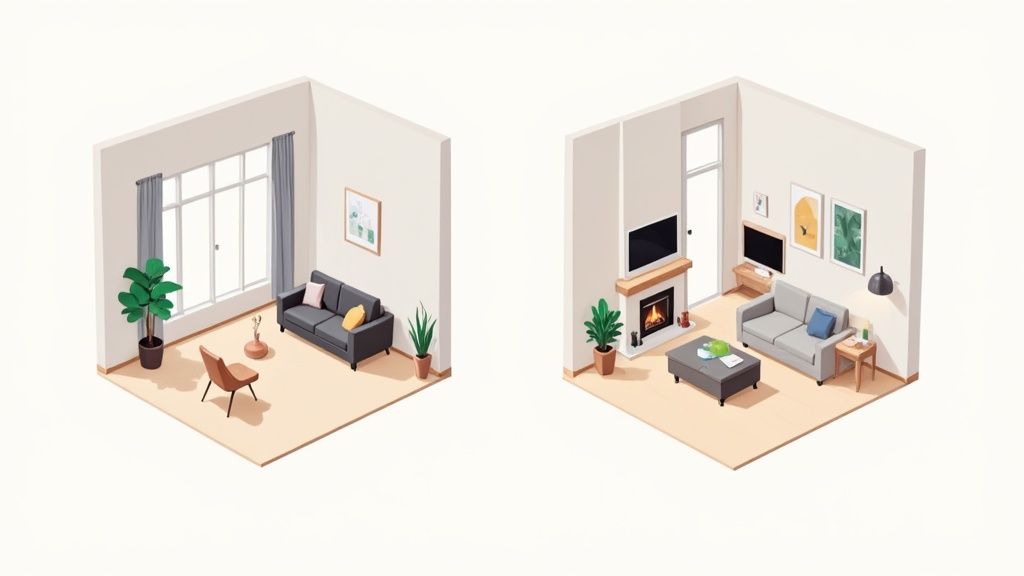
In the open-concept floor plans so common across the Orlando area, the default move is often to shove the sofa up against the longest wall. While that can certainly work, we often encourage clients to consider "floating" their sofa by pulling it away from the walls and positioning it more towards the center of the room. This one change can instantly create a more intimate and well-defined conversation area.
A floating arrangement works exceptionally well for defining zones. It carves out a cozy living space within a larger great room, visually separating it from a dining area or entryway without closing it off completely.
Here’s a quick breakdown to help you decide which approach is right for you:
- Wall-Backed: This traditional layout is great for maximizing floor space, especially in some of the narrower homes you might find in Longwood. It keeps traffic paths wide open and can make the room feel a bit larger.
- Floating: This method establishes a distinct conversational zone, which makes large, open rooms feel much cozier. It’s also fantastic for creating pathways behind the sofa, which directs foot traffic around your main seating area instead of right through the middle of it.
Choosing the Right Sectional Configuration
Sectionals are incredibly popular for a reason—they offer amazing comfort and tons of seating. But getting the shape right is absolutely critical. An L-shaped sectional is a versatile workhorse; it fits beautifully in a corner but can also be floated to help divide a room. For larger family rooms, like many we see in Lake Mary or Sanford, a U-shaped sectional can create the ultimate lounge pit, enclosing the space for a snug, home-theater feel.
Just remember that a sectional is a major commitment in terms of scale. Our in-house Design Team can be a huge help here, assisting with measurements and planning to ensure you pick a configuration that truly enhances your space rather than overpowering it.
Fabric Choices for the Florida Lifestyle
Finally, let's talk about materials. The intense Central Florida sun and our notorious humidity can be absolutely brutal on furniture. This is why we almost always recommend durable, high-performance fabrics designed to stand up to our climate.
Here are a couple of fantastic options for your new sofa or sectional:
- Performance Fabrics: Brands like Sunbrella and Crypton are engineered to resist fading from UV rays, stains, and moisture. They're an absolute must for any home with kids, pets, or a sun-drenched living room.
- Top-Grain Leather: Leather is not only timeless and incredibly durable, but it’s also surprisingly easy to keep clean and holds up well against humidity. Think of it as an investment in both style and long-term value.
Choosing the right material from the start ensures your centerpiece sofa will look beautiful for years, no matter what our Florida climate throws at it.
Layer Seating and Surfaces for Balanced Conversation Areas
Once your main sofa or sectional is anchored in place, it’s time to shape a welcoming conversation zone around it. Think of accent chairs, end tables, and a coffee table as the supporting cast that turns your living room into a true gathering spot. The aim is simple: create a layout where friends and family naturally gravitate and feel at ease.
A handy guideline is to keep seats within 8 feet of each other. Any farther apart, and small talk can feel strained—no one wants to raise their voice just to be heard. Arrange your pieces in a loose semi-circle or a gentle square to foster an intimate atmosphere.
Selecting The Right Surfaces
Positioning your coffee table is more than a styling choice—it’s about function. Ideally, it should sit 14 to 18 inches from your sofa, close enough for easy reach but far enough to keep knees happy.
The shape you choose can make or break the flow:
- Round or Oval: Eases traffic in snug spaces and eliminates sharp corners for safer navigation.
- Rectangular or Square: Anchors classic sofas and provides generous surface area for books, trays, or décor.
Adding Accent Chairs For Style And Function
Accent chairs aren’t just seating—they’re personality. A well-chosen silhouette can introduce color, texture, or a contrasting shape that breathes life into the room. For hands-on ideas, check out the five best ways to use an accent chair.
We often tell clients that accent chairs are the “jewelry” of a room. They don’t have to match your sofa precisely—instead, pick a contrasting style to show off your curated taste.
This isn’t just flair. The global residential furniture market hit USD 680.6 billion in 2024, driven by a hunger for multifunctional, space-smart pieces—especially in growth areas like Greater Orlando. For a deeper dive, explore the residential furniture market at Market.us.
Finishing The Zone With Functional Pieces
Don’t let side tables and consoles fall by the wayside—they’re the unsung heroes of a well-rounded seating area. A slim console behind a floating sofa can define boundaries and hold display lamps or art. Meanwhile, strategically placed end tables ensure every guest has a place to rest a drink or drop their phone.
If you need something truly one-of-a-kind, lean on our Custom-Order Program. From specific dimensions to unique finishes, we’ll work with you to craft the perfect piece from high-quality American manufacturers—making your conversation area as distinctive as you are.
Define Spaces With Rugs And Lighting For A Cohesive Look
Once your main furniture is in place, it’s time for the layers that really pull a room together. This is where the magic happens. Area rugs and smart lighting choices are what transform a collection of furniture into a genuinely cohesive, inviting space. An area rug, in particular, acts as a visual anchor, grounding your entire layout and clearly defining the conversation zone.
The most common mistake we see in homes all over Central Florida is a rug that’s just too small for the space. A tiny rug floating in the middle of the floor makes the furniture feel disconnected and can actually make the whole room feel smaller. It’s an easy fix, though.
As a rule of thumb, pick a size that allows at least the front legs of your sofa and accent chairs to sit comfortably on the rug. This one trick instantly unifies the whole grouping, creating a look that feels polished and intentional. The shape matters, too—a classic rectangular rug is perfect for a traditional sofa, but a round one can beautifully soften the sharp lines of a modern sectional.
Layer Your Lighting for Mood and Function
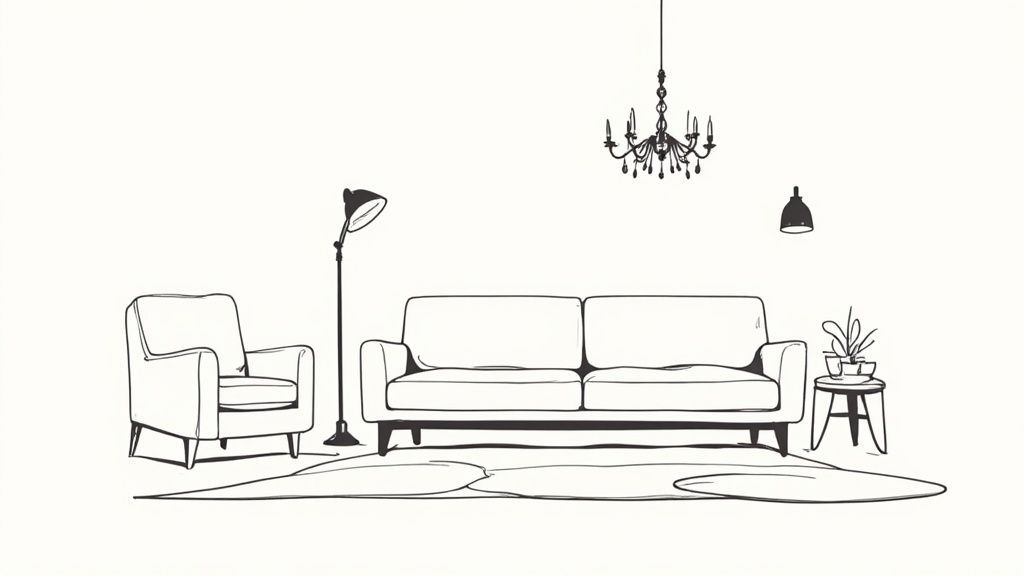
Great lighting is so much more than a single fixture plopped in the center of the ceiling. A thoughtfully designed room always uses a layered approach, mixing different light sources to create an atmosphere that’s both warm and functional. We always advise our clients to think about their lighting in three distinct layers:
- Ambient Lighting: This is your room’s main source of light, usually coming from a ceiling fixture like a chandelier or recessed cans. It’s what provides general, overall illumination.
- Task Lighting: This is all about focused light for specific activities. Think of a floor lamp next to an armchair for a perfect reading nook, or a table lamp on an end table for everyday convenience.
- Accent Lighting: This is the layer that adds real depth and drama. Wall sconces flanking a media console or a picture light highlighting your favorite piece of art can really draw attention to your room’s best features.
For a deeper dive into creating the perfect lighting scheme, check out our guide on how to put your living room in the best light.
A dimmable chandelier can instantly transform movie nights in your Winter Park home from bright and functional to cozy and cinematic. It’s this control over lighting that truly elevates a room’s feel and versatility.
By pairing a beautiful area rug with a layered lighting plan, you add that final polish that makes your living room feel truly complete. And don't forget the windows! To really tie it all together, consult an expert guide on choosing window treatments—they play a huge role in managing natural light and enhancing your overall design.
Local Design Support and Next Steps
Feeling that spark of inspiration but a little unsure how to pull it all together? That’s completely normal, and it’s exactly where we can help. Since 1980, we’ve been more than just a furniture store in Longwood; we’re a design resource for our neighbors throughout the Greater Orlando area. Our whole goal is to help you create a space that’s not just beautiful, but perfectly functional for your life.
This is more important than ever as our living rooms are asked to do double—or even triple—duty. The need for flexible, multi-use spaces has skyrocketed, and with it, the demand for smart, multifunctional furniture.
Ready for Your Next Move?
Whether you just need a second opinion on a floor plan you’ve sketched out or want to find that perfect American-made piece to complete your room, our team is here for you.
- Complimentary Design Help: Sometimes you just need an expert eye. Come in and chat with our in-house Design Team—they’re amazing at helping you bring your vision to life. You can learn more about our design services right here.
- The Perfect Fit: Can't find exactly what you have in mind? No problem. Our Custom-Order Program lets you tailor furniture to your exact colors, fabrics, and dimensions.
- Exceptional Value: If you're looking for great savings, you'll want to check out our Clearance Outlet. It’s packed with high-quality finds that deliver incredible value, backed by our Low Price Promise.
When you're ready to take the next step, just stop by the Slone Brothers Furniture showroom here in Longwood. We'd love to help you get started.
You Asked, We Answered: Our Most Common Layout Questions
We get a lot of great questions from our neighbors here in Central Florida. When you spend your days helping people design their homes, you start to see the same dilemmas pop up. Here are some of the most common furniture arrangement questions we hear in our Longwood showroom.
How Much Space Should I Leave Around My Coffee Table?
This is a big one, and it’s all about comfort. The sweet spot is leaving 14 to 18 inches between the edge of your sofa and your coffee table.
That might sound specific, but it’s the perfect distance to easily walk by, but still be able to set down a drink or grab the remote without having to get up. Any more, and things feel disconnected. Any less, and you'll be knocking your knees every time you sit down.
Can I Really "Float" Furniture in a Smaller Living Room?
Absolutely! It’s a total myth that you have to shove every piece of furniture against a wall, especially in smaller spaces. We see this all the time in Orlando-area homes.
Pulling a sofa or a pair of chairs away from the walls actually creates a more open, intentional feel. It defines a cozy conversation zone and frees up your walls for a beautiful bookcase or a slim console table. It tells your eye where the "room" is, even in an open-concept space.
What Fabrics Actually Hold Up in This Florida Climate?
Let's face it, our sun and humidity can be brutal on furniture. We always steer our clients toward high-performance fabrics specifically designed to handle the local climate.
Look for names like Sunbrella and Crypton. They’re fantastic because they’re built to resist moisture, spills, and fading from that intense Florida sunlight. If you love a classic look, don't overlook top-grain leathers. They are incredibly durable and hold up remarkably well against humidity, making them a smart long-term investment.
How Do I Pick the Right Rug Size for My Seating Area?
The single most common mistake we see is a rug that’s just too small for the space. Think of your rug as the anchor for your entire furniture arrangement.
A good rule of thumb is to choose a rug that’s large enough to fit at least the front legs of your sofa and all your chairs on it. This one simple trick ties the whole grouping together and makes your living room look polished and cohesive. For most living rooms, starting with an 8×10 or 9×12 is a safe bet.
Feeling inspired? Stop by our showroom and chat with our Design Team for a complimentary consultation. Visit us in Longwood, FL!