
How to Choose Upholstery Fabric for Your Florida Home

Picking the right upholstery for your furniture here in Central Florida isn't just about finding a color you love. It’s about choosing a fabric that can stand up to our sunny afternoons, handle the humidity, and still look great after years of daily life. At Slone Brothers Furniture, we believe the trick is to strike the perfect balance between durability, feel, and style—one that truly fits your home and how you live in it.
Choosing Fabric That Lasts in Central Florida
Think of us as your personal design expert, here to walk you through the big decisions. From decoding durability ratings to exploring the latest performance features, we'll give you the confidence to pick a fabric you'll be happy with for the long haul. Our mission is simple: as a local, family-owned business since 1980, we want to help you find materials made for our unique climate, turning your vision into a beautiful, practical reality.
This decision tree gives you a great visual starting point, breaking down the key choices you'll face. Notice how it all starts with your living space before getting into the fun stuff like color and pattern.
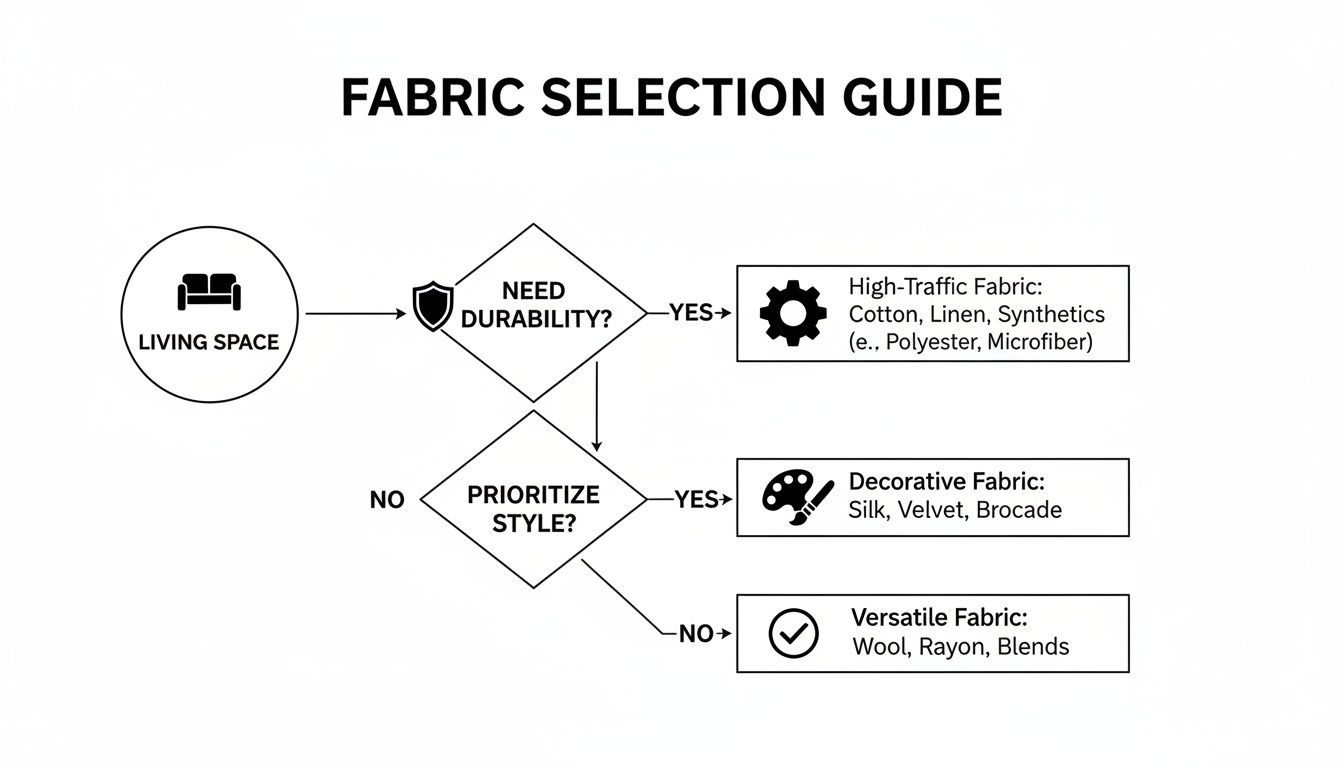
As you can see, thinking about how you'll use the furniture first makes the whole process much less overwhelming.
Your Home's Unique Needs
Every home in the Greater Orlando area tells a different story. A sofa in a bustling Lake Mary family room—complete with kids and pets—has a very different job to do than a quiet accent chair in a Longwood home office. Before you fall for a fabric swatch, let’s get practical.
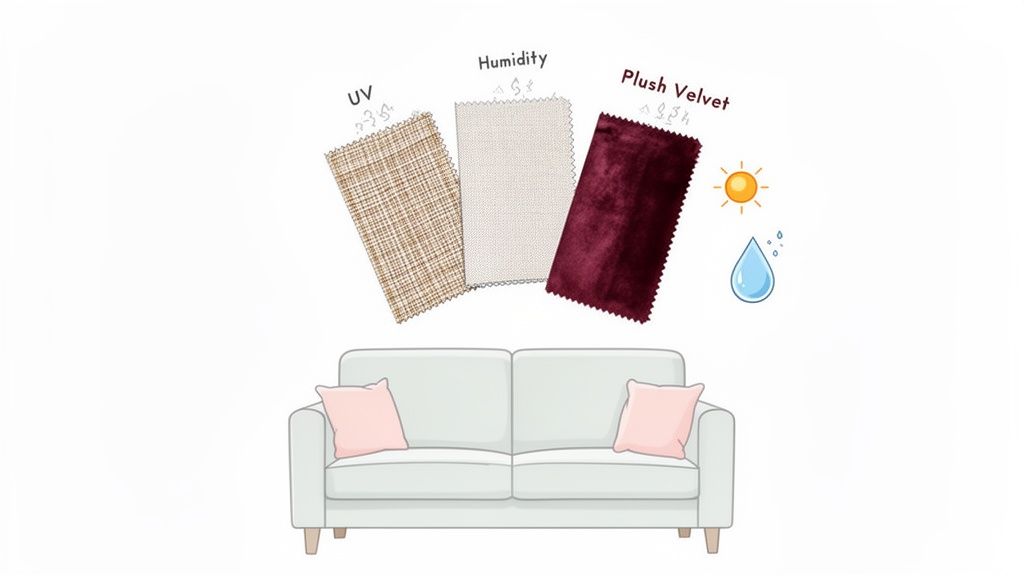
- Sunlight Exposure: Is the piece going to live right next to a window? Constant Central Florida sun is notorious for fading fabrics. A UV-resistant performance fabric is a smart move for any sun-drenched spot.
- Humidity: We all know Orlando humidity. It can be tough on certain natural fibers, so we often guide our clients toward blends and performance synthetics that won't invite moisture or mildew.
- Household Traffic: Be honest about who uses the room. High-traffic zones need tough, easy-to-clean fabrics. Less-used spaces are where you can indulge in something a bit more delicate.
Knowing how these local factors play into your fabric choice is the first and most important step. You can dive deeper into what to expect from quality pieces and how long your furniture should last in our detailed guide. A little homework now ensures your new furniture will be a source of comfort and pride for years to come.
Understanding Fabric Durability for an Active Household
In a busy Central Florida home, your furniture needs to be more than just stylish—it has to be tough. When you're trying to figure out which upholstery fabric will actually last, understanding how its strength is measured is a game-changer. This is where you'll hear our Design Team talk about the "double rub count," a key industry metric for abrasion resistance.
Think of the double rub test as a machine simulating someone sitting down and getting up from a cushion, over and over again. One back-and-forth motion equals one "double rub." The final number tells you exactly how much friction a fabric can handle before it starts to show noticeable wear.
Decoding Double Rubs
For a family sofa in a Lake Mary home that sees daily movie nights, homework sessions, and general lounging, a high double rub count is non-negotiable. A decorative accent chair might be perfectly fine with a lower count, but your main seating needs to be built for real life.
Here's a quick look at how we help you match those numbers to your home.
Fabric Durability at a Glance: Double Rub Ratings
This table helps you match the fabric's abrasion rating (in double rubs) to its best use in your home.
| Double Rub Count | Durability Level | Best For |
|---|---|---|
| Under 10,000 | Delicate Duty | Decorative items like toss pillows or furniture in very low-traffic areas. |
| 10,000 to 15,000 | Light Residential | Furniture that's used occasionally, like formal dining chairs or a bedroom settee. |
| 15,000 to 30,000 | Medium to Heavy Residential | The sweet spot for most family living room furniture. Built for daily life. |
| Over 30,000 | Heavy Duty & Commercial | The gold standard for pieces that see constant action. Perfect for large families or pets. |
As you can see, the higher the number, the more resilient the fabric. We're seeing amazing innovations in high-performance residential fabrics, like solution-dyed polyesters that can easily withstand over 50,000 double rubs.
Since 1980, we’ve helped countless Greater Orlando families select beautiful American-made and Amish-crafted pieces from brands like Stickley and Stressless, ensuring their investment is protected for the long haul. High-grade fabrics don't just resist abrasion; they're also engineered to fight fading from Florida's intense sun, often retaining their color after 500+ hours of UV exposure.
More Than Just Rubs: Weave and Pilling
Beyond the rub count, you need to look at the fabric’s weave. It’s simple: a tighter weave means less space for dirt, dust, and pet hair to get trapped. It also makes the fabric far less prone to snagging—a crucial factor if you have cats or dogs with claws.
If durability is your top priority, our guide on how to choose kid-friendly and pet-friendly furniture offers even more targeted advice.
A Pro Tip on Pilling: Pilling—those tiny, annoying balls of fiber that appear on a fabric's surface—is caused by friction, not a defect. The good news is that you can avoid it. Tightly woven fabrics and those made from long-staple natural fibers (like linen) or high-quality synthetics are much less likely to pill, keeping your furniture looking fresh and new.
Why Performance Fabrics Are a Florida Essential
Life in Central Florida is beautiful, but let's be honest—it can be tough on our furniture. Between accidental spills, muddy paws after a sudden downpour, and the relentless sun streaming through our windows, you need upholstery that can keep up. When you invest in a beautiful piece of furniture, you want it to stay beautiful, and that’s where performance fabrics come in.
Think of them as the modern solution for truly worry-free living.
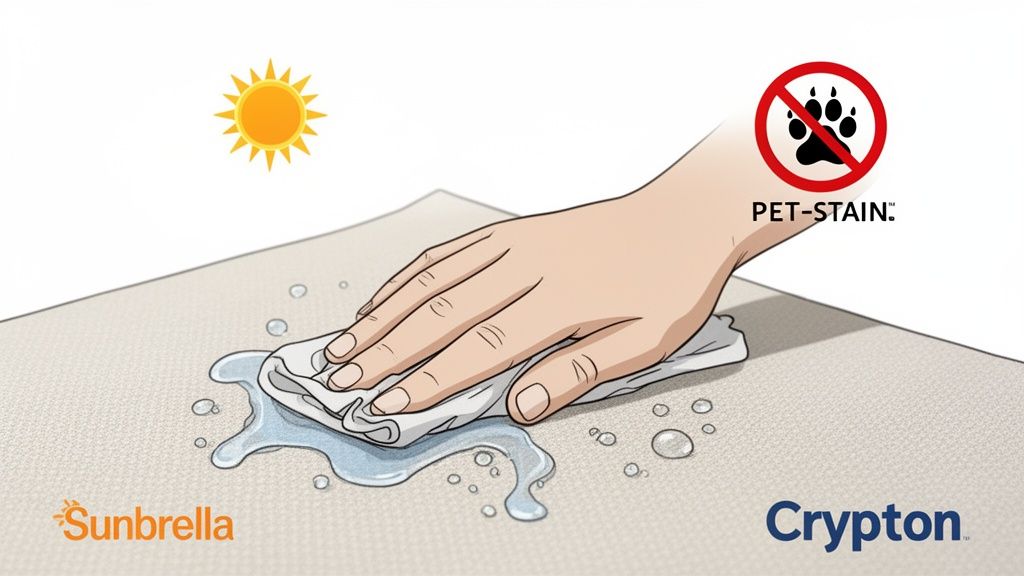
These are not your grandmother’s stiff, plastic-covered sofas. Today’s performance fabrics are engineered marvels, designed to look and feel incredibly luxurious while actively resisting stains, moisture, and fading. For homeowners from Orlando to Sanford, they are an absolute game-changer. Brands like Sunbrella and Crypton have become household names for a reason; they deliver incredible resilience without sacrificing an ounce of softness or style.
How Performance Fabrics Work for You
The real magic is in how these materials are made. It's crucial to understand the difference between a fabric with a simple topical treatment and one with performance built right into its DNA.
- Topical Treatments: These are protective coatings sprayed onto a finished fabric. While they can help for a while, these treatments can wear off over time with cleaning and everyday use, which means the fabric’s stain resistance slowly fades away.
- Inherent Performance: This is the gold standard. In fabrics like Sunbrella, the color and performance features are part of the very core of every single fiber. This means the stain resistance, UV protection, and mildew resistance can't be washed away or worn off. Ever.
This built-in protection is a huge deal here in Florida. A sofa sitting near a sunny window in a Lake Mary home needs serious UV defense to keep its color from fading into a pale imitation of what you fell in love with. Likewise, that inherent moisture and mildew resistance is key to withstanding our humid climate, keeping your furniture fresh and clean. You can explore a broader overview of different upholstery materials to see how these options compare.
Our Design Team's Takeaway: For any high-traffic piece—especially a family sofa, sectional, or dining chairs—we almost always recommend starting with performance fabrics. The peace of mind they provide is priceless, and the technology has advanced so much that you can find them in virtually any texture or color, from plush velvets to classic linens.
When you're designing a one-of-a-kind piece through our Custom-Order Program, choosing a performance fabric ensures your vision will not only come to life but will also stand the test of time. It’s a smart, practical investment in the long-term value and beauty of your furniture.
Pairing Fabric with Furniture and Room Function
The perfect fabric doesn't just cover a piece of furniture—it completes it. Think of it as the final, essential layer that pulls the whole design together and makes it right for the room. A sleek, modern Stressless recliner, for example, demands a totally different textile than a classic, Amish-crafted Stickley armchair.
At Slone Brothers, our Design Team always starts by looking at the furniture’s form and the room’s function as two sides of the same coin. This is the secret to choosing upholstery fabric that feels intentional and looks cohesive, not just an afterthought. A great fabric should honor the furniture's silhouette. For those clean, minimalist or mid-century modern designs, a tight weave or smooth leather really highlights the structural details. But for a more traditional frame, something like a plush velvet or a richly textured chenille adds that inviting warmth and classic comfort.
Matching Fabric to Room Function
How you actually live in a room is the ultimate guide for your fabric choice. A formal living room in a quiet Sanford home might be the perfect place for a more delicate silk blend. An entryway bench that sees backpacks and grocery bags every day? That needs something far more robust.
Here’s a quick breakdown of how we think about it:
- High-Traffic Zones (Family Rooms, Entryways): These areas need the toughest materials out there. We’re talking performance fabrics, durable leather, or tightly woven synthetics that can handle the daily grind.
- Moderate-Traffic Zones (Master Bedrooms, Home Offices): You’ve got a bit more flexibility here. Wools, durable linens, and quality cotton blends all work beautifully.
- Low-Traffic Zones (Formal Living Rooms, Guest Rooms): This is your chance to indulge. Luxurious or delicate fabrics like velvets and silks are perfect for spaces that won't see constant use.
The Role of Scale and Construction
Beyond how the room is used, you have to consider the scale of the furniture itself. It’s a classic design principle that our experts share with Central Florida homeowners every day: a large, bold pattern can easily overwhelm a small accent chair, while a tiny, intricate design will just get lost on a massive sectional sofa.
The global demand for comfortable, padded sofas and chairs continues to grow, with high-end upholstery becoming a significant market. In residential hubs like Greater Orlando, where our family-owned store has thrived since 1980, we see firsthand how smart fabric choices impact longevity. Fabrics with tight weaves—over 60 ends per inch—prevent pilling in busy family rooms, while softer velvets are perfect for lower-traffic bedrooms. Discover more insights about this growing trend from recent market research.
Finally, always think about the furniture’s construction. A tightly upholstered, firm sofa is going to showcase a crisp fabric beautifully. On the other hand, a plush, down-filled couch is the perfect candidate for a softer, more casual textile. Matching the fabric to the fill and frame is what ensures the final piece looks and feels exactly as it was meant to.
If you're just getting started on this journey, our guide on how to choose the right sofa provides a great foundation before you even start thinking about fabric.
Selecting Colors and Patterns Like a Pro
Now for the really fun part—choosing the colors and patterns that bring your personal style to life. We know this step can feel a little overwhelming with so many options, but with a few key design principles, you'll be able to select a fabric that perfectly enhances your existing decor and sets just the right mood.
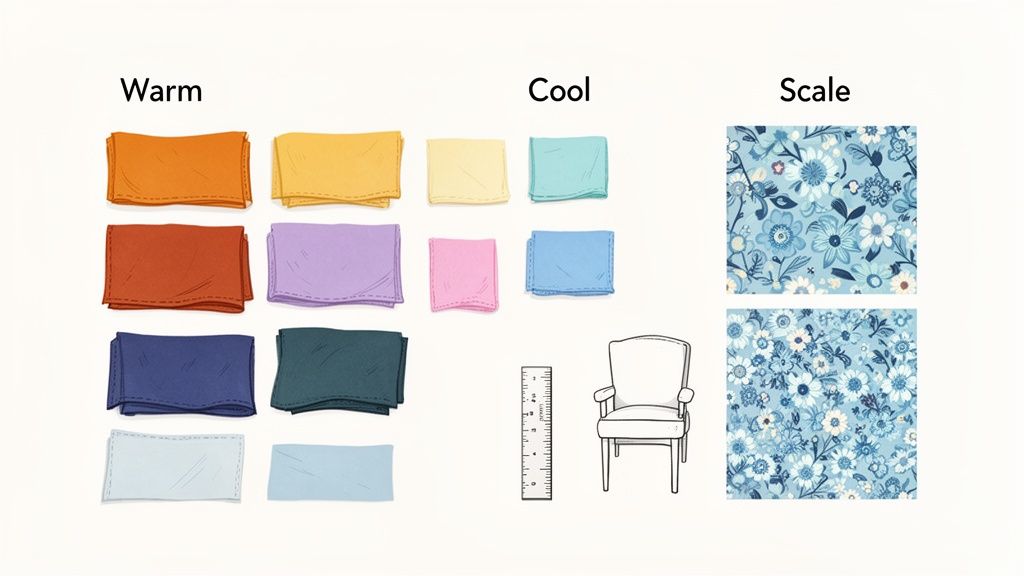
Your color choice has a powerful effect on a room's entire atmosphere. Warm tones like reds, oranges, and yellows create an energetic and inviting vibe, which is perfect for social spaces like the living room or dining room. On the flip side, cool tones such as blues, greens, and grays lend a sense of calm and serenity, making them ideal for a peaceful bedroom or a relaxing family room in your Longwood home.
If you really want to feel confident selecting colors, it's worth brushing up on some basic color theory. Exploring a resource like a quilting color wheel can be incredibly helpful to see how different hues relate to one another and learn how to build palettes that just work.
Finding the Right Scale and Texture
The scale of a pattern is just as important as its color, if not more so. A large, bold print can make a dramatic statement on a substantial sectional sofa, but it might completely overwhelm a delicate accent chair. And that tiny, intricate pattern that looks amazing up close? It can easily get lost on a large piece of furniture, basically reading as a solid color from across the room.
Our Design Team's Golden Rule: Always consider the pattern's scale in relation to the furniture's size. When in doubt, a medium-scale pattern is often a safe and stylish choice that works well on most pieces, adding visual interest without overpowering the frame.
Texture also plays a huge role in adding depth and a sense of comfort. A smooth microfiber or a tight linen weave can feel sleek and modern, while a nubby bouclé or plush chenille introduces an immediate layer of cozy warmth. Don't be afraid to mix and match textures to create a richer, more dynamic space. Our guide on creating an expert's guide to the perfect color palette can help you layer these elements beautifully.
Here’s a quick guide to help you get started on pairing colors and patterns with your design goals.
Color and Pattern Selection Guide
Use this guide to choose colors and patterns that create your desired atmosphere and work with your room's size.
| Goal | Color Strategy | Pattern Strategy | Best For |
|---|---|---|---|
| Make a Room Feel Larger | Light and cool colors (pastels, light grays, soft whites) | Small, delicate patterns or solid colors | Small living rooms, bedrooms, or tight spaces |
| Create a Cozy Atmosphere | Warm, deep colors (rich reds, deep blues, earthy tones) | Large-scale, bold patterns or rich textures like velvet | Dens, large family rooms, or master bedrooms |
| Add Energy and Excitement | Saturated, vibrant colors (bright yellows, oranges, teals) | Geometric, abstract, or large floral prints | Social areas, kids' playrooms, or accent pieces |
| Promote Calm and Relaxation | Muted, cool colors (soft greens, blues, lavenders) | Subtle, organic patterns like watercolors or soft stripes | Bedrooms, reading nooks, or home offices |
Choosing the right combination is all about balancing your personal taste with the function of the room.
The Most Important Step: Always Sample
If you take only one piece of advice from this guide, let it be this: always, always get a fabric swatch and test it in your own home. We can't stress this enough. The way a fabric looks under the bright, perfect lights of our Longwood showroom can be completely different from how it appears in the unique natural and artificial lighting of your living room.
Take the sample home. Look at it at different times of the day—morning, noon, and night. Hold it up next to your wall color, set it on your flooring, and compare it to your other furniture. This simple step is the only way to be absolutely certain you’ll love your final choice, and it's a non-negotiable part of the process for our In-House Design Team.
Find Your Perfect Fabric at Slone Brothers
You can research how to choose upholstery fabric all day, but nothing beats seeing and feeling your options in person. That's the final, most important step, and at Slone Brothers, we make it an exciting one. We’re here to bridge that gap between your online inspiration and the beautifully finished piece you'll love for years.
A visit to our Longwood showroom is a totally different experience. Here, you can run your hands over hundreds of fabric samples from the best American-made furniture brands. You’ll be able to compare textures, see the true colors under real lighting, and feel the tangible difference quality makes.
Guidance from Our In-House Design Team
And you don't have to make these big decisions alone. Our complimentary in-house Design Team is here to help you pull everything together flawlessly. We'll help you coordinate fabrics with beautiful wood finishes, make sure that bold pattern scale is just right for your sofa, and find the perfect performance fabric that stands up to your family’s lifestyle.
For so many of our Central Florida clients, the ability to create something truly personal is everything. Our Design Team can walk you through our Custom-Order Program, empowering you to create a piece of furniture that is uniquely yours, from the frame right down to the final stitch.
As a local, family-owned business serving the Greater Orlando area since 1980, we’re committed to giving you exceptional value and service. Backed by our Low Price Promise, we’re not just selling furniture—we're helping our neighbors create homes they absolutely love. There’s really no substitute for expert advice and a friendly, local touch.
Your Upholstery Questions Answered
Here are answers to a few common questions our design team hears from customers in our Longwood showroom when they're getting into the nitty-gritty of selecting new upholstery. We hope these quick tips help you feel even more confident as you figure out how to choose upholstery fabric for your home.
What Are Fabric Cleaning Codes and Why Do They Matter?
Those little letters on a fabric tag—W, S, W/S, or X—are your cleaning instructions, and honestly, they're crucial. For a busy Orlando household, a fabric with a 'W' (water-based cleaner) or 'W/S' (either water or solvent) code is almost always the most practical choice.
These codes mean you can tackle most spills with simple, accessible solutions you probably already have at home. That kind of peace of mind is priceless, especially when life gets a little messy.
How Much Does Custom Upholstery Add to the Cost?
This is a great question, and the answer really comes down to the fabric grade you select. Fabrics are often graded alphabetically, with grades near the beginning of the alphabet typically being the most affordable.
At Slone Brothers, our Design Team can show you a stunning array of choices at every price point, so you never have to feel limited. Plus, our Low Price Promise ensures you always receive the best value for your investment.
When you're weighing your options, a comprehensive guide on how to choose upholstery fabric can be incredibly helpful for making an informed decision you'll love for years to come.
What Is the Best Upholstery Fabric for Pets?
For Central Florida homes with furry family members, we almost always point people toward durable performance fabrics. You need something that can stand up to paws, claws, and the occasional accident.
- Microfiber is a fantastic choice. Its tight weave is a natural barrier against claws, stains, and even odors.
- Tightly woven synthetics like canvas are also incredibly resilient and a breeze to clean.
You’ll want to steer clear of delicate materials like silk or any fabrics with loose weaves that can easily snag and pull.
Feeling inspired? Stop by our showroom and chat with our Design Team for a complimentary consultation. Visit the Slone Brothers Furniture showroom in Longwood, FL, and let our design experts help you get started! https://slonebrothers.com