
How to Fix Sagging Couch Cushions: A Central Florida Guide

That sinking feeling when you drop into your favorite spot on the couch is all too familiar for many of us. But don't despair—knowing how to fix sagging couch cushions is usually a straightforward process. As your local furniture experts here in Longwood, we're here to guide you. More often than not, the issue boils down to one of two things: either the foam inside the cushion has given up the ghost, or the support underneath has weakened.
Luckily, most sagging problems can be tackled with a simple DIY fix, like replacing the foam, adding some extra batting for a plush feel, or sliding a support board under the cushions.
Why Your Couch Cushions Are Sagging
That dip in your sofa isn't just your imagination—it's a clear signal that your furniture needs a bit of TLC. Over time, all the materials that keep your sofa comfy and supportive start to wear out. Here in Central Florida, the humidity can actually make that happen even faster. At Slone Brothers Furniture, we've been serving the Greater Orlando community since 1980, helping folks from Longwood to Lake Mary diagnose this exact problem.
Figuring out the real reason for the sag is the most important step. You can fluff the cushions all you want for a temporary fix, but the real culprit is usually hiding deeper inside the cushion or within the sofa's frame. Nailing the diagnosis means you can apply the right solution and get your sofa feeling brand new again.
Quick Diagnosis: Your Sagging Cushion Solution Finder
Not sure where to start? Our design team put together this table to break down the common symptoms, their likely causes, and the best way to tackle them. It's a quick way to zero in on what's going on with your sofa.
| Symptom You're Seeing | Likely Cause | Quick Fix Solution |
|---|---|---|
| Cushions look flat, especially in the middle. | Compressed Cushion Foam—The inner foam has lost its bounce from regular use. | Replace the foam insert or add a layer of polyester batting to restore fullness. |
| You sink deeply into one section of the sofa. | Worn-Out Springs or Webbing—The support system under the cushions has failed. | Flip the sofa to inspect. Re-attach loose springs or add a plywood support board for reinforcement. |
| The entire couch feels uneven or dips dramatically. | Broken Frame—Less common, but a crack in the internal wood frame is serious. | This usually requires professional repair or, depending on the age, a new sofa. |
| The cushions themselves look fine, but the seat dips. | Weak Foundation—The springs/webbing are stretched but not broken. | A couch cushion support board placed directly under the cushions is the easiest and fastest fix. |
Once you've matched your symptom to a cause, you'll have a much clearer path forward. Most of these fixes are well within reach for a weekend DIY project.
Common Causes of Sagging
Let's dig a little deeper into what's happening beneath the surface. There are a few usual suspects when a once-firm seat starts feeling more like a hammock:
- Compressed Cushion Foam: This is the number one offender. The foam inserts inside your cushions just can't bounce back forever. After years of use, they develop permanent dents where you sit the most.
- Worn-Out Springs or Webbing: Underneath the cushions, you'll find a support system of either metal springs or crisscrossing fabric webbing. Over time, these can stretch, break, or pop off their attachments, creating a noticeable crater in the sofa's base.
- Broken Frame: This is less common, especially in well-made furniture, but a cracked or broken internal frame will definitely cause a major, often lopsided, sag across the whole sofa.
This flowchart can help you visualize the process and figure out whether the problem is in the cushion itself or deeper in the sofa's foundation.
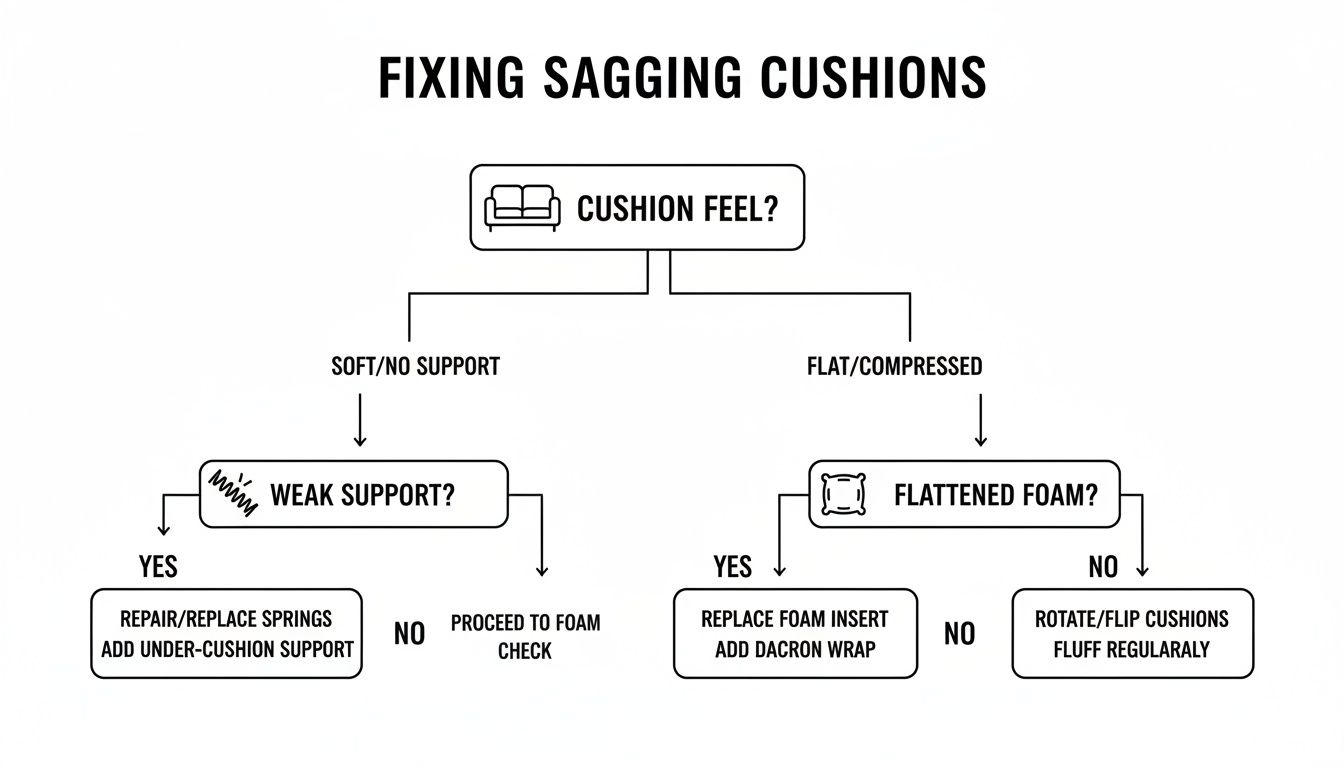
As you can see, determining if it's a "cushion fill" problem or a "sofa support" problem is the key. That distinction points you directly to the right repair.
A Widespread Furniture Frustration
If your sofa is sagging, you're in good company. It’s a remarkably common issue. In fact, some studies show that over 70% of sofas start to show noticeable sagging after just five years of normal use.
For families here in Central Florida, our humid climate can speed up that foam breakdown by as much as 25% compared to drier parts of the country. It just goes to show how much quality materials matter in our environment.
This really highlights why starting with a well-built sofa is so important. In our Longwood showroom, we focus on American-made brands like Smith Brothers and Craftmaster because they use high-density foams and heavy-duty support systems built to handle life in a busy Orlando home. Learning how to choose the right sofa from the get-go can save you a lot of headaches down the road. While these DIY fixes are fantastic, they can't fully substitute for the value of superior, long-lasting craftsmanship.
Reviving Removable Cushions: A Practical Guide
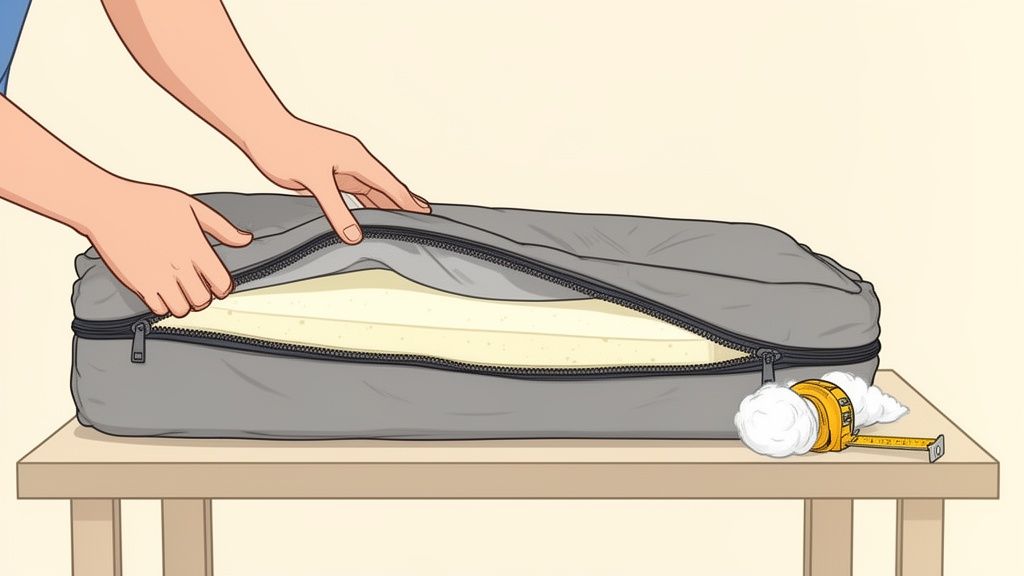
If your sofa has removable cushions, you're in luck. This is by far the easiest type of sagging to fix. Let's walk through the process together, just like our design experts would in our Longwood showroom. The goal is to get that plump, supportive feel back into the couch you love.
Your first move is a quick inspection. Unzip the cover of the sagging cushion and get a good look at the insert inside. Is the foam discolored, flattened out, or even crumbling a bit? This simple visual check will tell you everything you need to know and confirm that the fill is the culprit.
Measuring For a Perfect Fit
Once you've confirmed the foam has seen better days, you'll need to measure for a replacement. Here’s a critical tip from our team: don't measure the old, compressed foam insert itself. For an accurate fit, you need to measure the inside of the cushion cover from one seam to the other. This gives you the original dimensions the cushion was meant to have.
- Measure the width, depth, and thickness (or height) of the cover.
- Here’s a little rule of thumb: add about half an inch to your thickness measurement for the new foam insert. This simple trick ensures the cushion will be full and snug inside the cover, preventing any annoying wrinkles.
For a family in Sanford struggling with a constantly used sofa, getting these measurements right is crucial for a repair that lasts. A snug fit means less shifting and more even wear over time.
Choosing Your New Cushion Fill
This is your chance to make a real upgrade. While standard polyurethane foam is common, opting for a high-density (HD) or high-resiliency (HR) foam will give you much better support and longevity. There's a reason these superior materials are often found in higher-quality, American-made furniture—they are built to last.
While you're working on the inside, don't forget the outside! Keeping your sofa clean makes a huge difference. For a comprehensive look at maintaining your couch's appearance, check out this practical guide on how to clean sofa upholstery.
A Local Expert Tip: One of the best tricks we share with our customers is to wrap the new foam insert in a layer of Dacron batting before putting it back in the cover. This soft polyester wrap smooths out the firm edges of the foam, creates that crowned, professional look, and makes it much easier to slide the cushion into the cover.
If you're looking for a completely new feel or have unique cushion shapes, this might be the perfect time to explore our custom-order furniture program. Brands like Smith Brothers and American Leather offer incredible flexibility to help you select the perfect fill and fabric to match your home.
The Tools and The Process
You won't need a massive toolkit for this project. In fact, you probably have most of what you need already:
- Measuring tape: For getting those dimensions just right.
- Marker: To trace the shape onto the new foam, if needed.
- Electric carving knife or serrated bread knife: This is the absolute best tool for cutting foam cleanly and easily.
- Spray adhesive: To attach the Dacron batting to the foam insert.
It’s a straightforward process. Just cut your new foam to size, give it a light coat of spray adhesive, and wrap the Dacron batting around it, smoothing it out as you go. Then, carefully work the revitalized insert back into your cushion cover. Make sure the corners are properly aligned before you zip it up, and you’re all set.
Tackling Attached Cushions And Sofa Foundations
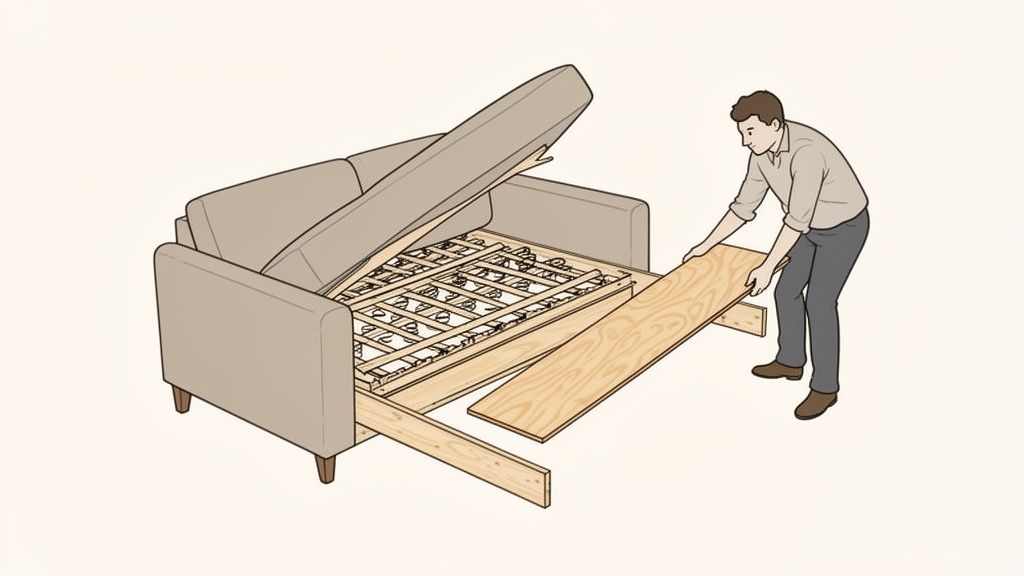
So, your sofa has attached cushions. A DIY repair might seem a little more intimidating when you can’t just unzip a cover and swap out the foam, but don't worry—you’ve still got options. Most of the time, the real issue isn't the cushion itself but what's happening underneath in the sofa’s foundation. Over years of movie nights and afternoon naps, the springs or webbing that support you can stretch out, creating that dreaded sinkhole in your favorite spot.
This is an incredibly common problem. Ever since foam became widespread in furniture making back in the 1970s, a staggering 85% of sagging issues are due to foam compression. Reports from the U.S. Consumer Product Safety Commission back in 1985 showed an average foam lifespan of just seven years before it lost half its height. For homeowners here in sunny Orlando, that timeline can shrink to as little as four or five years, impacting thousands of households. You can find more insights on the furniture market over on Grandview Research.
Inspecting Your Sofa's Foundation
To get to the bottom of the sag, you'll need to do a little detective work. Carefully flip your sofa over onto its back or side so you can get a good look at the underside. You’ll probably have to remove a thin fabric dust cover, which is usually just stapled in place and easy to pry off.
With a clear view, start looking for these usual suspects:
- Stretched or broken webbing: Check out the crisscrossing bands of fabric. Do they look loose and droopy? Are any of them frayed or completely snapped?
- Detached or broken springs: Many sofas use zigzag (or "sinuous") springs. Look to see if any have popped out of their holding clips or broken in the middle. If you have coil springs, check if any have become disconnected or weak.
- A cracked frame: This is less common, but it's worth a look. Inspect the wooden frame itself for any visible cracks or splintering, as that points to a more serious structural failure.
The Plywood Support Board Trick
For a quick, cheap, and surprisingly effective fix—especially for weakened springs or stretched webbing—the plywood support board is a fantastic trick. We recommend this to Orlando homeowners all the time for an immediate lift that can easily add another year or two of life to a well-loved sofa.
All you have to do is measure the length and width of the seating area on your sofa's frame, right under where the cushions sit. Head to a local hardware store and have them cut a piece of half-inch plywood to those exact dimensions. Then, just slide the board directly onto the sofa frame and put your cushions back on top. It’s that simple.
Our Design Team's Takeaway: A support board provides instant, even support across the entire seating area. It’s the perfect stop-gap solution while you decide whether a full repair or a new investment piece is the right next step for your home.
This method works wonders, but it's important to remember that it's a Band-Aid—it addresses the symptom (the sag) and not the root cause (the failing foundation). A truly solid foundation is why we champion American-made brands like Smith Brothers and Amish-crafted furniture from Simply Amish. They build their pieces with superior support systems from the get-go, ensuring decades of comfort and preventing that dreaded sag in the first place.
Choosing The Right Materials For A Lasting Fix
When you're trying to figure out how to fix sagging couch cushions, picking the right fill material is the single most important decision you'll make. It’s the difference between a temporary patch-up and a repair that actually lasts. As Central Florida’s design authority, we know the foam inside your sofa isn’t just random stuffing; it’s an engineered component designed for specific levels of comfort and support.
Think about the ergonomic science behind a Stressless recliner or the resilient foams inside an American Leather sofa. These brands invest heavily in high-quality materials because that's the secret to enduring comfort. You can bring that same level of quality into your own home by understanding just a few key terms.
Decoding Foam Density and ILD
You’ll probably run into terms like "density" and "ILD" when you start shopping for foam. They might sound technical, but they're actually pretty simple concepts that tell you exactly how a cushion will feel and how long it's going to hold up.
- Density (pounds per cubic foot): This is all about the foam's weight and is the best indicator of its durability. Higher density simply means more material is packed into the foam, making it much more resilient against sagging over time.
- ILD (Indentation Load Deflection): This number tells you how firm the foam is. It measures how much pressure it takes to squish the foam down by 25%. A lower ILD (around 20) is soft and plush, while a higher ILD (35+) is very firm and supportive.
For a seat cushion in a busy Lake Mary home that gets daily use, you'll want a higher density foam paired with a medium ILD. This combination strikes the perfect balance between durable support that won't quit and comfort you can sink into right away.
Cushion Fill Comparison: Your Guide to Lasting Comfort
To make your decision a little easier, we’ve put together a quick guide to the most common types of cushion fill. Each one offers a different feel and is suited for different needs, so you can find the perfect match for your home.
| Fill Type | Feel & Firmness | Lifespan | Best For |
|---|---|---|---|
| High-Density Foam | Firm and supportive. Provides a crisp, clean look. | 8-12+ years | Main seating areas; provides excellent longevity and support. |
| Memory Foam | Contouring and pressure-relieving. Slower to bounce back. | 5-10 years | Adding a top layer for comfort; great for those who like a "sinking in" feel. |
| Down/Feather Blend | Luxuriously soft and plush. Requires frequent fluffing. | 5-8 years | Back cushions or for a relaxed, less structured look. |
| Polyester Batting | Soft and springy. Often used as a wrap over foam cores. | 3-5 years | Restoring plumpness to existing cushions or softening firm foam. |
Real longevity comes from investing in the right core material from the start. A high-resiliency foam with a 35% ILD rating can easily last over 12 years, while a generic foam with a 22% ILD might start to sag in as little as three. The numbers don't lie.
Our Promise to You: At Slone Brothers, we’re all about lasting value. We guide our customers toward American-made brands that use high-quality, durable foams because your furniture should be a long-term investment in your home's comfort, not a recurring headache.
Understanding these options puts you in the driver's seat. You're now equipped to make a choice that fits your family's lifestyle. You can also learn more about upholstery materials to see how the outer fabric and inner fill work together to create the perfect seating experience.
Deciding When to Repair vs. Replace Your Sofa
Making the right call on your sofa is a big financial decision. Before you pour time and money into a repair project, you have to take a hard, honest look at the overall health of your furniture. Here at Slone Brothers, we see ourselves as your local furniture advisors, not just a store. We want to help you make the best choice for your home and your wallet.
Sometimes, a simple fix is all it takes to bring a sofa back to life. But other times, the cost of repairs can creep up and start looking a lot like the price tag on a brand-new, quality piece.
The most critical factor, hands down, is the foundation. If the frame is wobbly, cracked, or groaning every time someone sits down, its structural integrity is shot. Any cushion repairs you do will just be putting a band-aid on a much bigger problem.
Your Sofa Health Checklist
Run through this quick checklist to get a clearer picture of what you're working with. Try to be objective—we know it's hard when there's sentimental value, but focus on the sofa's true condition for a minute.
- Is the frame still solid and stable? Give the arms and the back a good push and pull. If you feel a lot of give or hear creaking, the frame is likely on its way out.
- How's the upholstery holding up? Is the fabric badly stained, torn, or faded beyond saving? Re-upholstery can be surprisingly expensive, often costing as much as (or more than) a new sofa.
- What's the estimated repair cost? Add up what you'd spend on new foam, batting, and any professional help you might need. Now, compare that number to the cost of a new sofa that fits your budget.
- Does the sofa still fit your style? If you’re already planning to refresh the room's look, investing in a new piece that fits your vision might make more sense than trying to force an old style to work.
If your sofa is past the point of a simple repair, you might even consider investing in a custom sofa to guarantee you get the perfect fit and lasting comfort for your home.
When Replacement Makes More Sense
If you've run the numbers and gone through the checklist, and replacement seems like the smarter path, we're here to help you find a piece that offers incredible long-term value. Think of this as an opportunity to invest in quality that will prevent that dreaded sag for years to come.
In our Longwood showroom, we focus on American-made brands like Bassett and Craftmaster for a reason—they are built with superior frames and high-density cushions that are truly designed to last. If you want to get a better feel for what you should expect from quality furniture, check out our guide on how long furniture should last.
At Slone Brothers, we believe in lasting investments. Our Low Price Promise ensures you get the best value, and our large Clearance Outlet is a fantastic place to find amazing savings on high-quality pieces that will serve your family for years.
For a truly perfect, sag-proof solution, our Custom-Order Program is the answer. It allows you to create a sofa tailored specifically to your Orlando home. You get to choose the frame, the fabric, and the cushion fill, ensuring your new sofa is the perfect foundation for countless family memories.
Your Local Partner For A Comfortable Home
So, you're now armed with the know-how to tackle those sagging couch cushions and bring some life back into your living room. What's next? At Slone Brothers Furniture, we're more than just a store; we’ve been your local, family-owned neighbors serving Central Florida since 1980. We're here to help you get that lasting comfort back into your home, no matter what it takes.
If you’re still trying to figure out the best approach, we’d love for you to bring your questions to our Longwood showroom. Our complimentary In-House Design Team can offer friendly, personalized advice—whether you just need help sourcing materials for a DIY fix or you're thinking about a complete room makeover. We’ve helped countless homeowners across the Greater Orlando area, from Lake Mary to Sanford, make the best choices for their families.
Your Invitation To Lasting Quality
While a good DIY repair is a fantastic way to extend your sofa's life, there eventually comes a time when investing in quality is the smartest move. A well-built piece of furniture with a solid frame and high-resiliency cushions is really the ultimate long-term solution to sagging. We're proud to carry industry-leading, American-made brands like Smith Brothers, Bassett, and Craftmaster, all built to provide decades of solid support.
You don’t have to tackle your furniture decisions alone. Our mission is to be your trusted resource, providing honest advice that puts your needs first. Think of us as an extension of your family—here to help you create a home you love.
We believe that everyone in our community deserves a comfortable place to relax at the end of the day. That’s why we stand by our Low Price Promise, making sure you always get exceptional value. If you'd like some professional guidance on elevating your space, learn more about our complimentary interior design services.
Ready to experience what true comfort and quality feel like firsthand? Visit the Slone Brothers Furniture showroom in Longwood, FL, and let our design experts help you get started.
Got Questions About Fixing Your Couch Cushions? We've Got Answers.
When you're trying to figure out the best way to fix those dreaded couch cushion dips, a few questions always seem to pop up. Here are some of the things our Central Florida customers often ask us, along with some straight-shooting advice to help you decide what’s best for your home and your wallet.
How Much Does It Really Cost To Get Couch Cushions Professionally Re-Stuffed Around Orlando?
The cost for a professional re-stuffing job in the Orlando area can be all over the map, usually starting at a few hundred dollars and sometimes climbing past a thousand. The final price tag really hinges on the quality and type of foam you pick out for the replacement.
To be perfectly honest, we often see that putting that kind of money toward a brand-new, well-made sofa from our showroom ends up being a much smarter investment in the long run. With our Low Price Promise and flexible financing, you might be surprised how affordable a brand-new piece built to last can be.
Is It A Good Idea To Use Memory Foam For My Couch Cushions?
You absolutely can, and it adds a fantastic, contouring comfort that many people love. The one thing to keep in mind, especially in our warm Florida climate, is that memory foam can sometimes hold onto heat.
What we usually suggest for the best of both worlds is a hybrid approach: start with a solid, high-density foam core for support, then wrap it in a layer of memory foam or soft batting. This combo gives you that durable structure you need, plus that plush, sink-in feel you want. It’s the kind of ergonomic science that premium brands like Stressless have perfected, and you can really feel the difference when you try one out in our Longwood showroom.
Pro Tip: A plywood board is a great immediate fix for sagging, but think of it as a bandage, not a cure. It'll buy you another year or two while you figure out a more permanent solution.
Can I Just Stick A Plywood Board Under The Cushions? Is That A Real Fix?
Putting a piece of plywood under your cushions is a brilliant trick for a quick lift. It's an affordable and immediate way to fight back against sagging that’s coming from a tired foundation.
However, it's definitely more of a temporary fix than a permanent solution. While it can make your sofa feel much more comfortable for another year or so, it doesn’t actually solve the root problem, which is usually worn-out springs or stretched webbing. Think of it as the perfect stop-gap measure while you plan your next move, whether that's replacing the cushion inserts or investing in a new piece of furniture that's built to last.