
How to Pick the Right Size Rug for Your Central Florida Home

So, you're ready to pick out a rug for your home. The secret isn't just about color or pattern; it's about getting the size just right. A good rule of thumb is to choose a rug that's large enough for at least the front two legs of your main furniture pieces to sit comfortably on top. This simple trick anchors your space and helps you dodge the most common mistake: buying a rug that’s too small, which can make a room feel choppy and even smaller than it is. Learning how to pick the right size rug is the key to a beautifully finished room.
Why Rug Sizing Is the Secret to a Polished Room
Welcome! We're Slone Brothers Furniture, and since 1980, we’ve been helping our neighbors here in Longwood and across Central Florida create homes they truly love. Let’s dive into one of the biggest design challenges we see: learning how to pick the right size rug. Trust us, it’s so much more than just a floor covering. The right rug grounds your furniture, defines the layout, and gives a room that finished, polished feeling.
A rug that's too small makes your furniture look like it's floating aimlessly in the room, creating a disjointed and unbalanced vibe. It's a super common issue our in-house Design Team helps homeowners in Orlando, Lake Mary, and Sanford fix every single day.
In fact, one survey of interior designers revealed that over 70% said their clients “almost always” buy rugs that are too small for their living rooms. The result? It can make the entire room feel 10–15% smaller than it actually is.
Defining Your Space with the Right Foundation
Think of a rug as the foundation for your room's entire design. It sets the stage for everything else you place on and around it. It’s more than just a way to protect your floors or add a collection of stylish wood floor coverings; the goal is to create a cohesive look that pulls all the separate elements in your room together.
Here’s why getting the size right is so critical:
- It Defines Zones: In the open-concept homes so popular here in Florida, a rug is the perfect tool to clearly mark where the living area ends and the dining space begins, or to carve out a cozy reading nook.
- It Anchors Furniture: Proper sizing connects your sofa, chairs, and tables, making the whole arrangement feel intentional and grounded, not just like a random collection of pieces.
- It Adds Warmth and Comfort: A well-proportioned rug brings a soft, inviting texture underfoot that just makes your whole home feel cozier.
In this guide, we’re going to share the pro tips our designers use daily. We'll walk you through how to measure your space and understand the "rules" for every room in your Orlando-area home, helping you avoid those costly mistakes.
For more inspiration on pulling a room together, check out our guide on how to create an eye-catching room. Consider this your personal consultation to get it right the first time and finally achieve that cohesive, designer look you've been after.
Grounding Your Living Room Space
The living room is truly the heart of your home, and the right rug acts as its foundation, pulling everything together. Here in our Longwood showroom, probably the most common mistake our Design Team helps folks correct is choosing a living room rug that’s simply too small. It’s an easy trap to fall into, but a tiny rug instantly makes a space feel unbalanced and can visually shrink the room, no matter how beautiful your furniture is.
For most homes here in Central Florida, the goal is to find a rug large enough to connect all your main seating pieces. This simple act creates a unified, intentional conversation area where your family and guests will feel comfortable and grounded. You definitely want to avoid the "floating rug" look—where it sits alone like a coaster under your coffee table.
The Golden Rule of Placement
Here’s the easiest rule to remember: at least the front two legs of your sofa and any accent chairs should rest comfortably on the rug. This one placement trick grounds the furniture, making the entire arrangement feel cohesive and purposeful. It naturally draws the eye across the space and has the wonderful effect of making the room feel larger and more inviting.
For an average-sized living room in the Orlando area, an 8×10 or 9×12 rug is typically the sweet spot. A larger size like this ensures there's enough surface area to properly anchor your furniture. Once that foundational piece is correctly sized and placed, figuring out how to arrange your living room furniture becomes so much easier.
Pro Tip: Before you commit, grab some painter's tape and mark the dimensions of the rug you're considering right on your floor. This simple step helps you visualize exactly how that size will work with your sofa, chairs, and traffic flow. It’s a trick our Design Team recommends to every single client, and it saves a lot of headaches!
Living Room Rug Size Quick Guide
To make things even clearer, here’s a quick reference table. It’s a handy way to see how common furniture layouts match up with the right rug size, and what mistakes to steer clear of.
| Arrangement | Common Rug Size Mistake | Recommended Rug Size |
|---|---|---|
| All Legs On | Choosing a rug that only fits under the coffee table, leaving furniture floating around it. | 9×12 or larger. This is perfect for larger rooms, creating a defined, luxurious seating area. |
| Front Legs On | Picking a 5×8 rug that forces only the very tips of the furniture legs onto the edge. | 8×10. This is the most versatile option, grounding the space without overwhelming it. |
| Floating Layout | Using a small rug for a large, open-concept space, which makes the furniture feel disconnected. | 9×12 or 10×14. A larger rug is needed to define the "zone" and unify the entire arrangement. |
| Small Space / Apt | Overwhelming a small room with a rug that touches every wall, making the space feel cramped. | 5×8 or 6×9. A smaller rug can work here, as long as it still anchors the front legs of the sofa. |
This guide helps take the guesswork out of the equation, ensuring your furniture and rug work together to create a cohesive look.
Visualizing the Right Fit
To simplify the process, this quick guide breaks down the essential steps to measure your room, anchor your furniture, and define your living space.
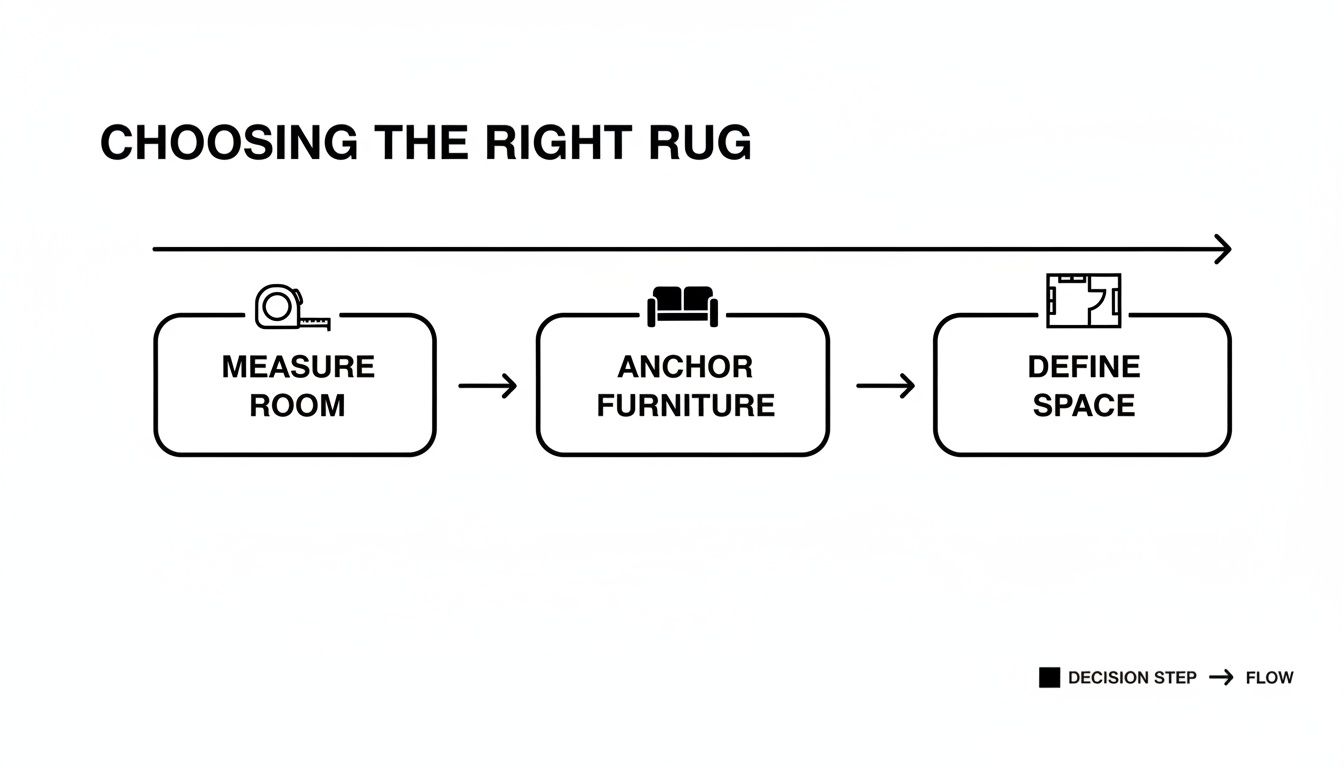
Following this sequence ensures you consider both the room's architecture and your furniture layout before you even start shopping.
Orientation and Room Shape
Don't forget that how you orient the rug matters, too. In a rectangular room, the rug should almost always run in the same direction as the room's longest walls to enhance that sense of space.
If you have a prominent fireplace or a big media center, the rug should be centered with that focal point to create a feeling of balance. Getting this right ensures your beautiful American-made sofa and chairs from Slone Brothers feel perfectly at home, creating a living area you'll absolutely love for years.
Perfecting Rug Proportions in Dining Rooms and Bedrooms
Once you've mastered the living room, the rules for picking the right rug for your dining room or bedroom shift a bit. Here, it’s less about anchoring a conversation area and more about supporting the specific function of the room. It all comes down to proportion and practicality. For Central Florida homes, getting this right adds a layer of comfort and polish that truly elevates your design.
Sizing a Rug for Your Dining Room
In a dining room, a rug's main job is to create a seamless and comfortable dining experience. You never want a chair leg catching on the edge of the rug when someone gets up from the table. It’s not just an annoyance; it creates an unstable, wobbly seat for your guests.
The solution is simple: your rug needs to be large enough for all dining chairs to stay completely on it, even when they’re pulled out.
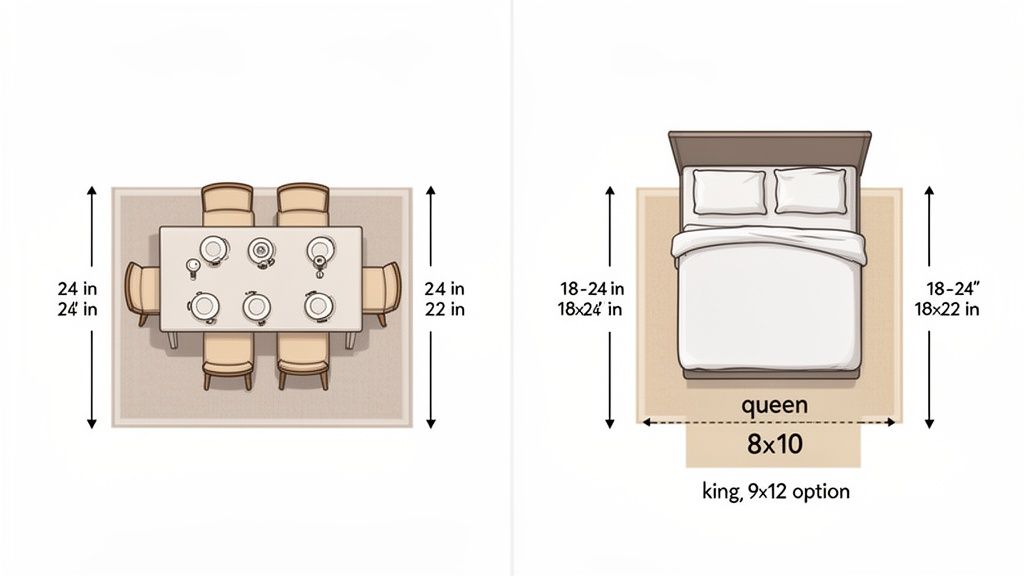
A good rule of thumb our Design Team always recommends is to measure your dining table and add at least 24 inches on every side. This buffer provides plenty of room for chairs to slide back without ever leaving the rug's surface. For a standard 36–42-inch-wide table, this usually means an 8×10 rug is a great fit for a table seating four to six people, while a 9×12 rug is often perfect for an eight-seat setup.
When you're ready to start pulling your space together, our team at Slone Brothers has put together a helpful guide on designing a dining room from scratch that can walk you through the entire process.
Sizing a Rug for the Bedroom
In the bedroom, a rug serves a completely different purpose. It’s all about giving your feet a soft, warm landing when you get out of bed in the morning. A properly sized rug can transform a bedroom from a simple sleeping space into a serene, luxurious retreat—a feeling every Orlando homeowner can appreciate.
The right size and placement really depend on your bed. Here’s a quick breakdown:
- Queen Bed: An 8×10 rug placed horizontally under the bed is almost always the perfect fit. This orientation lets the rug extend about 18-24 inches on either side of the bed and past the footboard, creating a beautiful and functional frame.
- King Bed: A king bed is bigger, so it naturally requires a larger 9×12 rug to get that same balanced, luxurious feel. This ensures you have that generous soft landing on both sides without the rug looking dwarfed by the bed.
Value-Driven Tip: If a large area rug isn't in the budget, or if your room is on the smaller side, try placing the rug under only the bottom two-thirds of the bed. This trick still gives you that soft landing at the foot and sides of the bed while allowing you to choose a slightly smaller, more affordable size.
Sizing Rugs for Hallways, Entries, and Offices
While living rooms and bedrooms usually get all the attention, knowing how to choose the right rug for your home’s connecting spaces is just as critical. Entryways, hallways, and home offices are some of the hardest-working areas in any Central Florida home, and the right rug adds both personality and essential function. After all, these are the spaces that create first impressions.
A well-proportioned runner can completely transform a boring hallway into an elegant, inviting path. The trick is to keep everything in balance with the surrounding floor. You always want to see about 4-6 inches of visible flooring on all sides of the runner. That little border is crucial—it prevents the rug from looking like poorly-fitted carpeting and keeps the hallway from feeling cramped and narrow.
Achieving Proportional Balance
In a long Orlando hallway, one of the most common mistakes we see is a runner that's way too short. This visually chops up the space and makes it feel disjointed. Instead, the runner should span most of the hallway's length, stopping just shy of another room's main walkway. It should never be pushed right up against a wall or cross a doorway threshold; that’s both a visual disruption and a tripping hazard waiting to happen.
Beyond just the dimensions, the type of rug you choose matters a great deal. For tips on selecting rugs for high traffic areas, you'll want to focus on durable materials that can handle constant foot traffic without showing wear and tear.
Sizing for the Home Office
When it comes to your home office, a rug is all about defining the space while providing comfort and protection. Think of your desk and chair as a single functional unit. The rug has to be large enough to sit comfortably under both your desk and the full range of motion for your office chair. You should be able to roll your chair back from your desk without the wheels ever falling off the rug's edge.
This isn't just about avoiding that annoying bump; it's a practical way to protect your beautiful tile or hardwood floors from the constant scratches and scuffs caused by chair casters. As more of us work from home, creating a dedicated, comfortable workspace is more important than ever. Our team has plenty of insights on how to design a home office that’s both stylish and productive.
A Quick Office Tip: Measure the space your chair takes up when you've pushed it all the way back from your desk. Add at least six inches to that measurement to figure out the minimum width and depth you'll need for your office rug.
Whether you need a tough-as-nails runner for a busy Lake Mary entryway or a perfectly-sized rug for your Sanford home office, our in-house Design Team can help. Swing by our Longwood showroom, and we'll walk you through the options to find the perfect piece that truly enhances the flow and function of your home.
Common Rug Sizing Mistakes to Avoid
After decades in the business, our in-house Design Team here at Slone Brothers Furniture has seen just about every design choice imaginable since we first opened our doors back in 1980. We want to help our neighbors across Central Florida sidestep the most common rug sizing pitfalls—the kind of simple mistakes that can keep a room from feeling truly pulled together.
Getting the size right from the start saves you a world of frustration, not to mention time and money.
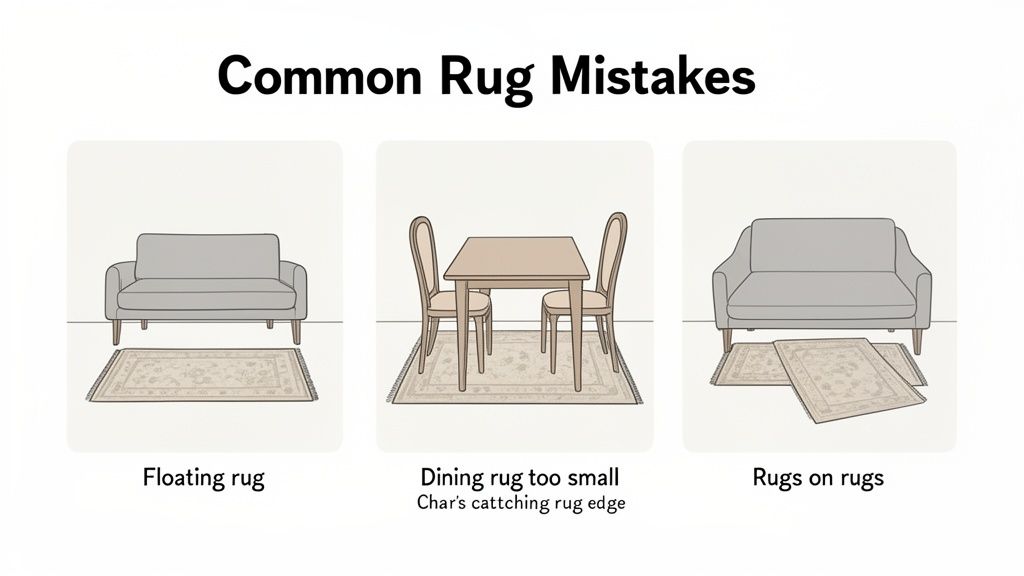
By far, the number one issue we see is the dreaded "floating rug." This is when a small rug is plopped down in the middle of a room, completely disconnected from any of the furniture. It ends up looking like a lonely island, an afterthought that actually makes the whole space feel smaller and more chaotic. Your rug should be an anchor, not a bathmat in the middle of the living room.
Forgetting About Function and Flow
Another classic misstep happens in the dining room. Choosing a rug that’s too small for the table and chairs is a recipe for wobbly seats and snagged chair legs. You have to be able to pull a dining chair all the way out from the table and still have all four legs sitting comfortably on the rug. If not, it’s a functional failure and a trip hazard waiting to happen.
Ignoring a room's natural borders is another common error, especially for our Orlando clients with beautiful tile or hardwood floors they want to show off. A rug that’s too big and touches the walls on all sides just looks like an awkward, ill-fitting carpet installation.
Design Team Tip: Always aim to leave at least 12-18 inches of bare floor showing between the rug's edge and the walls. In smaller rooms, 6-8 inches works just fine. This creates a clean visual frame that makes the room feel more spacious and intentional.
Layering Gone Wrong and Guesstimating Sizes
While layering rugs can add a ton of personality and texture, it can look messy if done incorrectly. A common mistake is using two rugs that are too close in size, which just looks cluttered instead of curated. For a successful layered look, the bottom rug (often a neutral jute or sisal) needs to be significantly larger, acting as a proper frame for the smaller, more decorative rug you place on top.
But perhaps the biggest mistake of all is simply guessing what size you need. Eyeballing it in a showroom is nearly impossible, and it's where most people go wrong.
Taking a few minutes to measure your space is the most critical first step. For a detailed walkthrough, our guide on how to measure a room for furniture covers the same principles that apply here. A few precise measurements will give you the confidence that your new rug will be a perfect fit from the moment it arrives.
Time to Find Your Perfect Fit at Slone Brothers Furniture
Alright, you've done the homework and now understand how to pick the right size rug. This is where the fun really begins—finding the one! Here at Slone Brothers Furniture in Longwood, we've always believed that the right rug is the essential finishing touch that pulls an entire room together. It’s not just an accessory; it’s the piece that completes your vision.
Our showroom features a carefully curated selection of high-quality rugs, each one chosen to perfectly complement our collections of beautiful Amish and American-made furniture. We always recommend bringing your room measurements, paint swatches, and even a few photos with you when you visit. This gives our team a real feel for your unique Central Florida home so we can help you find that perfect fit.
Your Local Design Partners
Feeling inspired but maybe a little overwhelmed? Don't be. Just stop by our showroom and have a chat with our in-house Design Team for a complimentary consultation. We're here to help you visualize the ideal size and style for your space, taking all the guesswork out of the process.
For our neighbors in Orlando, Sanford, and Lake Mary who are looking for exceptional value, our Clearance Outlet is a must-see. It often features great savings on beautiful, high-quality pieces that can complete your room for less.
Think of us as more than just a furniture store; we're your local partners in design. Let's work together to pull your Central Florida home together, one perfect rug at a time.
Answering Your Rug Sizing Questions
When it comes to choosing the right rug, a few common questions always pop up. Our Design Team has been helping Central Florida homeowners with these very dilemmas since we opened our doors in Longwood back in 1980. We’ve heard it all, and we're here to share some of that hard-won expertise.
Should a Rug Be Wider Than My Sofa?
Yes, absolutely. If you take away only one piece of advice, let it be this: your rug should extend beyond your sofa on both sides, ideally by at least 6-8 inches. This is probably the most important rule for getting rug placement right.
When a rug is narrower than the sofa sitting on it, it visually shrinks the whole room. The entire seating area suddenly feels cramped and unbalanced. A wider rug, on the other hand, properly anchors your sofa and any nearby chairs, creating a generous, cohesive foundation that makes the entire living room feel more expansive and put-together.
Can I Use a Round Rug in My Living Room?
Of course! A round rug can be a fantastic, dynamic choice. It’s a great way to add a touch of softness and break up all the straight lines and hard angles that tend to dominate most rooms. They work beautifully to define smaller spaces, like a cozy reading nook with a couple of armchairs, or under a round dining table to echo its shape.
The same general placement rules apply here, too. You’ll want to make sure it’s large enough for the front legs of your furniture to rest comfortably on it, which connects all the pieces into a single, intentional group.
What if My Room Has an Unusual Shape?
For those wonderfully quirky room layouts you often find in Orlando-area homes, you have a couple of great options. One popular approach is to use multiple, smaller rugs to define different functional zones within the one larger space. For instance, one rug can ground your seating area while another defines a workspace or a separate conversation spot.
Alternatively, if you want a single, seamless look, exploring our Custom-Order program can be a game-changer for getting that perfect, wall-to-wall fit.
Unsure how to handle a tricky layout? Bring your room dimensions and a few photos to our Longwood showroom. Our in-house Design Team specializes in space planning and provides complimentary consultations to find the best solution for your unique Central Florida home.
Feeling inspired? Stop by our showroom and chat with our Design Team for a complimentary consultation.