
How to Plan a Room Layout: A Guide for Central Florida Homes

Before you even think about furniture, we need to talk about the foundation of any great room design: the layout. At Slone Brothers Furniture, we've helped Central Florida families get this right since 1980, and it all comes down to a straightforward process: measure your space, figure out its main job, and then arrange everything to create easy-to-navigate pathways and comfortable conversation spots. Getting this right is the single most important thing you can do to create a functional, beautiful home you’ll love for years.
Your Blueprint for a Functional Central Florida Home
Creating the perfect room isn’t about some abstract design theory you’d see on a national TV show. It’s about practical, real-world solutions that work for your home and your lifestyle. As a local, family-owned business serving Longwood and the Greater Orlando area since 1980, we at Slone Brothers Furniture have seen it all. This guide is a friendly, neighborly walkthrough of the exact principles our professional in-house Design Team uses every single day.
We're here to help you craft a layout that feels both spacious and welcoming, tailored specifically for our fellow Central Florida residents. We know what it's like to plan around that intense afternoon sun in Lake Mary or how to maximize airflow to beat the Sanford humidity.
This is so much more than just deciding where to put a sofa. It's about creating a thoughtful blueprint that truly reflects how you live. Whether you're furnishing a brand-new build or just reimagining a room you’ve had for years, these steps will give you a rock-solid foundation. If you're just getting your feet wet, our guide on where to begin with home design is a great starting point.
A well-planned layout is the unsung hero of interior design. It’s the invisible structure that makes a room feel right—effortless, intuitive, and perfectly suited to the people who live in it.
To help you get started, let’s quickly break down the core ideas that guide every successful room plan. Think of these as the foundational principles to keep in your back pocket as we dive into the more detailed steps. They ensure every choice you make works together to create a space that’s both functional and beautiful.
Room Layout Planning: The 5 Core Principles
This table gives you a quick overview of the key pillars for a successful room layout, from the first measurement to the final touches.
| Principle | Why It Matters for Your Orlando Home |
|---|---|
| Measure First, Shop Later | Prevents the classic heartbreak of a beautiful piece of furniture not fitting through the door or completely overwhelming the room. |
| Define the Room's Function | This dictates every other choice, ensuring your layout supports your lifestyle, whether it’s for quiet relaxation or big family gatherings. |
| Establish a Focal Point | Creates a natural anchor for your furniture, bringing a sense of order and purpose to the space so it doesn't feel chaotic. |
| Prioritize Traffic Flow | Ensures you can move through your home easily and logically without weaving around furniture like an obstacle course. |
| Balance Scale and Proportion | Guarantees that furniture pieces relate well to each other and the room itself, creating a harmonious and uncluttered look. |
Keeping these five principles in mind will make the entire process smoother and far more successful. They are the bedrock of good design.
Start with Accurate Measurements and Scale
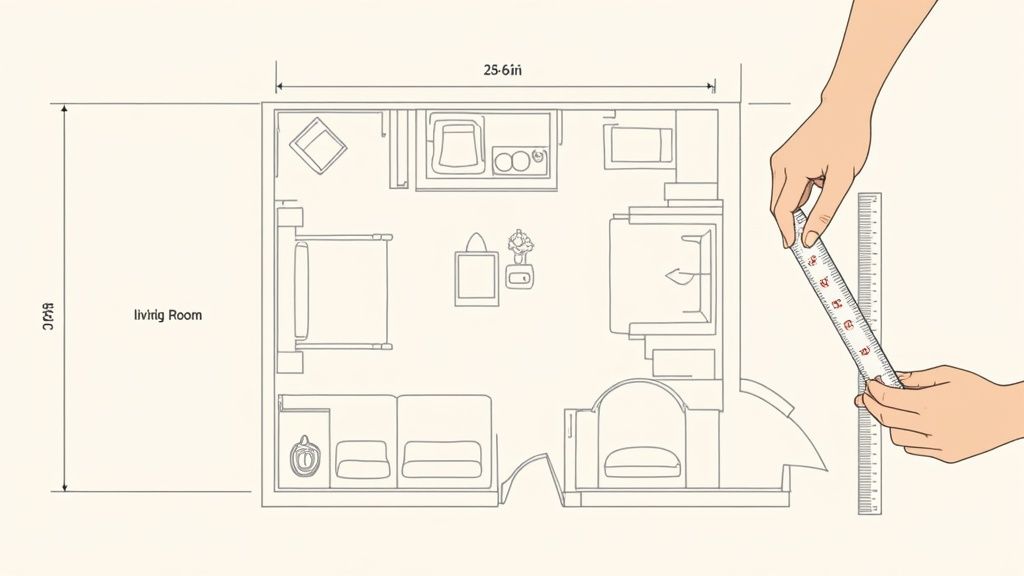
Before you fall in love with a sofa in our showroom, the absolute first step is to grab a tape measure. It sounds almost too simple, but this is where most layout mistakes are born. An accurate floor plan isn't just a suggestion; it's the non-negotiable foundation for a space that actually works for your Central Florida lifestyle.
This doesn't mean you need complex architectural drawings. A simple sketch on graph paper works just fine. The important part is being meticulous. Measure the room’s total length and width, and then—this is key—note the location and size of every single fixed element. That means windows, doorways, closets, fireplaces, and even your electrical outlets. Trust us, knowing where the outlets are will save you from placing a beautiful, Amish-crafted media center in a spot with no power.
This simple process of measuring, defining what you need the room to do, and then creating your layout is the core of successful room planning.
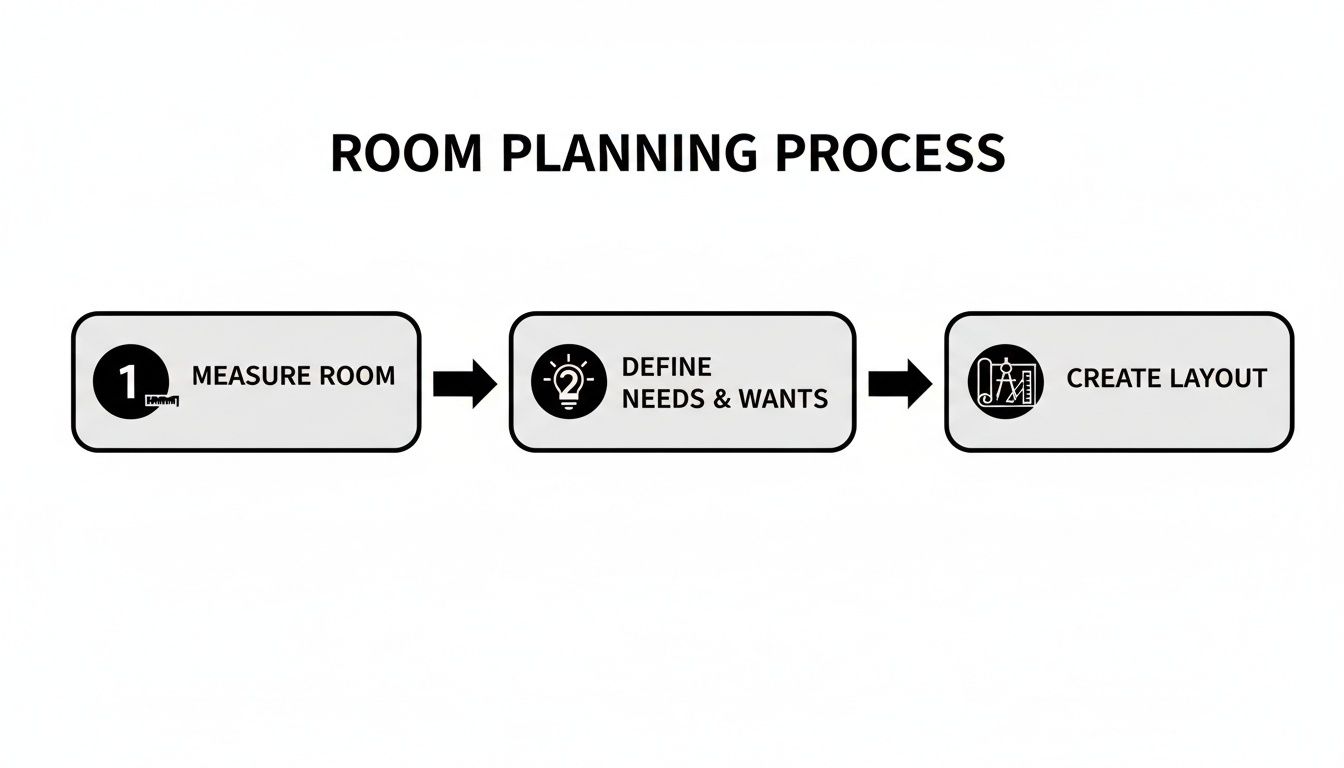
This visual really breaks down the planning journey into three clear, actionable steps, making sure you build your design on a solid foundation from the very start.
Understanding Scale and Clearance
Once you have your room's dimensions on paper, the next critical concept to understand is scale. This is all about the relationship between the size of your furniture and the size of your room. A grand, oversized sectional might look perfectly at home in our spacious Longwood showroom, but it could easily swallow a more modest Lake Mary living room whole, making the space feel cramped and cluttered.
From our four decades of experience, we've seen that the vast majority of layout problems come from poor measurement and incorrect assumptions about scale. Spending just an hour upfront to create a scaled sketch can save you time, money, and costly mistakes.
Taking the time to measure isn't just a chore; it's an investment in your home's future comfort and functionality. It ensures every piece you choose, from a custom-ordered dining set to a great value from our Clearance Outlet, fits exactly as it should.
For a more detailed walkthrough, be sure to check out our complete guide on how to measure a room for furniture, which dives much deeper into the nitty-gritty.
The Designer’s Rules for Spacing
Beyond just the size of the furniture, you have to plan for the empty space around it. We call this clearance, and it’s what makes a room feel comfortable and easy to navigate. Our in-house designers use these guidelines every single day to create layouts that feel right:
- Major Walkways: Always leave 30 to 36 inches of open space for the main traffic paths. Think about the route you’d take from the hallway to the sofa, or from the living room out to the patio door. Anything less and it starts to feel like an obstacle course.
- Sofa to Coffee Table: The sweet spot is right around 18 inches. This is close enough to comfortably set down a drink or reach for a magazine, but still gives you plenty of legroom.
- Seating Arrangement: To make conversation easy and natural, try to keep chairs and sofas no more than 8 feet apart. This simple rule helps create a connected, intimate atmosphere.
Mapping these measurements out on your floor plan will give you a truly realistic idea of what size furniture your room can handle. If you want more detailed guidance on mapping everything out, you can learn how to draw a floor plan effectively. Mastering these fundamentals of measurement and scale is the first—and most important—step in bringing your vision to life.
Define Your Room’s Purpose and Focal Point
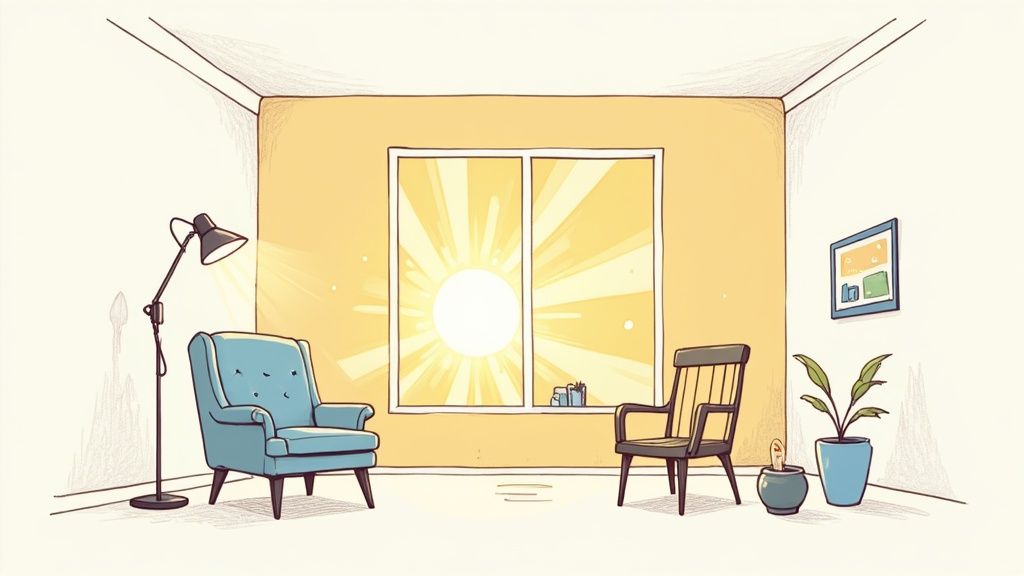
Before you move a single piece of furniture, the best place to start is with one simple question: "What is this room for?" Your answer will guide every single decision you make, from the type of furniture you choose to how you arrange it.
Is this going to be a formal living room for entertaining guests? Or is it a laid-back family den for movie nights and lazy Sunday afternoons? Maybe it’s a multi-purpose room that needs to pull double duty as a home office and a play area. Figuring out the room's primary job is the very first step in learning how to plan a room layout that makes sense. A room designed for quiet conversation will look and feel completely different from one built for kicking your feet up.
Identifying Your Room's Anchor
Once you know the why, you can find the where. The next step is to identify the room's focal point. This is the natural anchor of the space, the first place your eyes go when you walk in. A powerful focal point gives the room a sense of order and purpose, keeping it from feeling like a jumble of disconnected things.
Many Central Florida homes have built-in focal points that make this part easy. These architectural features are the perfect starting line for your furniture arrangement.
- A Fireplace: Even if you only use it a handful of times during our mild Orlando winters, a fireplace is a classic, can't-miss anchor for any seating group.
- A Large Window: A picture window looking out onto your Sanford backyard or a serene lake is an incredible feature. You can orient your furniture to embrace that beautiful view and all the natural light that comes with it.
- Built-in Shelving: Custom bookshelves or built-ins create a wonderful backdrop and a point of visual interest to build your layout around.
Creating Your Own Focal Point
But what if your room is a blank slate with no obvious architectural feature? No problem at all—you can create one. This is a great opportunity to let your personal style and the room's function take the lead.
For example, a gorgeous, American-made entertainment center from our showroom can instantly become the anchor of a family room. It provides storage and a clear spot for your TV, immediately telling you where the main seating should face. In a study or home office, a stunning Stickley bookcase filled with your favorite books and treasures can serve as a sophisticated, personal focal point.
You could also establish a feature wall using a bold paint color, eye-catching wallpaper, or a large piece of art. If you're leaning in that direction, an accent wall is a fantastic way to ground the space. We have a detailed guide on how to create a perfectly balanced accent wall that can walk you through it.
Our Design Team Tip: Don’t fight the room's natural architecture. If you have a beautiful fireplace, make it the star. Trying to force a focal point on a different wall often makes a layout feel awkward and unbalanced.
By first defining your room’s purpose and then identifying or creating a strong focal point, you turn an empty box into a room with a clear story. This is the secret to creating a layout that feels both intentional and effortlessly comfortable—a principle our Design Team has used to help Central Florida families for over four decades.
Let People Move: Arranging Furniture for Flow and Conversation
Now that your focal point is set, it’s time for the fun part: placing the furniture. This is where a room really comes to life, but it’s about more than just looking good. A beautiful room that’s a pain to walk through or impossible to have a good chat in just isn't functional.
The best layouts feel completely natural. They effortlessly guide you from one doorway to the next, with no awkward weaving. Think of these routes as the invisible infrastructure of your room. This is especially true for the open-concept homes so common across Central Florida, where a living room might flow right into a dining area or kitchen.
Carve Out Clear Pathways
The number one rule of traffic flow? Don’t block the doorways. You need to be able to enter a room and move toward the main seating area without hitting an obstacle course. As a rule of thumb, we always tell clients to leave 30 to 36 inches of clearance for these major walkways.
Now, this doesn’t mean you should shove everything up against the walls. That’s actually one of the biggest layout mistakes we see at our Longwood showroom. Floating your sofa and chairs in the middle of the room—even just a few inches off the wall—creates a far more sophisticated and intimate atmosphere. Plus, it lets you create walkways behind the furniture, a fantastic strategy for directing traffic without disrupting the central living space.
Design for Good Conversation
At its heart, a living room is for bringing people together. Your furniture arrangement should make connection feel easy and natural, not forced. The trick is to group seating pieces so they face each other, creating a distinct zone that invites people to sit down and talk.
Here are a few classic setups our design team loves:
- Symmetrical: Two sofas (or a sofa and two armchairs) facing each other with a coffee table in between. This arrangement feels formal and balanced, and it’s perfect for conversation.
- L-Shaped: Using a sectional or a sofa with chairs at a right angle creates a more casual vibe. It’s a great multi-purpose layout for both chatting and kicking back to watch TV.
- U-Shaped: If you have a larger room, a U-shaped layout with a sofa and several chairs can create an incredibly cozy and inclusive area that seats a whole group comfortably.
For conversation to feel natural, you don't want to be shouting. The ideal distance between seating pieces is around 8 feet. Any more than that, and you lose intimacy. For a deeper look at specific layouts, our guide on how to arrange living room furniture has plenty of detailed examples.
Don't forget to use an area rug to visually anchor your conversation zones. A rug should be large enough for at least the front legs of your main seating pieces to rest on it. It’s a simple trick that ties the entire grouping together beautifully.
Ever find that a standard-sized sofa is just a few inches too long for your perfect layout? You don't have to compromise. This is where our Custom-Order program really shines. We can help you get a beautiful, American-made sofa crafted to the exact dimensions your room needs. And for the bedroom, you can find some great insights on how to arrange bedroom furniture for a perfect layout. When you prioritize both flow and function, you end up with a layout that isn't just nice to look at—it’s a true pleasure to live in every single day.
Layer Your Layout with Florida-Friendly Lighting
Here in Central Florida, all that sunshine is one of our best assets. But it's also a powerful force you have to plan around. Light doesn’t just make a room bright; it completely changes the mood and how you can use the space from morning to night.
If you ignore our intense sun, you’ll end up with blinding glare on your TV, rooms that feel like an oven, and even sun-bleached furniture. It's why our Design Team always starts by looking at the windows.
Thinking about light first isn’t just a designer trick—it has a real impact on your home’s comfort. In fact, studies show that placing your main seating areas near windows can cut your need for artificial lights during the day. This isn't some new trend; you can read more about the history of interior design on Britannica.com to see how designers have long focused on inviting in more natural light.
Harnessing Orlando’s Natural Light
Before you move a single piece of furniture, take a day to just watch how the light moves through your room. That west-facing window in an Orlando home, for example, is notorious for blasting a room with intense heat and light. It can make a beautiful leather armchair too hot to sit in or cause the finish on a delicate, American-made wood table to fade over time.
To get the most out of our sunshine without the downsides, try these strategies:
- Position for Views, Not Glare: Arrange your sofa to either face a window or run parallel to it. This lets you enjoy the light without it shining directly in your eyes or on your TV.
- Create a Reading Nook: That little corner that gets soft, gentle morning light? It’s the perfect spot for an armchair and a small side table. Your new favorite place for coffee and a book.
- Protect Your Investments: For windows that get that harsh, direct sun, be smart about where you put your most valuable pieces. Investing in quality performance fabrics for your upholstery can also make a huge difference in preventing fading and wear from our strong Florida sun.
Layering Light for Evening Ambiance
Of course, a great layout has to work just as well after the Florida sun sets. A single light fixture in the middle of the ceiling is rarely enough to create a warm, inviting space. The secret is to layer your lighting, using different sources at different heights.
A beautifully lit room almost always has these three types of lighting working together:
- Ambient Lighting: This is the main source of light for the room—think a chandelier or recessed ceiling lights that provide general, all-over illumination.
- Task Lighting: This is focused light for specific activities. A great example is a floor lamp next to a reading chair or under-cabinet lights that show off a built-in bookcase.
- Accent Lighting: This is the jewelry for your room. It highlights things you want to show off, like a piece of art or cool architectural details.
For a deeper look at creating that perfect glow, our guide on how to put your living room in the best light has even more specific tips and ideas.
Our Design Team's advice: Put dimmers on as many lights as you can. It's the single most effective tool for controlling the mood of your room. You can go from bright and functional for cleaning to soft and cozy for relaxing with one simple switch.
When you thoughtfully plan for both natural and artificial light, you're adding a crucial layer of polish to your layout. It’s the step that turns a simple arrangement of furniture into a dynamic, comfortable, and truly livable space designed for the way we live here in Central Florida.
A Few Common Room Layout Questions, Answered
Even with a perfect plan on paper, the real world of arranging a room can throw a few curveballs your way. Over the decades we’ve been serving the Central Florida community, our in-house Design Team has heard just about every question imaginable.
We’ve pulled together a few of the most common ones we hear from homeowners in Longwood, Lake Mary, and right across the Greater Orlando area. Think of this as some practical, neighborly advice you can put to use today.
How Do I Plan a Layout for a Long, Narrow Room?
Ah, the long, narrow room. We see them a lot in older homes and townhouses, and they can feel like a real design puzzle. The biggest challenge is avoiding that dreaded "bowling alley" effect, where a single straight line of furniture makes the room feel even longer.
The trick is to break the space up into distinct, smaller zones. You’re essentially creating several "rooms within a room."
- Create Your Zones: At one end, you might set up your main conversation area with a sofa and a couple of chairs.
- Add a Mid-Point: In the middle of the room, maybe you place a small writing desk against a wall for a simple workspace, or a console table with some great art above it.
- Use the Far End: At the opposite end, you could create a cozy reading nook with one super-comfortable armchair and a floor lamp.
A fantastic way to visually define these zones is by using area rugs of different sizes. Also, try to bring in some round or curved furniture—like a circular coffee table or ottoman—to soften the room's sharp, linear feel. It's a simple trick that adds visual interest and helps break up those long lines.
What Are the Biggest Mistakes to Avoid When Arranging Furniture?
From our experience, a few common slip-ups can make even the most beautiful room feel awkward. If you can steer clear of these, you'll instantly elevate your space.
The number one mistake we see is pushing every single piece of furniture right up against the walls. It might seem like this creates more open space, but it usually just leaves a cold, empty void in the middle of the room. By "floating" your main seating group away from the walls—even by just a few inches—you create a much more intimate and professionally designed vibe.
Another big one is choosing furniture that’s the wrong scale. A tiny sofa can look completely lost in a huge great room, while a massive, overstuffed sectional will absolutely swallow a smaller living area. Always, always refer back to your measurements and floor plan.
Finally, a crucial but often overlooked mistake is forgetting about traffic flow. Your layout has to allow for clear, easy paths to move through the room. Nobody should have to turn sideways to squeeze past a chair just to get to the next room.
Can the Slone Brothers Design Team Help Me with My Layout?
Absolutely! This is one of the most valuable services we offer, and it’s a cornerstone of what makes us different from the big national chains. Our professional, in-house Design Team provides complimentary design consultations for our Central Florida neighbors.
You can bring your room measurements and a few photos of your space into our Longwood showroom. Our experts will sit down with you, create a scaled floor plan, and help you pick out the perfect pieces for your home—from durable, American-made collections to great values from our Clearance Outlet. We'll even guide you through choosing fabrics and finishes that can stand up to our sunny climate.
We can help you visualize how it will all look and feel before you commit. Whether you're interested in our high-quality Amish furniture or need a specific size through our Custom-Order program, our team is here to help. It’s a key part of the Slone Brothers difference we’ve been proud to offer since 1980.
Feeling inspired? Visit our showroom in Longwood, FL, and chat with our Design Team for a complimentary consultation.