
How to Protect Leather Furniture From Florida’s Sun and Humidity

A beautiful leather sofa is more than just furniture; it's an investment in your home's comfort and style. As a family-owned business serving Central Florida since 1980, we know that the secret to keeping it looking incredible is a mix of routine care, smart placement, and knowing how to handle life's little accidents. With the right approach, your cherished pieces from brands like Stickley or Smith Brothers will develop a beautiful patina and last for decades.
Keeping Your Leather Beautiful in Central Florida
A stunning leather sofa is a true statement piece, whether it's an iconic Stressless recliner you sink into every evening or a custom-ordered American Leather sectional that fits your living room perfectly. You chose it not just for how it looks today, but for the years of enjoyment it promises.
But living here in Central Florida introduces some unique challenges for natural materials. The intense, year-round sun and our famous humidity create a demanding environment that can take a toll on even the highest quality leather if it's not looked after properly. The very things we love about the Orlando area—the sunshine and warm weather—can unfortunately lead to fading, drying, and cracking.
As a local, family-owned business serving our neighbors in Longwood, Lake Mary, and beyond since 1980, we’ve seen firsthand what works and what doesn't. Our in-house design team has helped countless homeowners protect their furniture investments against our local climate.
The secret isn’t complicated or time-consuming. It’s about building simple, consistent habits that become a natural part of caring for your home.
This guide is filled with our proven advice, honed over decades of experience. We'll walk you through the practical steps you need to take to ensure your furniture remains a stunning centerpiece in your home for years to come. Understanding how to protect leather is just as important as the initial selection, a topic we dive into in our guide on how to choose upholstery fabric.
Our goal is to give you the confidence to:
- Establish a simple cleaning routine that prevents the buildup of damaging dust and oils.
- Understand the importance of conditioning to keep leather soft and supple in our humid climate.
- Mitigate the effects of the Florida sun to prevent fading and premature aging.
- Confidently handle everyday life, from accidental spills to playful pets.
With these expert tips from our team at Slone Brothers, you can relax and enjoy the timeless beauty and durability of leather without the worry.
Laying the Groundwork With a Gentle Cleaning Routine
The secret to keeping leather looking fantastic for years isn't some intensive, back-breaking process. It's actually all about consistency with a gentle maintenance routine. Think of it as preventative care that protects your investment, whether it’s a beautiful new Bassett sofa or a classic Smith Brothers armchair you’ve had for ages. Honestly, this simple, ongoing effort is the most important thing a Longwood homeowner can do.
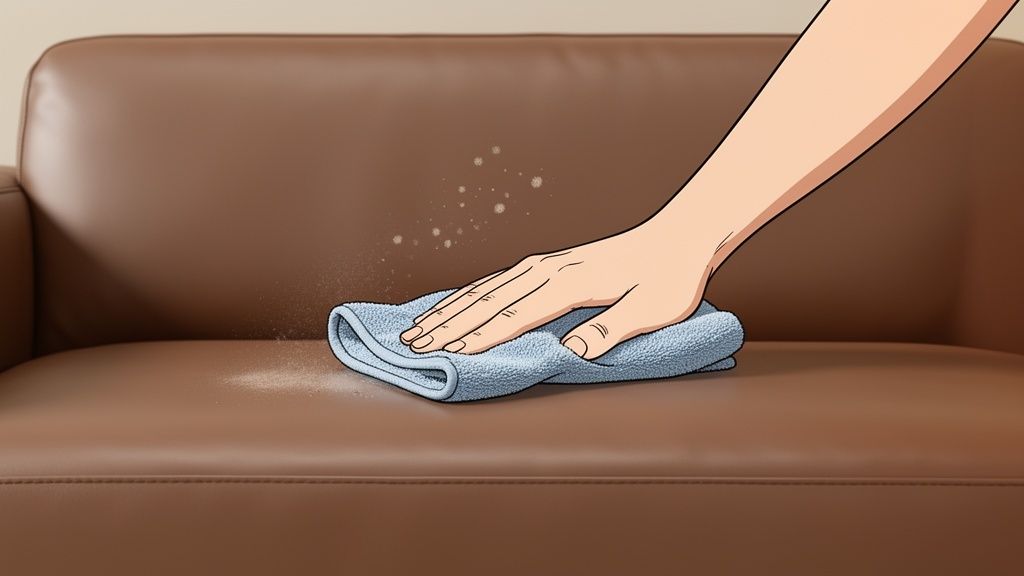
Get into the habit of giving your leather furniture a quick dusting once a week. Just grab a dry, soft microfiber cloth and gently go over all the surfaces. It only takes a minute, but it removes all that fine dust and gritty particles that settle on everything here in Central Florida. Over time, that grit can cause tiny micro-scratches that dull the leather's natural sheen.
Periodic Wipe-Downs and What to Avoid at All Costs
Every month or two, go a step beyond dusting. A periodic wipe-down lifts away the gradual buildup of body oils, lotions, and just everyday grime. All you need is a clean microfiber cloth dampened with a little distilled water—make sure it’s just damp, not soaking wet—and gently wipe everything down. For pieces that get a lot of love, like the family recliner, you might want to do this a bit more often.
Now for a crucial warning from our team: never, ever use common household cleaners on your leather. You'll do more harm than good. Keep these products far away:
- Ammonia or bleach-based cleaners
- Furniture polishes containing silicone or wax
- All-purpose cleaning sprays
- Saddle soap (it's way too harsh for most indoor upholstery)
- Vinegar and water solutions
These products are notorious for stripping the leather's protective finish and leaching out its essential natural oils. This leads straight to irreversible dryness, discoloration, and eventually, cracking. A huge part of protecting your furniture is simply knowing the best way to clean a leather sofa without causing damage.
To make this even easier, here's a simple checklist you can follow to stay on track with your weekly care.
Weekly Leather Care Checklist
This straightforward checklist helps turn your routine into a simple, repeatable habit.
| Task | Frequency | Tools Needed | Why It's Important |
|---|---|---|---|
| Dusting | Weekly | Dry microfiber cloth | Removes abrasive dust that can cause micro-scratches. |
| Fluff Cushions | Weekly | Your hands | Maintains cushion shape and ensures even wear. |
| Quick Inspect | Weekly | Your eyes | Catches small spills or spots before they become major stains. |
| Spot Clean | As needed | Leather cleaner, clean cloths | Addresses spills immediately to prevent permanent damage. |
Following these simple steps is the best way to keep your leather looking and feeling its best day in and day out.
The goal is always to clean without compromising the material's integrity. Stick to products specifically formulated for upholstery leather, as different types of leather require different care.
Knowing exactly what kind of leather you have is the first step to caring for it properly. For a deeper dive, you can explore our guide that covers everything you need to know about upholstery materials. This foundational routine sets the stage for long-term beauty, ensuring your furniture looks as good as the day our delivery team brought it to your home.
Why Conditioning Leather Is Non-Negotiable in Florida
Anyone who's lived in Central Florida knows our climate is a story of extremes. One minute you're battling thick, soupy humidity, and the next, your AC is blasting away to create a cool, dry oasis inside. This constant tug-of-war is incredibly tough on natural materials like leather, pulling essential moisture and oils right out of its delicate fibers.
This is exactly why conditioning your leather furniture isn't just a good idea—it's absolutely essential. Think of a quality leather conditioner less like a cleaner and more like a deep moisturizer for your sofa. It puts back the natural fats and oils that keep the material soft, flexible, and resilient against our unique weather challenges.
Restoring Vital Moisture to Prevent Damage
Without regular conditioning, leather gets thirsty. That dehydration eventually leads to stiffness and, before you know it, fine cracks start appearing on the surface of cushions and armrests. This is especially true for those beautiful, American-made pieces, like a timeless Stickley armchair, where the rich character of the leather is the main event. A little conditioning goes a long way in safeguarding that investment.
For most leather furniture here in the Longwood and greater Orlando area, we recommend applying a good conditioner every 6 to 12 months. That schedule is frequent enough to build a consistent defense against the effects of our climate.
Here's a key fact: regular conditioning can prevent up to 70-80% of common damage from drying and cracking. Industry experts note that untreated leather can lose moisture at a rate of 15-20% annually in environments with significant AC use, much like we have in Central Florida.
The Right Way to Condition Your Furniture
Applying conditioner isn't hard, but doing it the right way ensures you get the best results without leaving behind a greasy or sticky residue. Here’s the simple process our own team uses:
- Start with a clean slate. First, give your furniture a thorough dusting and wipe-down as we covered earlier. You never want to trap dirt and dust underneath the conditioner.
- Always test first. Before going all in, find a hidden spot—like the back of the sofa or underneath a cushion—and apply a small amount. This quick check makes sure it won't cause any discoloration.
- Apply with a soft cloth. Dab a small amount of conditioner onto a clean, lint-free microfiber cloth, not directly onto the leather itself.
- Use gentle, circular motions. Work the conditioner into the leather in small sections, using a light, circular buffing motion. The goal is an even, thin coat, not a thick layer.
- Let it soak in. Give the conditioner at least an hour to fully penetrate the leather's pores. Some products might need longer, so always double-check the label for specific instructions.
- Buff to a beautiful sheen. Once it has been absorbed, take a second clean, dry cloth and gently buff the entire surface. This removes any excess product and brings back the leather’s natural, healthy luster.
By making conditioning a part of your annual home maintenance routine, you're actively preserving the life, beauty, and comfort of your furniture. It's a small commitment of time that pays off for years, ensuring your leather pieces age as gracefully as they were meant to. And if you're ever unsure what kind of leather you're working with, our guide comparing bonded vs. genuine leather can help clear things up.
Protecting Your Leather From Sun Fade and Heat Damage
We all love filling our homes with that beautiful, bright sunshine Central Florida is famous for. But as much as we enjoy it, those direct UV rays are one of the biggest threats to your leather furniture, slowly breaking down its color and finish over time. For homeowners all over the Orlando area, figuring out how to protect leather furniture from sun fade and heat is the key to making it last.
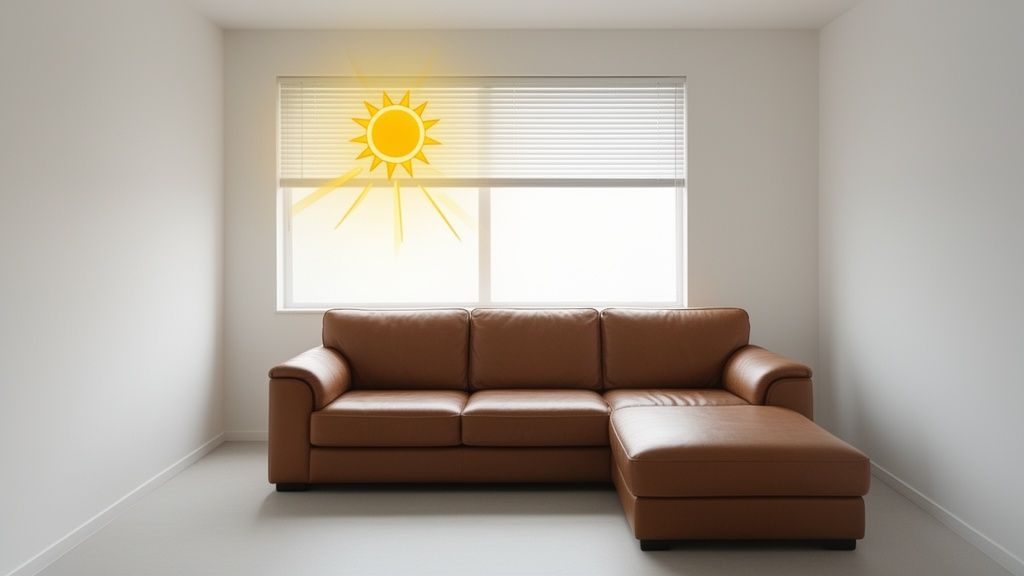
The simplest and most effective strategy starts with thoughtful furniture placement. Whenever you can, try to arrange your favorite sofa or recliner at least two feet away from windows that get that intense, direct sunlight, especially the ones facing south or west. This small adjustment can dramatically reduce the daily UV exposure that causes irreversible fading.
Of course, we know rearranging your entire living room isn't always practical. That's where a few other layers of protection become incredibly useful.
Smart Solutions for Sun-Drenched Rooms
Window treatments are your best friend in the fight against sun damage. And modern options offer fantastic protection without forcing you to live in a cave.
Here are a few solutions we recommend:
- UV-Protective Window Films: One of the most effective options is a high-quality residential window film for sun protection. These nearly invisible films can block up to 99% of harmful UV rays while still letting plenty of natural light filter through. It's a win-win for your furniture, rugs, and artwork.
- Light-Filtering Curtains: Sometimes, just diffusing the harsh sunlight is enough. Sheer or light-filtering curtains can soften its impact, providing a layer of defense while keeping the room feeling bright and airy.
- Blinds and Shutters: You can't beat the control you get with blinds. They give you precise power over the amount and direction of light entering a space. Just angle them to redirect sunlight away from your furniture during the peak hours of the day.
Our in-house design team often helps clients in Lake Mary and Sanford with space planning to protect their most cherished pieces. They have one go-to strategy that’s simple but brilliant.
Every few months, rotate the cushions on your sofa and, if possible, slightly shift the position of the entire piece. This small habit ensures that any light exposure is distributed evenly, preventing one area from fading faster than another.
It’s just like protecting your outdoor furniture from the elements—taking these steps indoors is just as crucial. We actually have more tips for handling the Florida climate in our guide on how to stay cool in style with outdoor furniture.
By combining smart placement with effective window solutions, you can enjoy our sunny weather without sacrificing the rich color and quality of your beautiful leather furniture.
How to Handle Spills, Pets, and Everyday Life
A well-loved home is a busy home, and let’s be honest—spills, pet claws, and the general chaos of daily life are just part of the story. The good news is that high-quality leather from brands like American Leather or Craftmaster is remarkably resilient. Your goal isn’t to treat your furniture like a museum piece, but to live comfortably on it, armed with the knowledge of how to handle life’s little accidents.
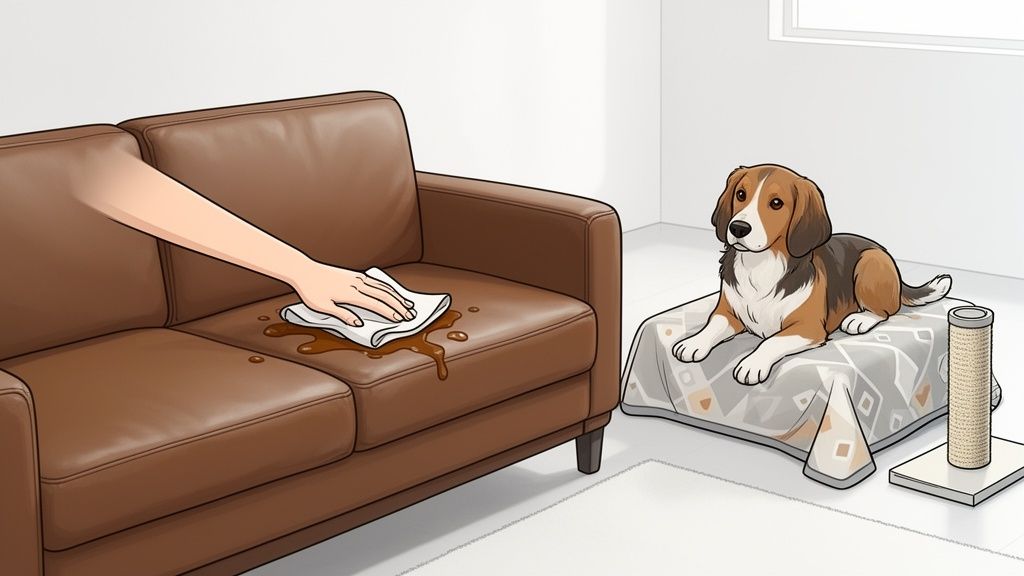
When a spill happens, speed is your greatest ally. Your immediate instinct should be to blot, never rub. Rubbing grinds the liquid deeper into the leather’s pores and can spread the stain, making it much harder to remove. Grab a clean, dry microfiber cloth and gently blot from the outside of the spill inward to contain it.
Tackling Different Types of Spills
Not all spills are created equal. Knowing what you’re dealing with helps you choose the right approach for your leather sofa or recliner.
- Water-Based Spills: For accidents involving coffee, juice, or soda, blotting with a dry cloth is usually sufficient. If a sticky residue remains, use a cloth slightly dampened with distilled water to gently lift it, then follow with a dry cloth.
- Oil-Based Stains: These are a bit trickier. For grease, butter, or salad dressing, start by blotting up any excess oil. Then, sprinkle a small amount of cornstarch or talcum powder directly on the spot. Let it sit for several hours (or even overnight) to absorb the grease before gently brushing it off.
Living with Pets and Kids
For many of us in Central Florida, our pets are part of the family. While their companionship is priceless, their claws can be a concern. The best defense is a good offense. Keep your cat’s nails trimmed and provide plenty of attractive scratching posts to divert their attention.
For minor surface scratches from pet claws or even jean rivets, you can often buff them out yourself. Simply use a clean, dry microfiber cloth and rub the mark in a gentle, circular motion. The friction and heat from your hand can help redistribute the oils in the leather, often making the scratch disappear.
Remember, a few minor marks add to the leather's unique story and patina. It's a sign of a piece that's truly part of your home and not just for show.
Choosing the right type of leather from the start makes a huge difference. That's where our custom-order program truly shines. For brands like American Leather or Smith Brothers, we can help you select a durable, protected (or "finished") leather. These leathers have a special topcoat that provides an extra layer of defense against stains and scratches, making them ideal for active households.
For more advice tailored to your family, check out our guide on how to choose kid-friendly and pet-friendly furniture. With the right leather and a little know-how, you can relax and enjoy your beautiful furniture for years to come.
Knowing When to Call a Leather Repair Professional
While we're all for the satisfaction of a good DIY project, there are times when it's best to put down the cleaning cloth and pick up the phone. As much as consistent care is your first line of defense, some damage is just too much for home remedies. Trust us, knowing your limits is one of the smartest things you can do for your furniture. Trying to fix a major issue on your own can quickly turn a repairable problem into a permanent one, costing you a lot more in the long run.
So, when is it time to call in the experts? You'll want to seek professional help for issues like these:
- Deep Cracks or Peeling: If you're seeing more than just fine surface lines—cracks that go deep into the leather or areas where the finish is peeling away—that’s a job for a pro. They have the tools and expertise to properly repair and re-dye the area.
- Major Tears or Punctures: A small scuff is one thing, but a significant tear or puncture needs a specialist's touch. A professional can patch and blend the repair so seamlessly that you'll have a hard time finding where the damage was. DIY kits just can't match that level of finish.
- Stubborn, Set-In Stains: That ink mark from a stray pen or the red wine ring from last night's get-together isn't budging. Stop scrubbing! A specialist has access to professional-grade solvents that can lift tough stains without stripping the leather's finish.
When a Repair Isn't Enough
Sometimes, even the best furniture reaches the end of its journey. If you get a quote from a professional and find that the cost to repair the piece is more than it's worth, it might be time to start fresh.
For our Central Florida neighbors facing that tough decision, our Slone Brothers Clearance Outlet right here in Longwood is the perfect next stop. You'll find an incredible selection of high-quality leather furniture from brands you know and trust, all at an amazing value. It’s a great way to find a beautiful new centerpiece for your home without breaking the bank, and our Low Price Promise ensures you're getting the best deal.
A Few Common Questions We Get About Leather Care
Over our many years in the Longwood showroom, our design team has heard just about every question you can imagine when it comes to leather. A few pop up time and time again, especially from folks trying to protect their new furniture. We've gathered the most common ones right here to give you the confidence to care for your investment.
"How Often Should I Clean and Condition My Leather Here in Florida?"
This is, without a doubt, the number one question we're asked. For day-to-day cleaning, a simple weekly dusting or wipe-down is all you need to handle surface dust.
But when it comes to conditioning, our unique Central Florida climate really changes the game. That constant back-and-forth between the thick outdoor humidity and the dry indoor A/C can really pull the moisture out of leather. To counteract that, we recommend using a high-quality conditioner every 6 to 12 months. Trust us, this one simple step is the key to keeping the material soft and preventing it from getting brittle.
"Can I Just Use Household Cleaners Like Soap and Water?"
Please don't! We strongly, strongly advise against this. Cleaners you have under the sink—dish soap, vinegar, all-purpose sprays—are almost always too harsh for leather. Their pH is either too acidic or too alkaline, and they'll strip the leather's protective finish right off, taking all the natural oils with it. This is what leads to dryness, fading, and eventually, cracking.
Always stick with a pH-balanced cleaner made specifically for upholstery leather.
Think of it this way: you wouldn't use dish soap to wash your hair, right? The same idea applies here. Leather is a natural skin, and it needs specialized care to stay healthy and look its best for years to come.
"Is There a Certain Type of Leather That’s Better for a Home with Kids and Pets?"
Yes, absolutely. For a busy household here in the Orlando area, we almost always point families toward protected or finished leathers. These types have a durable topcoat added at the tannery that acts as a fantastic barrier against spills, stains, and the occasional scratch from a pet's claw. It just gives you that extra peace of mind and makes cleanup so much easier.
Our in-house design team can walk you through some gorgeous and surprisingly tough options from brands like Smith Brothers or Bassett that don't make you choose between style and durability.
Ready to find the perfect piece for your home? Visit the Slone Brothers Furniture showroom in Longwood, FL, and let our design experts help you get started!