

Mattress Breaking In Period: How Long It Takes and Practical Tips

Welcome to the Slone Brothers family! So, you’ve just brought home your brand-new mattress from our Longwood showroom, eagerly anticipating that first night of blissful sleep, but… it feels a lot firmer than you remember.
Don't worry, this is completely normal. What you’re experiencing is what we in the business call the mattress breaking-in period. Think of it like a new pair of quality leather shoes; they need a little time to flex, soften, and mold perfectly to your feet before they become your favorite pair. As your local furniture experts serving Central Florida since 1980, we're here to guide you through this simple adjustment phase.
Why Your New Mattress Feels Different
That initial firmness is actually a good sign—it means you have a brand-new, factory-fresh sleep surface with all its support intact. Unlike the floor models in our Central Florida showroom, which have been gently tested by other shoppers, your mattress hasn’t had a chance to adapt to a human body yet. Its materials, whether foam, coils, or a hybrid blend, are still tightly compressed from the factory.
This initial adjustment phase is when the mattress materials begin to settle, and just as importantly, your body starts adapting to a new, more supportive surface. It's a two-way street: the mattress is learning you, and your body is learning the mattress.
What Happens During the Break-In Period
This get-to-know-you phase is a critical process for both you and your new bed. It’s not just about the mattress softening up; it’s also about your posture realigning, especially if you’ve spent years sleeping on an old, sagging mattress.
Here’s a closer look at what’s really going on:
- Materials Settle: High-quality foams and fibers will gently relax and start conforming to your body's pressure points, like your shoulders and hips.
- Your Body Realigns: If your old mattress was worn out, your muscles and spine got used to being in a less-than-ideal position. Now, they need time to adjust to proper alignment, which can feel a little strange or even slightly uncomfortable at first.
- The Feel Evolves: That mattress you thought might be too firm will gradually transform into the comfortable, supportive bed you fell in love with at our Longwood store. The firmness level you chose is still there, but it will feel more balanced and personalized.
Patience is the key to unlocking years of incredible sleep on your new investment. The way a mattress feels on night one is rarely how it will feel on night thirty.
It can take anywhere from 30 to 60 nights for a new mattress to be fully broken in. This window gives the materials enough time to respond to your body heat and weight, creating a sleep surface that feels like it was made just for you.
The specific firmness level can play a role, too. For a deeper dive into finding the right initial feel, our mattress firmness guide offers expert advice for Orlando sleepers. Ultimately, this brief waiting period is a small step toward ensuring your new mattress delivers the long-term value and restorative sleep you deserve for years to come.
How Long Does the Breaking In Period Usually Take
One of the first questions we hear from our Central Florida customers is, "How long until my new mattress feels perfect?" The honest answer is that it really depends on the materials it’s made from. Just like different performance fabrics handle the Orlando sun differently, various mattress materials have their own unique adjustment timelines.
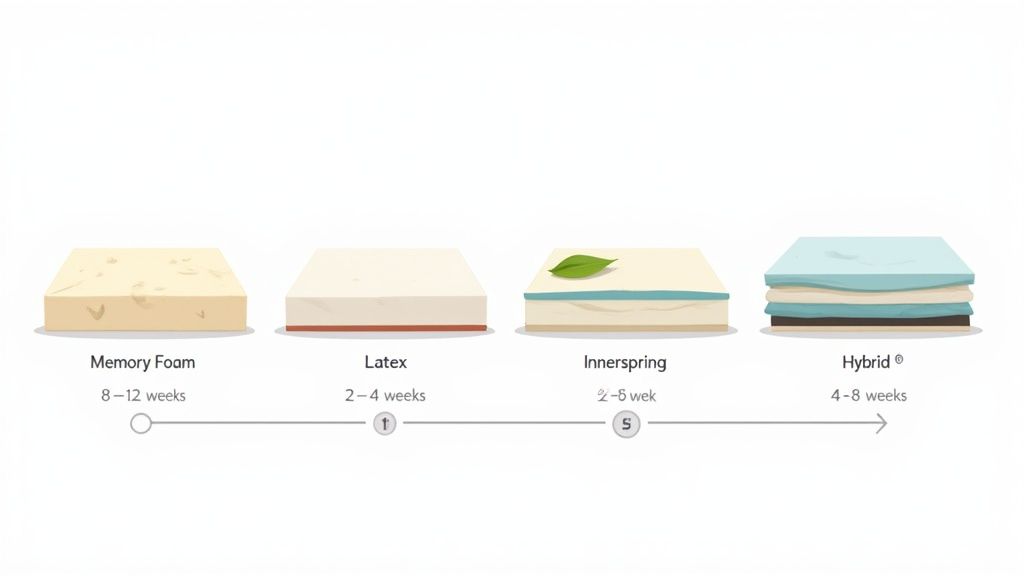
A dense memory foam mattress, for example, needs more time to soften up and respond to your body heat than a naturally springy latex or a classic innerspring. Giving your new bed the time it needs is the secret to unlocking years of incredible comfort.
Typical Mattress Breaking In Period by Material Type
Every mattress has a slightly different journey to its final feel. Some materials get comfortable almost right away, while others require a bit more patience as they settle in. To give you a clearer picture, we've broken down the average timelines you can expect based on the type of mattress you choose.
| Mattress Type | Average Breaking In Period | Key Characteristics |
|---|---|---|
| Memory Foam | 30 to 60 days | Dense foam needs consistent body heat and pressure to soften and contour to your shape. |
| Latex | 2 to 4 weeks | Highly resilient and responsive, so it adapts much more quickly than memory foam. |
| Innerspring | Within a few weeks | Coils don't need a break-in period, but the top comfort layers need a little time to settle. |
| Hybrid | 30 to 60 days | A mix of coils and foam; the timeline depends on the thickness and density of the foam layers. |
As you can see, patience is key, especially with foam-based mattresses. The timeline for hybrids, which blend supportive coils and contouring foam, often falls in the middle. Their break-in period depends heavily on the specific foam used in the comfort layers. You can dive deeper into what a hybrid mattress is and how they combine the best of both worlds in our detailed guide.
This is exactly why a mattress feels so much firmer when you first get it home compared to the softer, more inviting models you test out in our showroom.
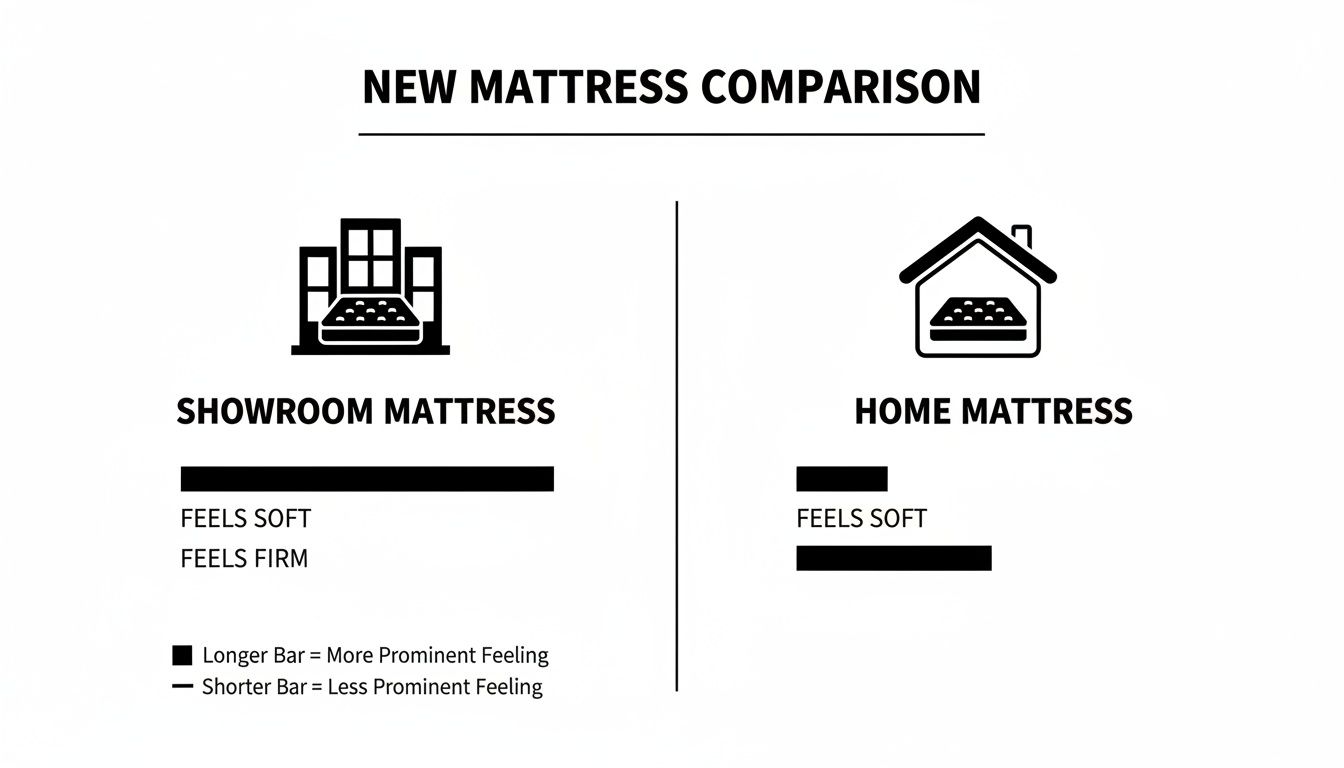
The key thing to remember is that your mattress at home is factory-fresh. The one on our floor has already been gently softened by other curious customers, giving it a head start.
Factors That Influence the Timeline
Beyond the materials themselves, a few other things can affect how long it takes for your mattress to feel just right. The biggest factor is, of course, the mattress type. High-density memory foams can take a full 60 days to fully mold to your body’s unique heat and weight signature.
On the flip side, wonderfully resilient natural latex mattresses often feel perfect in just 2 to 14 days. Most hybrid models will settle in somewhere in that 30 to 60-day range, which is why so many trial periods are set around that timeframe.
Even our Central Florida climate can play a small role. Colder room temperatures can make foam feel a bit firmer, which might extend the adjustment time slightly.
The most important factor in the break-in process is consistency. Sleeping on your new mattress every single night is the best way to help it adapt to you.
Ultimately, whether it takes two weeks or two months, this adjustment phase is just a temporary step. On the other side is years of consistent, supportive, and truly restful sleep.
How to Speed Up the Mattress Adjustment Process
While patience is definitely the most important part of getting used to a new mattress, you don't have to just sit around and wait. You can actually take a few simple, safe steps to encourage your new mattress to settle in a little faster and reach that peak comfort zone sooner.
At Slone Brothers, our team has been helping families all over Central Florida get their best sleep since 1980, so we know a thing or two about this. These are our go-to recommendations for breaking in a new bed.
The best thing you can do, hands down, is just use your new bed as much as possible. Consistent, nightly use is what really helps the materials soften and start contouring to your unique body shape.

Gentle Pressure and Consistent Use
Don't limit your time on the mattress to just sleeping. Spending an hour reading a book or watching TV in bed each evening adds valuable time for the mattress to adapt. This consistent pressure is especially effective for memory foam and hybrid models, which respond directly to your body heat and weight.
For a more hands-on approach, you can apply gentle, even pressure across the entire surface. Simply walking or carefully crawling across the mattress for a few minutes each day helps to loosen up all the new materials evenly. Think of it as giving the whole bed a chance to relax, not just the spots where you typically sleep.
A new mattress is an investment in your well-being. Giving it the right start ensures it delivers years of restorative sleep and proves its long-term value.
Ensure a Supportive Foundation
One of the most overlooked factors is what’s underneath your new mattress. A brand-new mattress needs a proper, supportive foundation to perform its best and break in correctly. If you place it on an old, sagging box spring, you can actually prevent it from settling correctly and may even void the warranty.
- Check Your Box Spring: If your box spring is more than a few years old or shows any visible sagging, it’s probably time for an upgrade.
- Solid Platform Beds: These are fantastic because they provide excellent, even support across the entire mattress surface.
- Slatted Bases: If you have one of these, make sure the slats are no more than 2-3 inches apart. This provides adequate support and prevents any dipping between the slats.
Making sure your mattress has the right support from day one is such a critical first step. It not only speeds up the adjustment process but also helps maintain the integrity of your investment for years to come. You can find more helpful advice in our guide to mattress maintenance and cleaning tips.
Finally, proper ventilation is key, especially here in our humid Orlando climate. Letting your new mattress air out for a bit helps dissipate any of that "new mattress" scent from the packaging and allows the materials to breathe and settle in naturally.
Knowing When Your Mattress Is Fully Broken In
So, after a few weeks of sleeping on your new mattress, how can you tell when the break-in period is officially over? While the change happens gradually, the signs are pretty clear, and the biggest one is simply how you feel each morning when you wake up in your Central Florida home.
You'll start to realize you're sleeping more soundly through the night. The tossing and turning that might have been common in the first week or two will fade, replaced by a much deeper, more restorative rest. Any initial morning stiffness or minor aches you felt as your body adjusted will begin to disappear.
From New Mattress to Personalized Sleep System
The mattress itself will feel different to the touch, too. That initial firmness will have softened into a more consistent, welcoming surface that strikes the perfect balance between comfort and support. It will feel less like a brand-new product and more like a bed that was custom-made just for you, conforming perfectly to your body’s unique curves and pressure points.
This is the point where your new bed truly transforms from just a mattress into your own personalized sleep system. You can finally feel confident that your investment is paying off and delivering the incredible quality of sleep you were hoping for.
The ultimate sign your mattress is broken in is simple: you stop thinking about it. You just lie down, get comfortable almost instantly, and wake up feeling refreshed and ready for your day.
If you find that you’re still waking up sore after a proper break-in period, it might point to a bigger issue. Sometimes, persistent discomfort can be one of the 7 signs it's time to replace your mattress, even if it's relatively new. This could mean there’s a mismatch between the mattress's firmness and your specific sleep style.
Recognizing these positive signs brings peace of mind, confirming that your patience has paid off. You're now all set for years of fantastic sleep ahead.
Understanding Sleep Trials and Warranties
At Slone Brothers, we want every family in Central Florida to feel fantastic about their furniture investment. That’s why it’s so important to understand sleep trials and warranties, especially when you’re in the middle of a mattress break-in period. These policies are your safety net, designed to give you total peace of mind while your body and your new mattress get to know each other.
A sleep trial is essentially your comfort guarantee. It gives you a generous window of time—usually 90 to 120 nights—to live with your new mattress and see how it really feels. This is critical because it takes time for the mattress materials to settle in and for your body to adjust to a new, more supportive feel. A proper trial helps you figure out if what you're feeling is just normal adjustment or a true comfort mismatch.
Sleep Trials vs. Warranties
It's easy to get these two mixed up, but they cover very different things. Knowing the difference empowers you to make the best choice for your home.
- Sleep Trial (For Comfort): Think of this as the ultimate test drive. If you've given it a fair shot (most brands ask for at least 30 days) and decide the mattress is just not right for you—maybe it's too firm or a bit too soft—the sleep trial lets you exchange it.
- Warranty (For Defects): A warranty is your protection against things that go wrong with the mattress itself. It covers manufacturing flaws like excessive sagging that isn't normal, coils that break, or seams that come apart. Basically, it’s for when the mattress fails to do its job, not when it just isn’t your cup of tea.
This distinction is precisely why manufacturers offer these long trials. They know that initial dissatisfaction is often just part of the break-in process, with most returns happening in the first 30 to 90 days. By giving you a few months, they ensure the mattress has fully settled before you have to make a final call.
Your sleep trial is your safety net, ensuring you don't have to make a final comfort decision on night one. It's built around the reality that great sleep sometimes requires a little patience.
Understanding what's covered is key. For a complete rundown, you can check out our detailed guide on furniture and mattress warranties. We also highly recommend you register your product warranty with the manufacturer as soon as your new mattress is delivered. It's a quick, simple step that makes sure your investment is protected right from the start.
Common Questions About the Mattress Breaking In Period
Since opening our doors in 1980, we've helped thousands of folks in Orlando, Lake Mary, and Sanford find their perfect mattress. We get a lot of great questions during that process, especially about what happens after the mattress is delivered. As your local furniture experts, we want you to feel confident in your new investment.
Here are a few of the most common questions we hear in our Longwood showroom. If you have more after reading, our friendly in-house design team is always here to help you in person.
Is It Normal for a New Mattress to Have a Slight Smell?
Yes, it’s perfectly normal, especially with memory foam or any bed-in-a-box model you might see. This faint scent is harmless and comes from a process called off-gassing. It's just the result of materials, like foams and adhesives, releasing volatile organic compounds (VOCs) that were trapped inside the vacuum-sealed packaging during manufacturing.
Think of it just like that "new car smell." The scent is temporary and should disappear completely within a few days to a week. To help it air out faster, we always recommend keeping the room well-ventilated. Simply opening a window or running a fan can make a huge difference, particularly in our humid Central Florida air.
Should I Rotate My Mattress During the Break-In Period?
Absolutely. Rotating your new mattress is one of the best habits you can start to ensure it breaks in evenly and lasts for years. We suggest rotating the mattress 180 degrees (head-to-toe) after the first 30 days of use. This one simple step prevents your body from creating impressions in just one spot and helps the entire surface soften at the same rate.
After that initial turn, keep doing it every few months. It's a crucial part of proper mattress care and the easiest way to protect your investment.
The mattress break-in period is an industry-recognized phase of both material conditioning and physiological adaptation. Allowing at least one full month of nightly use is essential before making a final judgment on comfort.
What If I’m Still Uncomfortable After 30 Days?
First off, don't panic. While 30 days feels like a good milestone, it’s often just the beginning of the adjustment for many mattresses, especially those with denser foams. The mattress industry widely recognizes that a full mattress breaking in period can take anywhere from 30 to 90 nights.
This window gives both the mattress materials time to soften and settle, and your body a chance to adapt to a new (and likely better) level of support. It’s no coincidence that most major brands build their sleep trial policies around this exact timeframe. You can learn more about how different mattress materials adapt over time by reading detailed industry insights on MyGreenMattress.com.
The best thing to do is keep sleeping on it every night to give it a fair shot. If you're still feeling significant discomfort after 60 days, that’s the perfect time to reach out and talk about your sleep trial. Our team is here to guide you through the process and make sure you end up with the perfect match for a great night's sleep.
Ready to find the perfect piece for your home? Visit the Slone Brothers Furniture showroom in Longwood, FL, and let our design experts help you get started!
https://slonebrothers.com