
Bench Seat Depth Guide: Find Your Perfect Fit


You find a bench you love for your breakfast nook, entryway, or window seat. The wood finish is right, the style fits your home, and it looks perfect in the room. Then you sit down, and something feels off.
That problem comes down to bench seat depth.
It’s one of the least glamorous furniture measurements, but it affects comfort more than assumed. In Central Florida homes, where benches pull double duty for dining, drop zones, and casual lounging, the right depth can make the difference between a spot you use every day and one that just collects throw pillows.
At Slone Brothers, we’ve helped Longwood and Greater Orlando families sort through these details since 1980. If you’re furnishing a kitchen banquette in Lake Mary, an entry hall in Sanford, or a sunny nook in Orlando, bench depth deserves a closer look.
Why Your Bench Seat Depth Matters
A bench can look balanced in a room and feel wrong the moment you sit on it. That’s because bench seat depth affects your posture, how your legs are supported, and how easily you can use the space around it.
For a dining bench, depth changes how close you sit to the table. For an entry bench, it changes whether people can move through the space comfortably. For a window seat, it shapes whether the bench feels like a quick perch or a place to settle in with coffee on a rainy Florida afternoon.
Comfort starts with the part you don’t notice
Most shoppers pay attention to length, color, or whether the bench has storage. Depth gets overlooked because it’s harder to judge with your eyes alone.
A bench that’s too shallow can feel stingy. You sit down and notice that your thighs don’t feel supported.
A bench that’s too deep causes a different problem. You may end up perching near the front edge, or you may struggle to sit back comfortably if the bench has a back.
Practical rule: If a bench feels good for five minutes but annoying by the end of a meal, depth is the reason.
It also changes how the room works
In many Central Florida homes, space has to work hard. A breakfast nook may sit right beside a sliding door. An entry bench may share space with shoes, bags, and a busy walkway. A built-in banquette may need storage underneath without crowding the table.
That means the “right” bench depth isn’t just about the seat. It’s also about how the bench fits into daily movement.
A few common examples:
- Dining nooks: You need a depth that supports upright sitting and keeps you close enough to the table.
- Entryways: You want a bench that’s useful without jutting too far into traffic flow.
- Window seats: You want more room, especially if you’re adding cushions.
- Built-ins with storage: Added function changes the ideal frame depth.
Why Florida homes need a little extra thought
Homes around Longwood, Orlando, Lake Mary, and Sanford mix casual living with flexible room use. A bench may serve kids at breakfast, guests during holidays, and everyday seating the rest of the week.
That’s why generic advice only gets you part of the way. The number matters, but so does the room, the cushion, the layout, and how you plan to use the bench.
Standard Bench Seat Depth for Every Room
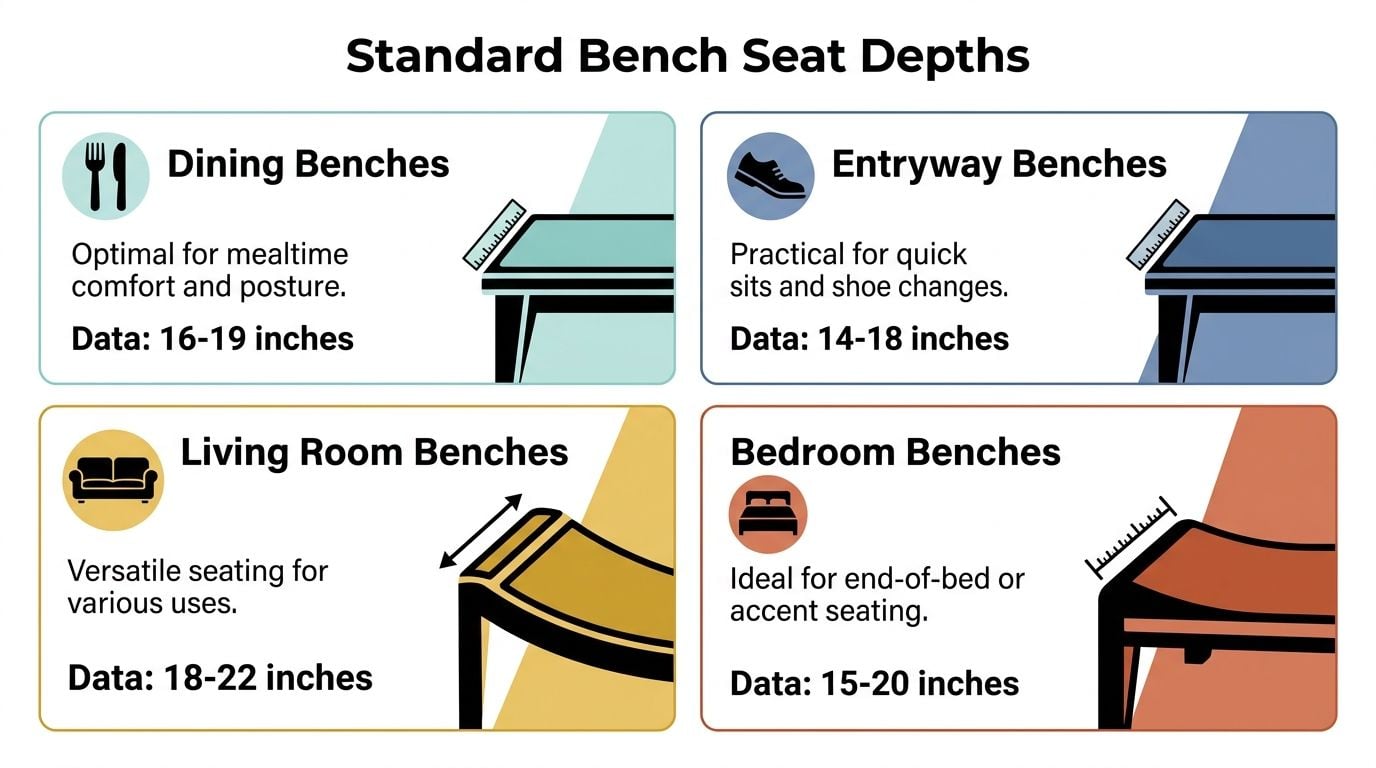
Most benches fall within a predictable range, but the ideal depth changes with the job the bench needs to do. The broad standard is 15 to 20 inches, while dining benches measure around 17½ inches and work best in the 16 to 18 inch range according to Dimensions.com’s bench collection.
Standard bench seat depth by type
| Bench Type | Standard Depth Range (Inches) |
|---|---|
| Dining bench | 16 to 18 |
| General bench seating | 15 to 20 |
| Entryway or mudroom bench | 14 to 17 |
| Window seat or lounge bench | 18 to 22 or more |
| Built-in kitchen bench | 19 to 22 |
| Outdoor bench | 12 to 15 |
| Backless bench | up to 30 |
Dining benches need a different feel
Dining benches need to keep you upright and close enough to the table to eat naturally. That’s why they stay on the shallower side.
A bench that’s too deep in a dining room can look substantial, but it feels awkward at mealtime. You don’t want to scoot forward every time you sit down.
For many families in Lake Mary or Longwood, this comes up in breakfast nooks where every inch matters. A dining bench should support real everyday use, not just match the table visually.
Entry benches should stay compact
Entryway and mudroom benches run 14 to 17 inches deep, based on the verified standards above. That slimmer profile makes sense in a pass-through space.
If you’ve got a narrower foyer or a hallway bench near the garage door, a bulky seat can become a traffic problem fast. In those settings, comfort still matters, but flow matters too.
A good entry bench gives you a place to sit and put on shoes without making the whole area feel pinched.
Window seats and banquettes can go deeper
A lounge-style bench has a different mission. Window seats and built-ins move into the 18 to 22 inches or more range, and built-in kitchen benches tend toward 19 to 22 inches when storage is part of the design, according to the verified data from Post Teak Furniture’s bench dimension guide.
That added depth makes sense when you want cushions, storage, or a more relaxed sitting style. In Orlando-area homes with open-concept kitchens, custom planning for benches can be particularly beneficial.
Outdoor benches are their own category
Outdoor benches are much shallower, usually 12 to 15 inches deep according to the same verified source above. Materials, weather exposure, and construction needs all influence that choice.
For a Central Florida lanai or covered patio, the intended use matters even more. If it’s a quick-sit bench by the garden or pool area, a shallower profile can be just fine. If you want a softer, lounge-like outdoor bench, you’ll need to think carefully about cushions and support.
If you want a visual overview of different types of benches, it can help to compare how bench style and intended use go hand in hand.
How to Measure for the Perfect Bench Depth
Most bench mistakes happen before the bench ever gets into the house. People measure the wall, but not the usable seat. Or they measure the bench, but not the walking space around it.
Measure the bench itself
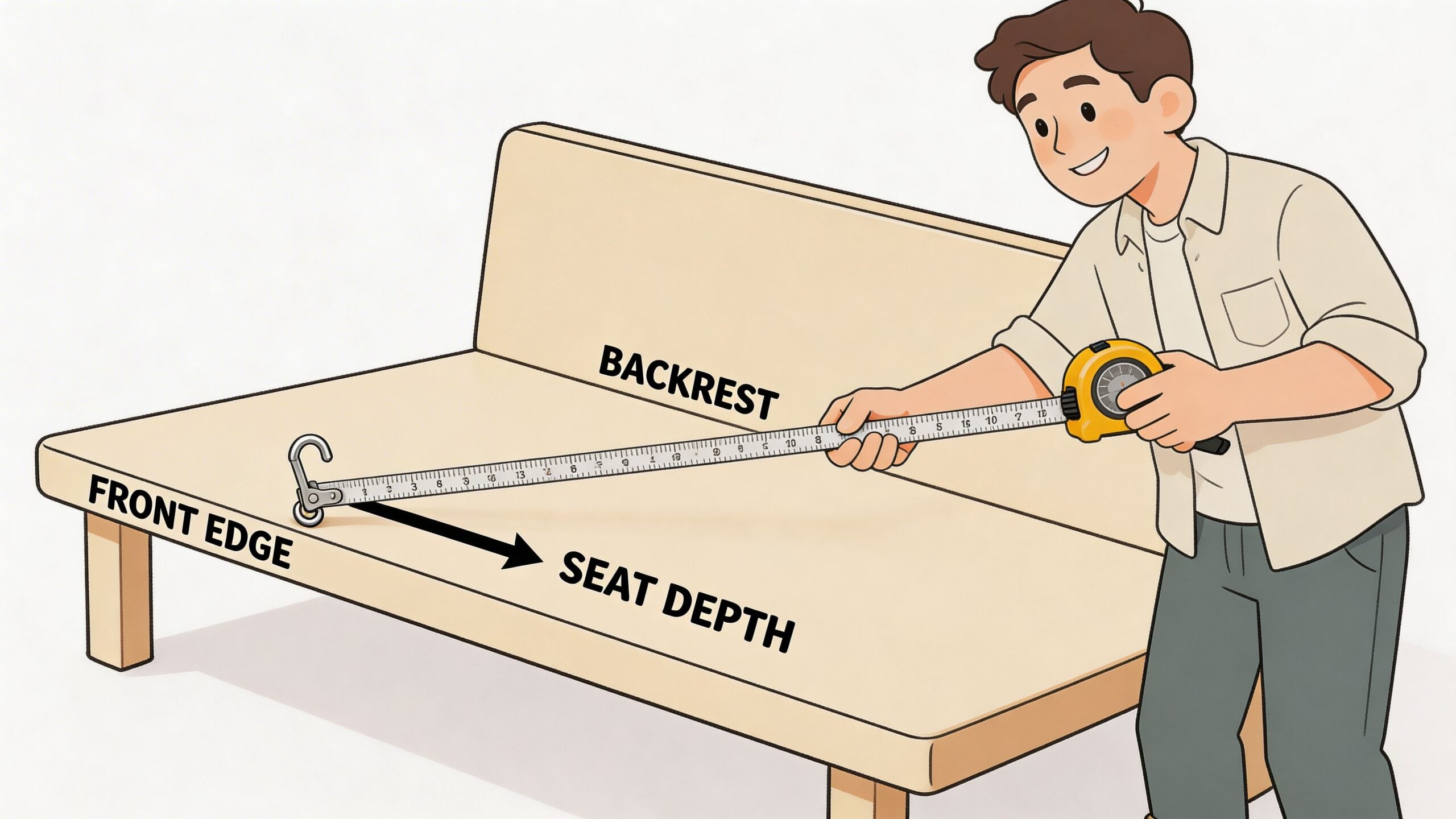
Start with the seat, not the overall silhouette.
Look for two dimensions:
Total frame depth
This is the full front-to-back measurement of the bench frame.Usable seat depth
This is the part you sit on, from the front edge of the seat to the back cushion or backrest.
Those two numbers aren’t always the same. A thick back cushion, a slanted back, or a rounded rear edge can reduce the space your body uses.
Measure the room around the bench
Then measure the area where the bench will live.
Check these points:
- Wall-to-table distance: For dining setups, make sure the bench works with the table base and doesn’t force an awkward sitting position.
- Walkway clearance: In entries and hallways, make sure people can pass naturally.
- Nearby doors and cabinets: This matters a lot in breakfast nooks and kitchen corners.
- Bench pull-out space: If the bench won’t stay tucked against a wall, allow room for people to get in and out.
A lot of this is the same logic people use when planning tighter spaces elsewhere in the home. If you’ve ever looked at typical shower stall dimensions, you’ve already seen the same principle at work. A fixture can technically fit and still feel cramped in daily use.
A simple measuring habit that saves headaches
Write down all measurements in one place before shopping:
- Bench location
- Maximum overall depth
- Preferred usable seat depth
- Whether cushions will be added
- Any obstacles nearby
For a more complete room-by-room process, our guide on how to measure furniture is a useful next step before you visit the showroom.
How Bench Depth Affects Comfort and Ergonomics
A bench doesn’t need plush padding to feel comfortable. It needs the right relationship between your body, the seat, and the back support.
Industry standards place general bench seat depth at 15 to 20 inches and dining benches at 16 to 18 inches because that range aligns with average adult thigh length and helps support a natural sitting position, as noted in this verified guide from Groen’s Fine Furniture.
What a good fit feels like
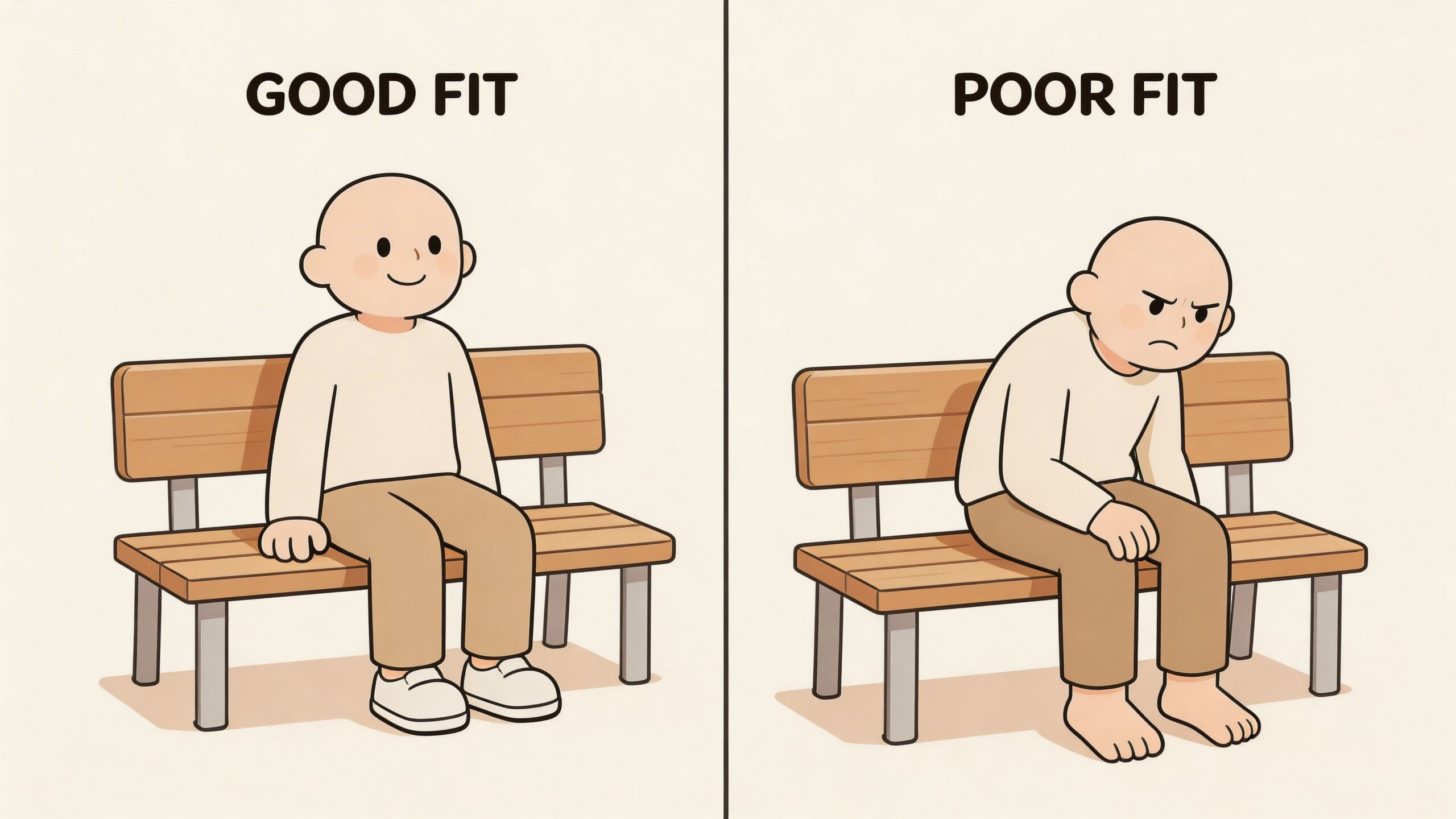
When the depth is right, your body settles into an easy posture.
You should be able to:
- Sit back comfortably if the bench has a back
- Keep your feet flat on the floor
- Maintain a natural bend at the knees
- Feel support under most of your thighs
- Avoid pressure at the back of the knees
For dining use, that fit becomes even more important. The verified source above notes that the proper dining depth helps minimize forward lean and supports 90-degree knee flexion, which is a big reason the bench feels more comfortable through a full meal.
What happens when the bench is too shallow
A shallow bench feels fine for a quick minute. Then your legs start doing extra work.
Common signs:
- You feel like you’re perched
- Your thighs don’t feel supported
- You shift around often
- Your lower back tires out sooner
This is one reason furniture brands that focus on comfort design get so much attention. Stressless is known for ergonomic thinking in recliners and seating, and the same principle applies here. Good support starts with proportions.
If you can’t relax your legs and your back at the same time, the bench probably isn’t the right depth for the job.
What happens when the bench is too deep
Depth causes trouble in a different way. On a bench with a back, you may not be able to sit all the way back without the front edge pressing into your legs or forcing your feet forward.
At a dining table, that means one of two things. You slump backward and lose your eating posture, or you scoot forward and stop using the backrest altogether.
That’s why mealtime benches and lounge benches shouldn’t be treated the same way. A deeper seat may sound more comfortable in theory, but comfort depends on the task.
Bench depth and the rest of the setup
Depth doesn’t work alone. It interacts with seat height, table height, cushion thickness, and back angle.
If you’re comparing a dining bench to dining chairs, it helps to understand how these dimensions support each other. Our guide to chair seat height shows how one measurement can affect the whole sitting experience.
For holiday dinners, game nights, and everyday breakfasts, the right bench depth helps people stay at the table longer without thinking about the seat. That’s the clearest sign the proportions are working.
The Impact of Cushions and Upholstery
Many bench shopping experiences go sideways at this stage. A customer sits on a bench frame in a showroom, then orders it with thick cushions and ends up with a completely different feel at home.
Cushions change effective depth, which is the usable depth after padding takes up space.
Frame depth and effective depth aren’t the same
A verified source notes that thick padding in the 3 to 5 inch range can make a 16-inch frame feel like 20+ inches, and that projected furniture trend reporting for 2025 to 2026 showed a 30% rise in custom deep-seat requests using 18 to 22 inch base frames for lounge benches in Florida homes according to Tip Top Furniture’s bench seat depth guide.
That’s a useful reminder, but it needs context. A plush lounge bench and a dining bench aren’t trying to do the same job.
For dining, too much softness can make the seat feel less stable and harder to use at the table. For a window seat, that same softness may be exactly what you want.
Upholstery changes the experience
The fabric and cushion style matter as much as the number on the tag.
A few examples:
- Firm seat cushions: These preserve a more defined sitting position.
- Plush cushions: These can create a cozy feel but may reduce support if the bench is already deep.
- Tight upholstery: This works well in dining spaces where you want a cleaner, more upright sit.
- Looser pillow-back styling: Better suited to casual lounging than everyday table seating.
In Central Florida, fabric choice matters for practical reasons too. Sun exposure, humidity, and active households can influence what upholstery feels best over time. That’s one reason many shoppers compare performance options before finalizing a custom bench. Our overview of upholstery materials can help you sort through those tradeoffs.
A bench can be the right depth on paper and still feel wrong once the cushion is added. Always judge the finished seat, not just the frame.
Custom planning is particularly important here
If you want a bench with upholstery, don’t choose depth in isolation. Choose it with the cushion in mind.
That’s true for banquettes, window seats, and end-of-bed benches where comfort depends on layering. American-made lines like Smith Brothers and Craftmaster give shoppers more upholstery options, while custom dining programs from brands like Canadel or Amisco can help match the bench more closely to the room and the way you sit.
Space Planning Tips for Orlando Area Homes
Bench depth doesn’t live on a spec sheet alone. It changes how a room moves.
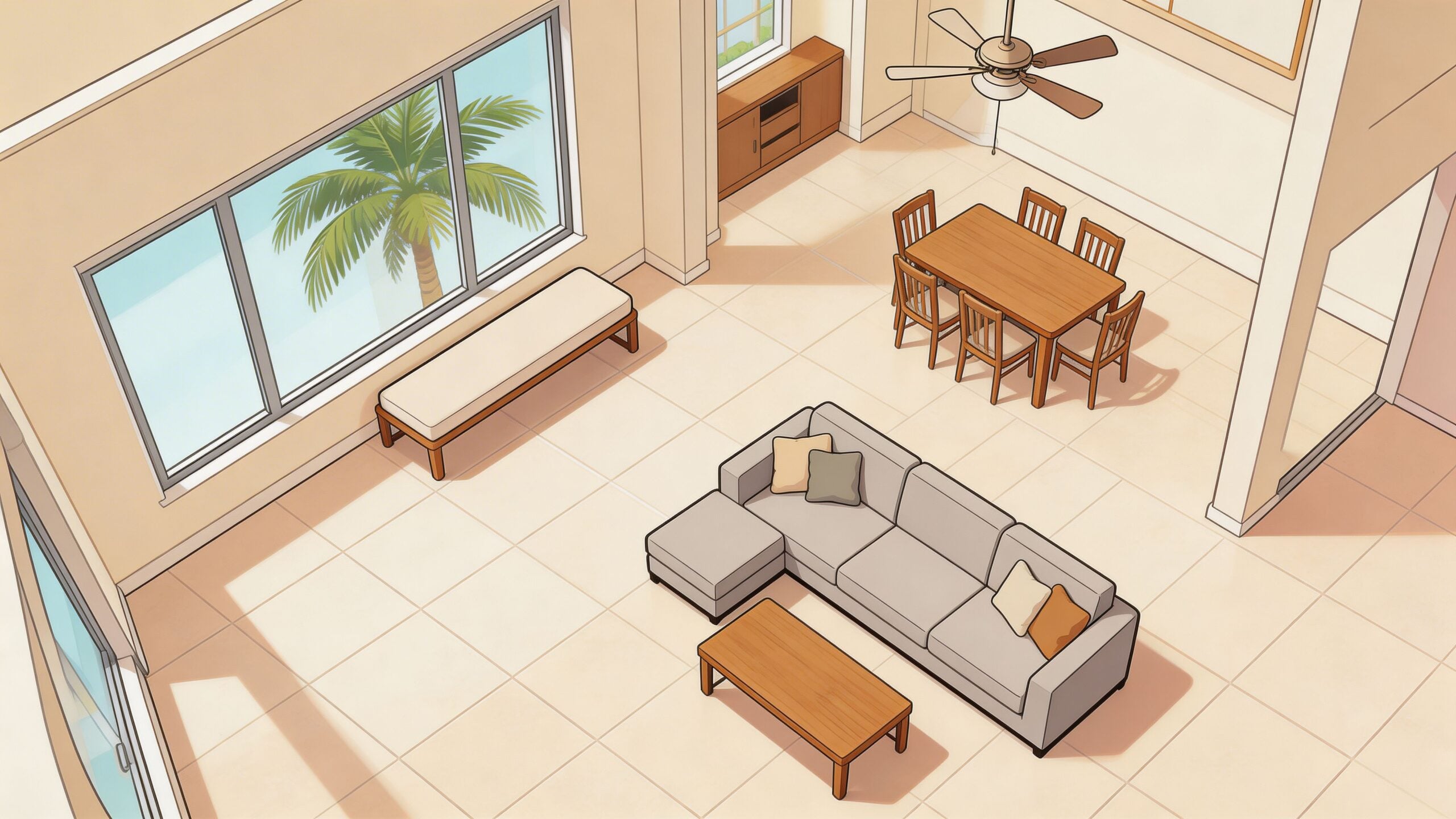
That’s easy to see in Greater Orlando homes, where open-concept layouts, casual breakfast areas, and hardworking entry spaces are common.
Breakfast nooks and banquettes
A family in Sanford may have a kitchen corner that looks roomy until chairs start sliding back. In that case, a bench can save space, but only if the depth stays in proportion to the table and walkway.
A built-in bench with storage can be smart in these homes, especially when you want to keep clutter under control. But storage pushes the piece deeper, so the full layout needs a second look.
Open-plan homes need visual balance
In many Orlando-area homes, a bench may be visible from the kitchen, living room, and entry at once. A piece that’s too deep can feel heavier than the room wants, even if it fits.
That’s where coordinated lines like Canadel can work nicely in dining spaces. You can maintain a cohesive appearance without sacrificing function.
Entryways need breathing room
A bench by the front door sounds simple until backpacks, shoes, and guests show up at once. In tighter Longwood or Lake Mary foyers, a shallower profile keeps the area feeling easier to use.
A few planning checks help:
- Watch swing paths: Make sure doors can open freely.
- Think about daily clutter: Bags and shoes effectively make the bench area deeper.
- Check the sightline: In small foyers, bulky furniture can make the whole entry feel crowded.
If you’re trying to map all of this before ordering, our guide on how to plan a room layout is a practical starting point.
In room planning, “fits” and “fits well” are two different things.
For homeowners furnishing several spaces at once, an in-house design team provides significant value. A bench that works beautifully in one floor plan can feel oversized or undersized in another, even when the measurements look close on paper.
Find Your Perfect Bench at Slone Brothers
Bench depth sounds technical, but the takeaway is simple. The right bench should fit your body, your room, and the way you’ll use it.
That means asking a few good questions:
- Will this bench be used for dining, lounging, or quick everyday tasks?
- Is the listed depth the frame depth or the usable seat depth?
- Will cushions change the feel?
- Does the room still function well once the bench is in place?
Those questions matter even more when you want something that isn’t off the rack. Many shoppers around Longwood, Lake Mary, Sanford, and Orlando don’t need just any bench. They need one that works with a specific nook, a specific table, or a specific style of home.
That’s where custom options become useful. Amish-crafted and American-made programs from brands like Amish, Mavin, Canadel, and Amisco give you more control over scale, finish, and function. If you want a corner setup or built-in style look, the upholstered corner bench page is one example of the kinds of configurations available.
We also carry brands that help round out a whole room, not just one seat. Stickley brings heritage craftsmanship, Stressless focuses on ergonomic comfort, Smith Brothers offers upholstery flexibility, and Bassett and American Leather give shoppers more ways to match a room around daily use.
If you’re comparing dimensions online, use this guide as a filter. But if you’re trying to get the fit right for a real Central Florida home, it helps to sit, measure, and talk it through with someone who does this every day.
Ready to find the perfect piece for your home? Visit the Slone Brothers Furniture showroom in Longwood, FL, and let our design experts help you get started!