
Choosing Types of Wood for Dining Tables That Last a Lifetime


Your dining table is so much more than just a place to eat. It's the true heart of your home, the spot where memories are made. When you start looking at all the different types of wood for dining tables, you're really choosing a future heirloom—one that will host countless family dinners, holiday celebrations, and quiet morning coffees for years to come. The right wood brings together durability, beauty, and character in a way that perfectly fits your family's unique story.
Finding the Heart of Your Central Florida Home
Here in Central Florida, a dining table has to pull double duty. It needs to look great, of course, but it also has to be tough. The constant sun and humidity in places like Longwood, Orlando, and Lake Mary can be brutal on furniture. That's why picking a high-quality solid wood table isn't just a style choice; it's a smart, practical investment that's built to last.
As a local, family-owned business serving our community since 1980, we at Slone Brothers Furniture have seen firsthand what makes a dining table stand the test of time. It’s not about chasing fleeting trends. It's about solid craftsmanship and materials that can handle real life. We put this guide together to share that expertise with you, helping you understand the story behind each wood grain, the strength in each finish, and the incredible value of an American-made piece.
What You'll Learn in This Guide
We've designed this guide to be your go-to resource, whether you're furnishing a brand-new Sanford home or upgrading a beloved family space. We’ll walk you through everything you need to know, from the most popular hardwoods to the amazing possibilities of a custom-designed piece.
Here’s a quick look at what we'll cover:
- The Gold Standard: We'll dive into why solid wood, especially Amish-crafted furniture, is the hands-down winner for lasting quality when compared to veneers or composites.
- A Wood for Every Style: You'll get to know the unique personalities of popular woods like Oak, Maple, Cherry, and Walnut, and discover which one best suits your home's vibe.
- Beyond the Basics: For those looking for a true one-of-a-kind statement piece, we'll explore specialty and reclaimed woods that come with a rich history.
- Making It Your Own: See how our Custom-Order program puts you in the driver's seat, letting you create the perfect table, tailored to your exact needs.
Our goal is simple: to give you the confidence to choose a dining table that will serve as the beautiful, durable centerpiece of your home for generations to come.
Why Solid Wood Is the Gold Standard for Dining Tables
In a world filled with fast-furniture options, solid wood remains the undisputed champion for quality, especially when it comes to the centerpiece of your dining room. When you're weighing the different types of wood for dining tables, you're really making an investment in your home's future. It’s a choice between a temporary fix and a true family heirloom.
Unlike alternatives like veneer or MDF, a solid wood table is simply built to last for generations. Veneer furniture can look beautiful at first glance, but it’s just a thin layer of real wood glued to a composite core. It's prone to peeling, bubbling, and chipping, and once that damage happens, it’s nearly impossible to repair properly.
A solid wood piece, on the other hand, tells a story through its unique, natural grain. Better yet, it can be sanded down and refinished to completely erase years of wear, making it look brand new again.
Durability for Everyday Florida Life
For families here in Longwood and across the Greater Orlando area, a dining table has to be more than just a place for meals. It’s a homework station, a craft corner, and the gathering spot for every holiday and celebration. The inherent strength of solid wood makes it resilient enough to handle all the demands of a busy household.
This is exactly why, as local furniture experts who champion American-made and Amish-crafted pieces, we see solid wood as the non-negotiable foundation of a lasting home. It’s a commitment to quality you can see and feel every single day.
And we're not alone in thinking this. Wood consistently captures the largest share of the global dining table market, accounting for about 40% of all sales—way ahead of metal or glass. This just goes to show that homeowners everywhere, including right here in Central Florida, prioritize durability and timeless design above all else.
An Investment in Timeless Value
Choosing a solid wood dining table is about looking beyond fleeting trends and appreciating real, enduring value. While the initial cost might be higher than mass-produced alternatives, the long-term benefits are undeniable. A solid wood table won't need to be replaced in a few years, saving you money over time and reducing waste.
Solid wood furniture is one of the few household purchases that can actually become more valuable with age. Its ability to be repaired and refinished means it can be passed down through generations, carrying family memories along with it.
To truly get a feel for what makes solid wood special, it helps to understand the different grades, like in this guide to understanding solid Grade ‘A’ Teak. Ultimately, solid wood provides the strength, repairability, and character needed for a piece that will truly be the heart of your home.
You can dive deeper into the benefits of solid wood in our guide on choosing the right hardwood for longevity and style.
Exploring the Most Popular Types of Wood for Dining Tables
Once you’ve settled on solid wood for your new dining table, the real fun begins: choosing the specific type of wood. This is where the table's true personality starts to shine. Every species has its own unique combination of color, grain, and hardness, making it a better fit for certain homes and lifestyles.
For homeowners here in Central Florida, picking the right wood is all about balancing looks with real-world practicality. You need something that not only fits your home's style but is also tough enough to handle daily family life, from hectic breakfasts in Lake Mary to big holiday dinners in Sanford. At Slone Brothers Furniture, we specialize in high-quality American-made and Amish-crafted pieces, and we absolutely love helping our neighbors find that perfect match.
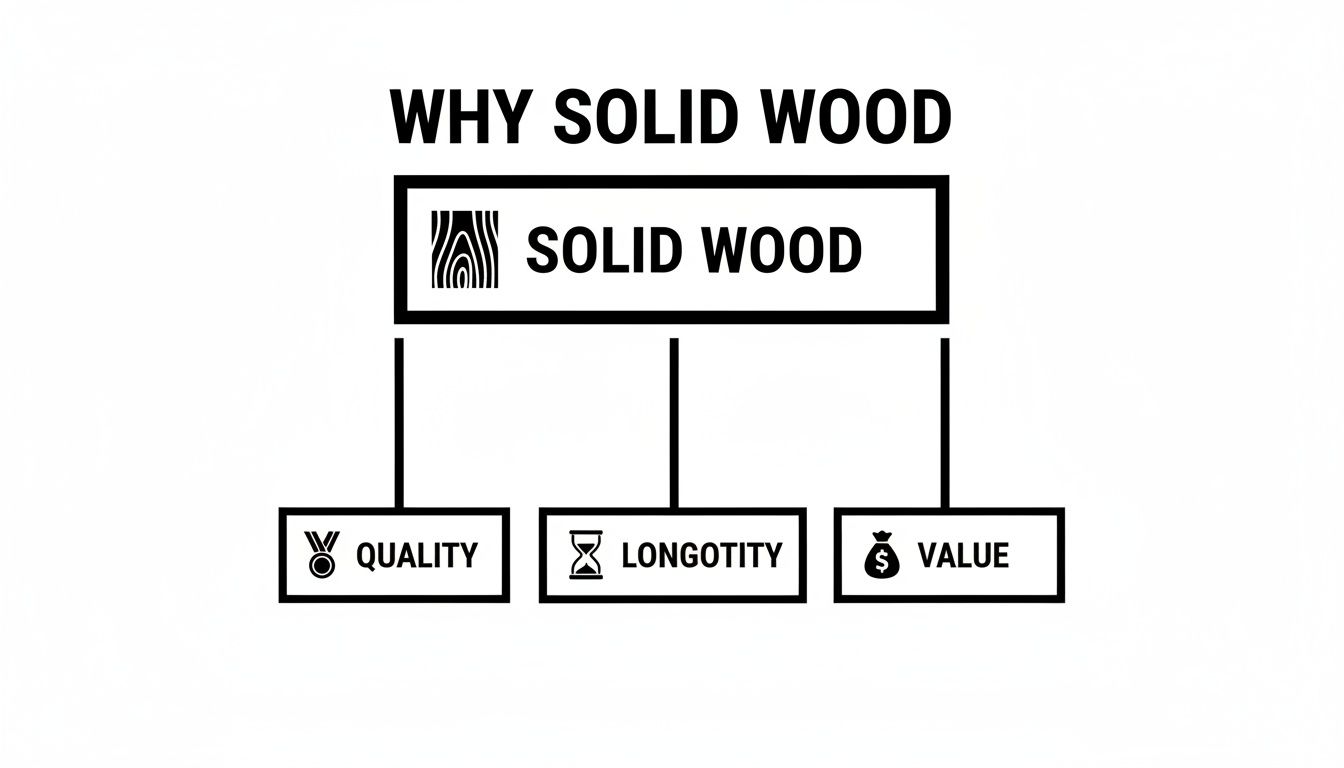
These three pillars—quality craftsmanship, incredible longevity, and outstanding value—are exactly why a solid wood dining table isn't just a purchase; it's a true investment in your home.
Let's dive into some of the most popular woods for dining tables you'll find right here in our Longwood showroom.
Oak: The Enduring Classic
Oak is one of the most beloved and instantly recognizable hardwoods out there, and for good reason. Known for its incredible strength and bold grain patterns, an oak dining table brings a feeling of warmth, tradition, and pure reliability to any room. It's a true workhorse, built for the rigors of a busy family home.
You'll mainly find two varieties: Red Oak and White Oak. Red Oak has a slightly pinkish hue and a more dramatic, wavy grain, while White Oak leans more golden-brown with a straighter, finer grain. Both are exceptionally durable.
- Janka Hardness: Red Oak clocks in around 1290, while White Oak is even tougher at 1360. That high rating means oak is very resistant to dents and scratches—perfect for homes with kids.
- Best For: Oak's timeless look is a natural fit for Traditional, Farmhouse, and Craftsman-style homes. Its rugged nature means it can handle daily homework sessions, craft projects, and family game nights without breaking a sweat.
- Pros: Extremely durable, resists everyday wear and tear, beautiful and prominent grain, and takes stain beautifully to match almost any decor.
- Cons: This is a heavy wood, which can make moving the table a two-person job. The pronounced grain might also feel a bit too traditional for strictly modern aesthetics.
Maple: The Smooth and Modern Choice
If you're drawn to clean lines and a bright, airy vibe, Maple could be the perfect wood for your dining table. Hard Maple is famous for its light, creamy color and a subtle, uniform grain. This smooth surface gives it a sleek, contemporary look that works beautifully with a wide range of modern interior designs.
Its incredible hardness makes it one of the most durable choices available. In fact, its density is why it's the wood of choice for things like bowling alley lanes and butcher blocks. A Maple dining table is built to withstand pretty much anything your family can throw at it.
- Janka Hardness: With a score of 1450, Hard Maple is one of the toughest domestic hardwoods around. This makes it an outstanding choice for high-traffic, heavy-use furniture.
- Best For: Maple is the go-to option for Modern, Scandinavian, and Minimalist designs. Its light color and subtle grain help create a wonderful sense of space and simplicity.
- Pros: Exceptionally durable and scratch-resistant, its smooth surface is a breeze to clean, and the light color brightens up a dining room.
- Cons: Because its grain is so tight, Maple can sometimes take dark stains unevenly. It's often at its best with a natural or light finish that lets its inherent beauty shine through.
Cherry: The Touch of Timeless Elegance
Cherry wood is prized for its rich, warm reddish-brown color and its smooth, satiny finish. When it's new, Cherry often has a lighter, pinkish tone, but it darkens beautifully with age and light exposure, developing a deep, luxurious patina over the years. This graceful aging process is part of what makes Cherry furniture so special.
It has a fine, straight grain that gives it a more formal and refined appearance than Oak. While it's not quite as hard as Maple, it's still a very durable wood that's more than capable of serving as the heart of your dining room for decades.
- Janka Hardness: Cherry has a Janka rating of 950. While this is softer than Oak or Maple, it remains a strong hardwood that holds up well to normal use.
- Best For: Its elegant look makes Cherry a perfect match for Traditional, Colonial, and Shaker-style furniture. It brings an undeniable sense of sophistication to a dining room.
- Pros: Gorgeous, warm color that only gets richer over time, a smooth and uniform grain, and it's easy to work with for creating detailed designs.
- Cons: It is softer than Oak and Maple, so it can be more prone to dents from heavy impacts. Its tendency to darken means you'll want to avoid leaving decor in the same spot for long periods to prevent uneven coloring.
Walnut: The Luxurious Statement Piece
For anyone looking to make a bold, sophisticated statement, Walnut is simply in a class of its own. Its rich, dark chocolate-brown color—often highlighted by dramatic grain patterns and sometimes even a hint of purple—creates instant visual drama. A Walnut dining table isn't just furniture; it's a conversation starter and a piece of natural art.
It's a strong, stable wood that's surprisingly lightweight for its durability. Walnut is a premium choice, often seen in high-end, designer furniture and is especially associated with the iconic Mid-Century Modern style.
- Janka Hardness: At 1010, Walnut is harder than Cherry but a bit softer than Oak and Maple. It offers a great balance of workability and resilience.
- Best For: Walnut is the undisputed star of Mid-Century Modern design. It also fits beautifully into Contemporary and Industrial spaces where its rich color can serve as a stunning focal point.
- Pros: Stunningly beautiful color and grain, very stable wood that resists warping, and adds a sense of luxury to any room.
- Cons: It's one of the more expensive domestic hardwoods. Its darker color can also show dust and minor scratches more readily than lighter woods.
Acacia: The Uniquely Rustic Option
Acacia is a fantastic wood that has surged in popularity lately, and it's easy to see why. It’s known for its striking, rustic appearance, which often features a dynamic mix of colors and a highly varied, wavy grain. Part of its charm is that no two Acacia tables ever look exactly alike.
This hardwood is also incredibly dense and naturally resistant to water, making it an excellent, low-maintenance choice for a dining table. Its durability rivals that of the more traditional hardwoods, but it often comes at a more accessible price point, offering fantastic value. To learn more, check out our guide on what makes an acacia dining table a great choice.
- Janka Hardness: Acacia is seriously hard, with a rating that often exceeds 1700, making it even harder than Maple and Oak.
- Best For: Its rustic and often live-edge look is perfect for Farmhouse, Industrial, and Bohemian-style homes. It brings a warm, organic, and natural element into the dining room.
- Pros: Very hard and durable, naturally water-resistant, unique and beautiful grain patterns, and often a great value for the money.
- Cons: The dramatic variations in color and grain might not suit someone looking for a perfectly uniform, consistent appearance.
Comparing Popular Dining Table Woods
Feeling a little overwhelmed by the options? It's completely normal. Sometimes, seeing everything side-by-side makes the decision a whole lot easier.
This quick-reference table breaks down the key characteristics of these popular hardwoods to help you see how they stack up against one another.
| Wood Type | Janka Hardness (Approx.) | Typical Grain | Best For… | Price Point |
|---|---|---|---|---|
| Oak | 1290 – 1360 | Prominent, open, wavy or straight | Traditional, Farmhouse, Craftsman | $$ – $$$ |
| Maple | 1450 | Fine, subtle, uniform | Modern, Scandinavian, Minimalist | $$ – $$$ |
| Cherry | 950 | Fine, straight, smooth | Traditional, Shaker, Colonial | $$$ – $$$$ |
| Walnut | 1010 | Rich, swirling, dramatic | Mid-Century Modern, Contemporary, Luxury | $$$$ – $$$$$ |
| Acacia | 1700+ | Highly varied, wavy, rustic | Farmhouse, Industrial, Bohemian | $$ – $$$ |
Remember, this is just a starting point. The best way to choose is to see and feel the wood for yourself. Each piece has its own unique character that you can only appreciate in person.
Go Beyond the Everyday with Specialty and Reclaimed Woods
While classics like oak and maple are always a fantastic choice, some homeowners in Central Florida are searching for a dining table with a little more personality—a story to tell. Specialty and reclaimed woods are your ticket to bringing a truly one-of-a-kind piece into your home. This is furniture that feels less like a purchase and more like a discovery, destined to become an instant conversation starter.
Here at Slone Brothers Furniture, we get it. We share that passion for furniture that feels personal and meaningful. It’s why we’re so drawn to the incredible character found in less common and repurposed woods, which often become the heirloom pieces our customers in Orlando and Longwood treasure for a lifetime.
Exploring Distinctive Specialty Woods
Ready to venture beyond the usual suspects? There are several specialty hardwoods out there that offer absolutely stunning and unique looks. Each one brings its own distinct vibe to the dining room.
- Mahogany: Known for that deep, reddish-brown color and a straight, fine grain, Mahogany has a timeless, luxurious feel. It radiates a classic elegance that only gets richer with age, developing a beautiful patina that makes it a sophisticated pick for more formal dining spaces.
- Ash: A fantastic alternative to oak, Ash is an incredibly hard and durable wood with a light, creamy color. Its prominent, straight grain is visually striking, giving it a look that’s clean yet full of character—perfect for both modern and traditional designs.
- Hickory: As one of the hardest and strongest American woods you can get, Hickory is practically built for the chaos of an active family. It’s famous for its dramatic color variations, often showing a mix of creamy white sapwood and darker heartwood in the same board, creating a bold, rustic look that’s impossible to ignore.
The Soulful Appeal of Reclaimed Wood
Reclaimed wood isn't just a material; it's a piece of history. Sourced from old barns, warehouses, and other structures, this wood has already lived a whole life before it even gets to your home. That journey is beautifully etched right into its surface, showing off distinctive knots, nail holes, weathering, and a rich patina that you simply can't fake with new lumber.
Choosing a reclaimed wood dining table is also a wonderful eco-friendly decision, giving beautiful old-growth timber a second act. It’s the perfect way to add warmth, texture, and a powerful sense of history to your space. This approach is all about finding meaningful, sustainable pieces, a concept we dive into in our article on creating a mindfully rustic home.
A reclaimed wood table doesn’t just anchor your dining room; it brings a story with it. Each mark and imperfection speaks to a past life, adding a layer of soul and character that makes the piece uniquely yours.
Whether you're drawn to the refined elegance of Mahogany or the rugged history of reclaimed pine, these unique options let you create a dining space that truly reflects your personal story and style.
How to Create Your Perfect Custom Dining Table
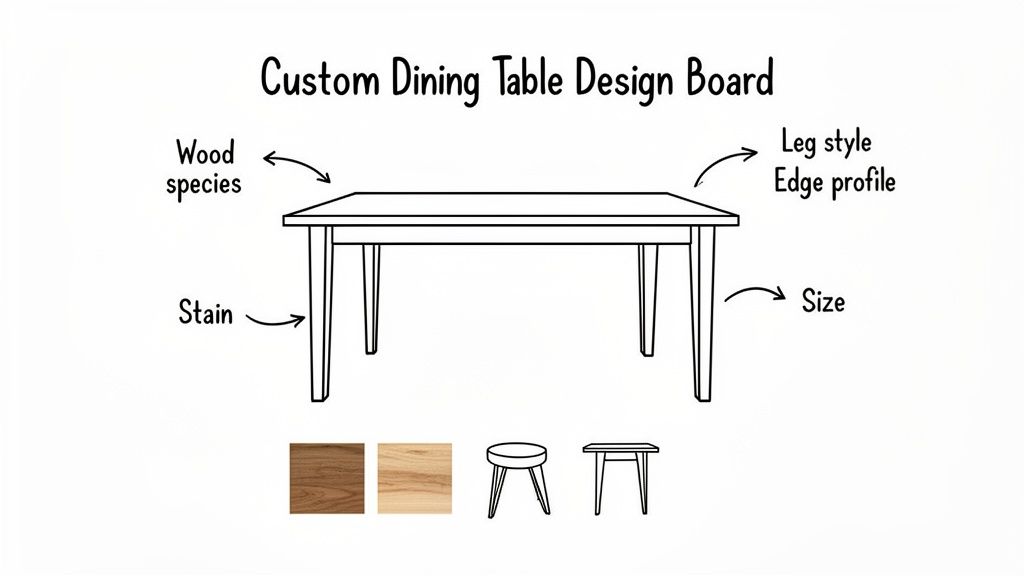
Sometimes, the perfect dining table isn't one you find on a showroom floor—it's one you dream up and bring to life. What if you could design your own from scratch, making sure it’s the perfect fit for your Longwood home, your family’s lifestyle, and your unique taste? That's exactly what our Custom-Order program is all about.
This isn’t some intimidating, complicated process you have to figure out on your own. We make it fun and inspiring, putting you in the designer's chair with our team right there to guide you. It's the absolute best way to get a piece of furniture that is truly and completely yours. You get to select from all the different types of wood for dining tables, hand-pick the stain and finish, and decide on every single detail.
Bringing Your Vision to Life Step by Step
Creating a custom table with us is a collaborative and genuinely exciting journey. Our in-house Design Team is here to walk you through every option in our Longwood showroom, helping you make choices you’ll be thrilled with for decades.
Here’s a look at the key decisions you'll get to make:
- Choose Your Wood: This is the foundation. Will it be the classic durability of Oak, the modern smoothness of Maple, or the rich elegance of Walnut? You can touch and see the samples right here in our store to really feel the difference.
- Select the Perfect Finish: From a clear coat that lets the natural grain shine to a deep, dramatic stain that matches your existing decor, the finish protects the wood and gives the table its final personality.
- Define the Shape and Size: Need a grand table for a large Orlando dining room? Or maybe a compact round table for a cozier breakfast nook? We’ll help you figure out the ideal dimensions for comfortable seating and easy movement.
- Pick a Leg and Base Style: The legs truly set the table’s stylistic tone. You can choose from sturdy farmhouse trestles, sleek tapered legs for a mid-century vibe, or a classic, elegant pedestal base.
- Decide on the Edge Profile: It’s a subtle detail, but it makes a huge impact. Options range from a simple, clean square edge to a more ornate, rounded, or beveled profile.
Your Design Partner in Central Florida
This level of personalization is becoming more and more important to homeowners everywhere. It’s not just a trend; it's about wanting furniture that reflects your personality and is built to last.
At Slone Brothers, our Custom-Order Program is our way of making sure you never have to compromise. It’s about building a future family heirloom that tells your story from day one.
Ready to start designing the heart of your home? You can find out more about how it all works by exploring our guide on our Custom-Order program. And once your table design is set, we can even help you figure out how to choose dining room chairs to complete the perfect look.
Find Your Forever Table at Our Longwood Showroom
Choosing the right wood for a dining table is a big decision. It’s a delicate balance between your family’s daily life, the style you’re dreaming of, and your budget. While starting your research online is a great first step, nothing beats seeing and touching these incredible materials for yourself.
We’d love for you to come visit the Slone Brothers Furniture showroom, a Longwood landmark since 1980. Here, you can run your hand over the buttery-smooth finish of a maple table, get lost in the deep, swirling grain of walnut, and feel the incredible heft of Amish-crafted oak. Seeing the true colors and textures up close makes all the difference, giving you the confidence to choose the piece that will truly become the heart of your home.
Your Local Design Partners
With so many beautiful options, it’s easy to feel a bit overwhelmed—but you don’t have to figure it all out on your own. Our expert In-House Design Team is always here to offer complimentary advice, with no strings attached. Whether you have questions about which wood can stand up to a busy household in Lake Mary or how to perfectly match a table to your Sanford home's unique decor, we're here to help.
We believe finding the perfect dining table should be an exciting and enjoyable journey. Our goal is to help you find—or create—a table you’ll absolutely love for a lifetime, all backed by our Low Price Promise.
Let us help you find a piece that’s ready to start telling your family’s story. Whether it’s a table you fall in love with on our floor or a one-of-a-kind piece from our Custom-Order program, we’re here to help you make a choice that brings joy for generations. Ready to find the perfect piece for your home? Visit the Slone Brothers Furniture showroom in Longwood, FL, and let our design experts help you get started!
Questions We Hear All the Time About Wood Dining Tables
Here in Central Florida, we get a lot of great questions from homeowners trying to find that perfect dining table. We’ve pulled together a few of the most common ones we hear in our Longwood showroom to help you on your search.
What's the Most Durable Wood for a Busy Family?
For a busy Orlando-area family with kids, you really can't beat the durability of hardwoods like Oak, Maple, or Acacia. Maple is exceptionally hard, which makes it incredibly resistant to the dents and scratches that come with daily life.
Oak is another classic workhorse, known for its sheer strength and its ability to hide minor wear and tear within its prominent, beautiful grain. Honestly, both are fantastic investments for a table that needs to stand up to homework, craft projects, and countless family meals.
How Do I Care for My Table in Florida's Humidity?
Humidity is a real concern around here, as wood naturally expands and contracts with changes in moisture. The key to managing it is consistency. Try to keep your home’s temperature stable and avoid placing your table in harsh, direct sunlight or right under an AC vent.
A regular dusting with a soft cloth and an occasional polish will go a long way in protecting the finish. For a complete guide, you can find more great tips in our detailed article on how to care for wood furniture.
Is an Amish-Made Dining Table Worth the Investment?
Absolutely. When we talk about Amish craftsmanship, we're talking about a commitment to quality that is simply second to none. These tables are built from premium, hand-selected solid woods using time-honored joinery techniques that create incredible stability and longevity.
An Amish-made table is more than just furniture; it’s a future heirloom, built to be passed down through generations. That makes it a wonderful long-term value.
Can I Match a New Table to My Existing Furniture?
Yes, and this is where our Custom-Order program truly shines. If you can't find a perfect match on our showroom floor, we can help you create one from the ground up.
You get to select the wood species and then choose from a huge array of stains and finishes to perfectly complement your existing chairs, buffet, or other decor. Our Design Team is here to help you coordinate everything seamlessly.