
What Is the Best Wood for Furniture for Your Central Florida Home?

When you ask, "what is the best wood for furniture," the honest answer really depends on your family's lifestyle and what you need from the piece. But for those high-traffic, everyday items like dining tables and bedroom sets that simply have to last, we always point our Central Florida neighbors toward dense hardwoods like Oak, Maple, and Walnut. There’s just no substitute for their durability when it comes to the rigors of a busy home.
Understanding the Foundation of Quality Furniture
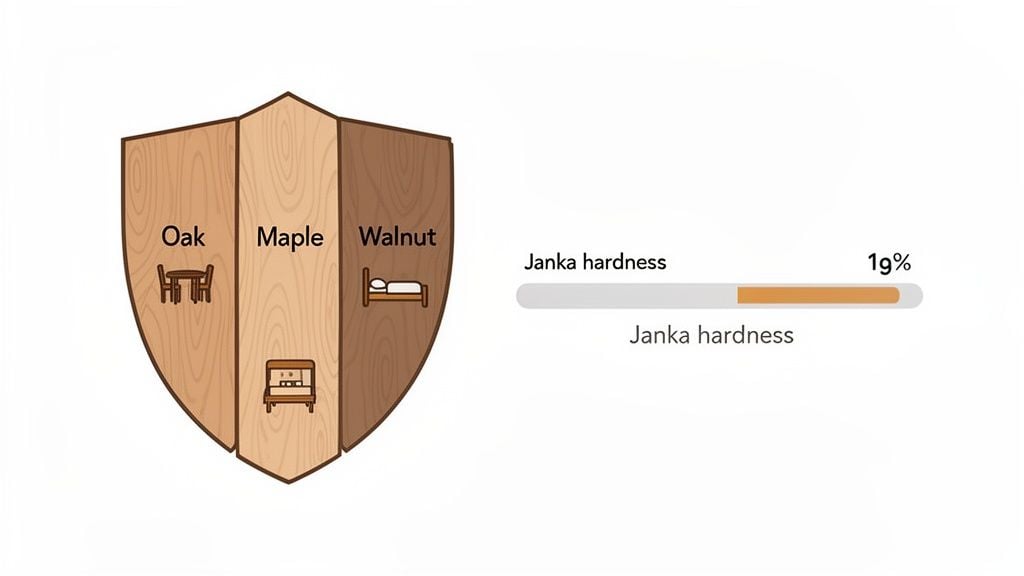
Choosing the right wood is the very first step toward finding furniture with lasting beauty and value—something we've been helping Central Florida families do since 1980. We like to think of wood hardness like a shield; the stronger the shield, the better it will resist the dents and scratches from dropped keys, sliding dishes, and all the little moments of daily life. This strength is actually measured by something called the Janka hardness test.
A higher Janka rating means the wood is tougher and more resilient. This is precisely why hardwoods are the top choice for the pieces you'll use day in and day out. Their dense, tight grain provides the structural integrity needed for a long and useful life, especially for something like a dining table that sees constant action.
The Strength of Hardwoods
Hardwoods like oak and maple have earned their top spot in the furniture world for good reason. It’s not just talk; modern tests confirm that oak has a Janka hardness rating of around 1,200 lbf, far surpassing softer woods. Maple is even tougher, boasting a 1,450 lbf rating that makes it an incredible choice for dining sets.
These powerhouse woods are so trusted for their durability that they are projected to command around 60% of the global wood furniture market share. It's a clear sign that when people want pieces that are built to last, they turn to these classic materials.
As your local Longwood furniture experts, we believe an informed decision is the best decision. Understanding the "why" behind wood choices empowers you to invest confidently in your home.
Just as you wouldn't build a house on a weak foundation, choosing the right wood for your furniture ensures it will become a cherished part of your family’s story for years to come. This same principle of choosing the right material for the job applies all over the home, as you can see in this helpful guide on the best wood flooring: Solid & Engineered Options.
Solid Wood Versus Engineered Wood Explained
When you’re browsing furniture, you’ll hear terms like "solid wood" and "engineered wood" thrown around quite a bit. As your local furniture experts here in Longwood, we think it’s crucial for Orlando homeowners to know what that really means. Getting this right is the difference between buying a piece for right now and investing in something that lasts a lifetime.
Think of solid wood furniture as being carved from a single, solid piece of lumber milled straight from a tree. It’s 100% natural wood, all the way through. This is what gives each piece its one-of-a-kind grain pattern, its authentic character, and the strength to be sanded, refinished, and repaired for generations to come. It’s the kind of quality you can feel in a beautiful Stickley mission bookcase or a dining table from Simply Amish.
Engineered wood, on the other hand, is a completely different animal. It’s a composite material created by binding wood fibers, particles, or thin veneers together with adhesives, heat, and pressure. The most common types you'll run into are:
- Particleboard: Made from small wood chips and sawdust. It’s often used for budget-friendly, flat-pack furniture and is the least durable option out there.
- MDF (Medium-Density Fiberboard): Made from finer wood fibers, which creates a denser and smoother material than particleboard.
- Plywood: Created by gluing thin layers of wood veneer together. The grain of each layer runs perpendicular to the one below it, which makes it surprisingly strong and resistant to warping.
The Clear Winner for Durability and Value
While engineered woods certainly have their place, solid wood is almost always the better choice for furniture you want to keep. The market data tells the same story; solid wood, especially hardwoods, consistently dominates the wooden furniture market. Consumer demand for its unmatched durability means it holds the lion’s share, with North America alone making up 40% of the global market. In fact, some resale data shows that a solid oak piece can hold onto 80-90% of its value even after a decade of use.
For us here in Central Florida, one of the biggest advantages of solid wood is its ability to stand up to our infamous humidity. Real wood can naturally expand and contract with changes in temperature and moisture without falling apart.
Engineered wood, especially particleboard, is extremely vulnerable to moisture. Once water gets in, it can swell, bubble, and delaminate—causing irreversible damage that’s impossible to properly repair.
Why We Champion American-Made Solid Wood
At Slone Brothers, creating lasting value for our community has been our goal since 1980. That’s why we’re so passionate about our collections of American-made and Amish-crafted furniture. These pieces, built from solid North American hardwoods, are made to become future family heirlooms. They stand for a commitment to craftsmanship that perfectly aligns with our family-owned values.
When you invest in a solid wood piece from a brand like Mavin or Stickley, you aren’t just buying a table or a dresser. You're bringing home a piece of functional art that tells a story—one that can be passed down through your family, gaining more character along the way. While engineered wood might seem like an affordable option upfront, solid wood provides unbeatable long-term value, beauty, and peace of mind.
To see what we mean, you can explore some stunning examples in our curated collection of American-made solid wood furniture.
Exploring the Best Hardwoods for Your Home
Okay, so you've got the basics of solid versus engineered wood down. Now for the fun part: picking the actual wood for your furniture. This is your field guide to some of the most beautiful and dependable hardwoods you’ll find right here in our Longwood showroom. It’s all about matching the wood's natural personality to your home and how you live in it.
At Slone Brothers, we’re firm believers that incredible furniture starts with incredible wood. It’s a value shared by the American craftsmen behind brands we love, like Mavin and Smith Brothers. They understand better than anyone that a piece’s ability to last for generations comes down to the timber it was built from. Let’s take a look at the heavy hitters.
Oak: The Timeless Classic
Oak is probably the most classic hardwood in American furniture, and for very good reason. It’s incredibly strong, heavy, and has a signature open grain pattern that can range from clean, straight lines to dramatic arches. That distinct texture gives oak furniture a traditional, substantial presence that’s perfect for a busy family home in Lake Mary or Sanford.
You’ll typically run into two main varieties:
- Red Oak: This type carries a warm, reddish tint and a slightly more porous grain. It's built tough, making it an amazing choice for a family dining table that has to stand up to daily meals, homework, and art projects.
- White Oak: A bit harder and even more durable than its red cousin, white oak has a gorgeous golden-brown color. It’s also naturally more resistant to rot and water, which is why it’s prized for heirloom-quality pieces. The iconic mission-style furniture from Stickley often puts the timeless beauty of white oak on full display, showcasing its heritage and craftsmanship.
Getting familiar with the unique characteristics of different hardwood types can make a world of difference when you're making a final decision.
Maple: The Smooth Contender
If you think of oak as the rugged traditionalist, then maple is its smooth and sturdy counterpart. As one of the hardest domestic woods you can find, maple is exceptionally resistant to dings, dents, and everyday wear. Its defining feature is a fine, uniform grain and a creamy white color that sometimes has a subtle reddish tint.
That incredibly smooth surface makes maple a perfect canvas for all kinds of finishes, from a light, natural stain that would feel right at home in a contemporary Orlando house to darker, more classic tones. Its impressive durability makes it a top-tier choice for:
- Bedroom Sets: Dressers and nightstands crafted from maple will look great and hold up to use for decades.
- Dining Furniture: You’ll see brands like Canadel frequently use maple for their custom dining sets because of its clean look, sheer strength, and incredible customization options.
Because of its density and light color, maple provides a bright, clean aesthetic without sacrificing an ounce of strength. It’s an ideal choice for anyone seeking American-made quality that feels both fresh and timeless.
This infographic is a great visual for sorting out the core differences between wood construction types.
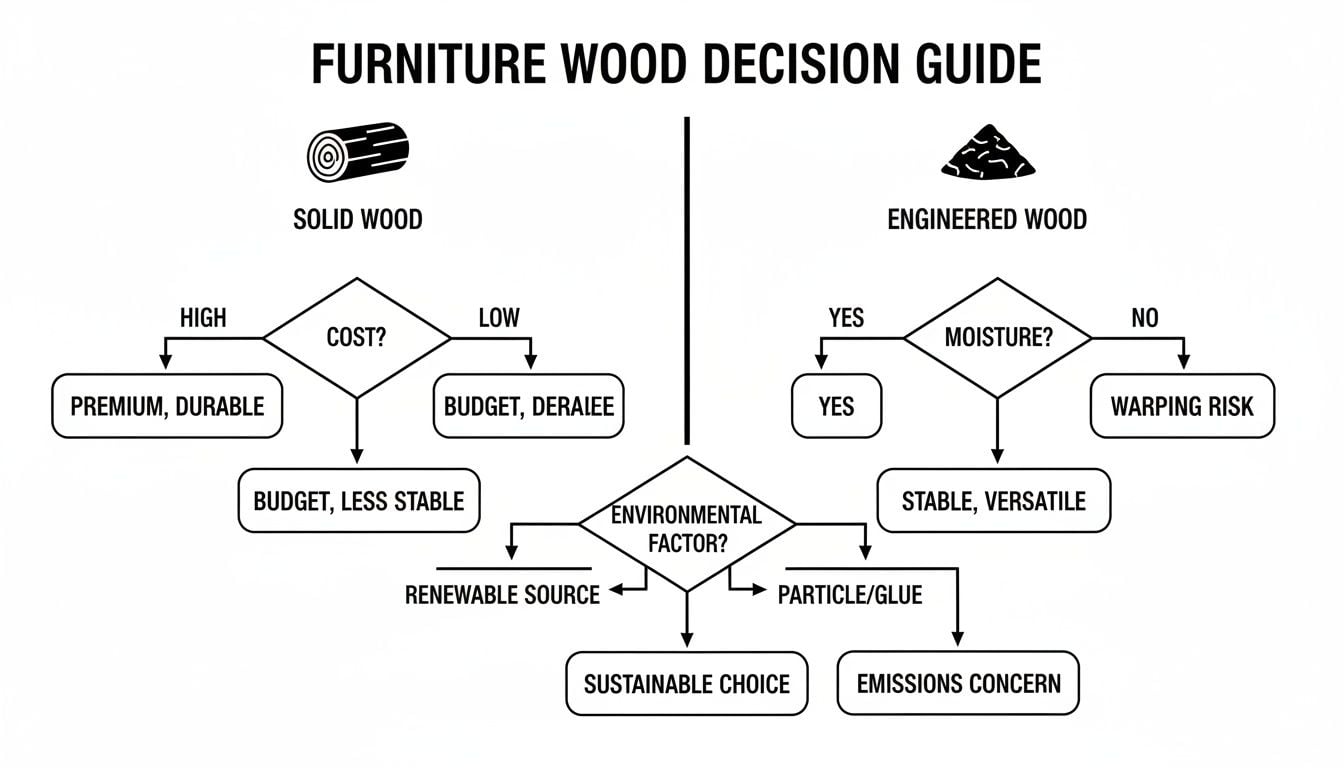
The flowchart makes it clear: while engineered options have their place, solid wood simply offers better longevity and repairability, making it the smarter long-term investment.
Walnut and Cherry: The Luxurious Duo
When you’re looking to bring a sense of true elegance and warmth into a room, walnut and cherry are the hardwoods that immediately come to mind.
Walnut is celebrated for its deep, rich brown color and complex grain patterns, which can run from straight and simple to beautifully swirled. It’s a strong wood, but it's also surprisingly lightweight, and it polishes to an incredibly smooth finish. It makes for a stunning statement desk in a home office or a sophisticated entertainment center.
Cherry is famous for its warm, reddish-brown hue that actually deepens over time, developing a richer patina with exposure to light. This graceful aging process is one of its most beloved qualities. With its fine, straight grain and satin-like texture, it’s a perfect fit for formal dining room furniture or elegant bedroom pieces. We dive deeper into how wood selection impacts furniture in our guide on wood furniture explained choosing the right hardwood for longevity and style.
When to Choose Softwoods and Specialty Woods
While hardwoods get most of the attention for high-traffic furniture, it’s a huge mistake to ignore their cousins: softwoods and specialty woods. Asking "what's the best wood for furniture?" isn't just about durability. Sometimes, your budget, personal style, or how you plan to use a piece are far more important.
That’s when knowing the unique roles of other woods helps you make a truly smart purchase for your Central Florida home.
Think of it like buying a car. You wouldn't use a sports car to haul lumber, and you wouldn't take a semi-truck on a scenic Sunday drive. In the same way, you wouldn't choose a delicate wood for a child's playroom, but you also don't need the bulletproof density of oak for a purely decorative accent piece.
The Role of Softwoods
Softwoods like pine often get labeled as the more affordable, rustic option. Because they grow much faster than hardwoods, they’re generally less expensive. This makes pine a fantastic choice for furniture that won't see a ton of daily abuse or for capturing a specific look.
A softwood like pine is perfect for:
- A decorative bookcase in a home office.
- A guest room bed frame that's used only occasionally.
- Accent tables or consoles in low-traffic hallways.
- Furniture you plan to paint to match your decor perfectly.
The main trade-off is that softwoods live up to their name—they’re softer. They will dent and scratch more easily than hardwoods. For many folks in Orlando looking for that charming cottage or farmhouse vibe, those little imperfections that are bound to happen just add to the piece's character over the years.
Matching the wood's inherent properties to its intended environment is a core principle we follow at Slone Brothers. Our in-house design team often helps clients in Lake Mary and Sanford furnish their homes by balancing beauty, budget, and practical daily use.
Understanding Specialty Woods Like Teak
Then we have the specialty woods, which are chosen for their truly exceptional properties. For any Florida homeowner, there is no greater champion for outdoor living than Teak. It's the undisputed gold standard for any furniture that has to brave our intense sun and relentless summer rains.
Teak is a tropical hardwood that produces its own natural oils. This oil acts like a powerful, built-in defense system against moisture, rot, and destructive pests like termites. It’s what makes Teak the perfect material for a high-quality Palasar patio set that will look beautiful for years, not just a single season. If you're planning an outdoor oasis, you might also find some great ideas in our guide to choosing an acacia dining table.
This remarkable wood is a superstar for both outdoor furniture and high-end indoor pieces. Thanks to its superior density and an oil content that resists rot by an estimated 90%, its performance is simply unmatched in our climate. Research shows teak can have a lifespan of over 50 years outdoors, a huge difference from the 10-15 years you might get from something like pine. You can find more insights on teak’s dominance in the furniture market and its sustainable sourcing on farmfolio.net.
Ultimately, choosing Teak is a long-term investment in worry-free quality—perfect for the lifestyle we love here in Central Florida.
Caring for Wood Furniture in the Florida Climate
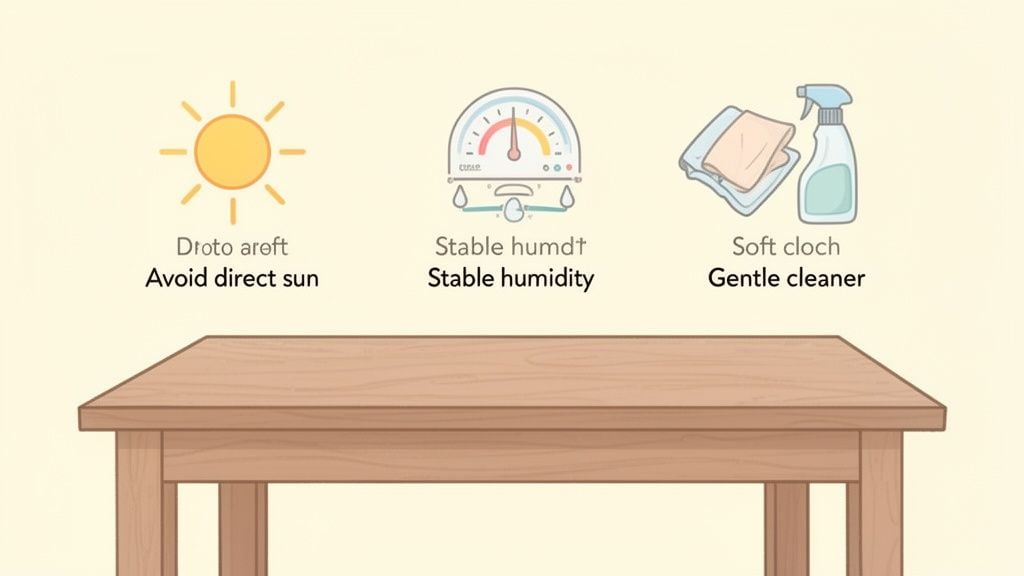
Once you’ve found the perfect wood furniture for your home, the next step is making sure it lasts. That’s especially true here in Central Florida. Our beautiful sunshine and humid air can be tough on wood, but with a few simple habits, you can keep your pieces looking brand new for decades to come.
We’ve always believed our job isn't just to sell you quality furniture, but to help our neighbors in Orlando and beyond enjoy it for a lifetime.
Guard Against Sun and Humidity
Think of your furniture's finish as sunscreen. Just like you wouldn't spend a day at the beach without it, your wood furniture needs a shield from constant, direct sunlight. Over time, those powerful ultraviolet (UV) rays can bleach the finish and dry out the wood, leaving it brittle.
The easiest fix? Simply arrange your room so that beautiful Stickley bookcase or Mavin dining table isn't sitting in the path of that intense afternoon sun. It’s one of the most effective long-term care tips we can offer.
Humidity is the other big factor for any wood piece in our local climate. Wood is a natural material, and it actually "breathes"—it expands when the air is humid and contracts when it's dry. When this happens too often or too dramatically, it can stress the joints and even cause the wood to warp or crack.
Maintaining a stable indoor environment is key. Running your air conditioner consistently during our hot, humid summers is the best way to regulate indoor humidity, protecting your furniture from the constant expansion and contraction that causes long-term damage.
This kind of climate control is crucial for preserving the integrity of both solid wood and high-quality veneered pieces.
The Right Way to Clean
When it's time to clean, a gentle approach is always best. Regular dusting with a soft, dry microfiber cloth should be your first line of defense. For a deeper clean or to wipe away smudges, use a cloth that’s just slightly damp, and always follow up immediately with a dry one.
Whatever you do, never use harsh chemical cleaners, ammonia-based products, or all-purpose sprays on your wood furniture. These can strip away the protective finish and leave the wood underneath exposed and vulnerable. Abrasive cleaners or scrub pads are also a no-go, as they can create tiny scratches that dull the surface.
By following these simple routines, you’re ensuring that the beautiful wood furniture you invested in will continue to be a source of pride and comfort in your home. It’s all part of what we’ve been helping families do since 1980: turn a house into a home.
Your Guide to Finding the Perfect Piece in Longwood
Now that you can tell the difference between hardy oak and elegant cherry, you’re ready for the fun part—finding a beautiful piece of furniture you’ll love for years to come. Knowing the story behind the wood is one thing, but translating that into the perfect fit for your Central Florida home is where the real magic happens.
That’s where we come in. Here at Slone Brothers Furniture, our family has been helping our neighbors in Longwood, Lake Mary, and across the Orlando area find furniture that truly lasts since 1980. It’s our passion. We’ve dedicated ourselves to sourcing high-quality, American-made furniture from brands that are masters of their craft.
When you see a piece from Simply Amish or Mavin in our showroom, you’re looking at more than just wood. You’re seeing a deep commitment to solid wood construction and time-honored techniques.
Making It Uniquely Yours with Our Design Team
Sometimes, the perfect piece isn’t one you find on the floor—it’s one you help create. What if you love a dining set's style but need it in a different wood to match your floors? Or you’ve found the ideal chair but want it in a custom finish? That’s a common roadblock for shoppers, but it’s a problem we genuinely love to solve.
Our robust custom-order program is what really sets us apart from the big-box stores. It’s a collaborative process where you get to be the designer, working directly with our in-house design team to bring your vision to life.
This service is a perfect match for brands known for their amazing flexibility, including:
- Canadel: Imagine designing your dream dining set from the ground up, selecting the exact wood, finish, and even table shape to fit your space perfectly.
- Amisco: Known for their stylish and durable metal and wood pieces, you can create custom bar stools or dining chairs that are truly one-of-a-kind.
- American Leather: While famous for their upholstery, many of their designs feature beautiful wood elements that can be tailored to your vision, demonstrating their commitment to American-made quality and flexibility.
Our goal is simple: to make sure you never have to compromise. We believe finding the best wood for your furniture should go beyond just knowing the species—it should mean getting the exact look and feel you want for your home.
Exceptional Value Is Part of Our Promise
As a local, family-owned business, we believe offering exceptional quality and great value go hand in hand. We’re not just competing on price; we’re focused on the long-term satisfaction of our customers. That's why we stand behind our Low Price Promise, ensuring you always get the best possible value on every piece.
And for those who love the thrill of a great find, our large Clearance Outlet is a must-visit. It’s your chance to discover incredible savings on high-quality furniture from top brands—the perfect way to find a hidden gem that combines outstanding craftsmanship with an unbelievable price.
We warmly invite you to our Longwood showroom to see, touch, and experience this quality for yourself. Let our friendly experts help turn your newfound knowledge into a beautiful reality for your home.
Frequently Asked Questions About Wood Furniture
Over the years, certain questions pop up time and time again in our Longwood showroom. We've found that getting clear, honest answers is the most important step in choosing furniture you’ll be happy with for decades.
Our family has been helping folks across Central Florida furnish their homes since 1980, so we’re always glad to share what we know. Here are a few of the most common questions we hear.
What Is the Most Durable Wood for a Dining Room Table?
When it comes to a dining table that has to stand up to daily family life, you just can't beat dense hardwoods. We always point customers toward Oak, Maple, and Walnut for pieces that will see a lot of action. Their natural hardness means they can handle spilled drinks, dropped forks, and science projects without showing every little ding.
Oak is a classic for a reason—it’s incredibly strong and has a beautiful, prominent grain. For a similar level of durability but with a finer, more contemporary grain, Maple is a fantastic choice. We often recommend Amish-built tables from brands like Mavin because they are specifically designed to be true heirloom pieces, ready for everything from big holiday feasts to nightly homework.
Is Amish Furniture Really Better Quality?
It absolutely is, and the difference is something you can see and feel. The stellar reputation of Amish furniture isn't just marketing; it's built on two core principles: superior materials and time-honored construction methods.
Amish craftsmen exclusively use solid American hardwoods and traditional joinery techniques, like mortise-and-tenon joints, that have been proven over centuries. This creates furniture with incredible strength and stability, built to be passed down through generations.
When you choose a piece from a brand like Simply Amish in our showroom, you're investing in a level of handcrafted excellence that mass-produced furniture simply can’t match.
How Can I Tell if Furniture Is Solid Wood?
This is a great question, and there are a few simple ways to spot real solid wood. First, look closely at the grain pattern on the top surface. On a solid piece, that pattern should "waterfall" over the edge and continue down the side. With veneers, the edge often looks like a thin, straight line or has a completely different pattern.
Next, give it the "heft test." Solid wood furniture is heavy. If you can, try lifting one corner. Finally, do a little detective work by looking at the back of the piece or inside a drawer. These less-visible areas are often left unfinished, giving you a clear view of the solid timber without any veneer covering it. Our team is always happy to walk you through these quality markers when you visit our showroom.
Ready to find the perfect piece for your home? Visit the Slone Brothers Furniture showroom in Longwood, FL, and let our design experts help you get started!