
Custom Dressing Room Furniture in Orlando | Slone Brothers

You know the moment. You're getting ready for work or dinner in Orlando, one shoe is under the bed, your favorite earrings are in the wrong drawer, and half your clothes feel cramped into a closet that never quite worked for the way you live.
That's usually when homeowners start thinking about dressing room furniture differently. Not as a luxury add-on, but as a practical way to bring order, comfort, and a little calm to the busiest part of the day.
A well-planned dressing area doesn't have to be huge or formal. In many Central Florida homes, it's a smart combination of wardrobe storage, a vanity, a mirror, and seating placed in the right spots. When those pieces are chosen carefully, your room works better, your clothing stays in better shape, and the whole space feels more intentional.
The Essentials of Dressing Room Furniture
A dressing room starts with function. Before style, before finish, before hardware, you need furniture that supports the way you get ready each day.
If your current setup feels scattered, it usually means one of two things. Either the room is missing a key furniture piece, or one piece is trying to do too many jobs.

The core pieces that do the heavy lifting
Most dressing room furniture falls into a few clear categories:
- Wardrobes and armoires hold hanging clothes, folded items, and often accessories. These are the backbone of the room.
- Dressers and chests handle everyday folded storage, from sweaters to sleepwear to linens.
- Vanities or dressing tables create a dedicated getting-ready spot for grooming, makeup, skincare, or jewelry.
- Benches and stools give you a place to sit while dressing and can soften a room visually.
- Nightstands or small accent cabinets often help in bedroom-based dressing areas where you need a little overflow storage close at hand.
Each piece has a job. When homeowners skip that step and buy only by appearance, the room tends to look finished but still feel frustrating.
How the pieces work together
Think of dressing room furniture as a system, not a collection. A wardrobe handles long garments and daily hanging pieces. A dresser takes care of folded storage. A vanity gives smaller personal items a home, so they don't drift onto every surface in the room.
Practical rule: If you use an item at least several times a week, it should have an easy-to-reach home.
That single rule solves a lot of clutter.
For example, if you wear watches, belts, or jewelry regularly, a dresser with shallow top drawers can serve you better than one deep chest. If you sit to put on shoes, a bench isn't decorative. It's useful. If you need to check outfits in good light, the mirror and vanity placement matter as much as the furniture itself.
A lot of homeowners around Longwood, Lake Mary, and Sanford also discover that the best dressing areas aren't always separate rooms. Sometimes the best answer is a bedroom corner that's thoughtfully arranged with storage, a seat, and one strong focal piece.
If you're also refining your overall sleep space, this guide on how to choose bedroom furniture helps connect the dressing area to the rest of the room so everything feels cohesive.
Planning and Measuring for Your Central Florida Home
Good dressing room furniture starts on paper, not in the showroom. Measuring first saves you from the most common mistakes, especially in Florida homes where layout, light, and airflow all matter.
Some rooms look generous until you open a cabinet door. Others seem tight until you use vertical storage well. The difference is careful planning.
The four measurements that matter most
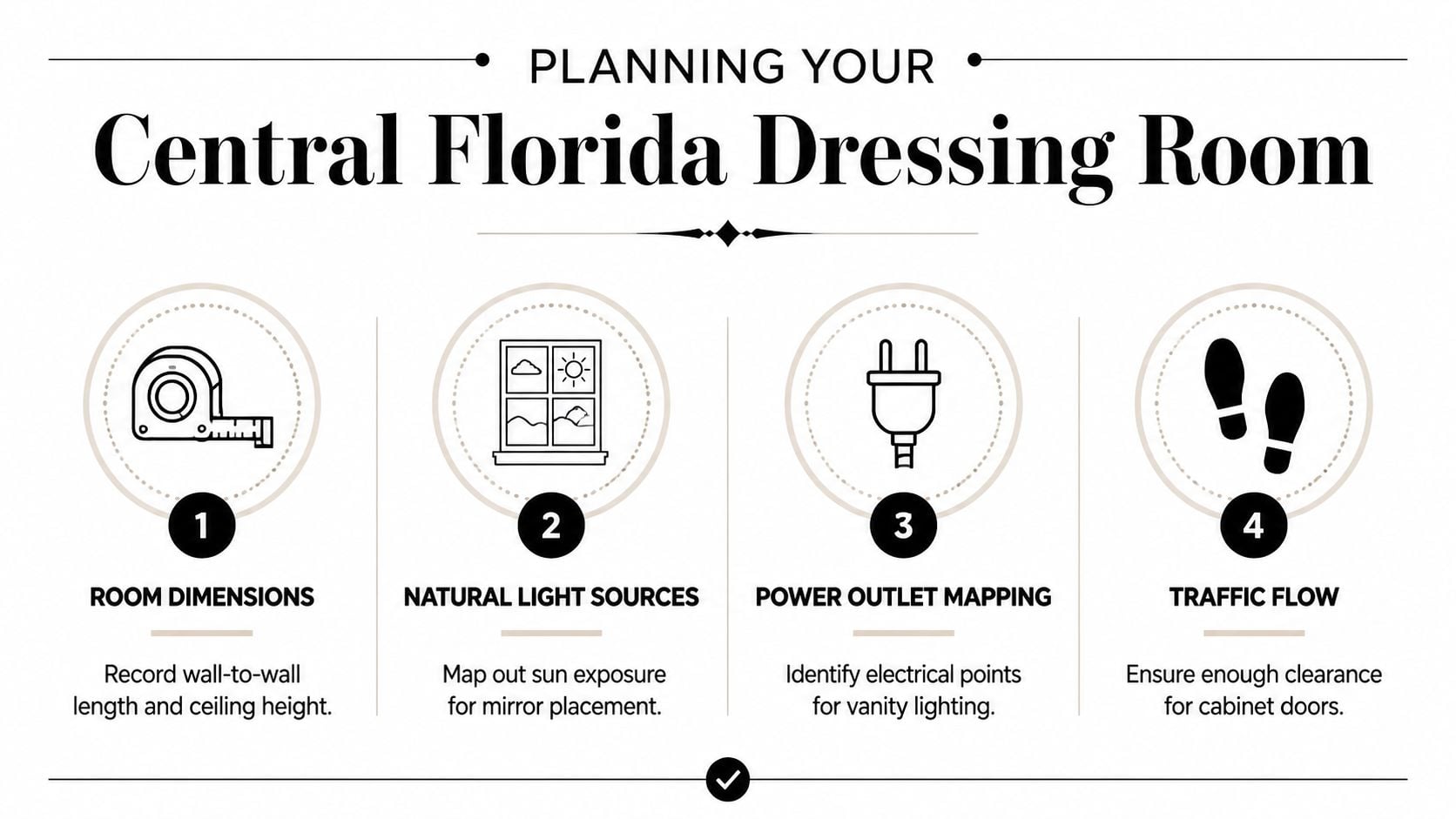
Start with these:
Wall length and ceiling height
Measure every usable wall, not just the one you plan to furnish first. Ceiling height matters because tall storage can reclaim space without crowding the floor.Window and door placement
A vanity near natural light often works beautifully, but you don't want drawer banks blocking trim, outlets, or window operation.Swing space and walking paths
Leave enough room for cabinet doors, drawers, and your own movement while dressing.Outlet locations
If you use a hair dryer, lighted mirror, or charging tray, power placement matters early, not late.
A simple sketch is enough. It doesn't need to be fancy. It just needs to be honest.
Florida humidity changes the plan
In Central Florida, airflow isn't optional. It affects both furniture and clothing.
According to standard wardrobe sizing guidance, standard dressing room wardrobes require a depth of 20 to 24 inches for hanging garments, and 24 inches is especially important for air circulation, which helps prevent moisture accumulation and mildew. That matters in a humid climate like ours, where closets can feel stuffy even in air-conditioned homes.
Leave breathing room around hanging clothes. Packed rods and shallow cabinets may save inches on paper, but they can create real headaches for fabric care.
That's one of the biggest areas where homeowners get tripped up. They focus on fitting more in, when the better goal is fitting the right amount well.
Common layout choices in local homes
Different Central Florida homes call for different dressing room furniture plans:
| Home layout | What usually works best |
|---|---|
| Primary bedroom with one open wall | A wardrobe plus a low dresser, keeping the room from feeling top-heavy |
| Narrow bedroom corner | A slim vanity, wall mirror, and vertical chest |
| Walk-in closet with a blank end wall | Built-up storage, shoe space, and a bench if clearance allows |
| Older home with uneven niches | Freestanding pieces with flexible placement |
In newer Orlando-area homes, I often see generous primary bedrooms but not always enough practical storage. In some older Longwood homes, the room shapes are more interesting, which can make freestanding dressing room furniture a smart solution.
If you want help mapping dimensions before you shop, this room-by-room guide on how to measure a room for furniture is worth keeping handy.
Choosing Materials and Styles for Enduring Quality
If you use your dressing room every day, quality shows up fast. You feel it in drawers that glide properly, doors that hang straight, and surfaces that still look good after years of use.
That's why I always tell homeowners to buy dressing room furniture the same way they'd buy a dining table or a sofa they plan to keep. Start with construction, then move to style.

Why well-made furniture keeps winning
The broader market points in that direction too. The global bedroom furniture market was valued at USD 266.15 billion in 2024, with continued growth tied to demand for quality and personalization. That tracks with what many homeowners want locally. They're less interested in disposable pieces and more interested in furniture that fits their home and lasts.
For a Florida home, I lean toward solid, well-crafted pieces with stable construction and finishes that feel timeless rather than trendy. Amish-crafted and American-made furniture often stands out here because the joinery, wood selection, and build quality tend to support long-term use.
Brands known for that kind of value include Simply Amish and Mavin. If you prefer a more classic, architectural look, Stickley often appeals to homeowners who want furniture with heritage and presence.
Style should match the house, not just the photo
A dressing room can be traditional, transitional, or modern and still feel right. The key is matching the furniture to the rest of the home.
Here's a practical way to sort your style:
- Traditional rooms often pair well with richer wood tones, framed drawer fronts, and substantial mirrors.
- Transitional spaces tend to work best with cleaner silhouettes, warm finishes, and understated hardware.
- Modern bedrooms usually benefit from simpler casegoods, smoother fronts, and a lighter visual footprint.
The best piece in the store can still be the wrong piece for your room.
That's especially true when homeowners shop from isolated product photos. A lovely vanity can feel fussy in a clean-lined Lake Mary home, while an ultra-minimal cabinet can feel cold in a more established Sanford or Longwood interior.
Think beyond the furniture footprint
Sometimes dressing room furniture is part of a larger home refresh. If walls are moving, alcoves are being added, or a primary suite is being reworked, it helps to look at how storage and architecture support each other. For homeowners exploring broader renovation ideas, this resource on custom home remodeling contractors in Jacksonville offers useful perspective on how custom planning can shape more functional interiors.
If you're weighing whether a better-made piece is worth it, this article on how long furniture should last is a helpful reality check. The short version is simple. Furniture you touch every day should earn its place over time.
Mastering Storage and Organization
A pretty dresser doesn't solve much if the top is buried by the end of the week. The best dressing room furniture creates habits. It makes the right thing easier.
I've seen this happen over and over. A room feels chaotic, but the underlying problem isn't the amount of stuff. It's that nothing has a specific home.
A room that works starts with zones
One of the easiest ways to improve a dressing area is to organize by use, not by furniture type alone.
For example:
- Daily zone for the clothes, accessories, and products you reach for every morning
- Occasional zone for special occasion wear, handbags, and less-used shoes
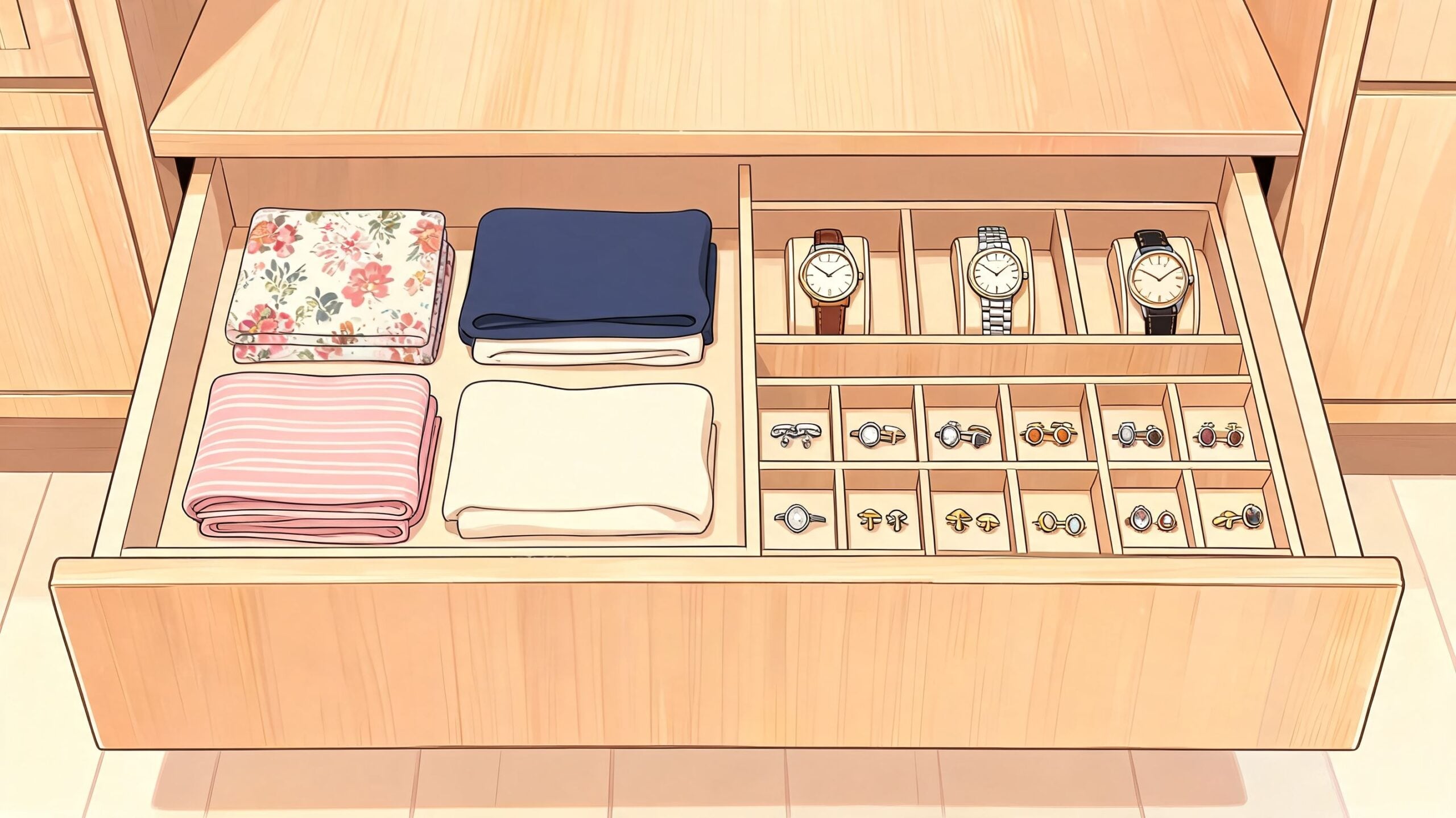
- Care zone for jewelry, watches, scarves, and personal-care items
- Seasonal zone for items that rotate in and out through the year
Once you think in zones, furniture choices get easier. A tall wardrobe becomes the long-garment zone. A dresser with divided top drawers becomes the accessory zone. A bench with hidden storage becomes a place for extra throws, travel bags, or off-season items.
Why wardrobes matter so much
The category keeps growing for a reason. The global wardrobe market stood at USD 69.96 billion in 2025 and is projected to reach USD 125.22 billion by 2034, reflecting strong demand for storage with integrated drawers, shelves, and hanging spaces.
That makes sense in real life. A wardrobe is often the command center of dressing room furniture because it can combine multiple storage jobs in one footprint.
A good wardrobe can hold:
- Hanging space for dresses, jackets, button-downs, and trousers
- Shelves for sweaters, denim, handbags, or labeled bins
- Drawers for smaller folded items and accessories
- Upper storage for luggage or items used less often
Small changes that make a room feel custom
One homeowner might need a double-hang section for work clothes. Another may need more open shelving for handbags and display storage. Someone else may care most about a seated spot for putting on shoes and sorting laundry.
That's why thoughtful organization often looks less like a showroom display and more like a customized system.
If you have to move three things to reach one thing, the storage plan isn't finished yet.
I also like borrowing ideas from other hardworking rooms in the house. Good utility spaces teach the same lesson as dressing areas: hidden structure creates visible calm. This article on bespoke laundry cabinetry is a useful example of how custom compartments and purposeful cabinet planning can make everyday routines smoother.
If clutter has been a constant battle, this guide on how to solve clutter issues once and for all pairs well with dressing room planning. Storage works best when furniture and habits support each other.
Budgeting for Long-Term Value
A dressing room budget works better when you separate wants from priorities. Not every piece needs to be elaborate, but the pieces you use hardest should be chosen with care.
I usually tell homeowners to spend with the morning routine in mind. Put your money where daily friction happens now.
Where value shows up first
For many individuals, these are the smartest places to invest:
- Primary storage pieces such as wardrobes and dressers, because they handle daily use and most of the room's visual weight
- A comfortable vanity or seat if you use it every day
- Good construction details like sturdy drawer boxes, dependable glides, and finishes that are easy to maintain
A mirror, lamp, or decorative tray can evolve later. A poorly chosen dresser is harder to forgive.
Think in phases if needed
You don't have to create the entire room at once. A strong approach is to build in layers.
Start with the anchor piece. Add secondary storage next. Then finish with mirrors, seating, and the smaller details that make the room feel personal.
This is also where long-term planning matters. With Central Florida's growing aging population, there's increasing interest in adaptive furniture. The guidance behind functional dressing corners for changing needs points to features like adjustable-height vanities and seated vanity options as smart choices that support independent living without giving up style.
That kind of planning isn't only for later life. It's good design now. A seated vanity can be more comfortable today and more practical for years to come.
A simple budgeting lens
Use this checklist when comparing dressing room furniture:
| Priority | Ask yourself |
|---|---|
| Longevity | Will this still work for me in several years? |
| Function | Does it solve a real daily problem? |
| Flexibility | Can it adapt if the room or my needs change? |
| Craftsmanship | Does it feel sturdy enough for regular use? |
A smart budget isn't about chasing the lowest number. It's about choosing pieces that keep paying you back in comfort, order, and durability.
The Power of Custom Design Services
Off-the-floor furniture can work beautifully. But it often breaks down at the exact point where real homes get complicated.
The wall is too narrow. The finish is close, but not right. The drawers are useful, but you needed more hanging space. Or you want today's conveniences without making the room feel like a gadget display.
Why custom solves the most common frustrations
Custom design proves its worth by allowing you to adapt furniture to the room rather than forcing the space to accommodate items delivered in a carton.
That can mean:
- Adjusting scale so a wardrobe fits a tricky wall
- Choosing finishes that coordinate with existing bedroom furniture
- Reworking storage to favor shelves, drawers, or hanging sections based on your wardrobe
- Adding modern function such as power access at a vanity
Homeowners are increasingly asking for those blended features. As noted in this piece on chic dressing rooms with modern functionality, shoppers often search for dressing room furniture with outlets and smart vanities, and custom-design services help bridge the gap that mass-market retailers often leave open.
Custom doesn't have to mean complicated
A lot of people hear "custom" and assume it means extreme pricing, endless delays, or a fully bespoke room from scratch. Often it's much simpler than that.
Sometimes custom just means choosing the right dimensions, wood finish, hardware, or drawer configuration. With well-made brands such as Amisco, American Leather, Bassett, Craftmaster, Smith Brothers, or Palasar, personalization can be the difference between furniture that merely fits and furniture that feels meant for your home.
Good custom work removes compromises you would otherwise stare at every day.
If you've never worked with a design professional before, this overview of furniture stores with design services gives a helpful sense of how the process can support layout, scale, and finish decisions without making the project feel overwhelming.
Shop Local at Slone Brothers in Longwood
For Central Florida homeowners, dressing room furniture is rarely just about filling empty square footage. It's about making your home easier to live in, protecting what you wear, and choosing pieces that feel good every time you use them.
That's where a local showroom experience matters. You can compare wood finishes in person, open drawers, test bench height, and see whether a wardrobe feels substantial or flimsy. You can also talk through practical concerns that national websites usually gloss over, like humidity, room flow, and how to blend a new piece into an existing bedroom set.
Since 1980, Slone Brothers Furniture has served Longwood and the Greater Orlando area as a local, family-owned showroom focused on quality, value, and guidance. Their selection includes respected brands like Stickley, Stressless, Smith Brothers, Bassett, Craftmaster, Simply Amish, Canadel, Amisco, American Leather, and Mavin, with a strong emphasis on American-made and Amish-crafted furniture.
If your project needs more than a standard piece, their custom-order program, complimentary in-house Design Team, home delivery, Low Price Promise, and clearance outlet give you more than one path to a room that works well and feels lasting.
Ready to find the perfect piece for your home? Visit Slone Brothers Furniture in Longwood, FL, and let their design experts help you get started!