
Best Mattress for Combination Sleepers: Find Your Fit

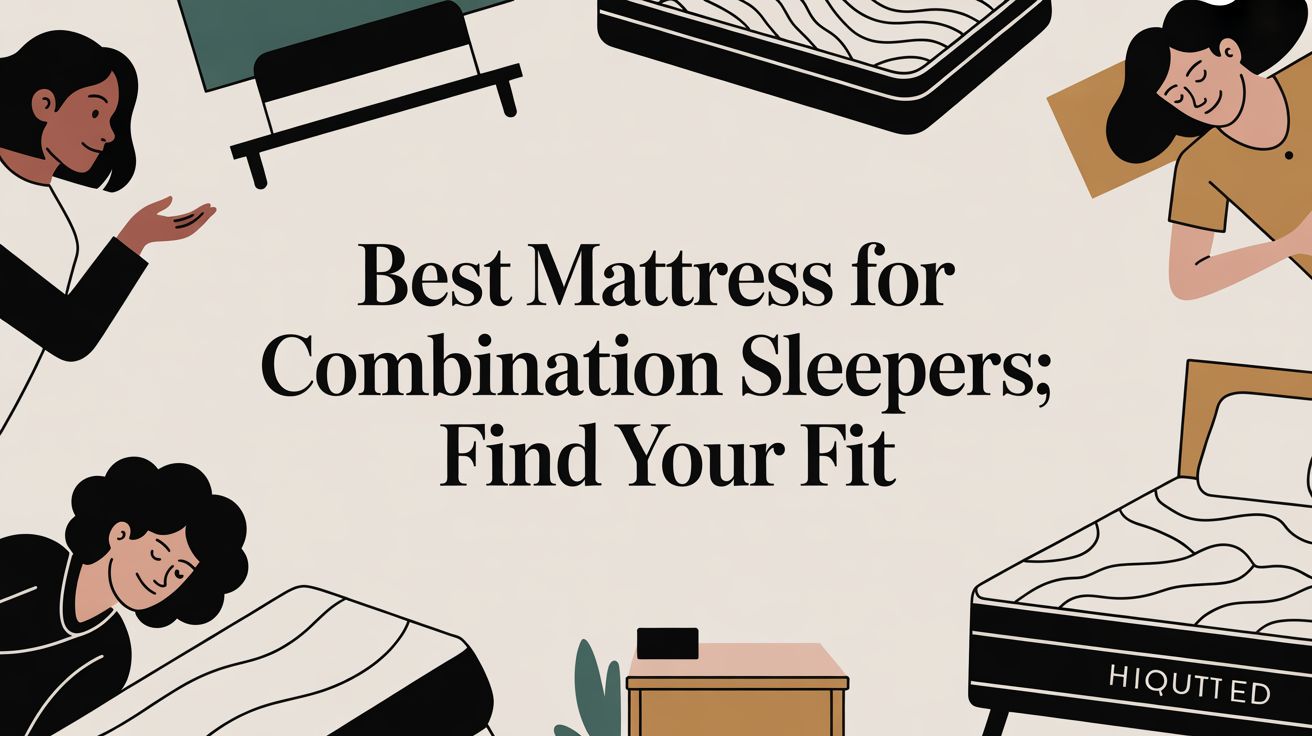
You finally lie down after a long day, get comfortable on your side, then roll to your back. A little later, you shift again. By morning, your shoulder feels sore, your lower back feels tight, and the mattress that seemed fine in the store suddenly doesn’t feel fine at all.
That’s the everyday problem behind the search for the best mattress for combination sleepers. If you move between your side, back, and stomach through the night, you need a mattress that can keep up with you instead of fighting every position change.
Around Longwood, Lake Mary, Sanford, and the greater Orlando area, we meet plenty of people dealing with exactly this. They don’t need a trendy mattress term. They need a bed that feels supportive when they’re on their back, cushioned when they’re on their side, and easy to move on when they roll over at 2 a.m. If you want a broader starting point before narrowing in on combination sleeping, our ultimate guide for choosing a mattress is a helpful companion.
Your Guide to Finding the Best Mattress for Combination Sleepers
A combination sleeper doesn’t stay in one position all night. You might fall asleep on your side, wake up on your back, and spend part of the night on your stomach without even realizing it.
That sounds simple, but it creates a real mattress challenge. Most mattresses have a personality. Some cushion beautifully but make movement harder. Others feel supportive but press too firmly against your shoulders and hips. The best match has to do more than one job well.
In our Longwood showroom, this is one of the most common mattress conversations we have with Central Florida shoppers. A customer will say, “I think I’m a side sleeper,” and after a few minutes of testing, they realize they spend plenty of time on their back too. That changes the decision.
A good mattress for a combination sleeper should feel balanced, not extreme.
The goal isn’t to chase the softest feel or the firmest feel. It’s to find a mattress that gives you pressure relief where you need it, support where you need it, and enough lift that turning over doesn’t feel like work.
The Unique Challenge of the Combination Sleeper
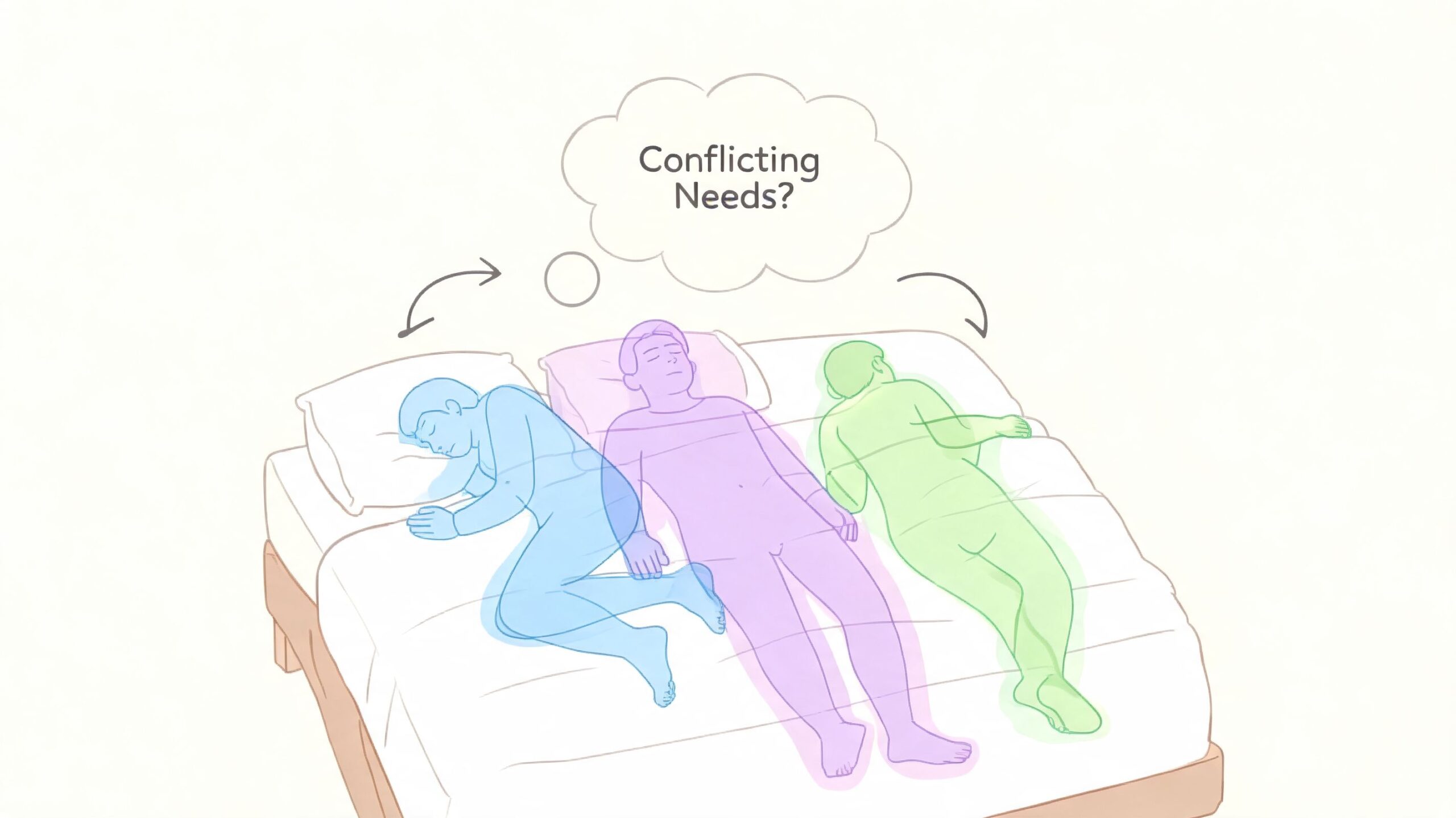
If you sleep in one position all night, mattress shopping is more straightforward. If you’re a combination sleeper, your body asks for different things at different times.
Why one position changes everything
Side sleeping usually needs more cushioning. Your shoulders and hips press more into the mattress, so a surface that’s too firm can feel sharp or unforgiving.
Back sleeping asks for steadier support. Your mattress should help keep your spine in a neutral position instead of letting your midsection dip too far.
Stomach sleeping is usually the pickiest of the three. Too much sink under the middle of the body can leave your lower back feeling strained by morning.
Why the wrong mattress feels fine at first
Many shoppers get tripped up when evaluating mattresses. A mattress can feel wonderful for the first minute and still be wrong for combination sleeping.
For example:
- A very plush mattress may feel cozy on your side, but less stable when you roll onto your stomach.
- A very firm mattress may feel supportive on your back, but too hard at the shoulder when you settle on your side.
- A slow-moving foam bed may feel pressure relieving, but frustrating when you try to turn over.
That’s why combination sleepers often describe the same mattress with two opposite reactions. “It’s comfortable” and “I wake up sore” can both be true if the bed only works for one of your positions.
What your mattress has to do well
Think of your mattress as a surface that has to respond to motion, not just hold still under weight. It needs to cushion pressure points, support your spine, and let you move without that trapped feeling.
Practical rule: If a mattress only feels good in one position, it probably isn’t the right fit for a combination sleeper.
That’s also why online mattress descriptions can feel confusing. Words like plush, supportive, contouring, and pressure relief sound good, but they don’t tell you how easily you can shift from one position to another. That part matters more than many people expect.
Finding Your Ideal Firmness and Responsiveness
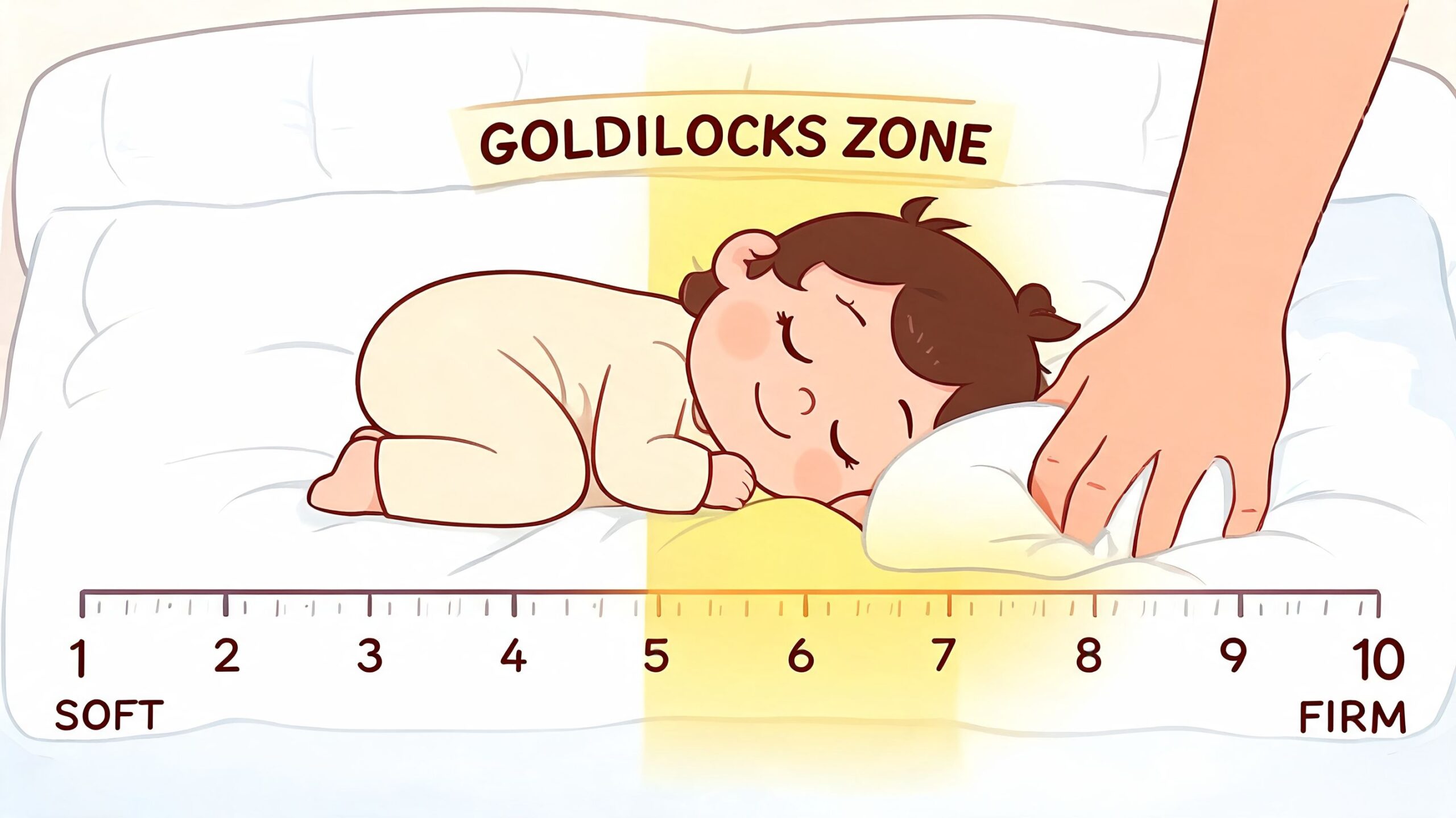
For most shoppers, the first question is firmness. The second should be responsiveness.
Combination sleepers typically do best with medium-firm support, usually in the 5 to 7 range on a 10-point firmness scale, along with enough responsiveness to make position changes easier, according to Mattress Clarity’s combination sleeper guidance.
Understanding the firmness scale
The firmness scale sounds technical, but it’s really just a way to describe feel.
| Feel | What it usually means |
|---|---|
| Soft | More sink, more hug, less push-back |
| Medium | A balance of comfort and support |
| Medium-firm | More support with enough cushioning for pressure points |
| Firm | Less sink, flatter sleeping surface |
For combination sleepers, medium-firm often lands in the sweet spot. It gives side sleepers enough cushion at the shoulder and hip without giving up the support back and stomach sleeping need.
A simple way to think about it is this: soft mattresses let you settle in, firmer mattresses hold you up. Combination sleepers usually need some of both.
Why responsiveness matters so much
Responsiveness is how quickly a mattress adjusts when you move. If you turn from your side to your back, a responsive mattress adapts quickly. A slower mattress can make that movement feel sticky or heavy.
That “stuck” feeling is one of the biggest complaints we hear from active sleepers. It doesn’t always mean the mattress is bad. It usually means the material isn’t the right match for the way you sleep.
Here’s what to notice when you test one in person:
- Roll from side to back and pay attention to effort. If you have to push hard to reposition, the mattress may be too slow.
- Pause on your side and check your shoulder. If it feels jammed upward, the surface may be too firm.
- Lie on your stomach briefly and notice your hips. If they sink too low, support may be lacking.
Our mattress firmness guide can help if you want a clearer feel for how different firmness levels translate in person.
The easiest way to avoid a common mistake
Many people shop by lying still. Combination sleepers shouldn’t.
Don’t test a mattress like a mannequin. Test it like you actually sleep.
Turn over. Bend a knee. Shift your shoulders. If the mattress feels supportive only when you stay perfectly still, that won’t help much at home.
The Best Mattress Types for Tossing and Turning
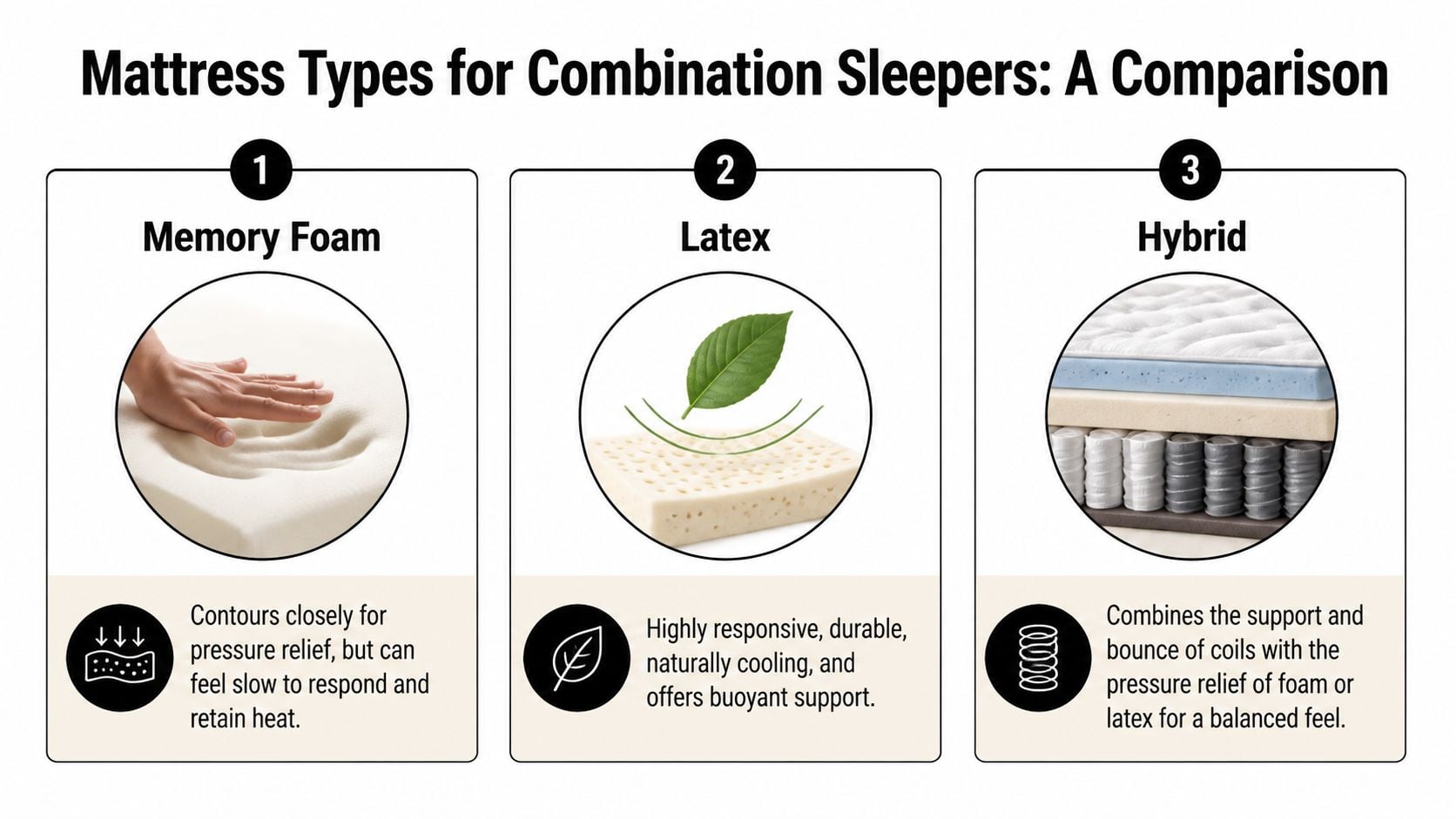
Material matters because it shapes how the mattress feels when you rest and how it behaves when you move. For combination sleepers, that second part is a big deal.
Memory foam
Memory foam is known for contouring. It can cradle the body nicely and soften pressure around the hips and shoulders.
That said, some memory foam beds respond more slowly. If you love a deep hug, that may feel comforting. If you change positions often, it can feel like the bed is a step behind you.
Memory foam often works best for combination sleepers who move some, but not constantly, and who strongly prefer a close-conforming feel.
Latex
Latex has a different personality. It feels more buoyant and springy, with less of that slow sink.
That buoyancy is one reason many active sleepers like it. Latex and advanced hybrids can recover quickly after pressure is removed, and some lab testing cited by Sleepopolis describes under 1 second for 90% recovery in these faster-reacting constructions, along with cooling benefits that can run 5 to 10°F cooler than dense foam in certain designs, as discussed in Sleepopolis’ guide to the best mattress for combination sleepers.
Latex can be a strong fit if you want:
- Quick push-back when you change positions
- A cooler feel in Central Florida’s humidity
- Less sink than classic memory foam
Hybrid
Hybrid mattresses combine a coil support system with comfort layers on top, often foam or latex. That mix is why they work so well for combination sleepers.
Expert testing has found that hybrid mattresses are the statistically preferred choice for combination sleepers, and hybrids with zoned support can reduce tossing and turning by up to 23% compared with traditional all-memory-foam beds, according to this hybrid mattress overview for combination sleepers.
That result makes sense when you try one in person. The coil system adds support and easier movement. The upper comfort layers add cushioning where you need relief.
A quick side-by-side view
| Mattress type | Pressure relief | Ease of movement | Cooling feel |
|---|---|---|---|
| Memory foam | Strong | Often lower | Varies |
| Latex | Good | High | Often better |
| Hybrid | Balanced | High | Often better |
If you want a deeper look at how these constructions differ, our mattress types explained guide breaks them down in plain language.
For many combination sleepers, hybrids feel like the most natural middle ground. Not too stiff, not too sinky, and easier to move on.
Essential Features for a Better Nights Sleep
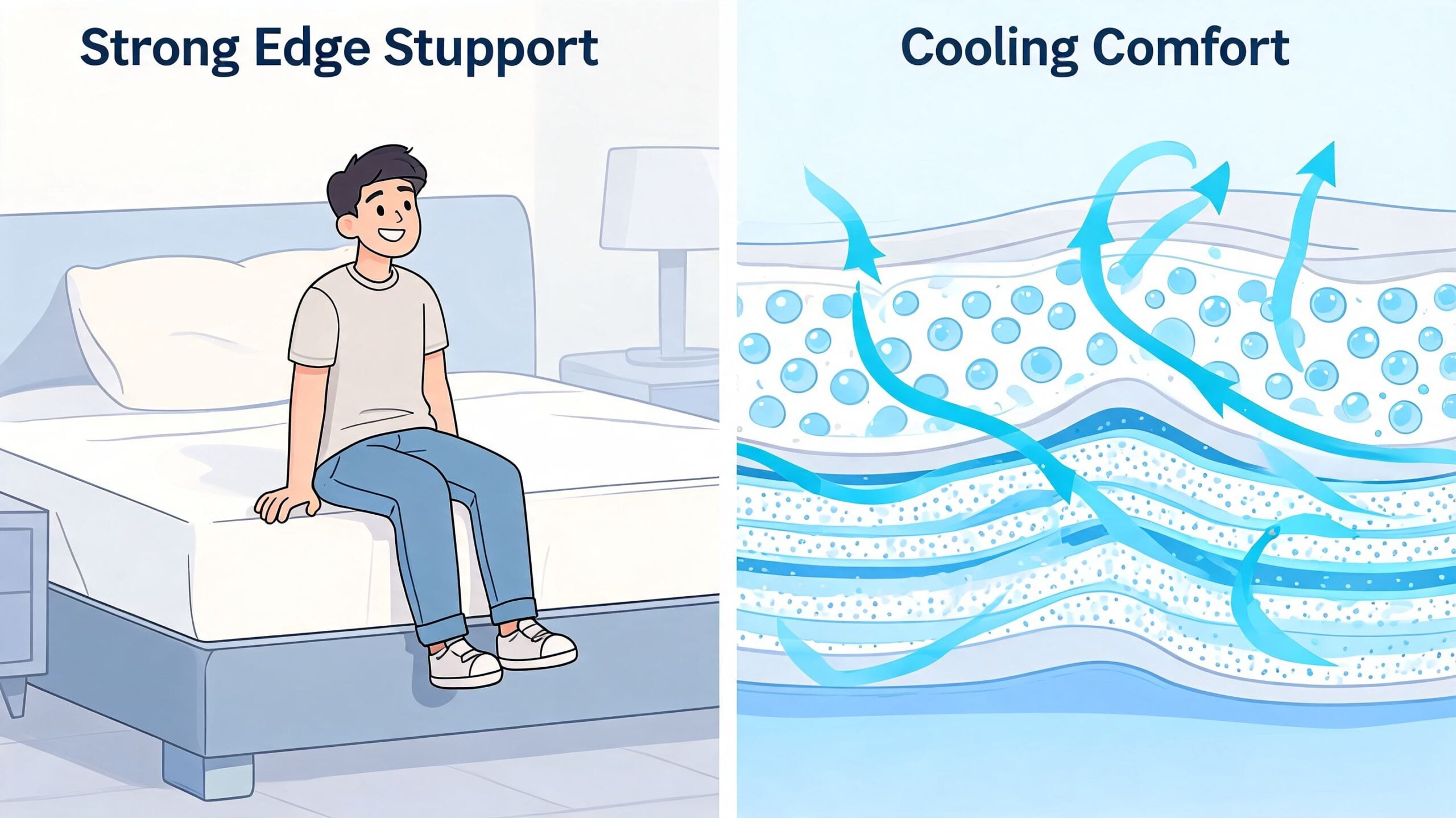
Shoppers usually focus on softness and firmness first. Two other features can make a big difference over time. Edge support and cooling.
Edge support helps you use the whole bed
Combination sleepers don’t stay parked in the center of the mattress. You may drift toward the side, roll back inward, or sit on the edge while getting in and out of bed.
Weak edges can make the mattress feel smaller than it is. Stronger edges create a more stable surface and can make movement feel more secure, especially if you share the bed.
When you test a mattress, sit on the side for a moment. Then lie near the perimeter. If the edge collapses too much, you’ll notice it quickly.
Cooling matters more in Central Florida
Warm sleepers in Orlando and Longwood usually know it right away. If a mattress traps heat, you don’t just feel warm. You wake up, kick off the covers, and keep shifting.
Latex and advanced hybrid constructions offer stronger breathability than standard dense memory foam, with cited cooling performance of 5 to 10°F cooler than dense foam in the Sleepopolis testing summary linked earlier. That’s one reason these constructions make sense in Central Florida’s humid climate.
Small details can help too:
- Breathable covers can keep the surface from feeling stuffy
- Coil systems allow more airflow than dense all-foam cores
- Moisture-managing bedding can improve comfort even if you already like your mattress
If you tend to sleep warm, protective bedding materials matter as much as the mattress itself. Natural-feeling, breathable layers like IdyllVie’s Tencel products are worth a look because they add protection without the plasticky feel that makes some sleepers overheat.
An adjustable foundation can help some people fine-tune comfort too, especially if they switch positions or want more flexibility for reading and relaxing. You can learn more in our guide to the benefits of an adjustable base.
Your Local Guide to Testing Mattresses in Orlando
Reading mattress advice online helps. Testing in person is what turns that advice into a decision you can trust.
In a showroom, your body tells you more than a product description ever will. That’s especially true for combination sleepers, because movement is part of the test.
How to test like a real combination sleeper
When you visit a mattress store, don’t just sit on the edge and press your hand into the top. That won’t tell you much.
Try this instead:
- Stay on the mattress long enough. Give yourself several minutes in each position so your body settles naturally.
- Start with your usual position. If you fall asleep on your side, begin there.
- Roll to your back and stomach. Notice whether the transition feels easy or awkward.
- Check your shoulder and hip pressure. These spots usually tell the truth fast.
- Test the edge directly. Sit down, then lie near the side to see whether the perimeter feels stable.
What to pay attention to in the showroom
A mattress can feel good in a general sense and still miss one important detail. Focus on specific reactions.
Ask yourself:
| Question | What a good sign feels like |
|---|---|
| Can I roll over easily? | The surface responds without delay |
| Do my shoulders feel cramped on my side? | They settle without sharp pressure |
| Does my lower back feel strained on my stomach? | Your midsection stays supported |
| Do I feel like I’m sliding off near the edge? | The perimeter feels steady |
One practical option for local shoppers is visiting Slone Brothers Furniture’s guide to top-rated mattress stores near me before heading out, so you can compare what matters and arrive with a plan.
Why in-person testing beats guessing
Online reviews can tell you how other people felt. They can’t tell you how your body reacts when you shift from side to back on a medium-firm hybrid.
The best showroom test is active, not passive. Roll, turn, sit, and settle.
That’s also where having a knowledgeable local team helps. In our Longwood showroom, we encourage shoppers to take their time, mimic real sleeping positions, and talk through what they’re noticing so the process feels clearer, not more overwhelming.
Frequently Asked Questions About Combination Sleeper Mattresses
How much should I expect to spend on a good mattress for a combination sleeper
Price matters, but value matters more. A higher price doesn’t automatically mean a better fit for the way you sleep.
For budget-conscious shoppers, the key issue is price-performance. As noted in Leesa’s discussion of combination sleeper mattress value, many value-oriented hybrid mattresses deliver the medium-firm responsiveness combination sleepers need without requiring a premium price tag. That’s why it makes sense to compare feel, support, and ease of movement before assuming you need the most expensive option.
If you’re furnishing a new home in Longwood, Lake Mary, or elsewhere in Central Florida, it’s smart to ask about value-focused hybrids, floor models, and clearance options rather than shopping by brand name alone.
How long will a hybrid mattress last
Durability depends on materials, construction quality, and how the mattress is used. In general, better-built hybrids tend to hold their feel more consistently because they combine support from coils with comfort layers on top.
It's the construction details that matter more than marketing words. Look at the overall support, the quality of the edge, and whether the surface still feels balanced when you change positions.
What if I need a specific feel or setup
That’s more common than people think. Some shoppers want a mattress that feels a little plusher at the shoulder. Others want a cleaner, more buoyant feel or need a foundation setup that works with their bedroom and comfort preferences.
A showroom visit helps because you can compare those differences side by side instead of guessing from a product page. It also gives you a chance to ask about special-order options, adjustable base compatibility, delivery, and room setup.
Is a hybrid always the right answer
Not always. It’s often the best starting point for combination sleepers, but personal preference still matters.
If you love a buoyant surface, latex may suit you well. If you prefer a more conforming feel and don’t mind slower response, some foam designs can still be comfortable. The right answer is the mattress that keeps you comfortable across your real sleep positions, not just your favorite one.
What should I bring with me when I shop in person
Wear comfortable clothes and give yourself time. If you share a bed, bring your partner if possible. If you use a specific pillow that strongly affects your alignment, mention that too.
The more closely you recreate your real sleep habits in the store, the more confident your decision will feel once the mattress is in your home.
Ready to find the perfect mattress for your home? Visit the Slone Brothers Furniture showroom in Longwood, FL, and let our design experts help you get started!