

Best Mattress for Hot Sleepers: Cool Comfort in FL


If you live in Central Florida, you probably know the routine. The AC is on, the ceiling fan is running, and you still wake up warm at 2 a.m. with the sheets twisted around you. In homes across Longwood, Lake Mary, Sanford, and Orlando, that problem often points to one overlooked culprit: the mattress itself.
The best mattress for hot sleepers doesn’t just feel cool for a few minutes when you lie down. It needs to release body heat, handle humidity better, and keep airflow moving through the night. That matters more here than in drier climates, where sweat evaporates faster and bedding doesn’t hold that sticky feeling as long.
We’ve helped Central Florida families shop for better sleep since 1980, and one pattern shows up again and again. People often blame their thermostat first, their sheets second, and only much later realize the bed is trapping heat underneath them. If you’ve already looked at room-darkening curtains, lighter bedding, or even practical car cooling solutions to make summer driving more bearable, you already understand the bigger point. Materials and airflow change comfort.
Your bedding setup matters too. A breathable mattress can still be held back by the wrong layers on top, which is why it helps to review the full sleep system, from protectors to comforters, in this guide to bedding, mattress protectors, and comforters.
Your Guide to a Cooler Night's Sleep in Central Florida
A hot sleeper in Florida usually isn’t dealing with one issue. It’s a stack of them. Body heat builds up, humidity lingers, and dense mattress materials keep that warmth close to your skin.
That’s why the right mattress choice feels different here. A bed that seems comfortable in a quick showroom test can sleep much warmer after a full night in a humid room.
What local shoppers usually notice first
Some people describe it as waking up sweaty. Others say they’re not sweating much, but they never feel settled. They keep flipping pillows, kicking off covers, and searching for a cool patch that disappears fast.
In our area, that often happens with mattresses that let you sink into dense foam. The surface hugs the body, but the trade-off is reduced airflow right where you need it most.
Practical rule: If your mattress feels cozy at bedtime but stuffy by the middle of the night, heat retention is likely part of the problem.
What actually helps
The most effective cooling beds tend to combine three things:
- Airflow through the core so heat has somewhere to go
- Breathable surface materials that don’t feel sealed off
- Support that keeps you from sinking too far into the comfort layers
Those details matter for every sleeper, but they matter even more in a Central Florida bedroom where moisture in the air already makes cooling harder.
Why You Overheat at Night Especially in Florida
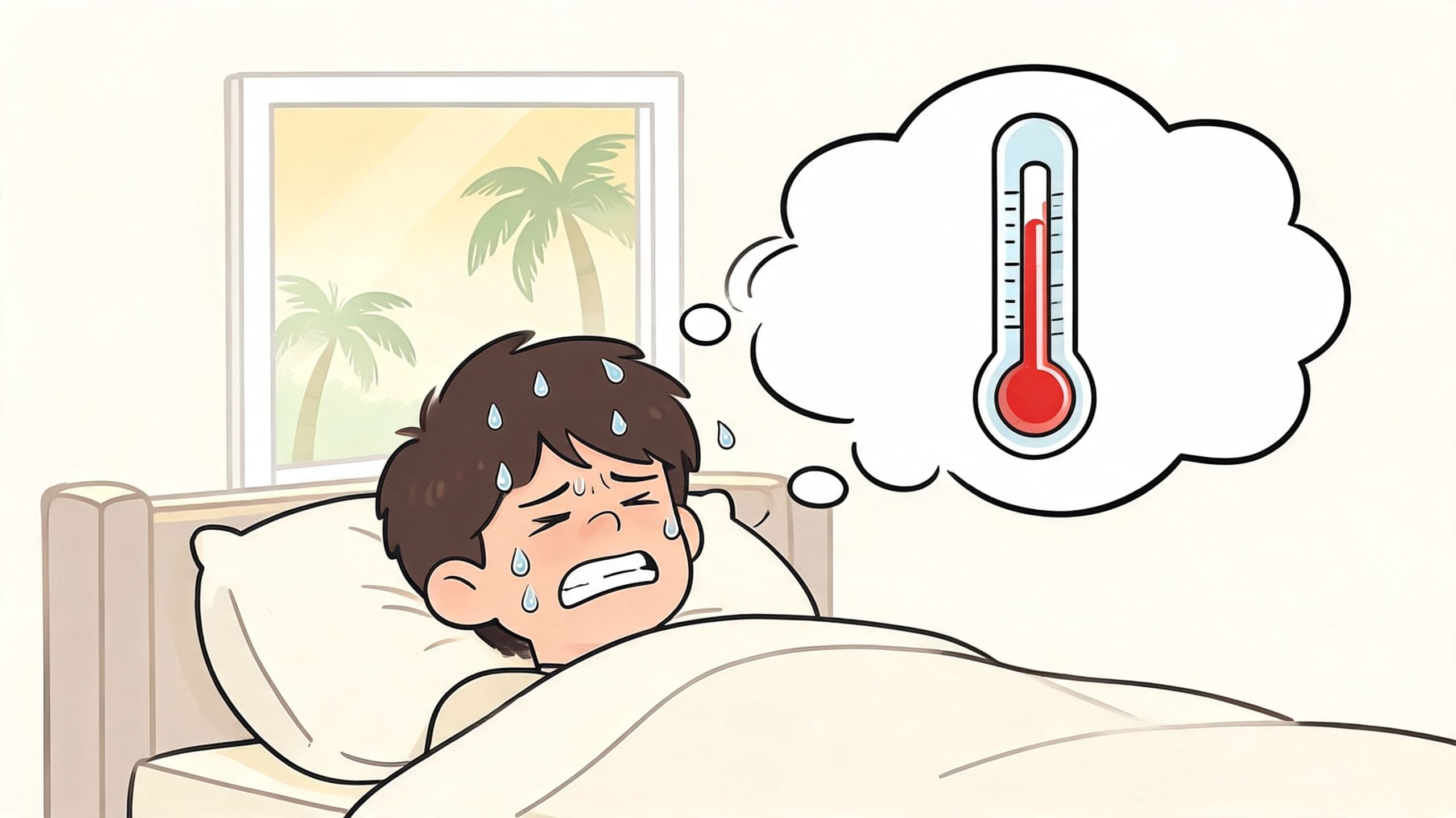
Your body sleeps best when it can release heat. If that heat gets trapped in the mattress, under heavy bedding, or against damp air, sleep gets interrupted.
Florida adds another layer to the problem. Humid air makes it harder for sweat to evaporate, and evaporation is one of the body’s basic ways to cool itself.
Heat gets trapped from below
Many sleepers focus on room temperature, but the bed plays a bigger role than expected. When you lie still for hours, your mattress either helps move heat away or stores it under your body.
Foam-heavy designs often hold more warmth close to the sleeper. That doesn’t mean every foam mattress is wrong for every person, but it does mean construction matters a lot.
Humidity makes a warm mattress feel worse
In a dry climate, sweat can evaporate faster and help cool the skin. In Central Florida, that process is less efficient. The result is a clammy, restless kind of heat that many homeowners know too well.
If your bedroom tends to feel damp or stuffy, reducing indoor moisture can help the whole sleep environment. This guide on reducing humidity in the house from Purified Air Duct Cleaning services gives practical ideas that pair well with mattress upgrades.
A cooler mattress works better when the whole room supports it.
The room and the bed work together
A mattress can’t fully overcome a muggy bedroom, but the wrong mattress can absolutely make a decent room feel hotter. That’s why Florida homeowners usually need to think about both the sleep surface and the space around it.
For homes in our region, finishes, fabrics, and indoor comfort all interact differently than they do in drier states. The same climate logic shows up throughout the home, which is why many local shoppers also find useful ideas in this article on decorating a Florida home.
Decoding the Best Cooling Mattress Technologies
A cooling mattress has one job. It needs to release body heat and handle moisture well enough that you do not wake up feeling warm and damp at 3 a.m. In Central Florida, that second part matters more than many shoppers expect.
Coils and hybrids usually do the heavy lifting
Innerspring and hybrid mattresses significantly outperform foam mattresses for heat retention, with innerspring models trapping less heat than nearly 80 percent of other mattresses tested according to Consumer Reports. The reason is simple. Coil systems leave open space inside the mattress, so air can move instead of getting trapped in solid foam layers.
That design tends to work well in our area. Many Orlando and Longwood shoppers want pressure relief, but they also need a bed that feels less muggy after a few hours. A hybrid often lands in that middle ground better than an all-foam build.
Foam cooling features can help, but they have limits
Foam is not all the same, and some newer foams do a better job with temperature control than older, denser memory foam. The question is how much of the mattress depends on foam, and where those cooling materials are placed.
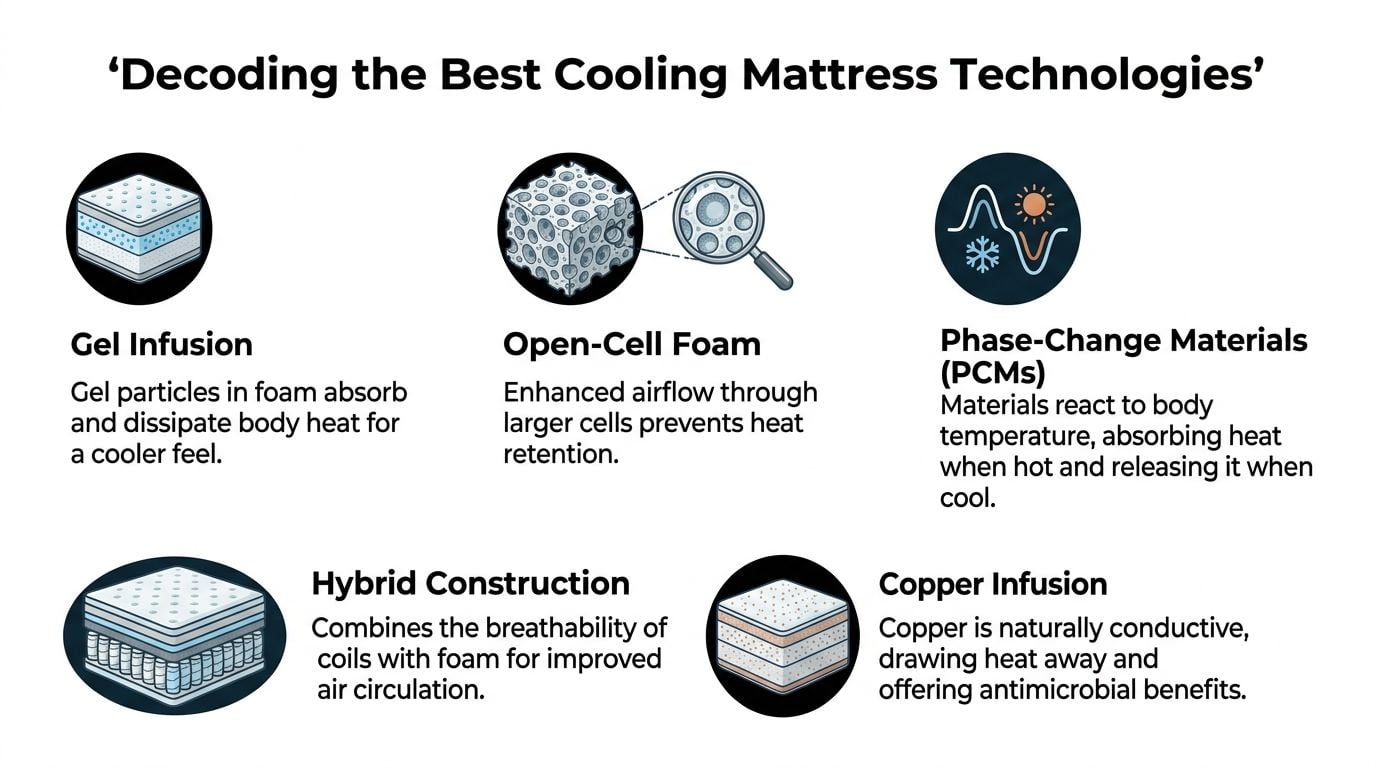
Common cooling-focused foam features include:
- Gel infusion to draw some heat away from the surface
- Open-cell foam to let more air move through the comfort layers
- Copper or graphite additives to conduct heat away more efficiently
- Phase-change materials to absorb and release heat as your temperature shifts
These features can improve the first few inches of the bed. In a humid Florida bedroom, though, surface cooling by itself usually is not enough if the support core underneath still holds heat.
Cover fabrics shape the feel of the mattress right away
The cover is the first layer your skin notices, especially if you sleep in lightweight sheets or tend to kick blankets off during the night. Some covers feel cool for a few minutes. Better ones keep handling heat and moisture after your body has settled in.
Natural fibers and performance fabrics such as cotton, linen, bamboo-derived viscose, and Tencel are popular because they tend to feel more breathable and less sticky than heavier knit covers with a sealed feel. For hot sleepers in Greater Orlando, that can mean less clammy skin and fewer wake-ups from overheating.
Cooling technology works best as a system
Shoppers sometimes focus on one buzzword, like gel or copper, and miss the bigger picture. The coolest mattresses usually combine several features. A breathable cover, ventilated comfort layers, and a coil support unit generally outperform a mattress that relies on one cooling additive alone.
That is why trying beds in person helps so much. You can feel the difference between a mattress that is cool to the touch and one that is built to sleep cooler through a humid Florida night. If you want a clearer breakdown before you shop, this guide to different mattress constructions and materials makes the terminology easier to sort out.
Cooling Technology Comparison
| Technology | How It Works | Best For |
|---|---|---|
| Hybrid coils | Opens space inside the mattress so air can circulate | Sleepers who want both support and airflow |
| Innerspring core | Uses a coil structure with minimal heat-trapping material | People who prioritize breathability |
| Gel-infused foam | Adds cooling-focused material to foam near the surface | Shoppers who like some contouring without as much heat buildup |
| Open-cell foam | Uses a less dense structure to improve airflow | Sleepers who want foam comfort with better ventilation |
| Breathable covers like Tencel or cotton | Improves surface feel and moisture handling | Anyone sensitive to sticky, humid sleep conditions |
In our Longwood showroom, this is often the point where shoppers stop looking at labels and start noticing what their body feels on each bed. That test matters. In Florida, the best cooling technology is the one that still feels comfortable after you have been on it long enough for heat and humidity to build.
How Firmness and Support Affect Cool Sleep
A mattress can have cooling fibers at the surface and still sleep warm if your body settles too much into it. In Central Florida, that matters more than many shoppers expect. Humid air already makes it harder for sweat to evaporate, so if the bed hugs too much of your body, you lose even more of the airflow that helps you feel dry and comfortable.
Softer isn’t always cooler
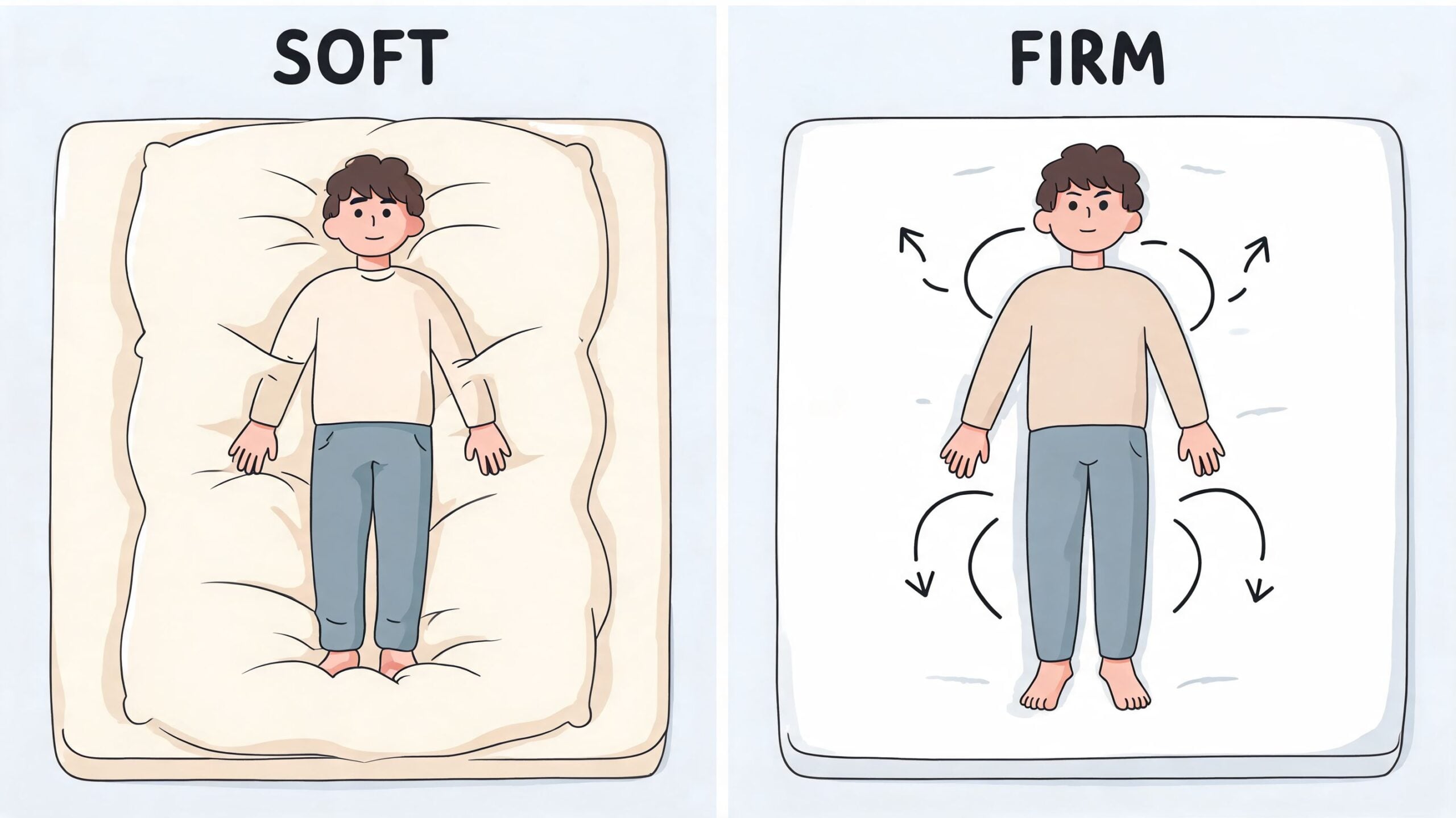
Plush comfort can feel great for the first few minutes, especially if you have sharper pressure points at the shoulders or hips. The trade-off shows up later in the night. More sink means more mattress surface touching your back, sides, and legs, which can hold heat close to the body and reduce the space where air can move.
That does not mean soft is wrong.
It means soft has to be paired with enough underlying support to keep you from feeling swallowed by the bed. In our Longwood showroom, hot sleepers often notice this after they stay on a mattress long enough for body heat to build. A bed that feels cozy right away can feel sticky 10 minutes later.
Firmer support can improve airflow
Supportive mattresses usually keep you more on the mattress than in it. That lifted posture helps air move around more of your body and often makes it easier to change positions during the night, which also helps with temperature comfort.
For many Florida homeowners, the sweet spot is medium to medium-firm. You get cushioning at the joints without the deep cradle that can trap warmth and moisture. Hybrids tend to do well here because the comfort layers soften the surface while the support system underneath keeps the body from sinking too far.
Build quality affects cooling, too
Cooling performance often costs more because it depends on several parts working together. Better support cores, more breathable covers, and comfort layers that relieve pressure without excessive sink all add to the price of a mattress.
The bigger point is practical. A hot sleeper usually gets better results from a well-built mattress with balanced support than from an ultra-plush bed with one cooling feature on the tag.
Showroom advice: Lie still for at least 10 minutes. If your lower back dips, your shoulders feel trapped, or the bed starts to feel muggy, that mattress is telling you how it will perform in a Florida bedroom.
If you want help sorting out soft, medium, and firm feels before you shop, our mattress firmness guide for different body types and sleep needs makes the differences easier to judge in person.
Matching Your Mattress to Your Sleep Position
Sleep position changes what “cool and comfortable” means. The right mattress for a back sleeper may not be the right one for a side sleeper, even if both people sleep warm.
That’s where many shoppers get stuck. They focus only on cooling labels and ignore how their body meets the bed.

Side sleepers need pressure relief without a heat trap
Side sleepers usually need more give at the shoulder and hip. The risk is choosing a mattress so plush that those pressure points sink too far, which can hold heat around the torso.
Often, a thoughtfully built hybrid makes sense. The comfort layers can soften those sharper contact points while the support core keeps air moving through the bed.
A good example is the Helix Midnight Luxe. According to Sleep Foundation, it uses a breathable Tencel cover, gel-infused foam, and zoned pocketed coils that enhance airflow, and it’s specifically praised for supporting side and back sleepers between 130 and 230 pounds without sacrificing ventilation.
Back sleepers usually benefit from balance
Back sleepers often do best on a mattress that keeps the hips from dipping too far while still cushioning the shoulders. If the midsection drops, the body sinks deeper into the bed and heat tends to build.
That’s why many back sleepers prefer a medium to medium-firm hybrid feel. They get surface comfort, but not the wrapped-up feeling that can turn a warm night into a restless one.
Stomach sleepers usually need less sink
Stomach sleepers tend to need firmer support to keep the midsection supported. When the body settles too much, both alignment and airflow suffer.
For hot sleepers in this group, a flatter, more supportive surface usually works better than a plush one. The practical benefit is simple. More air stays around the body, especially through the core of the night.
Couples need to think about both position and temperature
Many couples don’t sleep in the same position, and they don’t experience temperature the same way either. If one person is a side sleeper who wants pressure relief and the other is a back sleeper who runs warm, the mattress has to bridge both needs.
That’s why in-person testing matters so much. You’re not just checking comfort for ten seconds. You’re checking whether the mattress supports your sleep style without increasing heat retention.
Local Tips for Orlando Area Mattress Shoppers
Mattress shopping in Central Florida should be more hands-on than online-only shoppers expect. Cooling features are easier to understand when you can touch the cover, feel the support, and compare one build against another.
For many people in the Orlando area, the smartest move is narrowing the field before they buy. Not every mattress labeled “cooling” performs the same way in a humid climate.
What to do in the showroom
Try to test mattresses the way you sleep, not the way people pose in ads.
- Lie in your real sleep position: Side sleepers should stay on their side long enough to feel shoulder and hip pressure. Back sleepers should check whether the lower back stays supported.
- Notice the cover fabric first: Tencel and other breathable knits often feel different right away from heavier, less breathable tops.
- Stay on the bed for a few minutes: Quick bounce tests won’t reveal much about heat buildup.
- Compare hybrid versus all-foam directly: The contrast is often more obvious when you move from one to the other in the same visit.
Ask better questions
A strong showroom conversation usually gets better answers than a product tag alone. Ask what’s in the comfort layers, how thick the foam feels, and whether the support core is designed for airflow.
Ask about delivery timing, protector recommendations, and whether the mattress is a better fit for side, back, or combination sleeping. Those practical details matter more than flashy cooling language.
If you live in Longwood, Lake Mary, Sanford, or Orlando, local testing gives you something online photos can’t. A real sense of how the bed feels in your body, in your sleeping position, with Florida comfort in mind.
Look for value, not just buzzwords
Premium smart cooling beds can be expensive, but an emerging trend for 2025 to 2026 is the rise of affordable smart-enabled hybrids, and The Good Trade notes that Slone Brothers Furniture’s mattress outlet in Longwood often features these emerging technologies at discount prices with flexible financing for Greater Orlando shoppers. For buyers who want better cooling without jumping straight to the highest-end category, that’s worth asking about when you visit.
If you’re still deciding where to start locally, this roundup of top-rated mattress stores near me can help you plan your shopping route.
Find Your Coolest Sleep at Slone Brothers Furniture
The right mattress for a hot sleeper usually comes down to three decisions. First, choose a construction that allows airflow. Second, choose a firmness level that supports you without letting you sink too far. Third, match that mattress to your actual sleep position.
For Central Florida homeowners, humidity makes those choices more important. A bed that sleeps “fine” somewhere else may still feel too warm here if the materials hold heat or the support system hugs too closely.
That’s why reading reviews only gets you part of the way. The final step is lying on the mattress and paying attention to what your body feels after a few quiet minutes, not just the first impression.
We’ve served Greater Orlando since 1980, and local shoppers usually benefit most from comparing hybrids, breathable covers, and firmness levels side by side in person. That’s the fastest way to tell whether a mattress is merely marketed as cooling or whether it feels better for a humid Florida night.
If you’ve been waking up overheated, changing the mattress can make a real difference. The key is choosing one that fits both your body and your climate.
Ready to find the perfect piece for your home? Visit the Slone Brothers Furniture showroom in Longwood, FL, and let our design experts help you get started!