

Orlando’s Best 3 Season Room Furniture


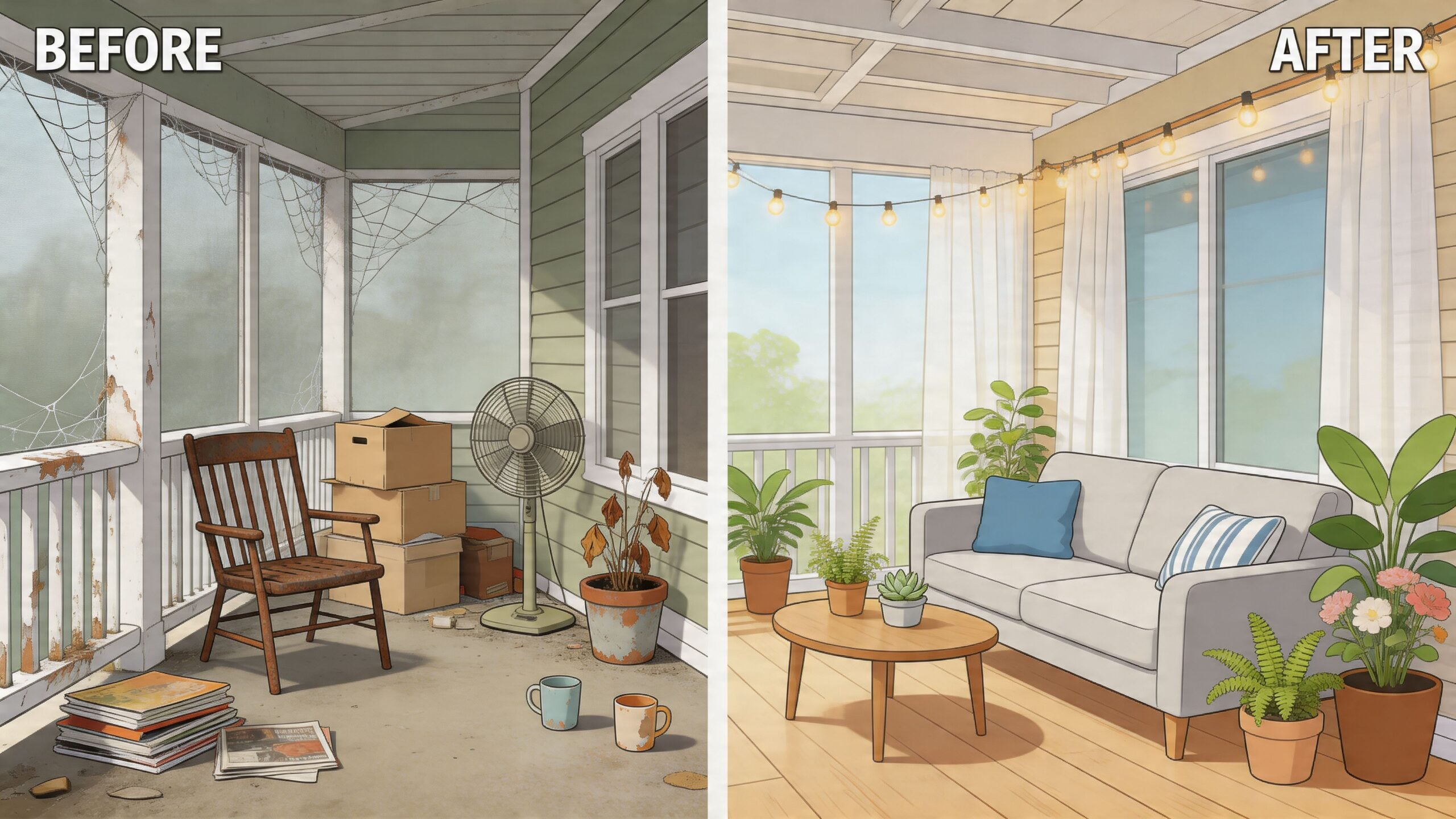
Your Florida room usually starts with good intentions. A pair of leftover patio chairs goes out there, then a small table, then a pile of cushions that were never meant for humidity. Before long, the room feels like storage instead of the bright, comfortable retreat you had in mind.
That’s a missed opportunity in Central Florida. In Orlando, Lake Mary, Sanford, and Longwood, a 3-season room can be one of the most useful spots in the house. It gives you shelter from bugs and rain while still keeping you connected to the light, the yard, and the breeze. But it only works when the furniture is chosen for our climate, not borrowed from a formal living room or picked up as an afterthought.
A true 3 season room furniture plan has to account for sun exposure, humidity, airflow, and the way you live. In Florida, that often means a glass-enclosed porch or screened lanai that isn’t fully climate-controlled year-round. The room feels indoors part of the day and outdoors the rest. That mix is exactly why furniture choices matter so much.
Transforming Your Florida Room From Unused Space to Favorite Retreat
Many Florida rooms sit half-finished because homeowners aren’t sure whether to furnish them like a patio or like a den. The right answer is usually neither. A 3-season room needs the comfort of indoor furniture with the durability of better outdoor materials.
If you're still shaping the space itself, this guide to building a Florida Room is a useful companion because enclosure details affect furniture choices more than anticipated. Glass type, screening, and how much weather comes through will influence what performs well over time.
What counts as a 3-season room in Central Florida
Around here, the term usually means an enclosed space that’s protected from direct rain and pests but not treated like a fully conditioned interior room every day. That distinction matters.
You’re dealing with changing temperatures, moisture in the air, and stronger sun than many national decorating articles account for. Furniture that looks fine in a showroom photo can fade, sag, rust, or feel bulky in a Florida room once it lives there.
What works better than a grab-bag approach
A good room starts with a clear use. Some households want a coffee spot that opens to the backyard. Others want a card table, a reading corner, or family seating that feels casual but polished. Once that purpose is clear, furniture decisions get easier.
A lot of homeowners find it helpful to start with visual planning ideas before shopping. If you need inspiration for style and arrangement, our article on how to decorate a Florida room is a practical next step.
Practical rule: Treat your 3-season room as its own environment. If you furnish it exactly like an interior living room, the climate usually wins.
The rooms that hold up best in Central Florida are the ones built around a few smart choices. Durable frames. Performance fabrics. Flexible pieces that can move when you need better airflow or a different setup for guests.
Measure Twice Buy Once Planning Your Room Layout
The biggest mistake usually happens before anyone looks at fabrics or finishes. Homeowners fall in love with a sofa or dining set, bring it home, and realize the room feels blocked, crowded, or awkward to move through.
Start with the room itself. Measure wall-to-wall dimensions, then mark where doors swing, where windows begin, and where outlets land. In a 3-season room, that last detail matters more than people think because floor lamps, fans, chargers, and occasional electronics often compete for limited spots.
Start with how you’ll actually use the room
A layout for morning coffee won’t look like a layout for family game night. If the room needs to do more than one job, identify the primary use first and build around it.
Consider these common Florida room setups:
- Conversation seating: A compact sofa with two chairs and a small table works well when you want a casual gathering space.
- Dining first: A table and chairs make sense if the room connects directly to the kitchen or pool area.
- Reading retreat: One comfortable chair, good lighting, and a side table can outperform a room full of furniture that doesn’t get used.
- Hybrid family space: Flexible seating and storage keep the room adaptable without making it feel busy.
Keep the center open
In Central Florida, airflow is part of comfort. Oversized pieces that sit in the middle of the room can interrupt breezes and make even a bright porch feel heavy.
That’s why perimeter placement works so well. Statistics from regional remodelers show 85% user satisfaction with perimeter furniture placement in sunrooms, as it maintains open centers and, when combined with mirrors, can increase perceived spaciousness by 20-30% according to this sunroom layout reference.
A simple layout test helps. Stand at the doorway and ask two questions. Can you see across the room easily, and can two people move through it without turning sideways? If the answer is no, the furniture is probably too deep, too large, or in the wrong place.
Rooms feel better when the traffic path is obvious. In a Florida room, that often means your largest pieces belong along the edges, not floating in the center.
Measure furniture before you shop
This sounds basic, but it saves expensive frustration. Don’t just measure the room. Measure the pieces you’re considering, then sketch them into the floor plan.
Pay special attention to these:
- Seat depth: Deep lounge seating feels inviting, but it can overwhelm a narrower sunroom.
- Chair pullback space: Dining chairs need room to move without scraping walls or blocking circulation.
- Table scale: A coffee table that looks right online may dominate a compact lanai.
- Sightlines: Lower-profile pieces often preserve yard views better than tall, heavy silhouettes.
If you want a reliable process, our guide on how to measure a room for furniture walks through the details that prevent costly sizing mistakes.
Choosing Materials That Endure the Florida Climate
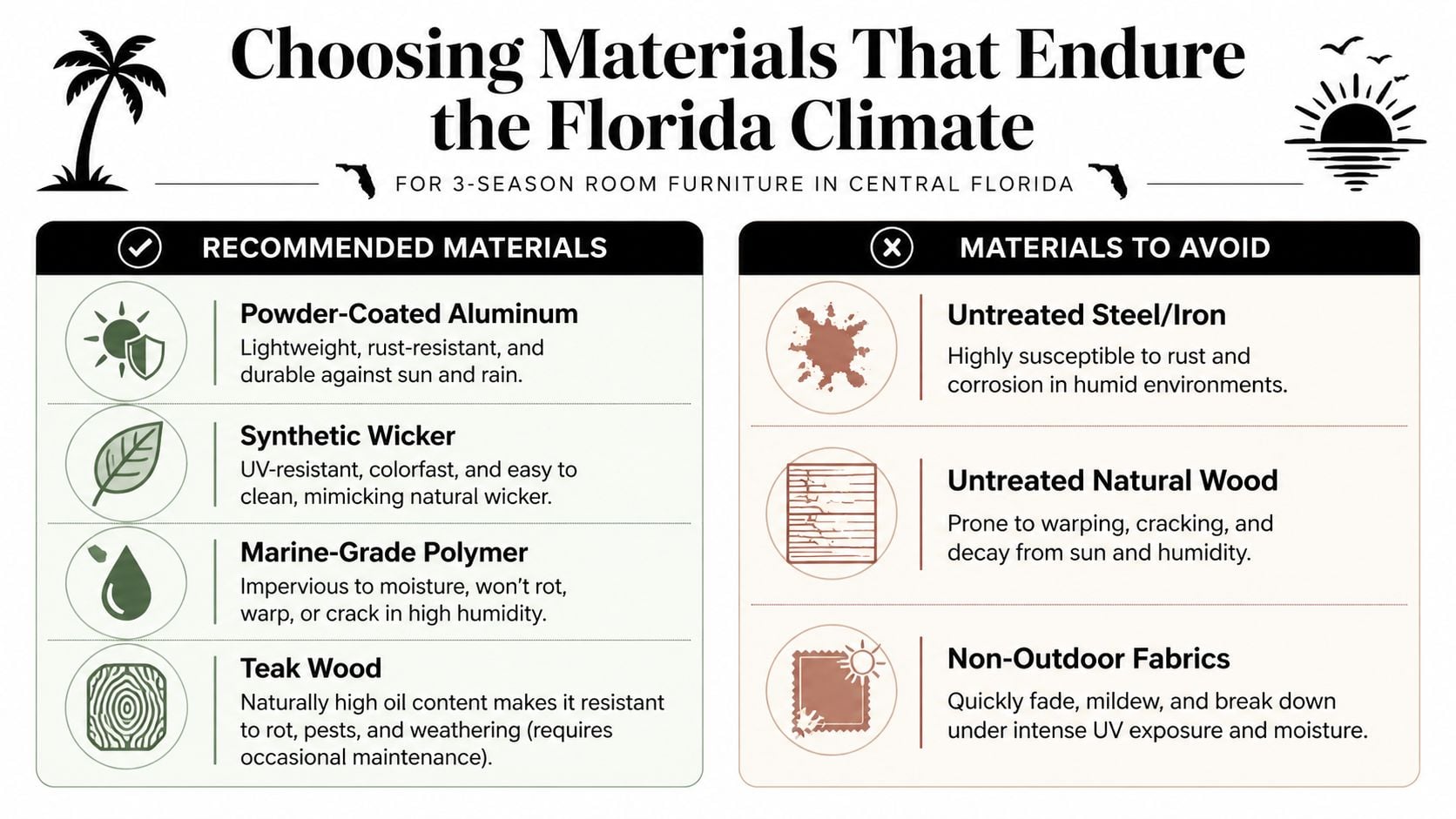
Material choice is where a pleasant idea becomes a durable room. In Central Florida, the climate exposes weak materials quickly. Sun fades color. Humidity stresses joints and finishes. Airflow helps, but it won’t rescue furniture that wasn’t built for this environment.
The safest approach is to choose components that tolerate fluctuation well. That usually means metal frames with protective finishes, high-quality synthetic woven elements, and upholstery designed for sun exposure instead of standard indoor fabric.
Frames that hold up
For many 3-season room settings, powder-coated aluminum is the easiest recommendation. It’s lighter to move, it resists rust well, and it works with everything from coastal to transitional styles. Powder-coated steel can also work when the finish quality is strong, though it’s heavier and less forgiving if the coating gets compromised.
The technical benchmark matters here. For 3-season rooms in Florida, select UV-resistant upholstery with 2000+ hour fade resistance and powder-coated metals tested to 1000+ hours, as these choices mitigate 75% of corrosion and fading failures common in standard patio sets according to this Florida furniture materials guide.
That’s the difference between furniture that still looks intentional after several seasons and furniture that starts showing tired surfaces early.
Wicker, wood, and where people go wrong
Natural wicker looks charming, but in Florida rooms it’s often a maintenance headache. Better synthetic wicker gives you the texture people want without the same tendency to dry out, crack, or unravel.
Wood takes more judgment. Some wood furniture works beautifully in a 3-season room, but only when the construction and species are right. Poorly prepared wood can move too much in humidity. Well-made, kiln-dried hardwood pieces are more stable, and that’s where brands with a reputation for careful American or Amish construction stand apart.
If you like the warmer, organic look of teak, this overview of sustainable teak furniture offers good context on why teak remains a strong outdoor-adjacent material. It’s not the only answer, but it’s one of the few woods that naturally belongs in conversations about humidity and weather resistance.
Material shortcut: If a piece depends on untreated metal, natural fiber, or standard upholstery to survive a Florida room, keep shopping.
Upholstery that earns its place
Fabric is where many otherwise good purchases fail. Indoor upholstery can look rich on day one and tired far too soon if the room gets regular sun.
Look for performance textiles with a proven outdoor or sunroom profile. Sunbrella is a familiar example because it gives homeowners a broad color range without asking them to choose between comfort and fade resistance. Sling fabrics can also be useful, especially when easy cleaning matters, but they need to feel supportive and well-tensioned.
A quick comparison helps:
| Material | Why it works in a Florida room | Common trade-off |
|---|---|---|
| Powder-coated aluminum | Rust resistance, lighter weight, easier rearranging | Can feel too casual if style selection is limited |
| Synthetic wicker | Holds the woven look without many natural-fiber issues | Quality varies sharply by manufacturer |
| Performance fabric | Better against sun and moisture than indoor upholstery | Premium fabric choices cost more upfront |
| Carefully built hardwood | Warmer visual feel, more furniture-like presence | Needs the right construction and placement |
If you're comparing styles and construction details, our article on how to choose outdoor furniture can help narrow down what belongs in a Florida climate and what doesn’t.
Selecting Furniture Pieces for Style and Comfort
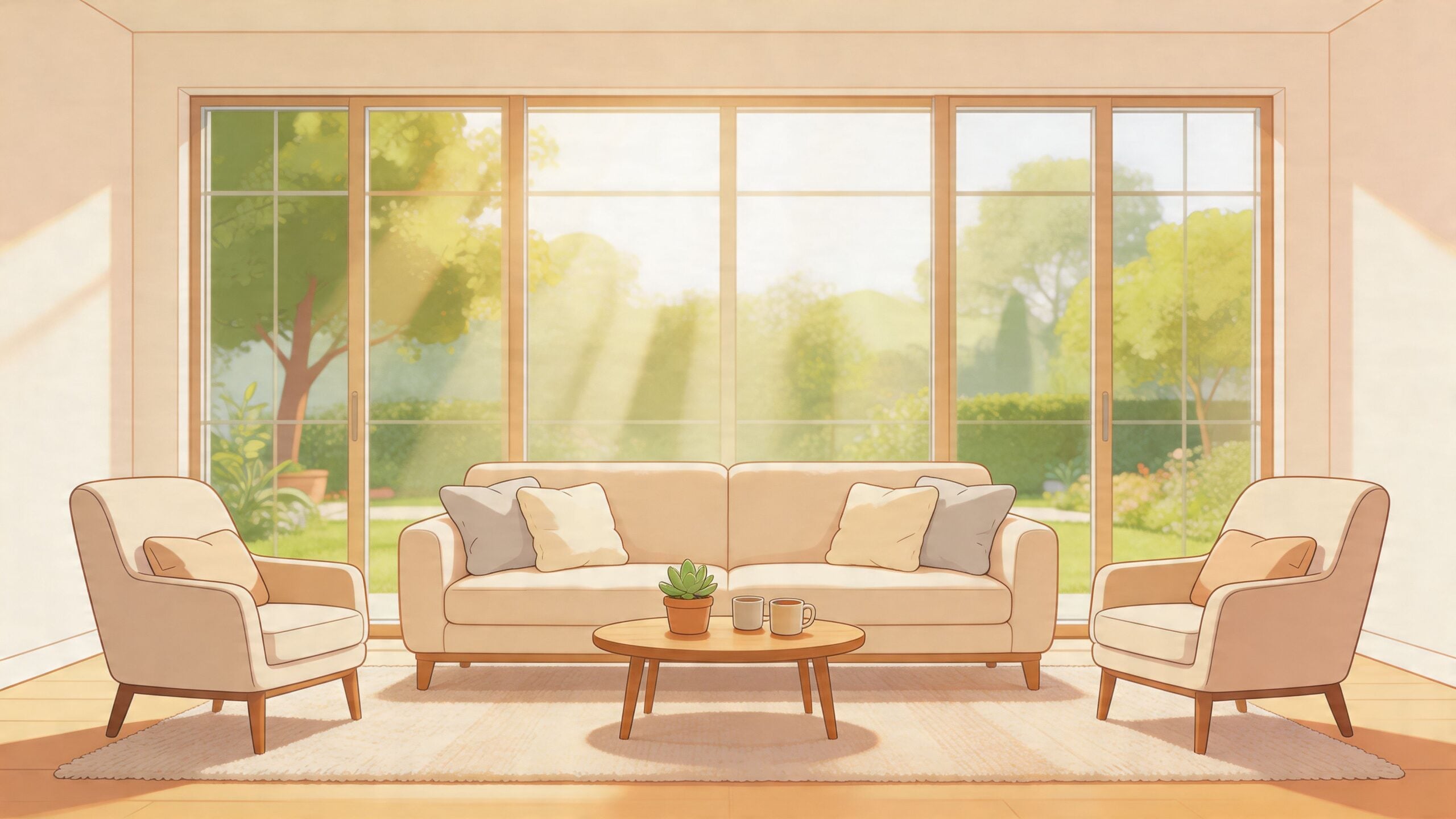
The best 3 season room furniture doesn’t look like a compromise. It looks like a natural extension of the rest of the home. The trick is mixing durability with pieces that still invite you to sit down, stay awhile, and use the room every day.
One room might start with a structured sofa, two accent chairs, and a woven coffee table. Another might lean more lounge-driven with a swivel chair, a recliner, and a slim console behind the sofa for lamps and storage. The right answer depends on the mood you want the room to carry.
Seating that feels like real living room furniture
A Florida room often works best when the main seating feels grounded and comfortable, not flimsy. That’s where Craftmaster and Bassett make sense for many homeowners. Their silhouettes can bridge indoor style and relaxed porch living, especially when paired with durable fabrics and practical tables.
If the room is more about personal comfort than group seating, Stressless deserves a look. A Stressless recliner in a bright corner can turn a sunroom into the best reading spot in the house. It also brings ergonomic support that many porch chairs do not offer.
For homeowners who prefer a more heritage-driven look, Stickley offers a different value. The appeal isn’t trendiness. It’s lasting design language, solid construction, and a sense that the room belongs to the home rather than being added as an afterthought.
Dining and multi-use pieces
In many Longwood and Lake Mary homes, the 3-season room is where casual meals happen. A dining set has to be scaled carefully, but when it fits, it changes how the space gets used.
Canadel is especially helpful for this kind of room because customization matters. A table shape, finish, or chair profile that works in a formal dining room may not work near windows, sliders, and a tighter traffic path. Canadel’s flexibility makes it easier to tune the room rather than forcing the room to adapt to a stock set.
A few pieces repeatedly prove useful:
- A storage ottoman: Keeps throws, reading material, or kids’ games out of sight.
- A bench under a window: Adds seating without the visual bulk of another chair.
- A narrow console table: Gives you a surface for lamps, plants, or baskets.
- A daybed or sleeper-style piece: Works well when the room doubles as overflow guest space.
The details that soften the room
A lot of comfort comes from the finishing layer. An outdoor-rated rug takes the edge off hard flooring. Toss pillows in better fabrics make the room feel furnished instead of staged. A small lamp, if the room conditions allow for it, adds evening warmth that overhead lighting rarely matches.
Some homeowners also like the look of poly patio furniture for certain applications, especially when low-maintenance performance matters. This overview of poly patio furniture is useful if you're weighing that material against woven or upholstered options.
A good Florida room shouldn’t feel like spare furniture moved outside. It should feel chosen.
The Slone Brothers Advantage Custom Orders and Design Help
Most homeowners don’t struggle because they can’t find furniture at all. They struggle because they can’t find the right size, right fabric, and right finish in one piece at the same time.
That’s where custom order becomes practical, not indulgent. If you’ve ever found the perfect sofa in the wrong fabric, or the right dining set that was just a little too large for your sunroom, you already understand why made-to-order options matter.
Why custom solves real room problems
A 3-season room is rarely a standard box. Sliders interrupt one wall. Windows wrap another. Ceiling height may be generous while floor area is tight. Off-the-floor dimensions, arm widths, table shapes, and fabric choices all matter more here than they do in a conventional family room.
Brands like Smith Brothers, Amisco, American Leather, Mavin, and Simply Amish are valuable in these projects because they let you fine-tune details instead of settling. You can choose a silhouette that fits the space, then pair it with a fabric or finish that makes sense for how the room lives.
That’s also where brand differences become meaningful:
- Smith Brothers: Great for custom comfort and upholstery options.
- American Leather: Strong when you need cleaner modern lines and precise scale.
- Amisco: Useful for dining and occasional pieces with flexible finish choices.
- Simply Amish and Mavin: Ideal when you want lasting wood craftsmanship with a more furniture-forward feel.
- Palasar: Helpful for decorative accents and occasional pieces that complete the room.
Design help saves more than time
A well-trained design team can spot problems before they become expensive. They can see when a chair back will interrupt a view, when a fabric color will fight the afternoon light, or when a table shape will make circulation awkward.
That kind of guidance is especially valuable in hybrid rooms. A sunroom may need to handle lounging, reading, casual dining, and occasional work without feeling crowded. Custom options make that possible, and professional planning keeps it cohesive.
If you want to explore what can be customized, take a look at custom order furniture options.
Worth remembering: The best custom piece isn’t the fanciest one. It’s the one that fits your room so well that nothing about it feels forced.
Your Guide to Long-Term Furniture Care and Maintenance
Even the right materials need routine care. Florida humidity, pollen, and daily dust settle into a 3-season room faster than many people expect, especially in spring and during wet summer stretches.
A simple maintenance routine
Start with regular dry cleaning habits. Vacuum cushions, brush fabric surfaces, and wipe exposed frames before dirt builds into seams and weave.
Then use mild soap and water on metal frames and many synthetic woven surfaces. Skip harsh cleaners unless the manufacturer specifically recommends them. Strong chemicals can dull finishes and shorten the life of coatings.
For cushions and pillows, spot-clean spills promptly and let fabrics dry fully before stacking or storing them. During long rainy periods, it helps to move soft goods to a drier interior closet or storage bench.
Material-specific care matters
Wood deserves extra attention in a 3-season room. Keep it clean, don’t let moisture sit on the surface, and use the manufacturer’s recommended care products rather than all-purpose polish. If you’ve chosen hardwood furniture, our guide on how to care for wood furniture is a helpful reference.
A few habits go a long way:
- Rotate cushions: Sun often hits one side of the room harder than the other.
- Check hardware: Tighten screws and connectors occasionally on chairs and tables.
- Lift, don’t drag: That protects both the floor and the furniture joints.
- Watch ventilation: A closed-up room with trapped moisture is harder on furnishings than a space with steady airflow.
Good furniture usually doesn’t ask for difficult care. It asks for consistent care.
Frequently Asked Questions About Furnishing Your 3 Season Room
Can I put a TV or other electronics in a Florida room
You can, but standard electronics are risky in a non-climate-controlled space. Standard electronics can fail in 60-80% humidity, with Consumer Reports testing showing a 40% failure rate for tech in non-climate-controlled porches, as noted in this porch technology discussion. If you want a screen in the room, use equipment designed for tougher conditions when possible, protect it from direct moisture, and add dehumidification.
Can a 3-season room work as a home office too
Yes, if you plan for ventilation, comfort, and storage. A desk or writing table with a supportive chair works best when it doesn’t dominate the room. Ventilated shelving is smart for routers, charging equipment, and office accessories. If the room needs to shift back to family use later, choose furniture that looks residential rather than corporate.
What furniture style looks best in a Florida room
The best style is usually the one that connects your house to the outdoors without feeling themed. Coastal textures, transitional upholstery, classic wood accents, and cleaner contemporary lines can all work. The common thread is scale, breathable layout, and materials that fit the room’s conditions.
What if I want good value without giving up quality
Look for long-term value rather than the lowest upfront number. Better-made American-made and Amish-crafted pieces usually perform more predictably over time, and clearance options can be a smart way to reach that level without stretching your budget unnecessarily.
Ready to find the perfect piece for your home? Visit Slone Brothers Furniture in Longwood, FL, and let our design experts help you get started. Since 1980, we’ve helped Greater Orlando homeowners create comfortable, lasting spaces with American-made and Amish-crafted furniture, custom-order options, a complimentary in-house design team, and our Low Price Promise.