
Farmhouse Style TV Stand: A Central Florida Guide

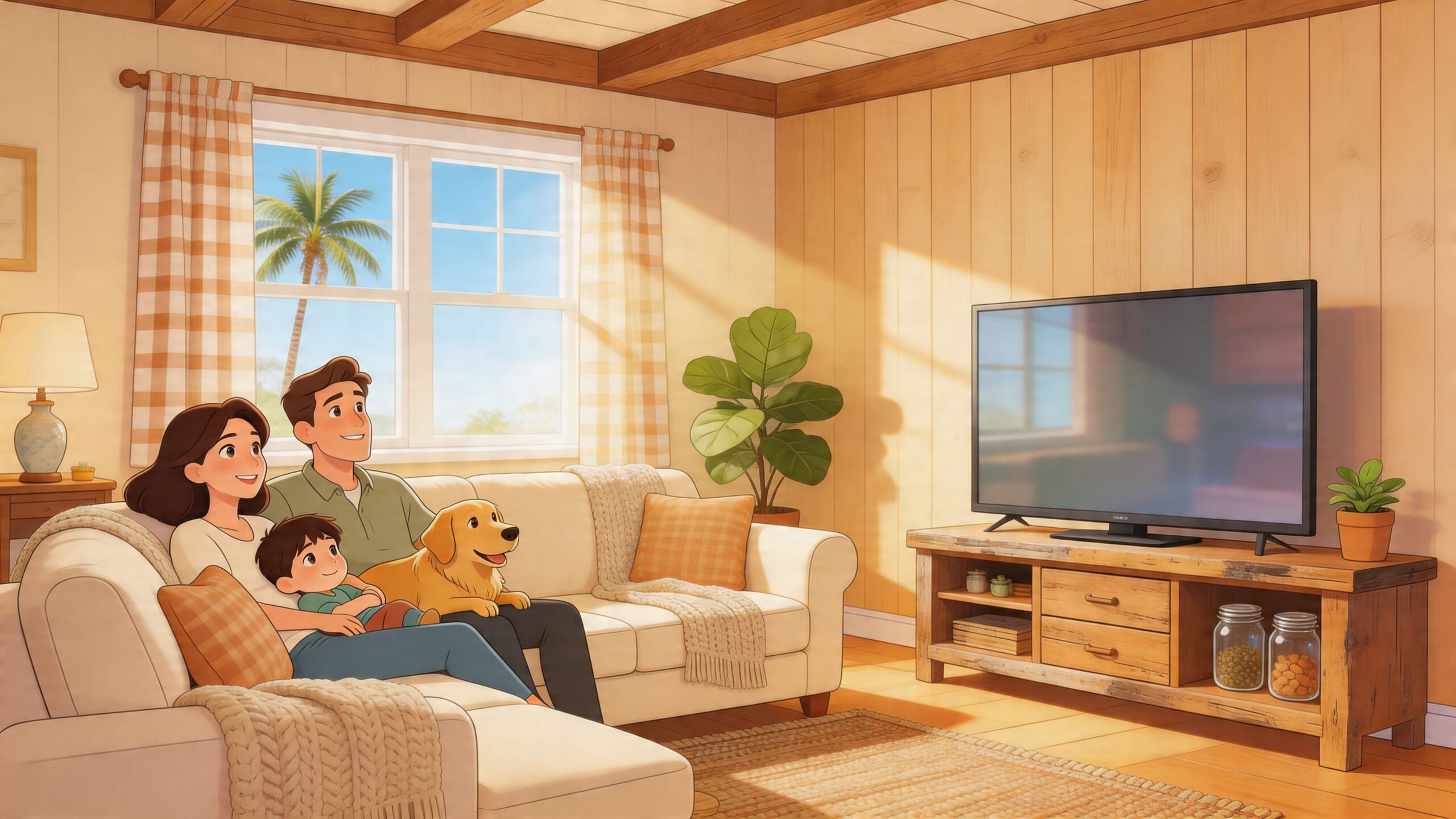
You know the moment. The sofa is in place, the rug is down, the television is mounted or waiting to be, and the room still feels unfinished. In a lot of Central Florida homes, that missing piece is the one that has to do the hardest job of all. It has to warm up the space, hide the gear, hold up to daily use, and make a flat-screen feel less like a black box on a wall.
That’s why the farmhouse style tv stand keeps showing up in living rooms from Longwood to Lake Mary. It softens modern technology with wood tone, texture, and practical storage. When it’s chosen well, it doesn’t just hold a TV. It anchors the whole room.
Why the Farmhouse Style TV Stand Is a Central Florida Favorite
A lot of homeowners around Orlando want the same balance. They like the cozy look they’ve seen in farmhouse interiors, but they still need room for streaming devices, game systems, remotes, and a soundbar. A farmhouse style tv stand works because it handles both sides of that equation without asking you to choose between charm and function.
The style took hold for a reason. The farmhouse style TV stand emerged as a dominant trend in the mid-2010s, coinciding with a 500% surge in searches for "farmhouse decor" between 2015 and 2018, and these stands typically support TVs up to 65 inches, which fits well with the average U.S. TV size of 55 inches and with the many homes being furnished across Greater Orlando (farmhouse decor trend and TV stand sizing).
What homeowners respond to most
The appeal usually starts with the finish. Distressed paint, weathered wood tones, barn-door fronts, and simple hardware make a room feel more relaxed. In Central Florida, where so many homes have open living areas and hard surfaces, that warmth matters. It keeps the room from feeling too sharp or sterile.
Then there’s the practicality. A good farmhouse media piece tends to offer a mix of closed storage and display space. That gives you room to hide what needs hiding and still show off a few personal pieces so the room feels lived in.
Practical rule: If your living room has to serve as family room, movie room, and everyday drop zone, a TV stand should calm the space down, not add more visual noise.
Why this style has staying power
Farmhouse furniture also adapts well. It can lean more rustic with heavy wood grain and dark metal, or it can feel cleaner and lighter with soft painted finishes. That flexibility is one reason it works in so many Central Florida homes, including newer builds that need a little character.
If you like a look that sits between rustic and updated, this farmhouse and transitional style guide is a helpful reference point. Many rooms land somewhere in that middle ground.
What doesn’t work is choosing a farmhouse stand just for the front view. The doors may look beautiful online, but if the proportions are wrong or the storage is too shallow for your equipment, you’ll feel that mistake every day.
Preparing Your Space for a Farmhouse TV Stand
Most problems start before the piece ever comes home. The stand is too short, too deep, too narrow, or it blocks a walkway. A farmhouse style tv stand should look settled into the room, not squeezed in as an afterthought.
Start with the wall. Measure the full width available, then look at what shares that space. Windows, floor vents, nearby doors, and traffic paths all matter. In many Central Florida homes, the living room opens directly into the kitchen or breakfast area, so a stand that projects too far can make the entire space feel tight.
Measure the TV correctly
The most common mistake is using the TV’s listed screen size as the width of the set. That number is diagonal, not side to side. The actual unit is wider than many people expect, and that’s how buyers end up with a stand that looks undersized.
Measure the TV itself from edge to edge. Then decide how much visual breathing room you want on either side. A stand should feel proportionate to the screen, not like a narrow shelf carrying a large panel.
Check components before you shop
Your stand has to fit more than the television. Measure:
- Gaming consoles so they have enough width and height inside a shelf or cabinet
- Soundbars if they’ll sit on the top or inside an open center section
- Streaming boxes and routers that need access but don’t need to be seen
- Cable plugs and power cords because rear clearance matters more than often realized
If you use enclosed storage, make sure cords can pass through cleanly and the shelves won’t crowd the equipment. A piece can look generous from the outside and still be frustrating inside.
A beautiful console that forces you to jam in components or bend cords sharply is the wrong console.
Think about height and load
Viewing height affects comfort. If the TV sits too high above the stand, the arrangement can feel disconnected. If the stand is too tall for the room, you’ll notice it during a long movie night.
Safety matters too, especially as screens get larger. Commercial-grade models can support up to an 85-inch TV with a 250 lb max load capacity, validated through testing that simulates a 1.2x safety factor, which is a strong reminder to verify capacity instead of assuming any media piece will do the job (commercial-grade TV stand load benchmark).
For a more detailed look at layout and comfort, this guide to optimal TV positioning is worth reviewing before you make a final decision.
Decoding Materials for Lasting Farmhouse Charm
Not all farmhouse furniture is built the same. Some pieces have the right look from across the room, but they don’t hold up well once you start opening doors, moving components, or living with them through changing indoor conditions. Material choice is where style turns into long-term value.
One of the biggest frustrations in this category is that many listings lean heavily on appearance while saying very little about construction. Many online retailers emphasize aesthetics but lack specific durability metrics, leaving homeowners unable to verify "built to last" claims, which makes it harder to judge wood quality, joinery, and long-term wear without seeing the piece in person (durability information gap in farmhouse TV stands).
Solid wood versus engineered materials
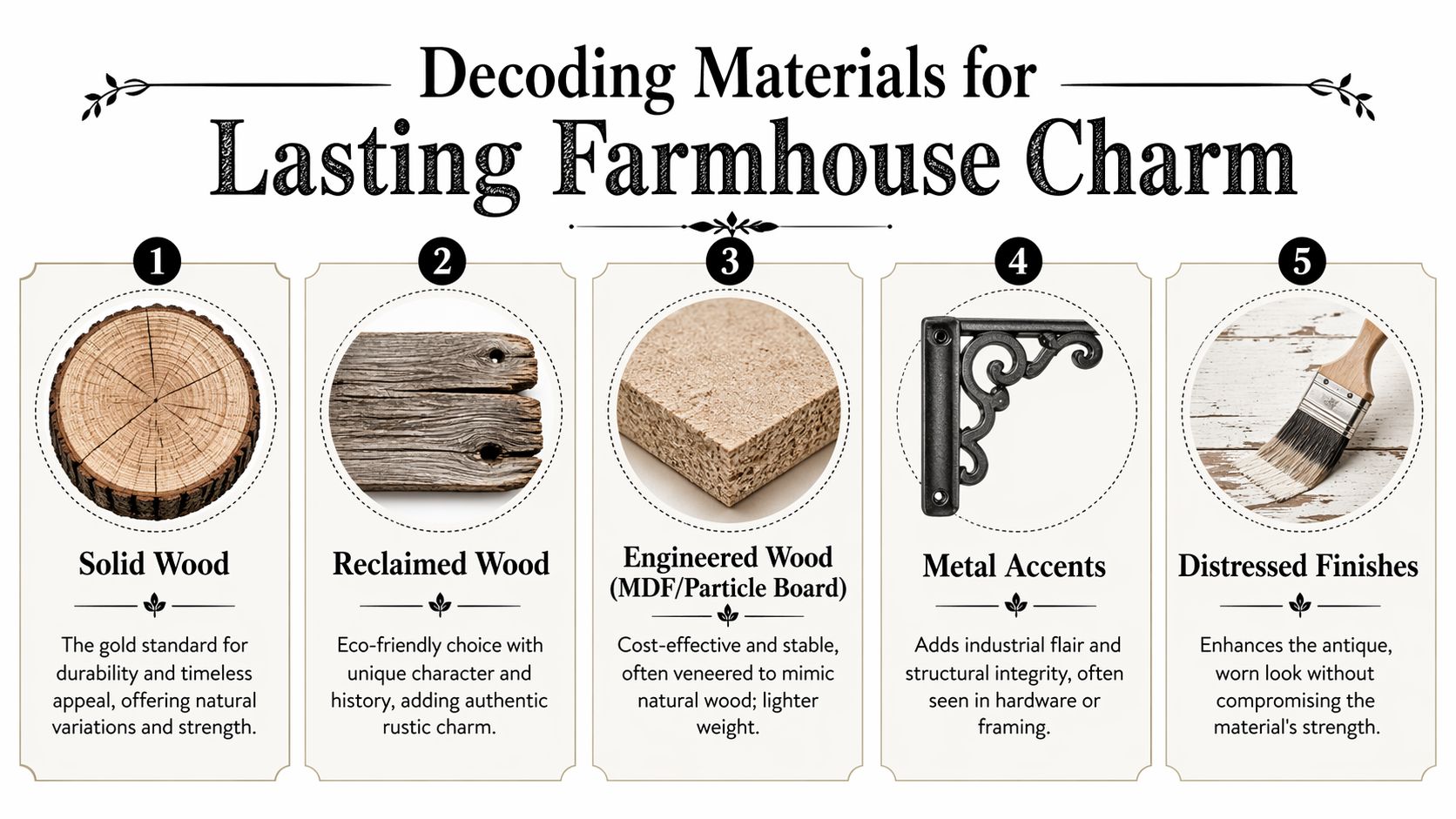
Solid wood has weight, texture, and repair potential on its side. It tends to feel more substantial, and it often ages more gracefully. In a farmhouse piece, that matters because the style depends on authenticity. When wood grain, finish depth, and edge detail look natural, the whole stand feels more convincing.
Engineered materials can still play a role. MDF and related products can offer a smooth painted surface and a more uniform appearance. They can work well in some designs, especially if the piece is made carefully. But they don’t deliver the same tactile character as solid wood, and they rarely satisfy buyers looking for heirloom quality.
In Central Florida, indoor humidity and air conditioning cycles can expose shortcuts. That doesn’t mean every engineered piece fails. It means the quality of the construction, edging, backing, and hardware matters even more.
What to inspect in person
Look at the back panel, interior shelves, and door movement. Those areas tell the truth. A farmhouse stand should feel stable when you touch it, not hollow or loose.
Check these details closely:
- Joinery that looks intentional and clean, especially at corners and shelf supports
- Doors and drawers that open smoothly without rubbing or shifting
- Finish consistency so painted areas, stain, and distressing feel deliberate instead of rushed
- Interior surfaces because cheap construction often hides inside the cabinet
Designer note: The best farmhouse pieces still look good with the doors open. That’s where weak construction usually gives itself away.
Farmhouse TV stand materials compared
| Material | Durability | Humidity Resistance | Long-Term Value |
|---|---|---|---|
| Solid wood | Strong, substantial, often repairable | Depends on construction and finish, but generally a better long-term choice | High for buyers who want a lasting piece |
| Reclaimed wood | Character-rich and often sturdy | Varies by source and finish | High when properly built |
| Engineered wood such as MDF or particle board | Can perform adequately in the right build, but less forgiving over time | Stable in some applications, though edge and surface quality matter | Moderate, often driven by price and appearance |
| Metal accents | Useful for support and hardware areas | Generally dependable in indoor use | Good as a complement to wood |
| Distressed finishes | Primarily aesthetic, not structural on their own | Depends on base material and protective finish | Best when applied over quality construction |
If you want a deeper primer on what wood species and construction choices mean for furniture life span, this guide on choosing the right hardwood for longevity and style is a smart next read.
Finding a Farmhouse TV Stand with Smart Storage
A farmhouse style tv stand has to do more than look warm and welcoming. It has to manage modern electronics without turning the room into a tangle of cords, blinking lights, and overheated components. That’s where many otherwise attractive pieces fall short.
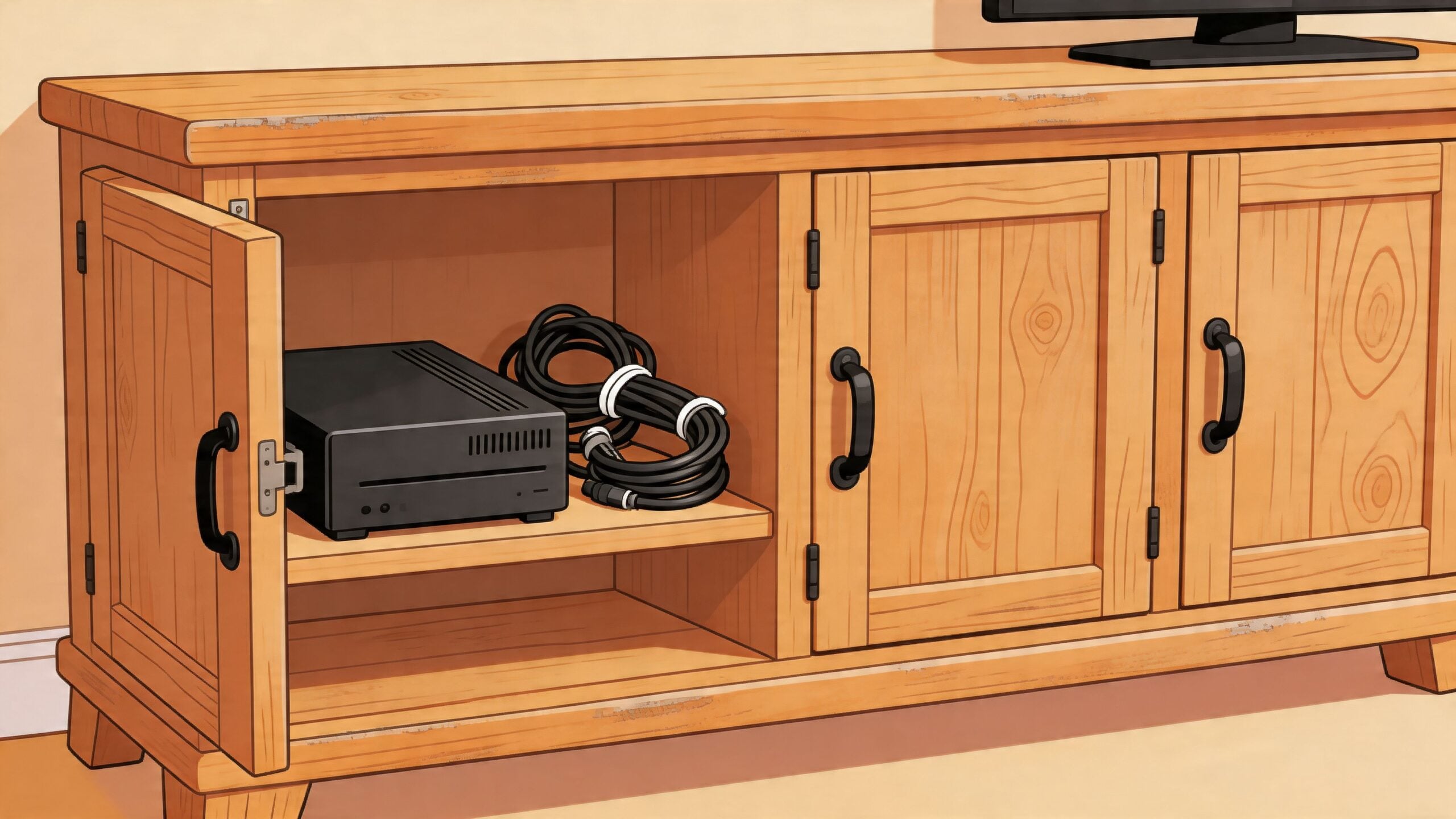
The weak point is common. Many farmhouse TV stands mention cable management, but few offer thoughtful solutions for hiding multiple cords, ventilating heat-generating consoles, or concealing smart home devices without hurting the rustic design (technology integration gap in farmhouse TV stands).
Storage that actually works
Open shelving works well for devices that need airflow and remote access. It’s especially useful for gaming systems, cable boxes, and soundbars. The downside is visual clutter. If every shelf becomes a holding area for electronics, the farmhouse character disappears.
Closed cabinets solve the clutter problem, but only if they’re planned properly. Barn doors are great for concealment and style, though they can also block one section while exposing another. Hinged doors can give better full access if you switch devices often.
A practical setup often includes:
- One open section for the component that runs hottest or needs the clearest signal path
- One concealed area for less attractive gear, remotes, or backup accessories
- Shelf flexibility so the stand can adapt when your equipment changes
- Rear cutouts or pass-through space that let cords fall naturally instead of bunching up
Ventilation matters more than buyers expect
Heat is where decorative furniture and electronics often disagree. If a console or media box runs warm, it needs room around it. A tightly enclosed cabinet may look tidy but can create long-term frustration.
The best storage design leaves air space around components, keeps cords organized, and avoids cramming a power strip behind a shelf with no breathing room. If the piece doesn’t support that, the styling won’t save it.
Farmhouse design should hide the mess, not trap the heat.
If you’re pairing a TV stand with nearby concealed storage, accent storage cabinets can help carry overflow without making the main media unit do too much.
What usually fails in real rooms
Too many small compartments. Shelves that are fixed in the wrong place. Decorative doors with no useful interior planning. Those details don’t show up in a staged photo, but they become obvious once you plug everything in.
Good storage keeps the room calm. Great storage makes the technology nearly disappear.
How to Style Your Farmhouse Entertainment Center
Once the stand is in place, styling should support the television, not compete with it. The best farmhouse arrangements feel layered but simple. You want enough personality to make the area feel finished, but not so much that the eye bounces around every shelf.
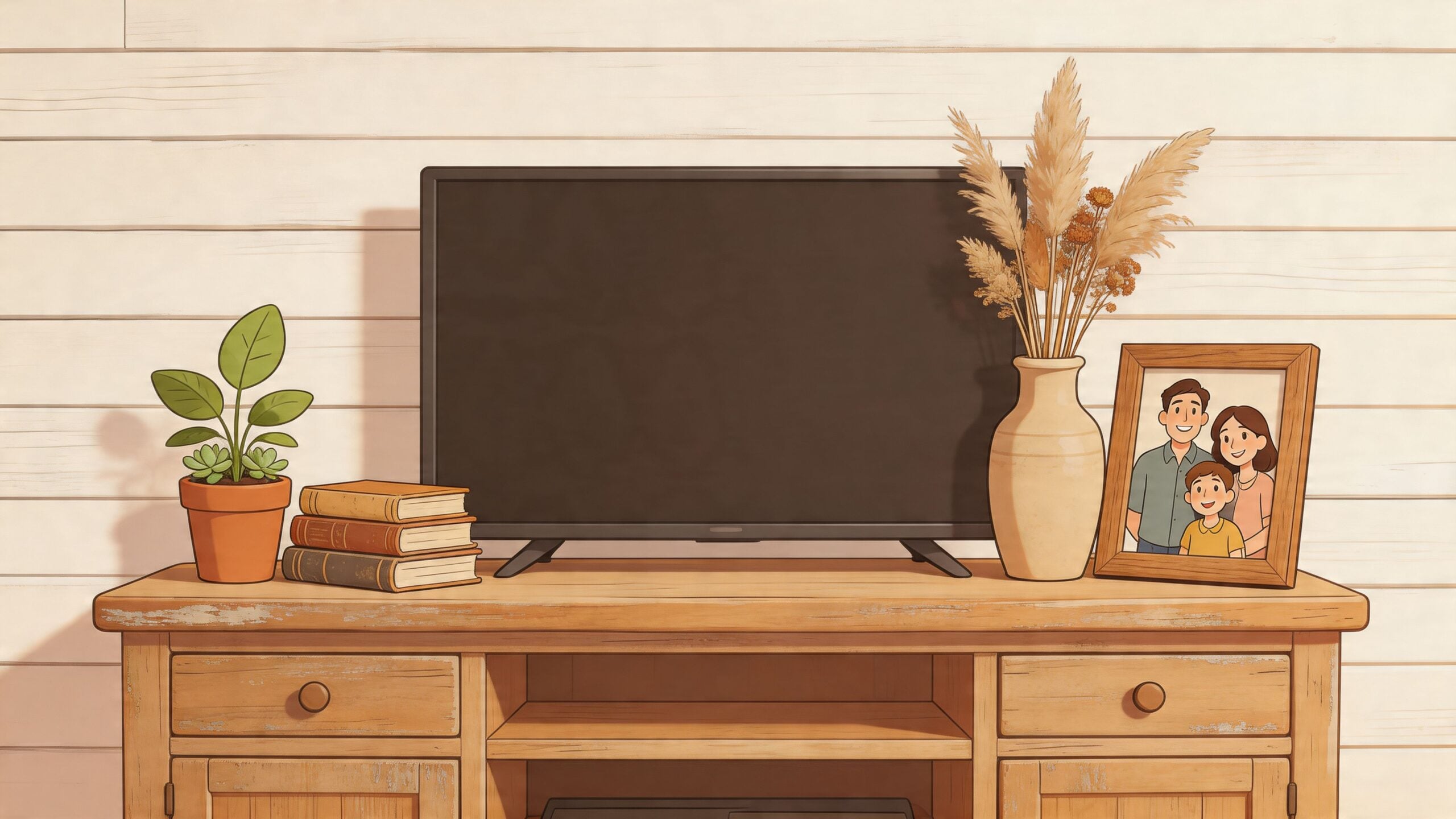
The construction details behind the look matter here too. Amish-inspired craftsmanship such as pocket-hole joinery and hand-applied finishes like Valspar Antique White or Minwax Jacobean stain are hallmarks of authentic farmhouse style, and those techniques support structural integrity of over 150 lbs (Amish-inspired farmhouse build details and finish references). That’s part of why well-made pieces style so well. They have presence before you add a single accessory.
Start with restraint
Leave some empty space. A farmhouse stand doesn’t need every shelf filled. Negative space keeps the piece from feeling busy, especially when the TV already dominates the visual field.
Try mixing these elements:
- Books with texture such as worn hardcovers or neutral spines stacked horizontally
- Baskets or boxes for remotes, game controllers, or small accessories
- Ceramics and glass in muted shapes that add contrast without glare
- Family photos used sparingly so they feel personal, not scattered
- Indoor plants that tolerate interior light and add softness to wood finishes
Use balance, not perfect symmetry
Symmetry can work around a TV, but too much of it can look stiff. A better approach is visual balance. If one side has a taller vase or plant, let the other side carry more weight through grouped objects or stacked books.
A few styling habits help:
- Vary height so everything doesn’t sit at one line
- Repeat a finish such as black metal, warm wood, or soft white in more than one spot
- Keep color quiet so the screen remains the focal point
- Edit aggressively when the stand starts looking like a catch-all surface
A TV wall already has one strong rectangle. Your accessories should soften that geometry, not repeat it over and over.
Don’t ignore the cords and wall area
Even a beautifully styled stand falls apart if wires are visible underneath. If you need practical help beyond what your furniture provides, this guide on how to hide TV wires and cables offers useful ideas that complement a cleaner farmhouse setup.
The wall behind the TV matters too. If it feels blank or disconnected from the stand, the whole arrangement can look unfinished. These ideas for how to decorate the wall behind your TV can help tie the full composition together without crowding it.
Why Shopping Local for Your Farmhouse TV Stand Matters
A farmhouse TV stand is one of those pieces that’s harder to judge through a screen than people expect. Finish depth, wood character, shelf sturdiness, and door movement are physical things. You notice them immediately in person, and those details often determine whether a piece feels substantial or disposable.
That matters in Central Florida, where homes get used hard and living rooms do a lot of work. The media console isn’t a decorative side table. It gets opened, bumped, loaded, styled, rewired, and lived with every day.
What you can tell in person
When you stand in front of a piece, you can do the checks that online shopping rarely allows. You can open the door and see whether the hardware glides cleanly. You can look underneath and assess how the base is built. You can compare painted finishes against stained finishes in real light instead of filtered photography.
That’s also where brand differences become easier to understand. Some pieces show their value in the way the wood grain reads, the way a drawer closes, or the way the finish is layered. American-made and Amish-crafted furniture often separates itself in those tactile details.
Why local guidance helps
A local showroom also gives you context national content can’t. Central Florida homes often deal with bright natural light, open-concept layouts, and rooms that need to feel casual without looking unfinished. Advice should reflect that reality.
The best guidance is specific to your room:
- How wide should the stand be if your wall shares space with a doorway or window
- Which finish reads best in strong Florida daylight
- Whether open or closed storage makes more sense for your equipment and habits
- How to coordinate the piece with sofas, rugs, and accent storage already in the room
Local advice is often less about trends and more about proportion, durability, and how the room actually functions on a Tuesday night.
There’s also a practical advantage to seeing custom options in person. Finish samples, wood species, and hardware choices are easier to evaluate when they’re right in front of you. That makes it easier to choose a farmhouse piece that fits your home instead of settling for a close-enough option from a national listing.
Bring Authentic Farmhouse Charm Home with Slone Brothers
A farmhouse style tv stand earns its place in a Central Florida home when it still looks grounded after a bright afternoon of sun, keeps cords and components under control, and fits the way your family uses the room. Good farmhouse furniture has character, but it also has a job to do.
The best results usually come from choosing a piece with staying power instead of chasing a quick online trend. Look for construction that feels solid, a finish that works with your flooring and light, and storage that supports streaming boxes, soundbars, and the clutter that tends to collect around the TV. In Florida, I also tell shoppers to pay attention to how painted and stained surfaces will read in strong daylight and how the piece will live with the humidity in the room over time.
That is why many local homeowners prefer to shop in person before they commit. Seeing the scale, finish, and build quality in a showroom gives you a clearer answer than a product photo ever will.
Ready to find the right fit for your room? Visit Slone Brothers Furniture in Longwood, FL, and talk with a team that understands Greater Orlando homes. Since 1980, our family-owned showroom has helped customers choose quality furniture with Amish-crafted and American-made options, custom-order flexibility, complimentary design help, reliable home delivery, and a Low Price Promise built around lasting value.