
How to Choose Living Room Rug: Expert Guide for 2026

You’ve probably had this moment already. The sofa is in place, the chairs are arranged, the coffee table looks right, and yet the room still feels unfinished. In many Central Florida homes, that last missing layer is the rug.
Learning how to choose living room rug options that work in your space can feel harder than it should. A rug has to do several jobs at once. It needs to fit your furniture, hold up to Florida sun and humidity, and still look like it belongs with the rest of your home.
We help homeowners with this every day in Longwood. Since 1980, we’ve worked with families across Orlando, Lake Mary, and Sanford who want their living rooms to feel pulled together, comfortable, and built for real life.
The Perfect Rug Completes Your Central Florida Home
A living room rug isn’t just decoration. It’s the piece that tells the eye where the room begins, where the seating area lives, and how everything connects.
That matters even more in Central Florida homes. Many newer Orlando-area layouts are open concept. Many older homes in Longwood and Sanford have additions, angled walls, or rooms that were updated over time. In both cases, the furniture can feel like it’s floating unless the rug grounds it.
A good rug does three things well:
- It unifies the room by visually connecting the sofa, chairs, and table.
- It softens the space so tile, wood, or laminate floors don’t feel cold or echoey.
- It adds personality through texture, color, or pattern without requiring a full redesign.
Practical rule: If your living room looks finished everywhere except the floor, the rug usually isn’t an accessory. It’s the anchor.
Individuals often get stuck because they shop by color first. That’s understandable, but it’s usually backwards. Size and placement come first. Material comes next. Style comes last.
If you start with pattern alone, you can end up with a rug that looks beautiful rolled out in a store but feels disconnected once it’s under your furniture. That’s one reason we always encourage homeowners to begin with room dimensions, traffic patterns, and lifestyle needs before falling in love with a look.
If you want more ideas for tying the full room together, our guide to living room home decor ideas is a helpful next read.
Start with Sizing and Placement
The fastest way to make a living room look off is choosing a rug that’s too small. It makes good furniture look scattered and makes the room feel less intentional.
The most reliable starting point is the industry standard: the front legs of all furniture pieces should rest on the rug surface. For average living rooms, 8'x10' often works best, while larger rooms typically do better with 9'x12' or 10'x14'. You also want 18 to 40 centimeters, or about 7 to 16 inches, of visible floor space between the rug edge and the walls so the room doesn’t feel cramped, according to this area rug sizing guide.
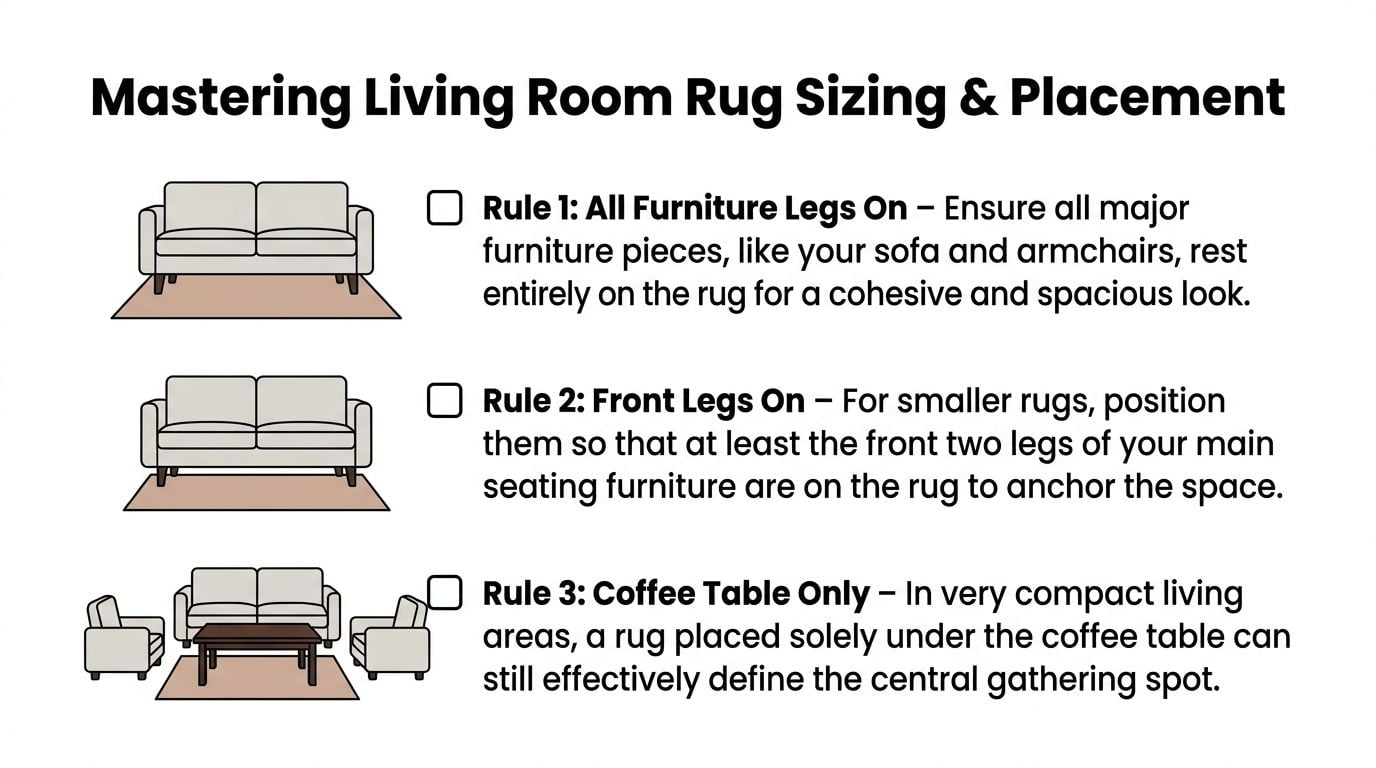
Three placement options that actually work
Most living rooms fall into one of these setups.
All legs on the rug
This works best in a larger room where you want a fully defined conversation area. The sofa, chairs, and coffee table all sit on the rug. The look is refined and generous.Front legs on the rug
This is the most practical choice for many homes in Lake Mary, Longwood, and Orlando. The rug extends under the front legs of the sofa and chairs, which visually links the whole seating area without requiring an oversized rug.Coffee table only
This is the most limited option. It can work in a compact room or with a special smaller rug, but it usually feels more like an accent than an anchor.
How to measure before you shop
Start with the seating zone, not the whole room. That’s the part many people miss.
Use this order:
- Measure the sofa width first so the rug isn’t visually narrower than your main piece.
- Mark the seating footprint from the front edge of the sofa to the front edge of the chairs.
- Check your walkways and keep 18 to 24 inches of clearance between major furniture pieces when possible.
- Step up to the closest rug size instead of squeezing into the smaller option.
If you’re unsure whether the rug should follow the room shape or the furniture grouping, let the furniture win. The rug should support the conversation area first.
For a more detailed measuring process, use our room planning guide on how to measure a room for furniture.
Where readers get confused
A common question is whether the rug should line up with the walls. Usually, no. It should line up with how the seating area functions.
Another sticking point is furniture spacing. If you’re refining the whole room at the same time, this outside guide on how to arrange furniture in your living room can help you think through the relationship between rug size and furniture layout.
Choose Materials for Florida Sun and Family Life
A rug that looks good on day one isn’t always the right rug for a Central Florida home. Material matters more here because humidity, sunlight, pets, kids, and frequent foot traffic all put more pressure on the floor than many generic decorating guides acknowledge.
That’s why I don’t recommend choosing by softness alone. In a busy family room, the best rug is the one that still looks good after everyday life happens.
What works well in real homes
For high-traffic family rooms in humid climates like ours, a useful approach is choosing a 0.5 to 1 inch thick wool/synthetic blend, which offers twice the stain resistance of lower-pile options according to ASTM-based testing cited in this rug placement guide. The same source notes that 62% of Orlando-area users in Houzz polls are looking for pet-friendly rug solutions, which tells you how common this concern is locally.
That point surprises people. They’ve often heard that lower pile is always better for traffic. In practice, a well-made blended rug with the right density can give you comfort and better stain performance without feeling flimsy.
Rug Material Guide for Central Florida Homes
| Material | Best For | Humidity Resistance | Fade Resistance | Good to Know |
|---|---|---|---|---|
| Wool | Comfortable family rooms, layered traditional spaces | Good | Good | Soft underfoot and naturally forgiving in lived-in spaces |
| Wool and synthetic blend | Busy living rooms with kids or pets | Good | Good | A practical choice when you want comfort and easier maintenance |
| Synthetic performance rug | Casual spaces, sun-exposed areas, everyday traffic | Good | Varies by construction | Often easier to spot-clean after spills |
| Jute or sisal | Relaxed coastal looks, lower-splash spaces | Moderate | Moderate | Brings texture, but can be less forgiving with stains and moisture |
Match the material to the room, not the trend
A textured natural-fiber rug may look perfect in a photo, but if your family comes in from the patio, the pool, or the yard, you may want something with easier cleanup and a softer landing underfoot.
This is also where furniture quality and rug quality should support each other. If your living room includes durable upholstered pieces from brands such as Smith Brothers or Craftmaster, the rug beneath them should be chosen with the same long-view mindset.
For homeowners comparing practical options, this guide to durable rugs for high traffic areas is a useful companion read.
One Florida-specific note people overlook
Sun exposure changes rug decisions. Large windows can wash out some colors over time, and humid air can punish materials that aren’t suited to the space. If your living room opens to a patio, lanai, or sliding doors, it’s also smart to look at outdoor rug options for Florida homes for nearby spaces so the transition feels intentional and durable.
The right material should fit your house on a normal Tuesday, not just look nice in a styled photo.
Define Your Style with Color and Pattern
Once the size is right and the material suits your home, the fun part starts. Color and pattern decide whether the rug subtly supports the room or becomes the feature that sets the tone.
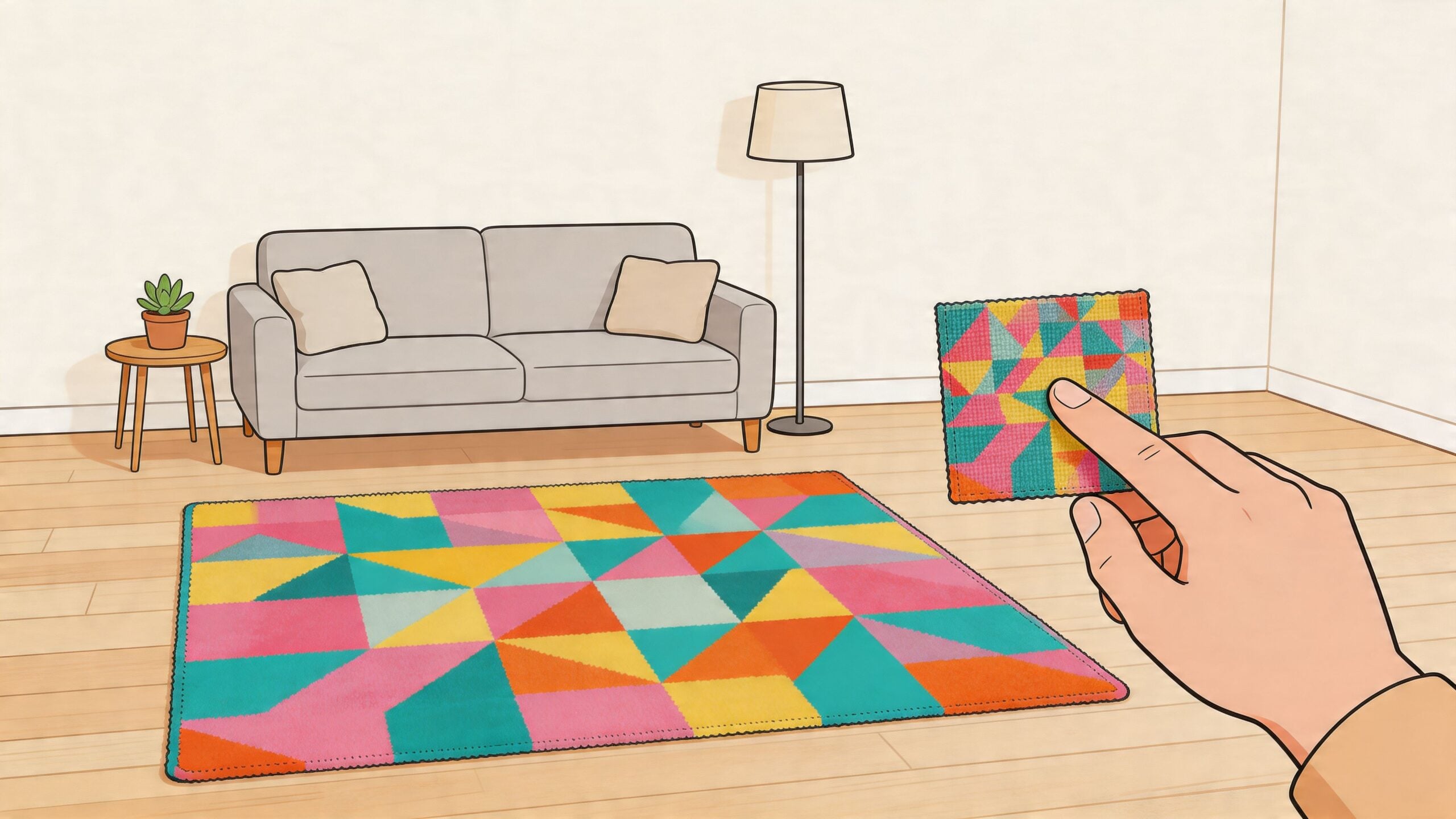
A neutral sofa can go two very different directions
Take a calm, structured Bassett sofa in a soft neutral fabric.
In one version of the room, you place a patterned rug beneath it with warm blue, rust, and cream tones. The rug becomes the palette setter. Pillows, art, and drapery can then pull from those colors without feeling forced. This approach works well when the furniture is simple and you want the floor to carry more character.
In another version, the same sofa sits on a softly textured rug in oatmeal, sand, or heathered gray. The room feels quieter and more architectural. Texture does the work instead of strong pattern.
Pattern should relate, not match
If you have a solid sofa, a patterned rug can add movement. If your chairs already carry a print, a more restrained rug often keeps the room from feeling busy.
That’s especially true with statement upholstery. A custom American Leather sofa in a rich color can pair beautifully with a rug that has subtle texture and low-contrast pattern. A mission-style setting with Stickley pieces may feel strongest with an understated rug that lets wood craftsmanship stay front and center.
A few reliable combinations:
- Solid seating plus patterned rug for energy and contrast
- Patterned chairs plus quieter rug for balance
- Textured rug plus wood-forward furniture for warmth without clutter
- Soft tonal rug plus bold art when you want the walls to lead
If everything in the room asks for attention, nothing wins. Let one element lead.
If pattern mixing feels tricky, our article on how to work with patterns in designing your room can help you sort out scale, contrast, and coordination.
Solve for Awkward and Open-Concept Rooms
Some of the most frustrating living rooms in Central Florida aren’t small. They’re irregular. A room may open into the dining area, angle toward a fireplace, or stretch into a flex space that doesn’t have clear boundaries.
That doesn’t mean you need to force a standard rug formula into a non-standard room. It means the rug needs a different job.
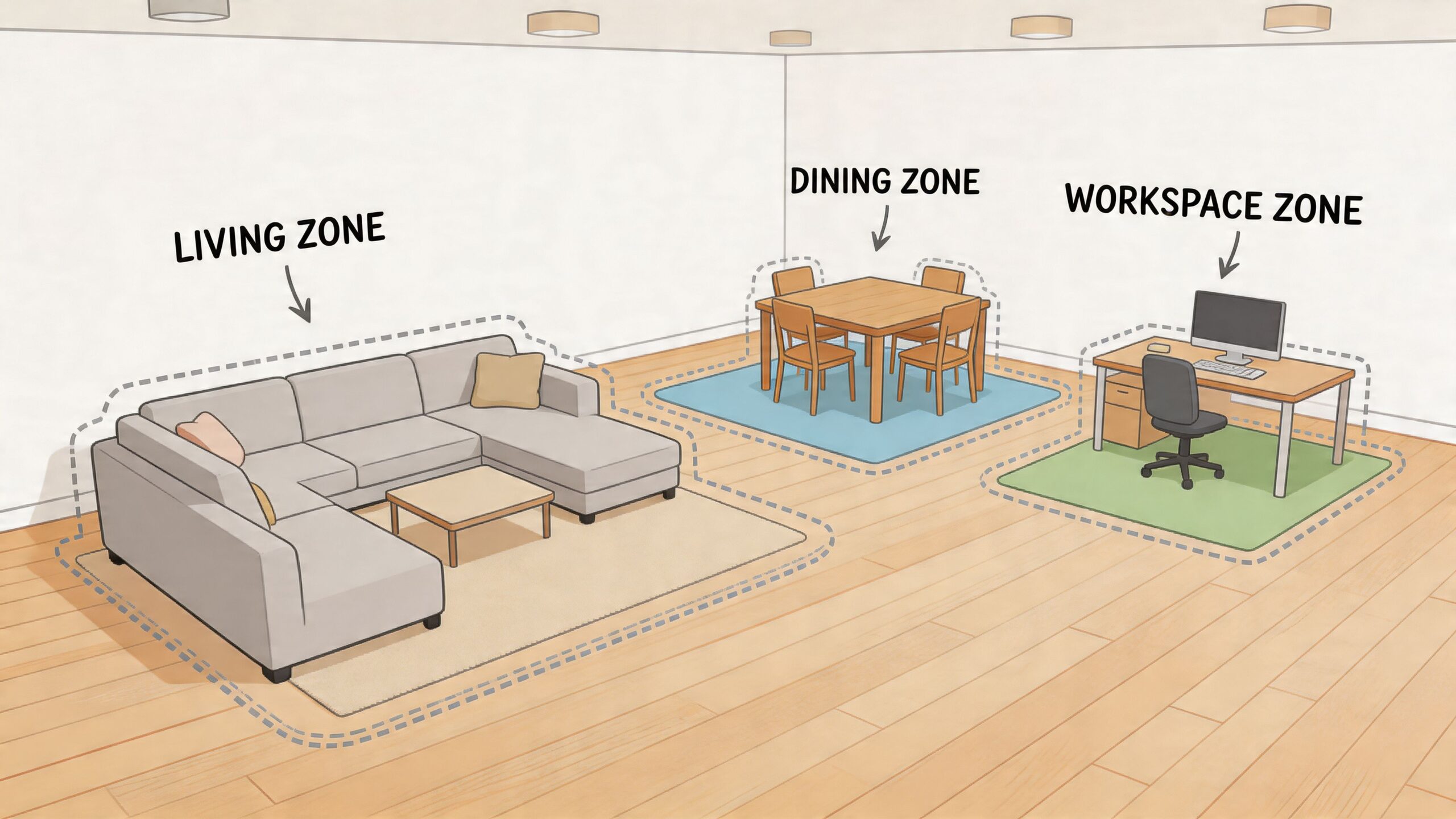
Online design forums have seen a 40% spike in queries like "awkward room rug" in areas with varied architecture like Central Florida, and there’s also been a 25% rise in demand for custom and irregular-shaped rugs. The most useful fix is to create "seating islands" instead of trying to follow the room perimeter, as noted in this living room rug size guide.
Use the rug to define function
In an open-concept home, the rug should frame the seating group, not try to cover the entire visible floor area.
That might mean:
- Creating one conversation zone around the sofa and chairs near the TV
- Separating a reading corner with a smaller rug and accent chair
- Keeping the dining area distinct with its own floor treatment instead of forcing one oversized rug to do everything
This is often the breakthrough for homeowners in Orlando and Lake Mary. Once you stop asking the rug to mimic the room shape, the plan gets much clearer.
What to do with angled walls and odd corners
Angled walls can make a rectangular rug feel wrong if you center it to the architecture instead of the furniture. Center it to the seating group instead.
If the room still feels unresolved, custom sizing may be the answer. That’s one reason some homeowners use the custom-order capabilities available through Slone Brothers Furniture when standard dimensions don’t solve the layout cleanly. It allows the rug to support the room you have, not the one a big-box size chart assumes.
One strong rule for complex layouts
Don’t let empty perimeter space push the seating area apart.
People often spread furniture wider because the room is large or irregular. Then they choose a rug based on the resulting gaps. The room feels disconnected, and the rug looks like an afterthought. Pull the seating group into a usable island first. Then size the rug to that island.
For more ideas on handling large connected spaces, our guide to decorating open floor plans offers practical layout thinking for Florida homes.
Budgeting for Value and Long-Term Care
A living room rug is easier to choose when you stop thinking in terms of “cheap versus expensive” and start thinking in terms of value over time.
A lower-quality rug that sheds, fades, or wears unevenly can cost more in frustration than a better-made one that holds up. That’s especially true in a busy Central Florida home where sun, shoes, pets, and traffic all show up fast.

What value really looks like
A value-focused purchase usually includes a few things working together:
- Better construction that keeps the rug looking stable and intentional
- Appropriate material for how your household lives
- A rug pad to reduce shifting and help the rug wear more evenly
- Routine care habits so spills and dirt don’t become permanent problems
Simple care habits that protect your investment
You don’t need a complicated system. You need consistency.
- Blot spills quickly instead of rubbing them deeper into the fibers.
- Rotate the rug periodically if one side gets stronger sun or traffic.
- Use a pad underneath so the rug has support and stays put.
- Schedule deep cleaning when needed rather than waiting until buildup is obvious.
If you’re comparing care options, this overview of professional rug cleaning services gives a useful sense of when professional cleaning makes more sense than spot treatment at home.
Quality also shows up in how the rug fits into the rest of your home plan. A well-chosen rug often outlasts furniture rearrangements, paint changes, and accessory updates. That’s why many homeowners shop with a long view, looking for lasting value, the reassurance of a Low Price Promise, or opportunities through a clearance outlet rather than chasing the quickest bargain.
Find Your Perfect Rug at Slone Brothers Furniture
The right rug starts with clear measurements, honest material choices, and a style that fits the way you live. If your room is irregular, the answer usually comes from defining the seating area first instead of trying to force the rug to match the walls. If your home gets strong sun or heavy family use, material matters just as much as appearance.
This is also one of those design decisions that’s easier in person. You can feel the texture underfoot. You can compare tones against wood finishes, upholstery fabrics, and lighting. You can see whether a rug reads warm, cool, soft, crisp, casual, or formal before it comes home.
That matters when you’re furnishing a new home in Longwood, updating a family room in Lake Mary, or trying to make an open Orlando layout feel more settled. It also matters when you want guidance that fits your actual room, not a generic showroom setup.
Bring your measurements. Bring a few photos of the space. Bring a pillow, swatch, or paint sample if you have one. A local design conversation usually solves rug questions faster than guessing from a screen.
Since 1980, Slone Brothers has served Central Florida as a family-owned showroom with a focus on quality furniture, home decor, custom-order flexibility, and practical design help. That combination matters when you want a rug that doesn’t just fit today, but still makes sense years from now.
Ready to find the perfect piece for your home? Visit the Slone Brothers Furniture showroom in Longwood, FL, and let our design experts help you get started!