
Best Mattress for Pressure Relief: A 2026 Orlando Guide


You go to bed tired, but not in a good way. Your shoulder aches when you lie on one side. Your hip gets sore on the other. By morning, your lower back feels stiff, and you’re not sure whether the problem is your routine, your pillow, or the mattress you’ve been meaning to replace for years.
That’s the situation many people around Orlando, Lake Mary, Sanford, and Longwood find themselves in. In our climate, heat can already make sleep feel restless. Add a mattress that creates too much pressure in the wrong places, and a full night’s rest gets hard to come by.
When people search for the best mattress for pressure relief, they’re usually trying to solve a very real problem. They want less tossing, less numbness, less soreness, and better support at the shoulders, hips, and lower back. Good pressure relief isn’t just about softness. It’s about how a mattress spreads your body weight, cushions sensitive areas, and helps you hold a more comfortable posture through the night.
Waking Up to a Better Night's Sleep
A lot of mattress problems show up in the morning.
You might wake up and roll your shoulder because it feels pinched. You might sit on the edge of the bed and notice your hips feel tender before your feet even hit the floor. Some people describe it as “sleeping hard,” even when the mattress itself feels soft at first touch.
That usually points to pressure buildup. The mattress isn’t doing enough to cushion the heavier parts of your body while still supporting everything else.
This matters more than many shoppers realize. A 2021 Cochrane systematic review analyzed 40 studies involving 12,517 participants and found that specialized surfaces such as static air overlays and alternating pressure air mattresses reduced pressure ulcer incidence compared with standard foam mattresses. That research comes from a medical setting, but the takeaway is useful for everyday shoppers too. Surface design has a direct effect on pressure relief.
For most homeowners, the goal isn’t a medical mattress. It’s a mattress that helps you sleep without waking up sore. That’s where the search for the best mattress for pressure relief becomes practical. You’re looking for a mattress that cushions your pressure points, keeps your spine from dipping out of position, and doesn’t trap heat in the middle of a humid Central Florida night.
A simple rule: if you wake up with the same sore spots again and again, your mattress is no longer just “old.” It may be creating pressure where your body needs relief.
Sleep comfort also works best when you look at the full picture. Mattress choice matters, but so do habits like room temperature, light, and routine. If you’re trying to improve the whole sleep environment, this guide to sleep quality improvement strategies offers a helpful broader view.
We’ve served Central Florida families since 1980, and one thing hasn’t changed. When someone says, “I’m tired of waking up sore,” the answer usually starts with better pressure relief.
What Causes Painful Pressure Points During Sleep
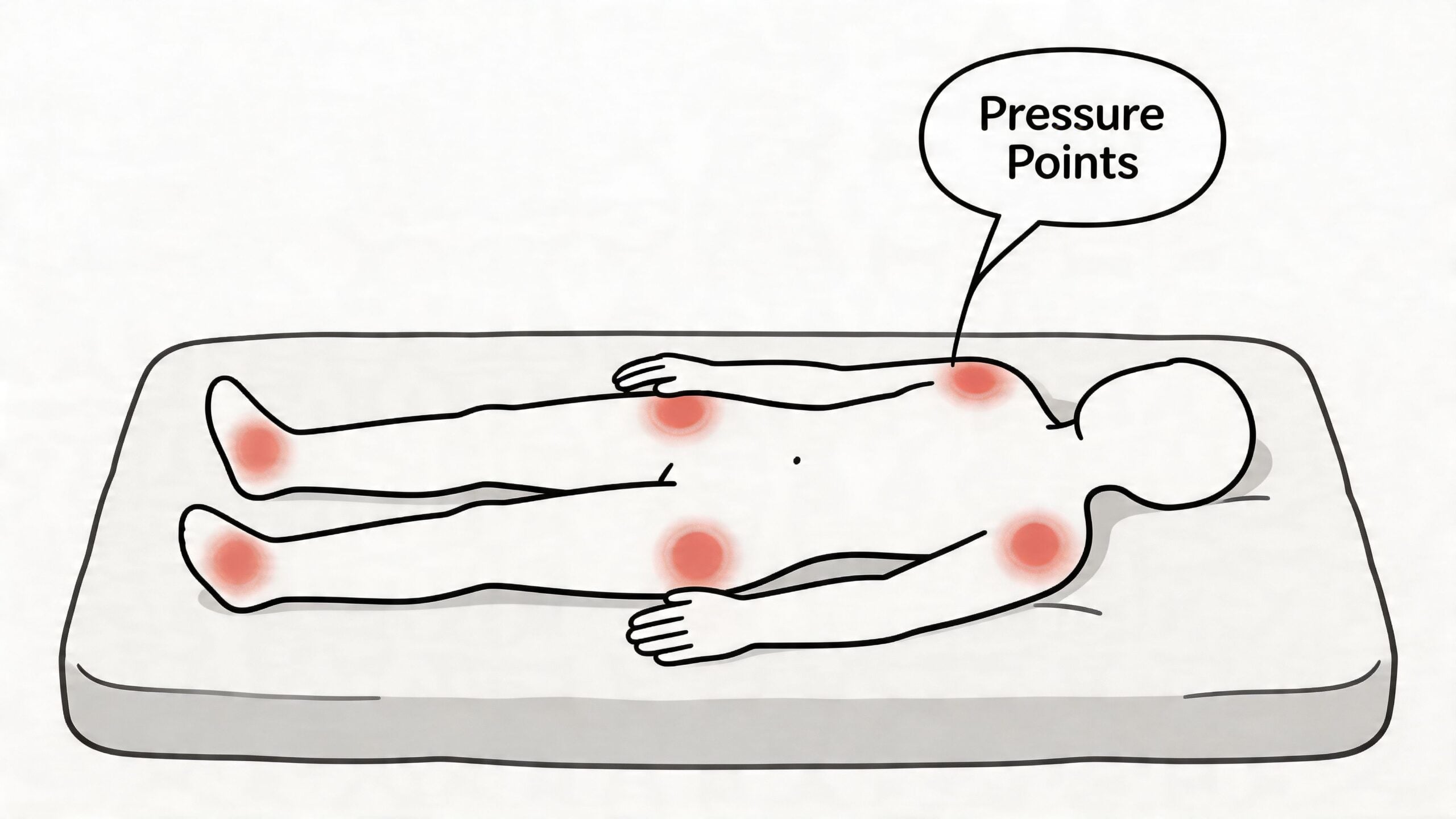
Pressure points happen when too much of your body weight pushes into too small an area for too long.
Your shoulders, hips, and sometimes your lower back usually take the brunt of it. That’s especially true for side sleepers, but back and stomach sleepers can feel it too if the mattress is either too firm in the wrong places or too soft underneath the torso.
Think floor versus cushion
A hard floor pushes back evenly, but it doesn’t adapt to your shape. The parts of your body that stick out more, like hips and shoulders, absorb more force. A supportive mattress behaves more like a well-made cushion. It gives where you need it to, then holds you up where you need support.
That balance is where many mattresses fail.
If the surface is too firm, your shoulder and hip press into it instead of sinking in slightly. If it’s too soft, those same areas may sink too far and pull the rest of your body out of line. In both cases, you tend to shift positions all night because your body is trying to escape that pressure.
What that feels like in real life
People don’t usually say, “I have peak interface pressure issues.” They say things like:
- “My arm falls asleep” when lying on one side.
- “My hip feels bruised” after a full night in bed.
- “I’m moving around all night” because no position stays comfortable.
- “My back feels tired in the morning” even if the mattress didn’t feel terrible at bedtime.
Those symptoms can overlap with muscle tightness too. Some people combine a better mattress with hands-on bodywork to address the discomfort from both angles. If muscle tension is part of the issue, learning about finding specialized Tui Na care may be useful alongside mattress changes.
Pressure relief is not the same as softness. A very soft mattress can still create pain if it lets your body sag out of alignment.
Why support and pressure relief have to work together
A mattress has two jobs during sleep.
First, it needs to reduce pressure at the shoulders, hips, and other sensitive areas. Second, it needs to support posture so your spine doesn’t bend into an awkward position overnight. If either job is missing, you’ll feel it.
This is why shoppers dealing with soreness often need more than a generic “plush” label. They need to know how the mattress behaves under actual body weight and sleep position. If lower back discomfort is part of the problem, our guide on how the right mattress can help back pain breaks down what to look for in more detail.
The hidden cycle
Here’s the part that confuses a lot of people. You can feel tired without realizing your mattress is waking you up in small ways all night. A pressure point doesn’t always cause a full waking moment. Sometimes it just triggers tiny shifts and turns that keep you from settling soundly.
That’s why the best mattress for pressure relief often feels less dramatic than people expect in the showroom. It doesn’t necessarily feel flashy. It feels steady, balanced, and easy to stay on.
Finding the Best Mattress Type for Pressure Relief
Not every mattress type handles pressure the same way. Materials matter. Construction matters. The top layer matters. The support core matters just as much.
For most shoppers, the main categories to compare are memory foam, latex, hybrid, and traditional innerspring. Each one creates a different feel under the shoulders, hips, and lower back.
Memory foam mattresses
Memory foam became popular for a reason. It’s very good at shaping itself around the body.
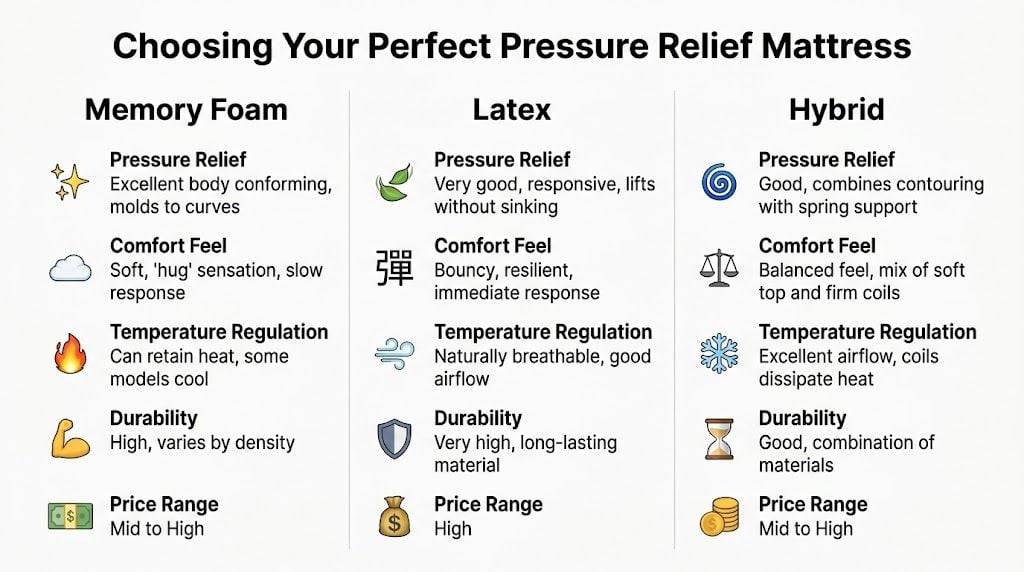
According to Sleep Foundation’s pressure relief methodology, memory foam mattresses distribute body weight evenly and can reduce peak interface pressures by 25% to 40% compared to innerspring models when measured with XSENSOR pressure mapping on diverse body types, as described in their pressure relief research methodology. In plain terms, memory foam tends to cushion sore spots well.
That makes memory foam appealing for:
- Side sleepers who need more give under the shoulders and hips
- People with sharp pressure spots who prefer a closer body-conforming feel
- Shoppers who like a “hug” sensation rather than a lifted, floating feel
But there are tradeoffs.
Memory foam can feel slower to respond when you move. Some sleepers love that calm, molded-in feeling. Others feel stuck. In Central Florida, the bigger question is heat. Some newer foams use cooling features, but foam still tends to feel warmer than more breathable constructions.
Latex mattresses
Latex is often the quiet favorite for people who want pressure relief without the deep sink of memory foam.
It contours, but in a more buoyant way. Instead of slowly wrapping around you, it pushes back faster and keeps you more “on” the mattress than “in” it. That can be a big advantage if you change positions often or dislike the slow response of traditional foam.
Latex often works well for:
- Stomach sleepers who need contouring without too much sink
- Heavier individuals who want pressure relief with a more lifted feel
- Hot sleepers who care about breathability
The biggest thing to understand is feel. Latex isn’t usually the plush, melting sensation people expect when they say they want a soft mattress. It’s more springy and resilient. For some bodies, that’s exactly right. For others, it doesn’t cushion enough at the shoulders.
Hybrid mattresses
For many shoppers, hybrids are the most balanced option.
Sleep Foundation’s methodology notes that hybrid mattresses, with thick comfort layers over pocketed coils, deliver average to above-average pressure relief by forming deep cradles and zoned support, which makes them especially suitable for side sleepers and combo sleepers with hot spots, as summarized in this hybrid mattress pressure relief overview.
A hybrid combines two strengths:
- The comfort layers provide contouring and cushioning.
- The coil system adds structure, airflow, and easier movement.
This combination often works well for Central Florida shoppers because it can ease pressure while sleeping cooler than an all-foam bed. You get more support under the midsection, more flexibility in comfort feel, and often better edge support if you sit on the side of the bed.
If you want pressure relief but also want to turn easily, sleep cooler, and avoid an overly “stuck” sensation, a hybrid is often the first type worth testing.
Hybrid models can vary a lot, though. One hybrid may feel plush and contouring. Another may feel firm and lifted. Coil design, zoning, and the thickness of the top layers all change the experience.
For a closer look at how these constructions differ, our guide to mattress types explained is a useful next step.
Traditional innerspring mattresses
Classic innersprings are still familiar, but they usually lag behind when pressure relief is the main goal.
That doesn’t mean every innerspring is uncomfortable. It means they tend to offer less targeted contouring. Without substantial comfort layers, they can feel firmer at the hips and shoulders, especially for side sleepers or anyone with joint sensitivity.
If you grew up sleeping on a spring mattress, that feel may seem normal. But if you’re waking with sore spots, it’s often worth testing newer foam or hybrid constructions side by side. Many shoppers are surprised by how much less effort their body has to make on a mattress that spreads pressure more evenly.
A simple comparison
| Mattress type | Pressure relief feel | Best fit for |
|---|---|---|
| Memory foam | Deep contouring, close cradle | Side sleepers, sharp shoulder or hip pressure |
| Latex | Buoyant contouring, quicker response | Hot sleepers, combo sleepers, people who dislike deep sink |
| Hybrid | Balanced contouring with coil support | Broad range of sleepers, especially those wanting relief plus airflow |
| Innerspring | Limited contouring unless heavily padded | Shoppers who prefer a traditional feel over targeted pressure relief |
The best mattress for pressure relief usually comes down to this. If you want the deepest contour, start with memory foam. If you want resilient cushioning, try latex. If you want the broadest mix of comfort, support, and airflow, begin with hybrids.
Matching Firmness to Your Sleep Style and Body Weight
Firmness trips people up because it sounds simple, but it’s personal.
One person’s “medium” can feel soft to someone else and firm to another. Body weight changes how far you sink in. Sleep position changes where pressure builds. That’s why the best mattress for pressure relief isn’t chosen by firmness alone. It’s chosen by how firmness interacts with your body.
Side sleepers need give at the shoulder and hip
If you sleep on your side, you need enough cushioning for the shoulder and hip to settle in without forcing the spine into a curve. Many too-firm mattresses often fail to provide this.
Hybrids with thick comfort layers and pocketed coils often work well here because they can create a cradle while still keeping the body supported. Sleep Foundation’s methodology notes that hybrids with this design can be especially effective for side sleepers and combo sleepers with hot spots, as referenced earlier.
A side sleeper usually does best when the mattress feels comfortable quickly in the shoulder area. If that area feels jammed or lifted, the surface is probably too firm.
Back and stomach sleepers need support in the middle
Back sleepers usually want a more balanced feel. There still needs to be some cushioning, but the main issue is keeping the midsection from dipping too far while allowing the hips to rest naturally.
Stomach sleepers usually need the firmest support of the three main groups. Too much softness under the torso can create an uncomfortable sway through the lower back. Pressure relief still matters, but support has to stay in charge.
Body weight changes the feel
This part matters more than many people realize.
A lighter sleeper may barely engage the deeper comfort layers of a mattress, so a medium bed can feel firmer than expected. A heavier sleeper presses further into the mattress and may need stronger support to avoid sinking too far.
That’s why the same mattress can feel excellent to one person and wrong to another.
Practical rule: don’t ask whether a mattress is soft or firm in general. Ask whether it feels supportive for your body in your usual sleep position.
Mattress Firmness Guide by Sleep Position & Weight
| Sleep Position | Body Weight (<130 lbs) | Body Weight (130-230 lbs) | Body Weight (>230 lbs) |
|---|---|---|---|
| Side | Soft to medium | Medium to medium-firm | Medium-firm with strong support core |
| Back | Medium | Medium-firm | Firm to medium-firm with reinforced support |
| Stomach | Medium-firm | Firm | Firm with minimal midsection sink |
| Combo | Medium | Medium to medium-firm | Medium-firm with easy movement and support |
How to use this in a showroom
Start with your real sleep style, not your ideal one. If you always end up on your side, test like a side sleeper. If you rotate between your back and side, test both positions on the same mattress.
Then ask yourself:
- Do my shoulders relax?
- Do my hips feel cushioned or blocked?
- Does my lower back feel supported, not strained?
- Can I roll over easily without fighting the surface?
If you want a more detailed breakdown before visiting in person, our mattress firmness guide can help narrow your starting point.
Common mistakes
Some shoppers pick a firmer bed because they assume firm means better support. Sometimes it does. Sometimes it just creates more pressure.
Others choose the softest bed on the floor because it feels luxurious for two minutes. Then they discover that after longer use, the midsection sinks too far and the back starts to complain.
The right firmness should feel comfortable and stable at the same time. If a mattress relieves your shoulder pressure but leaves your spine unsupported, it isn’t the right match. If it supports your lower back but crushes your shoulder, it also isn’t the right match.
Key Mattress Features That Enhance Pressure Relief
Once you know the right mattress type and a sensible firmness range, the next step is looking at features that improve how that mattress performs.
This explains why two mattresses that sound similar on a tag can feel completely different once you lie down.
Zoned support
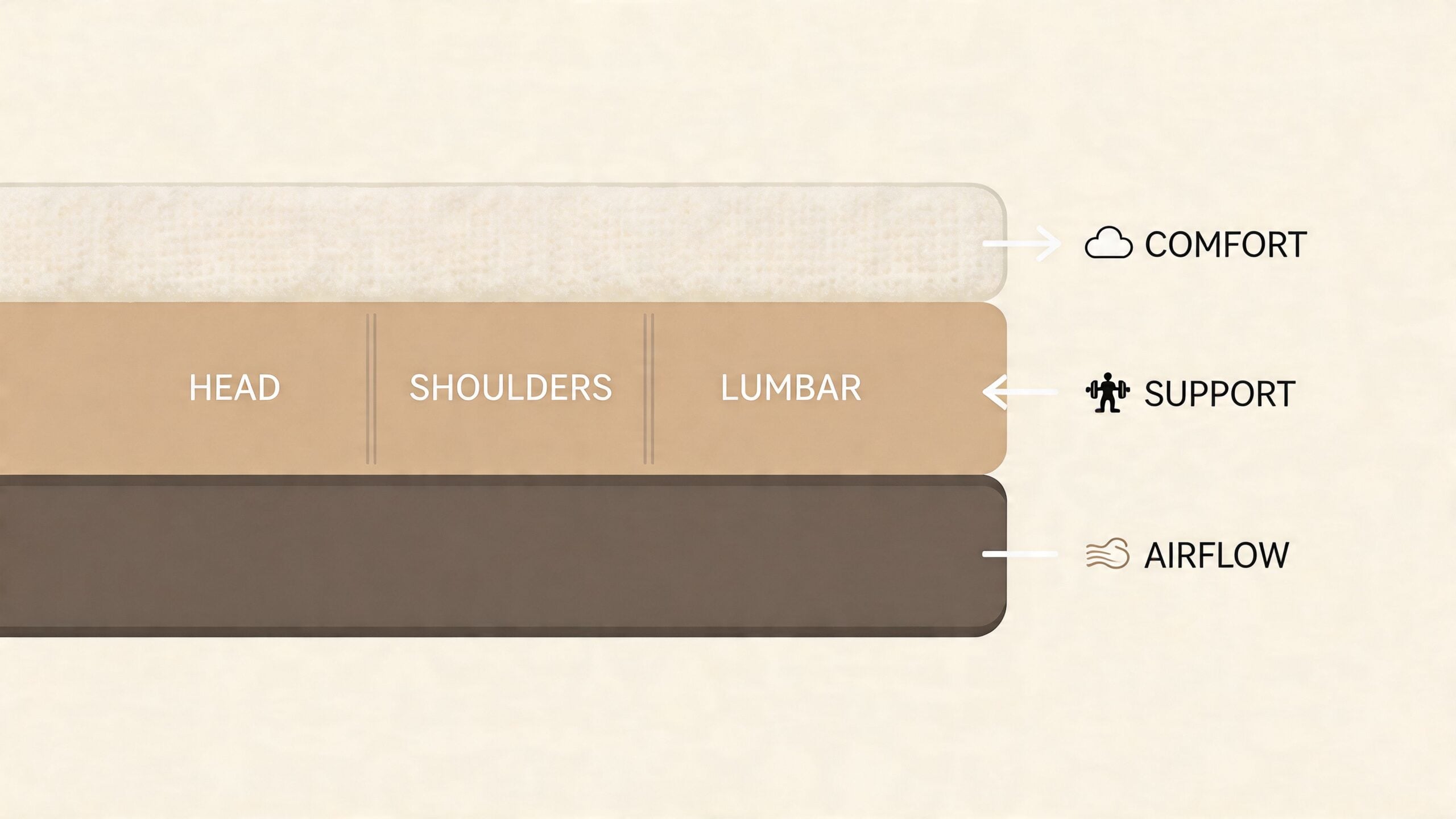
Zoned support means the mattress isn’t built with exactly the same firmness from top to bottom. It’s designed to be softer in some areas and firmer in others.
That matters because your shoulders and hips usually need more pressure relief, while your lumbar area often needs more support. In 2026 expert testing cited in industry guidance, hybrid mattresses with dual-coil systems and zoned support reduced pressure on shoulders and hips by up to 30% more than standard single-coil models, according to Sleep Foundation benchmarks referenced here.
For many sleepers, especially side sleepers, zoning is one of the most noticeable upgrades.
Comfort layer thickness
The comfort layer is the top portion of the mattress that does the first job of cushioning. If that layer is too thin, pressure points can meet resistance too early. If it’s well built, you feel a smoother transition from surface softness into deeper support.
This doesn’t mean thicker is always better. It means the comfort materials need to be substantial enough to cushion the body before you hit the firmer support layers below.
A good pressure-relief mattress usually feels progressive. You don’t crash through the top. You settle into it.
Pillow tops and Euro tops
Pillow tops and Euro tops can help if your current mattress feels harsh at the surface.
These add extra plushness to the top of the bed, which can soften the first contact point under the shoulder and hip. They’re often attractive to side sleepers who want a gentler feel without giving up the support underneath.
The key question is what sits below that top layer. A plush top on a weak support system won’t solve the larger issue.
Coil design and airflow
In hybrids, coil systems do more than support the body. They also affect motion, edge support, and airflow.
For Florida homes, airflow is worth paying attention to. A breathable support core can help the bed feel less stuffy than dense all-foam constructions. That doesn’t just help with temperature. It can also make the mattress feel fresher and easier to stay on through the night.
If you’re also considering bedroom comfort upgrades, our overview of adjustable bases and how they enhance comfort and well-being shows how the bed foundation can influence pressure distribution and sleep posture.
What to look for on the tag
When you’re comparing models, focus on these details:
- Zoned design: especially helpful if your shoulders and hips need relief but your back needs firmer support.
- Substantial comfort layers: useful for side sleepers and anyone who feels “pushed back” by firmer surfaces.
- Hybrid construction: often a strong choice for balancing contouring and airflow.
- Top feel versus deep support: don’t judge by the first touch alone.
A mattress earns pressure relief through layers working together, not through a single buzzword.
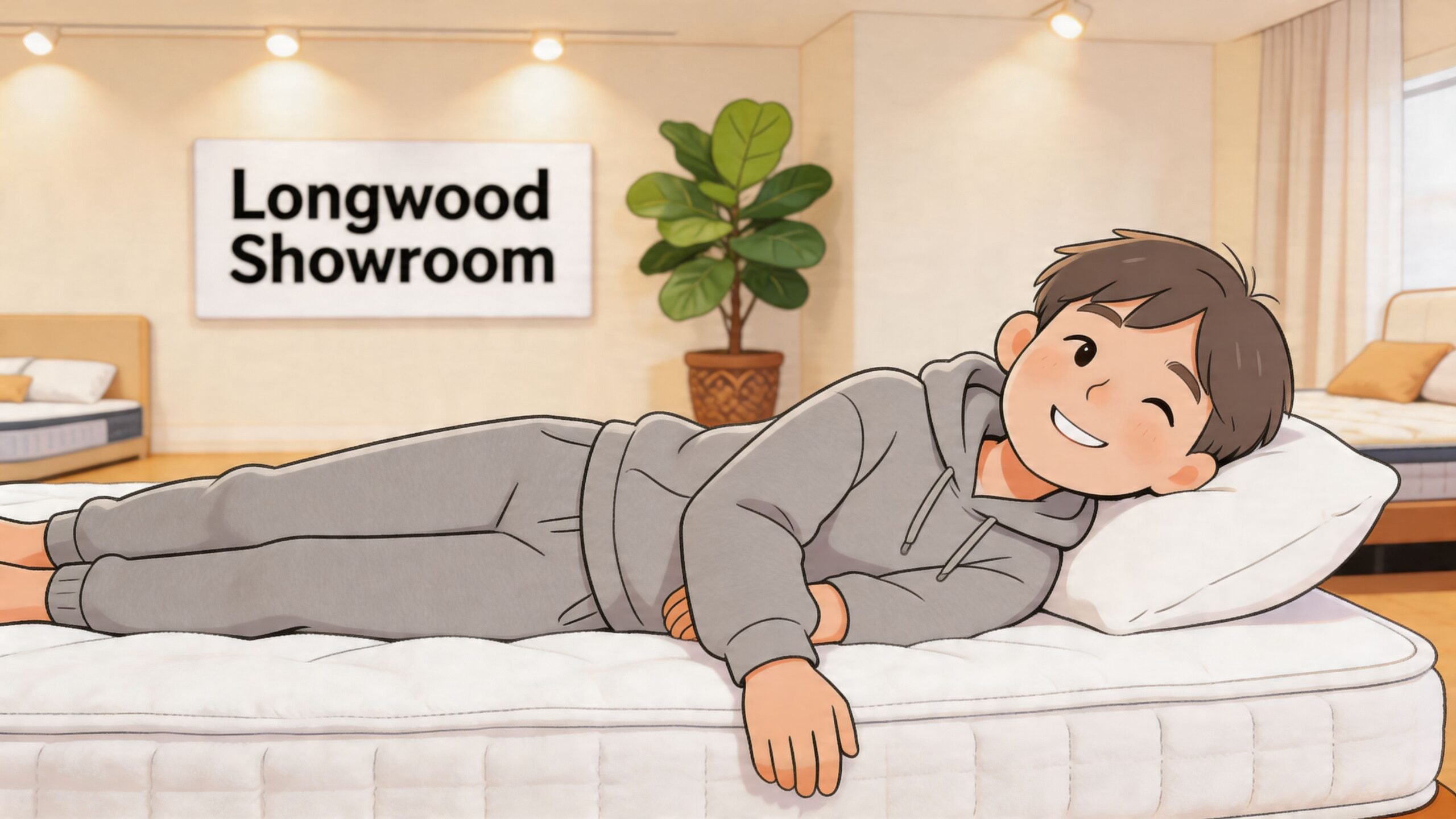
How to Test a Mattress in Our Longwood Showroom
You drive over to Longwood after another week of waking up with a sore shoulder. The mattress that sounded perfect online felt great in a review video. Then you lie down in person, give it a few minutes, and notice your hip settling comfortably while your lower back stays supported. That kind of answer only shows up when your body gets a real test.
Start by testing like you actually sleep
A quick sit on the edge is mostly a test of edge support. It does very little to show whether a mattress will ease pressure under your shoulders, hips, or lower back.
Lie down in your normal sleep position and stay there long enough for your muscles to stop bracing. Your body needs a few minutes to settle into the comfort layers, much like a new sofa cushion feels different after you stop perching and sit back.
Side sleepers should spend most of their time on their side. Back sleepers should stay flat with their usual pillow setup in mind. If you switch between positions at home, test both positions in the showroom.
Follow a simple showroom routine
A clear routine helps you compare beds instead of chasing first impressions.
Begin with your main sleep position
Test the mattress the same way you sleep at home, not the way it looks neatest in the showroom.Stay still for several minutes
Pressure problems often show up gradually. A mattress can feel soft at first touch and still press too hard once your shoulder or hip bears weight.Check for tension signals
Notice whether your shoulder starts creeping forward, your hip feels stuck, or your lower back feels like it is hovering without support.Change positions once or twice
You want enough contouring to cushion pressure points, but not so much that turning feels like climbing out of a hole.Compare one mattress against another
Testing two models back to back helps you feel differences in pressure relief, support, and ease of movement much more clearly.
A good test often feels uneventful. If you can relax without fidgeting or correcting your posture, that is useful information.
Share the details that affect your comfort
The more specific you are, the better the test becomes.
Tell the showroom team if you sleep hot in Florida’s humidity, wake up with numb arms, deal with hip soreness, or share the bed with a restless partner. Those details narrow the field quickly because they point to features that matter for your body instead of generic mattress labels.
Pillow height matters here too. Neck angle can change how pressure feels through your shoulders and upper back. Our guide on how to choose the right pillow for your sleep position can help you connect mattress feel with the support happening above it.
Why this matters for Greater Orlando shoppers
Central Florida shoppers usually need to balance pressure relief with cooling and airflow. A mattress can feel pleasantly plush for five minutes, then feel warmer than you want in a humid bedroom at home. Testing in person lets you compare how quickly a surface warms up, how easy it is to move, and whether the bed feels airy or closed in.
It also helps to test with your real room in mind. A mattress does not work alone. Bed height, foundation, pillow choice, and your usual sleep position all shape the final result. That is why many Longwood and Greater Orlando shoppers get more clarity from an in-person visit than from another round of national mattress rankings.
Your Pressure Relief Mattress Questions Answered
Can a topper fix pressure points, or do I need a new mattress
Sometimes a topper is enough. Sometimes it isn’t.
If your mattress still feels supportive but the surface has become too firm or too flat, a topper can add missing contouring. Data cited in mattress review guidance shows memory foam and latex toppers score 9 to 10 out of 10 for pressure relief, can extend bed life by 2 to 3 years, and cost around 20% to 50% of a full mattress cost, according to this topper-focused pressure relief review.
If the mattress underneath is sagging, uneven, or no longer supportive, a topper won’t correct the deeper problem.
How do I know if my mattress is causing the pain
Look for patterns.
If the soreness shows up mostly after sleep, improves as you move around, and tends to hit the same pressure areas night after night, the mattress is a likely suspect. If the discomfort follows you through the day without changing, other factors may be involved too.
Do pillows matter for pressure relief
Absolutely. A mattress and pillow work as a team.
A great pressure-relief mattress can still feel wrong if the pillow lifts your head too high or lets it drop too low. Side sleepers often need a different pillow height than back sleepers. Our guide on how to choose the perfect pillow can help with that part of the setup.
Are hybrids better than all-foam for hot sleepers
Often, yes. Many hot sleepers prefer the airflow that comes from a coil-based support system. But not every hybrid feels cool, and not every foam mattress sleeps hot. Construction matters more than the label alone.
Can I finance a mattress purchase
Many local shoppers prefer financing when they’re updating more than one room at once or replacing a mattress sooner than planned. That can make it easier to choose the right long-term comfort instead of settling for a short-term fix.
What if I need an unusual size or a coordinated bedroom setup
That’s where local showroom help becomes valuable. If you’re trying to match a mattress with a specific bed frame, bedroom set, or custom bedroom layout, it helps to work with a team that can look at the whole room instead of just the mattress tag.
Find Lasting Comfort at Slone Brothers Furniture
A pressure-relief mattress should leave you feeling less aware of your mattress, not more aware of your shoulders, hips, or lower back.
The right fit usually comes from a simple combination. You need a mattress type that matches how much contouring and support your body likes, a firmness level that suits your sleep position and body weight, and comfort materials that cushion pressure points without letting you dip out of alignment. It works a lot like properly fitted shoes. Softness alone does not create comfort. The shape and support under that softness matter just as much.
Online advice can help you narrow the field, but your body gives the final answer. That is especially true for Central Florida shoppers, where a mattress also has to sleep comfortably in a warm, humid bedroom. Pressure relief and temperature control have to work together if you want comfort that lasts past the first few nights.
At Slone Brothers Furniture in Longwood, we help people sort through that in person. You can compare how different builds feel, notice where your body relaxes, and tell the difference between a mattress that feels plush for two minutes and one that supports you through the night.
We have served this community since 1980. That experience has taught us something simple. Mattress shopping usually begins with frustration, but it gets easier once you can test the right options side by side with guidance from someone who knows what to look for.
Visit our Longwood showroom and let our team help you find a mattress that eases pressure points and fits the way you sleep.