
What Is Memory Foam Mattress Made Of: Guide 2026

Mattress shopping often starts the same way around Longwood, Lake Mary, and Sanford. You lie down on one bed, then another, and suddenly every label sounds the same. Plush. Cooling. High density. Supportive. By the third showroom stop, many shoppers are still asking one basic question: what is memory foam mattress made of?
That’s a fair question, and it’s one we’ve helped Central Florida families sort through for decades. If you understand what’s inside memory foam, it gets much easier to judge comfort, durability, and value for your home.
From NASA Tech to Your Orlando Bedroom
A lot of people are surprised to learn that memory foam didn’t begin in the bedding world. It traces back to NASA in the 1960s, where researchers developed a pressure-relieving, shock-absorbing material to improve astronaut safety. That material became the foundation for the memory foam used in mattresses today, as outlined in our look at the history of mattresses from straw mats to memory foam.
That origin story matters because it helps explain why memory foam feels so different from a traditional spring bed. It wasn’t created to feel bouncy. It was created to absorb force, cushion the body, and respond gradually.
Many shoppers first notice that “slow melt” feel and either love it or feel unsure about it. If that sounds familiar, a helpful starting point is this Woodstock Outlet memory foam overview, which gives a simple introduction to how memory foam differs from other mattress types.
Why this matters in a real bedroom
In an Orlando-area home, your mattress has to do more than feel soft for five minutes in a store. It has to support your body night after night, hold up over time, and stay comfortable in a warm climate.
That’s where the “made of what” question becomes practical. The ingredients and construction affect:
- How the mattress contours to your shoulders, hips, and lower back
- How long the comfort layers hold up
- How warm or breathable the bed feels
- How well the mattress supports different sleep positions
Neighborly advice: If a mattress label sounds impressive but doesn’t clearly explain what the comfort layers and support layers are made of, ask more questions before you buy.
The simple answer first
A memory foam mattress uses a special type of foam that responds to pressure and body heat. But that’s only the top layer of the story. The material itself has a specific chemical makeup, and the finished mattress always relies on layered construction rather than one solid block of memory foam.
That’s the part that tends to confuse shoppers most. Let’s break it down in plain English.
The Core Material Viscoelastic Polyurethane
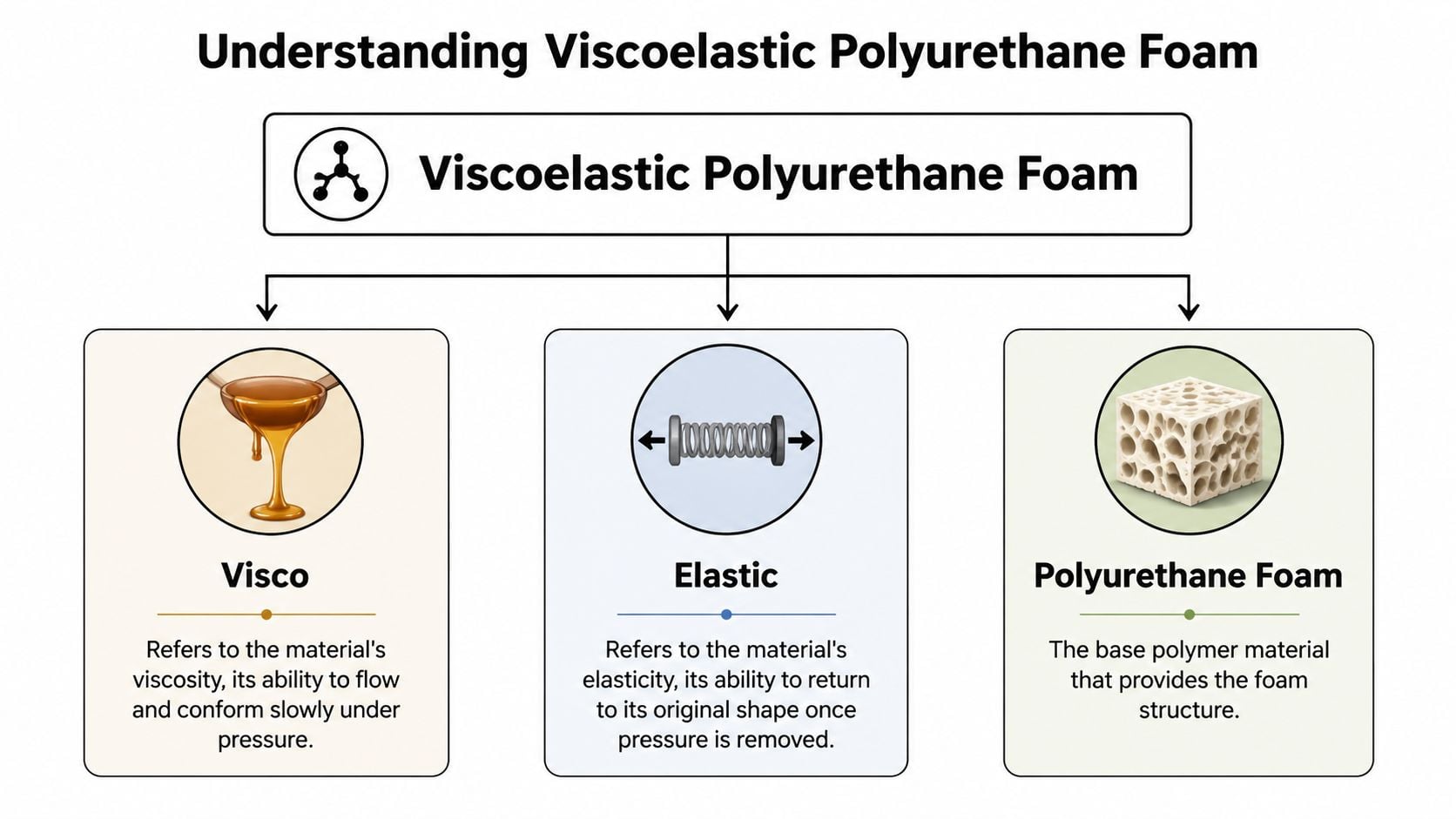
The main material in memory foam is viscoelastic polyurethane foam. That phrase sounds technical, but it becomes simple once you separate the words.
“Visco” means the material moves slowly under pressure. “Elastic” means it returns to shape after pressure is removed. Put those together, and you get the signature feel people associate with memory foam: you press into it, it contours gradually, and then it rises back slowly.
Here’s a visual way to think about it.
Breaking down the name
If you press your hand into bread dough, the surface gives under pressure and keeps the shape for a moment. If you pull a rubber band, it stretches and then snaps back. Memory foam combines a little of both behaviors, only in a more controlled way.
That’s why it can feel softer than standard foam without being loose or flimsy. It conforms, but it also recovers.
For a broader overview of how different mattress materials compare, our guide to mattress types explained is useful when you’re sorting memory foam from latex, innerspring, and hybrid options.
What the foam is made from
According to Ethical Bedding’s explanation of what’s really inside a memory foam mattress, memory foam mattresses are primarily made from viscoelastic polyurethane foam, a material originally developed by NASA in the 1960s. The manufacturing process can involve up to 61 specific ingredients, including petrochemical-based polyols and diisocyanates, plus blowing agents that create an open-cell structure. That foam is typically produced in densities ranging from 3 to 5 pounds per cubic foot.
Those ingredient names sound intimidating, but shoppers don’t need to become chemists. What matters is what each category does.
The ingredient jobs in plain language
- Polyols help form the soft, flexible base of the foam.
- Diisocyanates react with the polyols to create the polyurethane structure.
- Blowing agents help create the foam’s open-cell interior, which affects airflow and feel.
- Catalysts and surfactants help control how evenly the foam forms and how consistent the cell structure becomes.
Why open-cell structure matters
One point that often gets overlooked is the open-cell structure. Inside memory foam, there are tiny spaces that allow air to move through the material. That structure affects breathability and the way the foam compresses and recovers.
For a Florida homeowner, that’s important. In Central Florida, heat and humidity change how bedding feels. A foam with better airflow usually feels more comfortable than an older, denser style that traps more warmth.
Good memory foam should do two things at once. It should contour enough to relieve pressure, and it should allow enough airflow that the bed doesn’t feel stuffy.
What about gel and plant-based versions
You’ll also hear terms like gel-infused memory foam and plant-based foam.
Gel-infused foam means cooling material has been added to the memory foam formula to help with heat management. Plant-based foam means part of the foam’s polyol content may come from plant oils rather than only petroleum-based sources. Those changes can affect feel, marketing, and performance, but the central material is still a version of polyurethane memory foam.
That’s why it helps to ignore flashy label language and ask simpler questions instead:
- What is the comfort layer made of?
- How dense is the foam?
- What sits underneath it for support?
- Does it include features aimed at cooling?
Those answers tell you far more than a brand name ever will.
How a Memory Foam Mattress is Constructed
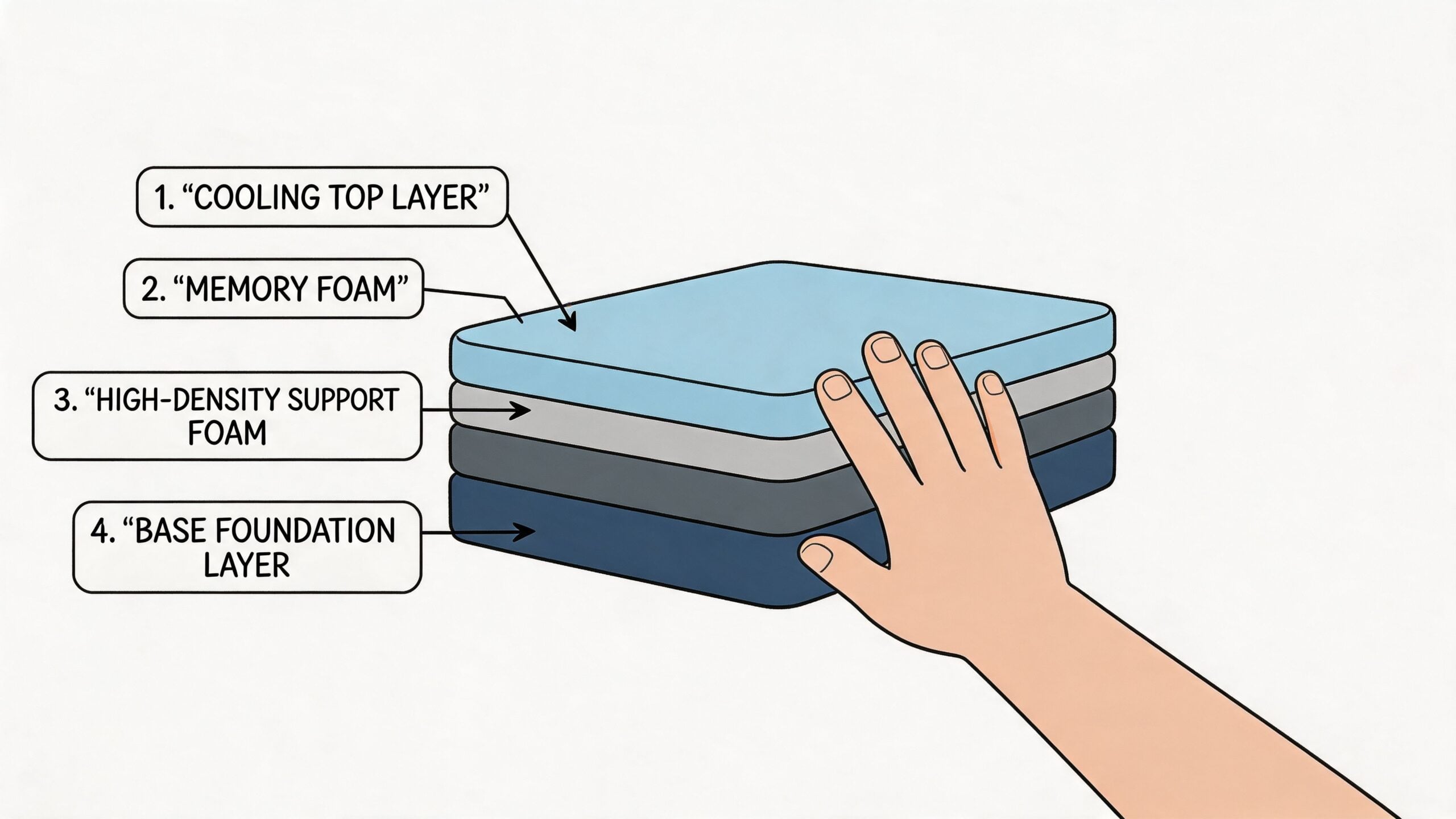
A memory foam mattress is not one giant slab of soft foam. That’s one of the biggest misconceptions we hear in the showroom. Support comes from layers, and each layer has a different job.
The easiest way to picture it is from top to bottom.
The top comfort layer
The top section is where memory foam does its most noticeable work. This is the layer that softens under pressure, contours around your shoulders and hips, and gives that close-to-the-body feel many side sleepers enjoy.
This layer is meant for comfort, not for carrying the full structural load of the mattress.
The middle transition area
Some mattresses include one or more transition layers between the top comfort foam and the support core. These layers keep you from feeling like you’re dropping abruptly from soft foam into a much firmer base.
Think of the transition layer as the part that smooths out the ride. It helps the mattress feel balanced rather than either mushy on top or hard underneath.
The base support core
The bottom of the mattress is the support core. This is the foundation that keeps the bed stable and helps maintain spinal alignment.
That’s why memory foam is never used as a solid 100% construction in a mattress. As noted by John Ryan By Design’s guide to what memory foam is made of, memory foam is always used as a comfort layer atop supportive bases. The same source notes that foam densities below 3 lbs/ft³ can wear out 50% faster than higher-grade versions, while quality manufacturers often certify foams at 4 to 5 lbs/ft³ for a lifespan exceeding 10 years. It also notes that gel-infused variants can reduce heat retention by up to 20%.
Why no mattress is all memory foam
Many buyers often get tripped up. They assume “memory foam mattress” means every inch of the bed is memory foam.
It doesn’t.
If the whole mattress were made only of soft viscoelastic foam, you’d likely sink too far and lose the underlying support your body needs. The support core keeps your spine from collapsing out of alignment, especially under heavier parts of the body like the hips and torso.
If you’re comparing all-foam models with mixed-material designs, our guide on the difference between memory foam and hybrid mattress can help clarify how coil support changes the feel.
The job of each layer at a glance
| Layer | What it does |
|---|---|
| Top comfort layer | Cushions pressure points and contours to your shape |
| Transition layer | Creates a smoother shift between soft and firm materials |
| Support core | Holds the body up and helps maintain alignment |
| Cover and surface materials | Add softness, airflow, and surface feel |
Practical rule: If you love the pressure relief of memory foam but hate the feeling of sinking too deep, the answer usually isn’t “avoid foam.” It’s “look for better layering.”
What this means for back pain and sleep position
Construction affects who the mattress works for. Side sleepers often like enough top softness to cushion the shoulder and hip. Back sleepers usually need a balance between contouring and pushback. Stomach sleepers often need firmer overall support to keep the midsection from dipping too far.
That’s why two memory foam mattresses can feel completely different even if both use similar materials. Layer thickness, density, and support design change the experience.
Understanding Key Performance Factors
Two memory foam mattresses can look almost identical on the sales floor and still perform very differently in your home. The difference usually comes down to the specs behind the feel.
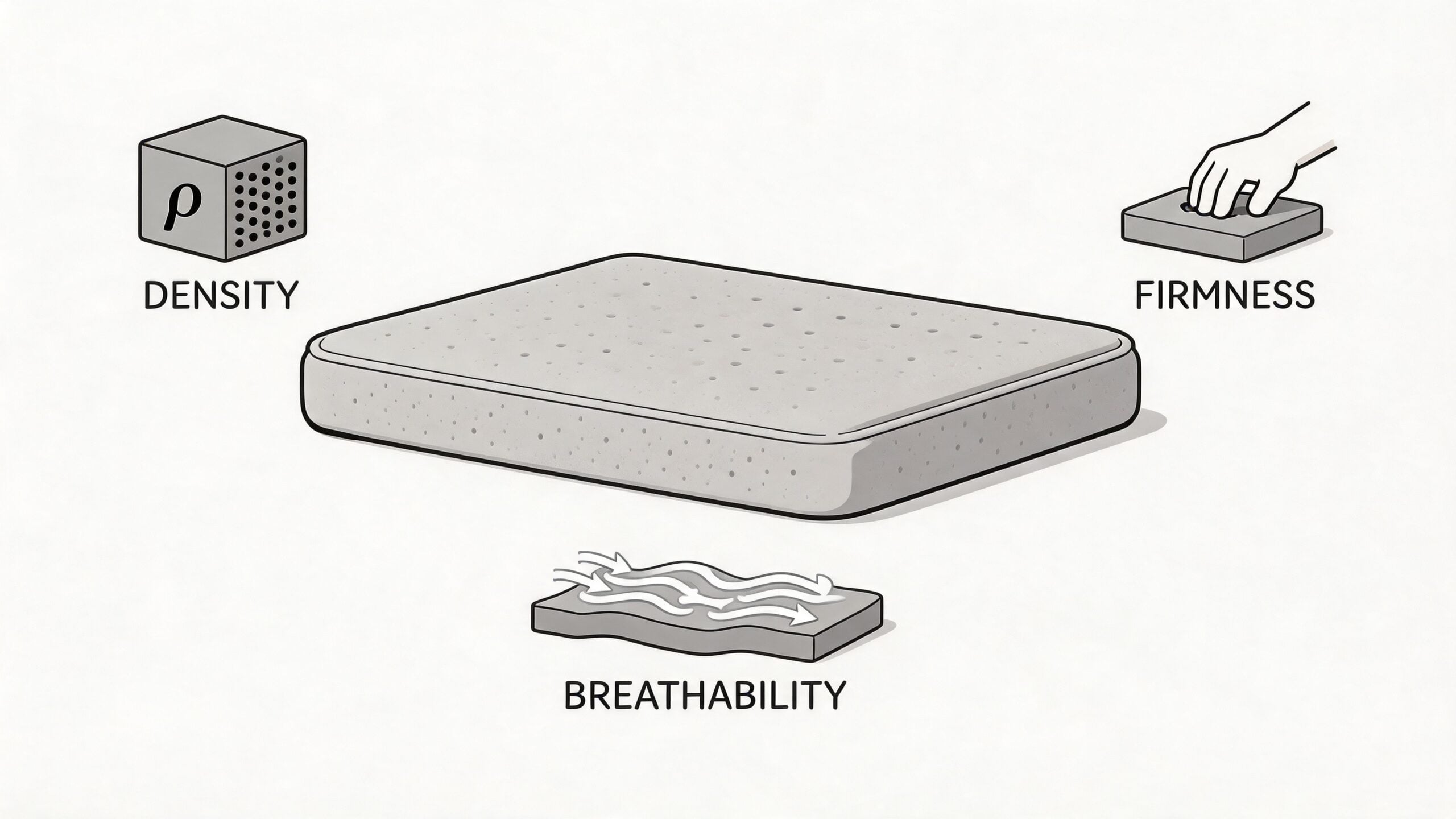
For shoppers in Longwood and across Central Florida, three factors matter most: density, firmness, and breathability.
Density tells you a lot about durability
Density is one of the most useful specs in foam shopping. It tells you how much material exists within a given volume of foam. In practical terms, denser foam usually holds up better over time.
According to WNSHaw’s explanation of how a memory foam mattress is made, quality memory foam mattresses often use a polyurethane support core in the 1.8 to 2.5 lbs/ft³ range beneath viscoelastic comfort layers in the 3 to 5 lbs/ft³ range. That same source notes that the comfort layers are designed with an ILD rating of 20 to 40 lbs and can reduce peak pressure points by up to 50% compared to traditional innerspring mattresses.
That’s a big reason memory foam appeals to people dealing with pressure at the shoulders, hips, or lower back.
ILD is the firmness clue shoppers often miss
ILD stands for Indentation Load Deflection. It sounds technical, but the idea is straightforward. It’s a way of measuring how firm the foam feels under pressure.
Lower ILD usually means the foam compresses more easily. Higher ILD usually means it feels firmer. That doesn’t tell you whether a mattress is “good” or “bad.” It tells you what kind of support and surface feel you’re likely to notice.
For many shoppers, firmness becomes clearer when they stop asking, “Is this mattress soft or firm?” and start asking:
- Does my shoulder sink enough when I’m on my side?
- Does my lower back stay supported when I’m on my back?
- Do I feel stuck when I change positions?
If you want a simpler way to sort those comfort questions, our mattress firmness guide can help you match feel to sleep position.
Breathability matters more in Florida
Older memory foam earned a reputation for sleeping hot. That concern didn’t come out of nowhere. Some traditional foams held onto warmth more than many sleepers liked.
Modern designs address that in several ways:
- Open-cell construction allows more airflow through the foam.
- Gel infusions help manage heat retention.
- Layered builds can create a cooler overall sleep surface than older all-foam designs.
That matters in Orlando bedrooms where warm nights can make bedding choices feel very different than they would in a cooler climate.
If you’re a warm sleeper, don’t stop at “memory foam sleeps hot.” Ask what kind of foam it is, whether it uses gel, and how the mattress is built from top to bottom.
A helpful comparison outside the bedroom
Pressure relief isn’t only a mattress issue. You can even see the same principle in pet bedding. If you’ve ever looked into orthopedic beds that support large dog health, you’ll notice the same design logic: cushioning where weight concentrates, plus stable support underneath. Human mattresses just apply that idea with more precise comfort and structural layering.
What about off-gassing
Many people ask about the “new mattress smell.” That odor comes from manufacturing and packaging, and it’s usually strongest right after unpacking. In everyday shopping terms, this is why many buyers let a new mattress air out before putting sheets on it.
The more useful question isn’t whether any scent exists at first. It’s whether the foam meets recognized safety standards and low-emission expectations, which leads directly into certifications.
Safety Certifications and Environmental Impact
When shoppers ask what memory foam mattress is made of, they’re often asking a second question underneath it. Is it safe for my home?
That’s a sensible concern, especially if you’re furnishing a primary bedroom, a guest room, or a child’s room in a busy Central Florida household. Foam chemistry matters, but so do the standards used to evaluate the finished product.
Why certifications give peace of mind
A quality mattress should come with clear information about the foam inside it. Certifications help because they give you a way to judge more than comfort alone.
When you’re shopping, look for certification details that address low emissions and material screening. That helps you move beyond marketing claims and toward something more concrete.
A mattress label should tell you more than how soft it feels. It should also help you understand whether the foam meets recognized safety expectations for indoor use.
The practical way to shop for safer foam
Here are the questions worth asking in a showroom:
- Certification details. Ask what foam certifications the mattress carries and what those standards cover.
- Material transparency. Ask whether the retailer or manufacturer can clearly describe the foam layers and support materials.
- Initial odor expectations. Ask what kind of break-in or airing-out period is typical after delivery.
- Room use. If the mattress is for a nursery or child’s room, be even more careful about material documentation.
Parents often take this approach with baby products first. For example, families researching infant sleep surfaces often use buying guides like this Hiccapop crib mattress guide because it focuses on safety, support, and material considerations before comfort marketing. Adult mattress shopping benefits from the same mindset.
Environmental impact in plain terms
Most memory foam is made from polyurethane-based materials. Some versions use plant-based components in part of the formula, but they still fall within the broader foam category rather than becoming an entirely different material.
For shoppers, the practical takeaway is simple. If environmental considerations matter to you, ask how the foam is formulated, how transparent the manufacturer is about materials, and what certifications back up those claims.
That won’t turn mattress shopping into a chemistry seminar. It just helps you buy with more confidence.
Care Lifespan and Making a Smart Purchase in Central Florida
You test a mattress for ten minutes in a cool showroom, then bring it home to a Central Florida bedroom that deals with heat, humidity, and daily use. That is when its true value shows up.
A memory foam mattress is a comfort purchase, but it is also a long-term home item. For a primary bedroom, guest room, or a house full of new furniture after a move, the better question is not only "Does this feel good today?" It is "Will this still support me well a few years from now?"
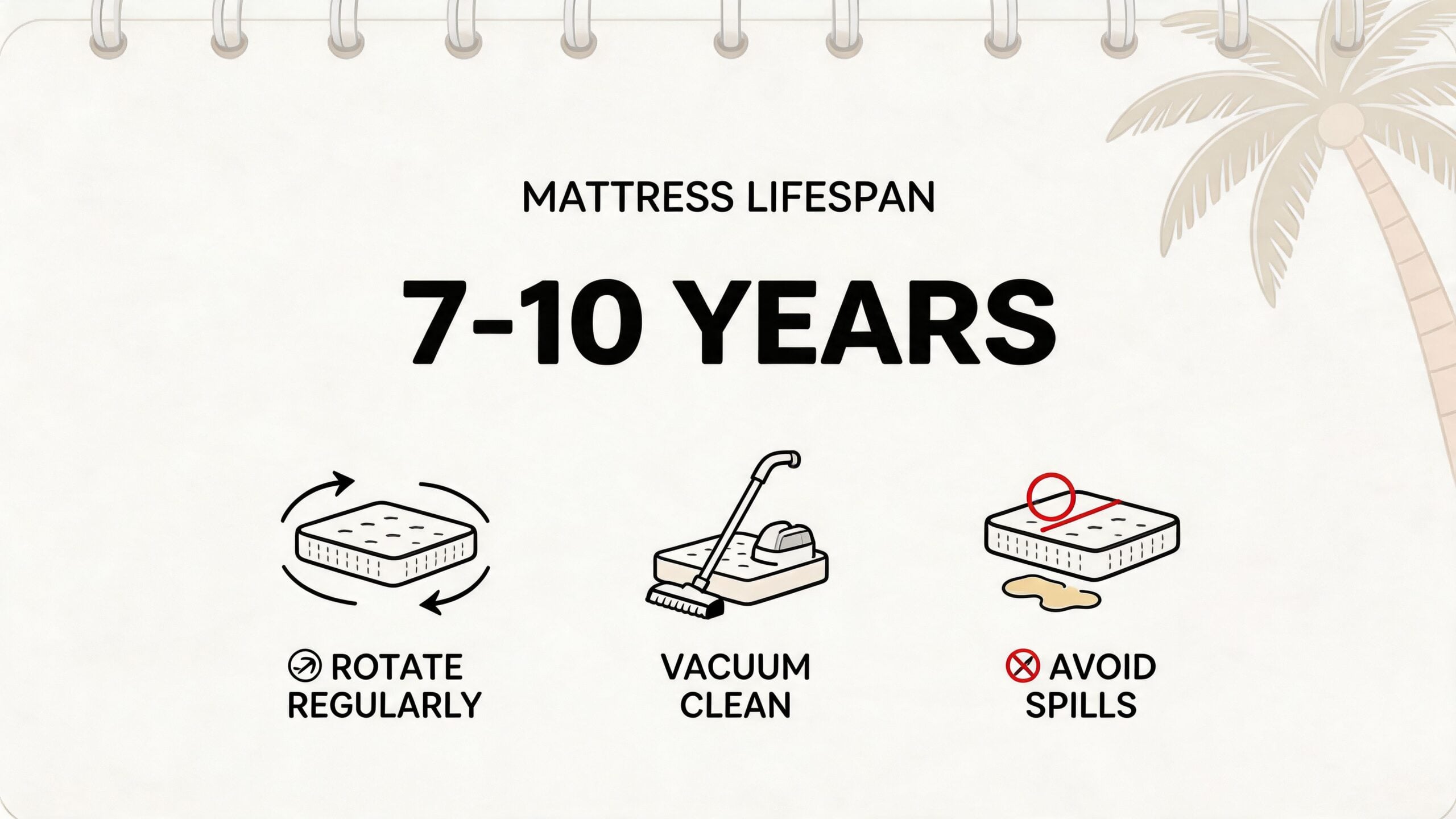
Why lifespan starts with density
Density gives you an early clue about how well foam may hold its shape over time. Foam with more material packed into the same space often resists early softening better than lighter, lower-density versions. Wikipedia’s memory foam overview explains density as one of the core traits that affects performance and durability.
For a shopper, that chemistry lesson turns into a budget lesson. A cheaper mattress can cost more in the long run if it loses support early and needs replacement sooner. A better-built foam mattress often gives you a lower cost per year of use, which matters when you are furnishing a whole home and trying to buy wisely.
Simple care habits that help
Memory foam does not need complicated upkeep. It responds well to steady, basic care, much like keeping upholstered furniture clean and properly supported helps it last longer.
- Use a mattress protector to help block spills, sweat, and everyday soil.
- Pair it with the right base so the foam layers stay evenly supported.
- Let the room breathe with normal ventilation or air circulation, especially during humid months.
- Follow the maker’s rotation guidance if the mattress is designed to be rotated.
In Florida, airflow matters. Humidity alone does not automatically damage a mattress, but a bedroom that stays stuffy and damp can make any sleep surface feel less fresh over time.
How to judge value in person
A quick hand press will not tell you much. Your body will.
Lie down in your usual sleep position and stay there for a few minutes. Notice whether your shoulders settle in without strain, whether your hips stay supported, and whether your lower back feels level instead of dipped. Memory foam should contour like a custom seat cushion, but the support underneath should still hold you up.
Ask clear questions while you test:
- What is the foam density? This helps you compare likely durability.
- How are the layers built? The comfort layer and support core need to work together.
- What cooling features are included? Open-cell designs, gel, and breathable covers can matter in our climate.
- What base does the manufacturer recommend? The wrong foundation can change how the mattress feels and wears.
Buying smarter in Central Florida
Local shoppers have one extra filter to use. You are not choosing for a dry mountain climate or a chilly northern winter. You are choosing for warm nights, air conditioning cycles, guest rooms that may sit unused for stretches, and homes where breathability can matter just as much as softness.
That is why it helps to compare mattresses in person with someone who can explain the build in plain language. At Slone Brothers Furniture in Longwood, you can test different feels side by side and ask practical questions about durability, support, cooling, and value. If you want to do some homework before visiting, their guide on how to choose a mattress for your sleep style and budget is a useful starting point.
A smart mattress purchase should feel comfortable tonight and still make sense years from now. That is the kind of value Central Florida families should expect.
Frequently Asked Questions About Memory Foam
Is memory foam good for back pain
It can be, especially when the mattress combines contouring comfort with proper support underneath. Memory foam is designed to redistribute pressure, which can help reduce stress at common pressure points. The key is choosing a build that keeps your spine aligned instead of letting you sink too far.
Can a memory foam mattress work with an adjustable base
Many memory foam mattresses work well with adjustable bases because foam can flex without relying on metal spring units. The important part is checking the specific mattress guidelines so the construction is compatible with an adjustable foundation.
Does memory foam always sleep hot
Not always. Older styles gave memory foam that reputation, but modern versions may use open-cell construction, gel infusions, and layered designs aimed at improving airflow. For many Florida shoppers, the better question is not “Is it memory foam?” but “How is this memory foam built?”
Quick Comparison Memory Foam vs Hybrid Mattresses
| Feature | Memory Foam | Hybrid |
|---|---|---|
| Feel | Close contouring, slower response | More bounce, more lift |
| Support system | Foam support core | Coil support with comfort layers |
| Pressure relief | Strong contouring around pressure points | Pressure relief with a more buoyant feel |
| Motion feel | Usually more motion-absorbing | Usually a bit more responsive |
| Airflow | Depends on foam design and cooling features | Often more breathable because of coil structure |
| Best fit for | Sleepers who like body contouring | Sleepers who want contour plus bounce |
Memory foam isn’t mysterious once you know what to look for. It’s a layered mattress system built around viscoelastic polyurethane foam, and the details that matter most are the ones you can use: density, support construction, firmness, breathability, and safety information.
Ready to find the perfect piece for your home? Visit the Slone Brothers Furniture showroom in Longwood, FL, and let our design experts help you get started!