

How to Clean Memory Foam Mattress Topper

Treating a memory foam topper like a bedsheet is the fastest way to turn a small spill into a lingering problem. The safest way to clean a memory foam mattress topper is to use as little moisture as possible, then verify that the foam is dry all the way through before putting the bed back together. In Central Florida, where humid air can slow drying, that final check matters as much as stain removal.
For homeowners in Longwood, Lake Mary, Sanford, and the wider Orlando area, a topper is part of a considered sleep setup, not disposable bedding. Gentle care protects its comfort and helps avoid trapped moisture that can undermine the foam.
Why Memory Foam Needs a Different Cleaning Approach
Memory foam shouldn't be washed like regular laundry. Its open-cell, viscoelastic structure absorbs pressure and slowly returns to shape, but it can also absorb liquid and hold moisture inside. Drenching, wringing, or machine agitation works against the material.
NASA developed the underlying foam technology in 1966 for shock absorption and improved protection and comfort in aircraft seats. The material later moved toward civilian use, first as “temper foam,” with rights sold in 1974; mattress makers explored it during the 1980s, and the first memory-foam bed appeared in 1991 (NASA's account of the foam's development). That history points to a straightforward care principle: preserve the foam's structure with targeted, low-moisture cleaning rather than aggressive washing.
For a closer look at the material itself, Slone Brothers' guide to what memory foam mattresses are made of provides useful background. Homeowners comparing care approaches may also find these deep rug cleaning tips helpful as a general reminder that delicate, absorbent materials need method-specific treatment.
The practical rule: Keep liquid localized, blot gently, and let the foam dry thoroughly before making the bed.
In Longwood and across Central Florida, warm, humid indoor air can make an already slow-drying material harder to dry fully. That's why routine vacuuming and careful spot treatment are better choices than waiting until a topper needs a major wash.
A Simple Routine That Keeps Your Topper Fresh
A topper stays fresher with light, consistent maintenance than with occasional heavy cleaning. Start by removing the cover, if it comes off, and laundering it according to its care label. Then vacuum the uncovered foam slowly with an upholstery attachment, using overlapping passes over the surface and paying extra attention to seams, edges, and tufted areas.
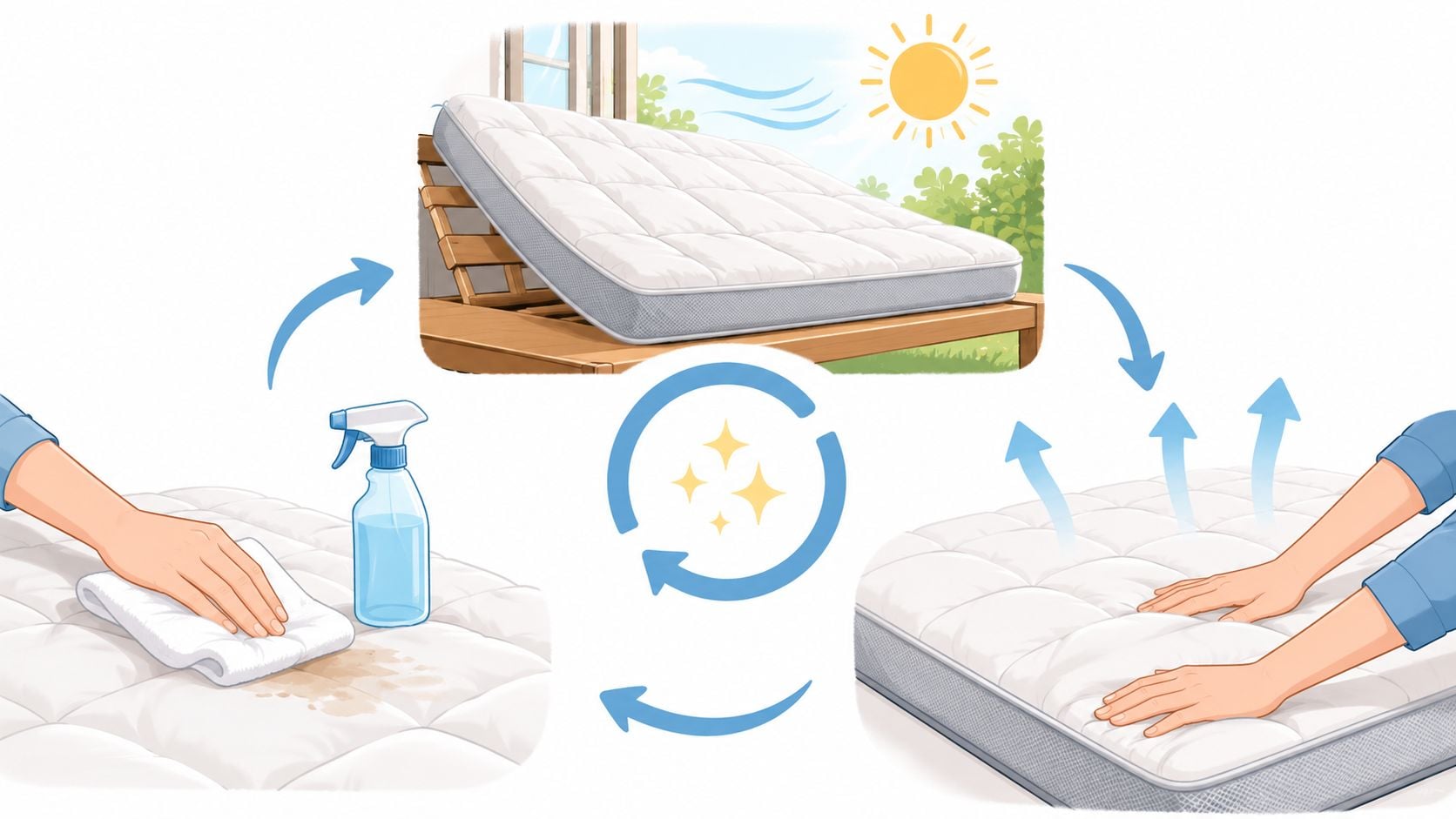
A light layer of baking soda can help reduce surface odors. Leave it in place for at least 30 minutes, then vacuum thoroughly so powder doesn't remain in the foam. Finish by running a clean, dry hand over the surface; if powder still transfers, vacuum again before replacing the cover.
Make vacuuming the baseline
Vacuuming removes loose dust, debris, skin particles, and allergens without introducing moisture. It's a maintenance step, not a one-time sanitation fix. Available allergen research summarized in NBC Select's mattress-cleaning guidance reports that daily mattress vacuuming over several weeks significantly reduced dust-mite allergens and other biocontaminants, while occasional surface cleaning is less effective.
The exact routine can follow the home's use and the topper's care label. The important point is to vacuum consistently and deal with small spills promptly, rather than letting debris and odors build up. For related bedroom upkeep, Slone Brothers offers advice on how often to change sheets.
Spot Cleaning Stains Without Damaging the Foam
For an ordinary stain, use a weak solution and a light hand. Mix one part mild liquid detergent with two parts cool water, then dampen a clean cloth with the solution. Apply it to the stain by blotting, not by pouring liquid onto the topper.
Blotting lifts soil into the cloth while limiting how much liquid enters the foam. Scrubbing can drive a spill deeper into the open cells, spread the mark, and abrade the surface. A fresh beverage spill or a light body-oil ring usually calls for patience, not force.
Use the least liquid that works
Work from the outside of the mark toward its center so it doesn't spread. After the stain lifts, use a separate cloth that's lightly dampened with clean water to blot away detergent residue. Press dry towels against the treated area to absorb moisture, then leave the topper to dry completely.
A stain should get a damp cloth, not a direct pour. The less liquid the foam takes in, the less moisture there is to remove.
Light pet residue may respond to the same careful approach, but avoid repeatedly wetting the area if the odor or mark persists. For more general mattress guidance, Canes Cleaners' mattress cleaning advice offers another perspective on keeping cleaning controlled. Always check the topper's care label first, especially if the manufacturer limits wet treatment or specifies an approved cleaner.
Drying Your Topper the Right Way in Florida Humidity
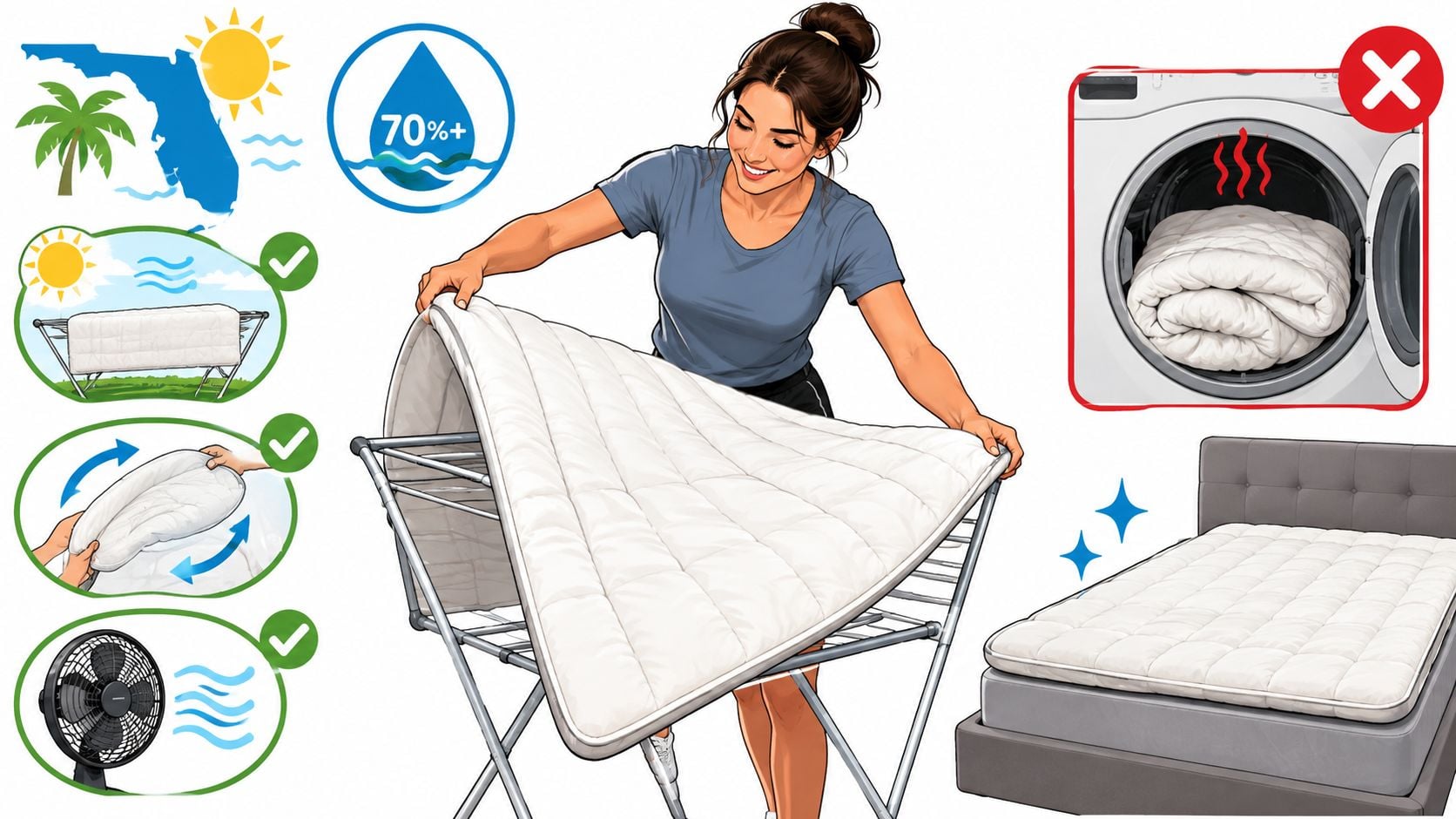
The hardest part of cleaning a thick topper isn't lifting a surface mark. It's confirming that moisture hasn't settled in the center. “Air-dry” isn't a reliable test by itself, particularly in Central Florida, where humid conditions can slow evaporation.
Place the topper flat on a raised surface in a well-ventilated room, with air moving across it. A fan can help; circulating indoor air or using dehumidification can also support drying. Flip or rotate the topper periodically so airflow reaches both sides, and check the underside as carefully as the top.
Check beyond the surface
Pay special attention to thick areas, seams, folds, and any spot that received detergent solution. The surface may feel dry while the center still retains moisture. Press and feel those areas with a clean hand: cool, heavy, or damp means the topper isn't ready to use.
Don't put sheets back on until the whole topper feels dry. Water-damaged items should ideally be dried within 24–48 hours because prolonged dampness raises mold risk. Homeowners looking for more guidance on preventing mold from Florida humidity can use that resource to understand why moisture control matters in the region.
A musty smell that returns after cleaning is a warning, not a cue to add more cleaner. It may indicate moisture or contamination inside the foam. Slone Brothers also shares mattress care tips for staying cool and clean through summer, but for a topper, the decision to reuse should come down to a full-thickness dryness check.
Cleaning Methods That Will Ruin a Memory Foam Topper
The common mistake is assuming that stronger cleaning means a cleaner topper. With memory foam, more water, heat, and force can damage the material or leave it damp inside. Follow the care label, and avoid methods that saturate or agitate the foam.
- Machine washing: The drum and spin cycle can distort the foam, and water can remain trapped deep inside.
- Soaking or immersing: Memory foam absorbs liquid readily and dries slowly, raising the risk of lingering dampness.
- Steam cleaning: Heat may degrade the foam, while added moisture is difficult to remove fully.
- Carpet extractors and wet vacuums: These tools can introduce or draw water through a broad area, leaving moisture in the core.
- Bleach or solvent drenching: Harsh chemicals can damage the material, and a surface application won't reliably reach contamination inside the foam.
Don't confuse disinfection with safe care
After a household illness, soaking the topper with a strong disinfectant may feel thorough, but it can leave residue while failing to clean the interior. The same caution applies to vigorous scrubbing: abrasion can harm the foam surface instead of removing a stain safely.
A removable fabric cover is different from the foam core. Wash the cover separately only if its care label allows it. For the foam, use a manufacturer-approved cleaner or a small amount of mild detergent solution on a cloth, then blot and dry carefully.
When Spot Cleaning Stops Being the Right Answer
Some marks are reasonable candidates for spot treatment; some conditions call for a different decision. A body-oil ring, a beverage spill, or light pet residue can often be addressed with careful blotting and thorough drying. A topper exposed to floodwater or sewage, or one with visible mold or bedbugs, shouldn't be treated as an ordinary stain.
| Situation | Sensible next move |
|---|---|
| Body oil, sweat, or a beverage mark | Try restrained spot cleaning, then check that the foam dries throughout. |
| Light pet residue | Treat only the affected area; stop if the odor remains or returns. |
| Floodwater or sewage contact | Isolate the topper and seek manufacturer or qualified remediation advice. |
| Visible mold or bedbugs | Don't keep using the topper while trying repeated surface treatments. |
| Musty odor that returns after cleaning | Treat it as a possible inside-the-foam problem, not a surface odor. |
For high-risk contamination, soaking the foam in bleach is not a safe substitute for a professional assessment. Surface cleaning may not reach the affected core, and additional moisture can make drying more difficult. Consumer guidance also warns that most foam isn't compatible with substantial water because trapped moisture can encourage mold and alter resilience, so check the care label before any wet cleaning.
When repeated cleaning doesn't resolve an internal musty smell, stop. Slone Brothers' mattress maintenance and cleaning guidance can help with broader upkeep, but a topper with persistent internal odor or visible mold may not be safely salvageable.
Protecting Your Sleep Investment for the Long Run
Good care is less about deep cleaning than about keeping spills and moisture from reaching the foam in the first place. A washable mattress protector can take the brunt of skin oils and everyday accidents, while breathable bedding supports airflow instead of trapping humidity against the topper. Choose both with the bed's comfort and the manufacturer's care guidance in mind.
Keep the routine simple: vacuum the uncovered topper, refresh it with a light layer of baking soda when needed, spot-treat ordinary marks with minimal liquid, and confirm it's dry through the center before use. Those habits protect the feel of the foam without subjecting it to the kind of aggressive cleaning that can shorten its useful life.
A mattress protector is a practical part of a considered sleep setup, not an afterthought. Slone Brothers' guide to the benefits of a mattress protector explains how that layer can help shield bedding from everyday wear. Homeowners can also ask about protective accessories and replacement toppers when reviewing their bedroom needs.
Homeowners in Longwood and the Greater Orlando area can visit Slone Brothers Furniture to discuss mattress care, protective accessories, and replacement options with experienced design consultants. The family-owned showroom has served Central Florida since 1980, offering face-to-face guidance for creating a comfortable bedroom that's made to last.

