

Toddler Bunk Bed Plans: Safety & Design Guide 2026


Most advice about toddler bunk bed plans starts in the wrong place. It starts with lumber, cut lists, and cute room photos. It should start with one harder question. Should a toddler be in a bunk bed at all?
For many families in Longwood, Orlando, Lake Mary, and across Central Florida, the problem is space. Shared bedrooms are common, and floor space matters. But safety matters more. A smart plan for a child's room isn't just about squeezing in two sleepers. It's about choosing a setup that a young child can use safely, night after night.
Toddler bunk bed plans can still be useful. They just need to be treated as safety planning first, furniture planning second. That means questioning the traditional top bunk, choosing lower-risk layouts, and building only when the design can be executed with precision.
Table of Contents
- A Safety-First Approach to Toddler Bunk Beds
- Understanding Bunk Bed Safety Standards
- Safer Bunk Bed Variations for Toddlers
- Core Construction Principles for a DIY Bed
- Finishing and Final Mattress Safety Checks
- When DIY Is Not the Answer A Local Alternative
A Safety-First Approach to Toddler Bunk Beds
A traditional bunk bed for a toddler is often the wrong answer. That's the part many DIY articles skip.
The clearest guidance comes from the American Academy of Pediatrics, which advises that children under 6 should not sleep in the upper bunk of a bunk bed due to fall risk, as noted in this toddler bunk bed planning reference. That single recommendation changes the whole conversation.
So when families search for toddler bunk bed plans, the better goal usually isn't “build a toddler top bunk.” The better goal is “create a compact shared-sleep setup that protects a young child.”
The common mistake
Many plans online answer the construction question while ignoring the age question. That's backwards.
A toddler doesn't need elevation. A toddler needs:
- Low fall exposure
- Predictable access in and out of bed
- Contained edges where appropriate
- A layout that works during tired, dark, middle-of-the-night moments
Neighborly advice: If the design requires a parent to say “just be careful climbing down,” the design probably isn't right for a toddler.
That's especially true in busy Central Florida households where siblings may share one room and bedtime routines can get rushed. A sleep setup has to work when everyone is tired, not just when the room looks neat in daylight.
What a responsible plan looks like
A responsible approach to toddler bunk bed plans usually leads in one of three directions. It either removes the upper bunk entirely for now, lowers the sleeping surface dramatically, or separates the two beds into a safer stacked or pull-out arrangement.
Families thinking through room function may also benefit from broader guidance on durable finishes and family-proof design choices in this kid-friendly and pet-friendly furniture guide.
The point is simple. A compact room solution should never ask a toddler to handle a grown-up sleeping risk. If a family still wants the look or space efficiency of bunks, the design should be adapted around the child, not the other way around.
Understanding Bunk Bed Safety Standards
Safety standards exist because children were hurt often enough that regulators had to respond. If you are sketching toddler bunk bed plans, treat those rules as the floor, not the finish line.
Research cited in Health Canada's bunk bed safety guidance estimates that 27,504 children ages 0–9 were treated annually in U.S. emergency rooms for bunk-bed injuries from 2001 to 2004, and 83.9% of those injuries were fall-related. That is the context behind every recommendation that follows. Falls are the main problem, so your design choices should focus on preventing them first.
The rule that ends most toddler bunk debates
Children under 6 should not sleep on the top bunk. Start there.
That age limit matters more than the style, the room layout, or the appeal of saving floor space. Young children do not judge distance well in the dark, they rush, they climb half-awake, and they use furniture in ways adults do not expect. A plan that depends on perfect behavior is a bad plan.
Health Canada also advises that only one person should use the top bunk at a time. That rules out sibling doubling up, daytime climbing games, and the common idea that the upper bunk can serve as both sleep space and play perch.
The hardware details that actually prevent injuries
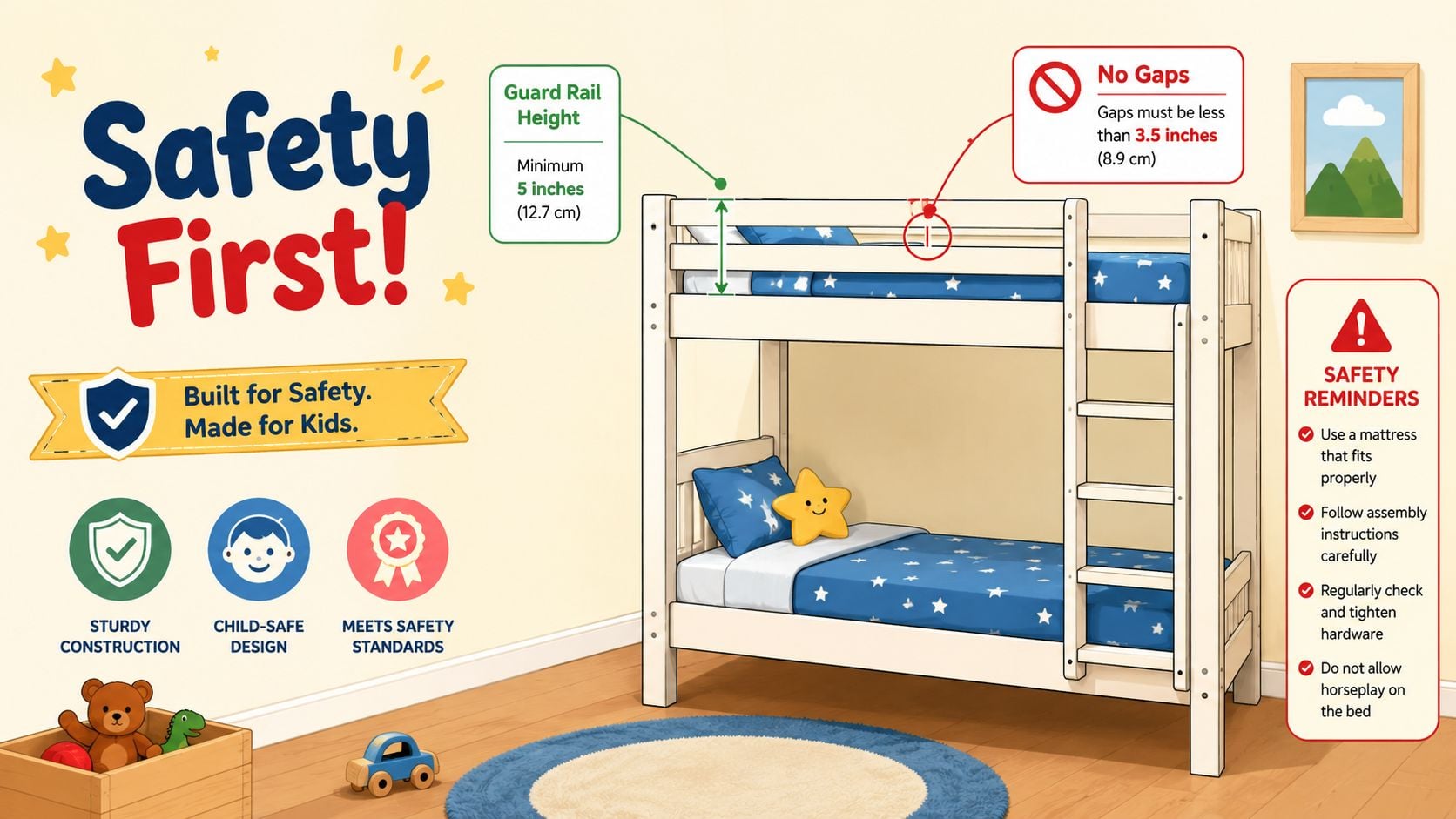
For any raised sleep surface, pay attention to the parts that control a child's body position during sleep and climbing. That means guardrails, openings, ladder access, and mattress fit.
Guardrails belong on both sides of the top bunk. Openings must stay small enough to reduce entrapment risk. Guardrails must also sit high enough above the mattress to keep a sleeping child from rolling over the edge. The injury analysis referenced later in this article gives the exact measurement benchmarks used by many safety checklists. Use those dimensions during planning, not after the bed is built.
Mattress fit deserves the same scrutiny. A mattress that sits too low can reduce rail protection. A mattress that leaves side gaps creates space for trapping limbs or shifting dangerously near an edge. If you are still sorting out room-scale decisions before build details, this guide to choosing bedroom furniture for a child's room helps frame the bigger safety picture.
Room hazards matter too
A bunk can meet the basic bed-frame rules and still be unsafe in the room where it sits.
Ceiling fans are the obvious Florida example. A raised bed needs clear space above the sleeper's head, above the child when sitting up, and above the route used to climb in and out. Light fixtures, window trim, shelves, and nearby dressers also matter. If a child can hit it during play, sleep, or a rushed climb down at 2 a.m., it belongs in your safety review.
Families sometimes ask about adding privacy features. Use caution there too. Anything attached to a raised bed has to preserve visibility, airflow, and safe access. If you want ideas without turning the bed into an enclosed hazard, the Playz blog on bed tents is a better place to start than improvising fabric around rails.
A practical approval test
Before you build or buy anything, answer these questions with a clear yes:
- Age fit: Is the toddler staying off the upper bunk entirely?
- Rail coverage: Does the raised sleep surface have guardrails on both sides?
- Opening control: Are all gaps kept within accepted safety limits?
- Mattress compatibility: Does the chosen mattress preserve the intended rail height and fit snugly?
- Access safety: Is the climb controlled, stable, and easy for a child to use without awkward footing?
- Room clearance: Is the bed well away from fans, fixtures, shelves, and other impact hazards?
If any answer is uncertain, stop planning the bunk and change the layout first. That is the safer call.
Safer Bunk Bed Variations for Toddlers
Most families looking at toddler bunk bed plans don't need a true bunk bed. They need two sleeping spots in one room without giving a toddler a dangerous climb. That opens the door to better layouts.
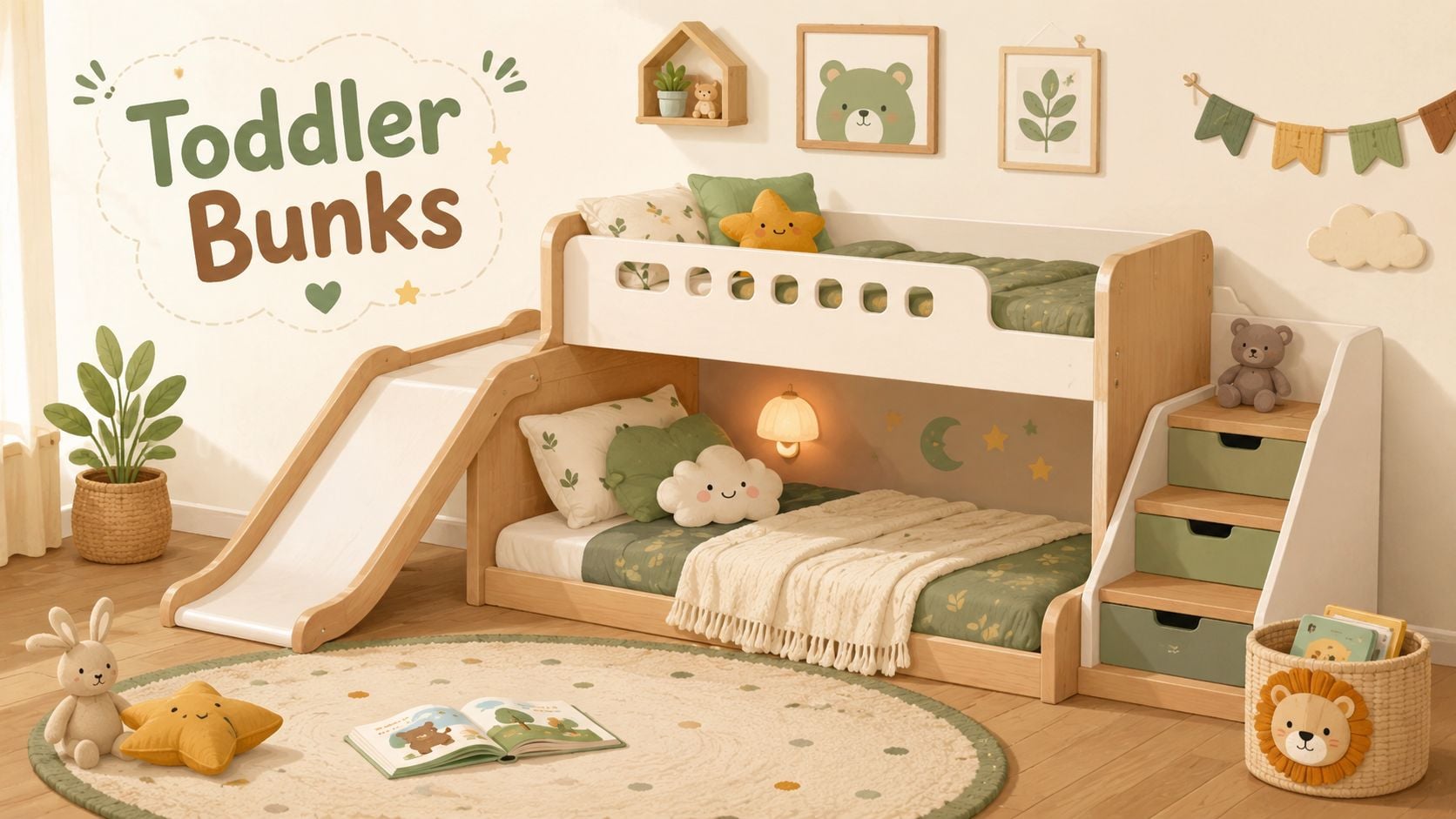
Low-rise bunk or floor bunk
This is the closest thing to a “toddler bunk” that still makes sense. The lower bed sits very near the floor, and the upper sleeping surface is kept much lower than a standard bunk.
The upside is obvious. It preserves the compact, stacked look while reducing fall severity. It also makes room-sharing feel intentional instead of temporary.
The downside is that it still requires strict attention to rail design, access, and mattress thickness. A low-rise design is safer than a tall bunk. It is not automatically safe just because it's lower.
This option fits best in smaller bedrooms where floor area is tight but ceiling height and wall layout make a trundle awkward.
Stacked single beds in an L-shape
This is one of the smartest room-planning moves for young siblings. One bed runs along one wall, the second along the adjacent wall, often tucked into a corner. It creates visual order, gives each child defined space, and avoids the main risk of a top bunk.
It doesn't have the novelty of bunks, but it solves the actual problem. There are two beds, better traffic flow, and no ladder issue.
For many Central Florida families, this arrangement also works well in rooms with windows, vents, and fan placement that make a vertical build less practical.
A room can save space without stacking danger.
The tradeoff is footprint. An L-shape typically uses more floor than a vertical setup. But that extra footprint often pays back in safety and easier bedding changes.
Single bed with trundle
This is the most practical option for many homes. During the day, the room functions like a single-bed room. At night, the second sleeping surface rolls out.
That means no climbing, no concerns about upper bunk rails, and no debate about top-bunk age appropriateness. It's also flexible for changing family needs. A younger child can stay on the main bed while the trundle serves a sibling, guest, or future sleepover setup.
The main caution is floor clearance. The room has to allow the trundle to open fully without colliding with dressers, toy storage, or the bedroom door.
Families planning flexible bedroom layouts may find useful room-planning ideas in this guide to choosing bedroom furniture.
A small comfort add-on that avoids extra height
Some parents pursue bunk beds because they want the bed to feel fun, enclosed, or special. That emotional goal can often be met without adding height at all. For cozy play value on a lower bed, this Playz blog on bed tents offers ideas that can make a simple bed feel more inviting without introducing a top-bunk sleeping risk.
Which option makes the most sense
A quick way to decide:
- Choose a low-rise bunk when vertical stacking is necessary and the child using the higher sleep surface is age-appropriate.
- Choose an L-shaped pair of singles when the room can spare more footprint and the family wants the safest everyday setup.
- Choose a trundle when flexibility matters most and daytime open floor space is valuable.
For actual toddlers, the second and third choices usually win. They're less flashy. They're also easier to live with.
Core Construction Principles for a DIY Bed
If the project is moving forward as a DIY build, the structure deserves more respect than many internet plans give it. Children's beds take repeated climbing, bouncing, side loading, and years of movement. A pretty frame that racks, loosens, or shifts out of square is a failed build.
Published twin bunk plans commonly use an overall footprint of 81-1/2 inches by 45-1/2 inches, built from 2x4s and 2x6s, with frame pieces joined using wood glue and pocket-hole screws and legs formed as L-shapes by fastening a 2×4 to a 2×6, as described in this open bunk bed plan reference. That method works because it creates a clearer load path and a stronger leg assembly than a flimsy decorative frame.
Build the structure around load paths
A bed should transfer weight predictably. Mattress support carries the sleeper. Side rails carry the support system. Legs or posts transfer that weight to the floor. Every joint should help that path, not interrupt it.
Three construction habits matter most:
- Use real structural stock: 2x4s and 2x6s are common for a reason. They provide enough section depth for rails, framing, and support members.
- Create rigid leg assemblies: L-shaped legs resist twist better than flat boards acting alone.
- Lock joints with glue and screws: Nails alone aren't enough for a child's bed that will see repeated movement.
A clean-looking build can still be weak. Hidden joinery and well-planned support locations matter more than decorative trim.
Standard Mattress Dimensions for a Snug Fit
The frame should be built around the mattress, not the other way around. A loose fit creates shifting and unsafe openings. A too-tight fit makes bedding difficult and can damage the frame during installation.
| Mattress Type | Width (inches) | Length (inches) |
|---|---|---|
| Twin | 38 | 75 |
That twin dimension is especially relevant because bunk designs are commonly sized around a standard twin mattress in bedroom planning.
Tools and joinery that deserve respect
Pocket-hole joinery is popular because it pulls parts together cleanly and works well when paired with glue. But it doesn't excuse sloppy milling or out-of-square assembly.
A safer build process usually follows this order:
- Cut accurately first. If rails and end pieces vary, the whole frame fights itself.
- Dry-fit the assembly. Check for square before final fastening.
- Install support members at matching heights. Mattress support should sit evenly across the frame.
- Fasten methodically. Glue, clamp, then screw.
- Test for racking. Push the frame side to side before finishing.
For beginners brushing up on shop basics, this guide to starter woodworking equipment gives a practical overview of the tools commonly used for projects like this.
Wood movement, finish wear, and family use will all stress the bed over time, so material care matters too. This wood furniture care guide is useful for thinking through finish durability and long-term maintenance before the project is even assembled.
Build standard: If the frame can't stay square during assembly, it won't become safer once a mattress hides the problem.
One more hard truth belongs here. Decorative add-ons often weaken a bed when they're attached as an afterthought. Slides, novelty rails, storage stairs, and house-frame toppers can all change balance and loading. They should be designed into the structure from the start or skipped entirely.
Finishing and Final Mattress Safety Checks
A pretty finish does not make a bed safe. On a toddler bed, the last details decide whether the build is fit for use or should stay out of the room.
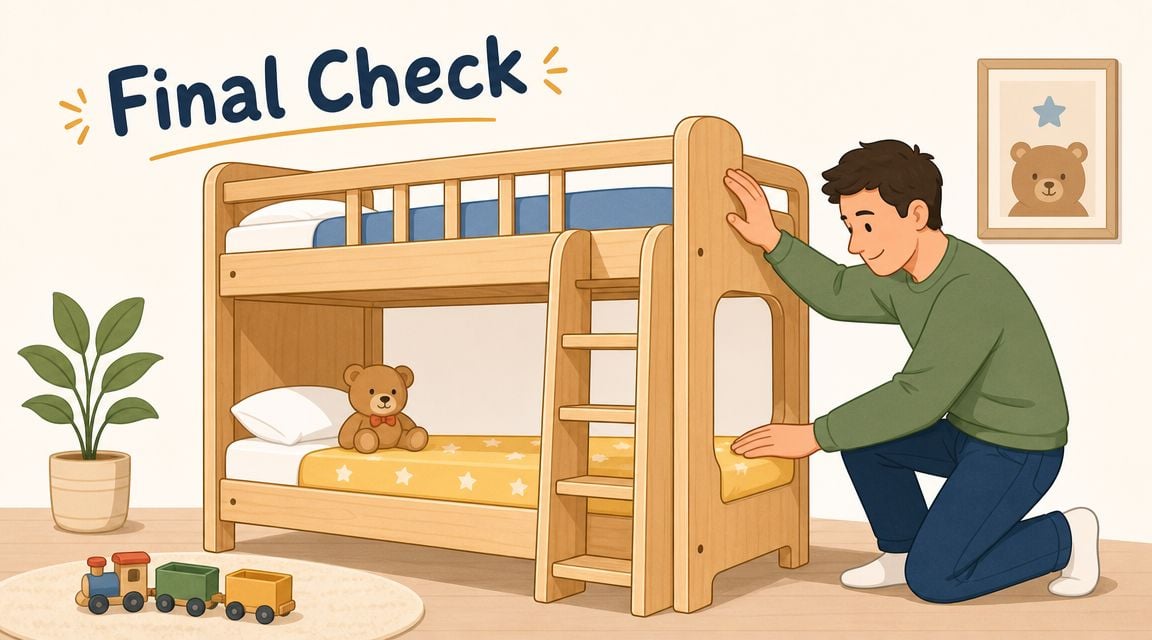
Finish the bed for hard contact, not showroom looks
Toddlers do not treat furniture gently. They drag hands across rails, bump shins on corners, and climb with bare feet. If a surface feels rough to you, it is wrong for a child.
Focus on the parts a child will touch:
- Sand every contact area smooth: Round over sharp edges on rails, side boards, ladder rungs, stairs, and entry points.
- Choose a child-conscious finish: Low-odor, low-VOC products make more sense in a sleeping space.
- Wait for a full cure: If the finish still smells strong or feels soft, the bed is not ready.
Skip thick, gummy coatings and decorative texture. They chip, grab dirt, and leave rough spots faster than a clean, properly cured finish.
Final checks before first use
The mattress fit is where a lot of DIY beds fail. A strong frame can still become unsafe if the mattress sits too high, leaves open space near the rails, or shifts inside the frame.
As noted earlier in the article's safety guidance, guardrails need to stand clearly above the top of the mattress, and openings around the mattress must stay tight enough to avoid trapping hazards. If your mattress eats up too much rail height, replace the mattress or change the bed design. Do not talk yourself into “close enough.”
Run this check before any child sleeps in the bed:
- Measure rail height above the installed mattress: The top bunk rail must still provide real containment.
- Check the fit on all sides: The mattress should sit snugly without oversized gaps at the perimeter.
- Push hard on the rails, ladder, or stairs: Any wobble means stop and fix it.
- Retighten every fastener after loading the bed: Weight exposes weak joints fast.
- Look beyond the bed frame: Keep the bed away from windows, cords, hard furniture corners, and ceiling fans.
Mattress thickness matters as much as mattress comfort. Families sorting out size, profile, and support can use this guide to choosing the right mattress for a bed frame.
One direct recommendation. If you cannot find a mattress that preserves safe rail height and a snug fit, do not force a bunk setup for a toddler. Choose a lower bed, a floor-adjacent option, or two separate sleep surfaces instead.
A child's first night in the bed should happen only after the finish is cured, the mattress fits correctly, and every contact point passes a hands-on safety check.
When DIY Is Not the Answer A Local Alternative
Some projects should stop at the sketch stage. A child's bed can be one of them.
A documented DIY bunk build method shows how much care the process really takes: fabricating independent mattress boxes, reinforcing them, tying them into posts with cleats, and keeping the entire frame perfectly square, while also avoiding the common mistake of relying on nails alone instead of screws and glue, as shown in this bunk build walkthrough. That's a lot to ask from a casual weekend project.
Why many families stop at the planning stage
The challenge isn't just cutting wood. It's controlling every detail that affects safety.
A builder has to manage:
- Accurate fit-up
- Reliable fastener choice
- Guard and rail geometry
- Mattress compatibility
- Long-term rigidity after repeated use
That's why many sensible parents decide not to improvise a child's sleep setup. There's no shame in that. It's a responsible call.
A better path for some Central Florida homes
For families in Longwood, Sanford, Lake Mary, and greater Orlando, a ready-made or custom-ordered bedroom solution can be the smarter route when the room needs to work safely from day one. Slone Brothers Furniture's custom furniture program is one local option for households that want help choosing a safer configuration, finish, and room layout without taking on the structural risk of building from scratch.
That matters even more when the family's real need isn't a true bunk at all. It may be a pair of coordinated low beds, a trundle arrangement, or a custom bedroom setup that uses the room better without elevating a toddler.
Since 1980, Central Florida families have leaned on local guidance for exactly this kind of problem. Good furniture planning isn't about forcing a dramatic design into a small room. It's about giving a child a sleeping space that works safely, comfortably, and for the long haul.
Ready to find the perfect piece for a child's room or shared bedroom layout? Visit the Slone Brothers Furniture showroom in Longwood, FL, and let the design experts help create a safer, smarter solution for a Central Florida home.