
Decorative Wall Plates for Kitchen: A Style Guide

A kitchen can be clean, updated, and fully functional, yet still feel unfinished. That's a familiar moment for many homeowners across Longwood, Lake Mary, Sanford, and the wider Orlando area. The cabinets are in place, the lighting works, the dining set fits, but the walls still feel quiet.
That's where decorative wall plates for kitchen spaces come in. They soften hard surfaces, add shape to blank walls, and help a room feel collected instead of merely completed. For homes in Central Florida, where kitchens often open into breakfast nooks or dining areas, wall plates can also help visually connect those spaces.
There's another reason they continue to resonate. Ornamental wall plates have a rich history across medieval Europe, Asia, and the Americas, where they symbolized wealth and artistic expression, as noted in PAC Lights' overview of ornamental wall plates. That long tradition gives them staying power. They don't read like a passing fad. They read like a design choice with roots.
For Central Florida homeowners who want a kitchen to feel personal, layered, and welcoming, decorative plates can do a surprising amount of work.
Table of Contents
- From Bare Walls to Beautiful Kitchens
- Finding a Style That Complements Your Florida Home
- Choosing Materials That Endure Kitchen Conditions
- Creative Layouts for Your Decorative Wall Plates
- Safe Installation and Long-Term Care
- Your Vision Realized with Slone Brothers
- Create a Kitchen That Tells Your Story
From Bare Walls to Beautiful Kitchens
A common Central Florida scenario starts the same way. A homeowner finishes a kitchen refresh, adds a handsome dining table, brings in a few stools, and steps back expecting the room to feel done. Instead, one wall beside the breakfast nook or above a sideboard still feels empty.
That empty wall often doesn't need a large framed print. It needs something with more texture and more rhythm. Decorative wall plates for kitchen spaces solve that problem in a way that feels approachable. A single grouping can make a room feel warmer, more lived in, and more connected to the people who use it every day.
Why plates work so well in kitchens
Kitchens already contain round forms. Bowls, platters, pendants, tables, and serving pieces all repeat that shape. A plate display feels natural because it echoes objects the room already understands.
It also helps that plate displays can be adapted to many kinds of homes:
- In a newer Orlando-area build, they can break up long stretches of painted wall.
- In a cottage-style kitchen, they add collected charm without requiring a full remodel.
- In an open-plan layout, they can visually bridge the kitchen and dining room.
- In a smaller breakfast nook, they offer dimension without taking up floor space.
Decorative wall plates often succeed where other wall decor feels too flat. They bring color, shape, and a handmade quality into one of the hardest-working rooms in the house.
Why they don't feel outdated now
Readers sometimes hesitate because they associate wall plates with older interiors. That concern makes sense, but the better way to look at plate displays is as a design language that keeps getting refreshed.
A plate wall can be formal, playful, coastal, minimal, floral, graphic, or vintage-inspired. The idea is timeless. The styling is what changes. That's why a plate arrangement can look just as comfortable beside a clean-lined dining set as it does near a more traditional hutch.
For homes throughout Longwood and surrounding communities, the strongest plate displays usually do one thing well. They reflect the home itself. Some tell a color story. Some tie into nearby wood tones. Some add softness to sleek cabinetry. The result isn't clutter. It's character.
Finding a Style That Complements Your Florida Home
The easiest mistake is choosing decorative wall plates for kitchen walls because each plate looks pretty on its own. A stronger result comes from choosing plates that support the room already in place.
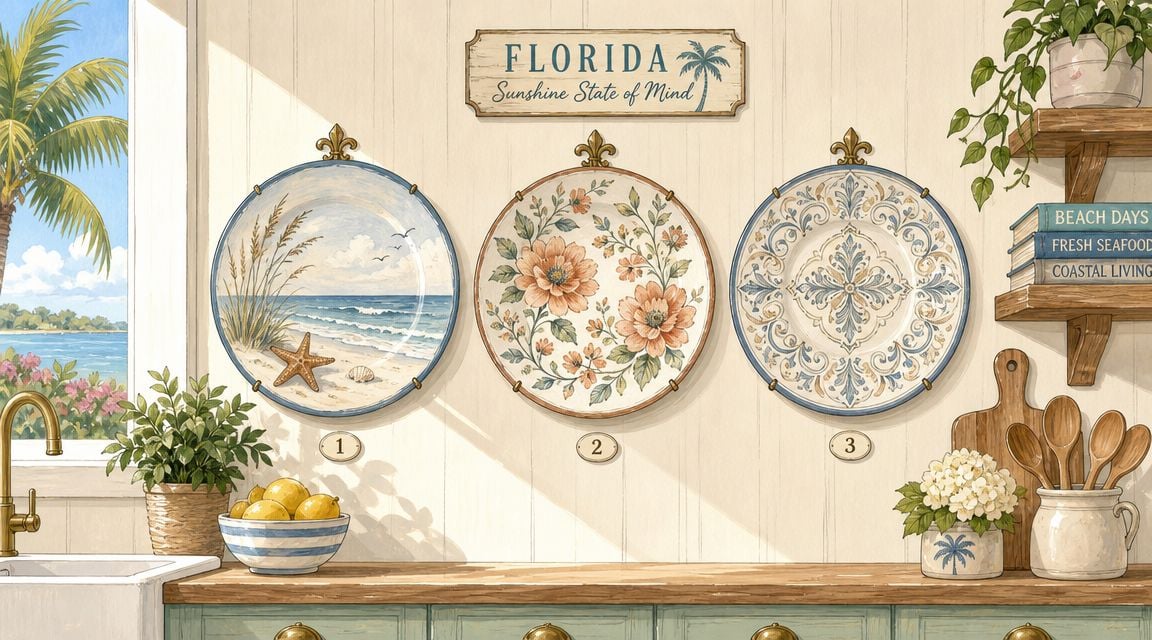
Maison Flaneur describes plate walls as a “decor revival” in its piece on how to style walls with plates. That shift matters because it opens the door to far more styles than many homeowners expect.
Start with the room, not the plate
Before looking at patterns, it helps to answer a few simple questions.
- What's the mood of the kitchen? Light and airy, rustic, curated, or collected?
- What finishes already lead the room? Wood, painted cabinetry, metal, stone, or woven textures?
- What sits nearby? A dining table, buffet, breakfast bench, or open shelving?
- What needs softening? A blank corner, a long wall, or a transition area between kitchen and dining.
A homeowner with a relaxed Florida interior may lean toward soft blues, botanical patterns, or subtle hand-painted pieces. Someone with a more modern home may prefer simpler forms, restrained color, and cleaner spacing.
For broader inspiration on blending local style influences, decorating a Florida home with intention can help frame the larger look.
Three directions that work well in Central Florida
Coastal without becoming theme decor
This works especially well in Lake Mary and other homes that lean bright and breezy. The key is restraint. Blue and white plates, soft green botanicals, or sandy neutrals can bring in a coastal mood without relying on obvious beach motifs.
Modern farmhouse with more polish
This style usually benefits from cream, charcoal, faded floral, or lightly distressed finishes. Mixed plate sizes look right at home here. They also pair naturally with dining furniture that has visible craftsmanship, such as a solid wood table from brands like Mavin or Simply Amish.
Clean-lined contemporary
A contemporary kitchen doesn't need to avoid plates. It just needs stronger editing. Fewer pieces, more negative space, and a tighter palette keep the arrangement crisp. This approach often works beautifully near an Amisco dining set or other sleek furniture with metal and wood contrasts.
Style shortcut: If the dining furniture has strong grain, texture, or character, the plates should echo that spirit. If the furniture is quiet and architectural, the wall display should stay disciplined.
A good plate wall doesn't compete with the room. It completes it.
Choosing Materials That Endure Kitchen Conditions
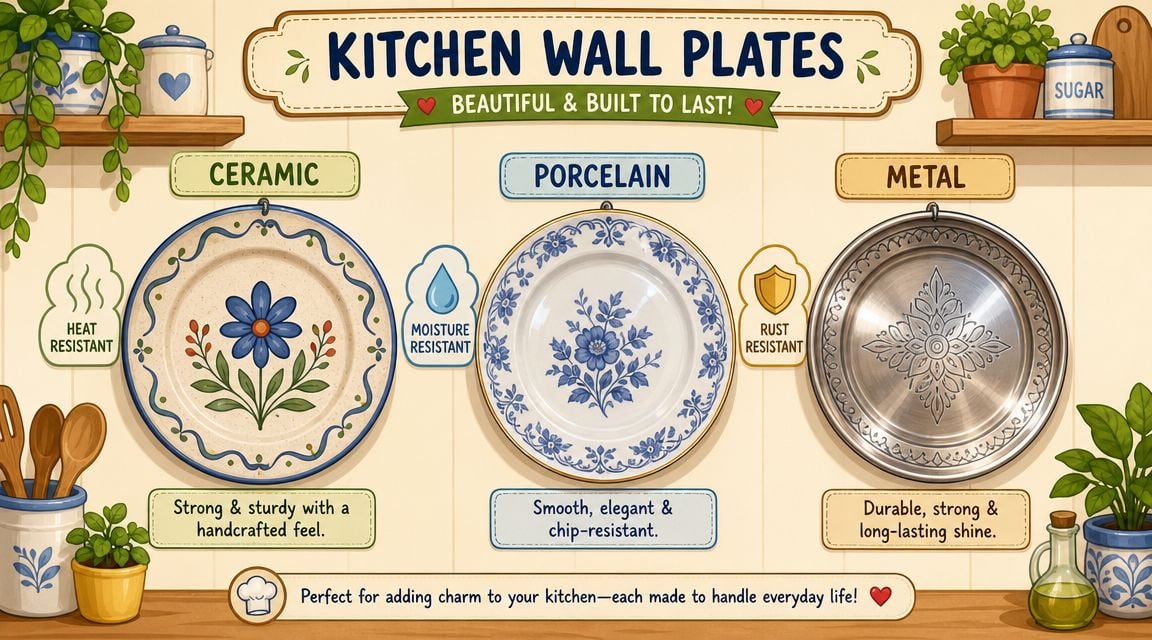
Material matters more in a kitchen than in many other rooms. Heat, steam, grease in the air, and frequent wiping all affect how decorative surfaces age. That's why homeowners choosing decorative wall plates for kitchen use should think beyond color and pattern.
Decorative plates and functional wall plates are not the same thing
This is a point that often causes confusion. A decorative plate displayed on the wall is one category. A decorative switch plate or outlet cover is another.
For functional wall plates around switches and outlets, material selection is especially important in kitchens. Legrand notes that decorative switch plates are offered in durable materials and finishes, including cast metal and plated options, to handle demanding environments while still fitting standard electrical form factors in its page on decorative wall plates.
That distinction matters because homeowners sometimes assume all “wall plates” perform the same way. They don't.
What tends to work well in a busy kitchen
For wall-mounted decorative pieces, these material tendencies are useful:
| Material | What homeowners like | Kitchen consideration |
|---|---|---|
| Ceramic | Color variety, handmade feel, classic look | Best when the finish is smooth and easy to wipe |
| Porcelain | Refined appearance, often lighter visual feel | Usually works well in cleaner, brighter kitchens |
| Metal | Crisp edge, reflective quality, durability | A good fit when the room already has metal accents |
| Wood or mixed media | Warmth and texture | Better in spots away from splatter and heavy moisture |
Smoother sealed finishes are usually easier to maintain than heavily textured or porous surfaces. In a working kitchen, that practical difference shows up quickly.
For homeowners also selecting hard finishes, material harmony matters. If a plate display will sit near a backsplash, cabinet hardware, or range wall, this guide to the best backsplash tile for your kitchen can be a helpful companion when matching sheen, texture, and color direction.
A similar principle applies to nearby decorative details. Metal accents in the home can help homeowners decide whether warm metals, darker finishes, or cleaner plated looks make sense around a kitchen plate arrangement.
Matching the material to the room's wear level
A low-traffic coffee station wall gives more flexibility than a display mounted near a range or prep zone. That sounds obvious, but many disappointing decor choices come from placing delicate finishes in the wrong part of the room.
- Near cooking zones, choose surfaces that can tolerate more frequent cleaning.
- Near breakfast nooks, ceramic and porcelain often work beautifully.
- Near switches or outlets, functional decorative wall plates should prioritize durable finishes.
- In open-plan spaces, tie the plate material back to nearby dining furniture or lighting.
A plate may look perfect in the showroom or on a table. In a kitchen, the better question is whether its finish still looks good after repeated wiping and exposure to everyday humidity.
Creative Layouts for Your Decorative Wall Plates
Some homeowners find the right plates quickly, then get stuck on the wall arrangement. That's normal. Layout is usually the part that determines whether decorative wall plates for kitchen spaces feel intentional or random.
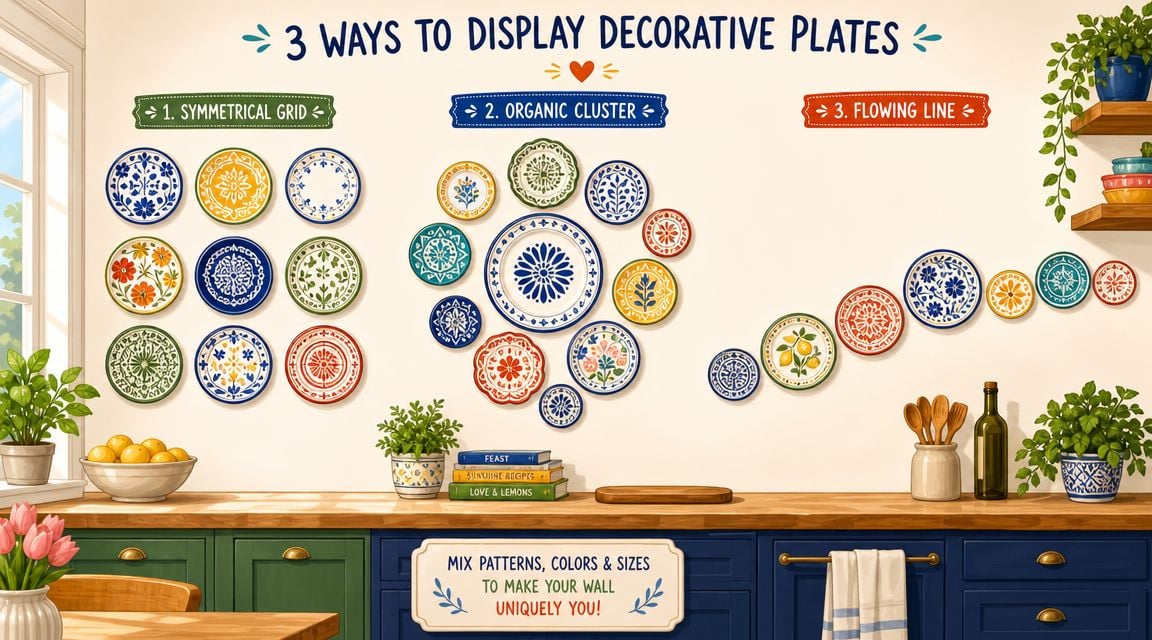
The strongest layouts usually respond to the wall itself. A narrow space beside a pantry door needs a different arrangement than a broad wall above a sideboard.
Three layout approaches that make sense
The grid
This is the neatest option. It works well in transitional and contemporary homes, especially when the plates are similar in size or color family. A grid can bring order to a busy kitchen because the arrangement itself feels calm.
The balanced cluster
This is often the most versatile approach. The plates vary in size, but the overall shape remains centered and visually steady. It suits breakfast nooks, corners near windows, and walls between kitchen and dining areas.
The flowing arrangement
This style feels more collected and relaxed. Plates move outward in a gentle arc or organic pattern. It works well in homes with softer architecture or more eclectic furnishings.
A homeowner who wants help judging visual balance may find accent wall planning principles useful, even though the material on the wall is different.
A simple planning method before any holes go in the wall
Many hanging mistakes happen because the wall becomes the first draft. It shouldn't.
Try this sequence instead:
Lay the plates on a table or floor first
This helps reveal whether one plate is too dominant or whether the colors clump on one side.Trace the arrangement on paper
Paper templates make spacing easier to judge on the actual wall.Check the view from a distance
Stand where the room is usually seen. Kitchen entries, the dining table, and adjacent living spaces often reveal imbalance faster than close-up viewing.Use a level where the eye expects order
Rows, paired placements, and centered groupings need precision.Leave breathing room
Plates don't need to touch to feel connected. Negative space is part of the design.
Scale matters more than most people expect
A small wall can carry a bold plate. What it can't carry well is too many medium plates squeezed too tightly. On a large wall, the opposite problem appears. Tiny plates can look lost.
A quick guide:
- For a narrow nook, use fewer plates with a clear vertical or stacked rhythm.
- For a sideboard wall, anchor the arrangement to the furniture width below.
- For a large open-plan wall, build enough visual weight to hold the space.
- For a pass-through area, keep the edges tidy so the display doesn't feel crowded.
A plate wall should relate to the architecture below it. If there's a dining cabinet, console, or banquette under the display, the arrangement should feel connected to that piece, not floating far above it.
Safe Installation and Long-Term Care
A beautiful arrangement still has to stay on the wall. In kitchens, that matters even more because heat, humidity, and motion in the room can affect hanging systems over time.
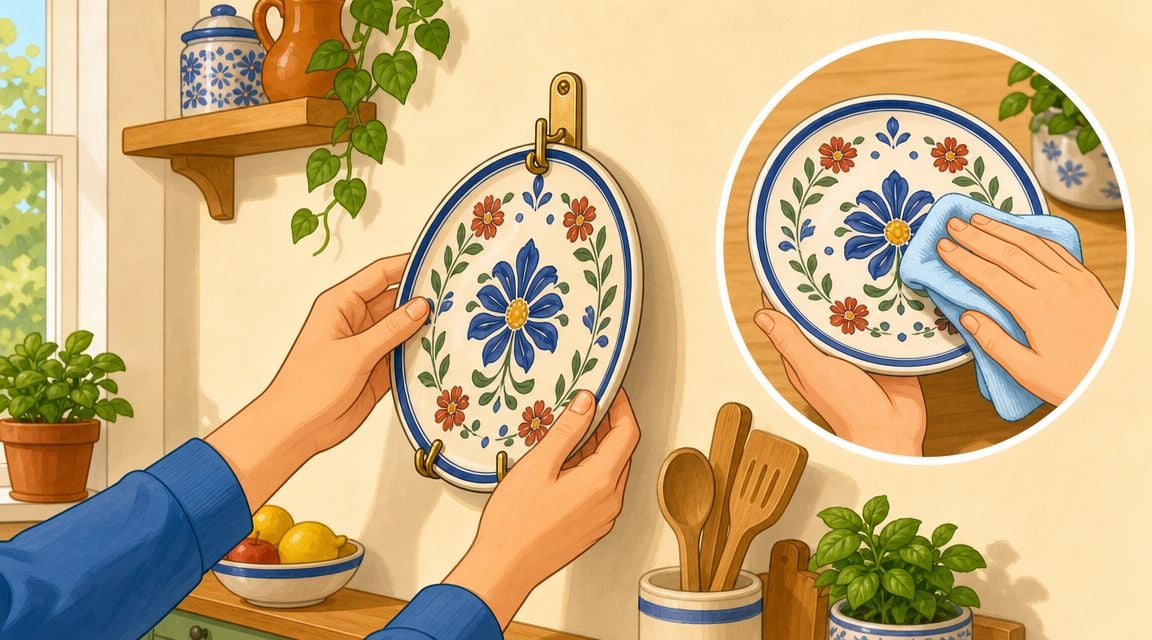
Guidance on plate walls recommends tracing the arrangement first, checking symmetry with a level, and then choosing hangers rated to the plate's weight. It also notes that lightweight pieces can use adhesive hooks or museum gel, while heavier plates should use metal or wire hangers with heavy-duty anchors, with museum gel added at the bottom to reduce slipping, as outlined in this guide on how to hang plates on a wall.
Where kitchen placement changes the hanging method
Placement affects safety. A decorative plate above a pantry message center is one thing. A heavier ceramic piece above a counter or near active cooking is another.
For heavier plates in a kitchen, metal or wire hangers secured with heavy-duty wall anchors are the safer choice. That's especially relevant in Central Florida, where temperature and humidity swings can weaken adhesives over time.
A practical way to think about it
Lightweight and decorative only
Adhesive options may be appropriate in lower-risk areas, provided the wall surface and room conditions support them.Heavier ceramic or metal plates
Mechanical fasteners are the better answer, particularly above counters or in busy zones.Areas exposed to steam or frequent heat
Avoid relying on adhesive alone.Rental situations
Damage-minimizing hanging methods can still work for lighter pieces, but kitchens require more caution than bedrooms or hallways.
Care habits that keep the display looking fresh
Once the plates are installed, maintenance should stay simple.
- Dust first, wipe second
Dry dusting removes loose residue before smearing it across the finish. - Use a soft cloth
Rough scrubbing can dull decorative surfaces. - Check the hardware occasionally
A display that looked secure on day one should still be checked after seasons of humidity. - Clean the wall area too
Grease and dust can collect around, not just on, decorative pieces.
For homeowners hanging multiple objects in a gallery-style grouping, a precise picture-hanging process can help with spacing and alignment.
In kitchens, safe installation isn't just about the plate. It's about the wall surface, the hanger type, the weight of the piece, and what happens underneath if it falls.
That's why cautious planning is worth it.
Your Vision Realized with Slone Brothers
A kitchen wall display rarely exists on its own. It sits beside cabinetry, flooring, stools, a dining table, and often a buffet or accent piece. The most satisfying results come when those elements are considered together.
Why furniture and wall decor should be planned together
A plate arrangement over a dining sideboard should relate to the size and finish of that furniture. A colorful wall grouping near a breakfast table should pick up a tone already present in the room. Without that relationship, even beautiful decor can feel separate from the space.
A local showroom perspective offers valuable insight. In a Central Florida home, open layouts often mean the kitchen is visible from the dining and living spaces at the same time. A wall display that looks charming up close but disconnected from nearby furnishings won't feel settled.
That's one reason some homeowners prefer working with a local design resource instead of selecting pieces in isolation. Design services for furniture shoppers in Central Florida can help coordinate wall decor with the rest of the room.
What local design help can solve
A homeowner may already know the general style direction, but still run into practical questions:
- Should the display be centered on the wall or on the furniture below?
- Should the plate colors echo the dining chairs or the backsplash?
- Would a rustic arrangement fight with a cleaner table silhouette?
- Is the wall better suited to one statement grouping or several smaller moments?
Those details matter. They're often the difference between a room that feels decorated and one that feels composed.
Slone Brothers Furniture offers an in-house design team, a custom-order program, and a Longwood showroom serving the Greater Orlando area since 1980. In practical terms, that gives homeowners a place to evaluate dining furniture, finishes, and home decor together instead of making disconnected decisions room by room.
That can be especially useful when coordinating handcrafted styles with specific furniture looks. A plate wall with rustic brushwork may pair beautifully with a Mavin or Simply Amish dining piece. A more restrained arrangement may sit better near Canadel, Bassett, or Amisco lines depending on the room's finish direction.
The goal isn't to make the wall louder. It's to make the whole space make sense.
Create a Kitchen That Tells Your Story
Decorative wall plates for kitchen spaces work because they do more than fill blank walls. They add shape, heritage, and personality to one of the most used rooms in the home. They can soften a new kitchen, warm up a dining nook, and connect adjoining spaces in a natural way.
They also reward thoughtful choices. The right style keeps the room cohesive. The right material handles kitchen conditions more gracefully. The right layout creates balance instead of clutter. And the right installation method protects both the wall and the pieces on it.
For many homeowners in Longwood, Orlando, Lake Mary, and Sanford, the challenge isn't whether decorative plates can work. It's narrowing down which look fits the home, where the arrangement should go, and how to make it feel intentional with the dining furniture and finishes already in place.
That's where local guidance becomes valuable. A family-owned business that has served Central Florida since 1980 understands that homeowners aren't decorating a single wall in isolation. They're trying to make the kitchen, breakfast area, and dining space feel like one complete story.
A well-planned plate wall can do exactly that. It can make a useful kitchen feel welcoming, personal, and finished in a way paint alone never could.
Ready to find the perfect piece for a Central Florida home? Visit Slone Brothers Furniture in Longwood, FL, and let the design team help bring a kitchen and dining space together with furniture, home decor, and practical guidance that fits the way local homeowners really live.