
End Table Dimensions: A Longwood Homeowner’s Guide

A lot of Central Florida homeowners run into the same problem. The sofa is in place, the rug looks right, the lamp has a home, but the spot beside the seat still feels unresolved. An end table seems simple until the wrong one shows up too tall, too deep, too tiny, or awkwardly out of reach.
That's why end table dimensions are more important than often realized. In open-plan Orlando homes, cozy Longwood living rooms, and condos around Lake Mary and Sanford, the right table helps the whole seating area feel easier to use and better balanced. The good news is that choosing one doesn't have to feel complicated.
Table of Contents
- Finding the Right Fit for Your Florida Living Room
- The Golden Rule for End Table Height
- Choosing the Right End Table Width and Depth
- Smart Placement and Styling for Your End Tables
- Custom End Table Solutions for Your Florida Home
- Measure With Confidence and Visit Our Showroom
- Frequently Asked Questions About End Tables
Finding the Right Fit for Your Florida Living Room
In many Greater Orlando homes, the living room has to do a lot at once. It may open into the kitchen, connect to a lanai, or need to handle everyday family traffic without feeling crowded. That makes small furniture choices feel bigger than they seem.
An end table often gets chosen last, and that's where frustration starts. A homeowner finds one that looks great online, then realizes it blocks the path, sits too low beside the sofa, or disappears next to a large sectional. The issue usually isn't style. It's proportion.
For households working with a compact footprint, it can help to study how smaller rooms are planned in the first place. This look at guide to small home plans shows why furniture scale matters so much when every walkway and corner has to work harder.
Before shopping, it also helps to look at the seating layout as a whole. A room arranged thoughtfully gives the end table a clear job and a clear place. This practical advice on arranging living room furniture is a useful starting point for homeowners in Longwood, Orlando, and nearby communities.
A well-sized end table doesn't just fill an empty spot. It supports comfort, reach, lighting, and flow.
The Golden Rule for End Table Height
Height is the first measurement that deserves attention. If the height is wrong, even a beautiful table will feel off every day.
Why height comes first
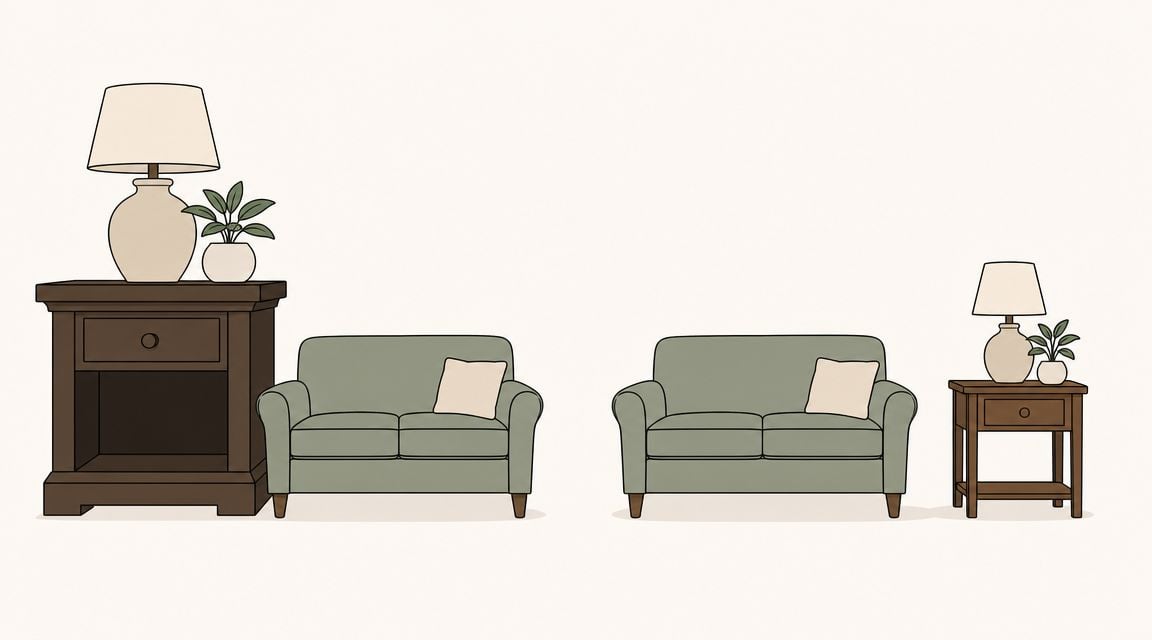
The easiest rule to remember is this one. The tabletop should sit within about 1 to 2 inches of the sofa arm height, and many guides place the practical target at roughly 22 to 28 inches tall depending on the sofa, according to this end table dimensions guide.
That rule works because it supports both comfort and appearance. When the table is close to the arm height, setting down a drink or reaching for a remote feels natural. The same source notes that this reduces awkward reaching by keeping the surface accessible with minimal shoulder lift or leaning.
A simple way to think about it is the handshake rule. The sofa arm and the table top should meet each other easily, not fight for position. If the table is much taller, it can look like it's crowding the seat. If it's far lower, it may feel disconnected and inconvenient.
Quick Guide to End Table Dimensions
| Dimension | Rule of Thumb | Why It Matters |
|---|---|---|
| Height | Keep the tabletop within about 1 to 2 inches of the sofa or chair arm height | Better reach and better visual alignment |
| Practical height target | Many living room end tables fall around 22 to 28 inches tall depending on the sofa | Gives shoppers a useful starting range |
| First measurement to take | Measure the exact arm height of the seat beside it | Sofas that look similar can still vary |
A common mistake is measuring the room but not the furniture. In a Central Florida home with mixed seating, such as a sofa on one side and a chair on the other, the nearby seat should guide the table height. That creates a more intentional look and a more comfortable everyday setup.
Practical rule: Measure from the floor to the top of the sofa arm before browsing. That single number eliminates a lot of guesswork.
Choosing the Right End Table Width and Depth
After height is settled, width and depth shape how the table feels in the room. Proportion is what then does the heavy lifting.
Use the seating piece as the scale reference
The most widely cited sizing benchmark is still the arm-height rule, and market examples show how that translates in practice. PopMaison notes that common end-table heights of 22 to 26 inches align with standard sofa seating in many homes.
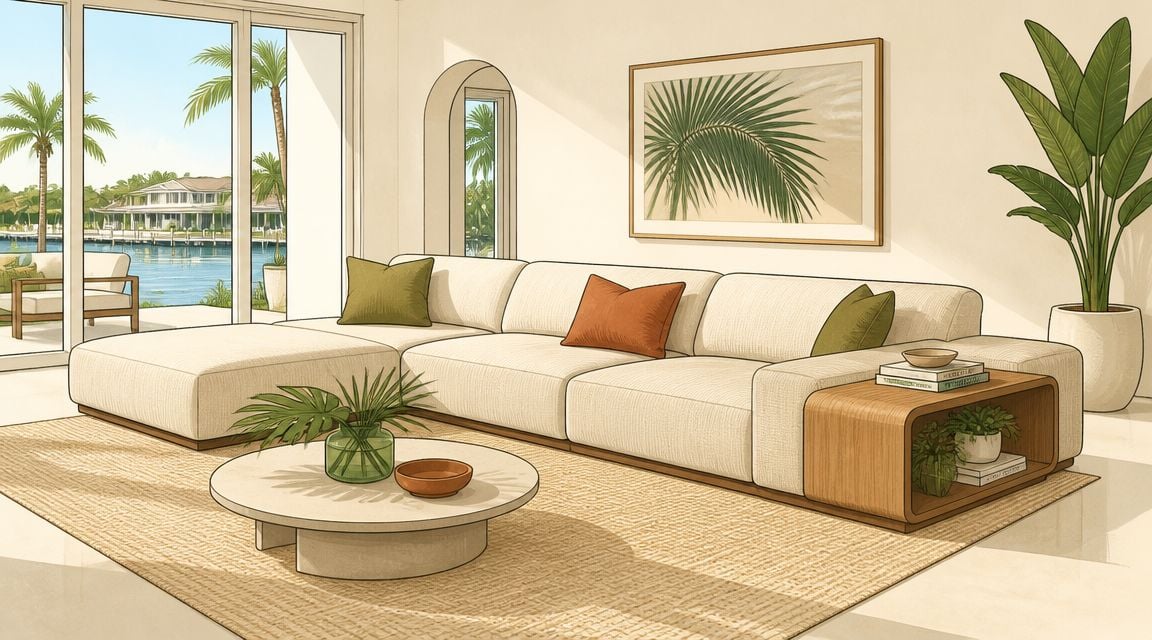
For width and depth, the best question isn't “What is standard?” It's “What sits beside it?” A broad, boxy sectional can usually handle a larger tabletop surface. A narrower chair or compact loveseat often looks better with a smaller piece that doesn't dominate the edge of the seating area.
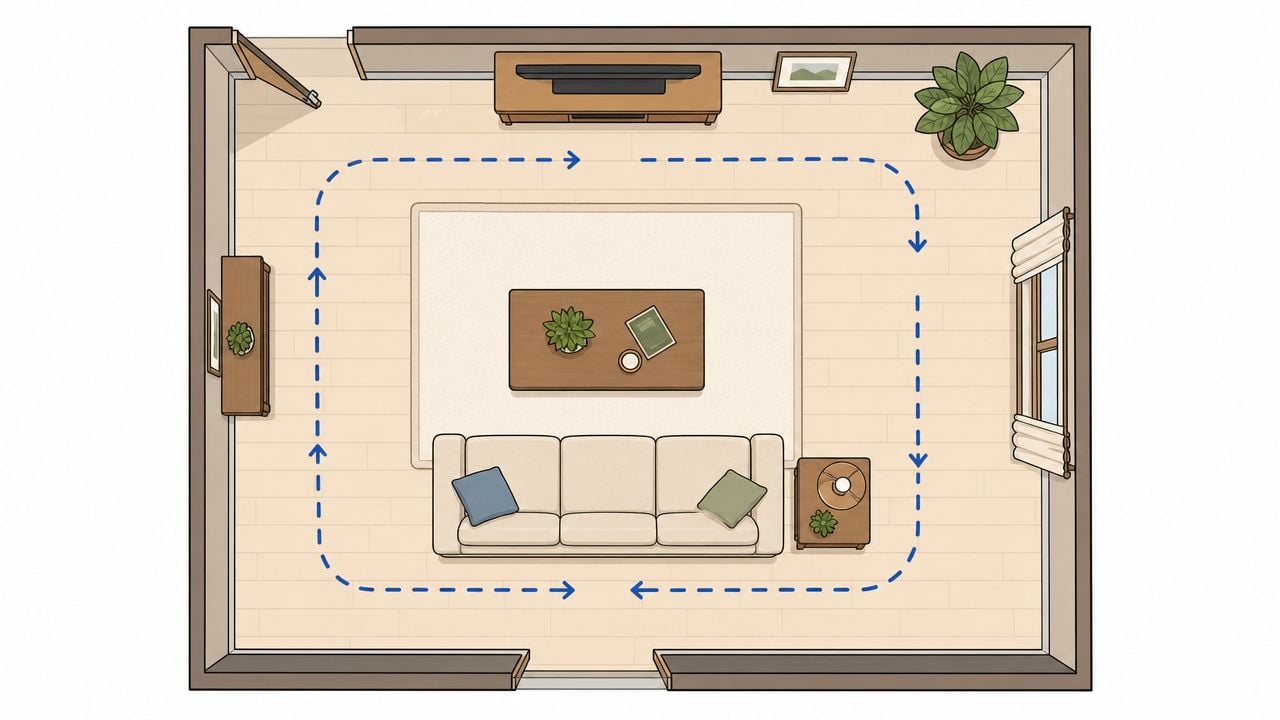
Depth is especially important in busy Florida layouts. If an end table extends farther than the chair or sofa beside it, it tends to interrupt sightlines and nibble into circulation space. That problem shows up often in living rooms that open toward dining areas, sliding doors, or lanais.
For homeowners who want cleaner planning before they shop, this guide on how to measure a room for furniture helps map out the footprint more accurately.
Think about visual weight, not just inches
Two tables can have similar measurements and still feel very different. That's because visual weight matters. A solid wood cube feels heavier than an open metal frame. A thick stone top feels more substantial than a slim round pedestal.
A few quick examples make this easier:
- Beside a plush sectional: A table with a broader top and stronger base usually feels balanced.
- Next to a sofa with exposed legs: A lighter table with open space underneath often looks more graceful.
- In a tighter corner: A round profile can soften the layout and reduce the sense of crowding.
The goal isn't strict matching. It's harmony. The table should look like it belongs beside the seat, not like it wandered in from another room.
Smart Placement and Styling for Your End Tables
Good end table dimensions can still fall short if the table lands in the wrong spot. Placement decides whether the room feels comfortable or constantly in the way.
A real layout problem in an open-plan room
A common Central Florida layout has a sectional facing the television, a path to the kitchen on one side, and sliders to the patio on the other. In that setup, a table can look fine in a photo and still create friction in real life.
For asymmetrical seating, guidance notes that end tables should match the arm height of the nearest seat, should not be deeper than the seating piece beside them, and that main walkways should preserve about 30 to 36 inches for practical traffic flow, as explained in this end table size reference.
That matters with recliners in particular. A table tucked too close to the moving side of the chair can interfere with use. A table placed too far away solves the clearance issue but loses convenience. The best placement usually keeps the surface near the seated user while respecting the movement path around the furniture.
In an open-plan room, the right table is the one people stop noticing because nothing bumps into it and everything feels easy to reach.
Homeowners refining the full seating area can also pick up useful ideas from these expert tips for living room design, especially when balancing function and appearance.
Simple styling that keeps the table useful
Styling works best when it starts with function. A lamp often claims the largest share of the top surface. After that, the table still needs room for a drink, glasses, or a phone.
A reliable styling formula is simple:
- Start with height: A lamp or taller accessory gives the table presence.
- Add one grounding layer: A small stack of books or a tray keeps loose items organized.
- Finish with one personal object: A ceramic piece, small plant, or framed photo adds character without clutter.
For households that want the coffee table and end tables to feel connected, this article on decorating a coffee table like a pro offers a helpful way to repeat shapes, textures, and finishes across the room.
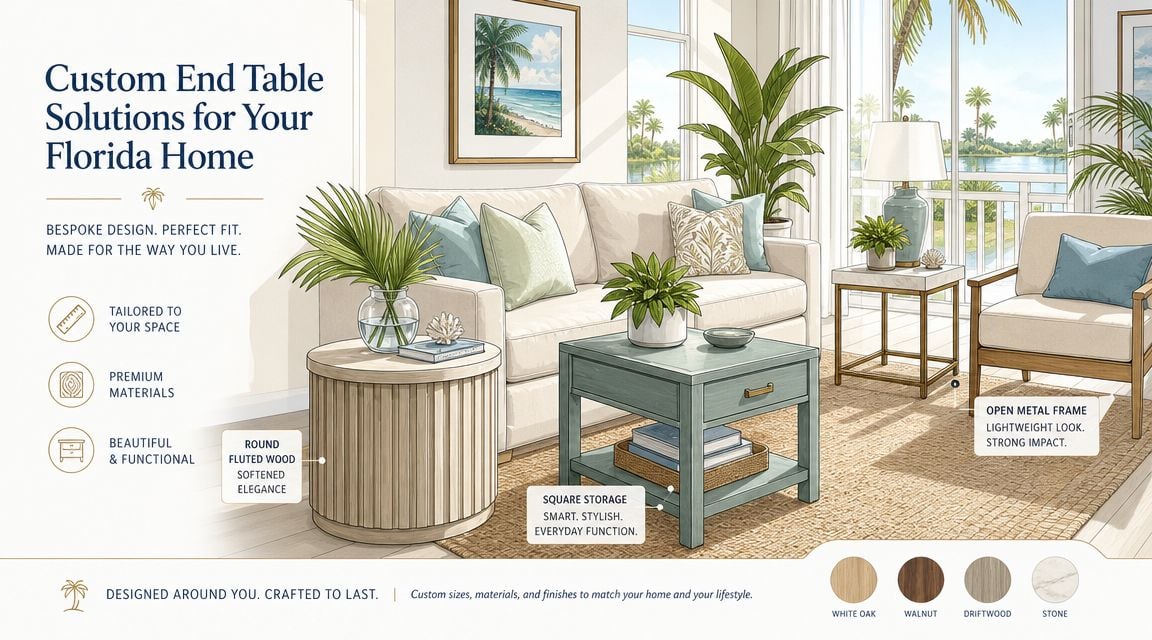
Custom End Table Solutions for Your Florida Home
Some rooms don't cooperate with standard sizes. That's especially true in condos, homes with unusual sectionals, or spaces where an heirloom chair sets the scale.
When standard sizes stop working
A low, modern sectional may need a lower profile table than most ready-made options. A narrow corner near a hallway may need a shallower footprint. A family that wants hidden storage may need drawers without adding visual bulk.
That's where custom planning becomes more than a luxury. It becomes the practical answer. Instead of forcing the room to accept a close-enough table, the dimensions can respond to the room.
For smaller homes, apartments, or flexible guest spaces, it also helps to think about storage needs around the seating area. These renter-friendly storage solutions for homes can spark ideas for how an end table might do more than hold a lamp.
What a custom approach solves
A custom route gives homeowners more control over:
- Footprint: Better fit beside sectionals, recliners, and tight passageways
- Material choice: Wood tone, finish, or texture that connects with the rest of the room
- Function: Open shelves, drawers, or cleaner silhouettes depending on how the space is used
Slone Brothers Furniture offers a custom furniture process that helps with sizing, finishes, and room-specific fit, which is useful when a standard table keeps missing the mark. That's especially relevant for Central Florida homeowners furnishing open-plan living rooms or working around architectural quirks.
A custom end table isn't about making a room look fancy. It's about making an awkward spot finally work.
Measure With Confidence and Visit Our Showroom
By this point, the measuring process gets much simpler. Height leads the decision. Width and depth keep the table in scale with the seat. Placement protects how people move through the room.
Those three checks remove most of the uncertainty. They also make shopping faster, because the homeowner can rule out pieces that won't function before getting distracted by color or finish.
For anyone still unsure about dimensions, a clear measuring reference helps translate showroom tags into real-life fit. This guide on how furniture is measured is useful to review before heading out to shop.
Since 1980, Slone Brothers has served Longwood and the Greater Orlando area with a focus on quality, craftsmanship, and practical design help. Homeowners can bring room photos, measurements, and questions into the showroom and compare styles in person, including American-made and Amish-crafted options from brands such as Stickley, Bassett, Simply Amish, Smith Brothers, Canadel, American Leather, Stressless, Amisco, Palasar, and Mavin.
Frequently Asked Questions About End Tables
Do end tables need to match
No. Matching can look polished, but it isn't required. In many L-shaped sectionals or mixed seating arrangements, two different tables can work well if they share similar height and visual weight.
A room often feels more collected when the tables relate rather than copy each other. That relationship might come from a similar wood tone, a repeated metal finish, or a shared shape language.
What about armless sofas and bedroom use
Armless sofas can confuse people because there's no arm height to guide the choice. In those cases, many decorators use the back height as a visual reference and choose a table that feels balanced rather than oversized. The key is still reach and proportion.
Nightstands follow a similar logic to end tables. The most comfortable height is usually close to the top of the mattress, so the surface is easy to access while lying in bed.
A few other common questions come up often:
- Different arm heights in one seating area: Match each table to the seat beside it when space allows.
- Recliner placement: Leave room for motion and avoid deep tables that crowd the mechanism side.
- Open-plan homes: Choose slimmer profiles where the living room shares space with a major walkway.
- Lanai-adjacent rooms: Consider how natural light and traffic from indoor to outdoor areas affect where the table can sit without becoming an obstacle.
The main goal is comfort. If the table is easy to reach, feels proportionate to the seat, and doesn't interrupt movement, it's probably the right choice.
Ready to find the perfect piece for a Central Florida home? Visit the Slone Brothers Furniture showroom in Longwood, FL and let the design team help turn measurements, photos, and ideas into a living room that feels finished and easy to use.