

Decorative Serving Tray: Style Your Central Florida Home


A room can be beautifully furnished and still feel unfinished. We see that a lot with Central Florida homes. The sofa is right, the rug works, the lighting is good, but the coffee table, console, or dining surface still looks a little scattered.
That's where a decorative serving tray earns its place. It gives loose items a home, adds shape to a flat surface, and helps a room feel intentional without making it feel fussy. In Longwood, Lake Mary, Sanford, and across the Orlando area, it's one of the simplest pieces you can add when you want a home to feel more pulled together.
More Than Just for Serving
A decorative serving tray does two jobs at once. It's useful when you're carrying drinks or snacks, and it's just as valuable when it stays put and organizes a surface every day.

In a living room, a tray can anchor remotes, coasters, and a candle so the coffee table doesn't look random. In an entryway, it can hold keys, sunglasses, and mail. On a dining table, it can gather a vase and a few accents so the centerpiece feels easy to remove when dinner starts.
Why trays have stayed relevant for so long
Serving trays aren't a passing fad. The formal tradition of trays as status symbols began in England in the mid-17th century with silver salvers, which signaled that food or drink had been tested and was safe for royal consumption, and over time trays evolved into staples of refined interior design, as noted in this history of serving trays and salvers.
That history matters because it explains why trays still work in almost every style. Traditional rooms use them for polish. Modern rooms use them for structure. Casual Florida homes use them to keep everyday life looking calmer.
Practical rule: If a tabletop feels busy, a tray helps by turning several small objects into one visual group.
A lot of homeowners think a tray is only for entertaining. It isn't. It's a design tool. If you've ever looked at your dining room and felt like it needed one finishing layer, ideas like these dining room accessories that go beyond the table can help you see how the smaller pieces make the larger furniture work harder.
Where a decorative serving tray works best
- Coffee tables help open surfaces feel grounded
- Ottomans add a stable spot for drinks, books, or decor
- Consoles create a clean drop zone near the front door
- Dining tables make centerpieces easier to manage
- Bedroom dressers organize jewelry, fragrance, and small personal items
If you're not sure where to start, start with the surface that collects clutter fastest. That's usually the right spot.
Choosing Your Material Wood Metal and More
Material changes everything. The same decorative serving tray can read warm, formal, coastal, rustic, or sleek depending on what it's made from. In Central Florida, material also affects how well the piece handles everyday use in a home that deals with sun, humidity, and frequent indoor-outdoor traffic.
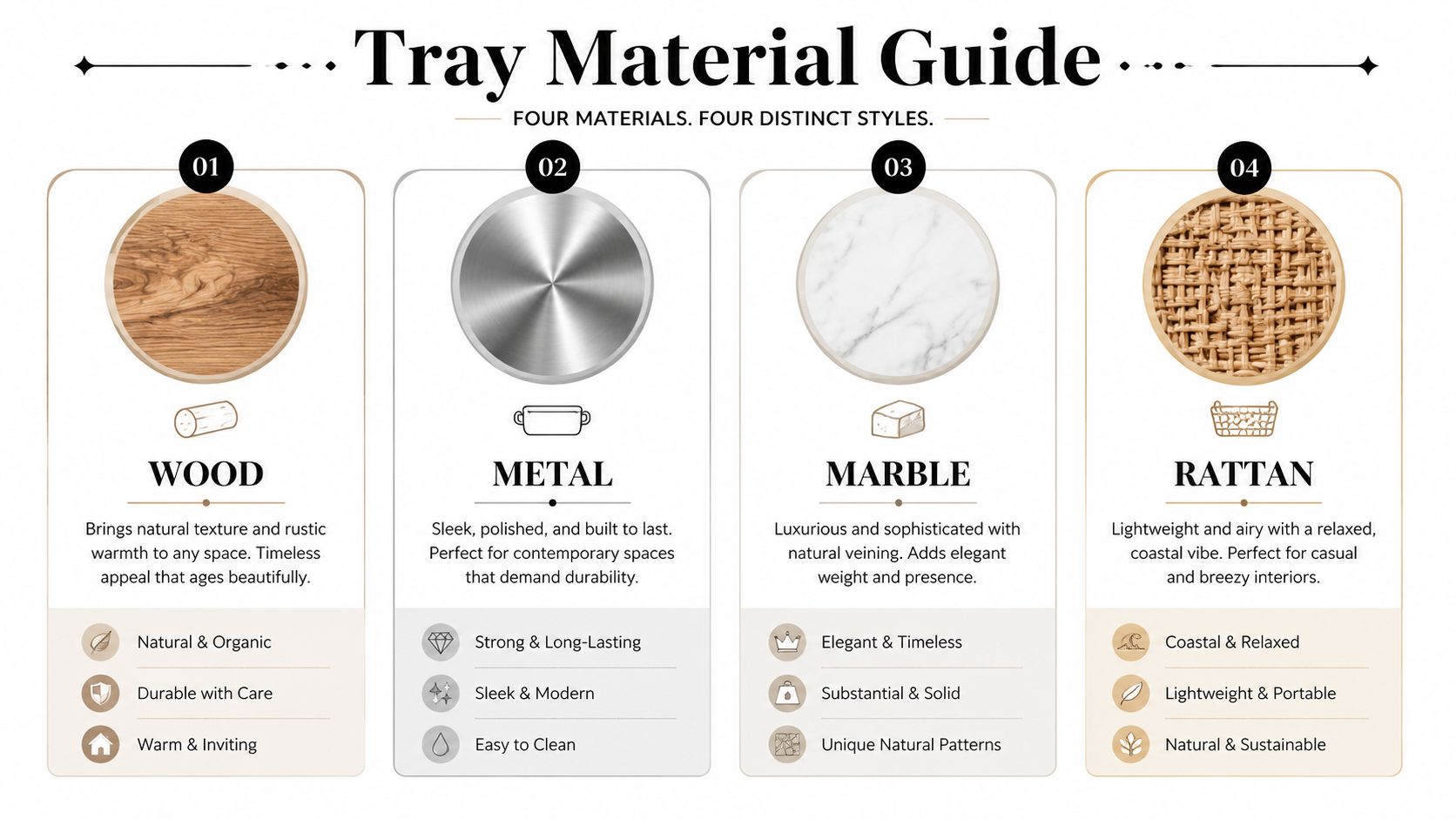
How each material changes the look
Wood is usually the easiest material to live with. It brings warmth, softens harder surfaces, and fits almost any room. In homes around Orlando, wood trays often work especially well with dining sets, upholstered ottomans, and mixed-material living spaces because they keep the room from feeling cold.
Metal trays lean more tailored. They can look polished and clean, especially in modern or transitional rooms. If the rest of your room already has metal lighting, hardware, or table bases, a metal tray can tie those details together. If you want a little guidance on balancing those finishes, this article on decorating with metal accents is useful.
Marble feels substantial and dressy. It's beautiful on a vanity, bar, or formal console, but it's also heavier. That weight can be a plus when you want a tray to stay put, and a drawback if you plan to move it often.
Rattan and woven materials bring a relaxed, coastal note that suits many Florida interiors. They're light, casual, and easy to style with greenery, ceramic pieces, and natural textures.
Decorative Tray Material Comparison
| Material | Best For (Style) | Durability | Florida Humidity Factor |
|---|---|---|---|
| Wood | Traditional, farmhouse, transitional, organic modern | Strong when well made | A solid choice indoors when properly finished |
| Metal | Modern, industrial, glam | Durable surface, may show scratches over time | Generally fine indoors, but finish quality matters |
| Marble | Formal, elegant, layered luxury | Heavy and substantial | Works well indoors, but weight limits portability |
| Rattan | Coastal, casual, relaxed Florida style | Lighter-duty feel | Good for dry indoor use, but keep away from excess moisture |
What works best for long-term value
If you want a tray that looks better with age and fits a wide range of rooms, wood is often the smartest choice. That's one reason we often recommend American-made and Amish-crafted wood pieces for homes that need staying power, not quick trend appeal. Brands such as Mavin and Simply Amish are known for craftsmanship that matches that mindset.
A tray should feel stable in your hands and quiet on the table. If it wobbles, flexes, or feels hollow, you'll notice it every time you use it.
There's also room for unusual natural materials when the setting is right. If you enjoy one-of-a-kind pieces and want to see how dramatic stone-like texture can become a decorative object, the Astro West petrified wood collection is an interesting example of how material alone can create presence.
A quick note on function
Some trays are made for decor first. Others are built for real serving. Verified product standards for heavier paper serving trays note 250+ GSM construction, medium dimensions around 16.25" x 12", and load-bearing in the 15 to 25 pound range for catering use, while wood trays are valued for natural thermal regulation and anti-microbial properties in food service settings, according to this overview of decorative serving tray materials and durability.
That doesn't mean every home tray needs technical specs. It does mean you should decide early whether your tray is mostly for styling, frequent serving, or both.
Finding the Perfect Fit with Size and Shape
The wrong size tray is one of the fastest ways to make a surface feel awkward. Too small, and it looks like an afterthought. Too large, and it takes over the furniture.
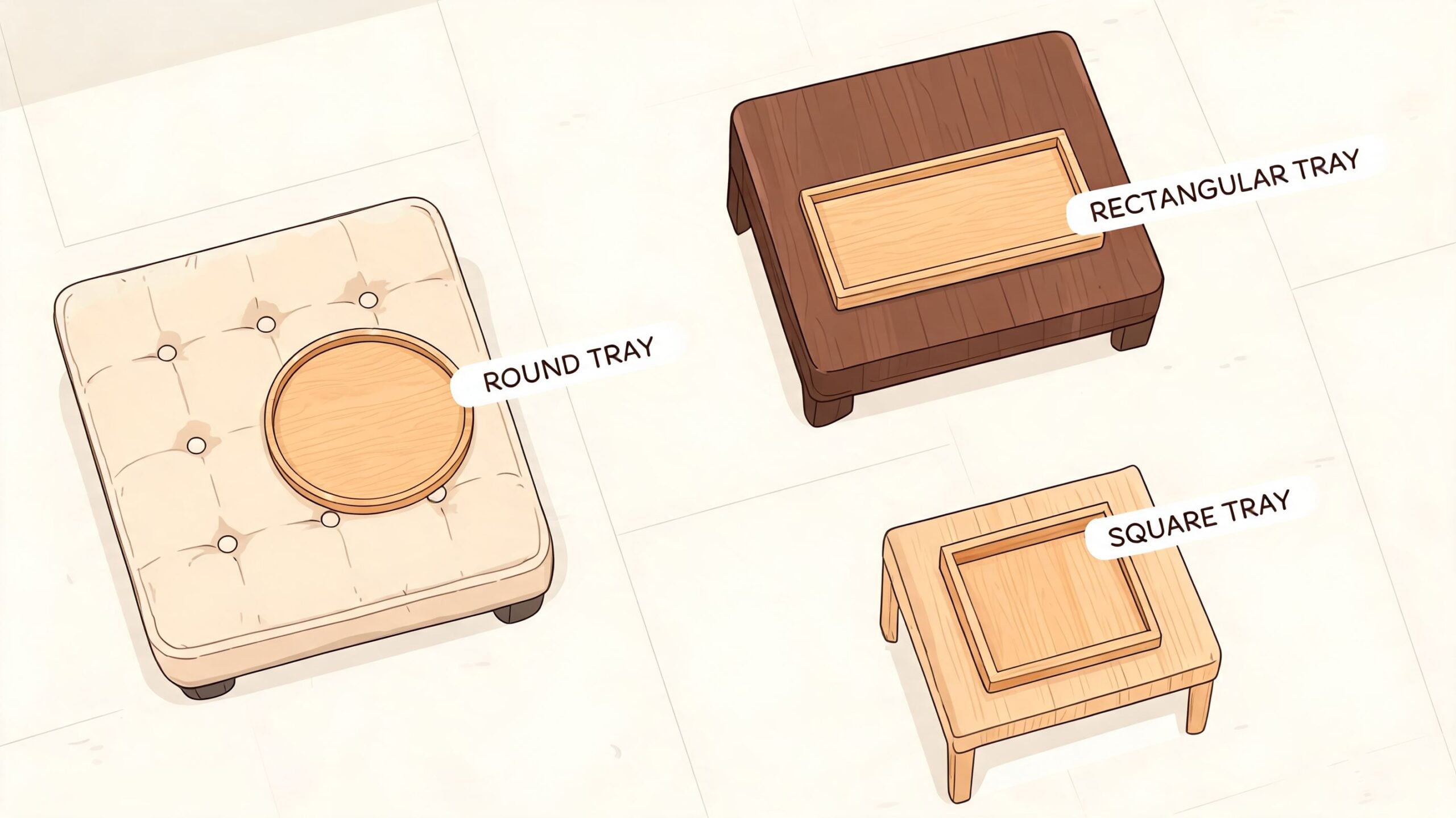
Start with the furniture shape
Match the tray shape to the surface first. That solves most sizing mistakes.
- Round table or round ottoman usually looks best with a round tray
- Long console or rectangular coffee table usually wants a rectangular tray
- Square ottoman can handle square or round, depending on whether you want a softer or sharper look
- Narrow dresser or sideboard often benefits from an oval or rectangular tray that follows the length without feeling rigid
If you're shopping before you measure, pause and take dimensions first. A few minutes with a tape measure saves a lot of guesswork. This guide on how to measure furniture correctly is a helpful refresher if you want to be precise.
Use size standards as a starting point
Verified sizing guidance for trays is straightforward. Small trays are 9 to 12 inches, medium trays are around 11" x 16", and large trays are 16+ inches. The same guidance notes that a raised edge of at least 0.75 inches helps keep items from sliding off, as outlined in this article on serving tray types and sizing.
That's useful because homeowners often ask, “What does medium mean?” In practical terms:
- A small tray works on a nightstand, vanity, or entry table.
- A medium tray fits many coffee tables and can handle casual snacks or drinks.
- A large tray works best when the tray itself is part of the statement.
Don't size the tray only to what goes on it. Size it to the furniture under it.
The easiest sizing rule for everyday decorating
Leave breathing room around the tray. You want enough open surface so the table still shows, especially if the table material is attractive. On an ottoman, that open margin also keeps the tray from looking crammed and leaves room for feet, folded throws, or books nearby.
A raised edge matters more than many people expect. On a tray that will carry glasses or small bowls, that lip gives you a little forgiveness. If you've ever had a drink slide near the edge while walking from the kitchen to the living room, you know why that detail matters.
Styling Your Decorative Serving Tray Like a Pro
Styling gets easier once you stop trying to fill every inch. A decorative serving tray usually looks better with a few purposeful pieces than with a crowded arrangement.

A living room setup that always works
On a coffee table in a Longwood family room, try a simple mix of three elements: something tall, something low, and something practical. That might be a small vase, a candle, and a box for remotes. The tray pulls those items into one neat composition so the room feels finished, even on a busy weekday.
A round tray can soften a rectangular coffee table. A rectangular tray can bring order to a large upholstered ottoman. If the table already has a strong grain or dramatic top, keep the tray contents lighter so the surface still gets some attention.
Grouping objects on a tray makes the table easier to clean, easier to restyle, and easier to live with.
If you'd like more tabletop arrangement ideas, this guide to decorating a coffee table like a pro pairs well with tray styling because the same principles apply.
Entryways and dining tables need a different approach
An entry tray should work harder than a living room tray. It needs to look good, but it also has to catch daily clutter. A shallow wood or metal tray with enough room for keys, mail, and sunglasses usually does the job better than an ornate piece with lots of texture.
On a dining table, the tray should be easy to move. That's the key mistake people miss. If your centerpiece is too loose, you have to clear each item one by one. If it's all gathered in a tray, you can relocate the whole arrangement in one trip when guests sit down.
Why multi-use trays make sense in Orlando homes
Many homes and condos around Orlando need pieces that can do more than one thing. Verified trend notes show rising interest in multi-functional serving trays, especially pieces that shift from dining use to office use or act as stackable organizers, as described in this overview of decorative tray trends and multi-use demand.
That trend makes practical sense. A tray on a console can hold mail during the week and drinks on the weekend. A tray on an ottoman can corral remotes in the evening and become a temporary work surface the next morning.
A simple formula for better styling
- Add height with a small vase, branch, or candlestick
- Include function with coasters, a box, or a bowl
- Mix textures such as wood, ceramic, glass, or woven material
- Leave open space so the arrangement can breathe
- Make it movable if the tray sits on a dining table or ottoman
If you like to plan layouts before buying accessories, tools that help create to-scale staging floor plans can make it easier to test proportions, especially in condos or smaller homes where every surface does multiple jobs.
A Buyers Guide to Finding Lasting Quality
A decorative tray doesn't have to be flashy to be well made. In fact, the best pieces often show their quality in quieter ways.
Start by picking it up. It should feel balanced. Set it down on a flat surface. It should sit level. Check the handles or cutout grips. They should feel secure, not decorative-only.
What to inspect before you bring one home
- Base stability matters first. A tray that rocks on the table will annoy you every time you use it.
- Handle attachment should feel firm and intentional, especially on larger trays.
- Finish consistency should look even, without rough patches, thin spots, or sloppy edges.
- Edge construction deserves a close look. Corners and seams often reveal whether the tray was made with care.
- Weight and feel should match the material. A tray should never feel flimsy for its size.
Why craftsmanship matters over time
Vintage hand-painted trays from the 1920s through the 1950s are still collectible today, and their value depends heavily on condition and preservation. That's a useful reminder that well-made decorative pieces can last for decades and become part of a home's story, as shown in this look at collectible vintage serving trays.
That same idea applies when you're shopping now. Buying a better tray once is often smarter than replacing a weaker one repeatedly.
Look for the signs of patience in the making. Clean edges, a level base, and a finish that feels complete usually tell you more than a trendy pattern ever will.
For shoppers who want to understand why quality home pieces cost more upfront, this article on the true cost of quality furniture explains the bigger picture well. It's the same logic with accessories. Better materials and better construction usually show up in daily use.
If you prefer to shop value with a long view, that's also where a local showroom can help. You can compare weight, finish, and scale in person instead of guessing from a screen.
Our Custom Solutions and Your Final Touches
Once you've chosen the right decorative serving tray, a little care goes a long way. Wood trays should be kept dry and wiped promptly after spills. Metal finishes do better when you avoid abrasive cleaners. Marble needs a gentle touch and a little awareness around anything that might stain. Woven trays should stay in indoor spaces where they won't be exposed to excess moisture.
Sometimes, though, the right tray doesn't exist off the shelf. Maybe your ottoman has unusual proportions. Maybe you want a specific finish to sit comfortably with a Stickley dining room, a Canadel breakfast nook, or a Mavin accent piece. Maybe you need a tray that works for both a home office and entertaining in the same room.
That's where custom options become useful. At Slone Brothers Furniture, our showroom in Longwood serves Central Florida homeowners who want coordinated home décor, American-made quality, Amish craftsmanship, and custom-order flexibility that national chains often can't match. Our in-house Design Team also helps with space planning, which matters when a small accessory needs to work hard in a room.
A tray may be a finishing touch, but finishing touches change how a home feels. They add order, warmth, and intention. In many rooms, that's the difference between “almost done” and “this feels right.”
Ready to find the perfect piece for your home? Visit the Slone Brothers Furniture showroom in Longwood, FL, and let our design experts help you get started!