

Beige Leather Sectional: Beige Leather Sectional: Orlando’s


Afternoon light has a way of telling the truth about a living room. In many Central Florida homes, that's the moment people realize their current sofa is too dark, too small, too worn, or not working with the way the room is used.
A beige leather sectional solves several problems at once. It gives you generous seating, a neutral foundation, and a look that can shift with your style over time. It can also be one of the biggest furniture decisions you make, especially if you're furnishing a new home in Lake Mary, updating a family room in Sanford, or trying to make an open-concept Orlando layout feel finished.
We've helped local homeowners make these choices since 1980, and the same questions come up again and again. Will it fit? Which leather holds up better? Why does one beige look warm and another look gray? And how do you choose something that still makes sense years from now?
Your Guide to the Perfect Beige Leather Sectional
You walk into your living room at the end of a long Florida day, kick off your shoes, and want one place that feels calm, durable, and easy to live with. That is the job a beige leather sectional can do well. It gives a room structure, adds generous seating, and creates a neutral base that still feels finished.
In many Central Florida homes, that matters more than it might in other parts of the country. Strong sun can change how color reads from morning to evening. Humidity affects how materials age. Open layouts also ask more from one furniture piece, because the sectional often has to connect the TV area, conversation area, and everyday traffic path.
A beige leather sectional works a lot like the foundation color on a home exterior. It is not there to steal attention every time you walk in. It is there to support everything around it, from wood tones and tile floors to patterned rugs, blue-green accents, and seasonal decor.
The sectional format also gives you more flexibility than a standard sofa-and-loveseat setup. These pieces are built in sections, so the overall shape can be fitted to the room and to how your household lives. That is especially helpful here in Central Florida, where one family may need a relaxed media room for nightly use, while another wants polished seating for entertaining in an open-concept space.
At Slone Brothers, we have found that buyers usually get clearer answers once they stop treating color as the first decision. A beautiful beige swatch can catch your eye online, but the better starting point is how the room needs to work day to day. If the sectional interrupts a walkway, feels oversized for the space, or comes in a leather finish that does not suit your household, the color will not save the choice.
A simpler order works better:
- Start with how the room is used. Daily family space, quieter sitting room, or one room doing both.
- Choose the right overall shape. The sectional should support conversation, TV viewing, and normal movement through the room.
- Compare leather types and finishes. Some are better suited for active households, pets, or strong natural light.
- Refine the beige tone last. Warm beige, sandy beige, taupe-beige, and gray-beige can all work, but only after the piece itself makes sense.
That sequence helps you avoid a common mistake. People fall in love with a color sample, then try to force the wrong sectional to fit their home. It is a little like picking paint before you know the room's lighting. You can do it, but the odds of a mismatch go up fast.
If you are still sorting out the basics, our guide to choosing living room furniture for your space and lifestyle is a helpful place to start before you narrow the field.
Mastering Sizing and Room Planning for Florida Homes
Saturday afternoon in a Central Florida home can make a room tell the truth fast. Kids cut through the living area for snacks, someone opens the slider to the patio, the dog claims the corner by the window, and a sectional that looked perfect online suddenly feels like it is sitting in the middle of every path people use.
That is why room planning comes before style details. In open layouts around Orlando, Longwood, and the surrounding areas, a sectional does more than fill a wall. It helps organize circulation, conversation, TV viewing, and the visual balance between the living room, kitchen, and dining space.
Measure the room before you shop
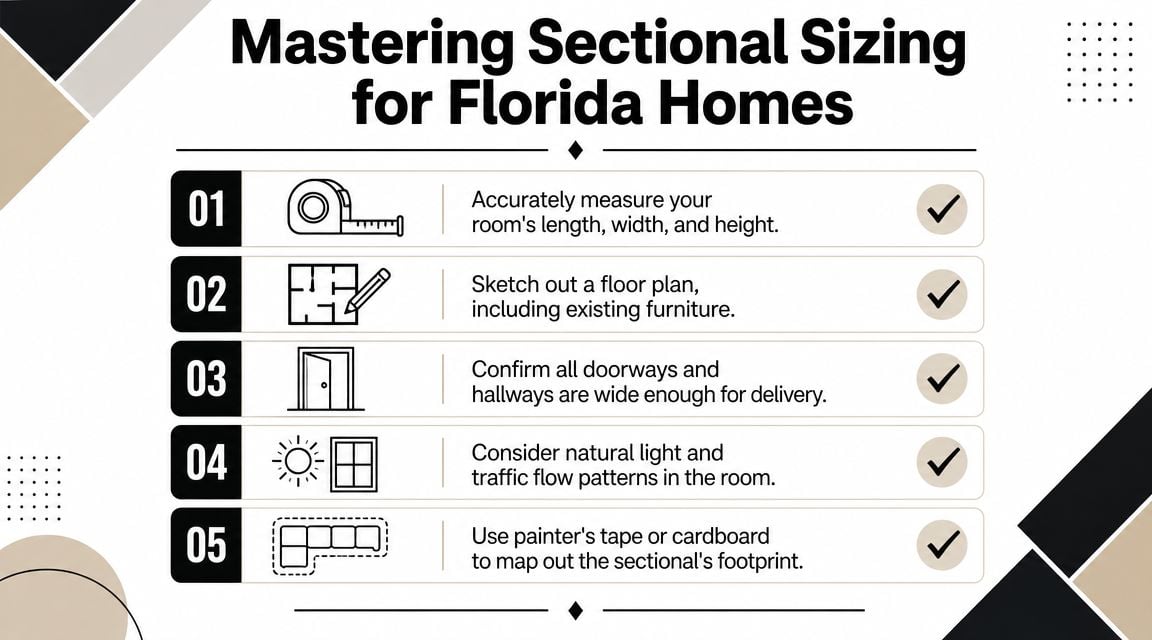
Start by measuring the full room, then the zone the sectional will occupy. Those are not always the same thing. A large open-concept room may have plenty of square footage on paper, but the usable furniture area shrinks once you account for walkways, door swings, windows, floor outlets, vents, and media storage.
Then measure the delivery path. A sectional that fits the floor plan still has to make it through the front door, down the hall, around a stair turn, or into an elevator. This step saves a lot of frustration.
For a practical step-by-step method, use our guide on how to measure a room for furniture.
A simple checklist helps:
- Record the room dimensions. Include length, width, and any fixed features that reduce placement options.
- Mark daily traffic routes. Keep the paths people use clear, especially between the kitchen, hallway, patio door, and TV area.
- Measure nearby pieces. Coffee tables, side tables, recliners, and consoles all change how roomy the sectional feels.
- Confirm entry access. Check door openings, hall widths, corners, and stair landings before you place an order.
Think in footprints, not just width
Width gets the attention, but footprint decides whether the room works. A sectional works like a parking space drawn on your floor. The overall width matters, but the depth, return, chaise projection, and arm thickness determine how much usable room remains around it.
That is where many homeowners get tripped up. Two sectionals can both be labeled as large, yet one may sit neatly along the edge of a room while the other pushes into a main walkway because of a deeper chaise or bulkier arm.
Orientation matters just as much. A left-facing chaise can suit one floor plan perfectly and create a bottleneck in the mirror-image version of the same home. In Central Florida homes with long sightlines from the kitchen into the living area, the wrong orientation can also block the room visually, even if the dimensions technically fit.
Leave enough open floor around the sectional so the room feels comfortable on a regular weekday, not only in a staged photo.
Test the layout at full scale
Painter's tape is one of the best planning tools you can use. Outline the sectional on the floor, including the chaise or corner return, then walk the room as you normally would. Sit where the coffee table will go. Open the patio door. Pass through with a laundry basket. That quick test often answers sizing questions better than a spec sheet.
Cardboard works too, especially for checking how far a chaise extends into the room. It gives you a real sense of where knees, feet, and walkways will land once the piece is in place.
Florida light changes this decision too. Strong sun from large windows and sliders can make a packed room feel even tighter by drawing attention to glare and heavy silhouettes. A sectional that leaves breathing room usually feels calmer and more natural in bright spaces.
If you are between two sizes, the better choice is usually the one that preserves movement and sightlines. Our in-house design team helps homeowners sort that out every day, and custom-order options can make the difference when a standard size is close, but not quite right.
Decoding Leather Types and Protective Finishes
“Leather” sounds like a single material, but it isn't. Two beige leather sectionals can look similar at first glance and perform very differently over time. The biggest variables are the leather grade, the finish, and the construction underneath.
That matters even more with lighter upholstery. Beige reads soft and airy, but it can also reveal wear, transfer, and uneven cleaning sooner if the material choice isn't right.
What the main leather terms really mean
Here's the simplest way to think about the common categories:
| Leather type | What it means for you |
|---|---|
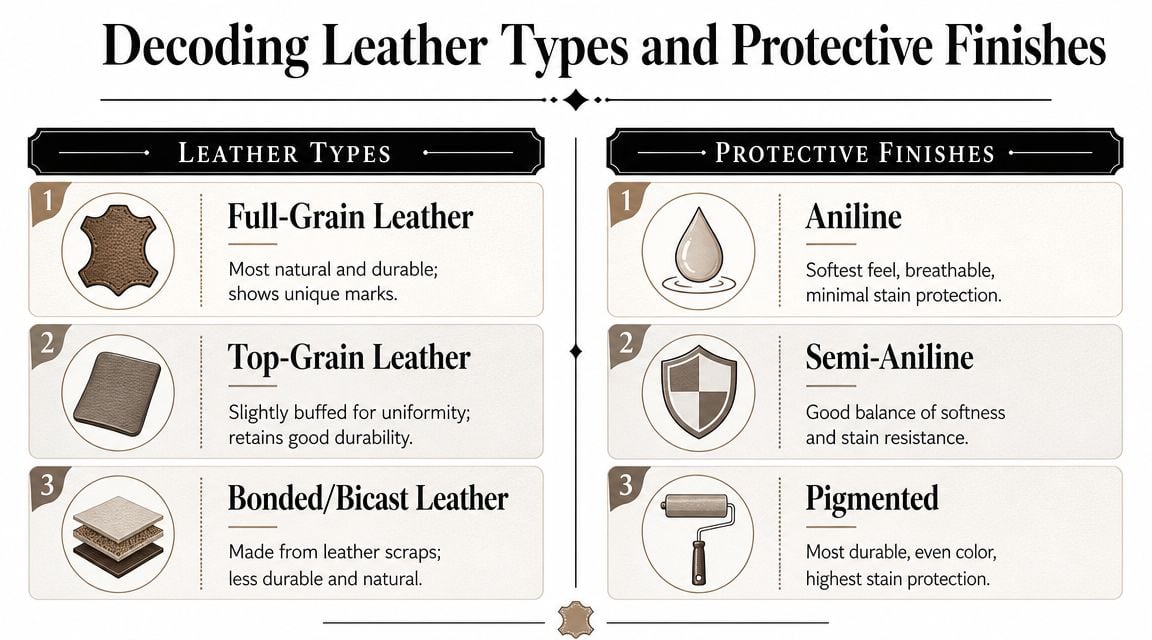
| Full-grain leather | Keeps more of the hide's natural character and tighter fiber structure |
| Top-grain leather | Refined for a more uniform appearance while still offering strong durability |
| Bonded or bicast leather | A lower-tier option that doesn't perform like higher-quality genuine leather |
Premium models often pair full-grain or top-grain Italian leather with kiln-dried solid wood frames and high-density cushions, as shown in this premium sectional listing. Those parts work together to resist wear, prevent warping, and maintain shape in a high-use room.
If you want a deeper breakdown of upholstery terminology, our comparison of bonded vs genuine leather clears up where many buyers get tripped up.
Finish matters just as much as the hide
The leather's finish changes how it feels and how it lives in your home.
- Aniline leather has a softer, more natural look, but it offers less surface protection.
- Semi-aniline leather balances softness with some added protection.
- Pigmented or protected leather usually gives you the most even color and the strongest resistance to daily wear.
For a busy household, this is often the turning point in the decision. A beautiful light beige aniline sectional may appeal in the showroom, but a protected finish can make more sense if kids, pets, or heavy daily use are part of the picture.
The color catches your eye first. The finish determines whether you'll still be happy with that color later.
Don't ignore the frame and cushion core
A beige leather sectional isn't only about the visible surface. The frame and support system decide whether the piece still sits well years from now.
Look for these construction signs:
- Kiln-dried hardwood frame. This helps reduce moisture-related warping and supports long-term joint stability.
- High-density cushioning. Better density helps slow seat breakdown and maintain the sectional's posture.
- Modular replacement options. If one piece gets harder use than the rest, replaceable modules can extend the life of the whole sectional.
Custom-order brands can make a real difference. For buyers comparing options such as American Leather or Smith Brothers, the conversation shouldn't stop at color. It should include the leather type, the finish, the frame, and the comfort construction.
Finding the Perfect Undertone for Your Beige Sectional
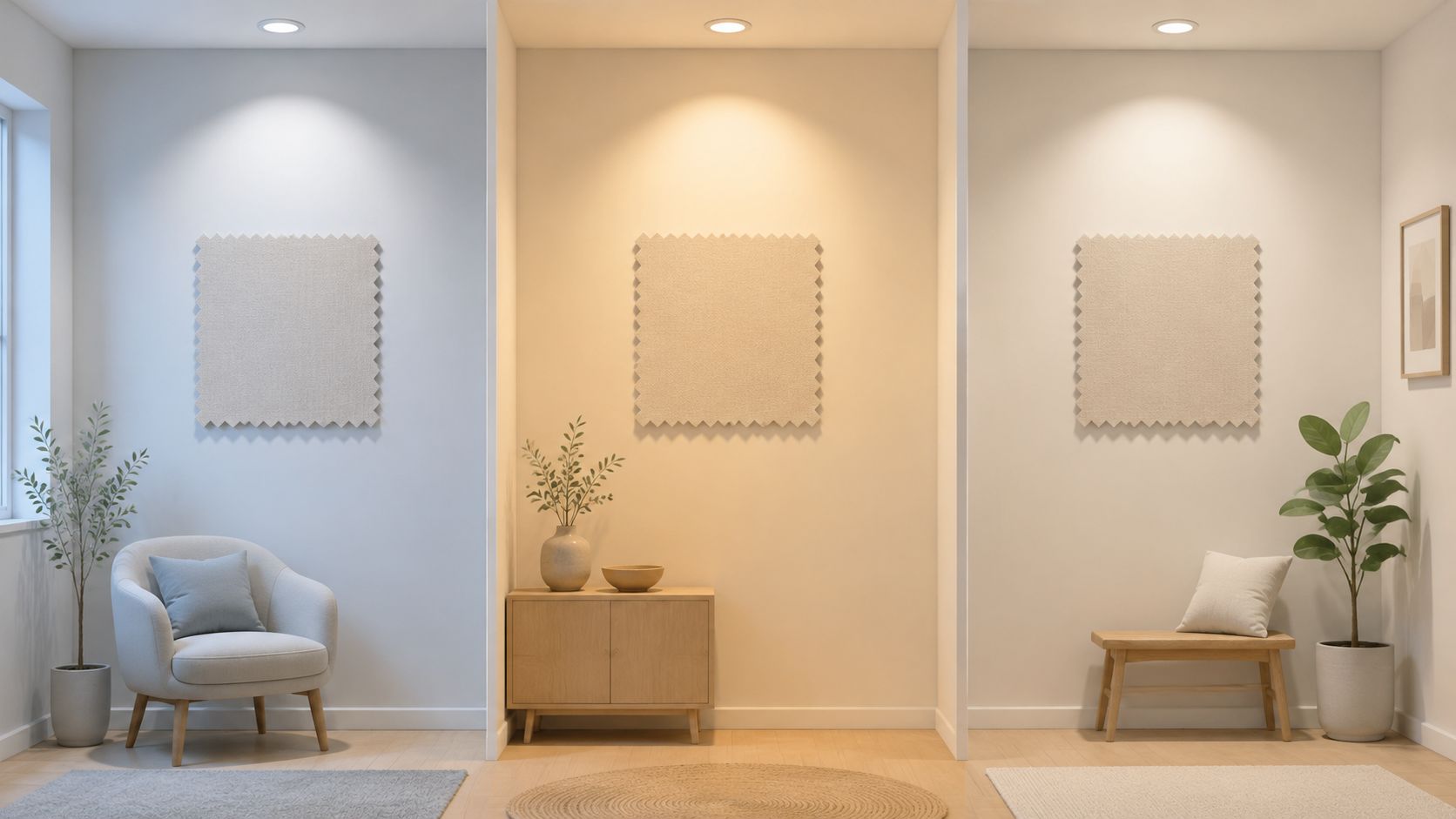
Beige sounds simple until you put three swatches side by side. One looks creamy. One looks sandy. One suddenly reads almost gray. That's why choosing a beige leather sectional by website photo alone rarely ends well.
In Central Florida, light shifts dramatically throughout the day. Morning light can make a beige look cool and crisp. Late afternoon sun can pull out yellow or gold notes you didn't notice in the showroom.
Beige isn't one color
Most buyers do better when they stop asking, “Do I want beige?” and start asking, “Which beige works in my house?”
A few common undertone directions:
- Warm beige works well with cream walls, honey wood tones, and relaxed coastal or transitional rooms.
- Neutral beige gives you more flexibility if your finishes are mixed and you don't want the sofa pulling too warm or too cool.
- Greige or sand-toned beige can make more sense with cooler flooring, black accents, or contemporary interiors.
This is also why a swatch that looked perfect under showroom lighting can feel off at home. Paint color, flooring, window direction, and even nearby greenery outside the windows can shift what your eye sees.
Test it where you live
The smartest move is to bring samples into your actual room and check them at different times of day. Hold them next to your flooring, wall color, rug, and wood furniture. Then look again after sunset with your lamps on.
That process usually answers questions faster than online browsing ever will.
A helpful companion read is an expert's guide to the perfect color palette, especially if you're trying to connect a new sectional to existing finishes.
A beige leather sectional should calm the room, not fight with it.
Why local guidance helps
This is one area where in-person design help earns its keep. A local design team can spot undertone conflicts quickly, especially in bright Florida homes where daylight is a major design factor.
If your home in Longwood or Lake Mary gets strong sun on one side of the room, the “right” beige on a product page may not be the right beige in your space. Swatches, side-by-side comparison, and real room context make the decision much clearer.
Customizing Configurations for Your Family's Needs
Saturday afternoon in a Central Florida family room usually looks the same. One person wants a clear view of the TV, kids spread out with snacks, the dog claims a corner cushion, and someone is still trying to keep the path to the patio open. A sectional has to support all of that without making the room feel crowded.
That is why configuration often matters more than shoppers expect. Color sets the mood, but layout controls how the room works every day. If the chaise blocks traffic or the corner seat never gets used, you will notice it far longer than you notice the exact shade of beige.
Start with the room's job
Before you choose a shape, decide what the sectional needs to do.
A family that hosts movie nights has different needs than a couple furnishing a formal sitting room. A home in Heathrow with a wide open great room may handle a larger return or chaise. A townhome in Winter Park may need a tighter footprint and cleaner traffic flow. In many Florida homes, you are not just placing seating. You are preserving access to sliders, lanai doors, and open views from one space to another.
A good rule is simple. Keep walkways comfortable, keep sightlines open, and avoid buying extra pieces you will only walk around.
Match the configuration to real-life habits
L-shape
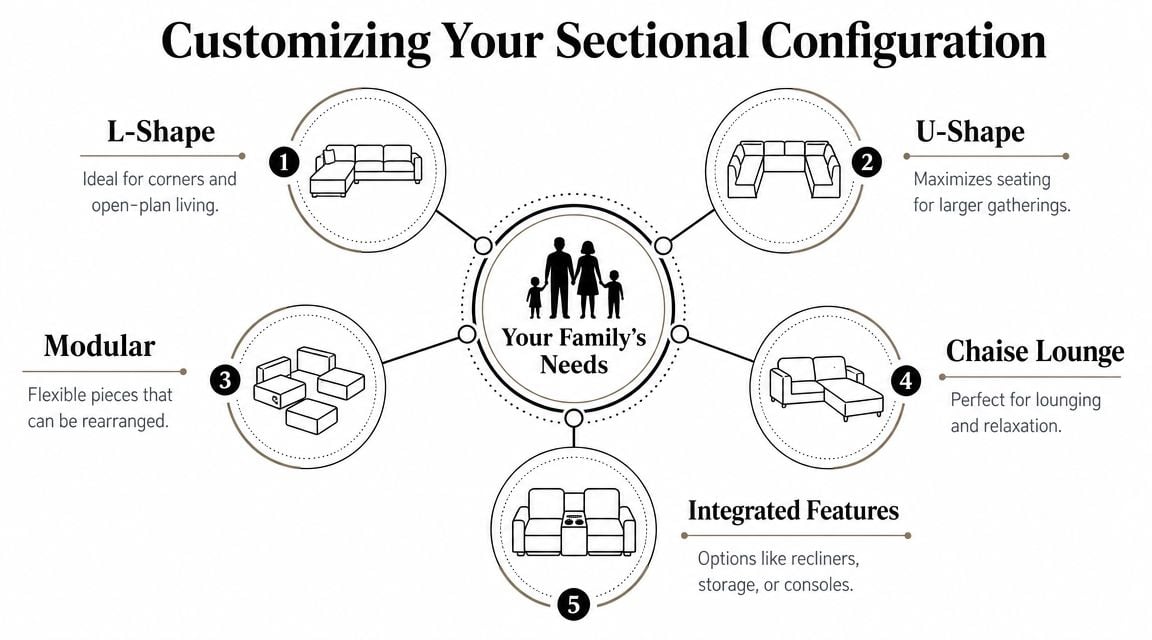
An L-shape works well for many open-plan homes because it defines the living area without closing it off. It gives you strong TV viewing and enough face-to-face seating for conversation. For families who want one sectional to do nearly everything, this is often the safest starting point.
Chaise layout
A chaise adds lounging space on one end, which can be great for reading, napping, or stretching out after a long day. It works best when that side of the room has enough depth and does not interrupt the natural route through the space. If your family cuts across the room to reach the kitchen or patio, the wrong chaise placement can feel like a parked car in the hallway.
U-shape
A U-shape suits larger rooms and people who entertain often. It pulls everyone into the same conversation zone, which can make a big family room feel more connected. But it needs enough breathing room around it. In many Central Florida homes, especially ones with views to the pool or backyard, a U-shape can start to block the openness that makes the room appealing.
Modular system
Modular sectionals are the most flexible choice. They work like building blocks. If you move, remodel, or want to flip the layout later, separate components give you more options than a fixed one-piece design. That flexibility is helpful for families whose needs change as kids grow or as a bonus room turns into the main hangout spot.
Then fine-tune the comfort
Once the overall shape makes sense, the smaller choices start to matter.
- Arm style affects both look and usable space. Slim arms can buy you a little more seat room in tighter homes.
- Seat depth changes posture. A deeper seat suits lounging, while a standard depth usually feels better for everyday sitting.
- Back height and cushion feel influence support. This matters if one family member likes a more upright sit and another wants to sink in.
- Consoles, cupholders, or power features can be useful in media rooms, but they are not always worth the space they consume.
- Leg finish and cushion shape help the sectional relate to your flooring, tables, and overall style.
Customization becomes especially valuable when your room has a specific challenge. Maybe you need the return on the opposite side, a shallower depth to protect a walkway, or firmer cushions that hold up better in a busy household. That is often the difference between a sectional that merely fits and one that feels made for the room.
If you are comparing leather options with kids, pets, or frequent guests in mind, our guide on how to protect leather furniture can help you connect configuration choices to long-term use.
Window placement also plays a role here. In rooms with strong afternoon sun, the best layout may be the one that keeps the most-used seats out of direct light while preserving comfort and traffic flow. Homeowners planning around heat and glare may also find The Drapery Company's energy saving guide useful.
At Slone Brothers Furniture, shoppers often compare custom-order possibilities from brands such as Bassett, Craftmaster, and Smith Brothers because those lines can offer more control over shape, scale, cushion comfort, and finishing details. That kind of in-person guidance helps when online shopping leaves you with a dozen floor plans open and no clear answer.
Practical Care for Your Leather in Florida's Climate
A beige leather sectional can be a smart family choice, but only if you're honest about your household. Many buyers worry about the same things. Will it show jean transfer? What happens with pets? Is Florida sun going to dry it out?
Those are the right questions.
A practical ownership guide should start with this: protected or pigmented leather generally resists stains better than more natural finishes, while lighter beige tones can show body oils, transfer, and dye migration more visibly. Placement also matters. Direct sun, HVAC vents, and busy family-room traffic can accelerate fading or drying, as explained in this leather sectional guidance.
Placement comes first
Before you think about cleaners or conditioners, look at where the sectional will live.
Try to avoid these spots:
- Direct sun exposure. Strong light can dry and fade leather over time.
- Air vents blowing directly on the sofa. Constant airflow can work against the leather's moisture balance.
- Tight paths near entry points. Repeated brushing from bags, denim, and daily traffic adds visible wear.
If your room gets strong afternoon light, window treatments can help protect both the leather and the comfort of the room. Homeowners comparing solutions may find The Drapery Company's energy saving guide useful for thinking through light control and shade options.
Everyday care that makes a difference
Leather care is usually simpler than people expect. The key is consistency.
- Wipe spills promptly. Don't let liquids sit, especially on lighter leather.
- Use a soft dry or slightly damp cloth first. Gentle cleaning is better than aggressive scrubbing.
- Follow the manufacturer's care guidance. Different finishes respond differently to products.
- Keep skin and fabric transfer in mind. Dark denim, some dyed fabrics, and oils from hands or hair can show faster on beige.
Our practical guide on how to protect leather furniture is a good reference if you want a maintenance routine that matches the type of leather you own.
Beige leather doesn't need perfect living conditions. It does need thoughtful placement and steady care.
What about kids and pets
A beige leather sectional can still work well in an active home. The trick is choosing the finish with your real lifestyle in mind, not the imagined one.
If your family uses the sectional daily for movies, naps, snacks, and dog cuddles, protected leather usually makes more sense than a more delicate finish. You may see the occasional mark or transfer, but that's different from the surface failing. Good material choice up front tends to prevent the bigger regrets later.
The Slone Brothers Difference an Investment in Quality
Fast furniture often looks appealing until you live with it. Cushions soften too quickly. Frames loosen. Surfaces stop aging gracefully and start looking tired. A well-made beige leather sectional belongs in a different category.
Leather sectionals are widely treated as long-life purchases, and with proper care a quality leather sectional can last over 20 years, supported by a sturdy hardwood frame, according to this article on investing in quality leather sectionals. The same source notes that high-end custom leather sectionals can range from about $3,000 to $25,000 depending on size, leather grade, and customization.
Why this purchase deserves a long view
A sectional is usually one of the largest purchases in the living room. It affects comfort, layout, and how the home feels when people gather. That's why value should be measured in years of use, not just the sticker price on day one.
For Central Florida homeowners, environment plays a role too. Humidity, airflow, and sun all influence how materials perform over time. If you're improving the room as a whole, not just the seating, resources like a game plan for South Florida humidity can help you think about the broader home conditions that affect comfort and furnishings.
What shopping local changes
Working with a local showroom gives you something online-only shopping can't. You can sit in the sectional, compare arm heights, study leather finishes in person, and get help sorting out fit before the piece arrives at your home.
That kind of support matters with a category this personal. Since 1980, we've worked with homeowners across Longwood, Orlando, Lake Mary, and Sanford who want lasting quality, custom-order flexibility, and practical design guidance instead of guesswork.
A beige leather sectional can be timeless, but only when the materials, scale, undertone, and layout all line up. When they do, the piece stops feeling like a risky major purchase and starts feeling like the natural center of the room.
Ready to find the perfect piece for your home? Visit the Slone Brothers Furniture showroom in Longwood, FL, and let our design experts help you get started!