
Guest Bedroom Furniture: A Central Florida Guide

You know the room. It's the spare bedroom that becomes a landing zone most of the year, then suddenly matters a lot when family books flights into Orlando, friends stay after a weekend visit, or grandparents come for a longer stretch. In Central Florida homes, that room often has to do double duty. It may be a quiet office in Longwood on Tuesday and a comfortable guest retreat by Friday night.
That's why guest bedroom furniture deserves more thought than “put a bed in there and call it done.” The right setup should feel welcoming for guests, but it also needs to make sense for the way you live. A room that looks good in photos but feels cramped, lacks storage, or sleeps poorly won't get the job done.
A well-planned guest room balances hospitality with practicality. It gives visitors a place to rest, read, charge a phone, and unpack a few things. It also respects the square footage you have, which matters in many Orlando-area homes where secondary bedrooms aren't oversized and every room needs to earn its keep.
Creating a Welcome Retreat for Your Florida Guests
In Central Florida, guest rooms tend to work harder than people expect. One week, you're hosting relatives who want a home base between park days. Another week, that same room is where you answer emails, wrap gifts, or store seasonal items. Good guest bedroom furniture starts with being honest about that reality.
Dedicated room or flex room
A key question is whether your guest room should be a dedicated bedroom or a hybrid space. As noted in this discussion of small guest bedroom ideas and flex room tradeoffs, homeowners often have to weigh the nightly comfort of a traditional bed against the space-saving benefits of a convertible solution.
That trade-off is where most good decisions begin.
If you host often, a real bed usually wins. Guests sleep better, the room feels more settled, and you won't be opening and closing a mechanism every time someone stays over. If you host only occasionally and the room serves another daily purpose, a multifunctional setup can be the smarter long-term choice.
Practical rule: Choose the room's identity before you choose the furniture. A room that tries to be everything at once often feels unfinished in every role.
What works in real homes
In many Lake Mary, Sanford, and Longwood homes, the best answer isn't extreme. It's a balanced setup with one strong sleeping solution and a few flexible supporting pieces. That might mean a smaller-scale bed with under-bed storage, or a guest room office where the sleeping furniture disappears cleanly when not in use.
A few real-world patterns usually work well:
- Frequent family visits call for a true bed, proper bedside lighting, and some drawer space.
- Holiday-only hosting can support a more flexible room, especially if floor space matters the rest of the year.
- Aging parents or grandparents usually need easier bed access, firmer support, and less bending or climbing.
- Homes with one spare room often benefit from furniture that looks finished every day, not only when guests arrive.
There's also a hospitality side to this. Preparing for overnight company isn't only about furniture. Good lighting, clear surfaces, fresh linens, and a few practical touches matter just as much. If you're working through the full checklist, this guide to preparing your home for guests is a useful complement to the design side.
The room should still serve you
The mistake I see most often is over-furnishing a guest room for an idealized version of hosting. People add pieces they think a bedroom “should” have, then end up with a room that's crowded and awkward for everyone.
A better approach is to ask three questions:
- Who stays here most often
- How long do they stay
- What does this room need to do when no one is visiting
Those answers shape everything that follows. Once that's clear, the furniture choices become much easier.
The Core Guest Bedroom Furniture Essentials
The foundation of good guest bedroom furniture is simple. Start with the pieces that support sleep, comfort, and basic function. Everything else is secondary.
Start with the bed frame
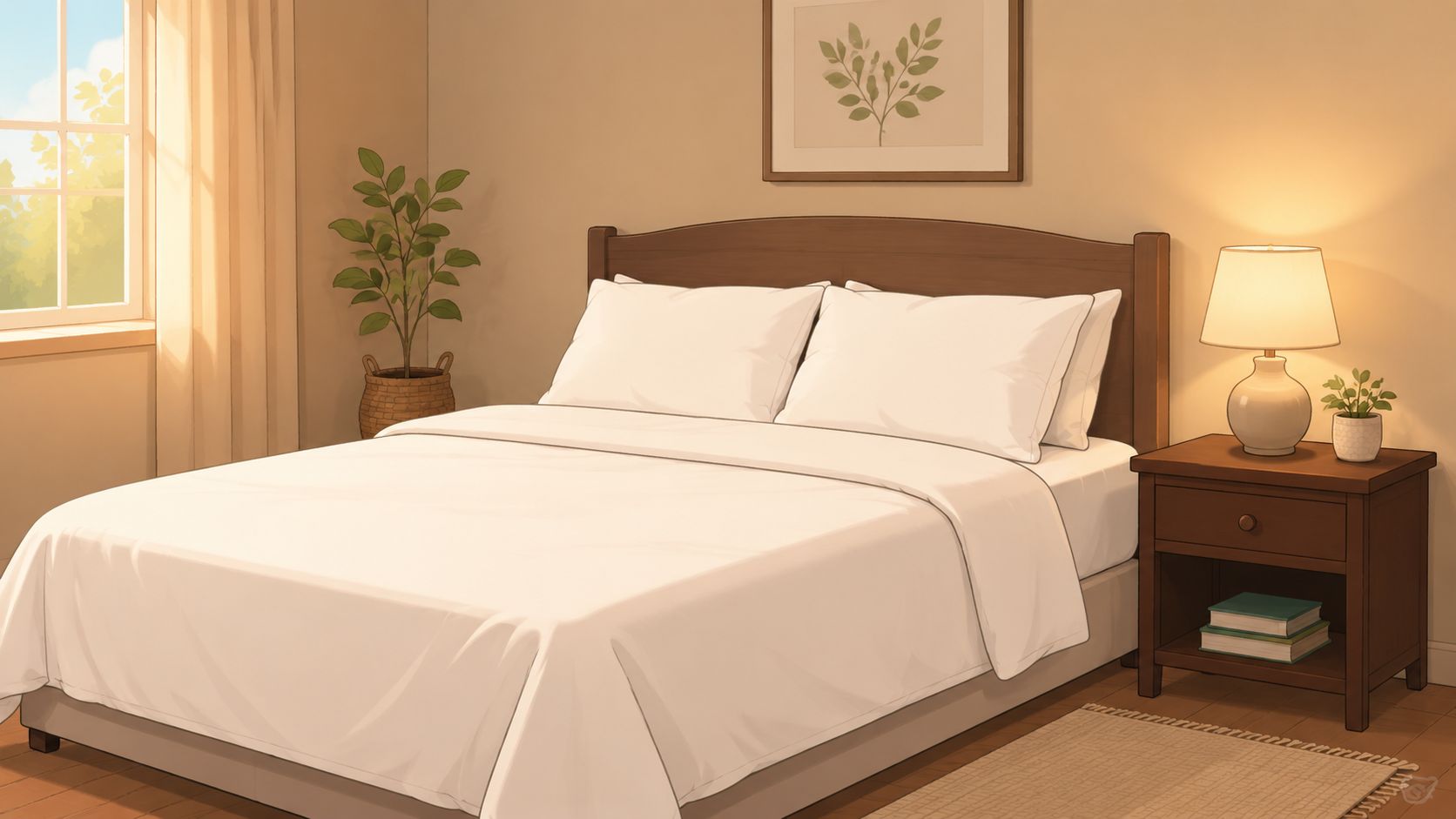
The bed is the anchor. That isn't just design advice. According to Mordor Intelligence, beds accounted for 36.55% of all bedroom furniture revenue in 2025, while wood held a 39.45% material share in the category, which reinforces why a durable wood bed remains such a practical core choice for most homes in this market, as shown in its global bedroom furniture market report.
That lines up with what works in real guest rooms. A sturdy wood bed frame has visual warmth, holds up well over time, and suits a wide range of styles, from coastal Florida looks to more traditional interiors. Metal can work too, especially in smaller rooms where a lighter visual footprint helps, but flimsy frames tend to show their weaknesses fast in guest spaces.
If you want a broader planning framework before picking pieces, this guide on how to choose bedroom furniture is a helpful starting point.
Nightstands are more important than people think
Guests need a place for the basics. A phone, glasses, a book, a bottle of water, medication, a watch. Even a beautifully furnished room feels inconvenient if there's nowhere to set things down.
If the room allows, use two nightstands. If space is tighter, one is still better than none. Drawers are useful, but an open shelf can also work well in a guest room because it keeps items visible and easy to reach.
A good nightstand should do three things well:
- Hold essentials without feeling cluttered
- Support lighting at a comfortable height
- Leave enough walking room around the bed
Lighting changes the whole experience
Overhead lighting alone rarely feels restful. In guest rooms, layered light makes a major difference. You want general light for unpacking and getting settled, then softer bedside lighting for reading or winding down.
A guest shouldn't have to get out of bed to turn off the only light in the room.
That usually means a bedside lamp, a wall-mounted reading light, or both. Easy switches matter. So does bulb warmth. Harsh light makes a room feel temporary. Softer light makes it feel considered.
Keep the essential list short
Before adding benches, accent chairs, or decorative chests, make sure these basics are right:
- A dependable bed frame that won't wobble or creak
- At least one usable nightstand within easy reach
- Bedside lighting that's comfortable and intuitive
- A mattress worth sleeping on, which deserves its own discussion
When those pieces are handled well, the room already feels welcoming.
Mastering Layout and Sizing in Your Space
A guest room can have beautiful furniture and still feel wrong if the layout is tight. In many Central Florida homes, the challenge isn't style. It's space planning.
Use the room size as your reality check
Cedreo reports that the average secondary bedroom in a U.S. home is around 10 by 12 feet, or 120 square feet, and that size can accommodate a queen-size bed plus a few smaller furniture pieces while maintaining circulation space, as described in its overview of average bedroom dimensions.
That's a very useful benchmark because plenty of guest rooms in the Orlando area fall right into that general range. If your room is close to that size, you can usually fit a queen, but the supporting pieces need to be chosen carefully. Oversized nightstands, deep dressers, and heavy footboards can make the room feel smaller than it is.
Measure first, then decide bed size
The order matters. Too many people choose the bed emotionally, then try to force the room around it.
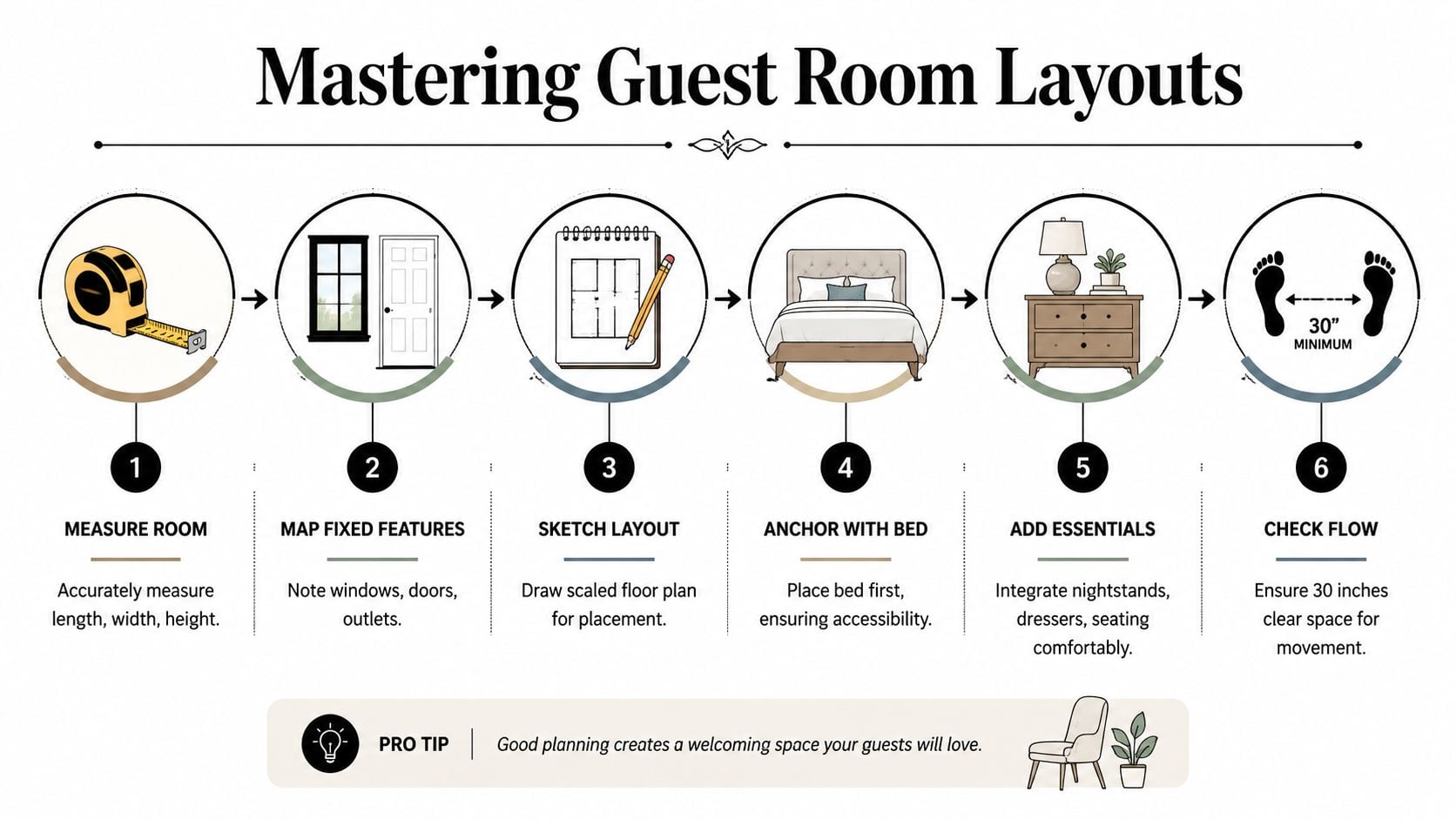
A practical layout process looks like this:
- Measure the walls and note the exact width and length.
- Mark fixed features like doors, windows, closet swings, and outlets.
- Place the bed first because it drives the whole room.
- Add only the storage you need.
- Walk the path mentally from the door to the bed, closet, and window.
For many guest rooms, a queen feels generous and familiar. A full bed can be a smarter choice when the room needs better movement around the sides. Twin and daybed setups work well for narrower spaces or homes that host children and solo travelers more often than couples.
If you want help visualizing options, this article on how to arrange bedroom furniture is a good companion to the measuring process.
Circulation is what guests notice
People don't usually comment on circulation space, but they feel it immediately. If a guest has to turn sideways past a dresser or squeeze between the bed and the wall, the room feels less comfortable no matter how pretty it is.
Leave enough room so the bed feels placed, not jammed in.
That principle often leads to better choices than chasing a complete matching set. In a compact room, one dresser may be enough. In some cases, a nightstand and a luggage bench are more useful than a bulky chest.
If your room has unusual dimensions, alcoves, or tight wall conditions, specialty sizing can help. This overview of an ideal custom size mattress is useful for understanding when standard sizes may not be the cleanest fit.
A simple planning table
| Room condition | Usually works well | Usually works poorly |
|---|---|---|
| Narrow room | Lower-profile bed, slimmer nightstand | Bulky bed with deep case goods |
| Shared office guest room | Bed plus compact storage | Large matching suite |
| Longer stays | Bed, nightstand, dresser or chest | Bed only, nowhere to unpack |
| Small footprint | Full or queen with restraint | Oversized queen setup with crowding |
Good layout is rarely about adding more. It's about giving every piece enough room to do its job.
Choosing a Mattress That Pleases Everyone
If the bed frame is the anchor, the mattress is the part your guests will remember. Visitors often won't notice your finish selection or drawer construction right away. They will notice whether they slept well.
Why medium-firm usually wins
For a guest room, the safest choice is usually a medium-firm hybrid mattress. It tends to satisfy the widest range of sleepers because it combines support with some surface comfort, rather than leaning too hard toward either extreme.
The technical guidance supports that approach. For guest comfort, a medium-firm hybrid mattress with 400 to 600 coils in a queen and a top foam layer density of 40 to 60 kg/m³ is ideal, and higher-density options can reduce pressure at the shoulders and lumbar area by 15 to 25 percent compared with lower-density alternatives, according to this breakdown of guest bedroom comfort essentials.
That's why hybrids tend to be easier to recommend for mixed households. They usually offer enough structure for back and stomach sleepers, but enough give for side sleepers who need better pressure relief.
What tends to work and what tends not to
A mattress for your own room can be highly personal. A mattress for guests should be more neutral.
Here's the practical version:
- Hybrid mattresses usually offer the broadest comfort range.
- Very soft memory foam can feel cozy at first but may not suit guests who prefer easier movement or firmer support.
- Overly firm mattresses can feel tidy in a showroom but often don't feel welcoming overnight.
- Aging guest mattresses are a common weak point. A nice bed frame can't rescue a tired sleep surface.
If you're comparing constructions and comfort levels, this guide on how to choose a mattress helps narrow the field without overcomplicating the decision.
Think beyond the mattress label
Comfort also depends on what surrounds the mattress. A supportive base, breathable bedding, and a pillow mix that isn't too specialized all help. If your guests tend to stay several nights, temperature balance matters too, especially in Florida where many visitors aren't used to our climate and indoor cooling patterns.
A guest mattress shouldn't be the leftover mattress from another room unless it still performs like a quality bed.
For broader wellness habits around rest, this article with tips for better, refreshing sleep pairs well with the furniture side of the conversation.
The crowd-pleaser test
When in doubt, ask whether the mattress can satisfy these common situations:
- A couple visiting for a weekend
- A solo guest with mild back sensitivity
- Someone who sleeps mostly on their side
- A guest who isn't familiar with your home and needs easy comfort right away
If the answer is yes, you're probably in the right zone. Guest rooms don't need a trendy sleep experiment. They need a dependable night's sleep.
Elevating the Room with Style and Storage
Once the basics are handled, the room starts to become memorable. At this stage, guest bedroom furniture shifts from functional to thoughtful. The room should still feel easy, but not bare.
Give guests somewhere to put their things
Storage is one of the quickest ways to make a guest room feel considerate. People don't want to live out of a suitcase on the floor if they're staying more than a night or two.
That doesn't mean you need a full suite. It means you should offer at least one clear storage option, such as:
- A dresser with a few empty drawers for folded clothes
- A luggage rack or bench so bags don't end up on the bed
- Hooks or a valet stand for jackets, robes, or tomorrow's outfit
- Under-bed storage if the room has limited case-good space
A lot of clutter problems disappear when the room gives guests a place to land. For more practical ideas, this resource on eliminating clutter with bedroom solutions is worth a look.
Add one piece that makes the room feel finished
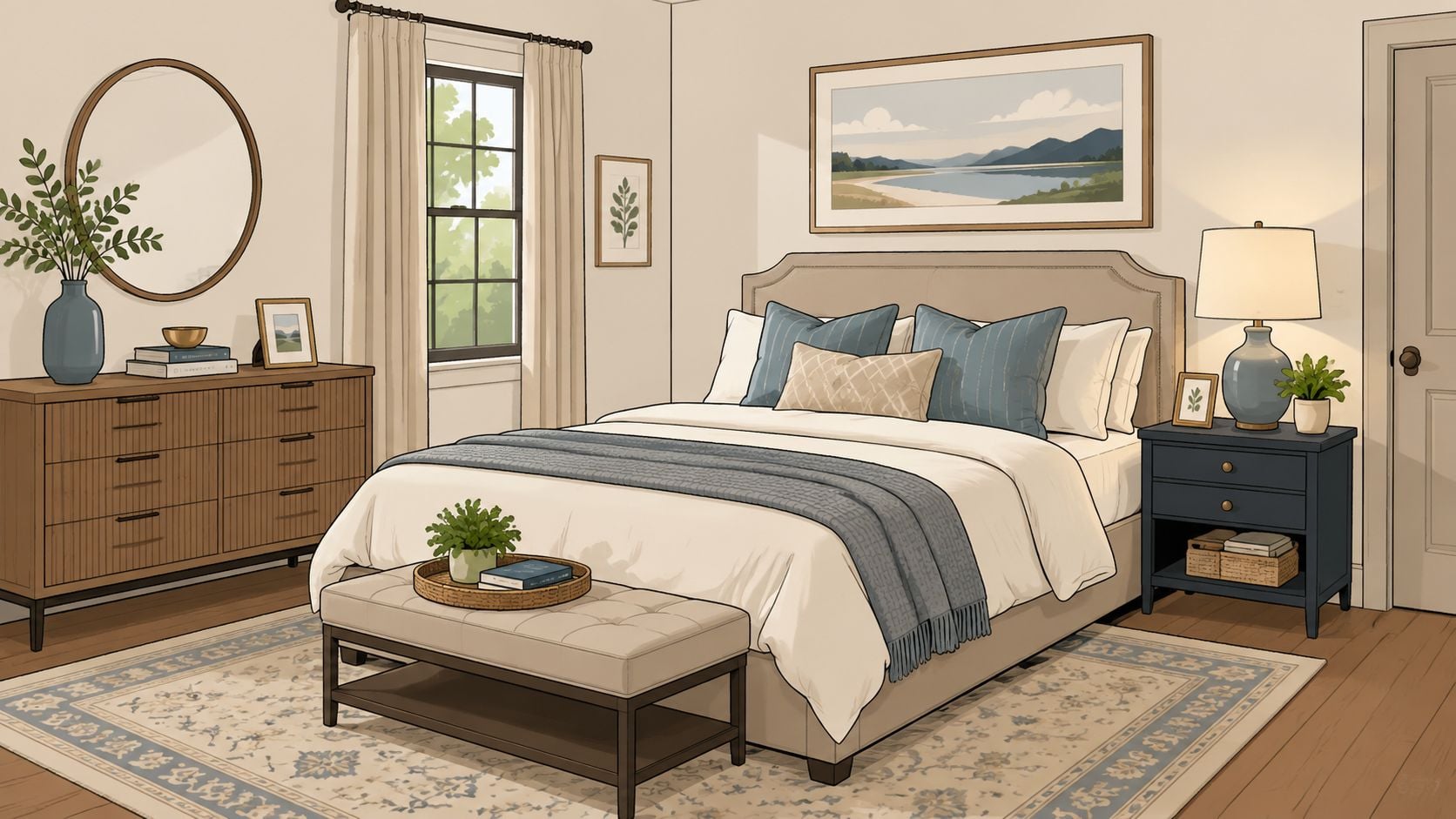
Not every guest room has space for a chair or bench, but when it does, that extra piece adds comfort in a way people immediately appreciate. A chair gives someone a place to sit while getting dressed. A bench at the foot of the bed gives shape to the room and catches an overnight bag without making the room feel messy.
This is also where craftsmanship matters. A guest room gets used intermittently, but that doesn't mean the furniture should be temporary. Well-made American-made and Amish-crafted pieces often make a lot of sense here because they hold up well and age gracefully. In the article body, one practical option homeowners sometimes consider is Slone Brothers Furniture, which carries bedroom pieces, mattresses, and design support relevant to guest-room planning in Longwood and the greater Orlando area.
Keep the style calm and locally appropriate
In Central Florida, guest rooms often look best when they feel light, breathable, and not over-decorated. Coastal touches can work beautifully, but the strongest rooms don't rely on themes. They rely on restraint.
A few style choices tend to age well:
- Natural wood tones that warm up the space
- Soft neutrals or muted greens and blues that feel restful
- Simple upholstered elements that soften harder surfaces
- A mirror, lamp, and artwork scaled to the room, not oversized for drama
Guests remember how a room felt. They rarely remember whether it matched a trend.
A quick level-up checklist
If the room has the bed, nightstand, and mattress in place, these additions usually deliver the most value:
| Priority | Why it matters |
|---|---|
| Dresser or chest | Lets guests unpack and stay organized |
| Bench or chair | Adds function without much complexity |
| Soft layered bedding | Makes the room feel complete |
| Simple decor | Gives personality without visual noise |
The goal isn't to decorate heavily. It's to remove the small inconveniences that make a guest feel temporary.
Smart Solutions for Multifunctional Guest Rooms
Not every home has the luxury of a spare bedroom that waits patiently for visitors. In plenty of homes around Orlando and Longwood, that extra room needs to earn its square footage every day. That's where multifunctional guest bedroom furniture becomes worth serious attention.
Comparing the main options
The right solution depends on how often people sleep there and what the room needs to do the rest of the time.
Sofa bed
A sofa bed makes sense when daytime seating matters. It's useful in a den, office, or bonus room where you want the room to feel like a living space most of the time.
The downside is familiar. Many sofa beds still compromise on sleep comfort compared with a real bed. They can be right for occasional overnight use, but they usually aren't my first choice for longer visits, older guests, or anyone who needs more consistent support.
Daybed with trundle
A daybed works well when the room needs a softer visual presence than a full bed. It can function almost like built-in seating and is especially practical for kids, teens, or homes that host one guest at a time but occasionally need room for two.
This option is often stronger than people expect. It can look polished, not improvised, as long as the bedding is handled well and the surrounding furniture doesn't crowd it.
If you're exploring this route, take a look at daybeds and trundle beds to see the different configurations that can fit smaller rooms.
Why wall beds have improved so much
The wall bed is usually the most efficient choice when you want a room to feel fully open by day and fully usable by night. Modern versions are very different from the clunky fold-down beds people remember.
According to this guide to creating a flexible guest room with wall-bed systems, modern wall beds use gas pistons rated for 20,000 to 30,000 cycles, can be operated with roughly 2 to 4 kg of force, and can support up to 300 kg when properly designed and installed. That matters because it turns the wall bed into a serious long-term furniture solution, not a novelty.
If a room has to be both a real office and a real guest room, a quality wall bed is often the cleanest answer.
Which option fits which household
| Room use | Often the better fit | Main trade-off |
|---|---|---|
| Daily office, occasional guests | Wall bed | Higher planning commitment |
| Den or media room | Sofa bed | Less consistent sleep comfort |
| Smaller bedroom with occasional second guest | Daybed with trundle | More casual look |
| Storage-heavy room with rare overnight use | Convertible seating plus storage | Hospitality can feel secondary |
The key is not to choose flexibility at the expense of usability. A multifunctional room should still feel intentional in both modes. If the sleeping setup feels like an afterthought, guests will feel it.
Your Local Partner for the Perfect Guest Room
The strongest guest rooms in Central Florida homes have one thing in common. They aren't designed around an ideal catalog image. They're designed around the people who use them.
Sometimes that means a dedicated bed, simple nightstands, and a mattress that can please almost anyone. Sometimes it means a room that works as an office most of the year but becomes a comfortable retreat when family visits. The right answer depends on your layout, your hosting habits, and how much flexibility your home needs.
That's why furniture selection works best when it's tied to real space planning. A bed that looks perfect on a showroom floor may be too visually heavy in a compact secondary bedroom. A convertible solution may sound efficient until you picture an older parent opening it night after night. Good choices come from matching the furniture to the room's actual job.
For homeowners in Longwood, Orlando, Lake Mary, and nearby communities, it also helps to work with people who understand local homes and local lifestyles. Since 1980, we've helped Central Florida families furnish bedrooms, guest rooms, and multifunctional spaces with an eye toward durability, comfort, and long-term value. That includes American-made and Amish-crafted options, custom-order flexibility when standard sizes or finishes don't quite fit, and guidance from an in-house design team when layout decisions get tricky.
If you're furnishing more than one room at once, that local perspective matters even more. Guest bedroom furniture doesn't exist in isolation. It needs to relate to the rest of the home, hold up over time, and feel like a smart use of your budget rather than a temporary fix.
A good guest room says welcome without trying too hard. It feels comfortable, useful, and calm. And when it's planned well, it works just as hard for you when the guests go home.
Ready to find the perfect piece for your home? Visit the Slone Brothers Furniture showroom in Longwood, FL and let our design experts help you get started!