
Elevate Your Home with Duck Hunting Decor


You walk into your home after a morning on the water, and the room doesn't quite match the life you live. Maybe the furniture feels too generic. Maybe the “hunting theme” pieces you've seen online look more like cabin-store novelty than something you'd want in a well-kept Orlando or Lake Mary home.
That's where duck hunting decor gets misunderstood.
Done poorly, it can feel cluttered and heavy. Done well, it feels grounded, personal, and distinctly American. It draws on one of the oldest forms of American folk art, the duck decoy, and translates that heritage into interiors that feel collected instead of staged. In Central Florida, where outdoor living and indoor comfort often meet in the same home, that balance matters.
Bringing the Outdoors In with Duck Hunting Decor
You come in from a wet Central Florida morning, set your hat on the console, and look around the room. The air outside smelled like reeds and lake water. Inside, the space should carry some of that memory, but in a way that still suits a polished Orlando home with well-fitted upholstery, good case goods, and daylight moving across the floors.
That is the primary goal of duck hunting decor.
The strongest rooms do not treat hunting as a gimmick. They treat it as heritage. In practice, that means borrowing the textures, materials, and quiet utility of the sport, then giving those references the same discipline you would give any well-designed interior. A carved decoy works like a bronze sculpture in a formal room. A worn game strap has the same visual role as old equestrian tack. The theme stays restrained, and the craftsmanship does the talking.
Many homeowners get tripped up by the word "decor" because it suggests novelty. In a refined room, the better starting point is atmosphere. You want a space with depth, honest materials, and a sense of place that feels tied to Florida water, weather, and tradition.
What the style should feel like
Aim for rooms with a few memorable pieces and enough open space around them to let each one matter. Use materials that gain character over time, such as wood with visible grain, leather with natural variation, linen, iron, and aged brass. Choose objects that show handwork or age, because patina gives hunting-inspired interiors credibility. Keep the palette comfortable in Florida light, with warm woods, muted greens, sand tones, tobacco leather, and softer backgrounds that prevent the room from feeling heavy.
Practical rule: If a piece still reads as handsome and well-made before anyone notices the hunting reference, it belongs in the room.
That is why a hand-carved decoy on a bookcase, framed marsh art above a sideboard, or waxed canvas on an accent chair usually lands better than slogan signs or novelty plaques. Good duck hunting decor should feel inherited, selected, and lived with.
It also helps to study how other sporting objects are used decoratively. The Magic Eagle deer decoy guide is focused on deer rather than waterfowl, but it is a useful reminder that field gear has shape, silhouette, and material presence. Those same qualities matter indoors, especially if you are choosing display pieces that need to feel intentional rather than ornamental.
Why it fits Central Florida homes
This approach suits homes around Longwood, Lake Mary, and Orlando because our interiors often blend relaxed living with better furniture. We want comfort, but we also want rooms that hold their value and age well. Duck hunting decor can support that goal when it is folded into rustic, transitional, or coastal-influenced interiors through texture and craftsmanship instead of obvious theme pieces.
That balance is especially important in Florida. Humidity exposes cheap veneers, weak joinery, and thin finishes fast. Well-built furniture and solid decorative pieces hold their shape better and continue to look appropriate as the room matures. If you appreciate that collected, grounded look, this guide to rustic design style offers a helpful starting point for pairing waterfowl references with furniture that feels substantial and lasting.
The room should feel settled. Like it belongs to someone who knows the water, values good workmanship, and wants a home that reflects both.
The Elements of Sophisticated Duck Hunting Decor
The quickest way to lose sophistication is to buy everything with a duck on it. The better path is to choose a few materials, colors, and motifs that subtly carry the theme.

Start with materials that age well
For wood decor, quality matters more than novelty. In premium duck hunting decor, woodworkers often choose oak or maple, with Janka hardness ratings typically around 1,200 to 1,500 lbf, because those hardwoods hold up well in humid homes. Quality layered construction can also reduce warping by up to 40% compared with single-plane carvings, according to this woodworking product reference.
That matters in Central Florida, where moisture can punish poorly made accents.
Look for pieces such as:
- Carved wall art in oak or maple where the grain is visible
- Solid wood boxes or trays that feel substantial in the hand
- Layered carvings instead of thin cutouts
- Leather accents with depth and natural variation rather than slick synthetic shine
Leather deserves its own caution. Many shoppers use “real leather” as a catchall, but durability and feel vary widely by grade and construction. If you're comparing upholstery or accent pieces, this explanation of bonded vs genuine leather helps clarify what you're buying.
Use a wetland palette, not cartoon colors
The best duck hunting decor borrows from dawn marsh tones. Think reed, bark, deep water, fog, canvas, and weathered metal. Those shades feel timeless because they come from nature, not trend.
A refined palette often includes:
| Element | Better choice | Avoid |
|---|---|---|
| Wood tone | Medium walnut, weathered oak, warm brown | Orange-stained wood |
| Greens | Moss, olive, cypress | Bright neon green |
| Blues | Gray-blue, muted teal | Shiny cobalt accents |
| Neutrals | Sand, taupe, cream, charcoal | Stark black-and-white contrast |
That softer palette lets one or two hunting references stand out without taking over the room.
Choose motifs with restraint
A carved duck, a framed waterfowl sketch, antique calls, marsh grass patterns, or understated plaid can all carry the theme. The point is suggestion, not costume.
One useful way to think about it is this. If field gear relies on silhouette and realism, home decor should do the same. Even resources outside interiors can sharpen your eye for believable form. The Magic Eagle deer decoy guide is about hunting equipment, but its discussion of realism and profile is a good reminder that convincing design usually depends on proportion and subtle detail.
A room feels collected when each object contributes texture, history, or function. It feels kitschy when every object repeats the same message.
That's the line to watch.
Room by Room Styling for Your Orlando Home
Some styles look good in a mood board and fall apart in a real house. Duck hunting decor doesn't have to. It can work beautifully room by room when each space gets its own level of emphasis.
The living room
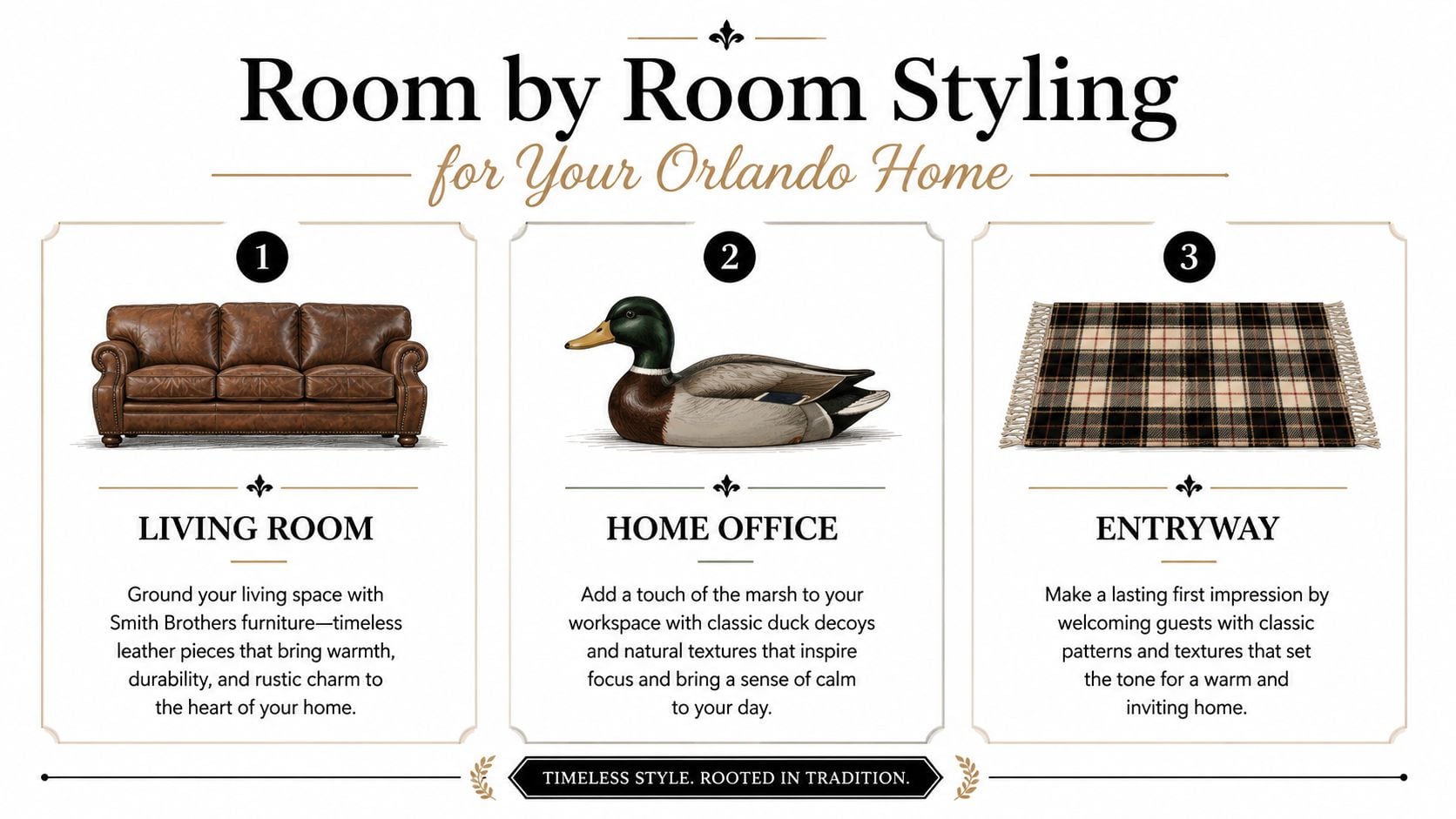
In many Orlando-area homes, the living room needs to feel welcoming first and thematic second. That means your anchor pieces should be classic and versatile.
A handsome leather sofa from Smith Brothers or American Leather sets the tone. From there, add a plaid wool throw, one framed waterfowl print, and a single carved decoy on a console or bookcase. The hunting reference is present, but the room still reads as polished family living.
A combination like this works well:
- Main seat with warm leather upholstery
- Coffee table in solid wood with visible grain
- Textiles in muted plaid or herringbone
- Accent decor limited to one shelf or one wall grouping
The den or man cave
This is the one room where you can lean in a little more. In a Lake Mary or Longwood den, a Stressless recliner paired with a wood bookcase can create a comfortable retreat that still looks refined.
Wall arrangement matters here. Expert hunting guides note that 24 decoy elements spaced 2 to 3 meters apart create optimal visual attraction in the field. That principle can translate to interiors. In a 10×12-foot man cave, arranging 12 to 24 stylized decoy forms with enough visual separation can enhance perceived space by 25%, according to this waterfowling layout reference.
You don't need literal decoys covering every surface. What you want is rhythm.
Leave visual breathing room between objects. A den with fewer, better-spaced pieces usually feels more authentic than one packed wall to wall.
Try a bookshelf with outdoor literature, a few decoys, and a small bronze or iron lamp. Then let one larger piece of art carry the room.
Entryway, office, and lanai
The entryway is a good place for restraint. A MAVIN bench, a durable runner, and one sculptural duck motif in metal or wood can set the tone without announcing it too loudly.
In a home office, the theme often works best through materials. A wood desk, antique brass accessories, and one decoy or framed marsh study on a shelf can bring in the outdoors without distracting from work.
For a covered lanai, think less “hunting room” and more “Florida retreat.” Use weather-aware textiles, simple wood or woven seating, and just one or two nods to waterfowl. That keeps the transition from indoors to outdoors natural.
How to Blend Hunting Decor with Other Styles
Many homeowners worry that duck hunting decor only belongs in rustic cabins. It doesn't. In fact, it often looks better when it's blended with a more familiar style already present in the home.
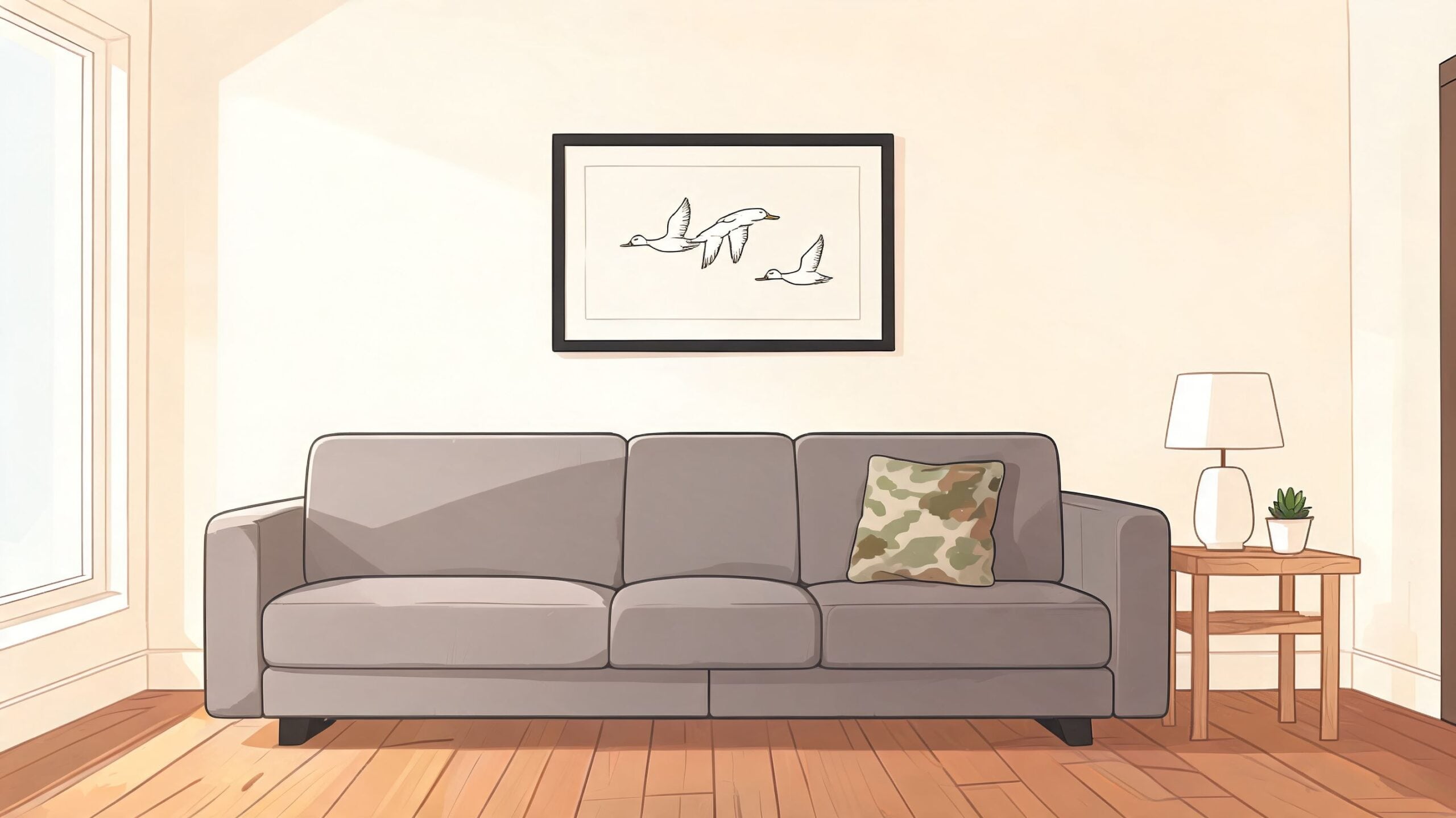
The reason is simple. The style is strongest as an accent language, not a takeover. That's especially relevant in Central Florida, where many homes mix coastal, farmhouse, transitional, and contemporary pieces.
There's also a practical gap in the market. Existing content around duck hunting decor tends to focus on novelty pieces, while homeowners looking for higher-end integration often get very little guidance. Interest in custom order furniture and Amish furniture near me also rises by 25% during fall hunting seasons, according to this duck hunting decor market gap reference. That tells us people are looking for a more serious version of the style.
Duck hunting decor with coastal interiors
This pairing works especially well in Florida. Both styles share a love of weathered wood, soft color, and natural themes.
Use duck hunting decor here through:
- A single decoy on a built-in shelf beside shells, books, or pottery
- Muted marsh art instead of bright beach prints
- Natural linen and driftwood tones that bridge wetland and coastal influences
A carved waterfowl piece can feel right at home in a coastal room if the finish is quiet and the surrounding palette stays light.
Duck hunting decor with farmhouse and transitional rooms
Farmhouse rooms already welcome wood, leather, black metal, and practical forms. Transitional rooms welcome restraint. That makes both good partners.
A custom Simply Amish cabinet with a subtle etched bird motif can bring in the theme without feeling literal. A Canadel dining set can carry the look through finish and fabric rather than imagery. Even Amisco counter stools can support the room if the metal and upholstery echo the palette.
If you're trying to combine multiple influences gracefully, this article on how to mix furniture styles is a useful design starting point.
Color is what keeps it elegant
Most style clashes happen because of color, not because of theme. If the wood tones, upholstery, and wall color agree, a duck motif usually feels intentional.
For a helpful outside perspective, Striped Circle's colour design tips offer a good reminder that color sets emotional tone before anyone notices decorative detail.
One duck-inspired detail in the right finish can look custom. Five unrelated duck-themed accessories in competing colors look accidental.
That's why custom furniture matters so much here. It lets you integrate the idea into the room's materials and proportions instead of dropping in random themed pieces after the fact.
Protecting Your Decor in Florida's Climate
A beautiful piece that can't handle Florida conditions isn't a value buy. It's a replacement cycle waiting to happen.

In Central Florida, the two biggest enemies of duck hunting decor are moisture and sun exposure. That's especially true for wood carvings, leather seating, framed art, and decorative finishes. A major advice gap exists here. 68% of Orlando homeowners reported decor damage from moisture within 2 years, and searches for weatherproof home decor rose 40% after hurricane season, according to this Florida climate decor reference.
What to choose from the start
If you're shopping for pieces that will last, prioritize construction and finish before style.
Look for:
- Marine-grade or moisture-aware finishes on wood and metal accents
- Performance fabrics instead of delicate novelty textiles
- Solid, well-sealed wood rather than thin composite decor
- Framed art under protective glazing if the room gets strong daylight
Brands known for better construction, such as Bassett and Craftmaster, make more sense in this climate than disposable decor that peels or fades quickly.
Where placement matters most
A piece can be well made and still fail if it's in the wrong spot. Avoid placing wood decor or leather seating where direct afternoon sun hits daily. Keep wall art away from damp exterior doors if they're frequently opened during storms or muggy months.
For wood surfaces, regular care makes a real difference. This guide on how to care for wood furniture covers good maintenance habits that also apply to many wood-heavy decor pieces.
A simple room scan helps. Check windows, HVAC vents, and spots where condensation tends to collect. Those micro-zones often explain why one piece ages well and another doesn't.
How to keep the look warm, not fragile
There's no need to make the room feel overly rugged to make it practical. You can still use woven patterns, earthy textiles, and handcrafted accents. The trick is to choose versions that suit Florida life.
For inspiration on using regional motifs without overloading a room, this post about incorporating southwestern design motifs is a helpful parallel. The lesson carries over. Strong style works best when pattern, material, and climate are all considered together.
Good decor maintenance starts before you buy. The right finish in the right room saves far more trouble than any repair routine later.
Create Your Perfect Space with Slone Brothers
You walk into your living room after a summer rain in Orlando. The air outside is heavy, the light inside is bright, and the room needs to feel polished enough for guests but personal enough to reflect your family's story. That is the core design challenge. Duck hunting decor can absolutely belong in that setting, but it needs the discipline of good furniture and the restraint of a well-planned room.
The strongest spaces begin with pieces that understatedly present the theme. A custom dining table in a warm oak finish, a leather chair with clean lines, or a display cabinet built for collected decoys does more for the room than a dozen novelty accents ever could. In design terms, duck hunting decor works like a signature stitch on a well-fitted jacket. It adds identity without taking over the whole garment.
For homeowners in Longwood, Orlando, Sanford, and Lake Mary, the goal is usually clear. They want a room that honors sporting heritage and still feels at home in Florida. That calls for furniture with substance, finishes chosen for our climate, and details that age with dignity rather than wearing out after one humid season.
A well-built room usually depends on four decisions:
- Start with furniture that has real staying power, including makers known for strong joinery, quality upholstery, and dependable wood construction such as Stickley, Smith Brothers, Canadel, Mavin, or American Leather
- Use hunting references sparingly, so a decoy, marsh painting, or carved duck motif reads as character instead of theme décor
- Choose custom options where they matter most, especially for scale, finish, fabric, and storage
- Match the design to Florida living, with materials and silhouettes that feel refined in a bright, open home
That last point matters more than many homeowners expect. A duck hunting inspired room in Central Florida should not look like a northern lodge dropped into a sunlit ranch or lakefront house. The proportions are different here. The natural light is stronger. Many homes open visually to lanais, pools, or large rear windows, so every furniture choice has to hold up both stylistically and practically.
Professional guidance helps you sort out those choices before you buy. A designer can tell when a treasured decoy collection needs a cabinet instead of open shelving, when a reclaimed wood finish is too heavy for the room, or when one excellent piece of art will do more than several small accessories. If you want that kind of room-by-room direction, an in-home design consultation gives you a plan built around your layout, your light, and the way your family lives.
Slone Brothers brings unusual value to this kind of project because the store is not built around quick theme pieces. It is built around quality furniture, custom possibilities, and practical design knowledge rooted in Central Florida homes. That combination matters. It helps you create a room that nods to duck hunting heritage while still feeling collected, refined, and worth keeping for years.
Ready to find the perfect piece for your home? Visit Slone Brothers Furniture in Longwood, FL, and let our design experts help you get started. As a local, family-owned showroom serving Greater Orlando since 1980, we offer quality American-made and Amish-crafted furniture, a strong custom-order program, complimentary in-house design help, and a Low Price Promise that makes lasting style a smart value.