
Discover Your Ideal Distressed Wood Buffet


A lot of Central Florida dining rooms feel finished, but not settled. The table is in place, the chairs work, and the lighting is good enough, yet the room still needs one piece that adds warmth and makes the whole space feel more personal. That's usually where a distressed wood buffet comes in.
For homeowners in Longwood, Lake Mary, Sanford, and the greater Orlando area, this piece solves more than one problem at once. It adds storage, anchors an open wall, and softens the look of newer construction with texture that feels collected instead of generic. It also works especially well if you're trying to create a home that feels relaxed, layered, and welcoming without looking overly formal.
A buffet with a timeworn finish has a way of making a dining room feel lived-in from day one. If you're pairing it with a newer table, this guide on blending retro vibes with modern style offers useful inspiration for mixing old-soul character with a cleaner current look. And if you're still shaping the whole room, our advice on how to choose a dining room table helps you build the right foundation first.
Bringing Timeless Character to Your Dining Room
A distressed buffet often becomes the piece people notice last, but remember most. It grounds the room. It gives serving dishes, linens, candles, and everyday clutter a proper place, and it does it with more personality than a flat, factory-smooth cabinet ever could.
In Central Florida homes, that matters. Many dining spaces open straight into the kitchen or living room, so every piece has to carry some visual weight without making the room feel heavy. A distressed finish helps because it adds dimension through softened edges, visible grain, and subtle variation in tone.
Why this look works in Florida homes
Newer homes around Orlando often have clean walls, bright light, and large windows. That can be beautiful, but it can also leave a room feeling a little stark. Distressed wood introduces contrast.
- It warms up hard surfaces like tile, stone, and painted cabinetry.
- It hides daily wear better than a perfectly uniform finish.
- It bridges styles easily, from farmhouse and rustic to coastal and transitional.
A good buffet shouldn't look like it was added as an afterthought. It should look like the room was waiting for it.
The appeal is emotional, but it's practical too. A well-chosen buffet gives you a staging surface for holidays, extra storage for entertaining, and a visual anchor between larger furniture pieces. That's why so many homeowners move toward one when the dining room feels close, but not quite right.
What Exactly Is a Distressed Wood Buffet
A distressed wood buffet is a storage piece finished to look gently aged through intentional surface treatments, not neglect. The goal is character, not damage. You'll see rubbed edges, layered color, visible grain, minor texture shifts, and a patina that suggests years of natural use.
That's different from furniture that's deteriorating. True distressing is controlled. The finish is built to evoke history while the cabinet itself remains sound, functional, and suitable for daily use.

Distressed doesn't mean worn out
Shoppers sometimes hesitate when encountering this term. They hear “distressed” and think chipped, fragile, or rough in a bad way. In quality furniture, that isn't what's happening.
A proper distressed finish usually includes sanding, layering color, and selective abrasion so the surface catches light in a more natural way. The piece can still feel sturdy, clean, and refined. In many cases, it looks better in a real home over time because small signs of use blend into the finish instead of standing out.
Here's a simple way to tell the difference:
| Type | What it looks like | What it means |
|---|---|---|
| Intentional distressing | Soft wear at edges, varied tone, textured grain | Designed finish with decorative aging |
| Actual damage | Loose joints, deep cracks, water stains, instability | Structural or finish problems |
| Cheap faux distressing | Repetitive scrape marks, flat color underneath, random nicks | Surface effect without depth |
A short history behind the look
The style has real roots. The distressed wood buffet draws its visual inspiration from antique buffets that originated in the late 18th century, with the first American pieces produced around 1770-1800 according to this history of the sideboard's evolution. Those early sideboards grew out of simpler medieval serving boards and later became status pieces in affluent homes by the Victorian era. During the Industrial Revolution, woodworking machinery expanded production and increased accessibility to the middle class by an estimated 40-50%, as noted in the same source.
That history matters because it explains why the silhouette still feels familiar today. Even in a newer Orlando home, a buffet doesn't read as trendy. It reads as established.
Practical rule: If a distressed buffet looks charming in a staged photo but flimsy when you open a drawer, you're looking at styling, not lasting quality.
Why people still choose them
The finish speaks to something many people want in their homes now. Not perfection. Not high gloss. A little depth. A little softness. A piece that feels like it belongs.
That's also why distressed buffets work across so many design directions. They borrow from older forms, but they don't require a fully traditional room. They can lean rustic, polished, coastal, or even a bit refined depending on the wood, hardware, and overall shape.
Exploring Different Buffet Styles and Materials
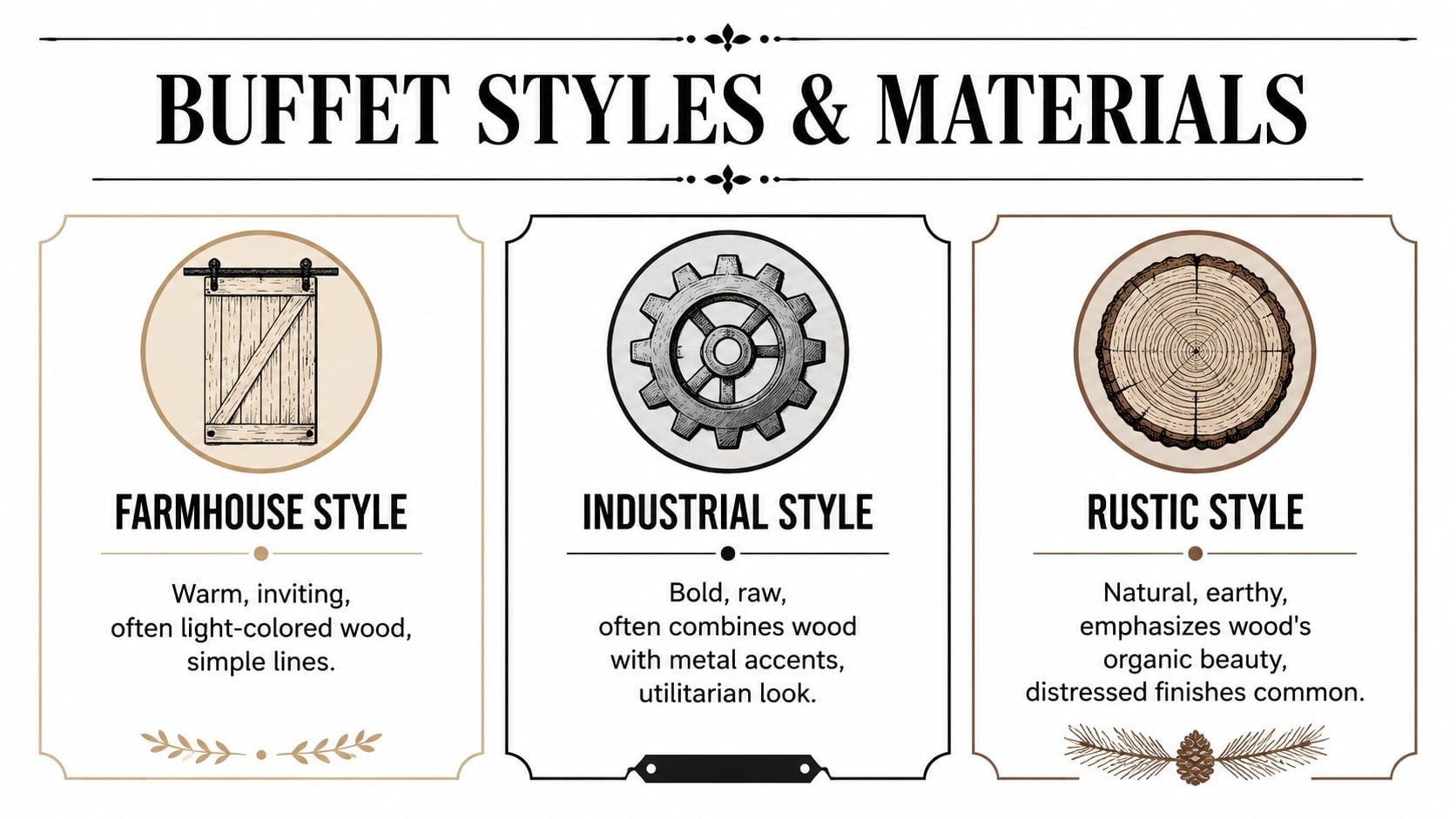
Once you know you want a distressed look, the next step is choosing the right version of it. Not every distressed wood buffet says the same thing. Some feel light and airy. Others feel grounded and architectural. The material, color, and degree of texture change the message completely.
Farmhouse, rustic, coastal, and industrial
In Central Florida, the most common request is usually some version of farmhouse or rustic. Those styles feel approachable and easy to live with. But there's more range here than many shoppers expect.
Farmhouse
Think soft whites, warm browns, simple panel details, and a finish that looks hand-touched rather than heavily carved. This works well with painted walls, lighter floors, and casual dining spaces.Rustic
Rustic leans more natural. You'll usually see deeper wood tone, stronger grain, thicker proportions, and distressing that emphasizes knots, saw marks, or texture. If that's the direction you like, our guide to rustic design style shows how to build the room around it.Coastal
Coastal distressing is subtler. Whitewash, driftwood-inspired finishes, and lighter wood tones fit especially well in Florida homes where sunlight is constant and the goal is a relaxed look.Industrial
Industrial buffets often combine distressed wood with darker hardware or metal framing. They work best when the room already has a little contrast through lighting, stools, or black accents.
Material choices change the feel
Style starts with shape, but material decides how convincing the piece feels. Solid pine and oak usually give a distressed finish more depth because the grain responds visibly to brushing, sanding, and stain variation. Veneers can still look attractive, but they tend to deliver a more controlled and less organic effect.
A quick comparison helps:
| Material | Best look | What to expect |
|---|---|---|
| Solid pine | Farmhouse, casual rustic, painted distressing | Softer character, visible texture, relaxed feel |
| Solid oak | Rustic, mission-influenced, more traditional | Strong grain, sturdier appearance, richer depth |
| Oak veneer over engineered core | Transitional or lighter distressing | Cleaner lines, more uniform surface |
| MDF with applied finish | Budget-focused decorative use | Can look good at first, but often lacks texture and depth |
How much distressing is enough
This is usually where taste matters more than trend. Some homeowners want a buffet that reads obviously aged from across the room. Others want just enough wear to keep the piece from feeling new.
It is useful to consider:
- Light distressing fits cleaner interiors and mixed-style homes.
- Medium distressing is the safest choice for most dining rooms.
- Heavy distressing works best when the room already has strong texture, reclaimed elements, or a true rustic direction.
The right finish should support the room, not turn into a theme piece.
Hardware matters too. Antique brass warms up pine and whitewashed finishes. Dark iron pulls sharpen the look and push it more rustic or industrial. Simpler knobs usually keep the piece quieter, which is often the better choice if your dining table already has a strong presence.
Choosing the Right Buffet for Your Orlando Home
The right buffet isn't just about style. It has to fit the wall, support how you entertain, and hold up in a house that deals with humidity and strong sun for much of the year. That's where many online purchases go wrong. The scale looks fine in the photo, but the piece arrives too shallow for real storage, too bulky for the room, or finished in a way that won't age gracefully in Florida conditions.
Start with the wall and the walkway
Before choosing finish or hardware, measure the room the way you use it. Include door swings, nearby chairs, and the path between the dining area and kitchen.
Use this checklist:
- Measure the wall width where the buffet will sit.
- Leave breathing room on each side so it doesn't look crammed in.
- Check traffic flow behind dining chairs, especially in open-concept layouts.
- Think about serving height if you'll use the top during holidays or gatherings.
- Match storage to use, drawers for linens and flatware, cabinets for platters or small appliances.
Some homeowners need a buffet mainly for visual balance. Others need it to work hard every week. Be honest about which one you are. A beautiful piece with the wrong storage mix becomes frustrating quickly.
Florida climate changes the decision
Humidity and sunlight aren't side issues in Orlando-area homes. They affect how a finish performs over time. The multi-stage finishing process used on distressed wood involves mechanical abrasion that creates textured depth, and in humid Orlando climates of 70-90% relative humidity, quality finishes on kiln-dried solid wood show less cracking and expansion, under 2% compared with 5% for veneers, according to product data summarized in this finish and humidity discussion. That difference helps prevent sticking drawers and seasonal movement that shoppers often notice in lower-quality dining storage.
That's one reason distressed solid wood can be a smart choice here. The finish already embraces variation, and the better examples are built to move more predictably with the environment.
What to prioritize in sunny rooms
If your dining room gets strong afternoon light, don't focus only on color. Ask about the topcoat and the wood beneath it. A pale finish can still fail if the protective layer is weak. A darker finish can still work if the seal is well applied and the placement is thoughtful.
Look for:
- Kiln-dried solid wood
- A finish with depth, not a flat printed effect
- Drawer operation that feels smooth in the showroom
- A back panel and base that feel substantial
- Placement away from direct, repeated sun exposure when possible
In Central Florida, a buffet doesn't just need to match your dining room. It needs to match your house.
One practical note. If you're considering a custom-order piece, specifying the finish becomes important. A distressed white, warm oak, or weathered brown can all work beautifully, but the right choice depends on light exposure, floor color, and how formal or casual you want the room to feel once everything is in place.
The Value of Amish and American-Made Craftsmanship
There's a big difference between a buffet that looks old and a buffet that's built to last. The visual style can be similar across price points. The structure usually isn't. That's why craftsmanship matters so much with distressed furniture. The finish draws your eye first, but the material and construction determine whether the piece still feels solid years from now.

What the construction tells you
For distressed wood buffets, material composition affects stability in a measurable way. Solid pine offers superior shear strength at 1,200-1,500 psi compared with 800-1,000 psi for veneered MDF, and American-made and Amish pieces often use kiln-dried wood at 6-8% moisture content, according to these construction benchmarks for buffet materials. The same source notes that custom Amish distressing can add $200-400 in value and includes hand-applied seals that boost UV resistance by 25%, which makes a practical difference in sunny Greater Orlando homes.
Those numbers line up with what experienced furniture shoppers usually notice by feel. Better pieces open smoothly, stand more firmly, and don't sound hollow when you touch the top or side panels.
Why custom matters with this category
Distressed furniture is one of the easiest places to see the value of customization. A stock piece may get the color close. A custom piece lets you choose the wood species, finish depth, hardware tone, and storage layout that suits your home.
That's especially useful if you're furnishing a room with a very specific look. A lightly distressed oak buffet can lean more classic. A painted pine version with simple hardware can read farmhouse. A cleaner-lined case piece in a weathered brown can work in a transitional Orlando home without feeling overly rustic.
For shoppers comparing options, American-made furniture is worth reviewing because this category tends to reward better materials and more careful finishing than mass-market imports.
The long-view value
This isn't only about appearance. It's about whether the piece keeps earning its place in your home.
- Solid wood ages better because minor wear often blends into the finish.
- Hand-applied distressing looks less repetitive than printed or machine-scraped effects.
- Better joinery and drying practices usually mean fewer seasonal problems.
- Domestic craftsmanship often gives you more finish control when you need a piece suited to light, scale, or existing furniture.
One practical example is Slone Brothers Furniture, which offers Amish-crafted and American-made furniture along with custom-order options and design help for matching finish and scale to a specific room. In this category, that kind of guidance matters because two buffets can look similar online and perform very differently once they're in a Florida home.
A distressed finish should feel deliberate in the hand, not just convincing from a distance.
There's also a values piece to this decision. Many homeowners want furniture that reflects real workmanship and more accountable sourcing. Choosing American-made or Amish-crafted furniture often aligns better with that goal, especially when you'd rather invest once than replace a decorative piece that wasn't built for regular life.
Caring for Your Distressed Wood Furniture
Distressed finishes are forgiving in daily use, but they're not maintenance-free. In fact, they're easy to damage with the wrong products because the texture that gives them charm can also trap residue. That's where many owners run into trouble.
A 2025 Houzz survey of 5,000 U.S. homeowners found that 68% of distressed furniture owners reported dissatisfaction with finish degradation within 2 years due to improper care, and in humid regions like Central Florida that rose to 74%, according to this summary of maintenance concerns for distressed furniture. Most of the frustration came down to one issue. People weren't sure how to care for authentic distressed finishes versus faux ones.
The safest cleaning routine
If you own a real wood buffet with a textured finish, keep the routine simple.
- Dust with a soft cloth first so grit doesn't drag across raised grain.
- Use a pH-neutral cleaner rather than harsh sprays that can strip the patina.
- Wipe with the grain instead of scrubbing across distressed edges.
- Dry the surface after cleaning so moisture doesn't sit in low spots or seams.
For homeowners who want a good reference point on gentle wood-surface habits, J.R. Hardwood's expert floor care covers the same basic principle. Clean wood carefully, use the right products, and don't leave water behind.
Placement matters more than people think
In Florida, placement is part of maintenance. A buffet pushed against a wall with direct afternoon sun will age differently than one in a shaded dining room. The same goes for rooms that stay muggy because the HVAC struggles or doors open constantly to patios and pools.
Keep these habits in mind:
| Habit | Why it helps |
|---|---|
| Avoid direct window exposure | Reduces extra drying and finish stress from UV light |
| Keep indoor conditions steady | Helps limit wood movement through humid swings |
| Use pads under lamps and décor | Prevents rings and pressure marks on textured tops |
| Clean spills quickly | Stops moisture from settling into distressed detail |
If a finish has character, treat it like wood, not plastic. Gentle care works better than aggressive cleaning every time.
What not to use
Many all-purpose sprays leave buildup in textured surfaces. Waxy polishes can also collect in recesses and make a finish look muddy over time. Abrasive scrub pads are worse. They can flatten the very detail that made you choose the piece in the first place.
If you want more guidance on day-to-day upkeep, our page on how to care for wood furniture covers the basics that help a quality piece stay beautiful longer.
Find Your Perfect Buffet in Central Florida
The best distressed wood buffet for a Central Florida home does three things well. It fits the room, it suits the climate, and it feels like a natural part of your style rather than a decorative extra. When those pieces line up, the room gets easier to use and more comfortable to live in.
That's one reason shopping this category in person matters. Finish depth, wood texture, drawer movement, and overall scale are hard to judge from a screen. A buffet may look charming online and still feel too shallow, too orange, too rough, or too lightly built once you stand in front of it.

Why local shopping helps on this category
A local showroom gives you the chance to compare finishes under real light and ask better questions. You can open the cabinets, inspect the back, look at hardware, and decide whether the distressing feels refined or overdone. For homes in Longwood, Orlando, Lake Mary, and Sanford, that hands-on process usually leads to a better long-term decision.
It also helps if you're furnishing more than one room at a time. A buffet doesn't sit alone. It has to make sense with your table, chairs, flooring, wall color, and nearby living spaces. That's where design guidance can save you from choosing a piece that's attractive on its own but wrong for the room.
What to look for in the showroom
When you visit, don't stop at color. Check the full package.
- Stand to the side of the piece and look for depth in the finish.
- Open every drawer and door to test alignment and feel.
- Ask what the core material is if the surface looks heavily styled.
- Step back across the room to see whether the buffet anchors the wall correctly.
- Compare several levels of distressing before deciding what fits your home.
A family-owned showroom also tends to offer a different kind of conversation. You're more likely to get practical feedback about whether a piece makes sense for your house, especially if humidity, sunlight, or a specific room layout is part of the challenge. If you're starting your search locally, our page for local furniture stores near me is a helpful place to begin.
The right buffet should make your dining room feel more finished the day it arrives, and more useful every season after that.
Since 1980, we've served Central Florida as a local, family-owned showroom focused on quality, value, and real service. That includes an in-house Design Team, custom-order flexibility, reliable home delivery, a Low Price Promise, and a clearance outlet for shoppers who want immediate savings without settling for throwaway furniture.
Ready to find the perfect piece for your home? Visit the Slone Brothers Furniture showroom in Longwood, FL, and let our design experts help you get started!