
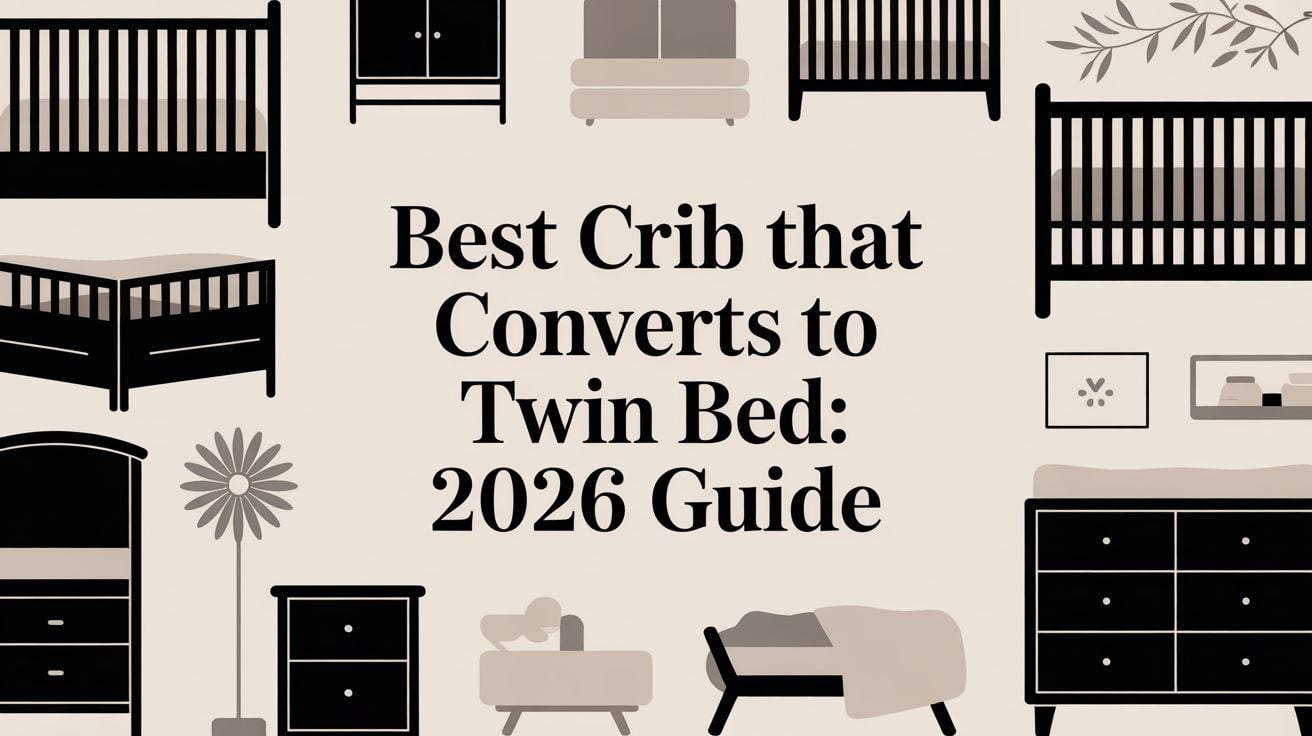
Best Crib That Converts To Twin Bed: 2026 Guide

You’re probably in that stage where the nursery feels both exciting and oddly high-stakes. You’re choosing paint, comparing dressers, saving baby names, and realizing that one small room suddenly needs to work very hard. For many Central Florida parents, the biggest early decision is also one of the smartest. Should you buy a crib that only handles the baby years, or start with a crib that converts to twin bed and think farther ahead?
That question matters more than it seems. A crib isn’t just nursery furniture. If you choose well, it becomes the first real piece of your child’s bedroom furniture, staying with your family from infancy through the school years and into the teen room stage.
Parents in Longwood, Orlando, Lake Mary, and Sanford often tell us the same thing. They don’t want to keep replacing major pieces every few years. They want something safe, practical, and built well enough to last. That’s why convertible cribs have become such a popular path for families who value long-term thinking and quality craftsmanship.
Your Growing Family Needs Furniture That Grows Too
A young couple setting up a nursery in Greater Orlando usually starts with the same list. Crib, dresser, chair, lamp, rug, changing setup. Then the practical questions arrive. Will this fit the room? Will we still like it in a few years? Will we have to replace it as soon as our child outgrows the crib stage?
That’s where a crib that converts to twin bed changes the conversation. Instead of buying for one short season, you’re buying for a longer family story.
Convertible cribs that become twin beds are leading the market due to their long-term value, and they move through multiple stages rather than stopping at infancy, according to this overview of convertible cribs and twin-bed transitions. In plain terms, that means one well-chosen piece can begin as a crib, shift into a toddler bed, often become a daybed, and later serve as a twin bed.
That’s a useful mindset shift for new parents. You’re not just buying a crib. You’re choosing the foundation of a room that can evolve with your child.
If you’re still building your planning checklist, a thoughtful practical baby registry list can help you separate true essentials from the things that only sound necessary in late-night scrolling. The same rule applies to nursery furniture. Buy for the years ahead, not just the first few months.
A well-made convertible crib works best when you see it as a long-term room anchor, not a temporary baby item.
Style matters here too. A crib with simple lines and durable construction usually ages better than one that feels overly themed or trend-driven. If you're thinking about how the whole room will handle real family life, this guide to kid-friendly and pet-friendly furniture is a smart next read.
Understanding Convertible Crib Terminology
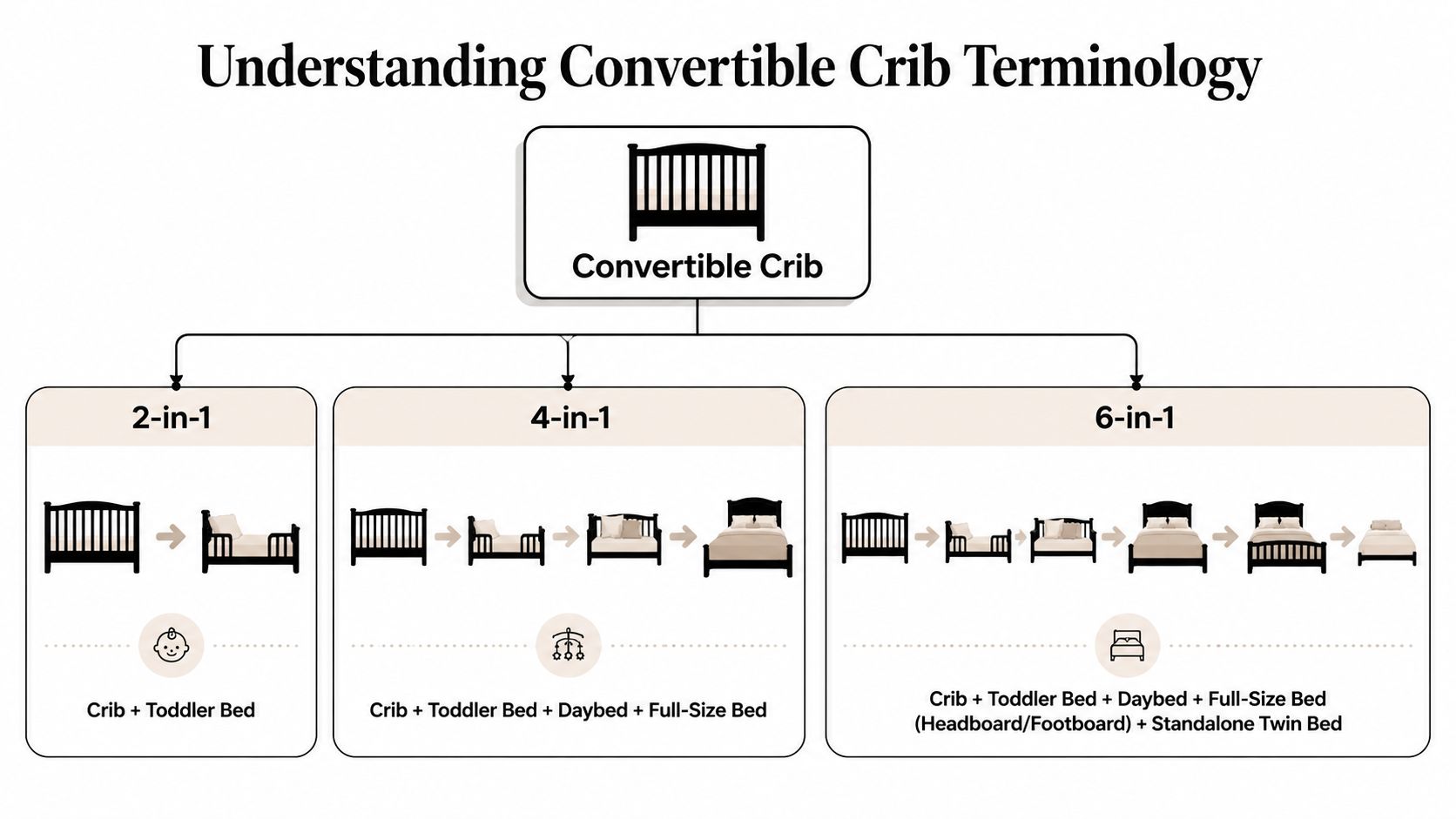
The language around convertible cribs can feel more confusing than it should. Parents see 2-in-1, 4-in-1, and 6-in-1 on product tags and often assume the higher number always means the better buy. Sometimes it does. Sometimes it just means more stages you may or may not use.
The key is to understand what each stage does in everyday life.
What the numbers usually mean
Think of the number as a count of the furniture stages built into one frame.
| Type | What it usually includes | Best fit for |
|---|---|---|
| 2-in-1 | Crib and one later stage, often a toddler bed or daybed | Families who want a simpler transition |
| 4-in-1 | Crib, toddler bed, daybed, and a larger bed stage | Parents planning for long-term use |
| 6-in-1 | Multiple transitional setups, sometimes including more than one larger-bed configuration | Families who want the most flexibility |
A basic 2-in-1 is often straightforward. It starts as a crib, then changes into one next-step version, usually intended to ease the move out of the crib stage.
A 4-in-1 is where many families find the sweet spot. It tends to cover the most practical stages without getting overly complicated.
A 6-in-1 or even more expansive system can offer extra options, but it’s worth asking whether those options match how your family will really use the piece.
What each stage is for
The terms matter less once you connect them to a child’s growth.
- Crib stage gives you the enclosed, secure sleep space you need at the beginning.
- Toddler bed stage lowers the barrier to entry and often adds a guardrail so your child can get in and out more independently.
- Daybed stage creates a more open setup that can work for a child who no longer needs a full rail.
- Twin bed stage gives the piece a much longer life and turns it into real bedroom furniture.
Many parents often misunderstand this point. They assume the toddler bed stage and the twin bed stage are minor differences. They’re not. The toddler phase is a transition. The twin phase is the point where the furniture needs to function like a true bed for years, not months.
Practical rule: Don’t shop by the number alone. Shop by the final stage you actually want the furniture to reach.
Why the final stage matters most
Some product descriptions spend a lot of time on the middle stages because they sound versatile. But for a family thinking long term, the most important question is simple. What does this become at the end?
If the answer is a twin bed, you’re evaluating a piece with a much longer job to do. It has to look right in a nursery now and still feel appropriate later in a kid’s room or teen room. That’s why shape, finish, and overall design should stay classic.
It also helps to read product descriptions carefully. Terms like “conversion kit sold separately,” “twin conversion available,” and “headboard only” can mean very different things. If you want help decoding those details, this guide on how to read furniture product descriptions and buy with confidence is useful before you compare models.
A simple way to think about it
A convertible crib is a bit like buying a jacket with layers you can add or remove over time. The core piece stays with you. The function changes as needs change.
That’s why the best choice often isn’t the one with the flashiest feature list. It’s the one whose stages make sense for your home, your room size, and the way you want the space to grow over the years.
Navigating Safety Standards and Mattress Choices
Parents often focus on the frame first and the mattress second. In practice, both decisions work together. A safe crib that converts well still needs the right sleep surface at every stage.
One of the most important rules is also one of the most misunderstood. A crib mattress does not become a twin mattress just because the bed frame changes.
Start with the crib safety basics
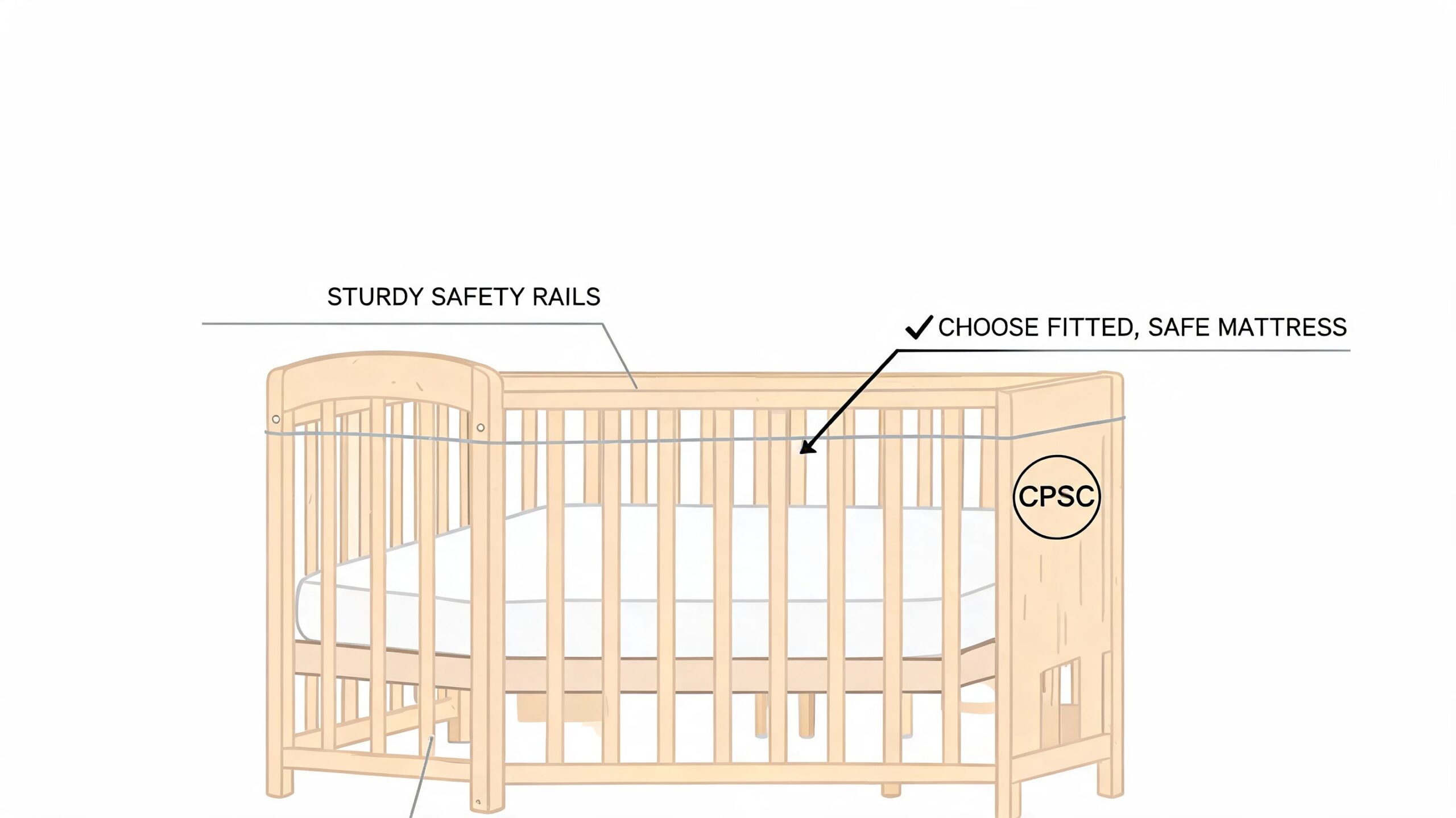
At the crib stage, parents should pay close attention to solid assembly, proper rail construction, and tight mattress fit. The goal is a sleep space that feels stable and intentional, not one that shifts, rattles, or leaves you second-guessing the build.
For many families, confusion starts when they look ahead to conversion. They assume that if the same frame is still involved, the same mattress can come along too. It can’t.
According to this crib-to-twin conversion guidance, converting a crib to a twin bed requires a new standard twin-size mattress measuring 38" x 75". The original crib mattress doesn’t provide the needed surface area or support, and it doesn’t meet twin bed standards such as 16 CFR 1633.
Why the crib mattress can’t stay
A crib mattress is designed for infant sleep needs. A twin mattress is designed for an older child’s body, movement, and sleep position. Those are different jobs.
Here’s the practical breakdown:
- Size difference means the crib mattress won’t properly fit the twin setup.
- Support needs change as children grow and carry weight differently than infants.
- Safety standards differ between a crib sleep environment and a twin bed setup.
- Edge support matters more once a child sits, rolls, reads, or climbs in and out of bed on their own.
That last point is easy to overlook. Older children don’t just sleep in bed. They lounge, sit on the edge, read books, and sometimes pile in with stuffed animals and blankets. The mattress has to support those habits safely.
The safest conversion is the one that treats the twin stage as a real bed, not just an extended crib phase.
What parents often get confused about
The most common misunderstanding goes like this. “If the crib converts, doesn’t that mean everything converts?”
Not quite. The frame converts. The mattress requirements change.
Another common point of confusion is timing. Parents sometimes think they should buy the twin mattress as soon as they buy the crib. That’s usually not necessary unless you’re planning the full room all at once. What matters is knowing ahead of time that the twin stage will require a new mattress, so it doesn’t catch you by surprise later.
A third confusion point is room planning. Once a crib that converts to twin bed reaches its final stage, the footprint and layout needs change. It helps to know twin sizing in advance, especially if the nursery is modest in size or doubles as a guest room or office now. This quick guide to crib mattress measurements and related sizing considerations helps clarify what changes when you move from crib scale to bed scale.
A safe mattress mindset for the long run
When the time comes to convert, think in terms of fit, support, and compliance, not just softness or price. Parents sometimes shop for a twin mattress the way they shop for an extra guest room mattress. That’s not the right lens.
For a growing child, you want a mattress that fits the frame properly, supports regular nightly sleep, and works with the bed structure as intended. The bed may have started in the nursery, but by the twin stage it needs to perform like dependable everyday bedroom furniture.
Why Quality Materials and Craftsmanship Matter Most
A convertible crib makes a big promise. It says, in effect, “I can serve your family now and still hold up years from now.” That promise depends less on the marketing label and more on what the piece is made of.
This is the part many online roundups skip. They compare colors, features, and price points, but they don’t spend enough time on the question parents really care about once the nursery years pass. Will this still feel solid later?
The nursery years are only the beginning
A crib has a fairly gentle job at first. By the time it becomes a twin bed, the demands change. A bigger child uses the furniture with more force, more movement, and a lot more daily wear.
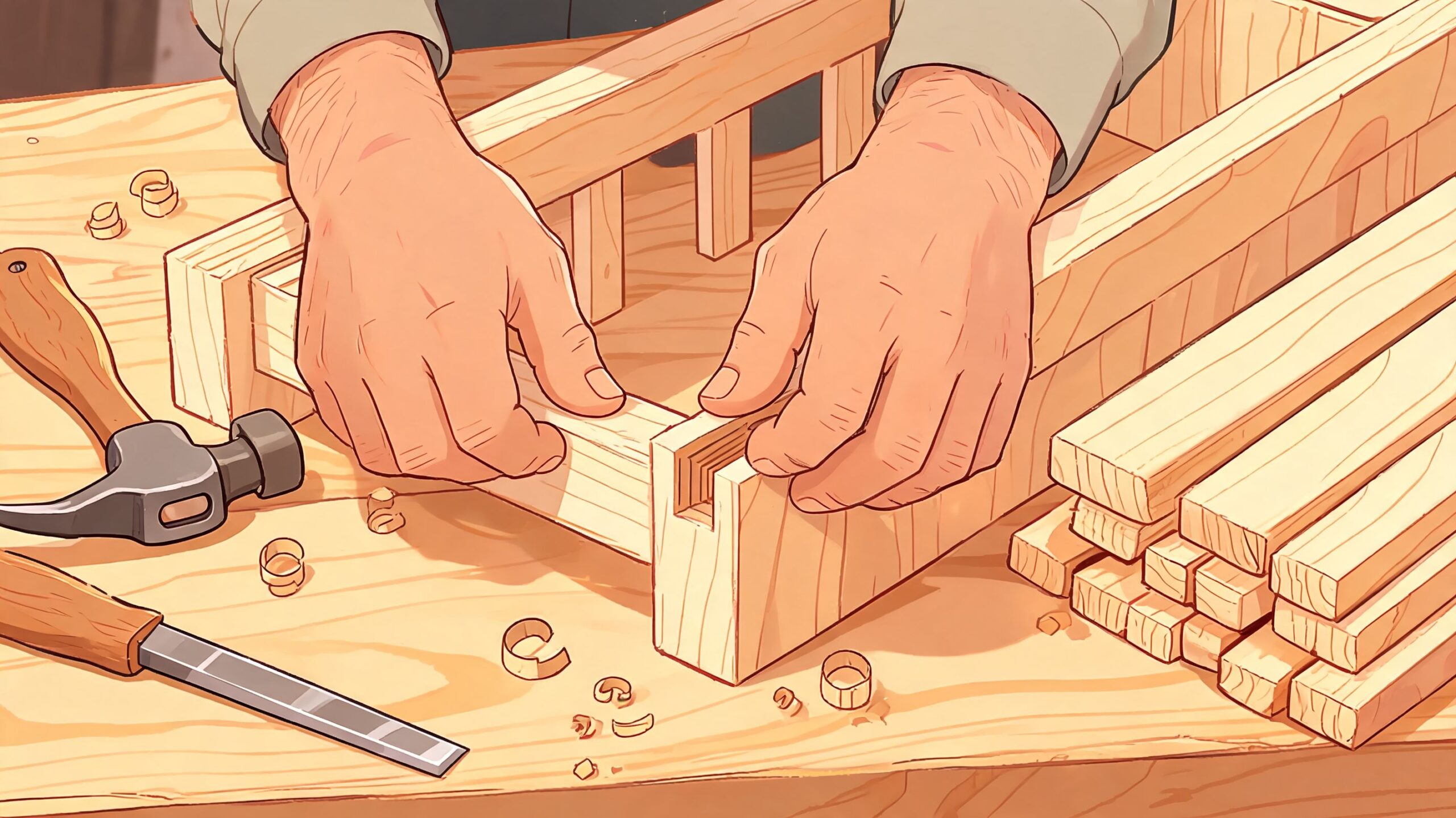
That’s why one of the most important overlooked issues is long-term durability. Consumer-focused crib testing coverage points to a key gap in many product reviews. Initial safety gets attention, but the structural stability of the twin-bed conversion after 5-10 years often doesn’t. That makes underlying materials and craftsmanship especially important, particularly when families want the bed to remain dependable into the later childhood and teen years.
What better construction looks like
You don’t have to be a furniture maker to spot signs of stronger construction. You just need to know what deserves a closer look.
- Solid wood parts usually offer a more substantial, stable feel over time than lighter composite-heavy builds.
- Quality hardware matters because repeated conversions and reassembly put stress on connection points.
- Smooth, even finishes tend to reflect more careful production and hold up better as the piece ages.
- Well-fitted joints help the frame feel tight and quiet instead of loose and shaky.
Parents often ask if this means every piece has to be formal or old-fashioned to last. Not at all. It just means the structure should be as thoughtful as the styling.
Why Amish-made and American-made options stand out
When a crib is expected to become part of a teen room later, craftsmanship becomes more than a nice extra. It becomes part of the safety and value equation.
That’s one reason many families gravitate toward Amish-crafted and American-made furniture. These pieces often appeal to buyers who want lasting materials, careful joinery, and a finish that still looks appropriate years after the nursery is gone. The style can stay simple and versatile while the construction does the hard work reliably in the background.
If you want a crib that converts to twin bed and actually endures, judge it like long-term bedroom furniture, not like short-term baby gear.
A quick comparison mindset
| Construction focus | What it tends to mean for long-term use |
|---|---|
| Lightweight build | Easier to move, but can feel less substantial later |
| Heavier solid construction | Often better suited for repeated use across years |
| Basic hardware setup | May need more attention as the piece ages |
| Robust joinery and hardware | Better chance of staying stable through later stages |
You don’t need the fanciest crib in the room. You need one that still makes sense when your child is no longer a toddler.
That’s also why finish choice matters. Soft white, warm natural wood, and classic medium tones tend to travel better from nursery to kid’s room to teen room than heavily themed looks. If you’re comparing long-lasting materials and design options, this guide to American-made solid wood furniture gives helpful context for what to look for.
How to Plan Your Twin Bed Conversion
The easiest crib conversion is the one you planned for years before you needed it. That may sound like overthinking when you’re setting up a nursery, but it saves a lot of frustration later.
The biggest mistake families make isn’t choosing the wrong style. It’s assuming they can sort out the twin conversion parts whenever the time comes.
Buy the conversion kit early
This is the most practical advice in the whole process. If the crib requires a brand-specific conversion kit, secure it when you buy the crib.
That matters because mismatched parts are a known problem. This convertible crib guidance notes a 28% spike in recalls for hardware failures during twin transitions tied to mismatched hardware, and it identifies the manufacturer-specific conversion kit as the best way to avoid that issue.
If you wait too long, several things can go wrong:
- The exact kit may become hard to find
- The finish may no longer match
- A similar-looking kit may not fit correctly
- Improvised hardware can create safety concerns
Buy the crib and the matching conversion path together, even if the twin stage is years away.
Know the transition points
Parents often ask when they should move from crib to toddler bed, or from toddler bed to the final twin setup. The answer depends on the child, the room, and how the family uses the space.
For a useful parenting-focused overview of timing and readiness, this guide on cot to bed safety and timing can help you think through the transition without rushing it.
The furniture side of the process is more straightforward. Once your child is ready for the final stage, the frame needs to be converted according to the manufacturer’s instructions, using the proper kit and the proper mattress.
What the conversion process usually involves
The details vary by model, but the overall flow is usually familiar.
Lower and prepare
Before any major change, the mattress platform is typically adjusted or removed based on the stage you’re leaving.Remove the crib sides
The enclosed crib structure changes as side panels come off and the bed begins to open up.Attach the correct rails or supports
This is where the manufacturer-specific hardware matters most.Install the twin mattress
The final bed stage requires the right mattress for fit and support.Check stability before use
Make sure the frame feels level, secure, and properly tightened.
Some parents get nervous because they imagine a complicated rebuild. In reality, the bigger challenge is usually preparation, not the hands-on assembly itself.
Plan for the full conversion, not just the frame
A good conversion plan includes more than rails and screws. It should also account for:
- Mattress timing so you’re ready when the room changes
- Room layout because the space will function differently at the twin stage
- Bedding updates since the look of the room often changes too
- Storage for extra parts if intermediate stages use removable components
If the nursery is compact, it also helps to understand how the bed will sit in the room once it reaches its final size. This guide to the size of twin beds can help you measure door swings, dresser placement, and walking space before the conversion day arrives.
The families who have the smoothest experience usually aren’t the ones who bought the trendiest crib. They’re the ones who planned the full lifecycle early and kept all the right parts together.
Budgeting for Long-Term Value and Timeless Style
The price conversation around nursery furniture can be misleading. Many parents compare a convertible crib to a basic crib and stop there. That’s too narrow.
A better comparison is this. Are you buying one adaptable furniture system, or are you signing up to replace the bed multiple times as your child grows?
Think in stages, not sticker shock
A crib that converts to twin bed asks for a little more planning upfront, but it can simplify the long-term furnishing path in a big way. Instead of shopping again at every transition, you start with a piece designed to keep going.
That value becomes even more visible in smaller homes and tighter rooms. For families dealing with compact nursery layouts in parts of Central Florida, mini cribs that convert to twin beds can reduce the initial footprint by 30-40% compared to full-size cribs, while still expanding later with solid wood rails into a standard twin setup, according to this mini crib conversion kit overview.
That’s a practical option for homes where every square foot matters now, but long-term use still matters later.
Hidden costs are easier to handle when you expect them
The smartest budget isn’t the lowest first number. It’s the one with fewer surprises.
When parents budget well for a convertible crib, they usually account for:
- The conversion kit if it isn’t included
- The later twin mattress
- New bedding at the twin stage
- A room refresh over time, such as changing wall color or accessories while keeping the main bed
This approach also helps you avoid the trap of buying a nursery style that only works for a baby. If the bed frame stays, the room can still evolve through art, bedding, rugs, and lighting.
Choose a style that won’t age out
Timeless style is one of the best budget tools you have. A crib in a classic finish with clean lines can look sweet in a nursery and still feel right in a school-age room or teen space.
That usually means avoiding pieces that feel too themed, too ornate, or too baby-specific. A convertible crib is at its best when the design stays flexible. Natural wood tones, soft neutrals, and uncomplicated silhouettes often do that job well.
The most cost-effective crib is often the one you still like years later.
Parents sometimes think “timeless” has to mean plain. It doesn’t. It just means the piece has enough design restraint to grow with the room instead of fighting every future update.
Experience the Quality at Our Longwood Showroom
Reading about a crib that converts to twin bed helps. Seeing one in person helps more. You can open drawers, inspect the finish, feel the weight of the wood, and ask the kinds of practical questions that don’t get answered well on a product page.
That’s especially valuable when you’re choosing a piece meant to last from nursery days into the teen years. Families across Longwood, Orlando, Lake Mary, and the surrounding Central Florida area often want confidence, not guesswork. Since 1980, a local family-owned showroom with experienced guidance, quality brands, custom-order options, and a strong design perspective can make that decision much easier.
Ready to find the perfect piece for your home? Visit the Slone Brothers Furniture showroom in Longwood, FL and let our design experts help you get started!