
Pocket Coil vs Innerspring Mattress: Which Fits Your Sleep


If pocket coils are automatically better, why might a carefully built traditional innerspring feel more supportive to the person sleeping on it? The pocket coil vs innerspring mattress decision starts with spring construction, but it ends with body weight, sleep position, firmness, and the materials above the springs.
For homeowners in Longwood and Greater Orlando, that distinction makes an in-person comparison valuable. A mattress should support the sleeper comfortably, work with the bedroom's furnishings, and justify its investment through sound construction, rather than carry the more impressive label.
Pocket Coil vs Innerspring Mattress at a Glance
The difference is structural, not cosmetic. Pocket coils sit in individual fabric sleeves and compress more independently, while traditional innersprings connect neighboring coils through wire or other linking structures.
One terminology point prevents considerable confusion: pocket coils are still springs. In everyday shopping language, however, “innerspring” often means the traditional interconnected construction, and that's the meaning used in this comparison.
Pocket coil and innerspring at a glance
| Feature | Pocket coil | Traditional innerspring |
|---|---|---|
| Spring construction | Individual springs in separate fabric pockets | Coils linked by helical wire or other connecting structures |
| Motion transfer | Generally low, because springs compress independently | Higher, because pressure spreads to neighboring coils |
| Contour | Localized conformity under shoulders and hips | Broader, buoyant and more uniform response |
| Edge support | Requires purposeful perimeter reinforcement | Reinforced borders can provide a stable sitting and sleeping edge |
| Typical fit | Couples, mixed sleep positions, partner movement concerns | Familiar responsive feel, edge-to-edge support |
| Durability factors | Steel quality, gauge, pocket fabric, foam density | Steel quality, gauge, linking method, foam density |
These differences describe tendencies, not promises. A pocketed mattress can feel firm and lively, while a connected spring mattress with substantial upholstery can feel gently cushioned.
What the comparison means on the showroom floor
Consider a side sleeper whose shoulder needs room to settle without allowing the waist to lose support. Localized spring movement may help, but the cushioning above those springs must also accommodate the shoulder.
A back sleeper who dislikes sinking may prefer the broader lift of a connected system. Yet a firmly upholstered pocket-coil model could provide that same preferred sense of sleeping on the surface rather than deep within it.
Starting point: Spring architecture narrows the selection. The complete mattress determines the fit.
For an Altamonte Springs couple concerned about nighttime movement, pocketed construction is usually the first option to test. For someone seeking a responsive surface with a secure perimeter, a well-built traditional innerspring deserves equal attention.
The table isn't a ranking. Coil gauge, zoning, edge construction, and comfort layers can change the result substantially, so body weight and sleeping position must guide the final comparison.
What Defines Build Quality and How Long Support Lasts?
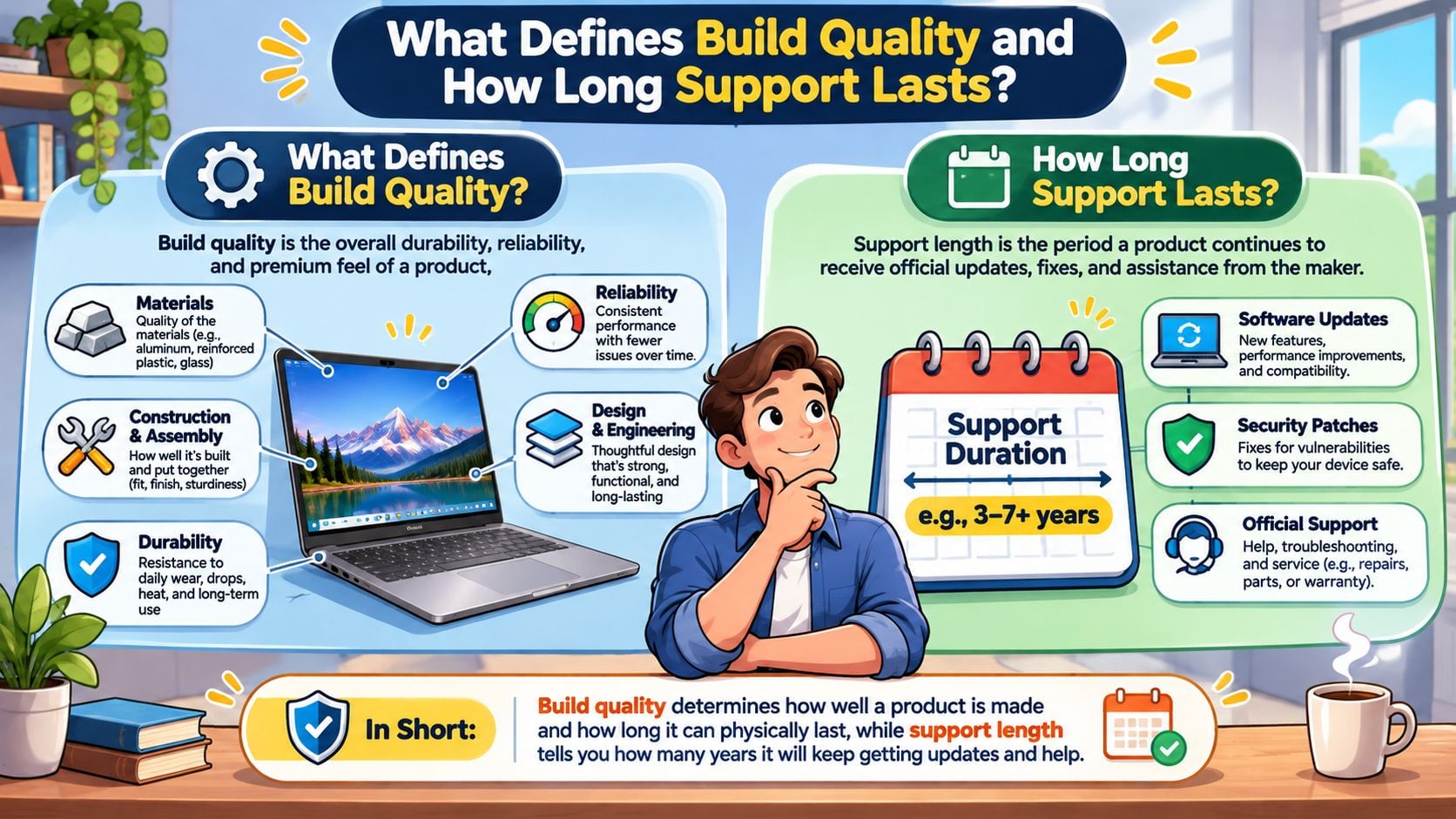
Coil architecture establishes how a mattress responds; build quality determines how well it retains that response. Individual fabric-wrapped coils and interconnected springs each need suitable steel, cushioning, perimeter construction, and foundation support to keep that response stable over time.
Independent springs date to 1899. The history of the Marshall coil traces the independent-spring concept to Canadian-born engineer James Marshall, with Canadian patent protection in 1900 and United States and United Kingdom patents in 1902.
Construction details worth examining
A useful comparison follows the mattress from its support core toward its sleeping surface. Think of the spring unit as the frame of a chair and the comfort layers as the upholstery. A strong frame matters, yet the upholstery controls how the body first meets that frame.
- Coil gauge and steel quality. Wire thickness and steel quality influence resistance under load, but neither should be evaluated apart from spring geometry.
- Coil count and height. These describe the support unit's arrangement and compression space, and they should be read with firmness, zoning, and comfort layers.
- Zoning across the surface. Different support regions can change how the shoulders, waist, and pelvis settle.
- Edge reinforcement. A reinforced perimeter helps preserve usable sleeping space and stability when sitting or standing.
- Upholstery and comfort layers. These determine much of the initial cushioning and can soften or compress independently of the springs.
For context, the Encyclopedia.com mattress manufacturing reference reports pocket-coil counts commonly ranging from approximately 580 to 704. Treat that as a description of common construction, not a shopping threshold. A lower-count model with thoughtful zoning may suit one sleeper better than a higher-count model with the wrong firmness.
What repeated loading can change
A peer-reviewed study of used mattress springs found that springs from high-load center zones compressed 2.78 ± 0.34 cm under a standardized 1,296-g load, compared with 1.52 ± 0.39 cm for springs from lightly loaded head and foot zones, with significantly weaker force response in the weight-bearing springs.
The practical concern is support beneath the shoulders, hips, and trunk. A mattress can appear relatively level without a sleeper on it yet provide less resistance where repeated loading has weakened its components. This is why a quick hand press is less informative than a steady lie-down that lets heavier body areas settle into the same zones used nightly.
The finding speaks to load history, not to a universal winner between spring systems. It supports evaluating how the entire mattress handles the household's weight and usage, including the comfort layers above the springs and the base beneath them.
Before purchase, the construction conversation should cover welds or fabric pockets, foam density, sleeper weight, foundation compatibility, and rotation instructions. The consultant should also explain the sagging warranty in writing, including how impressions are measured and how covered defects differ from normal comfort-layer settling.
Ongoing care belongs in the investment decision. This guide to mattress maintenance and cleaning offers a useful starting point for planning care around the manufacturer's requirements.
Bedding fit deserves separate attention after the mattress is selected. The SouthShore Fine Linens mattress fit guide is a practical resource for coordinating bedding with mattress dimensions and depth, rather than assuming existing sheets will fit a taller replacement.
Which Mattress Fits Your Sleep Position and How Do You Test It?
Lie down in your usual sleeping position before judging either spring system. Does your shoulder feel compressed? Do your hips settle farther than your torso? Those checks reveal more about fit than a pocket-coil or innerspring label alone.
The better mattress accommodates the sleeper's curves without allowing the heavier areas to settle excessively. Body weight, firmness, zoning, and comfort layers determine how that balance feels beneath you.
Spring type fit by sleeping position
| Sleeping position | Pocket coil fit | Innerspring fit | What to check in person |
|---|---|---|---|
| Side sleeper | Check whether local contouring allows enough shoulder depth | Check whether cushioning relieves pressure over the connected core | Shoulder and hip depth relative to the spine |
| Back sleeper | Check whether contouring supports rather than cradles the pelvis too deeply | Check whether steady lift preserves the spine's natural curves | Lumbar gap and pelvic sink |
| Stomach sleeper | Firmer builds may limit hip drop | Firm cores may keep the torso level | Hip height and lower-back arch |
| Combination sleeper | Check adaptation when changing position | Check ease of turning on the responsive surface | Surface recovery and effort needed to turn |
Firmness matters more than an upgrade label
Research reviewing mattress design generally favors medium-firm surfaces for comfort, sleep quality, and spinal alignment, with evidence of reduced chronic low-back pain compared with firmer surfaces. It does not establish pocket coils as clinically superior.
A controlled study discussed in a systematic review of mattress design and sleep outcomes found that an experimental mattress reduced pain while lying by 18% and increased comfort by 25%, but did not significantly improve pain on rising, stiffness, or overall sleep quality.
A comfortable showroom impression is not a medical outcome. A mattress should not be presented as treatment for persistent pain.
Either spring system can miss the mark. A soft pocket-coil build may allow excessive pelvic sink, while an overly firm connected mattress may create shoulder pressure. Compare how cushioning and resistance work together, rather than treating one construction as an automatic upgrade.
A deliberate lie-down test
Use the same routine on each candidate so differences in position or pillow height do not confuse the comparison:
- Settle into the usual position. Give your body and the comfort layers time to settle, using a pillow of familiar height.
- Check neutral alignment. A partner or consultant can assess neck and torso alignment during side sleeping. Back sleeping should preserve natural spinal curves.
- Examine shoulder and hip depth. Notice both pressure and excessive sinking. More cushioning is useful only if support remains balanced.
- Repeat on the adjacent firmness level. Keep the pillow and position consistent. Compare the same pressure points rather than relying on the first impression.
- Notice the transition to standing. Discuss lower-back pressure, difficult turning, or discomfort on rising before deciding.
Slone Brothers Furniture carries Stearns & Foster, Tempur-Pedic, and Sealy. Mattress categories include memory foam, foam gel, hybrid, innerspring, spring, euro top, cooling, tight top, and TEMPUR material mattresses.
Comfort options include extra soft, hybrid soft, ultra soft, plush, medium firm, ultra firm, and extra firm. These labels are not interchangeable measurements across models.
Before a Longwood visit, use the guide to choosing a mattress to organize sleeping positions, pain history, and current mattress concerns. Bring those priorities to the comparison and request written construction and warranty details.
Slone Brothers' complimentary in-house Design Team can also help coordinate bedroom placement and circulation space. Keep that room-planning decision separate from the lie-down test: appearance should not override physical comfort.
How Much Motion Will Reach Your Partner?
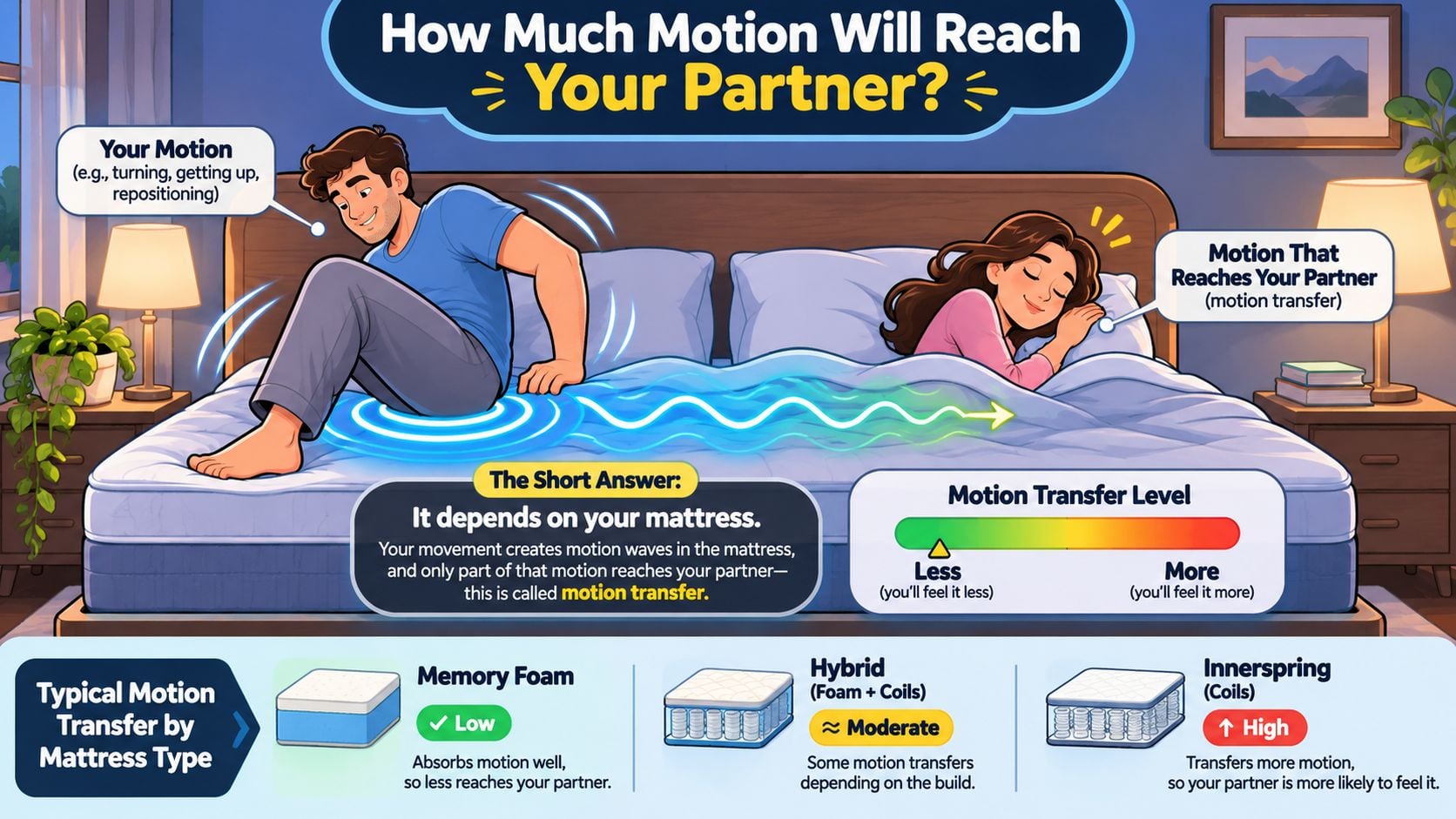
Pocket coils generally reduce partner disturbance, but the label doesn't guarantee a still sleeping surface. The upholstery, perimeter, and foundation can transmit movement even when individual springs respond locally.
When someone rolls over or gets out of bed, pocketed springs compress within separate sleeves. Connected springs share more of that pressure through their linked structure, which can make a movement noticeable farther across the bed.
The Sleep Foundation's motion-isolation testing methodology uses multiple movement-based assessments rather than treating spring type as a complete performance score. That's an important distinction for couples comparing mattresses with similar descriptions.
Reproduce the household's actual movements
For a Winter Park couple with different work schedules, the relevant test isn't a dramatic bounce. It's the ordinary sequence of turning, sitting at the side, and getting up while the other person remains still.
The resting partner should notice movement beneath the shoulder and hip, any sideways pull, and whether the disturbance continues after the moving partner stops. Then the partners should exchange roles.
The complete build deserves attention:
- Comfort-layer thickness and material. Surface cushioning can absorb movement or create a more elastic response.
- Coil gauge. Resistance changes how the support core reacts under each sleeper.
- Zoning. Different support regions may produce different sensations as weight shifts.
- Perimeter construction. Sitting near the edge can reveal disturbance that rolling near the center doesn't.
- Foundation compatibility. An unsuitable or unstable base can undermine an otherwise comfortable mattress.
Balance stillness with easy movement
The least bouncy option isn't automatically the best shared bed. A conforming surface may satisfy the light sleeper but make turning uncomfortable for the other partner.
A successful shared mattress limits unwanted disturbance without making either sleeper work harder to change position.
The discussion in finding a mattress that works for two sleepers can help couples separate firmness disagreements from motion concerns.
Pocketed construction usually deserves priority when disturbance is the main problem. A carefully upholstered innerspring can still satisfy partners whose movements are light and whose preference is a buoyant surface, but that verdict belongs to the hands-on test.
Which Household Should Choose Each Mattress Type
A heavier sleeper sharing a bed with a lighter partner needs a different first question than a single sleeper choosing a guest-room mattress. In that household, the main issue is how each body loads the support core and comfort layers, then how much that affects the other person. Spring architecture still matters, but it works with firmness, zoning, upholstery, and body type. A pocket-coil label alone cannot settle the choice.
Start with the heavier sleeper lying in the usual position. Check whether the pelvis stays level, the comfort layers resist bottoming out, and the edge feels stable during sitting and turning. Then have the lighter partner lie on the opposite side and notice whether the surface feels too firm for their weight. The right mattress has to serve both bodies without one person adapting to the other's idea of comfort.
A couple with different body weights. Test adjacent firmness levels in both constructions before assuming one category wins. A pocket-coil build may help when movement is the main complaint, while an innerspring with buoyant support may feel easier to move across. The practical comparison is resistance under the pelvis, stability near the edge, and how quickly each surface recovers after a roll.
Where a traditional response may fit better
A household that wants familiar bounce, easy repositioning, and a straightforward guest-bed feel may prefer a well-built innerspring. Reinforced edges deserve attention when the bed is used for sitting as well as sleeping. A traditional spring surface can also suit a room where support needs are simple and partner disturbance is a minor concern.
A heavier sleeper who wakes stiff should compare both constructions in more than one firmness. Stiffness alone doesn't identify the correct mattress, and persistent or worsening symptoms warrant clinical guidance rather than a promise that a particular spring system will resolve them.
Furnishing several bedrooms thoughtfully
A family establishing a home in Lake Mary, Sanford, or Winter Park can use the same quality standard in every bedroom while allowing different specifications. One room may need stronger motion control. Another may need accessible height and simple, even support.
That approach keeps mattress selection tied to the sleeper and the job of the room. A primary bedroom, guest room, and child's room rarely ask the same thing of a bed. Choosing every mattress by the same spring label would miss those differences.
Does a Pocket Coil Mattress Cost More, and Is the Investment Worth It?
Price often rises with pocket coils, but the construction method alone cannot tell you whether the mattress is a smart purchase. Fabric pockets, assembly, steel quality, zoning, and upholstery all shape the finished feel. Premium construction exists in both spring categories, so the useful question is what the extra money buys for the sleeper.
A higher price deserves a clear explanation in materials and performance. Extra height, elaborate quilting, or a technical product description means little if the sleeper loses alignment or struggles to turn. Think of the purchase like buying a chair: the frame matters, but the fit decides whether you want to sit in it every day.
Compare the cost of ownership
A useful investment comparison follows a simple sequence:
- Choose an expected ownership period. This is a planning assumption, not a promised mattress lifespan.
- Divide the purchase price by that period. For example, a planned five-year period turns one purchase price into an annualized cost without assuming the more expensive mattress must last longer.
- Evaluate nightly support. Consider pressure, position changes, partner disturbance, and perimeter stability together.
- Check the conditions already reviewed in the build-quality discussion. Ownership requirements belong in the decision before delivery, without repeating the full checklist here.
Early replacement can erase an apparent saving. Paying more for features that do not improve the household's comfort also fails to create value. The better comparison links cost to sleep quality, fit, and daily use, then asks whether the mattress still makes sense after the annualized cost is clear. The discussion of investing in a high-quality mattress for long-term health provides additional context for weighing construction against daily use.
Account for the Central Florida bedroom
Warm nights and humidity make cover materials, bedding, and care particularly relevant in a Longwood home. Breathable comfort layers and manageable cover-care requirements deserve attention alongside the support core.
Cooling terminology shouldn't replace a discussion of the actual materials. The sleeper's bedding, room conditions, and preferred surface feel all belong in that conversation.
A well-matched innerspring can remain useful longer than a poorly matched pocket-coil bed. The investment should follow the sleeper's fit and the complete build, using the annualized cost as a practical way to compare value rather than assuming one spring label always wins.
Ready to Invest in a Mattress That Lasts?
A couple walks into the showroom with different sleep positions in mind. One sleeps on the side and wants pressure relief at the shoulder. The other sleeps on the back and wants a steadier surface near the edge. The right choice comes from testing those needs together, not from assuming pocket coils are always the upgrade.
Spring architecture matters, but firmness, comfort layers, zoning, and body type shape how the bed feels. A pocket-coil system works like a row of individually wrapped springs, while a traditional innerspring links coils into a more unified support system. Each can work well when the complete build matches the sleeper.
Bring the bedroom into the conversation
Shoppers around Longwood, Lake Mary, Sanford, Winter Park, and Altamonte Springs can compare mattresses by lying down in the positions they use. Bed height, nightstand proportions, and walking space deserve attention alongside comfort level. A mattress that feels promising in isolation can still feel wrong when the full bedroom layout is considered.
The base under the bed belongs in that same decision. This guide to mattress foundations versus box springs explains why support beneath the mattress affects the feel and use of both pocket-coil and innerspring designs.
A useful showroom visit includes time to compare firmness options, check edge stability, notice motion transfer, and confirm how the bed fits the room. The goal is a clear reason for the choice, plus an understanding of what the mattress will require once it is home.
Mattress options include innerspring, hybrid, foam gel, memory foam, cooling, tight top, and euro top models, with comfort levels from extra soft through extra firm. Selecting among them should come down to the sleeper, the partner, the foundation, and the way the mattress performs during a careful lie-down test.
Compare pocket-coil and innerspring comfort in person at Slone Brothers Furniture in Longwood, FL. Bring a partner, try the positions you use each night, and ask a design consultant to walk through the options with you.