
Solid Wood vs Particle Board: Which Is Worth It?


The most repeated piece of furniture advice is also the laziest: buy solid wood, walk away from particle board. It's half right, and the half that's wrong costs Central Florida homeowners real money every year.
A solid wood vs particle board decision isn't settled by the hang tag. It's settled by what the piece has to do, how wet the room gets, how the panel was graded and certified, and whether the edges were sealed before the piece left the factory. A well-built particle board nightstand in a climate-controlled Winter Park bedroom will outlast a badly built solid wood table on a Sanford lanai.
The differences that matter are measurable: screw-withdrawal strength, thickness swelling after a spill, formaldehyde ceilings written into federal law, and how many times a top can be sanded back to bare fiber. Judge those, and the choice stops being a loyalty test.
Solid Wood vs Particle Board at a Glance
Solid wood earns its premium where a piece carries load, gets moved, or gets touched every day, because it can be sanded, re-glued and refinished instead of replaced. Certified, fully sealed particle board is a stable, dimensionally consistent material wherever the piece stays dry and static. The question isn't which material is better in general. It's which one the piece in front of you needs.
Solid wood is milled from a single log, and the grain runs the length of the board. That continuous fiber is why a leg can be planed true, why a mortise can be cut into it, and why a scratched top can be sanded back to raw wood. Particle board is chips, sawdust and planer shavings bonded with resin and pressed into a flat panel, then wrapped in veneer, laminate or paint. It's uniform and inexpensive, and once the wrap fails there's no grain left to repair.
Most shoppers also confuse a third construction with both of these: veneer over a plywood or MDF core. That's a legitimate build, common in high-end case goods, and it is neither solid lumber nor particle board. Ask which one you're looking at before comparing price.
Particle board isn't a recent shortcut, either. Commercial production began in Bremen, Germany, in 1941 using spruce chips and phenolic resin, and global output reached roughly 1.101 million cubic meters by 1956 against 20,000 cubic meters in 1950, according to a history of the particle board industry published by the Canadian Institute of Forestry. The material spread because it turned mill residue into consistent panels.
| Criterion | Solid wood | Particle board | What it means for you |
|---|---|---|---|
| Structure | Continuous lumber with grain running through the piece | Wood chips and sawdust bonded with resin under heat and pressure | Solid wood holds joinery and hardware; particle board depends on board grade and fastener design |
| Load-bearing strength | Highest screw-withdrawal capacity in controlled tests | Lower baseline capacity, adequate when joints are engineered | Matters most on bed rails, table aprons and loaded shelves |
| Repairability | Can be sanded, planed, glued and refinished | Chipped laminate and stripped screw holes are hard to reverse | Solid wood is restored; particle board is usually replaced |
| Appearance over time | Grain continues across edges and joints and patinas with age | Veneer or laminate over a particle core, with banded edges | Both look premium on day one; only solid wood improves with age |
| Moisture behavior | Absorbs and releases moisture, moving seasonally and splitting at ends | Core swells when water reaches it, lifting veneer and edge bands | Neither is waterproof; edge sealing and placement decide the outcome |
| Indoor air | Natural lumber, not a resin-bonded particle panel | Regulated composite with a 0.09 ppm formaldehyde ceiling under TSCA Title VI | Ask for certification and sealed edges on any composite piece |
| Weight and hardware | Heavy, holds hinges and drawer slides for decades | Lighter, hardware can loosen with repeated use | Open and close drawers and doors in the showroom before buying |
| Everyday upkeep | Dust, occasional oil or wax, refinish every 10 to 20 years | Wipe clean, keep water out of seams, replace when edges fail | Solid wood rewards care; particle board punishes moisture |
| Upfront cost | Higher per piece | Lower per piece | Compare cost per year of use rather than sticker price |
| Typical service life | Decades, often generations | Commonly under a decade in humid or heavily used settings | The real measure of value in the purchase |
If you're replacing one broken piece, read the repairability and everyday upkeep rows first. If you're furnishing a room from scratch on a fixed budget, read the upfront cost and service life rows together, because that pairing is where the math lives.
Two judgments the table can't make for you. How long you intend to keep the piece decides whether the premium amortizes; a five-year horizon rarely justifies heirloom construction. How wet the room gets decides which failure mode you're insuring against. The same logic applies a room over, and if you're weighing cabinet boxes it helps to compare kitchen cabinet materials on these exact criteria.
Durability and Joint Strength Under Real Load
Durability is a question about fasteners and joints. It isn't about the finish you can see. A joint either carries its rated load or it doesn't, and that gets settled with a load cell long before a customer notices a wobble three years in.
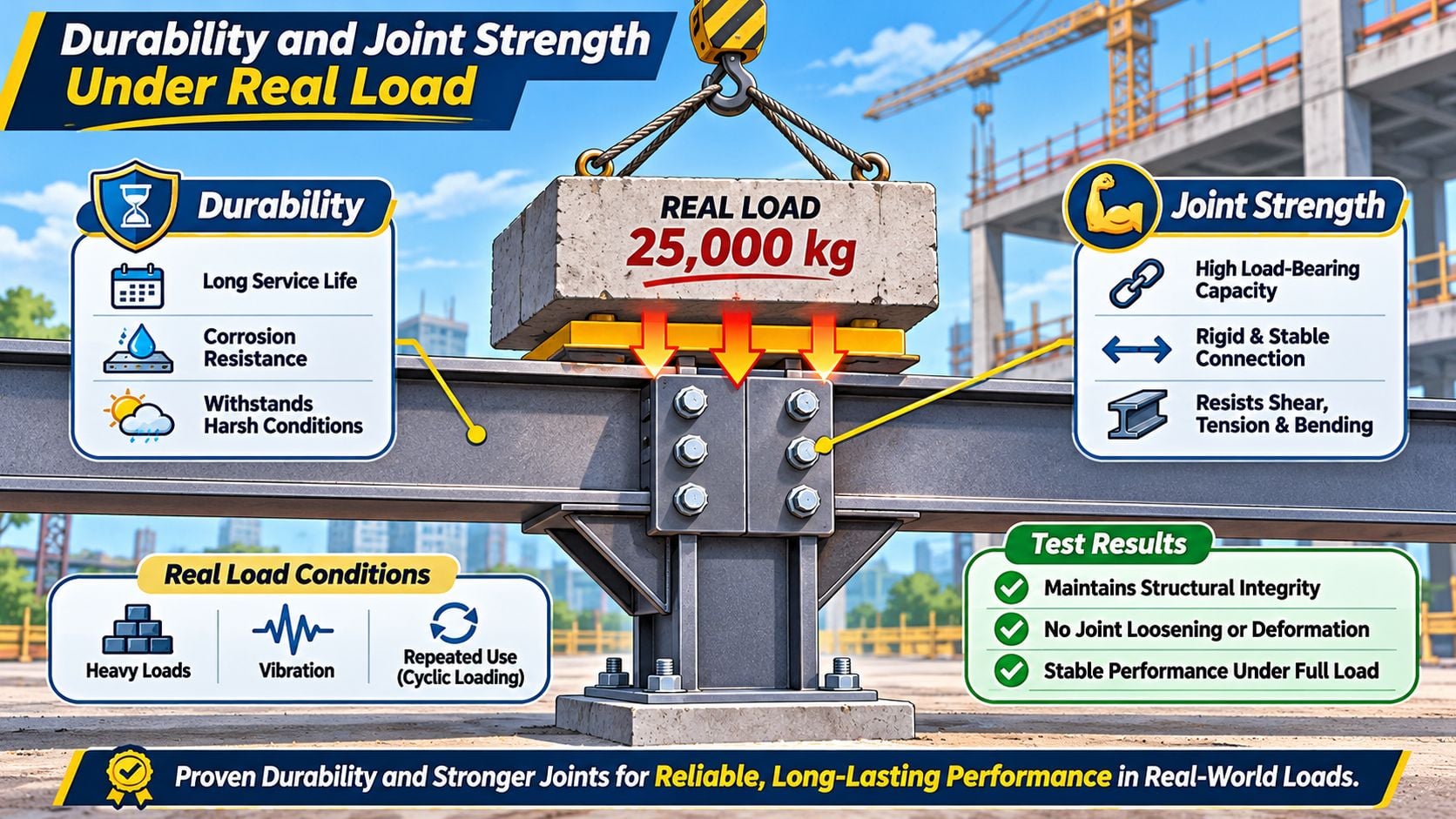
A 2026 comparative study of Scots pine and P2-class furniture particleboard put numbers on the gap. Solid pine averaged 4,616 newtons of screw-withdrawal resistance with Confirmat screws and 2,741 N with universal screws, more than twice the baseline of the particleboard samples, as reported in the Scots pine and P2 particleboard study.
Translate that into a bedroom. Bed rails take the mattress load plus the weight of anyone sitting on the edge, and they come apart and go back together every time someone moves. Table aprons carry racking force every time a chair is dragged in. Shelf standards carry the full weight of books. Those are the joints where the measured baseline matters most.
The same study keeps the comparison honest. P2 particleboard showed no statistically significant loss of screw-withdrawal capacity through five assembly-and-disassembly cycles, with maximum changes of only 21.1 N for Confirmat screws and 34.3 N for universal wood screws. Particle board is not brittle junk. It's a material whose performance depends heavily on how the joint around the screw was designed.
Why two particle board cabinets of the same thickness perform differently
Board grade alone doesn't predict holding strength. Research on screw withdrawal from both the face and the edge of furniture-grade particleboard identifies three variables that measurably improve it: a smaller pilot-hole diameter, a smaller screw diameter, and epoxy reinforcement in the screw hole, per published testing on epoxy reinforcement and screw withdrawal.
That's the whole story behind two flat-pack cabinets at the same price with the same panel thickness. One was engineered around its fasteners. The other was drilled and shipped.
Where continuous grain pays off
Solid wood accepts joinery a particle panel cannot take. The Stickley Gus Round Lamp Table #1890 makes the point in solid oak: splayed and tapered legs that join at cross stretchers with keyed through tenons, a detail that depends on continuous fiber running through the leg and a joint cut to fit. That is the kind of construction explained in this guide to mortise and tenon joint furniture, and it's why the table can be disassembled, re-glued and tightened rather than replaced.
Repair mechanics follow the same logic. A stripped screw hole in solid wood gets drilled out, plugged with a glued dowel, redrilled and reused. A loosened hinge in solid wood gets longer screws and a hardwood shim. In a swollen core, the material around the fastener has already crumbled, and there's nothing left to grip.
How Each Material Handles Central Florida Humidity
A west-facing dining room in Winter Park takes direct sun from mid-afternoon until it drops behind the oaks. A lanai door left open during a July storm pushes indoor humidity well past what any furniture finish was formulated for. This is the environment both materials have to survive here, and neither one is automatically immune to it.
Solid wood moves with the seasons. It absorbs and releases moisture, which shows up as expansion and contraction, occasional cupping, and end splits where shrinkage runs differently across and along the grain. Particle board fails by a different mechanism. Water that reaches the core causes swelling that can split solid-wood edge bands and lift veneers, and that swelling is largely irreversible. Purdue Extension's guidance on furniture defects documents both failure modes under climate changes.
The label alone proves nothing about moisture performance. Under EN 312, furniture-grade particleboard is evaluated for bending strength, internal-bond strength and 24-hour thickness swelling. A peer-reviewed evaluation of P3 moisture-resistant boards reported a 14% swelling limit and a 0.13 N/mm² moisture-resistance requirement for humid conditions, with the tested boards meeting the P3 criteria. A P3-rated panel is a different product from an unrated one.
The habits that decide the outcome
- Seal every edge: Dining and occasional tables need sealed edges, including the underside and any cutout for hardware.
- Keep water off the surface: No standing water under planters, no sweating glasses left overnight, felt pads under anything ceramic or metal.
- Acclimate before loading: Give a new piece 24 to 48 hours in the room at normal indoor conditions before filling drawers or hanging doors.
- Hold indoor humidity roughly between 40% and 60%: This is the range where solid wood moves least and finishes last longest.
- Keep particle board off the lanai slab: Outdoor slabs wick moisture upward regardless of the finish on the furniture.
- Inspect on arrival: Look at seams, edge bands and the inside of screw holes, because damage usually starts at an opening rather than in the middle of a panel.
Solid wood performs best when it was dried to the right moisture content before machining, which is the whole point of kiln-dried wood furniture. Green lumber machined into a table will move after it reaches your house, no matter how thick the finish is.
Practical rule: Water never damages the middle of a panel first. It enters through an unsealed screw hole, a chipped edge or a lifted seam, and everything after that is a repair you can't undo.
Emissions and Indoor Air Quality Compared
Most of the formaldehyde warnings circulating about particle board describe a problem that U.S. regulators already addressed with specific numbers, and the numbers are worth knowing before anyone panics in a bedroom set aisle. Particle board is a regulated composite wood product. Unfinished solid wood is not regulated in the same category.
Under the TSCA Title VI framework, the federal emission standard for particleboard is 0.09 parts per million of formaldehyde, with limits of 0.05 ppm for hardwood plywood, 0.11 ppm for medium-density fiberboard and 0.13 ppm for thin MDF, according to the EPA's formaldehyde emission standards for composite wood products. Those standards came from the Formaldehyde Standards for Composite Wood Products Act of 2010 and cover manufacturing, testing, labeling, recordkeeping and imported goods.
What the numbers do and don't mean
The 0.09 ppm figure is a regulatory ceiling for products tested under prescribed conditions. It is not a measurement of every panel on a showroom floor, and it is not a promise that two compliant boards emit identically.
Solid wood sits outside that category because it isn't built from resin-bonded particles, but that doesn't make every solid piece emission-free. As the EPA's answers to consumer questions on the formaldehyde standards explain, emissions can still vary with species, moisture content, temperature, storage time and processing. Imported goods face additional requirements, including CARB Phase II compliance and Canadian panel rules, which the federal regulation at 40 CFR 770.10 sets out.
| Material | Limit (ppm) | Regulated composite wood | What to ask for |
|---|---|---|---|
| Particleboard | 0.09 | Yes | TSCA Title VI compliance documentation and fully sealed edges |
| Hardwood plywood | 0.05 | Yes | Compliance label on the panel or finished product |
| Medium-density fiberboard (MDF) | 0.11 | Yes | Certification plus sealed or laminated surfaces |
| Thin MDF | 0.13 | Yes | Certification plus sealed or laminated surfaces |
| Solid wood | Not regulated in the composite wood category | No | Species, moisture content and finish information |
| Finished furniture containing particleboard | Must use compliant panels | Yes | A low-emission label or manufacturer documentation |
Four questions to ask before you buy: Is the composite panel certified? Are all exposed edges sealed or laminated? How recently was the piece manufactured? Is there a low-emission label or documentation in the file?
This matters most where the room is small and closed: nurseries, primary bedrooms and home offices with the door shut for eight hours. Ask there, and ask in writing.
Appearance, Refinishing and the Cost of Ownership
Two tables can look identical on a showroom floor and separate sharply after years of use. The difference sits in the edges, the seams and what happens the first time a chair leg catches a corner. Finishing is where appearance and longevity meet, because the coating is the only thing between the wood and the room.

On solid wood, the grain runs through the piece and across the edges, so it takes stain the same way in every direction and develops a patina as the finish ages. Sanding removes the old surface and reveals the same material underneath. Veneer and laminate can match that look at purchase, then chip at an edge, lift along a seam, and refuse to be sanded at all.
Natural markings deserve a fair reading before they are called flaws. Wood furniture may show variations in grain and color, including knots, mineral streaks, pitch pockets, tiger striping and insect markings, none of which count as quality defects. Simulated antique distressing is intentional too, and it gets mistaken for damage more often than almost anything else in a showroom. Metal, marble, granite and stone components can vary in color, texture, veins and voids. Handcrafted wrought iron can vary slightly in size and shape. Those variations are not quality defects either.
Cost per year is the honest comparison
Repairability is the reason the math works. A solid top can be sanded and recoated more than once across its life, a process covered in this guide to how to refinish wood furniture. A chipped laminate edge cannot be repaired at all, only hidden or replaced.
Run the comparison over 24 years. A veneered dining table at $700, replaced every six years, costs about $2,800 in purchase price alone before delivery and disposal enter the picture. A solid oak table at $2,600 kept for those same 24 years with one refinish costs less and never leaves the house. Sell the house in five years, though, and the cheaper table was the smarter buy. Furniture value depends on how long you keep it, not how long it could last in ideal use.
Buying rule: Divide the full price by the years you'll realistically keep the piece, not the years the salesman says it will last.
Warranties hint at expected service life. All products from Slone Brothers Furniture carry a full manufacturer warranty that commonly ranges from one year to limited lifetime, and that spread reflects what the maker expects from the construction. Finishes sit outside much of that coverage. Fabrics, leathers and wood finishes are not warranted against fading, stretching, staining, pilling, excessive wear, dye transfer or color variation from samples. A sun-drenched west-facing dining room in Lake Mary needs a finish plan built for UV exposure, not a standard lacquer and hope.
How to Tell Solid Wood From Particle Board in the Showroom
Five minutes and a fingernail will settle what a product description won't. Run these checks in this order, because each one narrows the answer before you commit.
- Look at exposed end grain. A leg end or tabletop edge on solid wood shows growth rings and a continuous fiber pattern. Particle board shows a speckled chip-and-resin core, sometimes visible under a thin band.
- Read the top, then flip it over. Solid wood repeats the same figure and grain pattern on both faces. Veneer shows a near-identical mirrored sheet with a seam line where two leaves meet.
- Run a fingernail along an edge. Solid wood needs no banding at all. Particle board carries a taped or PVC edge band, and that band is the first thing to lift when the core gets wet.
- Reach into a screw hole inside a drawer box or behind a hinge. Clean threads cut into grain mean solid wood. Chipped flakes and a powdery feel mean a composite core.
- Lift a corner and knock on it. Solid wood is heavy and answers with a dull, resonant knock. A light core under laminate sounds hollow and flat.
- Ask in writing for the substrate, the joint type, TSCA Title VI documentation, whether every edge is sealed, and what the warranty covers.
Read the core, not the front. Almost every piece in a premium showroom has a handsome face, and the money is spent on what's behind it.
The hybrid build deserves a fair hearing. A solid frame, solid top or solid drawer box over a compliant, fully sealed panel is a legitimate way to build a case good, and plenty of well-made furniture uses exactly that mix. Ask which parts are which, and judge the answer rather than the label. The guide to reading furniture product descriptions covers how those disclosures usually read. A Slone Brothers Furniture consultant in Longwood will walk the same six checks on the floor with you.
Which Rooms Suit Which Material
Put solid wood where the piece carries load, gets moved, or is touched daily: bed frames and rails, table tops, drawer boxes and chair frames. Allow certified, sealed particle board where the piece is static, dry and lightly loaded. The room decides more than the budget does.
| Room or piece | Better choice | Why | Watch-out |
|---|---|---|---|
| Dining table | Solid wood | Takes daily load, wiping and sunlight for decades | Specify sealed edges and a humidity-appropriate finish |
| Dining chairs | Solid wood | Joints absorb leaning, dragging and pushing back | Inspect corner blocks and leg joinery, not the seat cushion |
| Coffee and end tables | Solid wood top | Wet glasses, hot mugs and heavy decor land here constantly | Coasters and felt pads; a refinishable top pays for itself |
| Bed frame and rails | Solid wood | Carries the mattress and gets reassembled on every move | Confirm rail hardware and center support |
| Dresser or chest | Solid wood drawer boxes | Drawers open and close thousands of times | A composite carcase is acceptable if every edge is sealed |
| Nightstand | Either | Light, dry load in a climate-controlled room | Sealed laminate is fine; unsealed edges are not |
| Bookshelf or display cabinet | Solid wood shelves | Long spans deflect under the weight of books | Check shelf thickness and support, not just the material |
| Home office desk | Solid wood top | Daily arm weight, writing pressure and equipment | Laminate edges fail where wrists rest |
| Media console | Either | Static load and low moisture exposure | Keep ventilation for electronics and avoid standing water |
| Breakfast nook table | Solid wood | Kitchen humidity, spills and constant use | Sealed top and edges, and wipe spills within minutes |
| Lanai or covered porch | Solid wood rated for outdoor use | Humidity swings and direct sun | No particle board outdoors, whatever the finish |
| Kids room | Solid wood frame | Impact, climbing and repeated furniture moves | Rounded edges, and certified sealed panels if composite |
| Bathroom vanity | Solid wood or marine-grade composite | Standing water, steam and daily splashing | Sealed edges and a moisture-resistant grade only |
Two local rules that override the table
Nothing made of particle board belongs on a lanai or covered porch in Central Florida, regardless of what the finish claims. A covered porch in Altamonte Springs sees the same humidity swings as the yard, and the slab wicks moisture up through legs.
A bedroom set bought as a long-term investment needs solid wood drawer boxes and runners, even when the carcase is composite. Drawers are the part you touch at 6:40 in the morning, and they're the first failure in a cheap set.
Everything else in the table resolves the same way. Will this piece ever get wet, get moved, or need refinishing? If the answer is yes to any of them, the premium goes into wood. Dining is the clearest case, which is why Amish dining room furniture is built around solid tops and serviceable joinery rather than a veneer sheet.
The Verdict for Your Central Florida Home
Buy according to the buyer, not the material. There are three honest profiles, and only one of them should spend the premium across an entire house.
The heirloom buyer. Furnishing a Longwood, Lake Mary or Winter Park home for twenty years or more, this buyer should choose solid wood wherever the piece carries load, gets moved or is touched daily. For dining and bedroom, Mavin builds in Ohio's Amish country with cherry, oak, maple, walnut or hickory trees hand-selected by a third generation of lumber specialists. That's the construction that gets repaired in year fifteen instead of replaced.
The pragmatic buyer. Solid wood frames, tops and drawer boxes, paired with certified, fully sealed composite elsewhere. This buyer puts the premium exactly where hands and weight land and saves on static casework, which is a defensible strategy rather than a compromise.
The short-horizon buyer. A guest room, second home or rental. Certified, fully sealed particle board is rational here and needs no apology. Spending heirloom money on a room you see six weeks a year is a poor use of capital.
Timing shapes the decision as much as material does. Typical lead time in the furniture industry for special-ordered pieces is anywhere from 6 to 8 weeks, which may not include delays from out-of-stock fabrics or components, so a room that has to be finished by a holiday needs an order placed well before. Custom orders can specify species, finish and dimensions, which is often how a shopper ends up with solid wood in the right size instead of a compromise in the wrong one.
Before anyone commits, a design consultant should sit down with a floor plan and check dimensions, door swings and traffic paths. That conversation usually changes one or two choices, and it costs nothing.
Furniture that's meant to last twenty years deserves more than a spec sheet and a return policy. Slone Brothers Furniture has served Central Florida since 1980 from its Longwood showroom, with solid wood and Amish-crafted collections, custom orders, and experienced design consultants who will sit with your floor plan and answer hard material questions without pressure. Bring your room dimensions and your questions to Slone Brothers Furniture and compare a solid oak tabletop against a sealed laminate side by side, in person, before you spend a decade living with the choice.