

Mortise and Tenon Joint Furniture: A Buyer’s Guide


A homeowner in Longwood presses a palm against a dining chair's arm and feels it rock slightly. Beside it, another chair feels settled and solid. Both may be handsome, but the difference under the hand can point to something deeper than finish or upholstery: how the frame's parts connect.
That's where mortise and tenon joint furniture deserves a closer look. The name describes a traditional wood-to-wood connection, but the label alone can't guarantee heirloom quality. Geometry, fit, moisture, and the maker's choices all affect how the joint performs in a home.
What a Mortise and Tenon Joint Does
A mortise-and-tenon joint connects two pieces of wood by fitting their shapes together. One piece ends in a projecting tab, the tenon. The other has a matching slot, the mortise. Seated in that slot, the tenon transfers force across the wood surfaces, giving the connection support beyond screws or nails alone.
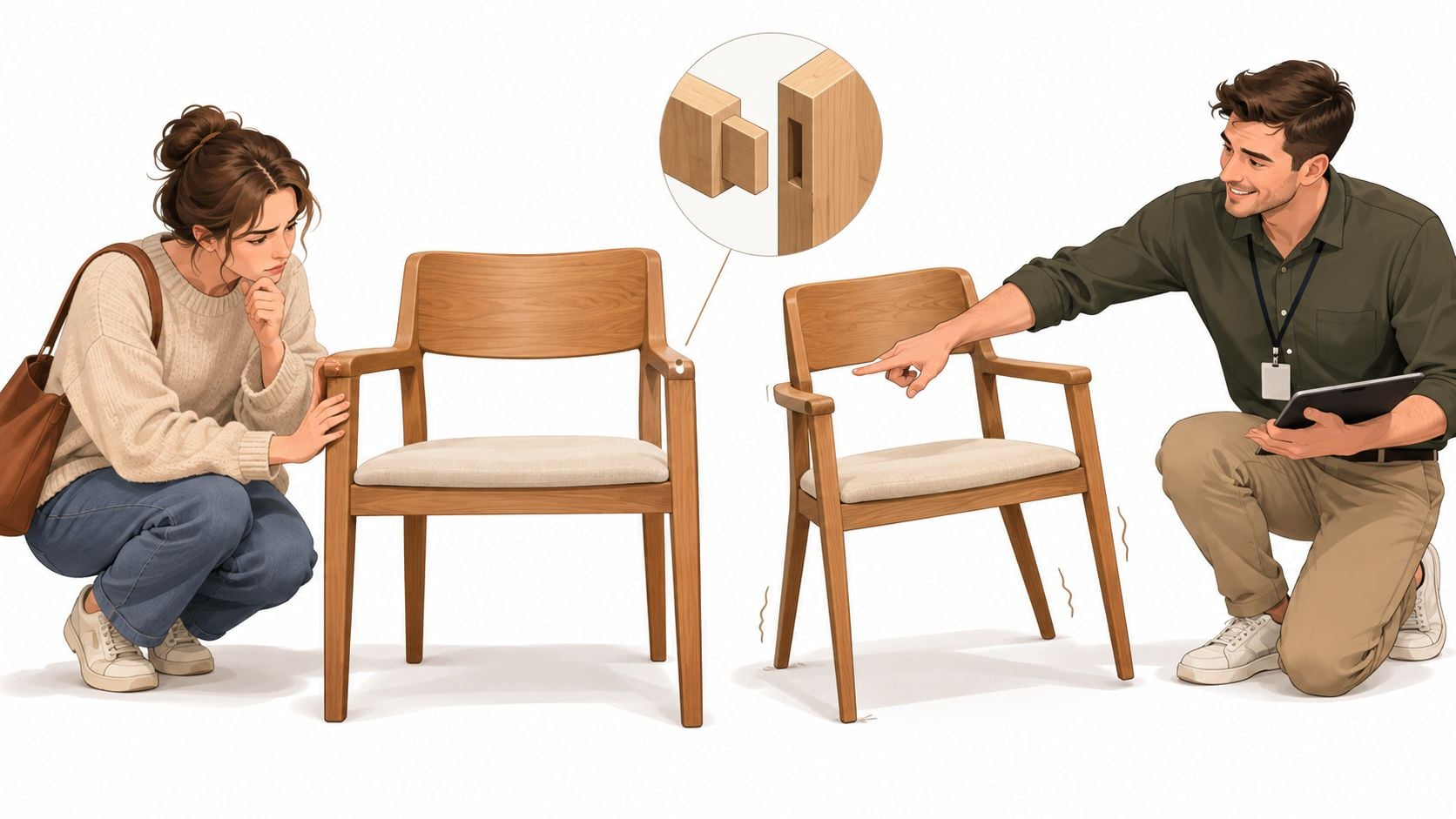
Consider a chair rail meeting a leg. As someone sits, stands, or shifts, that connection faces repeated movement. On a table, a mortise-and-tenon joint may connect an apron to a leg, helping the frame handle everyday pushing and pulling. Glue, pegs, or wedges may add support, while the fit between tenon and mortise determines how their surfaces meet and carry force.
Variations you may see on furniture
A through tenon passes through the receiving piece, leaving its end visible. A maker may secure that end with a wedge or peg, making the joinery part of the design. A blind tenon stops inside the mortise, so the outer face stays clean.
Other forms address different needs. A haunched tenon has a small shoulder extension that helps close a frame corner. A wedged tenon spreads at the end to resist being pulled back out. A pegged or draw-bored joint uses a wooden pin to hold the pieces together. These shapes reflect choices about appearance, assembly, and the forces a piece is expected to handle.
Why the principle has endured
Mortise-and-tenon joinery is among the oldest documented structural methods used in wooden construction and furniture. An early example from China's Hemudu culture dates to approximately 7,000 years ago. The technique also appears in Neolithic wells near Leipzig, Germany, as described in the history of mortise-and-tenon joinery.
The lasting idea is straightforward: wood surfaces shaped to fit can bear against one another. For shoppers considering American-made or Amish-crafted chairs, tables, beds, and case goods, that history provides useful context, not a guarantee. In any particular piece, the joint's value still depends on how accurately it is designed and made.
How the Joint Became a Mark of Heirloom Furniture
On the Khufu ship, wooden planks were joined to form a vessel more than 43.6 meters long. The mortise-and-tenon joint appears in wooden structures across widely separated regions, where builders relied on it to hold parts together under real loads. Its history is a record of a practical engineering solution, not merely a decorative tradition.
By approximately 2500 BC, builders used the joint to connect the Khufu ship's planks. The vessel was constructed for Egypt's Fourth Dynasty and preserved beside the Giza pyramid complex. Later evidence includes the Uluburun shipwreck, dated to the 14th century BC, as well as furniture and buildings across the Middle East, Europe, and Asia. The examples show how widely useful the underlying idea became.
From structural solution to visible craft
Over time, mortise-and-tenon work became part of furniture traditions that value honest construction. In Arts and Crafts and Mission styles, makers often left joinery visible, so the structure also shaped the design. That clarity still appeals to homeowners who want furniture with substance and a sense of continuity.
A Longwood shopper might recognize that heritage in Stickley's Arts and Crafts tradition, or see its practical continuation in Amish traditional joinery and Mavin's bench-carved dining and bedroom collections. Canadel offers another expression through hand-finished solid birch dining furniture. These makers differ in style and construction choices, but each illustrates how material and structure contribute to a finished piece.
A traditional joint earns its place through sound execution, not age alone.
The distinction matters when comparing heirloom furniture with pieces built around less visible, more temporary connections. A centuries-old method cannot guarantee that every modern example is exceptional. It gives shoppers a useful starting point: ask how the frame is assembled and whether the design suits the furniture's intended use.
For someone furnishing a home in Longwood, Lake Mary, or Winter Park, a well-made piece connects everyday life to a craft tradition with a long history. The meaningful question is whether the maker has carried that tradition forward with care, creating furniture suited to serve a household beyond its next redesign.
The Engineering Details That Determine Real Strength
A mortise-and-tenon label tells a shopper what kind of joint is present. It doesn't reveal how well the joint was engineered. Furniture research shows that tenon proportions, end shape, insertion depth, and fit all influence how a connection handles bending and movement.
One controlled study found that fully inserted tenons produced 54% greater bending-moment capacity than partially inserted tenons, as reported in research on mortise-and-tenon performance under bending. In plain language, a tenon that seats fully can engage more of the joint than one that stops short.
The end shape also matters. Rectangular-end mortise-and-tenon joints were approximately 15% stronger than round-end versions and than rectangular tenons fitted into round mortises, according to research on various mortise-and-tenon joint sizes. The finding doesn't mean every chair needs the same dimensions. It shows that details a shopper may not see at first glance can change the joint's behavior.
Length and width serve different purposes
Tenon length has a greater effect on moment resistance, which helps a frame withstand bending and racking. Tenon width has a greater effect on stiffness, or how resistant the connection is to movement under load. A maker has to choose dimensions that suit the furniture, while leaving enough wood around the mortise to protect the surrounding piece.
| Furniture Type | Key Joint Concern | What Strong Execution Looks Like |
|---|---|---|
| Chair frame | Repeated rocking and racking | Fully seated tenons, close shoulder contact, and dimensions suited to the joint's load |
| Dining table | Bending where the apron meets the leg | A well-fitted connection with enough tenon engagement and surrounding wood |
| Case goods | Frame movement around rails and corners | Consistent fit at structural intersections and a design suited to the case's construction |
For shoppers comparing solid-wood construction, the guide to choosing hardwood for longevity and style can help frame questions about material alongside joinery.
What the label leaves out
A joint can be traditional in name and still be poorly fitted. Gaps at the shoulders, incomplete seating, or dimensions that don't suit the load can weaken the result. Full insertion and continuous shoulder contact are more useful signs than a label by itself.
Research on chair frames also shows why testing must be read in context. A particular study assessed a specific design under defined loading conditions. That can inform sound design practice, but it doesn't prove that every chair sold with mortise-and-tenon construction will perform the same way.
For a buyer, the practical question is simple: how was this connection designed for this chair, table, or case piece? An experienced consultant should be able to discuss the construction in understandable terms rather than relying on a traditional label as a complete answer.
How to Identify Mortise and Tenon Construction in a Showroom
A showroom inspection doesn't require woodworking tools. It takes a patient look, a careful touch, and a few direct questions. The goal isn't to judge a piece from one detail, but to understand how its visible construction supports its intended use.
Start with the places where rails meet legs
Look at the stretcher and apron connections on a chair or table. Square shoulders that meet the leg cleanly can indicate careful fitting. Exposed wooden pegs or the end-grain of a through tenon may offer visible clues, while a snug seam at a rail-to-leg intersection suggests the parts meet closely.
Not every well-made joint is exposed. A blind tenon is meant to remain concealed, and upholstery can cover parts of a frame. The lack of a visible peg doesn't rule out traditional joinery; it means the shopper should ask how the frame is assembled.
Try a gentle, sensible test
With a chair on a stable floor, apply light pressure to the arms or back and notice whether the frame feels composed or shifts at its connections. Don't twist, force, or rock the chair aggressively. A creak can come from movement in a joint, but it can also come from other parts of the frame or upholstery, so it's a prompt for a closer inspection rather than proof of a defect.
The same approach works across furniture styles. A Stickley chair might reveal a visible structural detail, while a Mavin dining table, Amish bed, or Canadel sideboard may call for questions about concealed connections and frame construction.
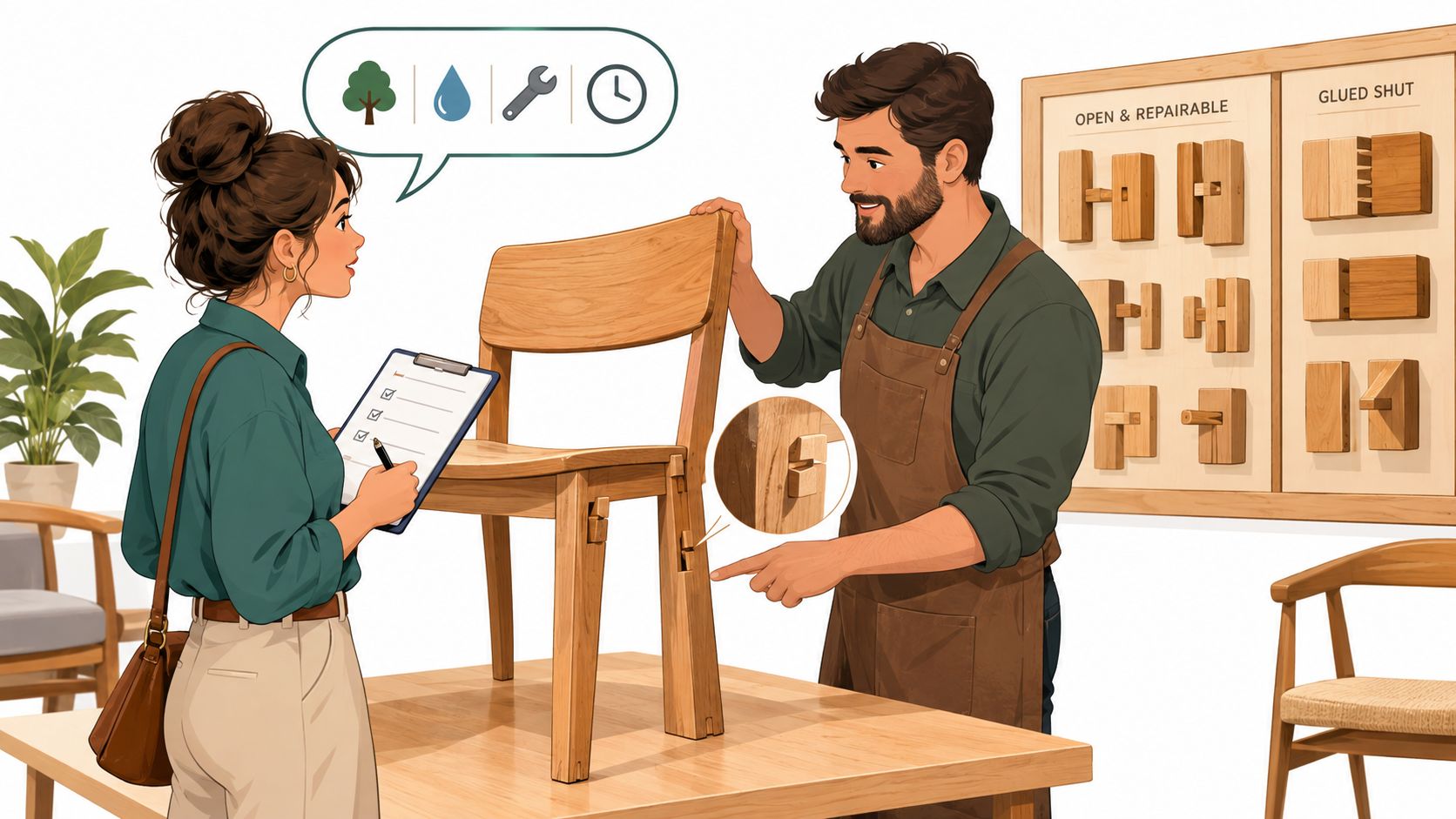
A useful showroom question: “Can you show me where the structural joints are and explain how they're secured?”
Ask about construction, not just terminology
A thoughtful conversation can clarify what the eye can't. Ask about:
- Wood species: What wood is used for the structural members, and how was the stock prepared?
- Tenon design: Is the joint through, blind, wedged, or pegged, and how does that choice suit this piece?
- Assembly: Is the joint glued, mechanically locked, or built with a combination of methods?
- Consistency: Are the same construction principles used throughout the frame or set?
A chair that feels stable in the showroom still needs a suitable frame and careful manufacture. Slone Brothers describes its quality assurance processes, and a face-to-face discussion can help a shopper connect those broader quality considerations to a particular piece.
Why Central Florida Humidity Changes Everything
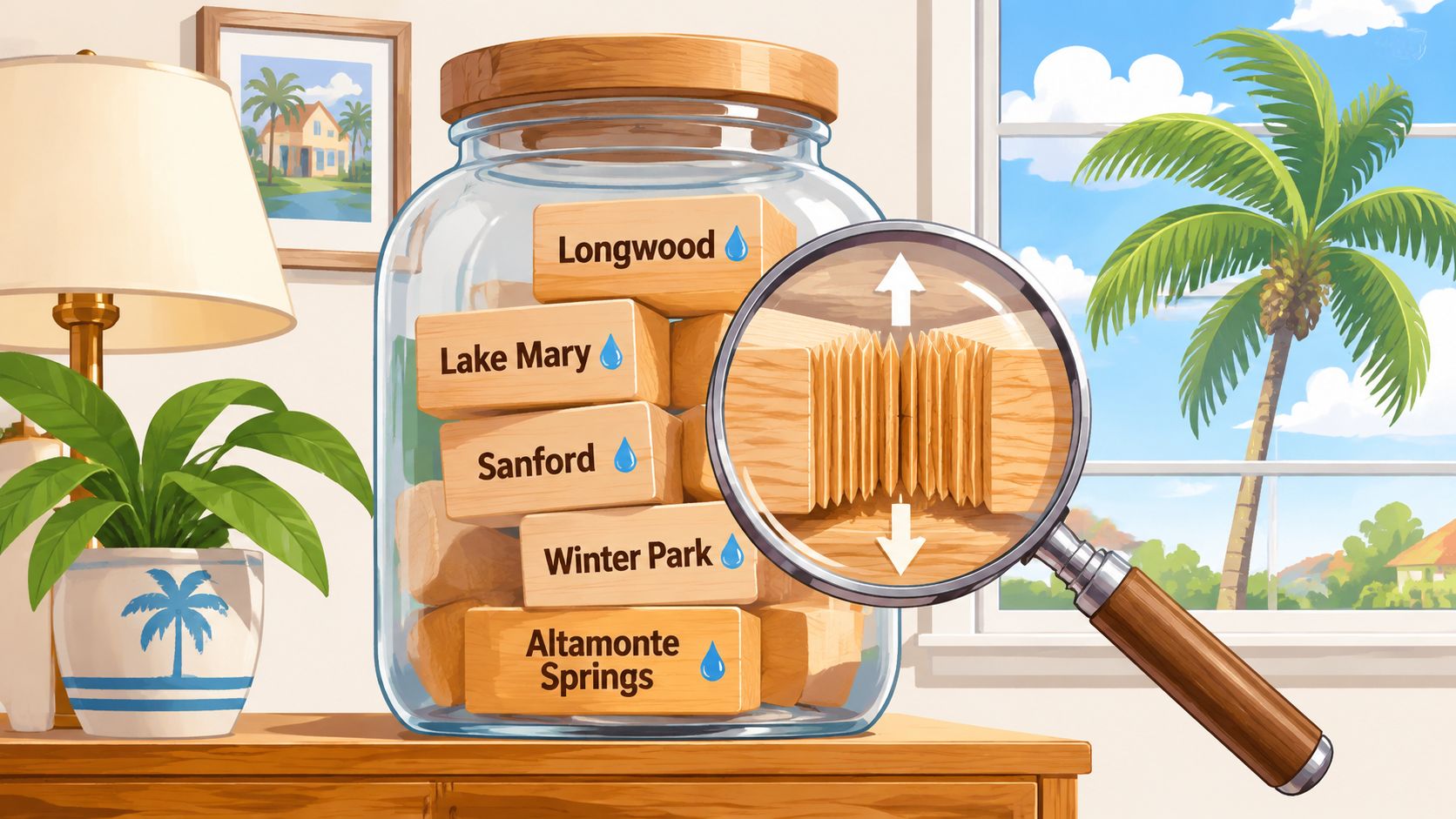
A wood joint doesn't live in a laboratory. It lives in a room, where wood continues to exchange moisture with the surrounding air and can change dimension across the grain. For homes in Longwood, Lake Mary, Sanford, Winter Park, and Altamonte Springs, indoor conditions are part of the furniture's long-term environment.
Moisture research helps explain why a tight-looking joint isn't automatically better. In one swelling-based assembly approach, a drier tenon fitted into a mortise at roughly 12% equilibrium moisture could swell and create compressive contact stresses that help stabilize the connection. But if the moisture difference is too great, constrained swelling can crack the mortise wall. The reported recommendation was to keep the moisture difference to no more than about 4 percentage points for pine and 5 percentage points for beech, as described in research on moisture behavior and mortise-and-tenon fit.
Room conditions and placement both matter
A cited indoor relative-humidity range of 35%–45% is recommended to help reduce wood-furniture problems. Homeowners don't need to chase a perfect reading every day, but steady indoor conditions can help limit avoidable stress on solid-wood furniture.
Placement also counts. Keep a solid-wood chair, table, or case piece away from direct air-conditioning discharge, damp exterior walls, and intense sun from a bright south-facing window. When a new piece arrives, give it a suitable place in the home and follow the maker's care guidance instead of exposing it immediately to harsh or unstable conditions.
For homeowners thinking about moisture across the home, this resource on protecting floors from humidity offers related context about wood materials indoors. Furniture needs its own care, too. Slone Brothers' guidance on caring for wood furniture can help owners build practical maintenance habits.
The maker controls the design and fit, but the room affects how wood behaves after delivery. Complimentary in-home design guidance can help homeowners consider placement alongside scale, finish, and the way a room is used.
When a Stronger Joint Is Not a Better Joint
Strength is only one part of long-term value. A joint that holds firmly but can't be serviced without damaging the piece may create a different problem when a bed needs to move, a dining table needs refinishing, or a chair leg needs replacement.
Research on a tested three-dimensional corner-joint design illustrates the trade-off. That design combined easier disassembly with a bending resistance of 4,386.57 N, compared with 1,921.25 N for its control, according to the study of three-dimensional furniture corner joints. Those values describe that tested design, not a general performance promise for every furniture joint. The broader lesson is that repairability and strength can be considered together.
Different assemblies suit different owners
A glued mortise-and-tenon joint can provide a durable, permanent connection when it's well designed and assembled. If it loosens or becomes damaged, a furniture professional may be able to repair it, but access and the condition of the surrounding wood matter.
A wedged or pegged joint adds mechanical retention. Depending on how it's built, a skilled repairer may be able to release or renew the mechanical element. A mechanically reinforced joint adds another material and changes how the connection carries load, so the construction details should be clear.
The best choice depends on the furniture's purpose and the owner's plans. A dining chair intended for daily use has different needs from a table designed to come apart for transport. A bed that might be disassembled during a move deserves an honest conversation about how its frame connects and whether it can be reassembled reliably.
“How will this piece come apart if it ever needs to?”
That question isn't a challenge to the maker. It's a practical way for a homeowner to understand what future repair might involve before making a long-term investment. A clear answer helps distinguish a durable design from a joint that's difficult to access.
What to Ask Before You Buy Heirloom-Quality Furniture
Construction transparency is a better measure of confidence than a label. Mortise-and-tenon joinery can be an excellent choice, but buyers should understand what wood, fit, assembly method, and intended use sit behind the term.
For a Greater Orlando homeowner comparing chairs, dining tables, beds, or case goods, a useful conversation can include:
- Wood species: Which species form the structural frame, and are the parts solid wood where the load-bearing connections are?
- Joint geometry: How does the tenon's size and shape suit the furniture's form and expected use?
- Assembly method: Does the maker use adhesive, pegs, wedges, or reinforcement, and why?
- Set consistency: Are the joints and construction standards consistent across the chairs or matching pieces?
- Florida conditions: What care and placement guidance does the maker recommend for indoor humidity changes?
- Future service: If a connection loosens or a component is damaged, what repair options may be available?
These questions make sense across different categories, though the construction details vary. Stickley brings a timeless Arts and Crafts heritage and handcrafted joinery. Smith Brothers focuses on custom bench-made comfort and premium frame construction, while Mavin offers precision solid-wood dining and bedroom collections built by custom bench-carvers in Amish country. Amish emphasizes hand-selected solid hardwoods and traditional joinery; Canadel offers hand-finished, solid birch custom dining furniture.
A frame's joinery is one part of the decision. Buyers can also sit in the chair, open a drawer, lift a table edge, and notice whether the piece feels composed in ordinary use. Those physical checks work best alongside a conversation with an experienced consultant who can explain construction and customization without pressuring the shopper.
A long-term furniture decision also includes how a piece fits the home and how it may be maintained. This guide to how long furniture should last can support that broader view. For homeowners furnishing a home in Longwood, Orlando, or nearby communities, heirloom value comes from a combination of sound construction, a suitable design, clear information, and service over time.
Experience the Joinery in Person at Our Longwood Showroom
A joint makes more sense when a shopper can see and feel the furniture in person. Slone Brothers Furniture is family-owned and has served Central Florida since 1980, with experienced design consultants, complimentary in-home design services, and white-glove delivery. Visit the Longwood showroom to explore Stickley, Mavin, Canadel, Stressless, and other curated collections with a real person who can talk through the construction.
Visit Slone Brothers Furniture in Longwood to compare solid-wood furniture, ask about mortise-and-tenon construction, and get thoughtful guidance from experienced design consultants. The team offers complimentary in-home design services and white-glove delivery, helping Central Florida homeowners plan a home with craftsmanship and care.