
Sustainable Wood Furniture: A Florida Homeowner’s Guide


A lot of Central Florida homeowners know the feeling. A dining table looks great in the store, works for a few seasons, then starts showing its weaknesses. Edges chip. Surfaces dull. Joints loosen. In a home that deals with sun, humidity, family traffic, and daily use, shortcuts don't stay hidden for long.
That's where sustainable wood furniture starts to matter. In practical terms, it isn't just about buying something labeled green. It's about choosing furniture made from responsibly sourced wood, built well enough to last, and finished in a way that supports long-term use instead of quick replacement. For homeowners in Longwood, Lake Mary, Sanford, and the greater Orlando area, that usually leads to better value, better durability, and a home that feels more settled over time.
Table of Contents
- What Is Sustainable Wood Furniture and Why It Matters in Florida
- Understanding the Materials Reclaimed Wood vs FSC Certified
- Key Certifications to Look For and What They Mean
- The True Value Durability and Lifecycle Benefits
- Affordable Quality Navigating Cost vs Long-Term Value
- Find Your Forever Furniture Right Here in Longwood
What Is Sustainable Wood Furniture and Why It Matters in Florida
For a Florida homeowner, sustainable wood furniture usually means a piece that does three things well. It uses wood from a responsible source, it's built for a long service life, and it can often be maintained instead of tossed out when normal wear appears.
That definition matters because sustainability gets oversimplified. Many shoppers hear the word and think only about forests. Forest management is part of the story, but so is construction quality, finish quality, and whether a piece still earns its place in the home ten or fifteen years from now.
In Central Florida, climate adds another layer. Heat, humidity, and strong sunlight can punish lower-quality furniture. A well-made solid wood dining table or bedroom piece generally handles real life better than something made to hit a low opening price.
Practical rule: The most sustainable piece in the room is often the one that still looks good, works well, and stays in the home for years.
The broader furniture category is enormous. The global wooden furniture market was estimated at USD 417.5 billion in 2025, which shows how much impact better buying habits can have when shoppers choose longer-lasting, responsibly sourced pieces across such a large market, according to wooden furniture market projections from GM Insights.
For local homeowners, that big-picture number connects to a simple everyday decision. Buy once with care, or replace repeatedly. One approach fills a house with furniture that settles in and ages gracefully. The other turns furniture into a revolving door.
Quality and sustainability often point to the same answer
A lot of furniture advice treats sustainability and quality as separate topics. They often overlap. A piece built with thoughtful joinery, better hardwoods, and a finish suited to regular use has a stronger chance of lasting. That's good for the home and better for the buying decision.
That's also why many Florida decorating conversations start with practical performance, not slogans. A homeowner choosing furnishings for sun-filled spaces can benefit from guidance like decorating a Florida home with long-term comfort and function in mind.
What usually confuses shoppers
The confusion usually comes from labels that sound alike but don't mean the same thing. “Reclaimed.” “Certified.” “Sustainably harvested.” “Eco-friendly.” Those terms can all point in the right direction, but they describe different parts of the product story.
A sustainable wood piece should be judged as a whole. Source of the wood. Quality of construction. Repair potential. Finish. Fit for the room where it will live.
Understanding the Materials Reclaimed Wood vs FSC Certified
Material terms can sound technical, but they're easier to understand when placed side by side. Most shoppers in the Orlando area aren't trying to become forestry experts. They just want to know what they're paying for and whether the furniture deserves a place in the home.
Reclaimed wood has history built in
Reclaimed wood is old wood put to work again. It may come from barns, older buildings, industrial structures, or previously used materials that have been cleaned, milled, and turned into furniture.
That gives reclaimed pieces a character many homeowners love. Saw marks, color variation, filled nail holes, and uneven grain aren't flaws in that context. They're part of the appeal.
Reclaimed wood can be a strong sustainability choice because it puts existing material back into use rather than relying only on newly harvested timber. It also tends to suit homes that want warmth, texture, and a less manufactured feel.
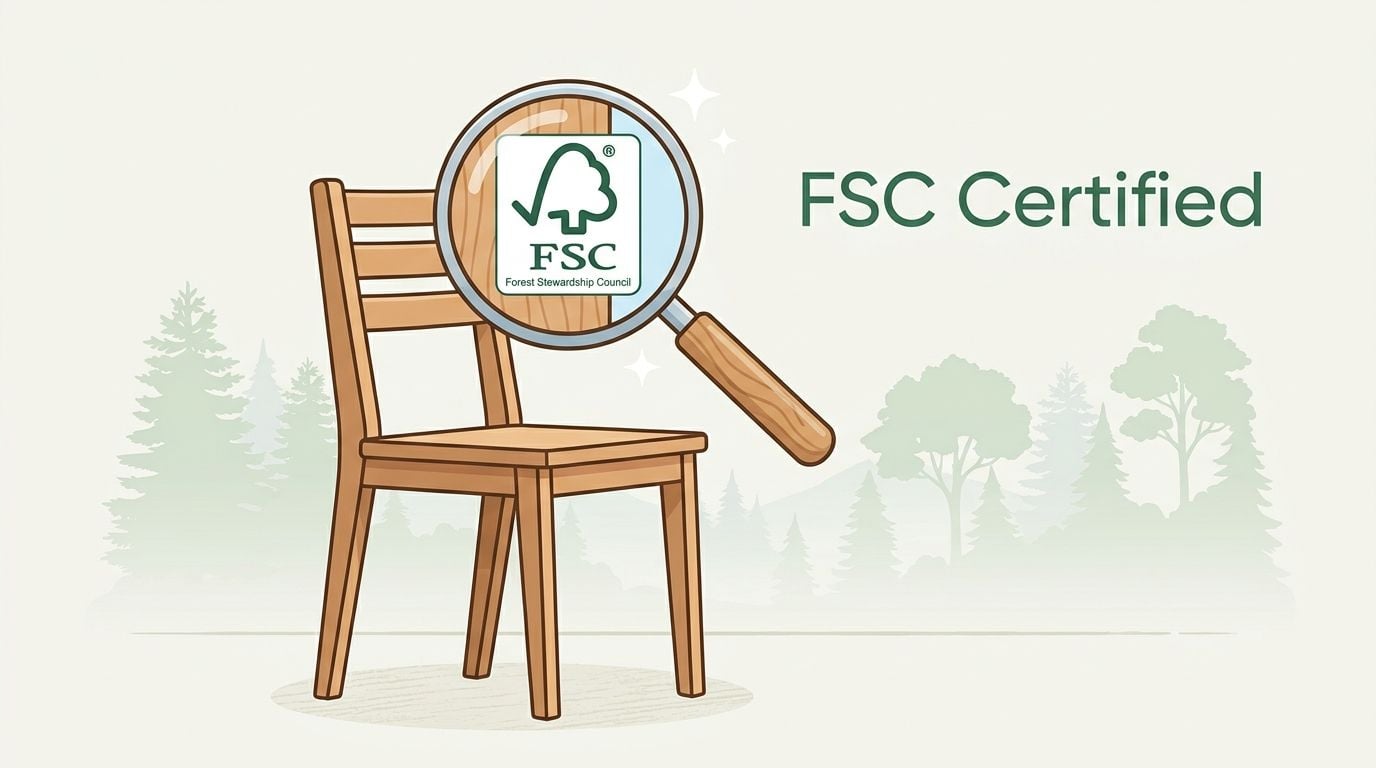
FSC certified wood is about traceability
If reclaimed wood is about a past life, FSC certified wood is more like a report card. It signals that the wood came from a responsibly managed source and followed a recognized chain of custody.
For shoppers, that matters because “responsible” is easy to say and harder to verify. Certification gives the claim structure. It gives a homeowner something specific to ask about when comparing a dining set, bedroom collection, or occasional table.
A shopper trying to get more comfortable with wood species, grain, and construction can also benefit from this guide to choosing the right hardwood for longevity and style.
Sustainably harvested is broader language
“Sustainably harvested” can be useful language, but it's broader. It often means the maker is describing responsible forestry practices without pointing to a specific third-party certification in the product description.
That doesn't automatically make the piece a poor choice. It does mean the shopper should ask better follow-up questions.
A simple comparison helps:
| Term | What it usually tells the shopper | What to ask next |
|---|---|---|
| Reclaimed wood | The wood had a prior use and was repurposed | Where did it come from, and how was it prepared for furniture use? |
| FSC certified | The source is tied to a recognized responsible forestry standard | Is the certification tied to the wood in this specific piece? |
| Sustainably harvested | The maker is describing responsible sourcing more generally | Is there documentation, supplier transparency, or third-party support behind the claim? |
A good product description should reduce confusion, not create it.
For families shopping for solid wood pieces that need to hold up to real use, it can also help to look at examples in adjacent categories. Resources on reliable bunk beds for high occupancy can be useful because they focus attention on structural strength, wood quality, and why solid construction matters when furniture gets used hard.
Key Certifications to Look For and What They Mean
Certifications matter because they give a shopper something firmer than marketing language. A furniture tag can say natural, earth-friendly, responsible, or green without saying much at all. Certification is different because it points to a defined standard.

According to PEFC's furniture sector guidance, third-party certification is a key signal of genuine sustainability, and organizations such as PEFC and FSC provide traceable assurance that wood comes from forests managed under strict environmental, social, and economic requirements.
What a certification does tell a shopper
It tells the shopper that someone outside the brand is involved in verifying the sourcing claim. That matters because traceability is one of the hardest parts of the furniture story for an ordinary buyer to see.
A useful way to think about it is this:
- FSC or PEFC on wood sourcing means the wood origin has a stronger layer of accountability.
- Traceability means the brand should be able to explain where the wood came from in a more concrete way.
- Consistency usually improves when a maker has systems in place instead of relying on vague language.
For a homeowner comparing two similar-looking tables, that can be the difference between buying with confidence and buying on hope.
What a certification does not guarantee
Certification is important, but it doesn't answer every question about the finished piece. It doesn't automatically tell a shopper how durable the joinery is, whether the finish is ideal for a bright breakfast nook, or whether every material in the item carries the same environmental profile.
That's where some people get tripped up. They assume a single logo means the entire furniture story is solved. It isn't. Certification is a strong sourcing signal, not a shortcut around every other quality question.
Worth remembering: Certification helps confirm where the wood came from. It doesn't replace questions about construction, finish, and expected lifespan.
A careful shopper can keep the process simple by asking:
- What wood is used in this piece
- Is the wood certified or otherwise traceable
- How is the piece constructed
- Can it be repaired or refinished later
- How should it be cared for in a Florida home
Those five questions usually reveal more than a long sales label ever will.
The True Value Durability and Lifecycle Benefits
The strongest sustainability argument in furniture isn't always about the forest first. Often, it's about the lifespan of the piece after it enters the home. Furniture that can be repaired, refinished, and kept in use asks less of the household over time.
According to this professional guide on sustainable furniture lifecycles, solid wood furniture often outperforms composites from a lifecycle perspective. The same guide notes that FSC-certified solid hardwood can remain in service for decades, while many composite products may fail in 5 to 10 years, increasing landfill burden.
Why longevity is the real sustainability test
A solid wood dresser that picks up a few scratches isn't necessarily nearing the end of its life. In many cases, that piece can be touched up, refinished, or kept in service because the structure is still sound.
That's very different from furniture that depends on thinner materials, weaker core construction, or surfaces that don't age well. Once damage shows up in those pieces, repair may be difficult or not worth the effort.
For many homeowners, that's the moment when the sustainability conversation becomes practical. A furniture purchase stops being only about style and starts becoming about service life.
Furniture earns its sustainability over time. The longer it serves the household well, the stronger the case for the purchase.
What this looks like in a busy Florida home
In Central Florida, furniture has to deal with real life. Family meals. Guests. Moving pieces during cleaning. Bright windows. Seasonal humidity. A table or bed that's made to be part of the home for years has a different feel from the start.
Good signs include:
- Repairable surfaces that can be refreshed instead of hidden under a tablecloth forever
- Solid construction that doesn't wobble after routine use
- Timeless styling that still works when wall color, flooring, or décor changes
- Material honesty so the piece ages like wood, not like a printed imitation
This same idea shows up in other long-lasting wooden goods. For families thinking about durability from an early age, Grow With Me's wooden toy insights offer a useful parallel. The appeal isn't just that wood looks nice. It's that wood often wears in a more forgiving, lasting way.
A homeowner who wants to compare short-term furniture with furniture built for long service can also review how long furniture should last in everyday use. That lens helps separate a temporary buy from a lasting one.
Affordable Quality Navigating Cost vs Long-Term Value
Price is where many sustainable furniture conversations get tense. A well-made wood piece often costs more upfront than a quick-ship alternative. That part is real. What often gets missed is the difference between ticket price and ownership value.
The market itself shows that more households are taking sustainability seriously. The eco-friendly furniture market is projected to grow at a 10.0% CAGR through 2033, with residential use accounting for 54.4% of demand in 2025, according to Grand View Research's eco-friendly furniture market analysis. That doesn't mean every sustainable piece is automatically a wise buy. It does suggest many homeowners now connect furniture choices with durability and long-term use.
Upfront price and lifetime value are not the same thing
A lower initial price can feel safer in the moment. But if the piece needs replacement far sooner, the household may spend more money, more time, and more effort than expected.
A better framework is to ask what the furniture costs across its useful life. That includes:
- How long it is likely to stay functional
- Whether it still looks good after normal wear
- If the style can stay relevant through room updates
- Whether the materials can be maintained
That's why value-minded shoppers in Longwood and Orlando often do well with furniture that lands in the middle of two extremes. Not disposable. Not selected only for prestige. Just well-built, meant to last, and priced with long use in mind.
A simple way to judge furniture value
A quick checklist can help:
| Question | Why it matters |
|---|---|
| Will this piece still function well years from now? | Durability drives value |
| Can the surface be maintained or refreshed? | Repair potential lowers replacement pressure |
| Does the design outlast short trends? | Timeless design stretches the investment |
| Is the construction easy to explain clearly? | Clear answers usually signal fewer shortcuts |
Shoppers sorting through that question often appreciate a straightforward look at why furniture can be expensive, because it helps separate material and craftsmanship costs from simple markup assumptions.
Affordable quality isn't the cheapest furniture in the room. It's the piece that still feels like a smart decision long after delivery day.
Find Your Forever Furniture Right Here in Longwood
A Central Florida homeowner walks into a showroom after replacing one sun-faded dining set and one wobbly bedroom piece in the last several years. By that point, the question has changed. It is no longer, “Do I like this color?” It is, “Will this still make sense in my home ten years from now?”
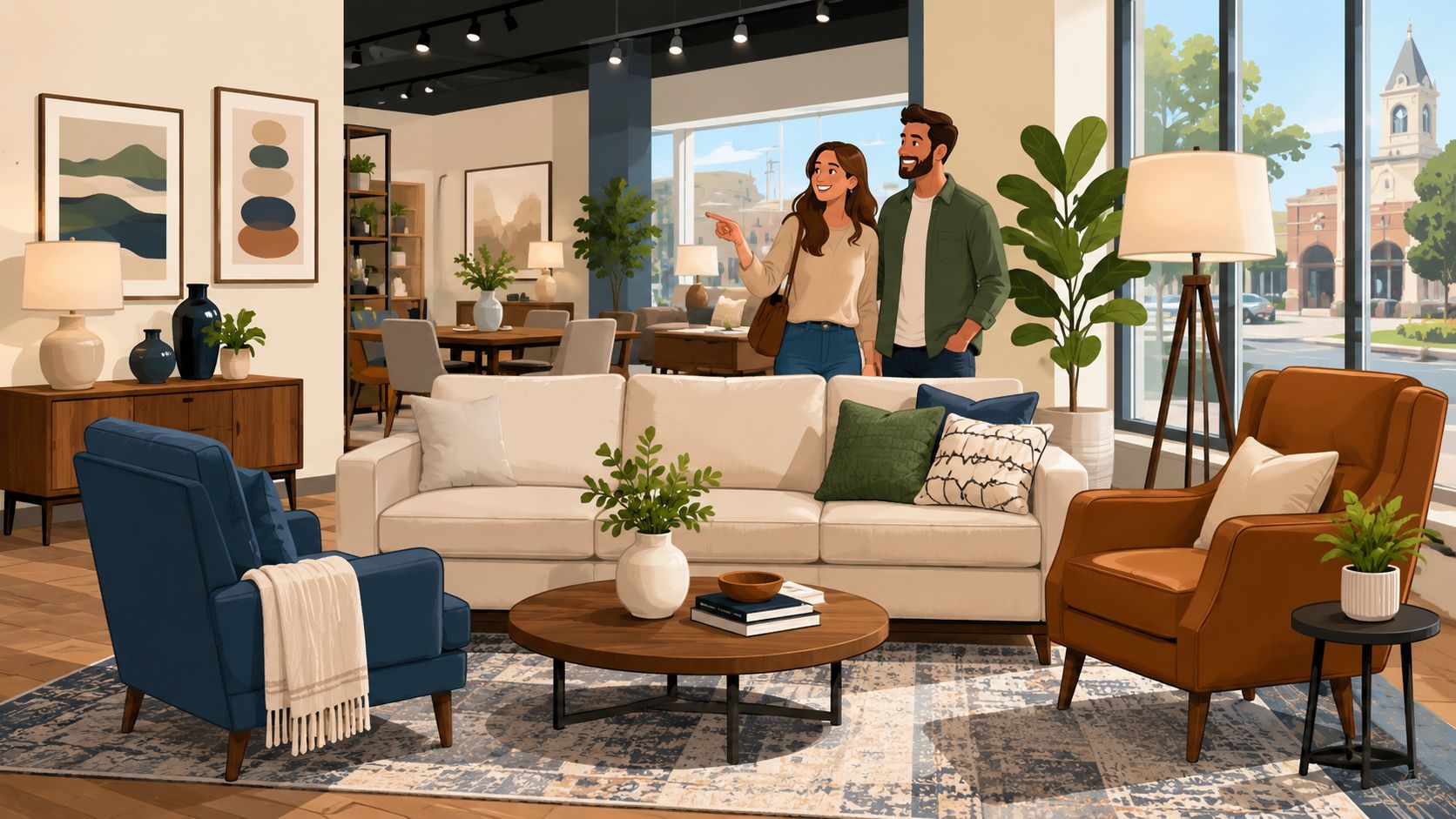
That shift matters because sustainable furniture is not just a label. It is a buying standard. Good wood furniture should come with a clear explanation of where the material came from, how the piece was built, and why it is likely to hold up in real family life here in Florida.
Shopping in person helps with that. A website can show a finish and a price. A showroom lets you open drawers, study grain patterns, compare construction, and ask the kind of practical questions that reveal whether a piece is built for long use or quick turnover.
Questions worth asking before buying
A helpful way to approach the conversation is to ask the same kind of questions you would ask about a roof or an appliance. You are checking what the piece is made of, how it will perform, and whether it can stay useful through the seasons of your home.
Where was the wood sourced?
A direct answer tells you more than a broad green claim.What kind of wood story does this piece have?
Solid wood, reclaimed wood, and certified wood can each be good choices, but they point to different strengths and sourcing paths.How will this finish handle light and daily use in Florida?
That question matters in sunny rooms, especially for dining tables, bedroom furniture, and accent pieces near windows.Can it be ordered in a size, wood species, or finish that fits the home better?
A piece that fits the room well is more likely to stay in the house for years instead of being replaced after the next move or remodel.
How Central Florida shoppers can buy with confidence
For many families, the easiest way to judge sustainability is to see quality up close. Construction works a lot like the frame of a house. If the bones are right, the piece has a much better chance of aging well. If the build is unclear, the pretty surface often does not tell the full story.
In Longwood, Slone Brothers Furniture gives shoppers that kind of hands-on setting. As a local family-owned showroom serving the greater Orlando area since 1980, it offers American-made, Amish-crafted, and custom-order furniture with design help for homeowners and commercial spaces. That makes it easier to connect ideas like responsible sourcing and long-term value to actual furniture you can touch, compare, and bring home, including collections from Bassett and Amish-crafted makers such as Mavin.
For homeowners who want furniture built with material honesty and long service in mind, this guide on where to buy Amish furniture in Central Florida is a useful place to start.
In practical terms, a sustainable purchase often looks very simple. It is the dining table that still feels right after a repaint. The bedroom chest that moves with you and still works smoothly. The wood piece you maintain, enjoy, and keep, instead of replacing every few years.
Ready to find the perfect piece for a Central Florida home? Visit Slone Brothers Furniture in Longwood, FL, and let the design experts help guide the search for sustainable wood furniture that fits the space, the style, and the long-term value the home deserves.