
Natural Fiber Rugs: Guide for Central Florida Homes 2026

A lot of Central Florida homeowners reach the same point with a room. The sofa looks right, the walls are painted, the light is good, but the space still feels a little flat. That's usually when natural fiber rugs come into the conversation.
They add warmth without heaviness, texture without busy pattern, and a relaxed look that fits homes in Longwood, Lake Mary, Sanford, and across Greater Orlando. They also line up with a larger shift toward sustainable materials. The global natural fibers market reached USD 60.42 billion in 2024 and is projected to grow to USD 108.57 billion by 2032 at a 7.60% CAGR, according to Data Bridge Market Research's natural fibers market report.
That growing interest makes sense. Natural textures work beautifully in Florida interiors, especially for homeowners who are already thinking about decorating for warmth and personal comfort in a way that still feels airy and uncluttered. For anyone browsing natural home decor ideas, rugs are often the piece that pulls the room together.
Since 1980, Slone Brothers has served Central Florida as a local, family-owned furniture and design resource. That local perspective matters with rugs because what works in a dry climate doesn't always work in Orlando's humidity, afternoon rain patterns, and bright sun.
Table of Contents
- Bringing Natural Texture into Your Florida Home
- Understanding the Types of Natural Fiber Rugs
- The Pros and Cons for Your Home
- Caring for Natural Fiber Rugs in Central Florida
- Styling Your Rug for a Florida-Inspired Look
- Your Smart Buying Guide at Slone Brothers
- Common Questions and Your Next Step
Bringing Natural Texture into Your Florida Home
A natural fiber rug usually enters the picture when a room needs balance. Upholstery can make a space feel soft, and wood furniture can make it feel grounded, but the floor often needs one more layer to connect everything. In Central Florida homes, that layer needs to feel light and casual rather than heavy or formal.
That's why these rugs show up so often in coastal casual, modern organic, and updated traditional spaces. Their texture brings in the outdoors without turning the room rustic, and their neutral color range works with everything from painted case pieces to warm wood dining tables.
Why they feel right in Florida homes
Florida homes deal with a different mix of conditions than homes in cooler, drier states. There's strong daylight, a lot of air conditioning, frequent humidity swings, and floor plans that often stay visually open from one room to the next. Natural fiber rugs help soften those transitions.
They also pair well with the kinds of furnishings many homeowners already gravitate toward in this area, including clean-lined American-made upholstery, lighter wood tones, and dining pieces that feel casual but structured.
Design note: A natural rug often works best when the rest of the room already has at least one smooth surface, such as leather, painted wood, glass, or metal. That contrast keeps the texture from feeling too rough or heavy.
What buyers should decide first
Before choosing color or weave, most homeowners need to answer three practical questions:
- Which room needs the rug most: A living room, hallway, bedroom, and dining room each place different demands on the fiber.
- How much foot traffic the area gets: Entry paths and family gathering zones call for tougher weaves than a quiet guest room.
- How much moisture the space sees: In Central Florida, this question matters more than many national rug guides admit.
A beautiful rug can absolutely work in an Orlando-area home. It just needs the right material, the right placement, and care habits that match the local climate.
Understanding the Types of Natural Fiber Rugs
Not all natural fiber rugs feel the same, wear the same, or belong in the same part of the house. That's where many homeowners get tripped up. A rug may look similar online, but the difference between jute, sisal, and seagrass becomes obvious once it's underfoot.
What makes a rug a natural fiber rug
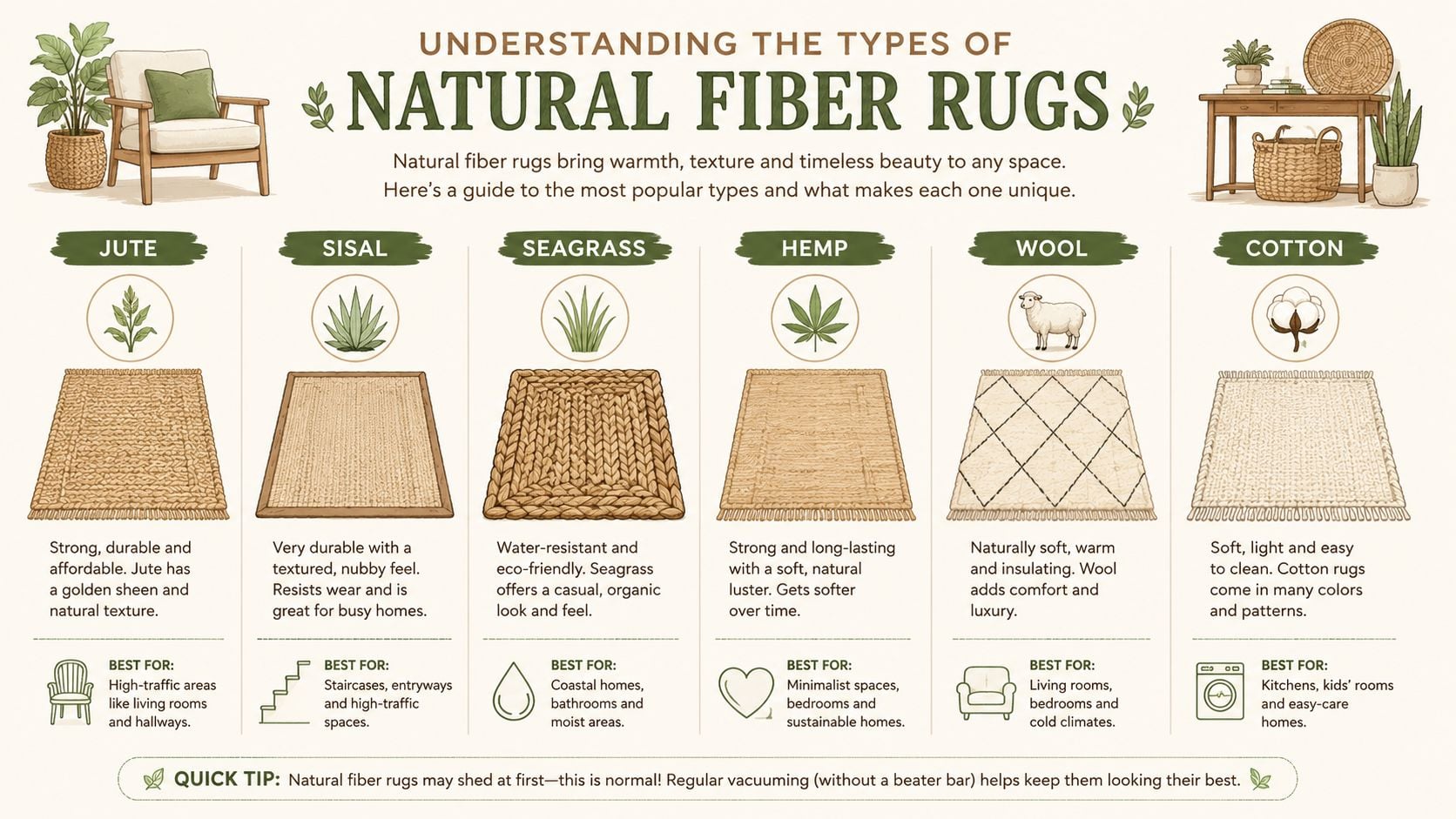
Natural fiber rugs are made from renewable plant or animal materials such as jute, sisal, seagrass, and wool. They typically use less chemical processing than petroleum-based synthetics, and many homeowners choose them because they want a more organic, grounded look.
One commonly cited benefit is construction. Natural fiber rugs made from sisal, jute, seagrass, and wool are described as requiring minimal chemical treatment during weaving, which contributes to durability and a slightly glossy finish in many styles, according to this rug fiber guide on sisal, jute, seagrass, and wool.
For rooms that need an outdoor-safe surface instead, plant-based fibers usually aren't the right answer. Homeowners comparing indoor natural options with patio-friendly alternatives can review outdoor rug guidance for Florida homes.
Jute vs. Sisal vs. Seagrass at a glance
The easiest way to compare them is by feel, durability, and room placement.
| Fiber Type | Feel Underfoot | Durability | Best For |
|---|---|---|---|
| Jute | Softer, more relaxed, often slightly cushioned in feel | Good for lighter daily use | Bedrooms, sitting areas, quieter living spaces |
| Sisal | Firmer and more textured | Strong choice for heavier use | Living rooms, hallways, offices, stair-adjacent areas |
| Seagrass | Smooth, tight, and a bit waxy in feel | Durable in daily use, but still not for wet zones | Casual living spaces, dining rooms, bedrooms |
A few real-world distinctions help:
- Jute tends to feel the most comfortable in barefoot spaces. It often suits homes aiming for a softer coastal or collected look.
- Sisal is the practical pick when a household wants a crisp, refined texture and better resistance to everyday wear.
- Seagrass usually reads slightly more structured. It works well in spaces where homeowners want texture but not a fuzzy or chunky weave.
A natural fiber rug should match how a room is used, not just how the room looks in a photo.
Other natural options worth knowing
Wool and cotton blends can also enter the conversation, especially when softness matters more than a highly textured look. Some buyers prefer these because they still offer natural content with a different feel underfoot.
For high-traffic areas such as hallways, entryways, and kitchens, darker hues or tighter, stain-conscious weaves generally hold their appearance better over time. That choice can matter just as much as the fiber itself.
The Pros and Cons for Your Home
Natural fiber rugs do a lot well, but they aren't magic. The right way to think about them is as a design-forward flooring layer with clear strengths and a few limits that buyers should understand upfront.
Why homeowners love them
The biggest advantage is visual texture. These rugs can warm up a room without adding a loud pattern, which makes them especially useful in homes that already have statement art, patterned pillows, or distinctive wood grain.
They also appeal to shoppers who want materials that feel more connected to nature. Natural fiber rugs are made from renewable plant materials such as jute, sisal, palm, and seagrass, and natural fiber carpets are often chosen for eco-conscious interiors because they're biodegradable and made with minimal chemical processing.
Another plus is versatility. A natural rug can support several local design directions at once:
- Coastal casual: It keeps the room breezy and relaxed.
- Modern organic: It adds warmth to sleek silhouettes.
- Traditional with a lighter hand: It softens darker furniture and formal lines.
Where buyers get surprised
The drawbacks usually show up in daily use, not in the showroom photo.
Some fibers feel coarse. Sisal, especially, can read more firm than soft. That's not necessarily a flaw, but it does mean a homeowner expecting plush comfort may be disappointed.
Spills also need quick attention. Natural fibers are absorbent, so they don't forgive neglect the way some synthetic rugs do. That makes them a less forgiving choice for spaces where wet shoes, pet accidents, or frequent splashes are expected.
Practical rule: A natural fiber rug is often a strong style choice for a busy room, but not for a wet room.
There's also a lesser-known issue that eco-conscious buyers should check before purchasing. Some tufted natural fiber rugs include synthetic backing materials, which matters for homeowners trying to avoid hidden plastic content. Asking about backing composition is smart, especially for anyone building a more plastic-conscious interior.
Caring for Natural Fiber Rugs in Central Florida
Generic rug advice often falls apart in Florida. Many care guides are written for homes that don't deal with the same moisture load, storm season habits, or day-to-day humidity swings that Central Florida homeowners see.
Humidity changes the care routine
That difference isn't minor. A 2024 Sustainable Lifestyles study found that 68% of natural fiber rug owners in humid climates such as Orlando and Miami reported premature damage due to improper care, while 90% of retail content still promoted standard dry-cleaning without humidity-specific protocols, according to Sustainable Lifestyles' FAQ on humid-climate rug care.
That lines up with what many Florida homeowners notice in real life. A rug that looks fine in a cooler, drier market can start to warp, hold odor, or break down faster when it sits in a damp environment here.
Natural fibers also shouldn't be installed in wet or high-moisture areas. Bathrooms, uncovered outdoor areas, and damp transition zones are poor candidates. For general Florida decorating ideas that account for climate and lifestyle, homeowners often find Florida home decorating guidance helpful.
Simple care habits that help rugs last longer
The care routine should be simple and consistent.
- Vacuum gently: Regular vacuuming helps, but rotating or beater brush attachments can snag loose fibers and rough up the surface.
- Act fast on spills: Blot right away, then use water and mild soap if needed. The goal is to remove the spill before it settles into the fiber.
- Use a quality rug pad: The pad reduces friction, helps with stability, and can support airflow under the rug.
- Rotate the rug periodically: Rotation spreads wear more evenly, especially in living rooms with one main walking path.
- Keep it out of damp zones: That includes bathrooms, lanais that take on moisture, and spots near doors where rainwater regularly enters.
Some homeowners also choose natural fiber rugs because they want a more breathable, lower-chemical surface indoors. For anyone focused on broader home air quality and allergens, this complete guide to removing dust mites offers useful household cleaning context that pairs well with rug care.
In Central Florida, moisture is usually the main threat. Not foot traffic.
Styling Your Rug for a Florida-Inspired Look
A natural fiber rug doesn't need to be the star of the room. In many well-designed Florida homes, it works more like the quiet foundation that makes everything else look better.

Living rooms that feel relaxed but finished
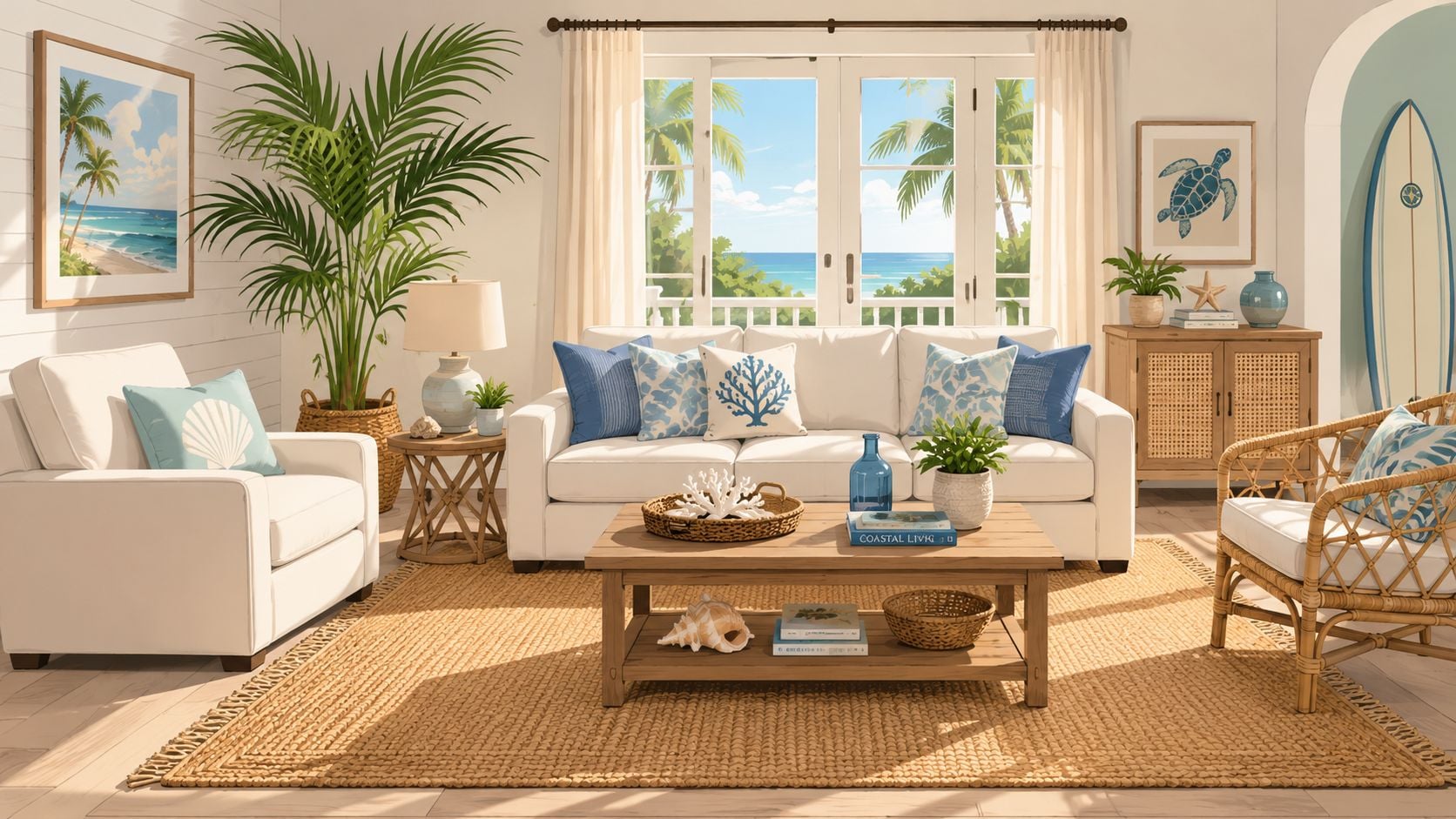
A jute or sisal rug under a seating group can anchor the room without fighting the furniture. In a Central Florida living room, that often means a natural base under a structured sofa, a pair of accent chairs, and a wood or glass cocktail table.
This approach works especially well with upholstery that already has character. A room with the custom comfort of Smith Brothers, the American-made quality of Bassett or Craftmaster, or the heritage look of Stickley often benefits from a rug that adds texture but keeps the palette calm.
Layering is another designer move that works nicely here. A large natural fiber rug can cover the main footprint, then a smaller patterned rug can sit on top under the coffee table. That lets the room keep its relaxed Florida feel while introducing color or pattern in a controlled way.
A layered rug setup often solves two problems at once. It adds softness where feet land most, and it keeps the room from feeling too beige.
Bedrooms dining rooms and hallways
Bedrooms benefit from softer textures, so jute often feels more inviting there than a firmer sisal weave. In a coastal-leaning bedroom, a natural rug can complement woven lighting, light woods, and serene bedding without making the room feel theme-driven.
Dining rooms need a little more discipline. The rug should be large enough for chairs to stay on it when pulled out, and the weave should be practical enough for regular movement. Homeowners planning that layout can use this dining room rug size guide for Florida homes.
Hallways and transitional spaces are a smart place for a more durable woven look. For wall decor that supports that easygoing Florida palette without overcomplicating the room, some homeowners also browse stunning Florida wall art for color ideas and regional inspiration.
Your Smart Buying Guide at Slone Brothers
Buying the right rug usually comes down to three decisions. Size first, construction second, and room conditions third. If any one of those gets skipped, the rug may still look good on day one, but it won't always live well over time.

Start with size and placement
North America holds 39.5% of the global area rugs market in 2025, and natural fiber rugs are particularly prevalent in that region, according to IMARC Group's area rugs market report. That popularity means there are plenty of options, but choice can create confusion.
The first check should always be room scale. A rug that's too small makes a room feel disconnected, while one that's oversized for the space can crowd furniture legs and pathways. Homeowners planning proportions can use this guide to picking the right size rug.
Don't skip the pad or the backing check
A rug pad isn't an accessory. It's part of the installation. It helps limit movement, reduces wear from friction, and gives a natural fiber rug a more stable feel underfoot.
Backing deserves attention too. For homeowners focused on lower-plastic interiors, asking whether the rug uses a synthetic backing layer is worth the extra minute. That detail often doesn't show up in a quick product photo.
Where local guidance helps
An in-person process can save a lot of second-guessing. Slone Brothers Furniture offers access to an in-house Design Team, along with custom-order options and a large Clearance Outlet, so buyers can compare rug scale, color, and texture against actual furnishings rather than guessing from a screen.
That matters in homes furnished with pieces that have a strong material presence. The ergonomic innovation of Stressless, the American-made quality of American Leather, the craftsmanship of Simply Amish and Mavin, the custom flexibility of Amisco, the configurable dining options from Canadel, and the comfort focus of Palasar all create slightly different styling needs around the floor.
A smart purchase isn't just about finding a rug that looks attractive on its own. It's about finding one that fits the room, the climate, and the way the household lives.
Common Questions and Your Next Step
A few questions come up again and again when homeowners are deciding whether a natural fiber rug is really the right fit.
Are natural fiber rugs good for allergies
They can be a strong option for households that want breathable materials and minimal chemical processing. Regular vacuuming still matters, and the rug should stay dry and clean to perform well in daily life.
Can they work in homes with pets
They can, but the answer depends on the pet and the room. A calm, low-mess household may do well with one in a living room or bedroom. Homes with frequent accidents or tracked-in moisture may be better served by placing natural fibers only in lower-risk spaces.
Are they a good fit for every room
No. They're usually a poor fit for bathrooms, uncovered outdoor areas, and any consistently damp zone. They're strongest in living rooms, bedrooms, offices, and some dining rooms, depending on the weave and the household's habits.
What's the biggest mistake buyers make
Most mistakes come from choosing by look alone. The better approach is to match the fiber to the room, use a quality pad, and respect Central Florida humidity from the start.
Ready to find the perfect piece for a Central Florida home? Visit Slone Brothers Furniture in Longwood, FL, and let the design experts help with rug textures, room sizing, custom-order options, and furniture pairing that suits the way local families live.