
A Distressed White Console Table Guide for Florida Homes


A lot of Central Florida homes have the same small problem. The entryway, hallway, or back wall behind the sofa feels unfinished. There's plenty of light, the flooring is in place, and the wall art may even be up, but the room still needs one grounded piece that adds both function and warmth.
That's where a Distressed White Console Table often earns its place. It gives a home a landing spot for keys, mail, lamps, baskets, or seasonal decor, while still keeping the room airy and relaxed. In Orlando, Lake Mary, Sanford, and Longwood, that balance matters. Many homeowners want furniture that feels collected and welcoming, not stiff or overly formal.
Table of Contents
- Your Guide to the Distressed White Console Table
- What Defines a Distressed White Finish
- How to Choose the Right Console Table
- Styling Ideas for Your Central Florida Home
- Care and Maintenance for Everyday Life
- Find Your Console Table at Slone Brothers Furniture
Your Guide to the Distressed White Console Table
A new homeowner in Central Florida often starts with the biggest pieces first. Sofa, bed, dining table. Then a few weeks later, the empty entry wall starts to stand out. The space needs something slim, useful, and welcoming, especially when guests walk in through a bright front door and immediately see that first room.
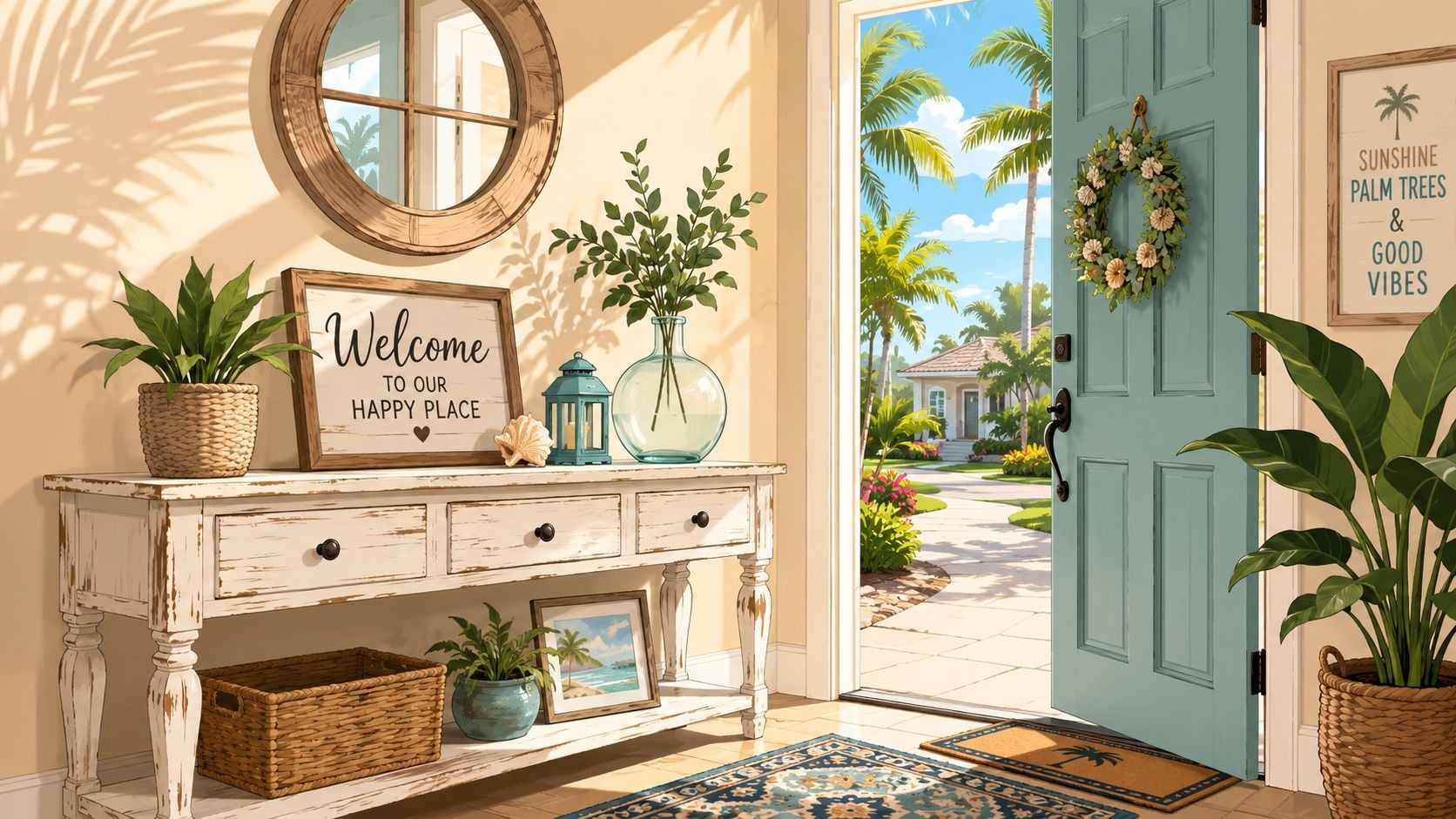
A Distressed White Console Table solves that problem in a way that feels right for this region. The preference for vintage-inspired finishes remains strong locally. Consumer search volume for distressed white finishes rose by 42%, and 35% of new homeowners in Central Florida prioritize farmhouse or coastal styles for entryways, according to Slone Brothers Furniture.
That local context matters because Florida homes often need furniture that lightens a room instead of weighing it down. Distressed white does that well. It reflects light, softens heavier architectural lines, and introduces character without making a room feel dark.
Local design note: In many Longwood and Orlando homes, a console table does more than decorate a wall. It becomes the everyday drop zone that keeps shoes, keys, bags, and loose mail from spreading across the room.
The other reason this piece lasts is flexibility. It can work in an entry, behind a sofa, along a dining room wall, or even in a hallway that needs storage and shape. A good one doesn't lock a home into one style. It can read coastal with woven accents, transitional with cleaner lighting, or rustic with warmer woods nearby.
What Defines a Distressed White Finish
A distressed white finish isn't just white paint applied to a table. It's a finish designed to show gentle wear in the right places, usually at edges, corners, legs, and other high-contact areas. That visible variation is what gives the piece depth.
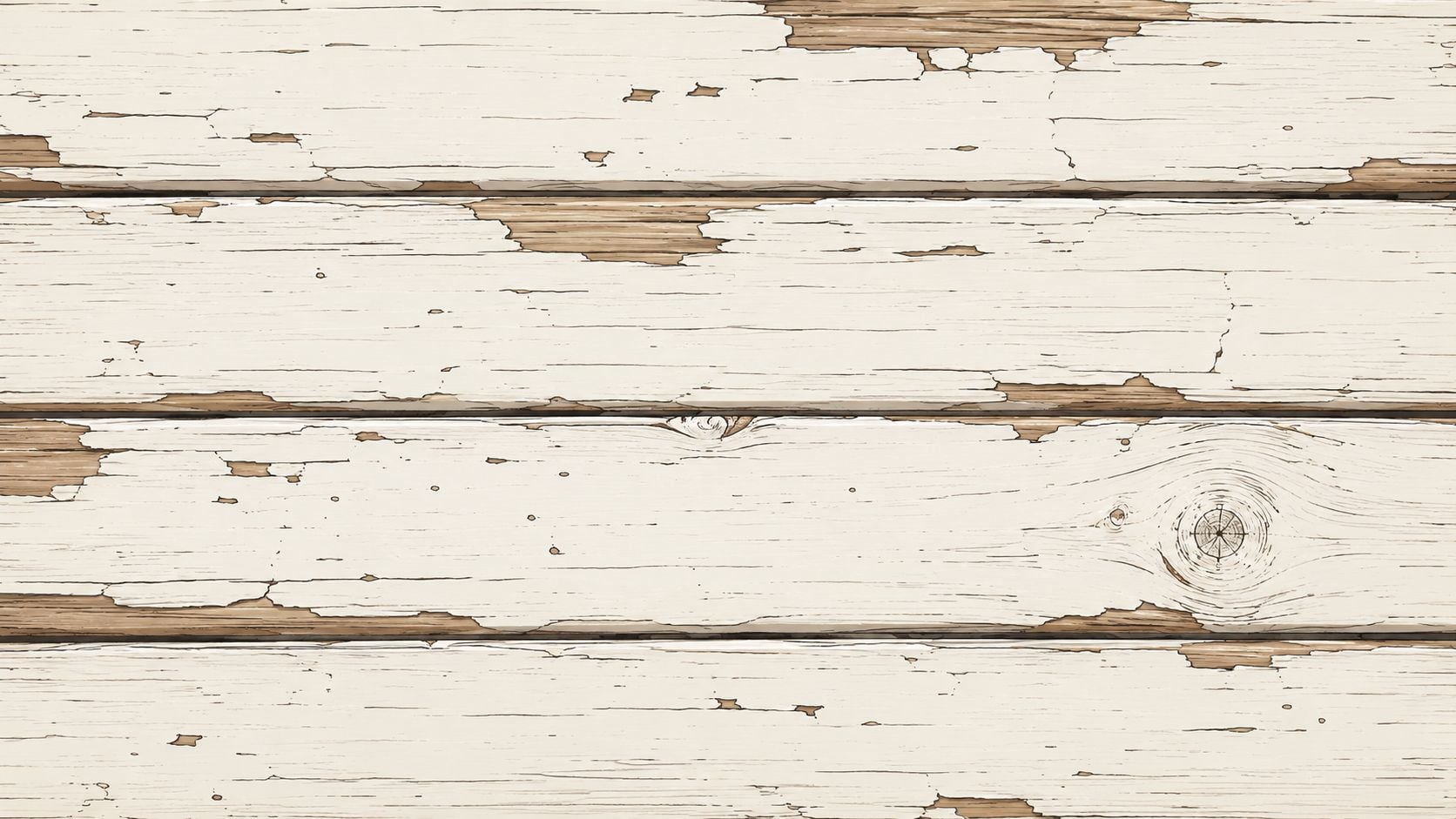
When homeowners get confused, it's usually because the term “distressed” can mean two very different things. One version looks layered, intentional, and balanced. The other looks flat or artificially scraped. The difference comes down to finish technique, proportion, and material underneath.
What real distressing looks like
A strong distressed finish usually includes a few visual cues:
- Softly worn edges that look natural rather than aggressively sanded
- Color variation that keeps the white from feeling stark
- Texture that gives the piece a hand-finished look
- Wood character underneath that supports the aged effect instead of fighting it
The finish works because it takes the brightness of white and relaxes it. The aged effect softens contrast, which is one reason this look fits farmhouse and transitional interiors so well. It also helps the piece feel settled in the room, rather than freshly coated and visually sharp.
How to tell quality from imitation
Construction matters as much as color. Better pieces often use solid wood, veneers, or solid-wood edges, which give the finish more credibility and durability. Homeowners who are curious about finish behavior on wood surfaces may also find this guide on choosing the right cabinet paint helpful, since paint type and surface preparation both influence how a finish ages over time.
For readers who want to understand wood surfaces more broadly, Slone Brothers also shares guidance on how to refinish wood furniture.
A distressed piece should look intentional from across the room and convincing up close. If the wear pattern looks random or repeated, it usually won't age gracefully in the home.
How to Choose the Right Console Table
Choosing the right console table starts with function. A table that looks good online can still feel awkward in a real hallway, too shallow to be useful, too deep for the space, or too short to anchor the wall.
Start with the room, not the table
Most distressed white console tables fall within these common dimensions: 30 to 72 inches long, 12 to 24 inches deep, and roughly 28 to 32 inches tall, with many standard formats around 36 to 48 inches wide and 12 to 18 inches deep, based on console table dimension guidance. For circulation, designers commonly preserve 30 to 36 inches of clearance in front of the piece.
That clearance number matters in busy homes. A narrow hall in a Sanford bungalow and an open foyer in a Lake Mary home may both need a console table, but they won't need the same depth. The room should dictate the size.
Console Table Size Guide for Florida Homes
| Use Case | Typical Length | Typical Depth | Recommended Clearance |
|---|---|---|---|
| Narrow entry hallway | 30 to 36 inches | 12 to 18 inches | 30 to 36 inches |
| Standard foyer wall | 36 to 48 inches | 12 to 18 inches | 30 to 36 inches |
| Behind a sofa | 48 to 72 inches | 12 to 24 inches | 30 to 36 inches |
| Dining room buffet use | 36 to 72 inches | 18 to 24 inches | 30 to 36 inches |
A deeper profile often makes sense when the table needs to do more than display decor. Pieces in the 18 to 24 inch depth range are better suited for storage-heavy use or buffet-style serving, as noted in this construction and profile overview.
Look closely at materials and craftsmanship
Material quality changes how the table feels after a year of use. Premium distressed white furniture is still commonly hand-crafted by Amish artisans, and 68% of shoppers actively seek that heritage for its higher perceived value and authentic, non-uniform character, according to Slone Brothers About Us.
That hand-crafted look matters because distressing should never feel stamped on. On better-made pieces, the finish follows the shape of the furniture. It complements joinery, molding, drawer fronts, and corners instead of masking them.
A few practical checkpoints help narrow the options:
- Check the top first. If the household needs a real landing zone for bags, keys, or trays, the top should feel sturdy and balanced.
- Study the edges. Good distressing usually looks subtle on contact points rather than exaggerated across broad flat panels.
- Open the storage. Drawers and lower shelves should support the home's routine, not just the room's appearance.
- Match the undertone. Some distressed whites lean creamy. Others lean cool. That undertone should work with nearby flooring, trim, and wall color.
For readers browsing local options, the console table collection offers a useful point of reference for scale and storage styles.
Mavin and Simply Amish are especially relevant in this category because Amish and American-made construction often suits this finish well. The distressing looks more convincing when it's applied over furniture built with real substance.
Styling Ideas for Your Central Florida Home
The easiest mistake with a distressed white console table is styling it too overtly. If every accessory leans heavily rustic, the whole setup can feel themed instead of timeless. In Central Florida homes, the stronger approach is usually to let the table bring the character while the surrounding decor keeps the room current.
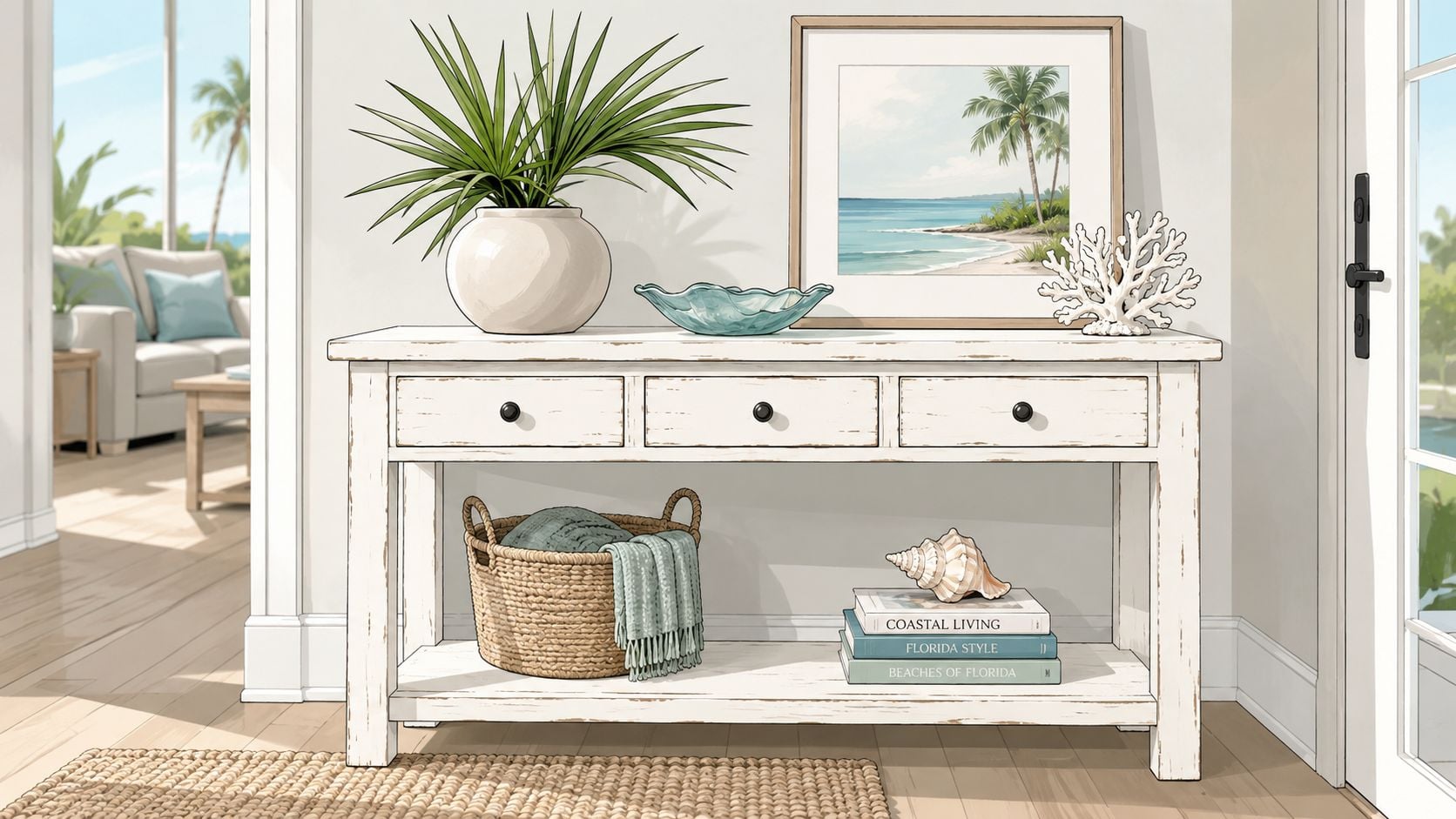
For entryways, scale and flow still come first. Slone Brothers notes that a functional entry should keep 30 to 36 inches of clear walking space in front of the table, and standard console heights of 28 to 32 inches work well for everyday drop-zone use, according to their design services guidance.
Lake Mary coastal
In a bright home with pale flooring and lots of natural light, distressed white can lean coastal without feeling beach-house obvious. The key is restraint.
A good setup might include:
- A woven basket below for shoes or totes
- A blue-green vase or glass accent that picks up Florida's water tones
- A framed scenic or abstract print instead of overt nautical decor
- A lamp with a simple linen shade for softness at night
Scent also plays a role in how an entry feels. Homeowners refining the mood of a small foyer may enjoy reading everything about The Candledust diffusers, especially when they want fragrance that complements a calm, airy setup.
Orlando transitional
A transitional room benefits from contrast. The distressed white finish brings warmth and texture, while cleaner accessories keep the arrangement from turning overly rustic.
This version often works well with:
- A darker metal lamp base for definition
- One large mirror with a simpler frame
- A tray for keys and mail to give clutter a boundary
- Minimal books or ceramics rather than many small collectibles
In transitional rooms, the table shouldn't compete with everything around it. One textured furniture piece plus cleaner accessories usually reads more current than a fully layered rustic vignette.
For more placement ideas and decor balance, this article on elements of the entry table gives helpful visual direction.
Sanford relaxed modern farmhouse
This is the version that keeps farmhouse style from looking dated. The table still has softened edges and age, but the styling stays edited.
Instead of filling every shelf, a better mix is often one ceramic vessel, a pair of baskets, and a larger piece of art above. Black hardware, warmer medium-tone woods, and fewer decorative fillers keep the room grounded. The distressed white finish becomes the bridge between old and new.
This style also travels well through the house. The same table can shift from entryway to dining wall or behind a sofa as the home changes, which is part of its long-term value.
Care and Maintenance for Everyday Life
Many homeowners worry that white furniture will be hard to live with. That concern makes sense, especially in active households with kids, pets, frequent guests, or a front door that sees daily traffic.
Why this finish works in real homes
A distressed finish helps in that setting. The intentional wear at edges makes it effective for busy households because it naturally camouflages minor scuffs and dings that would stand out on a smooth, uniform finish, as noted by Slone Brothers.
That doesn't mean it hides everything. Dust can still settle into carved details or textured surfaces, and heavily styled tabletops still need regular attention. But small signs of use tend to blend in better than they would on a glossy painted piece.
A distressed white console table isn't fragile furniture. It's furniture that usually looks better when it's lived with instead of tiptoed around.
Simple habits that help
Care stays simple when the household treats the table like a working surface rather than a display piece only.
- Dust gently: Use a soft dry cloth, especially around grooves and carved areas.
- Wipe spills quickly: Moisture should never sit on the top for long.
- Use coasters or trays: They help contain glasses, keys, and small daily clutter.
- Keep decor edited: Fewer accessories make cleaning easier and keep the finish visible.
The finish does part of the visual work on its own. Daily habits do the rest.
Find Your Console Table at Slone Brothers Furniture
A distressed white console table is one of those pieces that benefits from seeing it in person. Finish tone, texture, depth, and scale are hard to judge on a screen, especially when the goal is to fit a Florida home that already has its own flooring color, wall light, and traffic pattern.

For shoppers in Longwood, Orlando, Lake Mary, and nearby communities, Slone Brothers Furniture offers console table options along with access to custom-order possibilities, in-house design help, and a showroom setting where finish and scale can be evaluated more accurately. That matters when a piece needs to coordinate with coastal, transitional, or farmhouse influences without leaning too heavily in one direction.
The local advantage also shows up in problem-solving. A family may need a slimmer piece for a tighter hallway, a deeper profile for storage, or hardware that works better with existing lighting and flooring. American-made and Amish-crafted options often provide more flexibility in those decisions, especially when the household wants lasting value instead of a short-term placeholder.
Since 1980, the showroom in Longwood has served Central Florida homeowners who want quality, guidance, and options that feel appropriate for real homes. That includes custom-order programs, a design team, delivery support, and a clearance outlet for value-minded shoppers who still care about craftsmanship.
Ready to find the perfect piece for a Central Florida home? Visit Slone Brothers Furniture in Longwood, FL, and let their design experts help get the search started.