

Butcher Block Coffee Table: Styles & Care Guide 2026


A lot of Central Florida homeowners reach the same point with their living room. The sofa feels right. The rug is close. The lamps work. But the center of the room still feels unfinished because the coffee table is either too flimsy, too trendy, or the wrong size for the way the room lives.
A butcher block coffee table often solves that problem beautifully. It brings warmth, visual weight, and the kind of honest craftsmanship that makes a room feel settled. In a Lake Mary family room, a Sanford bungalow, or a downtown Orlando apartment, it can look collected instead of temporary.
For shoppers who want more than a generic showroom piece, a primary advantage is local customization. A butcher block design can be adapted to the room, the seating, and the finish palette already in the home. That makes it especially useful for Central Florida spaces where open plans, mixed styles, and tricky footprints are common. Readers who are also thinking about styling after the purchase may find coffee table decorating ideas that keep a surface useful and attractive helpful.
Table of Contents
- Why a Butcher Block Coffee Table Is a Timeless Choice
- What Makes a Quality Butcher Block Coffee Table
- Finding the Right Size and Style for Your Florida Home
- The Honest Truth About Owning a Butcher Block Table
- Design a Custom Butcher Block Table with Slone Brothers
- Where to Find Your Perfect Table in Greater Orlando
Why a Butcher Block Coffee Table Is a Timeless Choice
A butcher block coffee table has a way of calming down a room. It doesn't try too hard, and it doesn't disappear either. It sits in the middle of the living room with the kind of presence that makes everything around it feel more intentional.
That matters in Central Florida homes. Many living rooms here need to do more than one job. One day the table holds coffee mugs, mail, and a laptop. The next day it's catching snack bowls during a game, or serving as the surface everyone gathers around when family visits.
A solid wood look also gives people something many mass-market pieces don't. It gives them character. The grain is visible. The thickness feels substantial. The table looks like it was made, not just assembled.
A good coffee table shouldn't feel like filler. It should make the seating area feel anchored.
That helps explain why butcher block keeps showing up in homes with very different styles. In one room it reads rustic and relaxed. In another, it feels clean and modern because the base is simpler and the finish is quieter. The same general idea can fit a modern farmhouse home in Longwood, a transitional house in Lake Mary, or a more compact condo near Orlando.
There is also an emotional reason people hold onto pieces like this longer. Wood tends to age with the home. A few light signs of use often make it feel more personal, not less attractive. For families trying to invest in furniture they'll still enjoy years from now, that's a meaningful difference.
What Makes a Quality Butcher Block Coffee Table
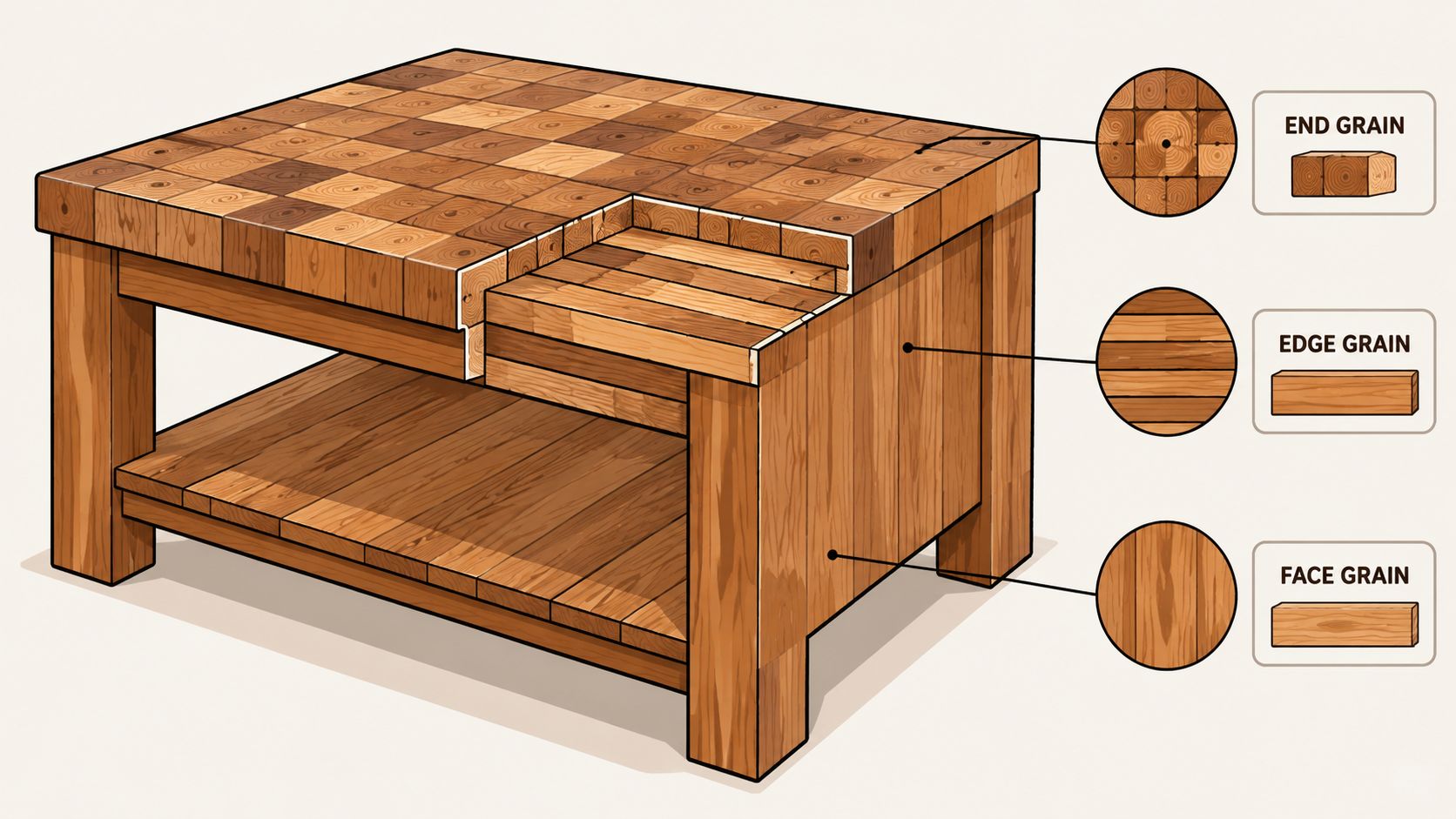
The term sounds simple, but shoppers often aren't told what they're buying. A quality butcher block coffee table isn't just "wood on top." It's a top built from multiple pieces joined into a thick panel, and the details of that construction affect the look, the feel, and the long-term performance.
How butcher block is built
Shoppers usually hear terms like edge grain, end grain, and face grain, then get left to sort it out on their own.
A plain-language version helps:
- Edge grain means the long edges of boards are joined side by side. It usually creates a clean, striped look that feels orderly and versatile.
- End grain shows the cut ends of the wood pieces. It has more pattern and more texture, often with a block-like appearance.
- Face grain highlights the broad face of the board. It can show more sweeping grain character and often feels a little more slab-like in appearance.
None of those automatically means "better." The primary question is whether the table feels intentionally built. The grain pattern should look balanced, the panel should feel flat, and the joinery should look clean instead of rushed.
One documented build shows how hands-on this category can be. The maker joined 12 boards total, then planed the surface, sanded with 100-grit paper, refined it with 220-grit paper, and attached black steel A-frame legs with wood screws, as shown in this documented butcher block coffee table build process. That same source also shows a retail example priced at $400, which helps illustrate why handmade butcher block sits in a mid-range to premium position.
What shoppers should notice up close
Construction terms matter, but the in-person checks matter more.
A buyer should look for:
- Consistent join lines so the top looks cohesive rather than patched together
- A stable, substantial feel when light pressure is placed on the surface
- Balanced base support that matches the visual weight of the top
- A smooth finish that feels complete around edges and corners, not just on the center surface
Mass-produced tables often imitate this look with thin veneers or lighter materials underneath. A solid butcher block design tends to feel different immediately. It has heft. It has depth. And it usually reveals more craftsmanship the closer someone gets.
For readers comparing wood choices across categories, this guide to choosing the right hardwood for longevity and style can make the differences easier to spot.
Practical rule: if the top looks thick but the table feels hollow or visually top-heavy, it probably isn't delivering the value the appearance suggests.
Finding the Right Size and Style for Your Florida Home
A butcher block table can be beautifully made and still feel wrong in the room. That usually comes down to proportion. In Central Florida homes, where open-concept layouts are common and seating areas often connect to dining or kitchen spaces, size has to be handled carefully.
Start with the room, not the table
The most useful starting point is the way people move around the seating area. A coffee table needs to sit within easy reach, but it also can't choke off circulation.
A buying guide notes that many well-built coffee tables fall in the 18 to 20 inch height range, and one butcher-block-style example was listed at 36 x 24 x 19 inches. The same guide notes that many solid butcher-block designs use a top around 50 mm thick, which gives the piece durability and visual weight without pushing it into oversized dining-table territory, as explained in this butcher block coffee table sizing guide.
That gives shoppers a helpful mental picture. A butcher block coffee table is usually substantial, but it isn't supposed to dominate the room.
A simple way to think about fit:
| Room type | What usually works best |
|---|---|
| Smaller apartment living room | A more compact footprint and a base that feels visually open |
| Open-plan family room | A thicker-looking top with enough width to hold its own near a sectional |
| Narrow seating area | Rounded corners or a less bulky base to keep pathways easier |
| Mixed-use living room | A finish and shape that can transition between casual and dressed-up styling |
For more layout help, this guide on how to choose a coffee table is a practical next step.
Style directions that work well in Central Florida
Butcher block becomes more flexible than many people expect.
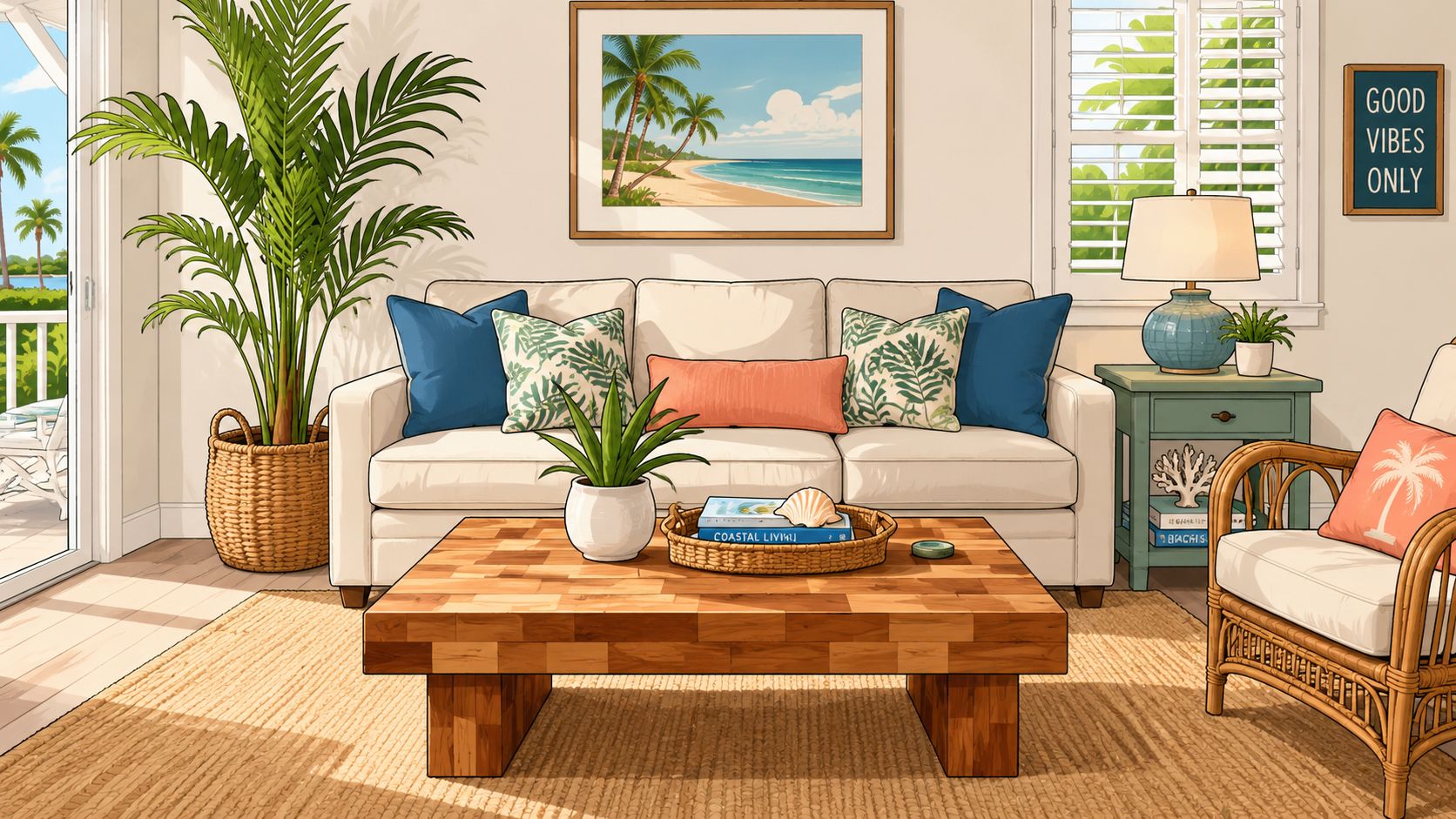
In a coastal-inspired room, a lighter wood tone and simple base keep the table relaxed and airy. In a modern farmhouse setting, a thicker top with a black metal base brings contrast without making the room feel heavy. In a more contemporary Orlando condo, a geometric base and cleaner finish can make butcher block feel current instead of rustic.
A few combinations tend to work especially well:
- Natural wood with black steel for an industrial or transitional look
- Warm medium stain with a wood base for traditional and farmhouse interiors
- Lighter finish with minimal styling for coastal and casual Florida rooms
- Darker top with a crisp silhouette for a moodier, more modern setting
The key is restraint. Because the top already has texture and visual depth, it doesn't need an overly busy base or too many decorative accessories piled on top.
The Honest Truth About Owning a Butcher Block Table
A butcher block coffee table has real strengths, but it isn't magic. People make the best decisions when they're clear on both sides of ownership.
Why people love living with solid wood
The biggest advantage is substance. A solid butcher block top feels grounded in a way lighter furniture often doesn't. It can handle the daily rhythm of a living room better than delicate surfaces that make everyone nervous.
It also tends to age in a forgiving way. Small signs of use usually blend into the story of the wood instead of making the table feel ruined. That's a major reason many homeowners choose solid wood when they want a piece they can keep.
Another benefit is repairability. A quality wood table is not a one-scratch-and-done purchase. Depending on the finish and the depth of the wear, many minor issues can be improved over time rather than hidden forever under trays and books.
Solid wood asks for reasonable care, but it usually gives something back in return. Longevity.
What requires a little more thought
The first honest drawback is weight. A thick butcher block coffee table often feels wonderfully stable once it's in place, but it may not be the right match for anyone who rearranges furniture constantly.
The second is maintenance. Wood is durable, but it isn't invincible. Standing water, repeated heat, and rough treatment can all leave marks. That's not a flaw. It's the tradeoff that comes with owning a natural material instead of a synthetic one.
Some shoppers also expect every butcher block piece to fit every style. It doesn't. The wrong stain, base, or scale can make the table feel too rustic, too dark, or too bulky for the room.
A buyer should pause before purchasing if any of these concerns sound familiar:
- Frequent furniture movers may find the weight less convenient than expected
- High-clutter households may lose the beauty of the wood under constant surface overload
- Very tight rooms can feel crowded if the top is too thick or the base too heavy-looking
- Low-maintenance-only shoppers may prefer a material that hides wear differently
A simple care routine for Florida homes
Central Florida homes bring one extra consideration. Wood furniture benefits from steady indoor conditions and sensible everyday habits, especially in spaces that deal with humidity, sunlight, and active family use.
A straightforward care routine usually works well:
- Dust with a soft cloth. Gentle, regular cleaning is better than aggressive scrubbing later.
- Wipe spills promptly. Rings and sticky residue are easier to prevent than correct.
- Use coasters or a tray. This keeps repeated moisture and heat from hitting the same spot over and over.
- Keep the surface clear enough to breathe. Decor is fine. A permanently crowded top makes cleaning harder and hides the wood people paid for.
- Follow the finish requirements. Some finishes want occasional refreshing, while others mainly need clean, careful use.
Readers looking for a deeper maintenance overview can use this guide on how to care for wood furniture.
One final point reassures many homeowners. A butcher block table isn't meant to stay untouched forever. It's meant to stay serviceable, attractive, and worth keeping.
Design a Custom Butcher Block Table with Slone Brothers
The biggest mistake many shoppers make is assuming they have to accept standard dimensions. That works for some rooms. It doesn't work for all of them.
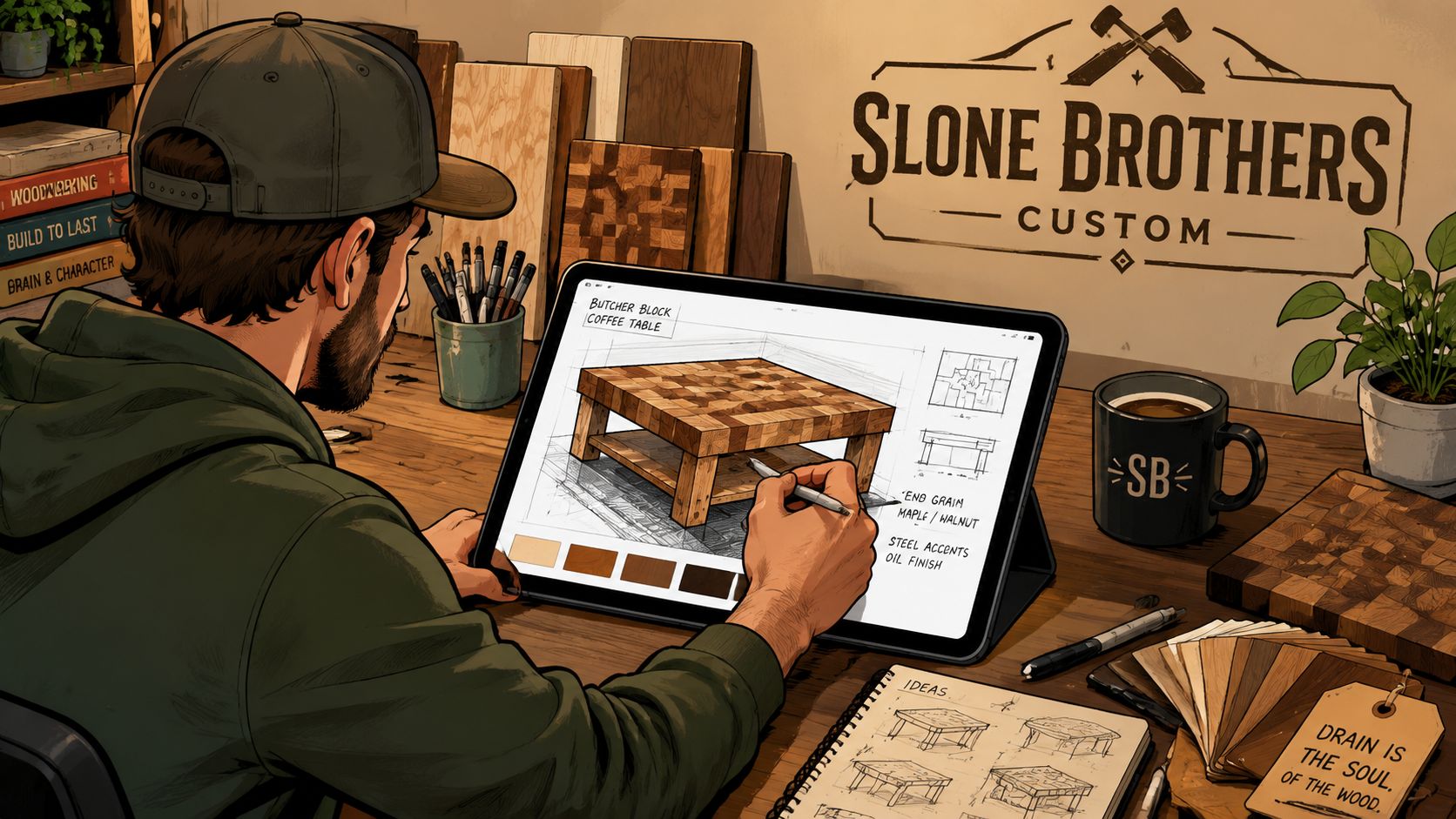
A custom butcher block coffee table makes sense when the living room has an awkward walkway, an oversized sectional, a smaller apartment footprint, or a very specific mix of wood tones already in the space. That's where local design guidance becomes more valuable than scrolling through endless fixed-size listings.
Why custom matters more than most shoppers expect
There is growing demand for made-to-order butcher block tables with customizable dimensions and finishes, especially for smaller spaces and rooms where default retail proportions don't work well. Current listings also show a move toward configurable options instead of fixed retail SKUs, allowing shoppers to choose thickness, base style, and footprint for apartments or open-concept homes, as seen in this made-to-order butcher block table example.
That trend makes sense in Greater Orlando. One household may need a narrower table for a condo. Another may want a larger square format to balance a sectional in a Lake Mary family room. Someone else may need a finish that coordinates with existing American-made case goods or an Amish-crafted entertainment console.
What can be tailored for the room
Custom ordering gives shoppers more control over the decisions that affect daily satisfaction.
Those decisions often include:
- Footprint so the table fits the seating plan instead of forcing the room to work around it
- Top thickness for either a lighter visual look or a more grounded statement
- Base style to shift the design toward industrial, farmhouse, modern, or transitional
- Finish tone so the piece works with nearby floors, rugs, and upholstery
- Material character for shoppers who want visible grain and handcrafted presence
For Central Florida buyers, that local custom advantage is practical, not just decorative. A table can be designed to suit a downtown apartment, a Longwood great room, or a multi-room furnishing project where the living room has to coordinate with nearby dining pieces.
One local option for that process is Slone Brothers Furniture's custom furniture program, which pairs custom-order flexibility with design guidance in Longwood. That can be especially useful for shoppers considering American-made or Amish-crafted furniture from collections known for material quality and finish choice, including names such as Simply Amish, Mavin, Amisco, Bassett, and Canadel.
Custom makes the most sense when the room has a real requirement, not just a vague wish for something different.
Where to Find Your Perfect Table in Greater Orlando
There is only so much a product listing can tell a shopper about a butcher block coffee table. It can show dimensions and finish names, but it can't show edge detail, surface depth, or how the wood looks under real light.
That's why in-person shopping still matters for solid wood furniture. A shopper can walk around the table, compare base styles, feel the finish, and decide whether the scale feels calm or overpowering. For households furnishing homes in Longwood, Lake Mary, Sanford, and the wider Orlando area, that kind of confidence is worth a lot.
Shopping locally also helps when the project goes beyond one table. Many homeowners are balancing a coffee table choice with a new sofa, a rug, media storage, or a broader room update. Design guidance can help those pieces feel connected instead of pieced together over time.
For homeowners who want to protect wood surfaces well, it also helps to know what to do when life happens. If a nearby floor picks up a ring or mark, these wood floor water stain removal methods offer useful general guidance on approaching water-related wood blemishes carefully.
A local, family-owned showroom serving Central Florida since 1980 gives buyers a more practical path. They can compare quality levels in person, ask better questions, explore custom-order options, and weigh long-term value instead of guessing from photos alone. That same visit can also open up choices in American-made collections, Amish-crafted furniture, home décor, and clearance finds for shoppers trying to furnish multiple rooms thoughtfully.
Ready to find the perfect piece for a home in Central Florida? Visit Slone Brothers Furniture in Longwood, FL, and let the design experts help turn a butcher block coffee table idea into a confident, long-term choice for the living room.