
Emerald Green Accent Chairs: A Central Florida Design Guide


You can stand in a Longwood living room and feel the problem instantly. The sofa is fine, the rug works, but the room still needs one confident move, and emerald green accent chairs are often that move. They bring color without forcing a full redesign, which is why they've become a serious choice for homeowners who want a room to look finished, not decorated on autopilot.
The mistake is treating one as a throwaway trend piece. In Central Florida, where sunlight, humidity, and open floor plans all change how furniture behaves, an emerald chair has to earn its place through construction, scale, and fabric choice. The right chair should look composed beside heirloom wood pieces, feel comfortable in daily use, and hold up long after the novelty of the color has passed.
Why Emerald Green Accent Chairs Have Become a Design Staple
A homeowner in Winter Park can have a neutral room that feels finished on paper and still lacks a clear focal point. Emerald green accent chairs solve that problem without forcing a full repaint or a new furniture plan. The color brings contrast with restraint, so it works in living rooms, home offices, and bedroom corners without looking flashy.
Industry trend data shows the appeal is real, and it is broad enough to matter beyond one style of home. A 2024 trend summary reported stronger interest in green seating, including more searches for green sofas and more green accent chair sales, while social posts around green furniture also rose green furniture trend summary. That kind of momentum explains why emerald upholstery keeps appearing in modern, coastal, and transitional interiors.
The style advantage is simple
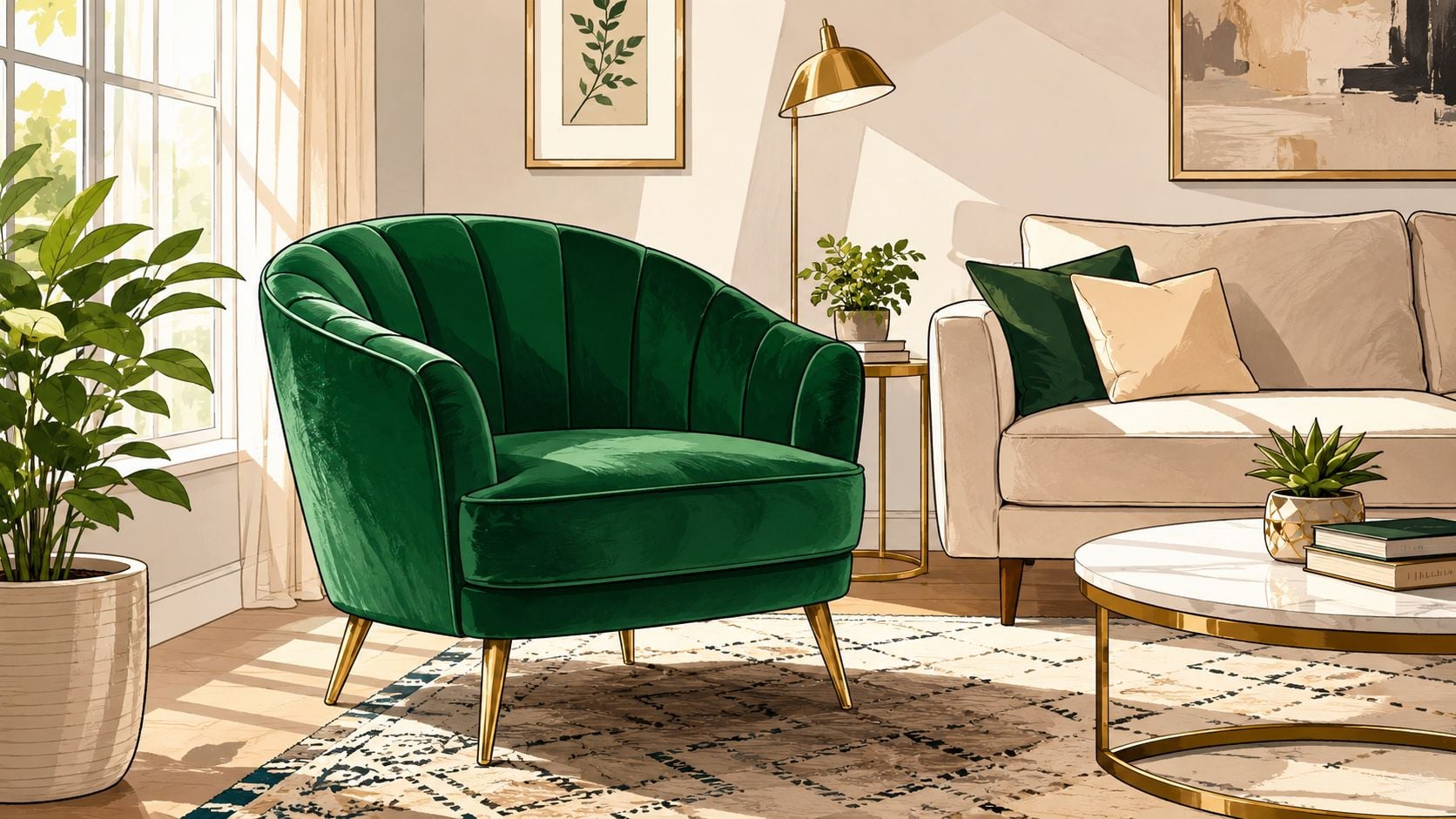
Emerald works because it functions as a visual anchor. It sharpens a neutral palette, warms pale wood tones, and still sits comfortably beside brass, cream, navy, or charcoal without losing its character.
For Central Florida homes, that matters. Open great rooms in Orlando, Lake Mary, and Sanford often need one piece that ties together a sofa grouping, a reading corner, or a quiet office area without making the rest of the room feel overworked. Emerald does that job better than many brighter colors because it feels intentional, not impulsive.
The practical advantage is flexibility. A well-chosen emerald chair can read coastal in a sunlit room, transitional in a traditional home, or modern in a cleaner-lined space. That range is exactly why discerning buyers keep returning to it, especially when they want the chair to sit beside heirloom wood furniture instead of competing with it.
Long-term value depends on details that hold up in daily use. Upholstery choice, seam quality, and stitching all matter, which is why careful buyers should look at how the chair is put together and use a reference like the best thread and needle for upholstery when they compare workmanship. In a humid market, a pretty chair that cannot hold its shape or finish is a weak purchase, no matter how good it looks on delivery day.
What Construction and Materials Make an Emerald Chair Last
A good emerald chair is defined by structure as much as by color. The upholstery may draw the eye first, but the frame, fill, and base decide whether the chair stays supportive and stable or starts feeling worn after a short period of use. For homeowners in Central Florida, that distinction matters because a chair near a bright window or in a heavily used living space needs more than visual appeal.
Construction choices separate a decorative piece from a chair that earns its place in the room. In the emerald green accent chair category, buyers are usually looking at finishes and materials that belong in the statement-piece range rather than the basic seating range, which is exactly why the internal build deserves close attention.
Frame and fill reveal the true quality
Emerald and green accent chairs commonly use velvet, polyester, or fabric upholstery over wood, plywood, or metal frames, with finished weights ranging from a compact dining-style chair to a larger swivel lounge chair chair construction reference. Lighter chairs are easier to move and restyle, while heavier pieces usually have more internal structure, denser cushioning, or swivel hardware that helps the chair stay planted.
A chair that feels too light often gives itself away in the first few sit-downs. A better-built piece has enough weight to feel steady without becoming hard to reposition.
The upholstery choice matters just as much. Product examples include 100% polyester fabric with a minimum 30% recycled material and 100% solid mango wood with cotton velvet and hand-carved construction material specs. Those are very different products, and they should be judged differently.
The stitching matters too. Clean seams, tight corners, and durable thread are what keep the upholstery from loosening at stress points, which is why a reference like the best thread and needle for upholstery belongs in any serious workmanship check.
Match the engineering to the use
A swivel barrel chair, a wingback, and a compact accent chair each ask something different of the frame. A larger silhouette needs stronger internal engineering than a basic occasional chair, especially if it will serve as primary seating in a family room or office corner.
For upholstery care and selection basics, the article on upholstery materials is a useful companion because the fabric choice affects the chair's lifespan, not just its look. Velvet can feel rich, but it needs proper backing and careful maintenance. Polyester blends are often easier to live with in humid rooms. Cotton-based textiles can read beautifully, though they demand more attention if the chair sits in strong light or gets frequent use.
For buyers who care about long-term value, heritage-quality construction earns its keep. A chair built with serious joinery, reliable foam, and a stable base costs more up front, but it is the kind of purchase that still feels right years later in a Longwood home furnished with care.
How to Measure Your Space for the Perfect Fit
Scale causes more accent-chair mistakes than color ever will. An emerald chair can look wrong if it blocks a walkway, overwhelms a sofa, or gets lost beside heirloom furniture with real presence. In a Lake Mary condo or a Winter Park great room, the fit starts with the room dimensions, then the chair style.
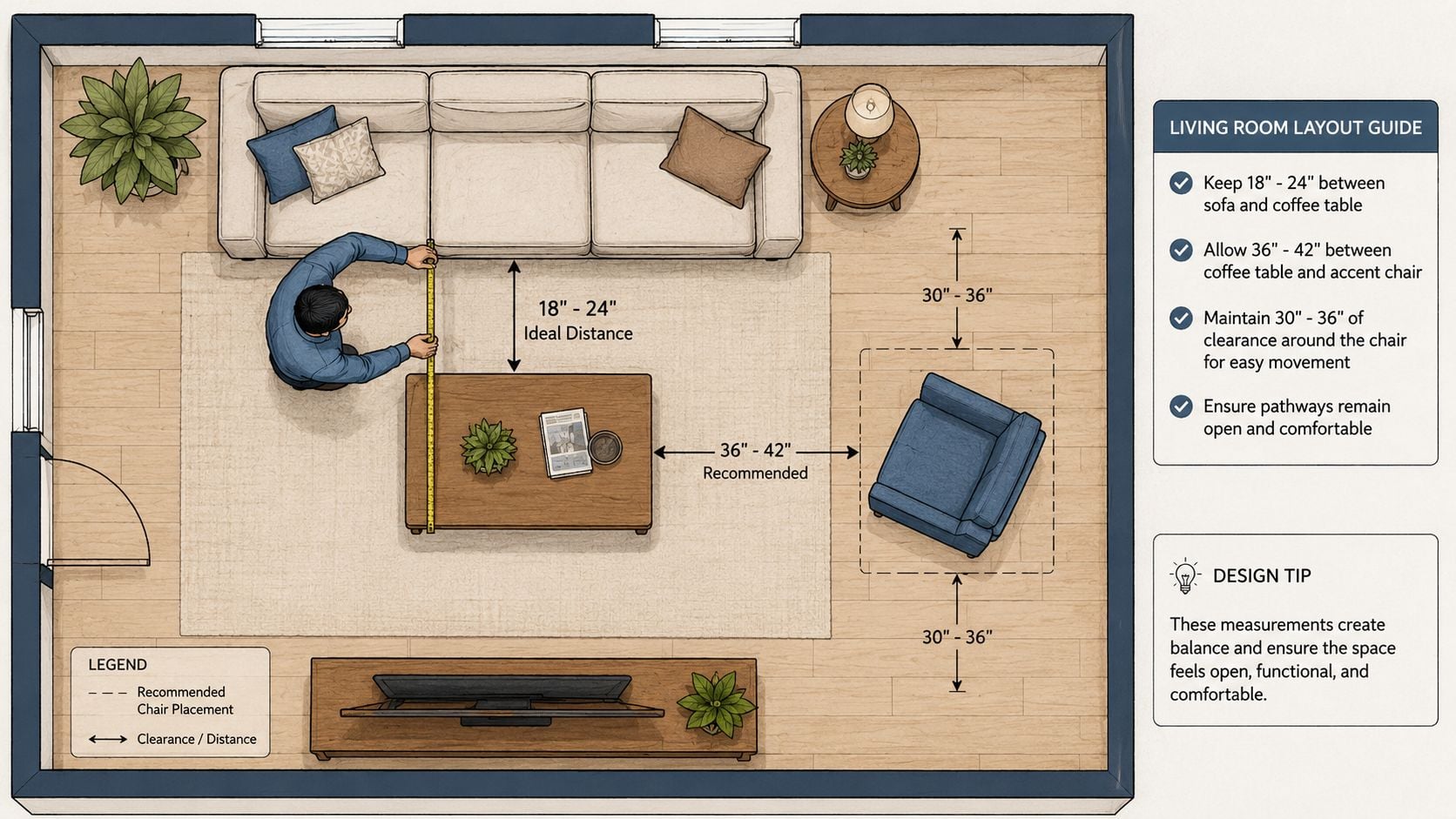
Start with the relationship to the sofa. The chair's seat height should stay within 1 to 2 inches of the adjacent sofa, and there should be at least 30 inches of circulation space in front of the chair so people can move without turning the room into a squeeze point small-room layout guidance. That is the difference between a seating area and a barrier.
Use the room, not just the tape measure
Measure the chair's actual footprint, not just the wall nearby. Compact models may be around 20.5 inches wide, while lounge barrels can reach roughly 30 inches wide and 29.5 inches deep, so the same emerald finish can feel restrained or substantial depending on the silhouette size comparison reference.
Ceiling height changes the read too. A tall wingback can feel heavier in a room with lower ceilings, even when the footprint matches a shorter chair. In a smaller room, that visual weight matters as much as the physical dimensions.
A good chair still needs good clearance
A chair can be small enough on paper and still fail if it interrupts movement through the room. Measure width and depth, then check how the chair sits beside rugs, side tables, and lamps.
Practical rule: If the route from the doorway to the sofa feels narrower after the chair arrives, the chair is too large or badly placed, even if the dimensions looked fine on paper.
Homeowners who measure furniture with the same discipline they use for how to measure for new windows get fewer surprises. Measure the opening, confirm the clearances, and verify the finished fit before you commit. The same habit protects you from buying a chair that looks right online and wrong in the room.
A clear room plan also helps before anything is ordered, and a guide on how to measure a room for furniture belongs in that planning stage. Good placement keeps the chair working with the rest of the home instead of fighting it.
Which Color Pairings and Room Styles Work Best
Emerald green accent chairs carry enough visual weight to shape a room, yet they still cooperate with a range of finishes. The safest approach is to treat the chair as a strong anchor, then build around it with materials that feel deliberate and lived-in, not busy.
Gold metal legs, cream upholstery nearby, walnut wood, and warm brass all support the chair's depth. If the room calls for something quieter, charcoal, navy, and natural rattan keep the color grounded without draining it. The goal is simple. Let emerald feel chosen, not dropped in as an afterthought.
Living room, bedroom, or office
In a living room, emerald green accent chairs work best when they complete the seating group instead of reading like standalone decoration. In a primary bedroom, one chair can turn an empty corner into a proper reading spot that feels finished. In a home office, it brings in a softer seat that breaks up the hard lines of a desk and storage wall.
A room with coastal or modern-farmhouse influence can still handle emerald well if the surrounding materials stay honest. Natural wood, linen, woven textures, and clean-lined upholstery keep the chair from feeling too formal. That matters in homes where the rest of the furniture already has a relaxed, collected look.
Emerald looks strongest when it sits beside something calm. Light walls, quiet flooring, and one or two warm finishes keep the chair from taking over the room.
For design inspiration around green in interior spaces, Leaves & Soul design inspiration shows how a rich green tone can be balanced with natural textures and controlled contrast. The same idea applies to furniture in a real home. Strong color needs disciplined surroundings, especially when the room already includes heirloom pieces that deserve room to breathe.
Choose the palette with the room, not against it
The color palette for living room guidance is useful when the chair has to sit alongside existing upholstery, art, or wood finishes. That is common in Central Florida homes, where the room may already mix inherited furniture, newer purchases, and pieces chosen over time.
Emerald also works cleanly with both warm and cool neutrals, which gives the homeowner more flexibility later. Rugs, lamps, and art can change without forcing the chair out of the room. Use the chair as a bridge color. It can connect traditional wood furniture with cleaner modern lines, and that is why it fits so many Orlando-area interiors without feeling forced.
How to Protect Emerald Upholstery in Florida Sun and Humidity
Central Florida light can be punishing. A richly dyed chair placed in direct sun will age faster than most homeowners expect, and the fabric you choose decides how well it handles daily wear, dust, and the humidity swings that come with air conditioning running much of the year.
Start with placement. Keep emerald upholstery out of direct window exposure whenever you can, or use UV-filtering treatments if the chair has to live near a bright opening. A south-facing room in Orlando can look beautiful, but that same brightness can punish saturated fabric if the chair sits in the beam all afternoon.
Choose the fabric with the room in mind
Velvet gives emerald its most luxurious read, but it also asks for regular attention. Vacuum it gently so dust does not work its way into the pile, and handle spills quickly before they settle in. For households with pets or heavier daily use, tighter-weave or more forgiving materials make more sense than delicate surfaces.
The care guidance for emerald dining chairs recommends regular vacuuming, prompt spot-cleaning, and avoiding extended exposure to direct sunlight to help prevent fading emerald care guidance. Those habits apply just as well to accent chairs in living rooms and reading nooks.
Keep the chair visually even over time
A chair that sits in the same light pattern for years can age unevenly, especially in bright rooms. Rotating the chair's position now and then helps the color wear more evenly, and it gives the homeowner a chance to check whether the chair still belongs in that spot.
The upholstery material matters here too. Velvet feels rich, while leatherette is easier to maintain, and both have a place depending on the household's daily traffic. The smarter decision is the one that matches the room's actual use, not just its look.
Before you buy, read how to choose upholstery fabric with a bright window, a pet bed, or a frequently used family path in mind. In a Florida home, durability starts with the right fabric, not with hope.
Why Custom Ordering Through a Local Showroom Beats Online Guesswork
Ordering a chair online asks a homeowner to trust a screen for color, a product page for scale, and a shipping box for comfort. That's a risky way to buy an upholstered piece, especially when the chair has to work in a real room with real light, real traffic, and existing furniture that already has a voice. A local showroom gives the buyer a far better read on how emerald will behave in the house.
At a Longwood showroom, a homeowner can sit in the chair, check the scale beside nearby pieces, and compare fabric textures in person. That matters because emerald can look dramatic in one weave and softer in another, even when the color family is the same.
Custom details are where the value lives
A custom-order process lets the buyer choose from fabric options, leg finishes, and dimensions that fit the room instead of forcing the room to adapt to the chair. The article on custom furniture ordering is the right next step for someone who wants a custom piece rather than a compromise.
Slone Brothers Furniture, in Longwood, fits into this conversation because it offers a showroom setting, design help, home delivery, and custom-order support under one roof. That kind of process is useful when the chair has to coordinate with existing wood tones, a specific sofa height, or the scale of a compact nook.
Human guidance solves the expensive mistakes
The right design consultant notices what the screen can't. They catch when a chair is too tall for the sofa, too deep for the walkway, or too glossy for the room's other finishes. They also help a homeowner avoid choosing a style that looks impressive in isolation but awkward in the actual house.
A showroom chair can be judged for comfort, proportion, and finish in the same visit. That's a cleaner decision than waiting for delivery and hoping the room will adjust itself.
For homeowners in Central Florida, that difference is the whole point. The chair shouldn't be a gamble, and the process shouldn't feel rushed. A face-to-face selection creates more confidence and fewer returns, which is exactly what a premium purchase should do.
Your Next Steps to Finding the Perfect Emerald Chair
The best emerald chair checks four boxes. It has a frame that feels substantial, upholstery that suits the room's light and traffic, dimensions that respect circulation, and a color pairing that works with the furniture already in place. If one of those pieces is weak, the chair will never feel fully right.
Before buying, use this simple filter:
- Check the build: Look for a stable frame, sensible weight, and upholstery that matches how the room gets used.
- Check the scale: Confirm seat height, width, and depth against the sofa and the walking path.
- Check the color fit: Make sure emerald supports the wood tones, metals, and neutrals already in the room.
- Check the care plan: Decide whether the fabric can handle sunlight, pets, and regular cleaning.
The design services page at Slone Brothers design services is a practical starting point if the room needs help beyond one chair. For shoppers focused on living spaces, the living room furniture collection is a useful place to compare how an accent chair fits within a larger seating plan.
Emerald green accent chairs are not for impulse buyers. They reward clear measurements, disciplined fabric choices, and a room plan that values longevity over novelty.
Ready to invest in furniture that lasts a lifetime? Skip the online guesswork and automated digital chatbots. Visit the Slone Brothers Furniture showroom in Longwood, FL today. Connect face-to-face with experienced design consultants, compare emerald green accent chairs in person, and let Slone Brothers Furniture help turn a good room into a carefully finished one.