

2 Seater Sofas Recliners: A Buyer Guide for Central Florida


A homeowner in Longwood can spend an afternoon comparing fabrics, cushion profiles, and reclining features, only to discover that the sofa won't clear the hallway or that its footrest collides with the coffee table. 2 seater sofas recliners deserve a more careful approach because they combine the footprint of a loveseat with the moving geometry of a recliner.
For Central Florida homes, the right decision starts with the room, not the showroom display. Wall clearance, doorway access, mechanism type, frame construction, foam density, upholstery, and daily posture all affect whether a reclining loveseat becomes a lasting comfort investment or an awkward obstruction. A thoughtful visit to a local design showroom, supported by in-home planning, can resolve those questions before delivery day.
What a 2 Seater Sofa Recliner Actually Is
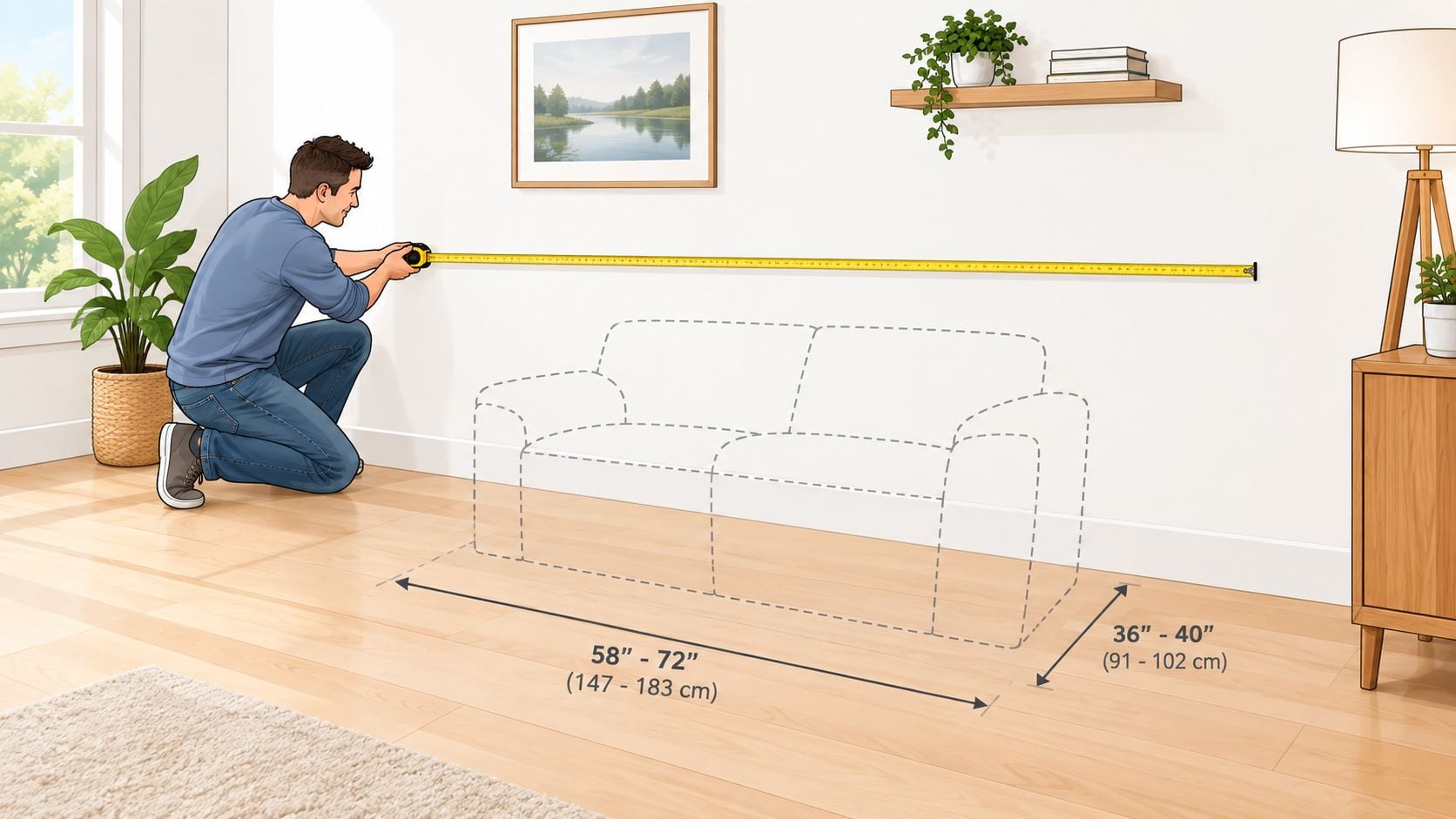
A Longwood homeowner measuring a living room wall with a tape measure is already asking the most important question: will this piece work in the room when both seats are fully open? A 2-seater recliner sofa, also called a loveseat recliner or double recliner sofa, is a two-cushion seating piece in which each seat can recline independently.
Seat count is not the same as cushion count
A standard loveseat usually provides two seating positions without moving parts. A reclining chair serves one person. A three-seat reclining sofa offers more seating, but it also demands a wider wall and a larger visual presence. In a two-seater recliner, each occupant can choose an upright, partially reclined, or fully reclined position without forcing the other person to move.
That independence suits couples, smaller households, reading corners, and living rooms that need comfortable seating without the scale of a sectional. The sofa can also function well in a media room where two people want separate leg support while sharing the same screen.
Wall-hugger or traditional recline
A wall-hugger mechanism moves the seat forward as it reclines, reducing the rear clearance required by the backrest. A traditional lay-flat mechanism generally needs more room behind the sofa and more open space in front of it. The distinction matters in apartments, compact family rooms, and open-plan homes where every path between the kitchen, lanai, and seating area carries daily traffic.
The recliner sofa category has developed from a niche furnishing into a sizable global segment. One 2025 industry estimate valued the market at USD 4.82 billion and projected nearly USD 6.69 billion by 2032, with a 4.8% compound annual growth rate, as reported in this recliner sofa market estimate. That broader demand helps explain why manufacturers now offer more refined proportions, upholstery choices, ergonomic options, and custom configurations.
Homeowners comparing mechanisms and seating proportions can also consult this recliner buying guide. The useful questions remain practical: how will the sofa move through the home, where will the footrests extend, and will the construction support the way the household sits?
Measuring Your Room Before You Fall in Love
Measure the closed footprint first, then measure the open footprint. A two-seater recliner may look modest against a showroom wall, yet the deployed footrest and backrest can change the room's usable circulation considerably.
Published guidance places many two-seat recliners at approximately 200 to 240 cm wide when closed and 250 to 280 cm when deployed, with depth increasing from roughly 90 to 100 cm to 150 to 170 cm as the mechanism opens. A separate sizing guide gives a common width of 63 to 75 inches and a fully reclined depth of 59 to 71 inches, depending on the model. Those ranges appear in this two-seat recliner sizing guidance.
Four measurements to record
Closed width: Measure the wall or zone where the sofa will sit, including adjacent tables, door casings, and built-ins.
Closed depth and height: Record the sofa's front-to-back depth and its highest point. A high back can affect a lamp, artwork, window treatment, or ceiling fan sightline.
Fully reclined depth: Extend a tape measure forward from the sofa's back wall to the end of the footrest. This is the dimension that determines whether a coffee table, ottoman, or walkway must move.
Delivery access: Measure the front door, interior doors, hallways, stair turns, and any tight transition into the living room. One product example measures 87 inches wide by 40 inches deep by 41 inches high, requires 3 inches of wall clearance, and calls for a 32-inch minimum doorway width for delivery, according to this living-room furniture sizing guide.
A practical planning buffer of 4 to 6 inches around walls and walkways can help preserve comfortable circulation, but the manufacturer's specifications should always control the final layout. A wall-hugger still needs room for arms, controls, movement, and cleaning access.
| Measurement | Typical Range | Why It Matters |
|---|---|---|
| Closed width | 63 to 75 inches | Confirms the sofa fits the intended wall |
| Fully reclined depth | 59 to 71 inches | Protects the front walkway and nearby tables |
| Overall closed depth | 90 to 100 cm | Shows the basic room footprint |
| Overall deployed depth | 150 to 170 cm | Reveals the space required during use |
For homeowners refining the room after measuring, these two-seat sofa styling ideas can help balance a compact sofa with rugs, tables, and surrounding furnishings. A more complete measuring process is available in the room measurement guide, especially useful before arranging an in-home consultation.
Manual vs Power Recline Mechanisms Compared
Manual and power recliners solve the same comfort problem through very different user experiences. A manual model uses a lever or pull handle and relies on the occupant's body movement, while a power model uses an electric motor controlled by buttons or a wand.
Manual systems have a straightforward appeal. They don't need an outlet, they avoid motors and control panels, and they can feel natural for someone who prefers a simple adjustment. Their limitation is equally clear: the user needs enough body strength to initiate the movement, and the range of positions may be less precise.
Power recliners offer gradual adjustment, which can be particularly helpful for aging joints, limited mobility, or households where two people regularly choose different seating angles. Some designs add powered headrests, lumbar adjustment, USB charging, or storage features. Those additions improve convenience, but they also introduce electrical components that should be covered by a clear warranty and supported by accessible service.
| Feature | Manual Recline | Power Recline |
|---|---|---|
| Adjustment | Lever or handle | Buttons or wand |
| Power source | Not required | Outlet planning required |
| Position control | Usually more limited | Smooth, incremental positioning |
| Maintenance focus | Mechanical linkage | Motor, wiring, controls, and linkage |
| Best fit | Simple operation and flexible placement | Precise comfort and easier adjustment |
A durable mechanism should be evaluated as part of the whole frame, not treated as a decorative feature. EN 13759 addresses durability testing for hand-operated and power-operated reclining mechanisms, with test methods based on use by a person weighing up to 110 kg, as described in the European furniture standard. That standard offers an engineering reference, but shoppers should still ask about the specific model's warranty and service process.
Practical rule: A power sofa is only convenient if the room has a safe outlet plan and the household understands what the warranty covers.
A guide to seating for people who need additional standing support may also be useful, particularly when evaluating seat height and motion, through this lift recliner buyer's guide. For broader local options, the power reclining seating collection shows how powered seating can be integrated into a larger living-room plan.
Frame Foam and Upholstery That Holds Up
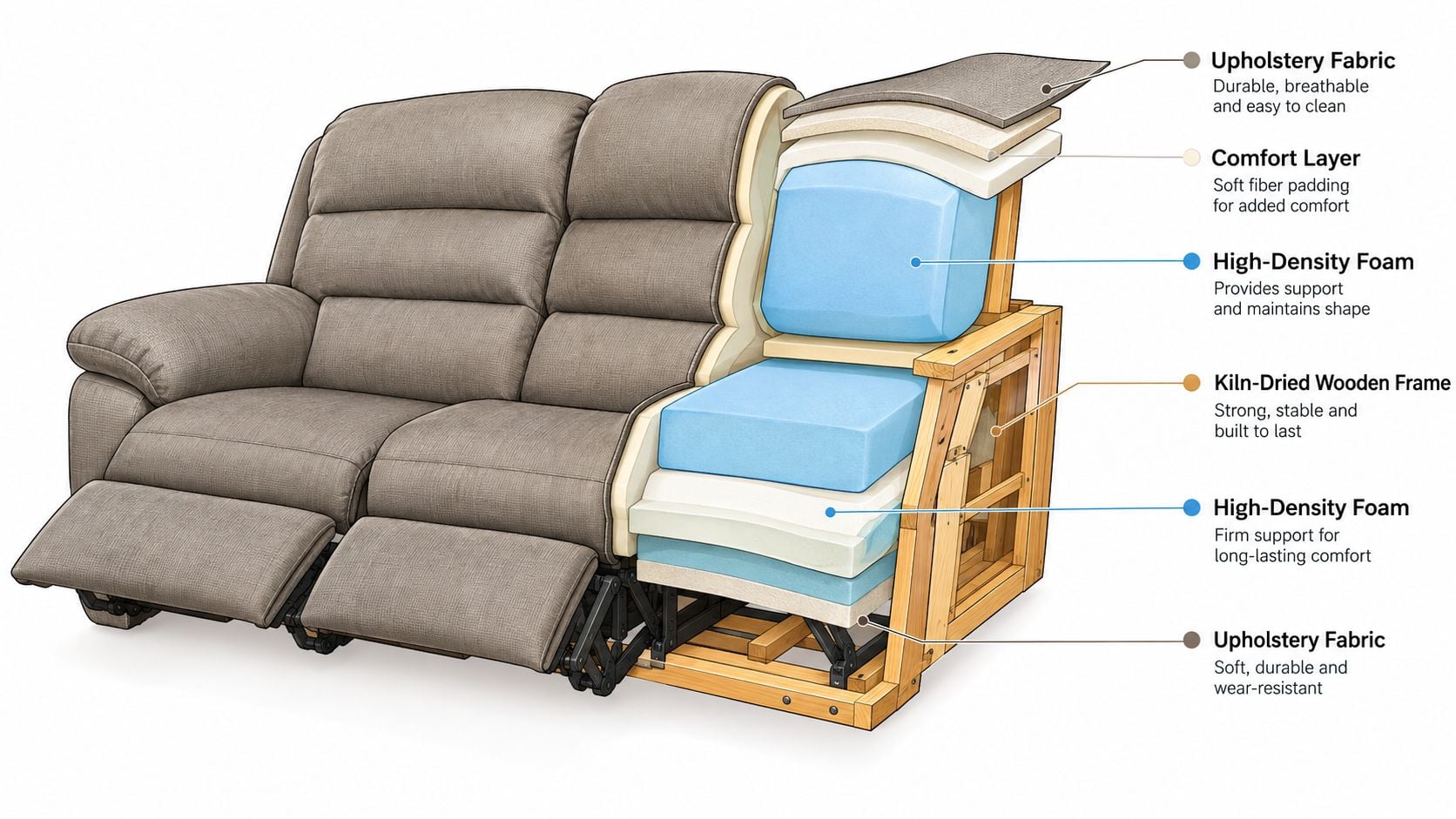
The showroom silhouette tells only part of the story. The frame, suspension, foam, and upholstery determine whether a two-seater recliner continues to feel composed after years of daily use, particularly in a Central Florida home exposed to humidity, strong sunlight, and frequent indoor-outdoor movement.
Start with the frame and suspension
A quality frame may use kiln-dried hardwood, reinforced corners, and carefully secured joinery. Those details help the sofa resist movement as people sit, recline, and rise. Particle board can serve different construction purposes, but a shopper should ask which components carry the structural load and how the reclining hardware attaches to the frame.
Suspension also affects the seat's character. Eight-way hand-tied springs can provide a more controlled, supported feel on select custom upholstery, while sinuous wire and webbing offer different balances of resilience, flexibility, and cost. The important point is consistency. A strong upholstery frame cannot compensate for a cushion core or suspension system that doesn't suit the sofa's expected use.
Understand foam density
Industry guidance identifies approximately 1.8 PCF as a minimum density for daily-use recliner cushions. The same guidance states that 2.5-density foam can extend useful life to 10 or more years, while 1.8-density foam may lose resiliency in about 5 years or less under heavy use, as explained in this durable recliner construction guide.
Density isn't the same as firmness. It describes how much material is present in the foam, while firmness describes how the cushion feels under pressure. A design consultant can help a homeowner compare a supportive seat with a softer wrap, rather than assuming a harder cushion is automatically better.
Match upholstery to the room
Top-grain leather offers a refined surface and can be practical for households that prefer wipeable upholstery. Performance fabrics can provide a softer visual texture and may be suited to pets, children, and active rooms. Microfiber offers another tactile direction, but the exact finish and cleaning instructions matter more than the category name alone.
For households balancing pets with polished interiors, this pet friendly sofa fabric guide offers useful care considerations. Central Florida homeowners can also review the upholstery fabric selection guide before choosing a fabric against tile, wood, or existing case goods.
Pros and Cons of Owning a Two-Seat Recliner
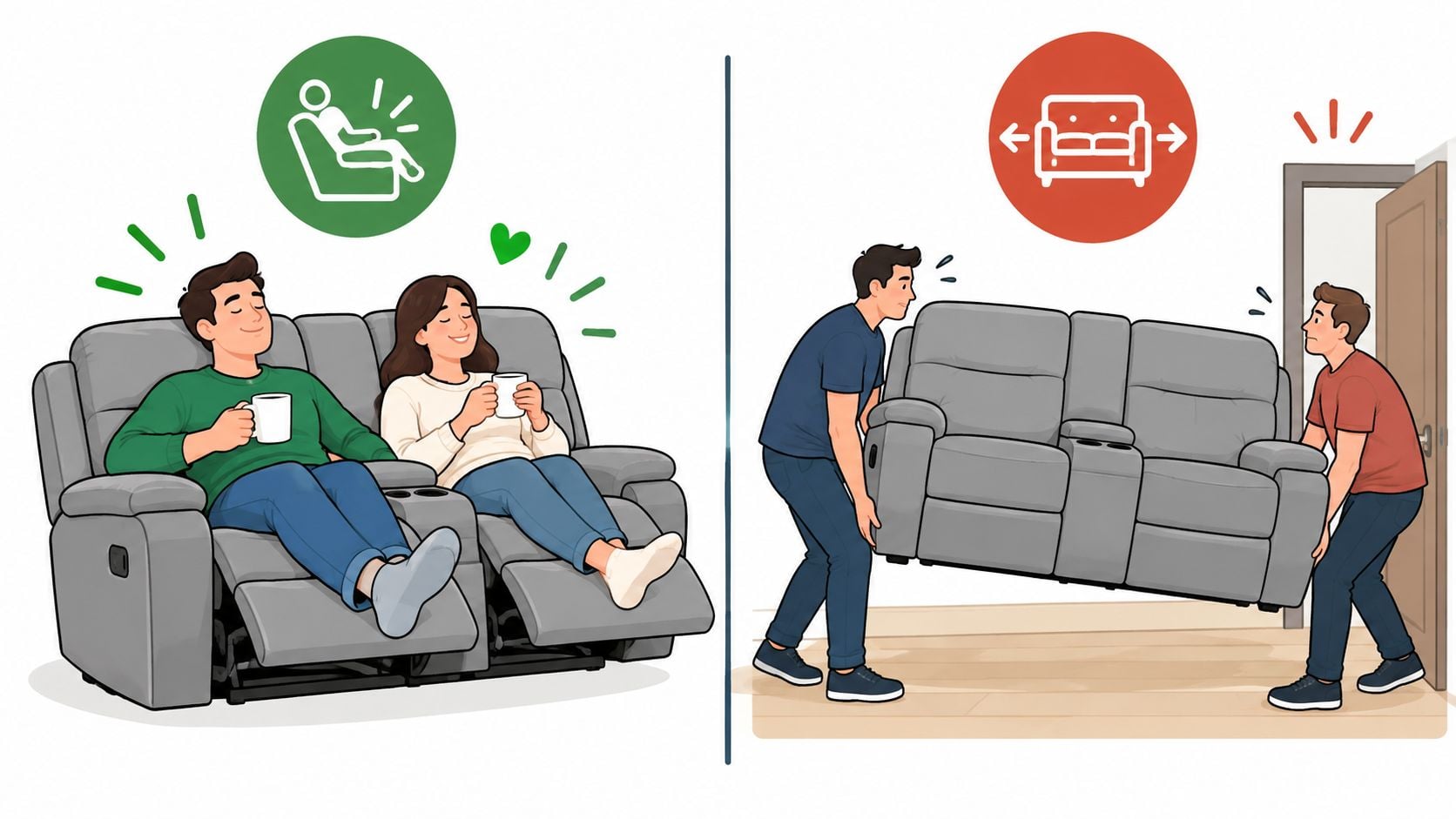
A two-seat recliner offers a clear exchange. It gives two people independent lounging positions in a relatively contained arrangement, but the moving parts and stronger frame can make the piece heavier and more demanding to place than a stationary loveseat.
Where the format earns its place
- Independent comfort: Each person can select a preferred position without disturbing the other seat.
- Contained scale: A two-seater generally occupies less wall length than a three-seat reclining sofa.
- Room flexibility: It can serve a living room, media room, reading area, or multipurpose family space.
- Reduced furniture clutter: Built-in foot support can remove the need for a separate ottoman or lounge chair.
- Custom potential: Select upholstery programs allow choices in fabric, leather, finish, and configuration.
The format can also suit couples furnishing homes in Lake Mary, Sanford, Winter Park, or Altamonte Springs, where an open floor plan may need to support conversation, television viewing, and passage toward an outdoor area.
Where the compromises appear
A quality recliner often weighs more than a fixed sofa because it includes reinforced structure and operating hardware. Stairs, narrow landings, and tight turns deserve attention before purchase, especially in homes with raised entries or compact interior corridors.
Power versions also require a practical outlet location. Cords should remain secure and discreet, and the sofa shouldn't block access to the receptacle. Tall users may find that two-seat designs provide less seating depth than a larger sofa, so the sit test matters. Knee position, lumbar contact, head support, and footrest length all affect comfort.
Finally, quality construction costs more at the outset than a stationary loveseat, but the comparison should include frame integrity, foam specification, upholstery serviceability, mechanism warranty, and expected daily use. The right question isn't what the sofa costs today. It's whether the piece delivers the comfort and resilience expected from a long-term furnishing.
Styling a 2 Seater Recliner for Central Florida Homes
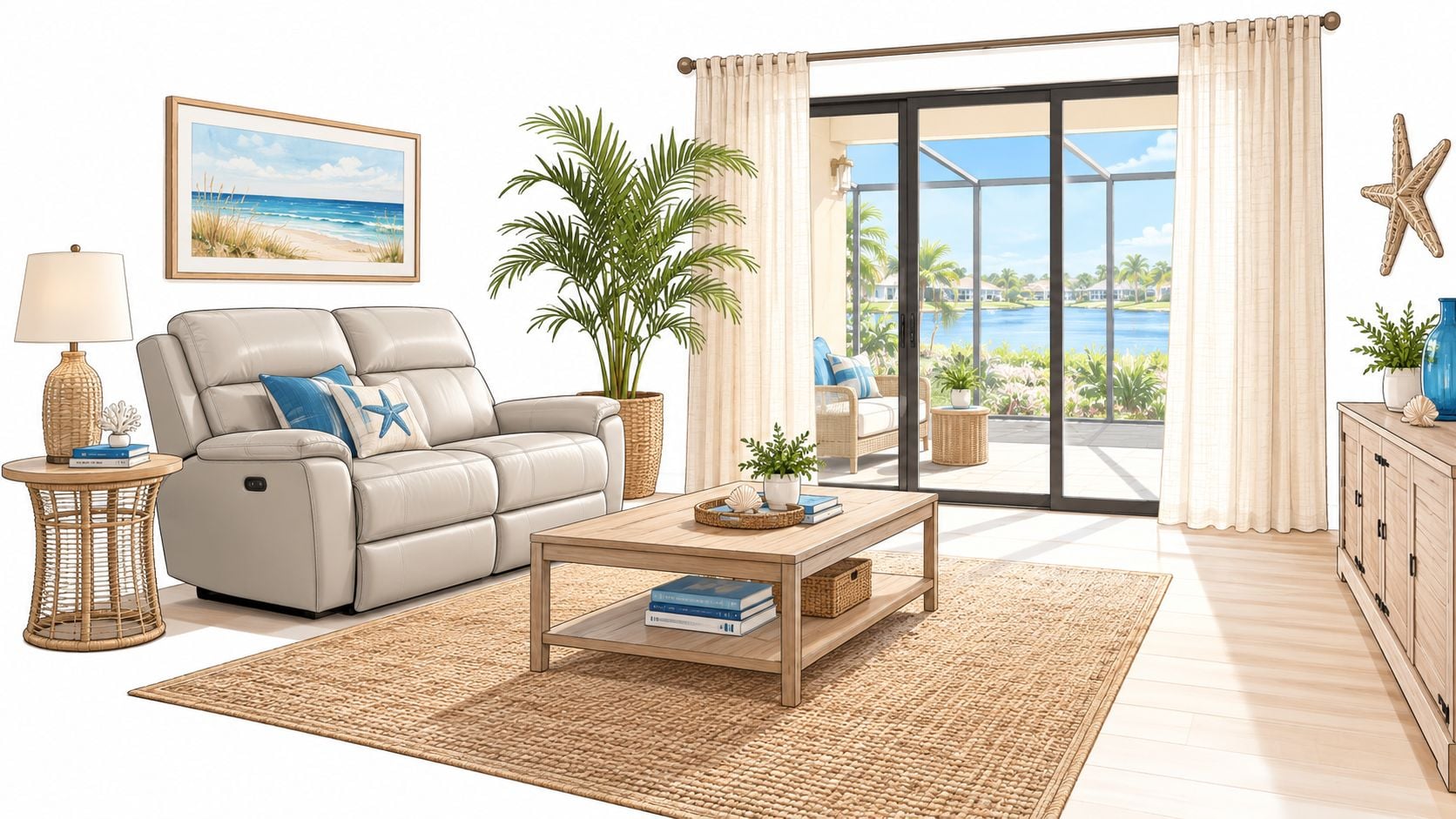
A two-seater recliner should look intentional when closed and remain functional when open. In Central Florida, that means accounting for sun, humidity, tile floors, ceiling fans, lanai access, and the movement of wet feet through the home.
Place for movement, not just appearance
A west-facing lanai door can send strong afternoon light across the sofa. Fade-resistant performance fabric can help maintain a neat appearance, while leather may suit a homeowner who wants a more structured surface. Window treatments, furniture orientation, and the sofa's distance from direct sun still matter, regardless of upholstery choice.
In muggy weather, breathable woven fabrics can feel less clingy than some dense surfaces. Leather can work well in humid interiors when the room is properly conditioned and the manufacturer's care instructions are followed. A design consultant can evaluate the sofa beside existing rugs, wood tones, and window exposure rather than judging a swatch in isolation.
Protect traffic flow
Low-profile rugs can anchor a recliner on tile without catching the mechanism or interfering with the footrest. The rug should define the sitting area while leaving enough smooth surface for the recliner to operate safely. Paths toward pool entries, kitchens, and hallways should remain clear, especially where wet feet and sandy shoes may cross the room.
High-back recliners also need visual breathing room. A ceiling fan above the seating area requires careful consideration of height, sightlines, and moving parts. The sofa shouldn't dominate an open-plan room because its back is tall.
Build a composed palette
Coastal Central Florida interiors often benefit from woven pillows, pale woods, and restrained blue-green accents. Craftsman homes may call for deeper wood tones, substantial side tables, and textured upholstery that complements existing built-ins. Pillow depth should remain modest enough that it doesn't obstruct head support or interfere with reclining.
A two-seater can also sit across from a sectional, provided the combined arrangement supports conversation rather than creating a row of isolated seats. Scale, sightlines, and the open recline path should guide the placement. The most successful room feels balanced whether the sofa is upright for conversation or extended for an evening of reading.
Custom Orders Clearance and Local Showroom Experience
A productive showroom visit begins with measurements, not a sales script. At a Longwood furniture showroom, a homeowner can compare two-seat recliners in performance fabrics, leathers, and selected American-made or Amish-crafted constructions while testing how each seat supports the body.
American-made construction may include kiln-dried frames, reinforced joinery, and, on select custom orders, eight-way hand-tied suspension. Amish furniture programs may offer hand-selected solid hardwoods and traditional joinery. These details don't make every model identical, so a design consultant should explain what the specific frame, suspension, cushion, and mechanism include.
What the consultation can resolve
A complimentary in-home design consultation can turn a difficult layout into a measured plan. The consultant can:
- Check dimensions: Confirm wall length, recline clearance, doorway access, and traffic paths.
- Review existing pieces: Compare the new sofa with rugs, tables, sectionals, cabinetry, and lighting.
- Evaluate upholstery: Place fabric or leather swatches beside flooring, paint, trim, and natural light.
- Discuss configuration: Determine whether manual or power recline suits the household's daily routines.
- Coordinate the room: Consider the sofa as part of a larger living-room composition instead of an isolated purchase.
For homeowners requesting a frame, finish, fabric, or configuration that meets their needs, the custom furniture ordering service provides a starting point for discussing available choices and lead times.
Consider timing and delivery
Custom work can require patience because materials, construction, and scheduling vary. Clearance and floor-model pieces may offer a shorter path when the dimensions and upholstery already suit the room. Warranty coverage should still be reviewed carefully, particularly for the frame, mechanism, motor, upholstery, and cushions.
Slone Brothers Furniture serves the Greater Orlando area from Longwood and offers a Low Price Promise, flexible financing options, home delivery, and a clearance selection. Delivery planning should include the full route through Seminole, Orange, and Volusia counties, with attention to entry conditions and interior access.
The showroom experience also allows a homeowner to test the sofa in a way a screen cannot reproduce. The seat should be evaluated upright and reclined, with attention to arm height, lumbar contact, head position, footrest length, control placement, and the amount of effort required to return to a seated position.
Your Next Step Toward a Lasting Investment
The most important decisions are practical. A homeowner needs to know whether the sofa fits the wall and delivery route, whether the mechanism matches the household's physical needs, and whether the frame, foam, suspension, and upholstery justify a long-term investment in comfort.
A portable showroom checklist
Bring the following information to the appointment:
- Room dimensions: Closed wall width, available depth, ceiling conditions, and the intended location of tables or rugs.
- Recline clearance: Full forward depth and the space required behind the sofa.
- Access measurements: Front door, interior doorway, hallway, stair, and turn dimensions.
- Household preferences: Manual or power operation, preferred seat firmness, head support, and leg support.
- Material priorities: Leather, performance fabric, microfiber, pet considerations, sun exposure, and cleaning expectations.
- Existing furnishings: Photos or measurements of sectionals, tables, flooring, lamps, and nearby cabinetry.
- Service questions: Frame construction, foam density, suspension, mechanism coverage, motor warranty, delivery, and care instructions.
A two-seat recliner deserves an in-person sit test because comfort depends on proportion. One person may need a deeper seat and longer footrest, while another may prefer a more upright posture and firmer lumbar support. The same sofa can feel entirely different when tested with shoes on, feet raised, and arms resting naturally.
The Greater Orlando homeowner also benefits from examining fabric and leather under real showroom lighting. Swatches reveal texture and color, but a full sofa reveals seam placement, cushion relationship, arm scale, and how the reclining hardware affects the silhouette.
A face-to-face design consultation brings those observations together without pressure. The homeowner can compare materials, test mechanisms, review custom possibilities, and decide whether a two-seater is the right answer for the room before arranging delivery.
Slone Brothers Furniture offers two-seat reclining seating, custom-order furniture, in-home design support, delivery coordination, and a local showroom experience in Longwood for Central Florida homeowners. Visit Slone Brothers Furniture to connect with an experienced design consultant, measure the room with confidence, and test the frames, cushions, upholstery, and reclining mechanisms in person.