

Candle Wall Sconces Wrought Iron Style Guide


A living room in Winter Park can have beautiful furniture, generous windows, and carefully chosen art, yet still feel flat after sunset. A pair of candle wall sconces wrought iron can solve that problem by adding warm, eye-level illumination and a sense of architectural permanence, but only when the material, placement, candle, and finish are chosen with equal care.
For Central Florida homeowners, the decision goes beyond appearance. Humidity, bright interiors, painted walls, wax, soot, and installation support all affect long-term satisfaction. The following guide helps homeowners in Longwood, Orlando, Lake Mary, Sanford, and Altamonte Springs evaluate wrought iron candle sconces as investment décor rather than temporary embellishment.
What Are Candle Wall Sconces Wrought Iron and Why Choose Them
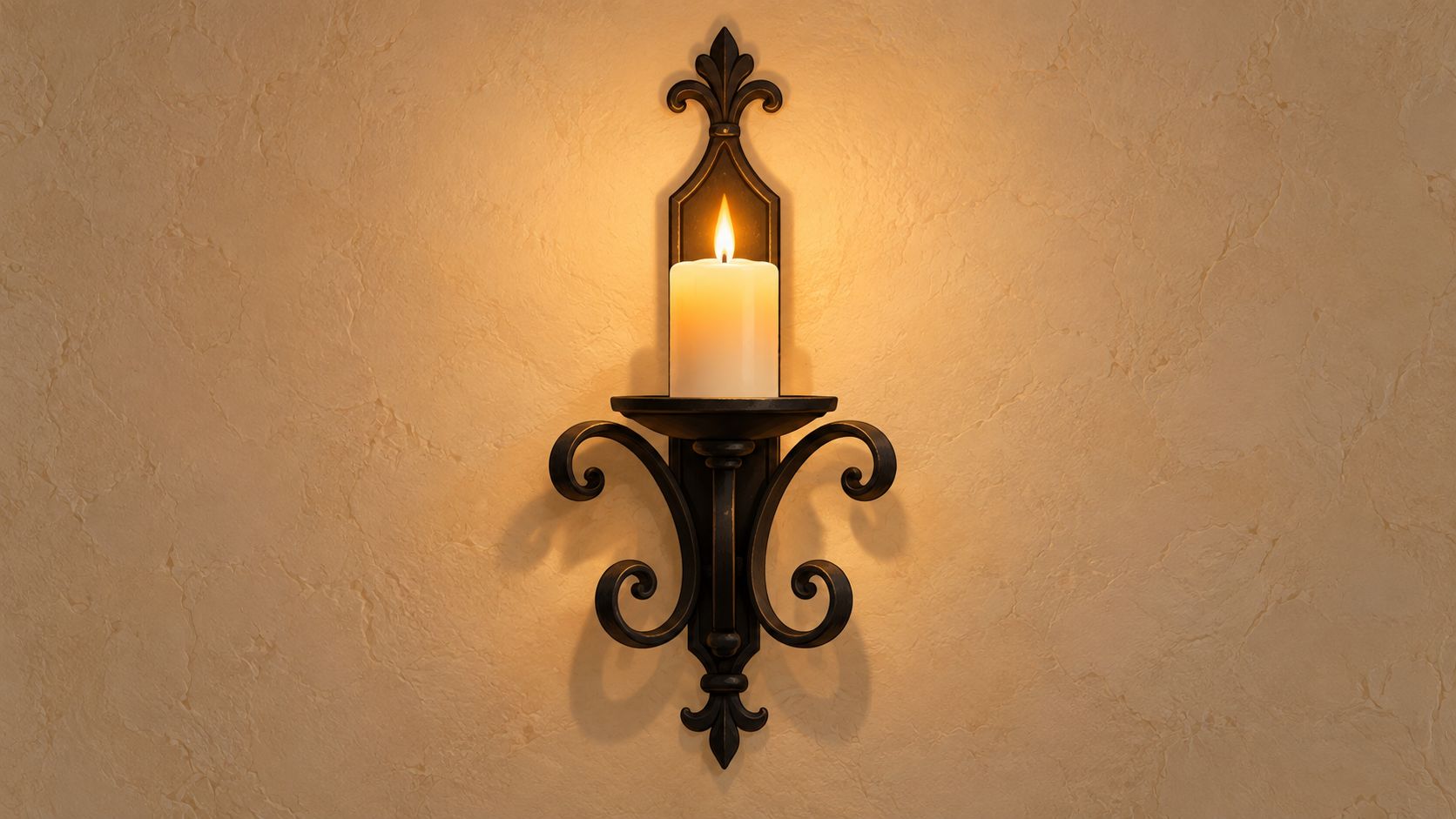
A well-appointed Central Florida living room can still feel unfinished after sunset. A pair of candle wall sconces wrought iron adds light at eye level, frames artwork or furniture, and gives the wall a sense of permanence. The fixture supports a candle in a cup, arm, or scrollwork frame, while the metal contributes structure even when the flame is unlit.
During daylight, a substantial sconce can relate to dark cabinet hardware, a solid wood console, or the leather of a reading chair. After dark, its flame softens the room without competing with a chandelier or ceiling fixture. Used with restraint, it works like a small architectural detail rather than a loose decorative object.
Why craftsmanship changes the character
Hand-forged iron shows evidence of its making. Slight variation in scrolls, textured surfaces, shaped candle cups, and carefully finished backplates gives the fixture a tactile authority beside heirloom furniture. A factory-made piece may copy the outline, yet often feels lighter and less expressive because its density, joins, and surface character are limited.
The tradition also reaches beyond basic candle support. A documented 1939 example by Milwaukee metalworker Cyril Colnik used three candleholders and a deer antler wrapped in wrought iron, showing how candle brackets could become ornamental architectural objects (Milwaukee Art Museum documentation). Colnik trained in Vienna and Munich, settled in Milwaukee in 1893, worked until retiring in 1955, and his collection included more than 200 examples.
Design principle: The finest iron sconce should look as though it belongs to the room's architecture, not as though it was added after the room was finished.
In a Longwood showroom, handle each candidate. Check whether the wall plate sits flat, inspect the scroll joins, and view the finish in both natural and warm light. A made-to-order piece can also provide better control over proportion, details, and finish. Guidance on the advantages of custom ironwork explains why that control can support visual integrity and long service.
Florida homeowners should also judge the fixture as part of the room's maintenance plan. A protective candle cup helps contain wax, while a considered location keeps flame, smoke, and occasional soot away from pale walls and nearby fabrics. The iron should be easy to wipe and inspect, especially in humid rooms.
For perspective on combining iron with wood, upholstery, and other furnishings, review metal accents in interior design. The right sconce contributes warmth, proportion, and permanence without asking the rest of the room to compete for attention.
How Wrought Iron Materials and Finishes Affect Longevity in Florida
A sconce that looks refined in a showroom may age differently on a humid Florida wall. Salt carried inland by air, damp bathrooms, and daily temperature changes test the metal at its joints, candle cups, and wall plate. Material quality and surface preparation determine whether a wrought iron sconce remains beautiful in Florida's humidity. The finish must cover every exposed surface, because an unprotected rear plate or tight scroll connection can become the starting point for corrosion.
The iron should feel substantial rather than hollow or flimsy. Solid scroll elements, cleanly joined arms, and a wall plate thick enough to remain flat support long service. A practical specification may include a wall plate around 4.5 inches wide by 3 inches high and roughly 1/4 inch thick, with solid-iron scroll elements around 9/16 inch. These dimensions are a useful reference when reviewing wrought iron candle sconce specifications, not a substitute for judging the actual workmanship.
Why preparation matters more than a beautiful topcoat
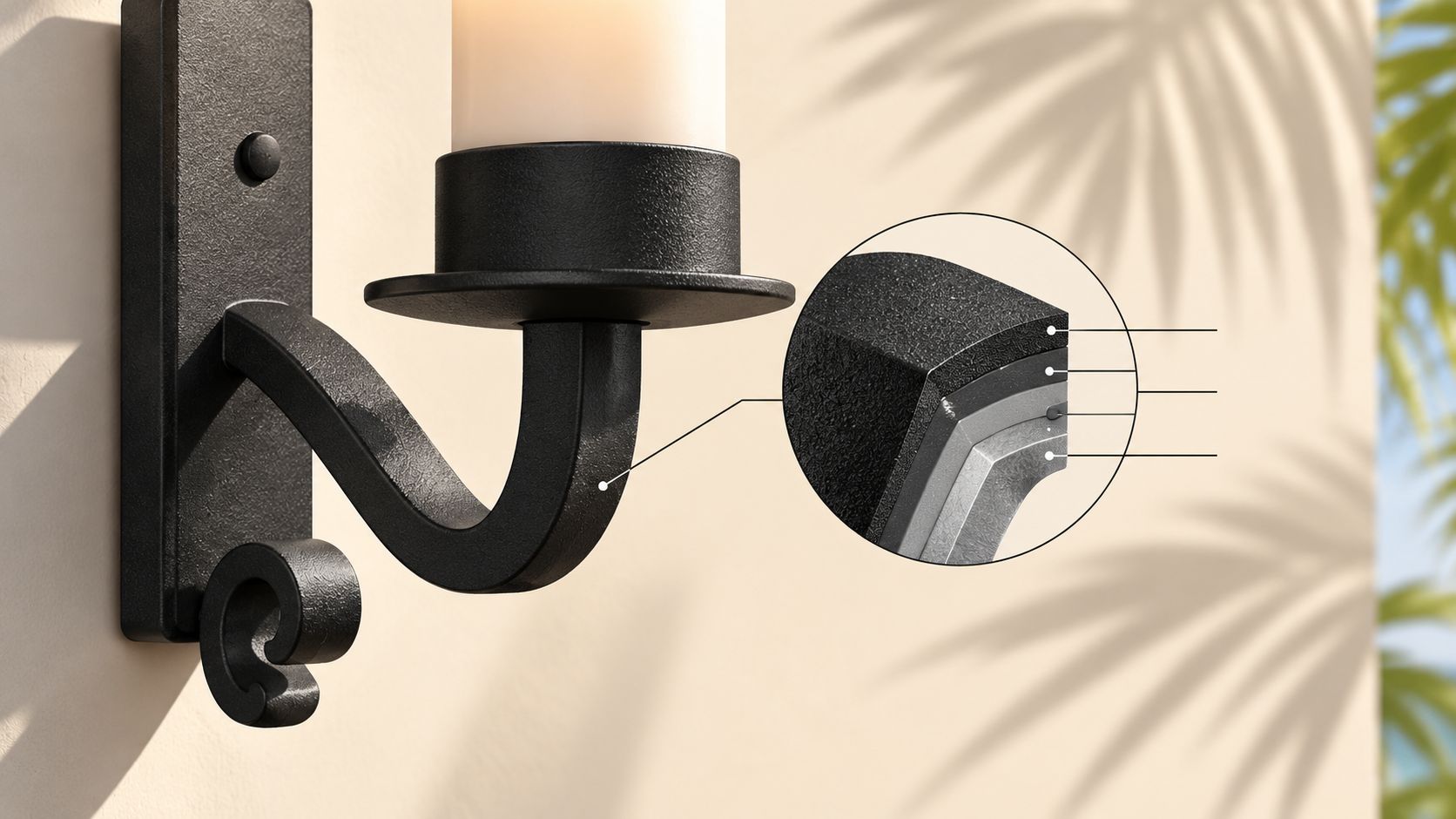
Powder coating cannot conceal weak preparation. Rust, grease, dirt, and other contaminants must be removed before the coating can bond to clean metal. If rust is already present, stripping and blasting are appropriate steps. Coating over corrosion leaves a concealed weakness that moisture can exploit.
A layered finish commonly includes primer and topcoats. Technical guidance recommends a combined dry film thickness of about 250 microns to balance protection with preservation of fine detail. That balance matters on ornate pieces. An excessively heavy coating can soften small scrolls, obscure crisp joins, and make handmade texture look flat.
Finish choices for Central Florida rooms
Matte black gives a quiet, architectural effect beside walnut, oak, linen, and neutral paint. Oil-rubbed bronze adds warmth to caramel leather, darker wood, and traditional upholstery. Antique iron suits Mediterranean or Tuscan rooms, where variation and patina can appear intentional rather than worn.
Finish color also changes with Florida's strong daylight. Review a sample near the intended wall, then inspect it in daylight and warm evening light. Ask four practical questions:
- What is underneath the finish? Confirm that the iron was cleaned and prepared before coating.
- Are the joints protected? Moisture can remain in tight scroll connections and accelerate corrosion.
- Does the finish suit the room's light? Bright daylight may reveal undertones hidden by showroom lighting.
- Will the backplate sit flat? A well-made plate keeps the installation neat against painted, plaster, or textured walls.
For broader guidance on coordinating material, color, and proportion while responding to Florida's climate and natural light, review this guide to decorating a Florida home. A finish chosen with the room's conditions in mind will be easier to maintain and more likely to retain its quiet character over time.
Which Wrought Iron Candle Sconce Style Fits Your Home
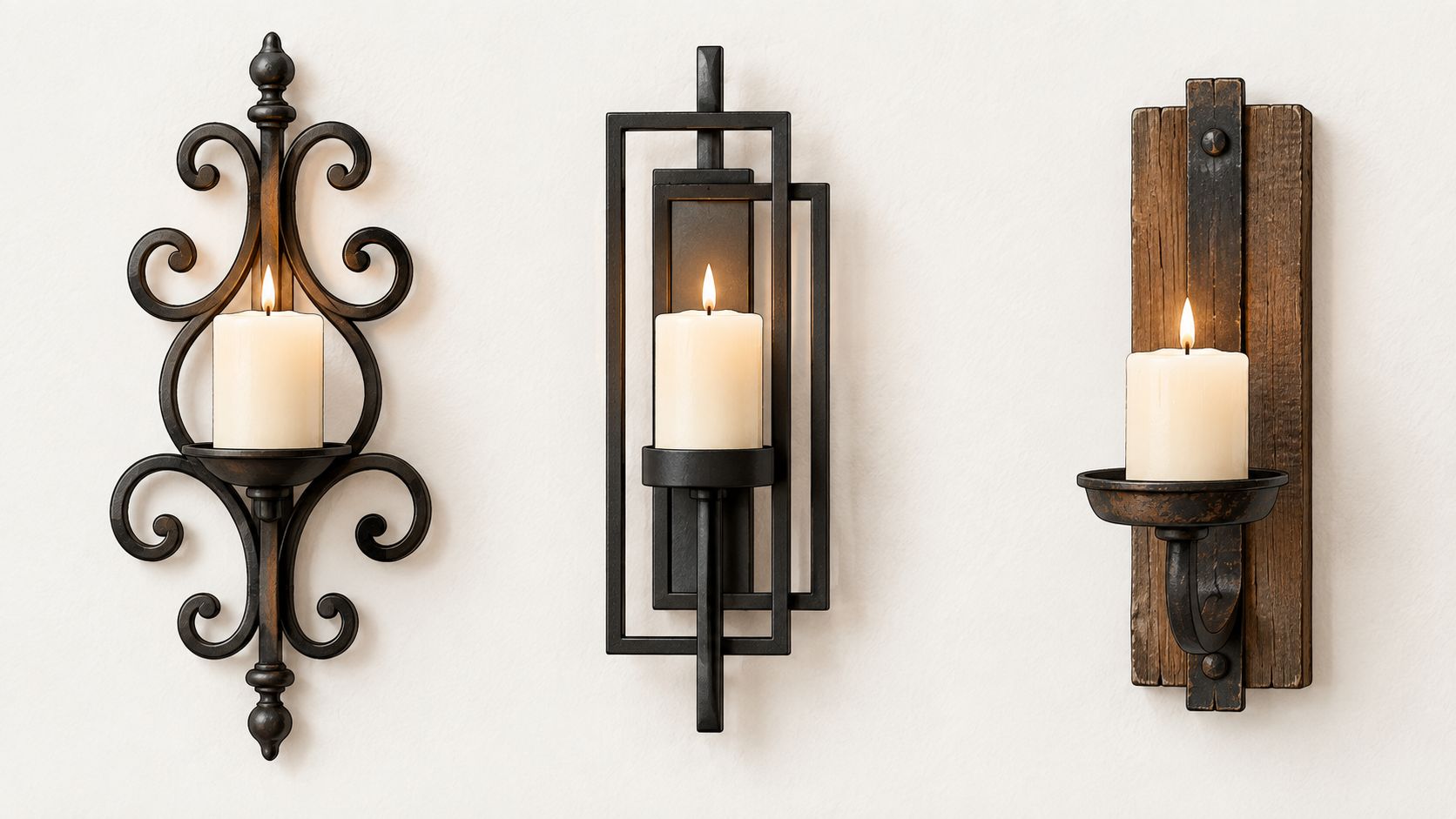
The right sconce style follows the room's existing visual language. Traditional scrollwork suits formal and transitional interiors, Mediterranean designs reinforce Old World warmth, linear forms support restrained modern rooms, and simpler rustic silhouettes work with relaxed wood and textile combinations.
Four useful style families
Traditional scroll and filigree sconces feature curled arms, decorative backplates, and sometimes multiple candle cups. They pair well with carved wood, upholstery, framed art, and formal dining furniture. In a Winter Park home with substantial case goods, a detailed sconce can provide the wall with an appropriate level of ornament.
Mediterranean and Tuscan sconces often use heavier scrolls, aged finishes, and strong vertical shapes. These work beside plaster textures, terracotta tones, dark wood, and warm leather. In Lake Mary or Altamonte Springs interiors with arched openings, tiled surfaces, or substantial beams, the iron can reinforce the architecture without introducing another competing material.
Modern minimalist linear sconces reduce ornament and emphasize geometry. Their cleaner outlines can complement contemporary sofas, pale walls, polished stone, and simple dining tables. They still provide the tactile contrast of iron, but they avoid making the room feel historically themed.
Rustic farmhouse sconces tend to use straightforward arms, visible texture, and restrained silhouettes. They work with reclaimed-looking wood, woven fabrics, relaxed upholstery, and soft neutral colors. The best versions feel crafted rather than distressed for effect.
Choosing one, two, or three candle arms
A single-arm sconce is visually quiet and useful in a narrow hallway, beside a doorway, or on either side of a mirror. A double-arm design carries more presence and may suit a larger wall or a room that needs stronger candlelight. A triple-arm piece becomes a decorative focal point and requires enough surrounding wall area to avoid visual crowding.
Pairs generally create symmetry beside fireplaces, artwork, mirrors, and doorways. Strict matching throughout the house isn't necessary, however. A homeowner may use a more decorative style in the dining room and a simpler linear version in a hallway, provided the finish or material creates a visual relationship.
A practical selection filter is:
- Formal room: Choose ornamented scrolls or a richer antique finish.
- Relaxed room: Choose simpler arms with visible hand-shaped texture.
- Contemporary room: Select restrained geometry and a clean wall plate.
- Mixed-metal room: Repeat the iron's tone through hardware or another small accent rather than matching every metal exactly.
Homeowners seeking a clearer framework for combining periods and materials can consult furniture styles explained. The most successful choice supports the room's existing furniture instead of asking every other element to accommodate it.
How to Size and Place Candle Wall Sconces for Balanced Light
A homeowner may find the right wrought iron sconce, then discover that poor placement makes it feel cramped, dim, or difficult to use. Mounting height, projection, and proportion should be settled together, especially in a Florida home where bright daylight can make an arrangement appear busier than it will at night.
A common guideline places the center of a wall-mounted fixture 60 to 66 inches above the finished floor, measured to the center of the fixture's junction box. This position generally keeps candlelight near standing eye level while leaving normal circulation clear. Use this wall sconce height guidance as a starting point, then adjust for the room, ceiling height, furniture, and the candle cup's accessibility.
Fireplaces offer a natural visual anchor. Position a pair in relation to the mantel, artwork, or firebox, leaving enough breathing room so the wall does not feel crowded. Beside a mirror, the sconces should illuminate the surrounding area without projecting so far that they interrupt the mirror's visual plane. Their candle cups should remain reachable for lighting, extinguishing, and replacement.
Match scale to the wall
A narrow hallway usually suits a slim single-arm sconce with limited projection. A broad dining room wall can support a deeper double- or triple-arm piece when it relates to a sideboard or substantial artwork. The wall plate should look proportionate to the iron body, and its construction should distribute the load rather than flex beneath a heavier pillar candle.
Have a qualified installer confirm the mounting method before committing to a substantial wrought iron piece. The outlet box and fasteners must be rated for the fixture's weight and dimensions. This check protects both the wall and the craftsmanship, particularly with hand-forged designs that carry more material than a lightweight decorative reproduction.
| Placement Scenario | Recommended Height and Spacing | Scale Tip |
|---|---|---|
| Beside a fireplace | Center the fixtures within the visual field created by the mantel and artwork, with balanced distance on both sides | Use matching sconces when the fireplace is the room's primary focal point |
| Dining room sideboard | Keep the center near standing eye level and align the pair with the sideboard or artwork | Choose double arms only when the wall has enough breathing room |
| Hallway | Use the common 60 to 66 inch center-height range and leave comfortable clearance for movement | Favor a narrow profile that will not catch clothing or bags |
| Bedroom | Place each sconce so its candle cup is accessible from the bed without creating glare | A single-arm design often feels calmer than a heavily ornamented piece |
| Mirror or artwork | Relate the sconce to the composition's outer edges rather than placing it directly over important details | Keep both sides visually equal, even when the wall is not perfectly symmetrical |
Before drilling into drywall, create a paper template or removable outline of the wall plate and full projection. Test it from seated and standing positions, and check nearby doors, curtains, artwork, and air-conditioning movement. For a layered lighting plan, see this guidance on putting a living room in the best light.
How to Prevent Soot and Wall Staining From Candle Sconces
A beautifully finished wrought iron sconce can still leave a dark halo on the wall if its candle burns poorly. Scented candles tend to create more soot, so candle selection and wick care belong in the installation plan, not after the first stain appears. Guidance on candle soot and indoor air quality also supports treating combustion as an indoor-air consideration.
A long wick produces a larger, less stable flame. Air movement can have the same effect. Ceiling fans, open doors, nearby windows, and a strong air-conditioning stream may make the flame flicker, smoke, or burn unevenly. In Central Florida, place a candle sconce outside those direct currents while retaining comfortable room ventilation.
A cleaner-use routine
- Select a cleaner-burning candle: Choose unscented or lightly scented wax when painted walls are a priority.
- Trim the wick before each use: A short, controlled wick encourages a steadier flame.
- Watch the flame: Extinguish a candle that flickers persistently, smokes, or develops a visibly dark flame. Correct the draft or wick before relighting.
- Allow wall clearance: Choose a sconce with enough projection to keep heat and flame away from the painted surface. A protective backplate can also make minor cleaning easier.
- Control air movement: Keep the fixture away from direct drafts rather than sealing off normal ventilation.
- Check the area above the sconce: Early gray or brown discoloration is easier to clean than a set-in ceiling mark.
Open-flame sconces suit homeowners who value ritual, visible flame, and historical character. Electric or hybrid versions may better fit rooms used frequently, households seeking simpler supervision, or spaces where clean walls take priority. Both approaches can retain the wrought iron appearance, but candle-only fixtures require active supervision.
Wax presents a separate risk, especially above flooring, upholstery, or finished wood. Review practical guidance on tackling wax on carpet and tile before installing sconces near vulnerable surfaces. Use a heat-safe candle cup, keep the wick centered, and extinguish the flame before leaving the room. The most durable design pairs heirloom-quality ironwork with disciplined candle habits, so its finish remains an asset rather than a source of wall repairs.
How to Care for Wrought Iron Candle Wall Sconces in Central Florida
A sconce near a humid entryway, screened porch, or coastal-facing room needs a care routine that reaches beyond visible dust. Gentle cleaning protects the finish, while close attention to joints and recesses helps prevent moisture from becoming a concealed rust problem.
Wrought iron corrosion often starts where water lingers, especially around connections and scrollwork. Flexible protective coatings can accommodate movement at these stress points, and exposed outdoor ironwork may require repainting at least every five years, according to wrought iron conservation and maintenance guidance.
A practical Florida care schedule
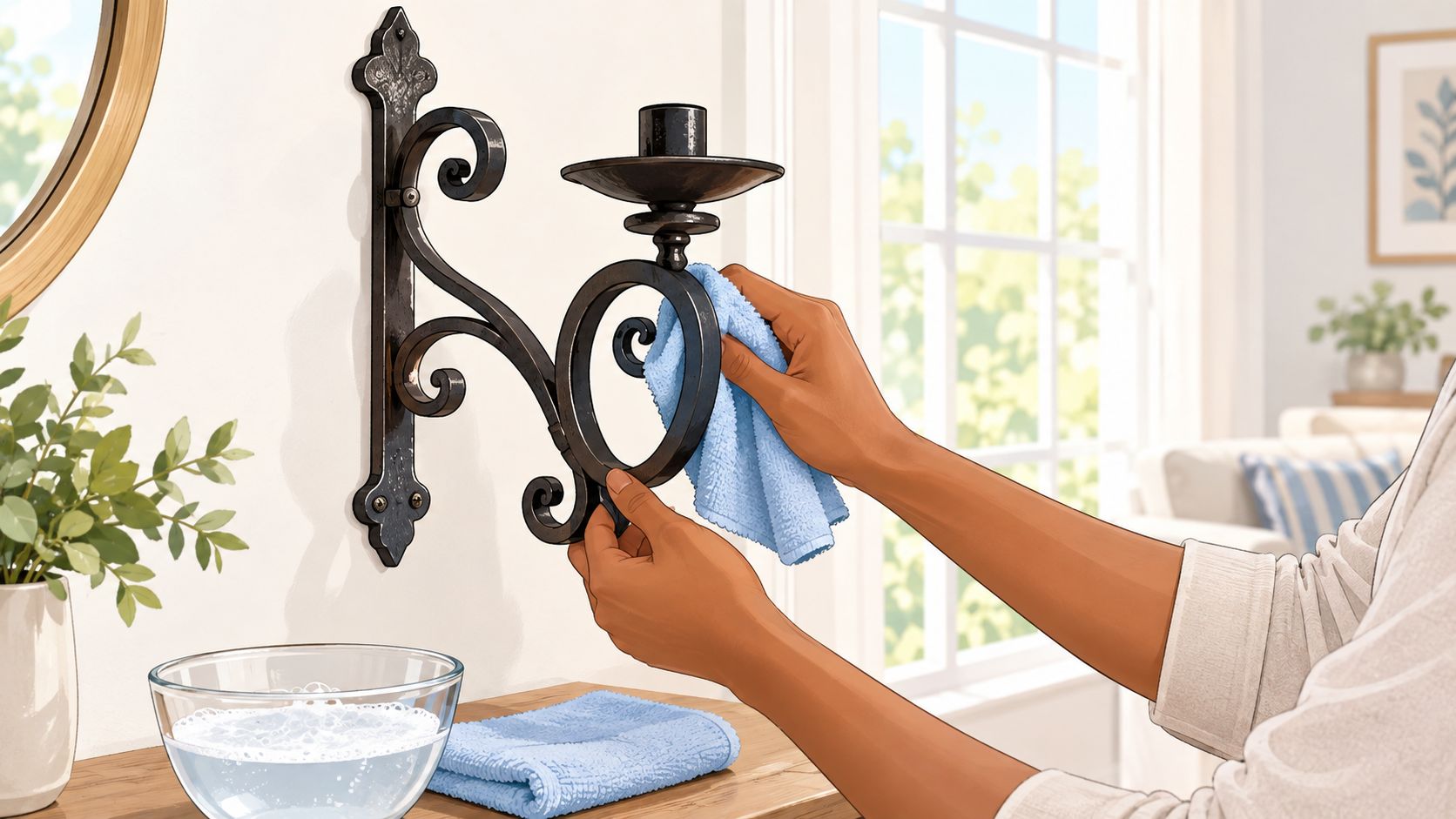
During routine dusting, use a soft cloth or gentle brush to reach the scrollwork. Treat the finish like a protective skin. Aggressive scrubbing can scratch it and expose the iron underneath.
Every 6 to 12 months, wash the fixture with a mild cleaning solution and soft cloth, then dry the joints, recesses, and underside of the candle cup completely. Wrought iron maintenance guidance supports this interval (wrought iron rust and maintenance guidance).
After cleaning, inspect the candle cup, arm connections, wall plate, and exposed edges. Touch up chips promptly. Once bare iron meets moisture and oxygen, rust can move beneath an otherwise attractive finish.
In humid or coastal conditions, inspect more often for film, discoloration, and trapped moisture. Salt air places extra demand on exposed coatings, and strong sun can gradually change their appearance.
Avoid abrasive pads, harsh solvents, and saturated cleaning methods that leave water in the scrollwork. If rust has spread beneath the finish, painting over it only hides the problem temporarily. Remove the rust and prepare the surface properly before refinishing, so the sconce remains a durable architectural detail rather than a recurring maintenance concern.
Where to Find Candle Wall Sconces Wrought Iron in Longwood and Orlando
Seeing wrought iron in person is the most reliable way to judge weight, texture, weld quality, finish, and scale. Photographs rarely communicate whether a piece feels substantial enough for a formal living room or whether its backplate will sit convincingly against a Florida wall.
A local showroom also allows homeowners to compare a candle-only fixture with an electric or hybrid alternative while considering the room's furnishings. A design consultant can review wall dimensions, existing metal accents, candle preferences, and the desired relationship between sconces and sofas, dining tables, bedroom furniture, or artwork.
A more considered local buying process
Homeowners visiting from Longwood, Orlando, Lake Mary, Sanford, Winter Park, or Altamonte Springs can bring room photographs, wall measurements, paint samples, and furniture dimensions. These details help a consultant evaluate proportion before a custom order is placed.
A custom-order program can support selected materials, finishes, and configurations when a standard fixture doesn't suit the architecture. Complementary in-home design services can also help coordinate sconces with a broader room plan, while white-glove delivery supports the final installation process.
Slone Brothers Furniture, a family-owned Longwood showroom serving Central Florida since 1980, offers home décor, custom-order furnishings, design services, and home delivery alongside its furniture collections. Its Orlando furniture store guide provides additional local context for homeowners furnishing an entire home rather than selecting isolated pieces.
The purchase should be evaluated as a long-term design investment. A thoughtfully made sconce can remain relevant through upholstery changes, paint updates, and furniture rearrangements, especially when its material and finish relate naturally to the home.
Ready to evaluate candle wall sconces wrought iron with experienced guidance? Visit Slone Brothers Furniture in Longwood, FL, where design consultants can help Central Florida homeowners compare finishes, scale, candle and electric options, and custom configurations in person. Schedule a showroom visit to create a warm, carefully considered home with craftsmanship that lasts.