

Shop by Room Guide for a Cohesive Central Florida Home


A familiar scene plays out in homes across Longwood, Lake Mary, Winter Park, and greater Orlando. The closing papers are signed, the rooms are finally empty enough to imagine, and then the questions start. Should the living room come first because that's where guests gather, or should the primary bedroom lead because restful sleep matters every single night?
That's exactly where Shop by Room becomes useful. Not as a website shortcut, but as a disciplined way to furnish a home with intention. For discerning Central Florida homeowners, it helps prevent the most expensive decorating mistake of all: buying one attractive piece at a time without a plan for how the whole house should live, feel, and age.
Why Shop by Room Is the Smartest Way to Furnish Your Home
Shop by room works because people don't live by product category. They live by space. A sofa isn't just a sofa. It belongs to a conversation area, a television room, a reading corner, or a family gathering space. A mattress isn't just a mattress. It belongs to a bedroom that should support sleep, recovery, and daily routine.
A room-first method also reflects how the furniture business is measured at scale. In September 2024, Circana said it tracks $32.1 billion in annual furniture sales across more than 20 categories, including bedroom and mattresses, home office, living room, and kitchen and dining, which shows how room-based buying maps to a large organized market rather than a passing merchandising idea (Circana coverage).
For a homeowner settling into a new residence in Sanford or Altamonte Springs, that matters. It means the smartest furnishing decisions usually begin with the job of each room, not with a random scroll through individual pieces.
A practical example from a new-home move
Consider a household that has just moved into a larger Central Florida home. The family room needs seating, the dining room feels bare, and the guest room can wait a little while. Without a room-based plan, many buyers start with whichever item feels most urgent or most fun.
That approach often creates three problems:
- Scale problems because the first sofa purchased sets proportions the rest of the room must follow.
- Style drift because a formal dining table may clash with a relaxed living space if there's no shared design language.
- Budget strain because the household spends too much in one room and has too little left for the spaces used every day.
A better sequence is simpler.
- Rank rooms by daily impact. Primary bedroom, living room, and dining space usually carry the most weight.
- Define the function first. Entertaining, quiet reading, movie watching, working from home, or orthopedic sleep support all call for different furniture decisions.
- Buy in complete room solutions. Think seating group, dining composition, or bedroom system rather than isolated items.
Practical rule: The first large piece in any room should answer the room's most important function, not just fill empty square footage.
Independent consumer data also supports this way of thinking. A 2025 survey reported that 41% of furniture shoppers bought a sofa, 34% bought an area rug, 27% bought a lamp, 25% bought an occasional table, 20% bought a recliner, and 17% bought home entertainment furniture. The same survey found 23% purchased a mattress for the primary bedroom and 22% bought primary bedroom furniture. Earlier UK consumer research found 30.5% purchased living room furniture in the last 12 months, 62.6% cited range as the main reason for buying, and 86.9% researched before purchase (consumer furniture purchase data).
That heavy research behavior is one reason room planning deserves patience. A helpful starting point is understanding the furniture buying journey from first research to final decision, especially for homeowners furnishing multiple spaces at once.
Why this approach suits Central Florida homes
Florida homes often ask more from furniture. Open plans blur one room into the next. Sunlight can be strong. Humidity affects materials. Guests arrive often. A room-by-room method helps a homeowner account for all of that without losing the larger vision.
Since 1980, local family-owned guidance has mattered here because furnishing a whole home isn't a transaction. It's a sequence of decisions that should feel calm, coherent, and built to last.
How to Create a Cohesive Look When You Furnish Room by Room
A cohesive home doesn't require matching sets. It requires repeatable design cues. The goal is to let each room have its own personality while still feeling related to the rest of the house.
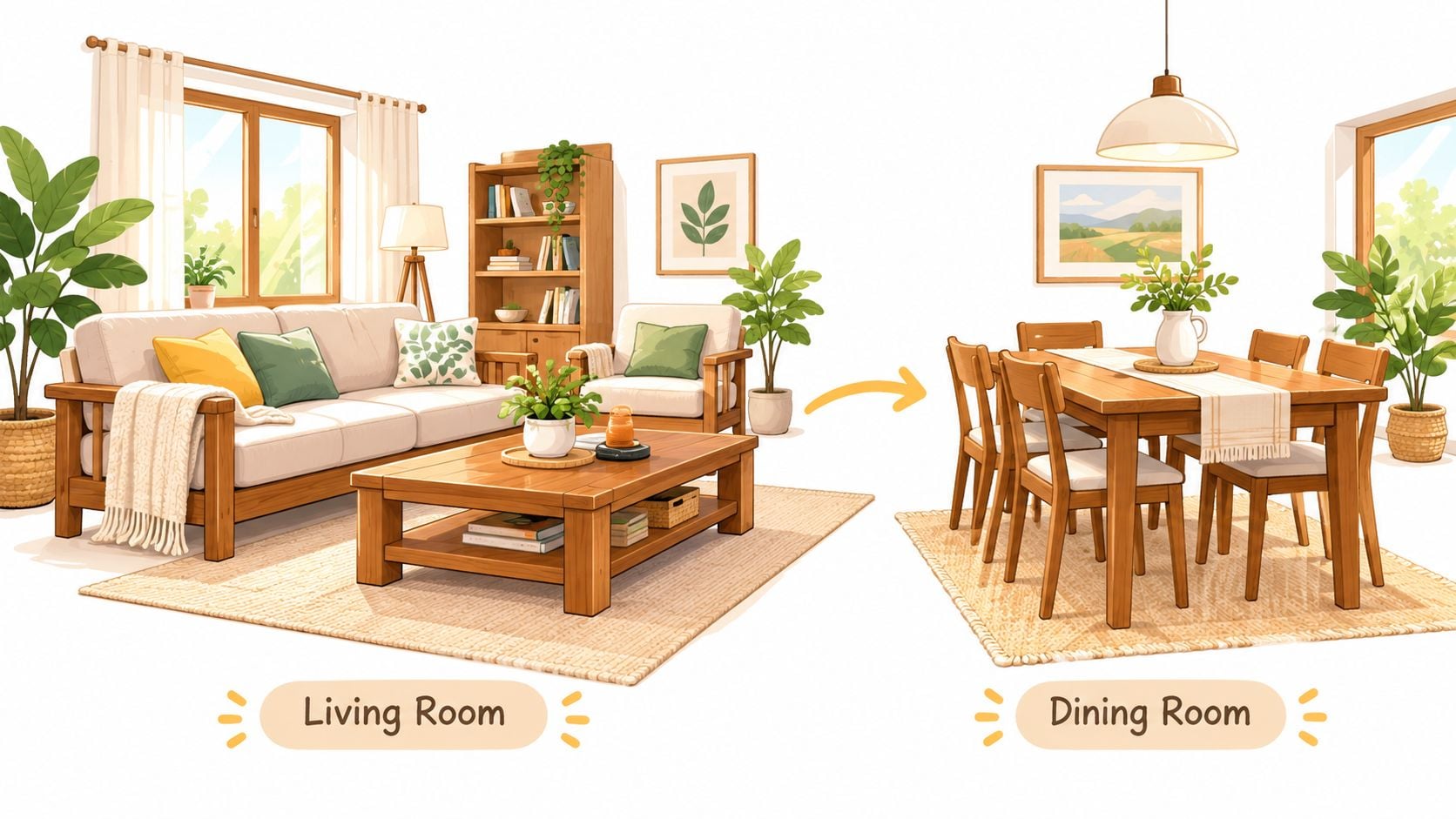
Recent furniture coverage points away from rigid matching packages and toward character-driven interiors with warm woods, mixed eras, natural materials, modular forms, and comfort-first upholstery (furniture trend reporting). That shift is good news for homeowners in Longwood and Lake Mary. It allows a home to grow over time without looking pieced together.
Start with a shared design language
Before choosing a single sofa or bed, it helps to settle three repeating elements that can travel through the house.
- Wood tone family such as warm walnut, medium brown oak, or lighter natural finishes.
- Silhouette family such as clean-lined tailoring, softened traditional shapes, or substantial craftsman forms.
- Upholstery family such as textured neutrals, quiet patterns, or leather and fabric combinations.
That framework creates order. A dining room and living room don't need identical finishes, but they should feel as though they belong to the same household.
A home feels collected when materials repeat with restraint. It feels staged when everything matches too closely.
Choose two or three materials to repeat
A simple whole-home plan might carry these elements from room to room:
| Element | How it repeats | Why it works |
|---|---|---|
| Warm wood | Dining table, bedroom case goods, occasional tables | Gives continuity and visual warmth |
| Black or bronze metal | Lighting, chair bases, hardware accents | Sharpens the palette without dominating |
| Textured neutral upholstery | Sofa, headboard, dining host chairs | Keeps the home calm and flexible |
This is especially useful when purchases happen in phases. A family may buy living room seating now, a dining set in several months, and a bedroom suite later. Repeated materials keep those staggered decisions from feeling disconnected.
Think beyond furniture alone
The envelope matters too. Flooring, wall color, and tile all shape how furnishings read. For homeowners refining a room palette before committing to furniture, it can help to browse stunning affordable tiles as part of the early planning stage, especially when kitchens, baths, and adjoining living areas need material continuity.
For furniture specifically, another helpful reference is how to mix furniture styles. The strongest interiors rarely stay inside one strict style lane. They borrow thoughtfully.
A four-step method that prevents mismatches
Choose the anchor room first
In many Central Florida homes, that's the living room or family room because it's the most public space and often opens to adjacent rooms.Pull a palette from one enduring piece
A solid wood dining table, a handcrafted sideboard, or a sofa can set the color direction better than a trendy accessory can.Repeat shape, not sameness
If the living room uses gently curved arms and softened edges, the dining chairs or bedroom mirror can echo that softness without duplicating it.Use performance-minded fabrics where life happens
Family rooms, breakfast areas, and homes with children, pets, or frequent visitors benefit from practical upholstery selections that still look refined in Florida light.
A cohesive home in Winter Park or Sanford shouldn't feel purchased all at once from a single page. It should feel considered. Shop by room succeeds when each room solves its own purpose, while the whole house speaks the same design language in a quieter voice.
Room by Room Inspiration and What to Choose for Each Space
Each room asks different questions. The living room asks about comfort and construction. The dining room asks about materials and daily wear. The bedroom asks whether sleep support is doing its job. The home office asks for function, and outdoor spaces ask for durability.
Living room choices that age well
A well-made living room begins inside the sofa, not on the surface. Frame construction matters. Cushion composition matters. The depth, height, and pitch of the seat matter because those details shape how the body feels after ten minutes and after ten years.
For living rooms, homeowners should pay close attention to:
- Frame integrity with stable hardwood or other strong, well-engineered construction rather than disposable build quality
- Seat cushion design including high-density foam or down-wrapped comfort options for a more substantial sit
- Arm and back scale that fits both the room and the people using it
- Fabric or leather suitability based on sunlight, children, pets, and frequency of use
Several heritage and custom upholstery names suit different priorities. Stickley is known for timeless Arts & Crafts heritage, heirloom solid wood construction, and handcrafted joinery. Smith Brothers is associated with custom bench-made comfort, premium frame construction, and extensive fabric and leather customization. Bassett and Craftmaster offer classic American-made quality, custom upholstery, and accessible luxury. American Leather is recognized for high-performance luxury leather, precision engineering, and the Comfort Sleeper®. Palliser brings contemporary North American leather and fabric home theater and sectional seating.
A few measurements make this room easier to get right:
- Overall room length and width
- Distance between openings and windows
- Walkway clearance
- Maximum sofa length and sectional return
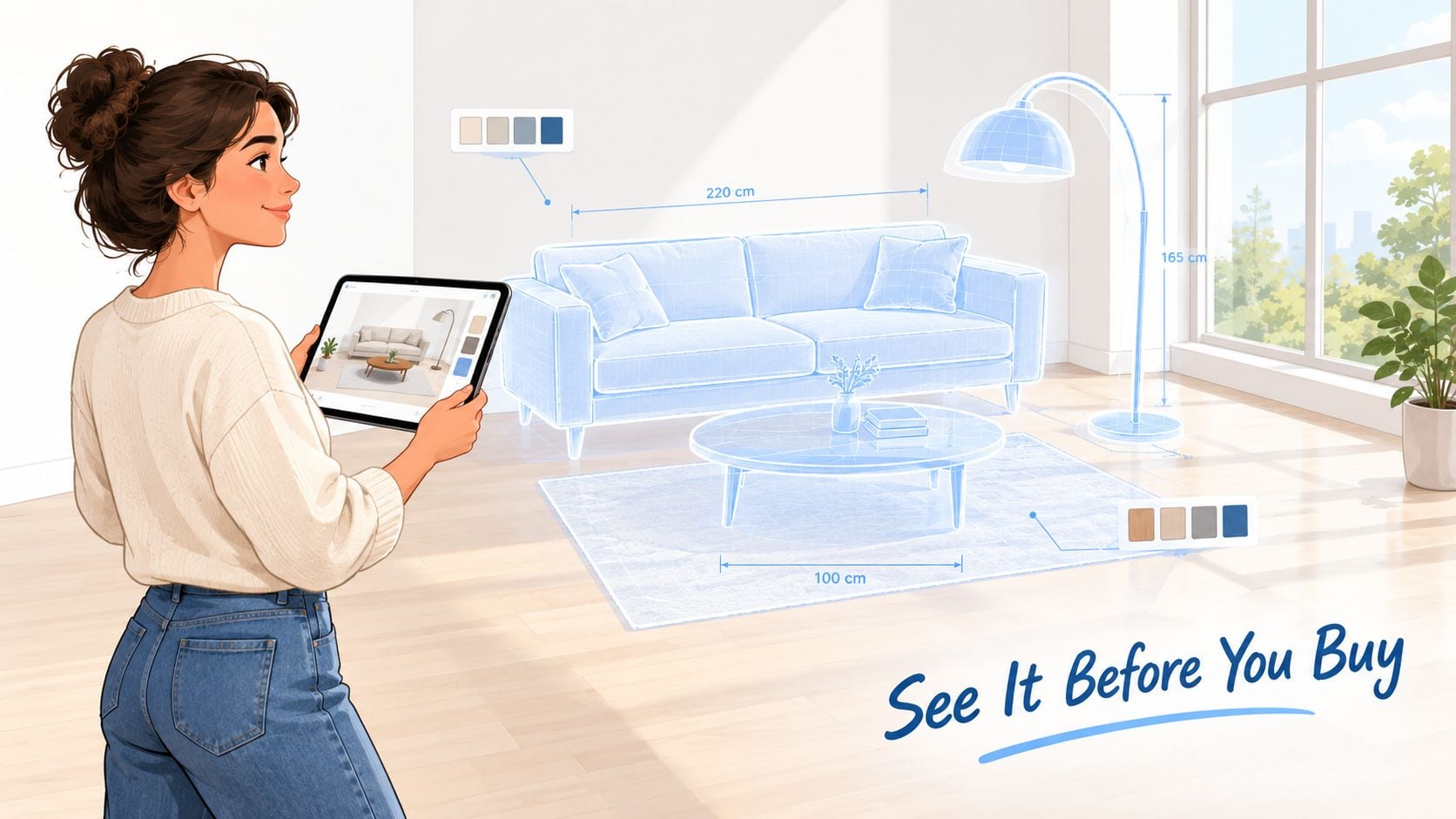
- Rug size needed to connect the seating group
Designer's note: In open Florida floor plans, the rug often does more than soften the room. It establishes the room boundary that walls no longer provide.
Some households also like to test room layouts digitally before they commit. Early-stage quick furniture mockups can help a family compare sectional shapes or chair placement before moving into final specifications.
Dining room decisions that reward patience
Dining furniture has to work harder than many people expect. It must withstand daily meals, holidays, homework, and shifting guest counts. Solid wood versus particle board becomes more than a material preference. It becomes a durability decision.
Solid wood typically offers stronger structural integrity, more honest aging, and better long-term value. Particle board may look acceptable on day one, but it often falls short in weight, joinery, repairability, and lifespan.
For dining rooms, craftsmanship shows up in several places:
- Top construction that resists the feel of a hollow or insubstantial surface
- Joinery quality where legs, aprons, and extensions meet
- Chair stability under daily use
- Finish depth that gives wood visual character rather than a flat printed look
Canadel offers hand-finished, solid birch custom dining furniture made to individual design specifications. Amisco specializes in durable Canadian-made metal and wood dining and bar seating. For homeowners who want American craftsman appeal, Simply Amish is known for hand-selected solid hardwoods, traditional joinery, and custom American craftsman furniture. Mavin is recognized for precision solid wood dining and bedroom collections built by custom bench-carvers in Amish country.
Bedroom choices that support sleep and calm
The bedroom should do less visually and more physically. It's the room where restraint usually wins. A quieter palette, better mattress support, and substantial case goods often create more luxury than extra decoration.
Bedroom shopping should start with the sleep system:
- Measure for the mattress size and nightstand width
- Check circulation space around the bed
- Think about storage needs before choosing the bed style
- Evaluate whether mattress support aligns with comfort and body needs
High-intent buyers often think differently than casual shoppers. They're not just buying a bed. They're investing in comfort, alignment, and durability. In a primary bedroom, that long-view mindset usually leads to better outcomes than chasing a fast fix.
Bedroom furniture also needs visual discipline. If the dining room carries a warm wood tone, the bedroom doesn't need the exact same finish. It just needs to feel related. Similar grain character, depth of stain, or hardware tone is often enough.
Home office furniture should answer how work happens
Room-specific shopping today is increasingly shaped by function, not just style. A 2026 furniture shopping study noted that hybrid shopping is dominant, with 42% of buyers shopping both in-store and online and 25% shopping online only. The same research found that home office buyers tend to prioritize multi-functionality, power features, and practicality, while entertainment-room buyers care more about aesthetics and family-friendliness (2026 furniture shopping trends).
For a home office in Orlando or Lake Mary, that means asking sharper questions:
- Does the desk support focused work or shared household use?
- Is storage open, closed, or a mix of both?
- Are power and cable needs accounted for?
- Will the chair support posture over long sessions?
A home office that looks handsome but doesn't support work will quickly feel like a missed opportunity.
Outdoor rooms deserve the same discipline
Central Florida homeowners often treat the lanai, covered patio, or poolside seating area as a real extension of the house. That's wise. Outdoor furniture should still connect to the indoor palette, but the material priorities shift.
Outdoor selections should lean on:
- Durable frames
- Thoughtful drainage and cushion construction
- Sun-aware textiles
- Easy-care surfaces
The goal isn't to make the patio match the living room. It's to let the outdoor room feel like part of the same home story.
Why Visualizing Your Room Before You Buy Changes Everything
The hardest part of furniture shopping often isn't choosing style. It's trusting scale, layout, and proportion before the furniture arrives. That uncertainty leads many homeowners to hesitate, second-guess, or settle.
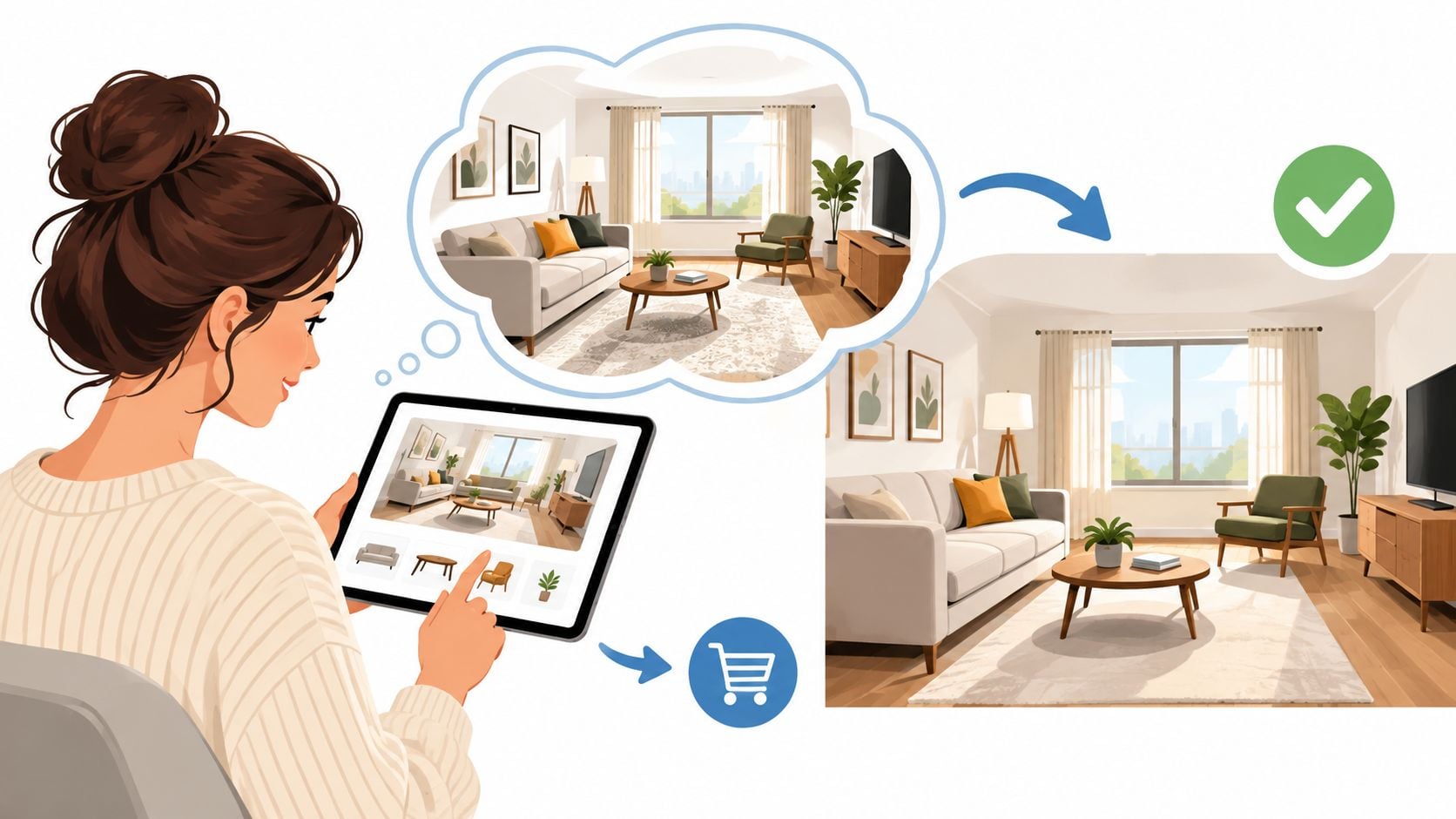
A 2026 furniture shopping study found that 62% of shoppers say visualizing how furniture will look in their home is a challenge. The same study reported that two-thirds of 3D tool users feel more confident in purchase decisions, over a quarter buy everything they saw in the planner, and 80% of 3D configurator users found the tool very helpful (3D furniture shopping study).
What online guesswork often misses
A screen can't fully communicate wood depth, leather hand, seat resilience, or how a chair supports the lower back. It also can't easily warn a homeowner when a sectional blocks a walkway or when a dining table leaves too little pull-back space for chairs.
That's where room visualization becomes practical rather than flashy.
| Buying method | What it helps with | What it can miss |
|---|---|---|
| Online browsing | Early inspiration, rough style direction, initial dimensions | Comfort, finish nuance, true scale in the room |
| In-person showroom testing | Sit, support, craftsmanship, material honesty | Needs room measurements to be most effective |
| Guided room planning | Layout, fit, finish coordination, confidence | Requires a bit of preparation from the homeowner |
Good visualization isn't about making a room look perfect on a screen. It's about catching the expensive mistake before the order is placed.
Why human guidance still matters
Major retailers across furniture and home improvement commonly organize shopping by living room, bedroom, dining room, home office, and patio, which shows that room-based navigation has become a mainstream discovery pattern rather than a niche feature. But navigation alone isn't design guidance.
A thoughtful showroom process gives homeowners something automation can't. It allows them to test comfort, compare finishes side by side, and discuss how one room should relate to another. How to measure a room for furniture becomes especially useful at this stage because confident choices depend on dimensions, circulation, and actual use.
One practical option for Central Florida homeowners is Slone Brothers Furniture, which offers curated room-based categories and complimentary design support for space planning and coordinated room selections. In a category where buyers often need reassurance before making a serious investment, that kind of hands-on guidance can reduce uncertainty.
Understanding Custom Orders Lead Times and American Made Quality
Custom furniture takes planning because craftsmanship takes time. That's especially true when a homeowner wants the right dimensions, finish, fabric, comfort level, and delivery timing to line up correctly.
The term Made in USA also deserves careful use. The U.S. Federal Trade Commission says an unqualified claim requires a product to be “all or virtually all” made in the United States, with final assembly or processing taking place in the U.S. and only a de minimis amount of foreign content. The FTC also says consumers are likely to interpret an unqualified U.S. origin claim to mean exactly that, so the claim needs a reasonable factual basis when it's made (FTC guidance on U.S. origin claims).
What realistic lead times look like
Custom order timelines are usually measured in weeks, not days. One current industry guide states that standard custom commercial furniture lead time is 4 to 10 weeks from approved shop drawings or fabric receipt, depending on construction and quantity. The same guide also summarizes broader planning ranges showing standard custom pieces with stock fabric at 6 to 8 weeks of production and 8 to 12 weeks total, while fully bespoke work can run 12 to 20 weeks of production and 15 to 24 weeks total including shipping. It also notes that custom upholstery typically runs 8 to 16 weeks, custom millwork 10 to 20 weeks, and European imports may add 4 to 8 weeks of shipping on top of production.
Those windows help explain why custom upholstery, solid wood dining, and made-to-order bedroom pieces should never be treated like impulse purchases.
Why Amish and bench-made work often takes longer
Amish furniture is commonly described as hand-built work from small workshops rather than mass-produced inventory. One industry guide says Amish furniture is built in small workshops without mass-production machinery and that indoor furniture builders often run 8 to 20 weeks depending on the piece.
That slower pace often reflects the very qualities serious buyers want:
- Manual joinery and hand-built construction
- Solid hardwood selection
- Finish work that isn't rushed
- Smaller production scheduling
Canadian custom specialties also require patience. Canadel custom dining, for example, involves finish and specification decisions that benefit from careful review. Getting started with custom order is often the right first step because dimensions, materials, and delivery expectations should be aligned before the order is finalized.
For American-made upholstery, Amish-crafted wood furniture, and other heirloom-minded categories, longer lead times are often a sign that the homeowner is buying something built with intention rather than speed.
Bring Your Whole Home Together at Slone Brothers in Longwood
The most successful shop-by-room plan doesn't stop at one room. It creates a house-wide rhythm. The living room may lead with comfort, the dining room with craftsmanship, the bedroom with support, and the office with function. But the home still needs one design language running through all of them.
For many Central Florida homeowners, that means starting with a few steady principles:
- Choose enduring materials before trendy accents
- Repeat wood tones, silhouettes, and upholstery families
- Prioritize the rooms that shape daily life first
- Allow time for custom work when the piece is meant to last
This approach is especially valuable for households furnishing in phases. A home in Winter Park may need the living and dining spaces complete before the guest rooms. A family in Sanford may focus on the primary suite, then the office, then the outdoor room. When the underlying language stays consistent, the timeline can stay flexible.
A local showroom can make that process far easier because homeowners can compare room groups, finishes, and comfort levels in one visit instead of trying to assemble confidence from disconnected screens. Complimentary interior design consultation services can also help translate ideas into an actual room plan with measurements, materials, and sequencing.
Since 1980, Longwood has been home to a kind of furniture buying experience that still values conversation, craftsmanship, and follow-through. For Greater Orlando homeowners who want a home that feels curated rather than hurried, shop by room isn't a shortcut. It's a smarter way to furnish with clarity.
Ready to invest in furniture that lasts a lifetime? Skip the online guesswork and automated digital chatbots. Visit Slone Brothers Furniture in Longwood, FL to explore living room, dining room, bedroom, office, and outdoor pieces with experienced design consultants who can help coordinate every room into one cohesive Central Florida home.