
Wall Art for Bedroom: A Central Florida Homeowner Guide


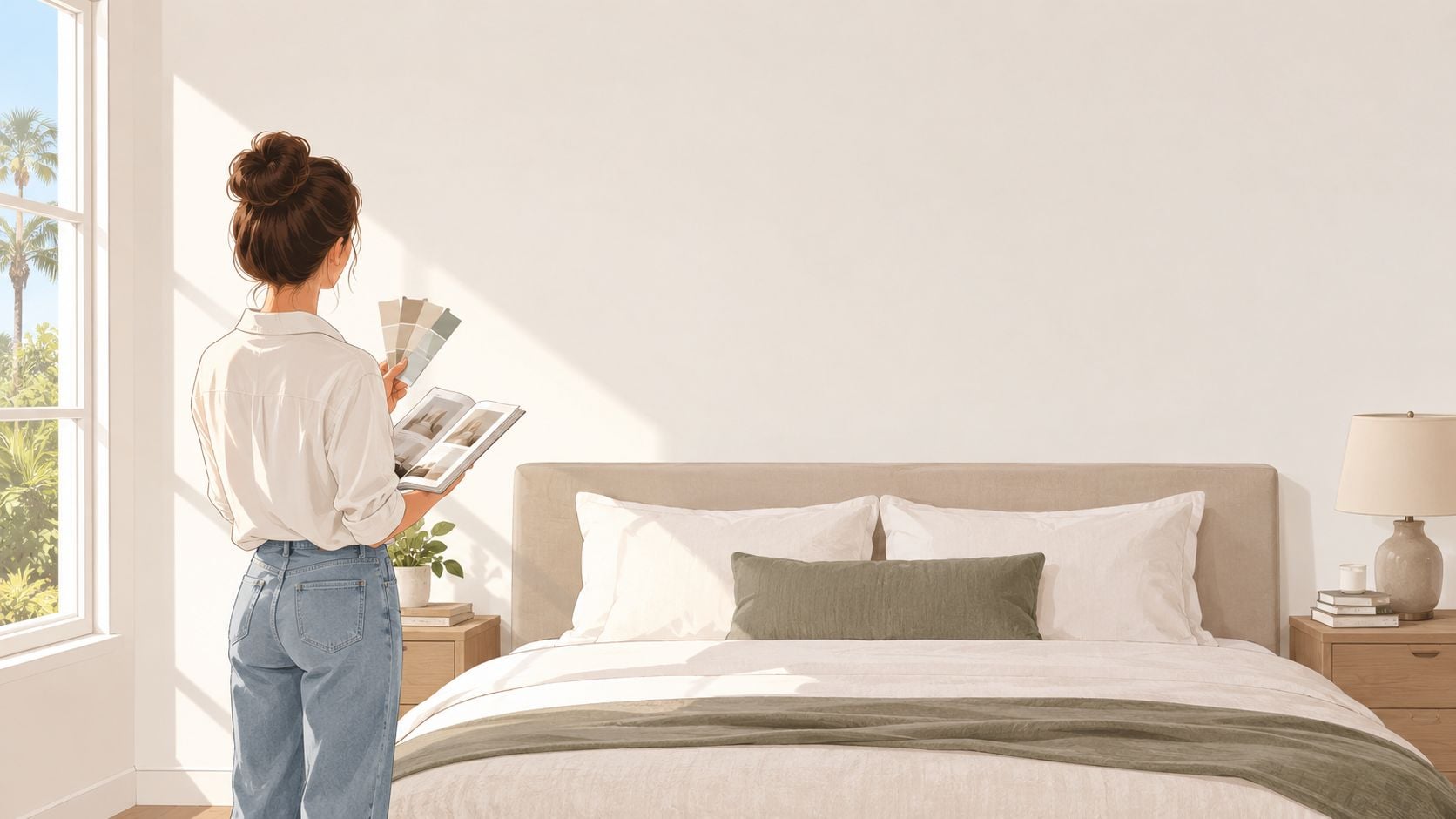
A homeowner in Longwood may stand at the foot of the bed, looking at a broad, empty wall and wondering why the room still feels unfinished. The furniture may be carefully chosen, the bedding layered, and the lighting softened, yet the blank space above the headboard can make the entire bedroom feel visually unsettled. Choosing wall art for a bedroom requires more than finding a pretty print. The artwork needs to support rest, relate to the bed's scale, suit Central Florida light, and remain appropriate for a room designed as a private retreat.
Since 1980, Slone Brothers Furniture has helped Central Florida homeowners make those decisions as part of a larger approach to furnishing the home. The same care used to evaluate a mattress, solid wood bed, or custom upholstery belongs in the selection of bedroom art. A well-chosen piece should feel considered today and remain satisfying as the room evolves.
Understanding Why Bedroom Art Needs a Different Approach
The blank wall above a bed can be deceptively difficult. A living room may welcome a dramatic conversation piece, while a dining room can carry stronger contrast and movement. A bedroom has a quieter responsibility. It should help the eye settle rather than compete with the bed, lamps, windows, or the first light entering through Central Florida shutters and curtains.
A homeowner furnishing a primary suite in Lake Mary might begin with a large abstract canvas because the wall feels expansive. Yet if the canvas has sharp contrast, crowded detail, or an aggressive subject, it can create visual activity precisely where the room needs calm. A softer tonal composition, subtle personal photograph, or restrained textile may provide a more comfortable conclusion to the wall.
The bedroom is a retreat, not a display wall
Bedroom art works best when it reflects the room's emotional purpose. Calm colors, generous negative space, and tactile surfaces can make a wall feel composed without making it feel empty. Recent 2026 trend coverage points toward soft neutrals, warm earth tones, minimal linework, and textured pieces in bedrooms, while also identifying stronger interest in nostalgic and personal visuals. Those observations appear in this overview of 2026 interior art trends.
That direction matters for Florida homeowners because bright daylight can intensify color. A piece that seems muted under showroom lighting may appear much more energetic beside a sunlit window. The artwork should be viewed in relation to the actual room, not selected in isolation from its walls, bedding, and exposure.
Bedroom principle: Art can be personal without being visually loud. The strongest choice often gives the room a sense of identity while allowing the bed to remain the main anchor.
A personal connection also helps prevent a bedroom from looking generic. A quiet photograph from a meaningful trip, a botanical study tied to a loved place, or a hand-finished textile can carry more staying power than a trend selected only because it fills space. Homeowners seeking a broader approach to restful room planning can also review guidance on designing a relaxing bedroom.
Mastering Wall Art Size and Placement Rules
The most dependable starting point is the furniture beneath the art. For artwork above a bed or headboard, a practical benchmark is to choose a piece, or a grouped arrangement, that spans about 60% to 75% of the furniture width. This proportion helps the art and bed read as one visual unit rather than leaving a small object floating above a dominant wall anchor, as explained in this bedroom wall art placement guide.
Measure from the bed, not from the empty wall
A wide wall doesn't automatically call for the widest possible artwork. The bed establishes the composition's visual center, so the artwork should relate to the bed or headboard first.
| Bed width | Recommended artwork width range | Visual effect |
|---|---|---|
| 54 inches | About 32 to 41 inches | Balanced and comfortably framed |
| 60 inches | About 36 to 45 inches | Proportional without crowding |
| 72 inches | About 43 to 54 inches | Strong horizontal relationship |
| 84 inches | About 50 to 63 inches | Substantial presence above a broad bed |
These ranges apply the 60% to 75% rule to common furniture widths. The exact bed dimensions should be measured before ordering, particularly when a headboard extends beyond the mattress or includes substantial posts, shelves, or upholstery.
A single horizontal piece often works beautifully over a broad headboard. A pair of related prints can create a similar overall width with more breathing room between the frames. A small curated cluster may suit an asymmetrical wall, but the combined arrangement still needs to be measured as one visual shape. Current trend commentary notes the movement toward one intentional focal piece, while smaller mixed-frame groupings remain useful in bedrooms with more complex layouts. Practical bedroom art trend guidance supports considering both formats rather than treating one as universally correct.
Set the vertical position before drilling
Above a headboard, artwork generally sits 6 to 10 inches above the furniture. That spacing keeps the frame connected to the bed without allowing it to collide visually with pillows or an upholstered top. One placement guide also identifies 4 to 8 inches as a workable range, so the final choice should account for the headboard's height, the frame thickness, and whether the art has a strong lower edge.
On an open wall without furniture below, aim for the artwork center to sit around 57 to 60 inches from the floor. This aligns the piece with typical eye level and keeps it from appearing uncomfortably high. Homeowners planning installation can use this step-by-step picture-hanging guide to translate the measurements into a secure, carefully aligned result.
Before purchase, a simple check helps:
- Measure the bed or headboard: Record the actual width, including any meaningful outer edges.
- Calculate the art span: Use approximately 60% to 75% of that width.
- Mark the upper wall: Test the proposed height with paper templates or painter's tape.
- Study the room at different times: Central Florida sunlight changes the way color and contrast behave.
- Treat grouped art as one composition: Measure the outside edges, including the space between pieces.
Choosing Art Styles That Promote a Restful Atmosphere
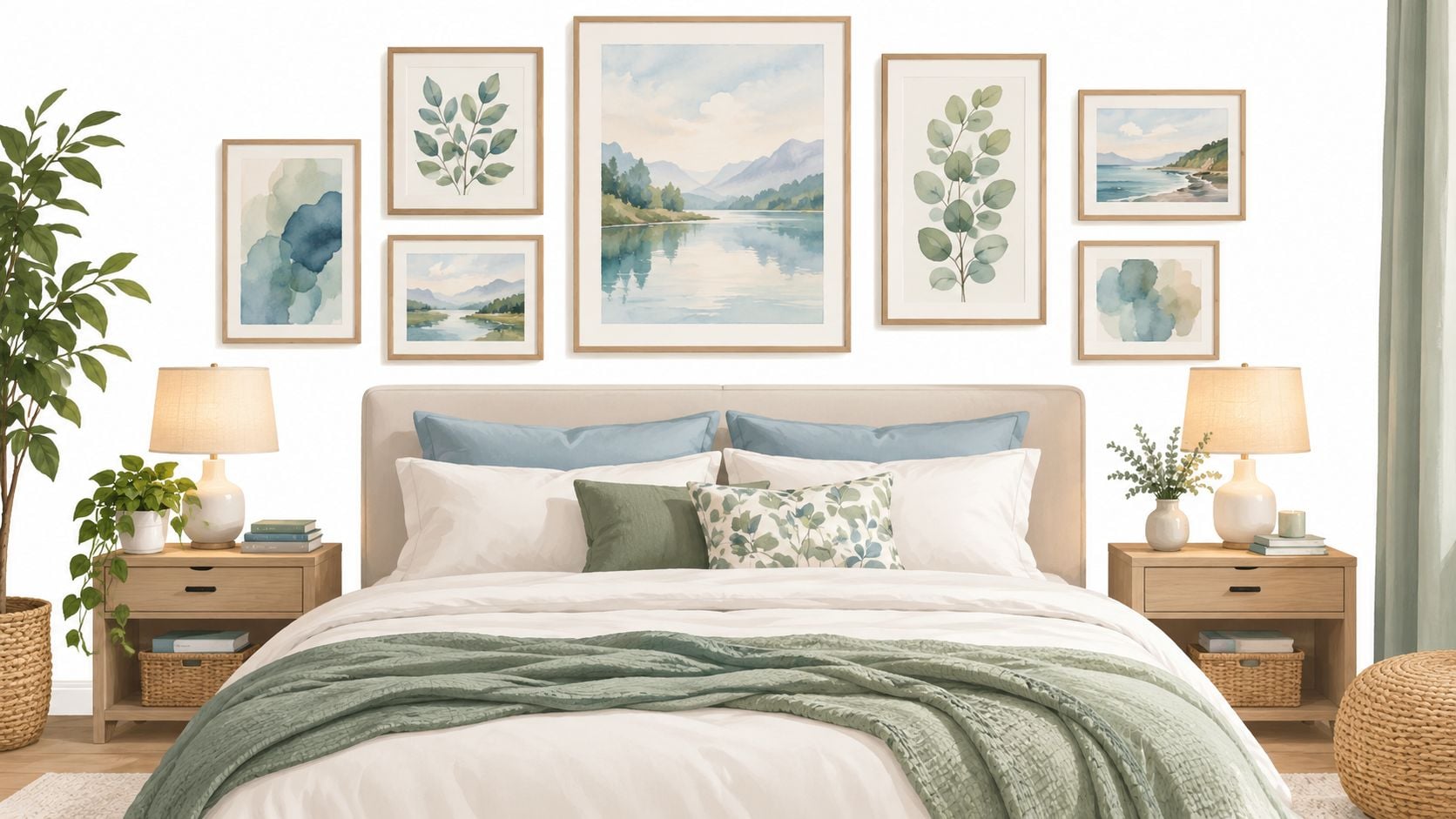
Style should follow the atmosphere a bedroom needs, not lead it. A homeowner who wants a tranquil primary suite may respond well to tonal nature scenes, quiet botanical studies, minimal linework, or textured abstracts with restrained contrast. Someone with a more collected home may prefer personal photography or a small group of related works, provided the arrangement has visual breathing room.
Compare the mood before comparing the frame
Minimal linework brings a light, graceful quality to a room. It suits simple furniture, pale walls, and bedding with subtle pattern. Because the imagery is restrained, it can remain present without demanding constant attention.
Textured abstracts and textile art offer depth through material rather than busy imagery. They pair naturally with upholstered headboards, natural wood, woven rugs, and layered linens. Textile surfaces can also soften a room filled with hard plaster, glass, and painted furniture.
Serene botanical pieces connect the bedroom with the natural world. Their success depends on editing. A composition with open sky, quiet foliage, or gentle tonal transitions tends to feel calmer than a crowded scene with intense color.
Personal photography gives a room emotional meaning. Black-and-white work can complement a refined palette, while a softly colored image may echo a throw, rug, or accent chair. The subject matters less than the memory and the visual discipline of the image.
Material changes the experience, too. A framed print offers crisp edges and architectural structure. A canvas wrap feels more relaxed and informal. A textile introduces softness and dimension, while mixed media creates a more collected impression. The frame should support the artwork rather than compete with it.
Account for Central Florida light
Orlando-area bedrooms often receive strong daylight, and humidity makes material quality important. Direct sun can alter the perceived intensity of colors, while reflections on glazing may obscure delicate details during bright hours. Artwork placed near a window should be evaluated for glare, frame stability, and the suitability of its finish for the room's conditions.
Wall color also influences the result. Before committing to art, homeowners may benefit from practical Toronto bedroom paint tips that explain how color choices affect a room's atmosphere. The same principle applies in Winter Park or Sanford. A warm neutral wall can make earth-toned art feel enveloping, while a cooler wall can sharpen blue, green, or gray compositions.
For homeowners drawn to nature, biophilic design elements can provide a useful framework for combining organic art, natural materials, and restful color. The aim isn't to copy a style. It's to select a piece that feels quiet enough for sleep and personal enough to belong in the home.
Coordinating Wall Art with Bedroom Furniture and Décor
Bedroom art feels integrated when it responds to the room's existing materials without matching every surface too precisely. The bed, nightstands, lamps, rug, drapery, and bedding already establish a visual language. Artwork should join that conversation through color, proportion, texture, or shape.
A useful method begins with one anchor detail. A homeowner might select the muted green found in a coverlet, the warm walnut tone of a nightstand, or the soft ivory of an upholstered headboard. The art doesn't need to repeat that color exactly. A related value or neighboring tone can create cohesion while preserving sophistication.
Let furniture guide the art's character
A Stickley bedroom with Arts and Crafts heritage and heirloom solid wood construction calls for art with substance. Handcrafted joinery and visible wood grain pair well with botanical studies, nature-inspired prints, and frames that feel honest rather than overly ornate. The goal is harmony between craftsmanship traditions, not a themed room.
A more contemporary American bedroom may support geometric abstraction, monochromatic photography, or a clean-lined diptych. If the furniture already has strong profiles, the artwork can provide softness through a painterly surface or organic subject. Conversely, a quiet bed design may welcome a more expressive focal piece.
The materials should also balance one another:
- Solid wood furniture: Echo its warmth with natural frames, earthy imagery, or tactile paper.
- Upholstered headboards: Introduce sharper framed art or a structured pair of prints for definition.
- Metal accents: Use linework, subtle geometry, or a frame finish that gives the metal a visual companion.
- Layered bedding: Pull one restrained tone from the linens, then allow the art to introduce a nearby shade.
Design observation: Coordination isn't duplication. A room feels collected when its elements relate, but not when every color and finish has been copied.
A gallery wall can work when the bedroom has an asymmetrical layout, a long side wall, or several personal pieces that deserve to remain together. Above the bed, however, a single work or unified pair often gives the eye a calmer destination. Homeowners considering changes beyond art can also review these bedroom color scheme ideas before finalizing frames and mats.
Accessories should support the result. A refined bed throw, carefully chosen lamp, or quality linen can complete the composition without adding visual clutter. For homeowners editing the entire room, these bedroom accessory guidance notes offer another perspective on making modest decorative changes feel intentional.
Local Sourcing and Custom Framing Opportunities
The difference between an attractive idea and a successful bedroom installation often appears in person. Online images can flatten scale, alter color, and conceal frame construction. A local showroom allows homeowners from Longwood, Altamonte Springs, Orlando, and nearby communities to stand beside the artwork, compare it with furniture, and judge whether its presence feels calm or overwhelming.
Local consultation is especially valuable when the bedroom has complications. A tall headboard, angled ceiling, narrow nightstands, heavy window trim, or strong afternoon light can change the correct format. An experienced design consultant can assess the wall as part of the room rather than treating the artwork as an isolated purchase.

Custom framing turns a selection into a finished piece
Framing deserves the same attention as the artwork itself. A solid wood frame can reinforce a traditional bedroom, while a slim profile may suit modern furniture. Matting creates visual space around a print and can prevent a small image from appearing lost inside a larger arrangement. Glazing choices affect reflection, weight, and how clearly the artwork reads in changing daylight.
In Central Florida, homeowners should also consider the room's humidity and ventilation. Quality construction, stable materials, and professional assembly help protect the investment over time. The frame should feel secure, sit squarely, and provide appropriate support for the artwork's weight.
Slone Brothers Furniture offers wall décor and design consultation within its Longwood showroom, while its custom-order process can help homeowners coordinate furnishings and finishes through custom-order furniture guidance. That service is useful when the art needs to relate to a new bed, nightstand, or complete bedroom plan rather than an existing room.
A consultation can also address practical handling. Anyone moving framed art between a current home in Sanford and a new residence in Lake Mary may benefit from these framed canvas moving tips, especially when the piece has substantial glazing or a delicate frame.
Installation insight: A carefully framed piece should arrive with a plan for placement, fastening, and future care. That preparation protects both the room and the artwork.
Taking Your Next Steps with Confidence
A successful bedroom art project begins before the showroom visit. Homeowners should photograph the wall in daylight, record the bed and headboard width, and note the height of nearby windows, lamps, and trim. A simple sketch can reveal whether the composition needs a horizontal piece, a pair, or a more flexible cluster.
The next decision concerns atmosphere. A homeowner might describe the desired room as quiet and textural, warm and traditional, or personal and collected. That language gives a design consultant more useful direction than a style label alone.
Questions worth bringing to a consultation
- Does the artwork suit the bed's width? The consultant should assess the complete composition, not just the art by itself.
- How will the colors behave in daylight? Ask to view finishes and frames under lighting that resembles the bedroom.
- Would one piece or a pair feel calmer? The answer depends on wall proportions, furniture lines, and personal preference.
- What frame and mat preserve the intended mood? Materials should support both the artwork and the bedroom's furnishings.
- How should the piece be installed? Placement, fastening, and future maintenance deserve clear answers.
A local, face-to-face process also reduces the risk of choosing a piece that looks attractive on a screen but feels too small, too active, or poorly finished in the room. The right artwork should make the bedroom feel more settled, not merely more decorated.
Ready to invest in a bedroom that feels as carefully considered as the rest of the home? Visit Slone Brothers Furniture in Longwood, FL, where experienced design consultants can help Central Florida homeowners coordinate wall art, bedroom furniture, framing, and complete-room details in person. Stop by from Orlando, Lake Mary, Sanford, Winter Park, or Altamonte Springs and begin the conversation with a real local design professional.