

Black Wall Decor Styling Guide for Every Room


You're standing in a new room in Longwood or Lake Mary, the sofa is in place, the dining set finally arrived, and the wall behind it still looks unfinished. That's usually the moment black wall decor earns its keep, not as a loud statement, but as the thing that makes the whole room feel intentional. In a Central Florida home, where light changes by the hour and rooms often mix wood tones, soft upholstery, and metal finishes, black is the calmest anchor in the room.
Why Black Wall Decor Belongs in a Well-Curated Home
Black wall decor works because it gives a room structure. It creates contrast against lighter paint, keeps a space from feeling washed out, and pulls together furniture that might otherwise look disconnected. In homes across Orlando, Winter Park, and Altamonte Springs, that matters more than trend language ever will.
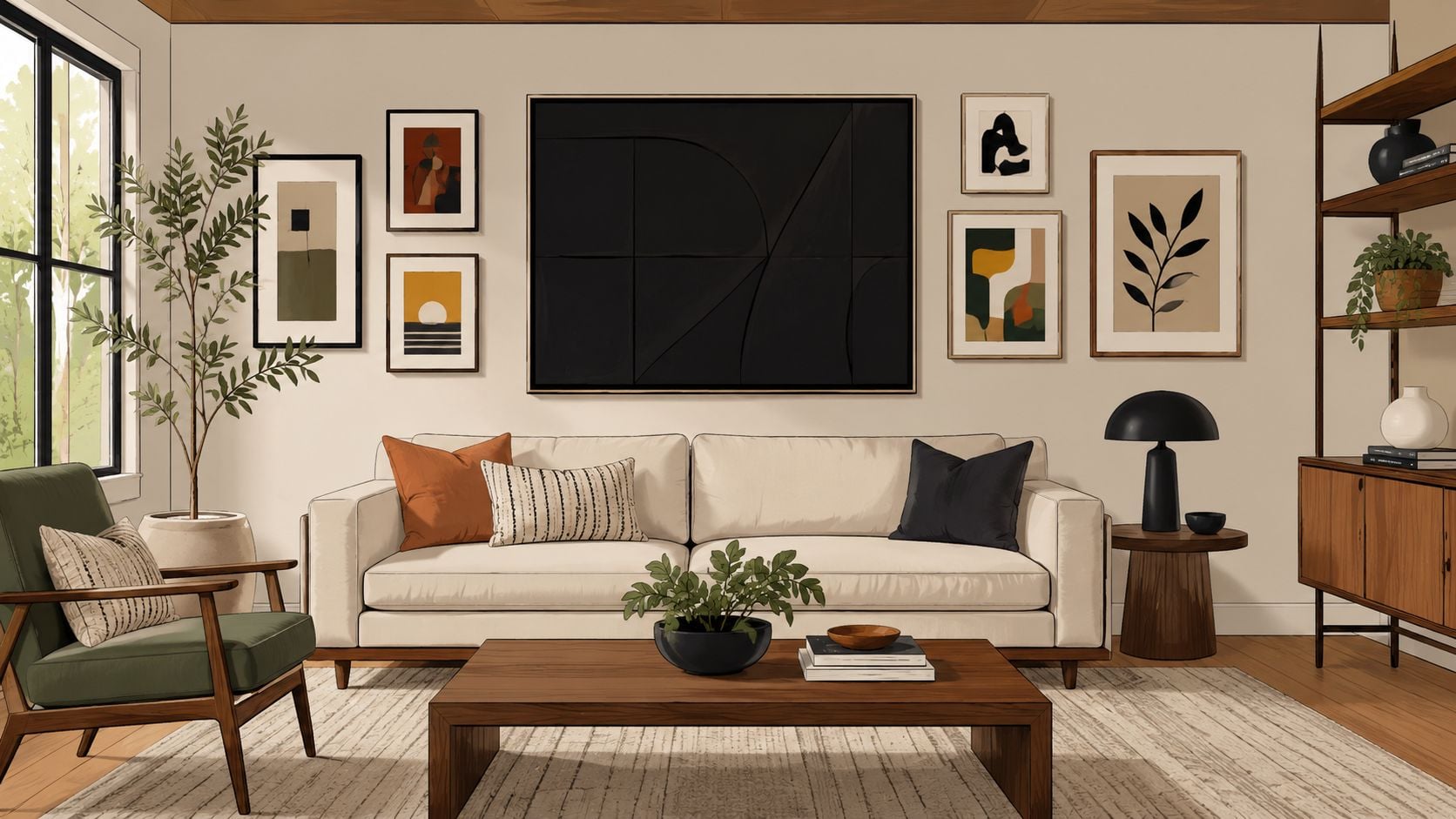
The best way to think about black wall decor is as a visual foundation. It can steady a room with white walls, warm oak floors, and mixed seating, especially when the furniture includes both painted and natural finishes. That's why it works in farmhouse, coastal, modern, and transitional rooms without looking out of place.
Black is a neutral, not a mood
A lot of homeowners hesitate because they think black will feel severe. It doesn't, if it's used correctly. A framed print, sculptural metal piece, or black mirror usually reads as a clean line in the room, not a dark takeover.
Practical rule: If a room already has plenty of light surfaces, black wall decor often makes the rest of the palette look more expensive and more resolved.
The right piece also helps define sightlines. When a room opens into a dining area or connects to a kitchen, black can separate zones without adding walls or extra furniture. That's useful in Central Florida homes where open plans are common and each space needs a clear visual job.
For color balance, the key is to let black answer something already in the room. It might echo a table base, a lamp, a chair leg, or the frame of a mirror. Slone Brothers has a useful color palette guide for pulling a room together, and that same logic applies here, because black works best when it's not floating alone.
Getting the Foundations Right Before You Hang Anything
Start with scale. A black piece that is too small vanishes into the wall, while one that is too large starts fighting the sofa, bed, console, or dining table underneath it. The cleanest result comes from measuring the wall first and choosing art that feels proportionate to the furniture it sits over.
Finish comes next. Matte black pulls less light and hides small flaws better, while satin or softly reflective surfaces feel lighter in rooms that do not get much daylight. That distinction matters in bedrooms, hallways, and offices, where the lighting is softer and the walls need help, not more visual weight.
Texture decides whether the room feels collected or flat. Black beside glossy metal reads modern, black beside carved wood feels layered, and black near linen upholstery keeps the arrangement from turning one-note. Keep the contrast deliberate, not busy.
Measure before you buy
A simple hanging plan saves money and keeps the room from looking patched together. Choose art that matches the scale of the furniture below it, then hold the spacing and alignment steady so the wall reads as one composition instead of a stack of separate objects.
The hanging method matters just as much as the image itself. A lightweight framed print behaves differently from a heavier sculptural piece, and a standard drywall wall needs a cleaner hardware plan than a wall that will take repeated contact. For anyone framing a poster or print, a black one sheet poster frame can be a practical starting point because it keeps the piece visually tight and preserves the dark edge that makes the image feel finished.
Before anything goes on the wall, check the basics:
- Confirm the wall surface: Flat, indoors, and able to support the weight you plan to hang.
- Match the hardware to the piece: Light frames, heavier panels, and metal decor all call for different mounting support.
- Map the seams first: This matters most if the wall will hold more than one frame or a modular panel arrangement.
- Plan for trim loss: Cutting and alignment always reduce usable coverage more than first-time buyers expect.
Black looks effortless only after the measurements are exact.
If the goal is precision, use a hanging method that respects the wall instead of improvising. The step-by-step hanging guide is a smart companion when the wall is the main visual focus and the room cannot afford crooked placement or repeated patching.
Living Room and Dining Room Placement That Actually Works
Living and dining rooms carry the most visual pressure in a Central Florida home. They're the spaces guests see first, and they're also the rooms where black wall decor has to earn its place by supporting the largest furniture investment already in the room. If the placement doesn't make the seating or dining area feel more grounded, it's the wrong piece.
Above a sofa, black works best when it behaves like an anchor. A single oversized framed print, a restrained abstract, or a sculptural wall piece can sit cleanly over a Stressless sofa or a Bassett sectional without crowding the room. The same is true over a long dining table, where a horizontal black piece can mirror the table's length and keep the whole composition from feeling top-heavy.
Let the furniture set the width
The safest design move is to let the wall piece relate directly to the furniture below it. If the sofa is the hero, the art should support the sofa. If the dining table is the hero, the wall decor should echo its shape and not compete with the chairs, chandelier, or china cabinet.
Gallery walls can work, but only when the wall needs more movement. A long sofa or blank dining wall can handle a grouped arrangement if the spacing stays even and the frames repeat in a controlled way. If there's already a fireplace, a console, or another architectural focal point, one strong black piece is usually enough.
For dining areas, black pairs especially well with solid wood tables and case goods, including Canadel, Stickley, and MAVIN pieces. Dark wall art against grain-rich wood creates depth that lighter decor rarely matches. A black metal sculpture, for example, can sharpen the outlines of an Amish-crafted table without making the room feel cold.
If the room has plants or natural materials, keep them in service of the wall, not the other way around. A helpful source for softening the edges of a room with greenery is this guide on homestyle with self-watering planters, which can be useful when black decor needs a little living texture nearby.
Best practice: In living rooms and dining rooms, hang black wall decor to support the biggest investment in the room, not to compete with it.
For a clean visual line, Slone Brothers' horizontal wall decor page is worth checking when the room needs width more than height. That's the right move above a sofa, buffet, or sideboard in a Longwood or Winter Park home.
Bedroom and Home Office Applications
Bedrooms need calm, not drama. Black wall decor can absolutely belong there, but it should feel restful, not theatrical. A single piece above the headboard, a pair of black mirrors near a window, or a restrained black-and-white composition usually gives the room enough contrast without disturbing the softness of the bedding and drapery.
The finish matters even more in a bedroom than in a living room. Matte and eggshell black tend to work better than high-gloss surfaces because they read quieter under bedside lamps and recessed lighting. In a master suite, that softer finish helps black feel refined instead of heavy.
Use black to sharpen a quiet room
Bedrooms usually benefit from one clear focal point, not a cluster of competing elements. Black wall decor can frame the bed, ground a reading chair, or create a visual stop behind a dresser. When the rest of the room is upholstered in linen, cotton, or soft wood tones, black gives the space a spine.
A home office asks for a different kind of restraint. Black behind the desk reads polished on video calls, and a black frame or metal piece helps create depth without turning the room into a set. That's a strong fit next to Smith Brothers seating or an American Leather chair, where clean lines and quiet structure already matter.
For a smaller guest room or a compact office, one strong piece usually beats several weaker ones. That's a lesson worth following in new-build homes around Central Florida, where spare rooms often have to serve as office, guest room, and storage space at different times.
A few room-specific choices work especially well:
- Above the bed: One wide piece, centered and low enough to relate to the headboard.
- Beside a window: Matching mirrors that bounce light without adding visual clutter.
- Behind the desk: A single framed composition that gives the camera a polished backdrop.
- In a reading corner: One black metal wall sculpture or shelf arrangement with simple lines.
For bedrooms that want more texture, this source on maximalist bedroom texture ideas can help explain how heavier visual layers can still feel controlled when the palette stays disciplined.
Outdoor and Humidity-Aware Applications for Florida Homes
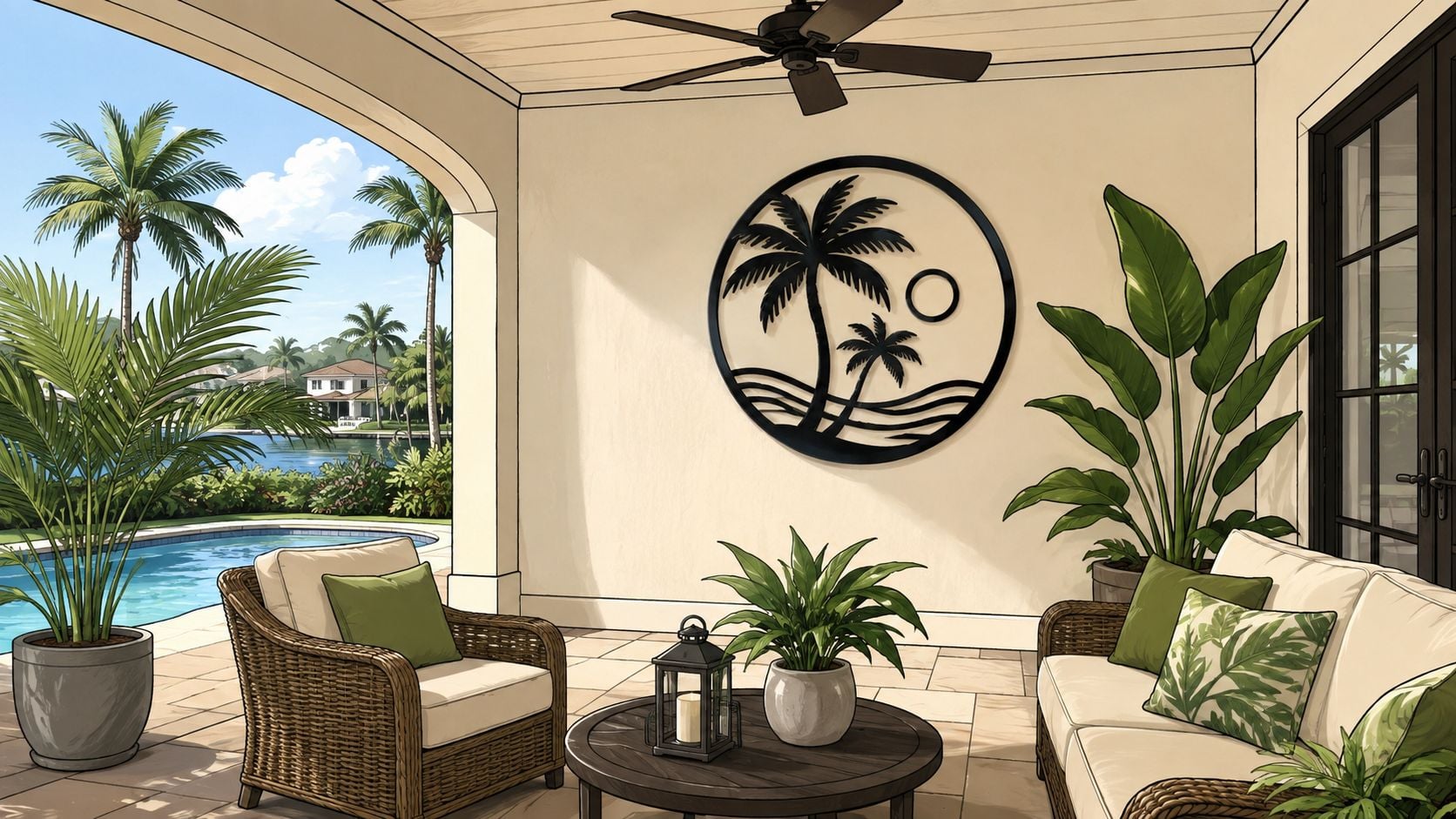
Central Florida changes the rules. Humidity, bright sun, and salt air can punish the wrong finish quickly, so black wall decor near a lanai, covered patio, or entry needs to be chosen with the climate in mind. Painted MDF is a poor match for those conditions, while powder-coated black metal handles exposure far better.
Covered outdoor spaces need decor that can survive heat, moisture, and cleaning without looking tired. Black metal signs, framed mirrors, and weather-aware wall pieces make sense there because they keep their shape and still look crisp next to wicker, teak, or cushioned seating. In entryways and mudrooms, the same principle applies, since those walls get daily contact and benefit from durable surfaces.
Choose materials that respect the climate
Black finishes outdoors should stay matte or low-sheen whenever possible, because strong reflections and visible fade can make a piece look worn before the rest of the space does. Direct afternoon sun is the enemy of a lot of decorative finishes, so anything placed outside the fully protected envelope of the home should be chosen carefully.
Garage and workshop walls are another smart place for black decor, but the point there is order, not prettiness. Black pegboard, framed utility prints, or black metal signage can make a working space feel intentional without needing soft decor. That's useful in homes where the garage doubles as storage for tools, outdoor gear, or overflow household items.
Use this simple Florida checklist before buying:
- UV exposure: Decide whether the piece will live in direct light or under cover.
- Moisture: Look for finishes that won't warp, swell, or peel.
- Salt spray: Keep delicate materials away from open-air coastal exposure.
- Cleaning: Choose surfaces that wipe down cleanly without leaving a chalky film.
If the room also needs outdoor furnishings, Slone Brothers' guide to choosing outdoor furniture fits naturally with this approach, because wall decor and seating should age at the same pace in a Florida climate.
Custom Sizing and the Value of an In-House Design Team
Stock pieces are convenient, but they rarely solve a real room perfectly. A wall may be too wide for a single print and too narrow for a full gallery wall, or a finish may miss the tone of the furniture by just enough to feel off. That's where custom sizing becomes a design tool, not a luxury flourish.
Custom black wall decor can mean a larger frame, a specific black stain, a metal finish that matches case goods, or a multi-piece arrangement built to the exact width of a wall. In a home with Amish-crafted wood pieces or a strong American-made seating group, that level of coordination is often what keeps the room from feeling assembled instead of curated.
Custom is about fit, not excess
The value shows up in the details. A custom piece can be scaled to the width of a sofa, matched to ceiling height, or built to sit between architectural elements without awkward gaps. That matters in homes where every wall carries a job, especially in open plans and two-story spaces.
Slone Brothers' complimentary in-house design service is built around that kind of decision-making. The difference between a design consultant and a commission-driven order taker is simple, one listens to the room first. A real consultative appointment uses samples, measurements, and the rest of the furnishings to land on a choice that will still make sense years from now.
Pricing should be framed clearly. A custom wall piece costs more up front because it's built to fit the home, and that's exactly why it tends to last longer in use and in style. The same logic applies to a Stickley chair or a Stressless recliner, where the value lives in the structure, not the shortcut.
If a homeowner wants a room that looks finished rather than merely decorated, a custom consultation is the smarter move. The interior design consultation services page is a useful starting point for anyone who wants a plan built around the actual wall, the actual furniture, and the actual lighting.
Bringing It All Home in Longwood
Black wall decor works when four decisions are handled with discipline, scale, finish, texture, and focal point. Get those right, and a single black framed piece over a Bassett sectional, a custom metal arrangement near a Stickley anchor piece, or a coordinated black-and-wood wall over a Canadel dining table can make the whole room feel complete. Get them wrong, and even a beautiful object reads like a mistake.
For Central Florida homeowners, the right next step is simple. Bring the wall width, a few photos of the room, and the dimensions of the furniture you're anchoring, then compare finishes under real light instead of guessing from a screen. That's the difference between buying decor and finishing a room.
Ready to make the wall work as hard as the furniture beneath it? Visit the showroom with your measurements, room photos, and a clear sense of the room's lighting, then let a real consultant help shape the plan around your home.
Slone Brothers Furniture offers complimentary in-home interior design guidance, custom-order options, and a curated selection of wall decor, furniture, and home furnishings for Central Florida homes. Visit Slone Brothers Furniture in Longwood, FL to see black wall decor, finishes, and scale in person, and work face-to-face with experienced design consultants who'll help turn one blank wall into a finished room.