

How to Design a Coastal Style Living Room That Lasts


A coastal style living room should feel easy the second someone walks in, not staged for a magazine shoot. In Longwood, Lake Mary, Winter Park, or Orlando, that usually means one thing, a room that handles Florida light, humidity, kids, pets, and daily traffic without turning fragile or themed. The right approach is calm, restrained, and built around pieces that still look composed after real life has done its work.
Homeowners often start with shells, anchors, and striped pillows, then wonder why the room feels busy six months later. The better move is to treat coastal style living room design as a material decision first, a color decision second, and a decor decision last.
What a Coastal Style Living Room Really Means in Florida
The biggest mistake Florida homeowners make is thinking coastal has to look literal. It doesn't. The style grew out of seaside communities that favored comfort, natural light, and practical furnishings, then became more recognizable through the 1990s and 2000s as it shifted from nautical props to a broader vocabulary of white walls, natural textures, and airy finishes (Aesthetics Fandom).
That matters in Central Florida because most homes in Longwood and Orlando aren't beachfront cottages. They're family homes with mixed light, open-plan rooms, and day-to-day wear that demand more restraint and better construction than a Pinterest board suggests.
Start with the feeling, not the theme
A refined coastal room should read as bright, relaxed, and breathable. That means fewer objects, more texture, and no need to prove the theme with obvious symbols. A well-chosen sofa, a natural rug, and a few carefully edited accessories do more for the look than a shelf full of shells ever will.
Practical rule: If a piece only works because it says “beach,” it's too literal for a long-term living room.
Slone Brothers' own Coastal Design Style guide points in the same direction, with a focus on pale neutrals, crisp linens, weathered wood, and light-filled rooms. That's the right instinct for a homeowner in Sanford or Winter Park who wants the room to feel current, not costume-like.
Why the inland version has to be stricter
The inland version of coastal style needs more discipline because the view isn't doing the work. The room has to create its own calm through light, texture, and proportion. If the palette gets too busy or the furniture too small, the whole space loses the relaxed rhythm that defines the style.
That's why a local showroom conversation matters. A consultant can look at ceiling height, window direction, flooring tone, and how the room connects to the rest of the house, then steer the design toward pieces that belong in a real Florida home, not a vacation rental fantasy.
Choosing the Palette and Materials That Hold Up
The palette should stay disciplined. The most practical coastal rooms use either an 80/20 or 70/20/10 balance, which keeps 80% to 70% of the visual field in soft whites, creams, or pale grays, with 20% in sand, beige, or faded blue, and only 10% reserved for stronger accents (Room Studio AI). That ratio keeps the room bright, flexible, and easy to refresh later without starting over.
Let the sofa do the heavy lifting
The sofa should anchor the room, not compete with it. That means choosing a durable natural or performance fabric, usually linen, cotton duck, or a blend that can handle family use without looking stiff. Bright coastal notes belong in pillows, art, and smaller accents, where they're easy to change.
A strong sofa color should sit close enough to the wall color that the room feels unified, but not so close that everything disappears. Low-contrast choices are better in Florida because they preserve the open, sunlit feeling coastal design depends on.
Build the room from durable surfaces
For case pieces, solid wood is the right long-term answer. Particle board may look fine on delivery day, but it does not offer the same structural integrity, weight, or longevity, especially in a humid climate where cheap construction tends to fail sooner.
Natural layers belong here too, but in moderation:
- Jute and sisal rugs add texture without visual noise.
- Rattan accents bring warmth, but should stay secondary.
- Wood finishes should look weathered or softly matte, not glossy.
- Linen and cotton keep the room breathable and relaxed.
For homeowners who want a practical reference on moisture control, the general indoor comfort guidance in ideal indoor humidity Canada is a useful reminder that fabrics, wood, and climate all need to work together, even though Florida's conditions are different.
Slone Brothers' upholstery fabric guide is worth reading before any order is placed. Fabric selection is where a pretty room either becomes family-proof or becomes a maintenance problem.
Furniture Built to Last Sofas Chairs and Case Pieces
A coastal living room lives or dies by the sofa frame. If the frame isn't kiln-dried hardwood, it's already compromised. The same goes for joinery, which should rely on corner blocks, dowels, or mortise-and-tenon construction rather than shortcuts that loosen over time.
What separates a real investment from a temporary sofa
The best sofas also pay attention to suspension and cushions. Eight-way hand-tied or sinuous no-sag suspension supports the seat properly, and a cushion core built from high-resilience foam, often wrapped in down or paired with a dense foam core, keeps the seating from collapsing into a lumpy middle.
That's the difference homeowners feel after a few years of daily use. A cheaper sofa can look acceptable for a season, but a well-built one keeps its shape, support, and comfort much longer.
Which brands make sense in a Florida coastal room
For a refined coastal room in Central Florida, American-made upholstery from Craftmaster and Smith Brothers fits the brief well because custom comfort, fabric choice, and frame quality matter more than trendy silhouettes. Stressless is a smart option when ergonomic support matters most, especially for households that sit in the room every evening rather than just decorate it.
American Leather is useful for clean-lined seating with performance-minded finishes, and Bassett can serve as a practical source for coordinated case pieces. For homeowners who want something more and built with a different construction ethic, the custom-order path opens up more control over fabric, leg style, and scale.
A coastal room gets expensive when the wrong piece has to be replaced twice.
Slone Brothers offers a custom look furniture path that lets a homeowner specify the materials and proportions instead of settling for whatever arrived in a warehouse. That matters when the room has to work with Florida sun, pets, and real family traffic, not just a design concept.

Case pieces should support the room, not dominate it
A coastal room rarely needs oversized storage. It needs a few measured pieces that keep the room airy, such as a low media console, a restrained side table, or a clean-lined cabinet with enough presence to feel intentional. In a Lake Mary new build, that usually means letting the upholstery carry the weight while the wood pieces reinforce the palette.
Slone Brothers' how long should furniture last page is a sensible checkpoint before anyone spends on a major sofa or chair. A purchase that lasts well is the one that wins, even when the initial price is higher.
Layout and Lighting That Make the Room Breathe
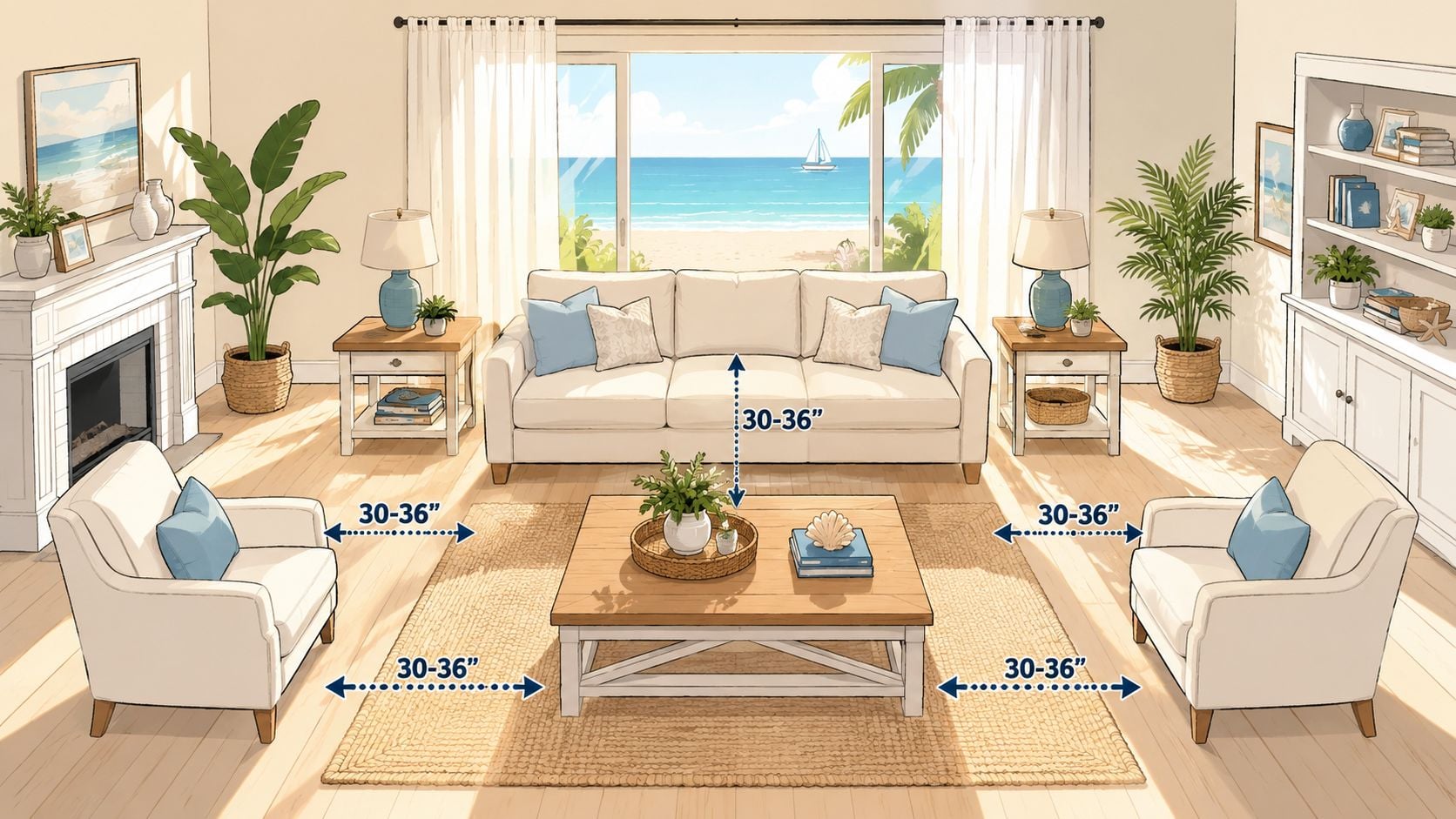
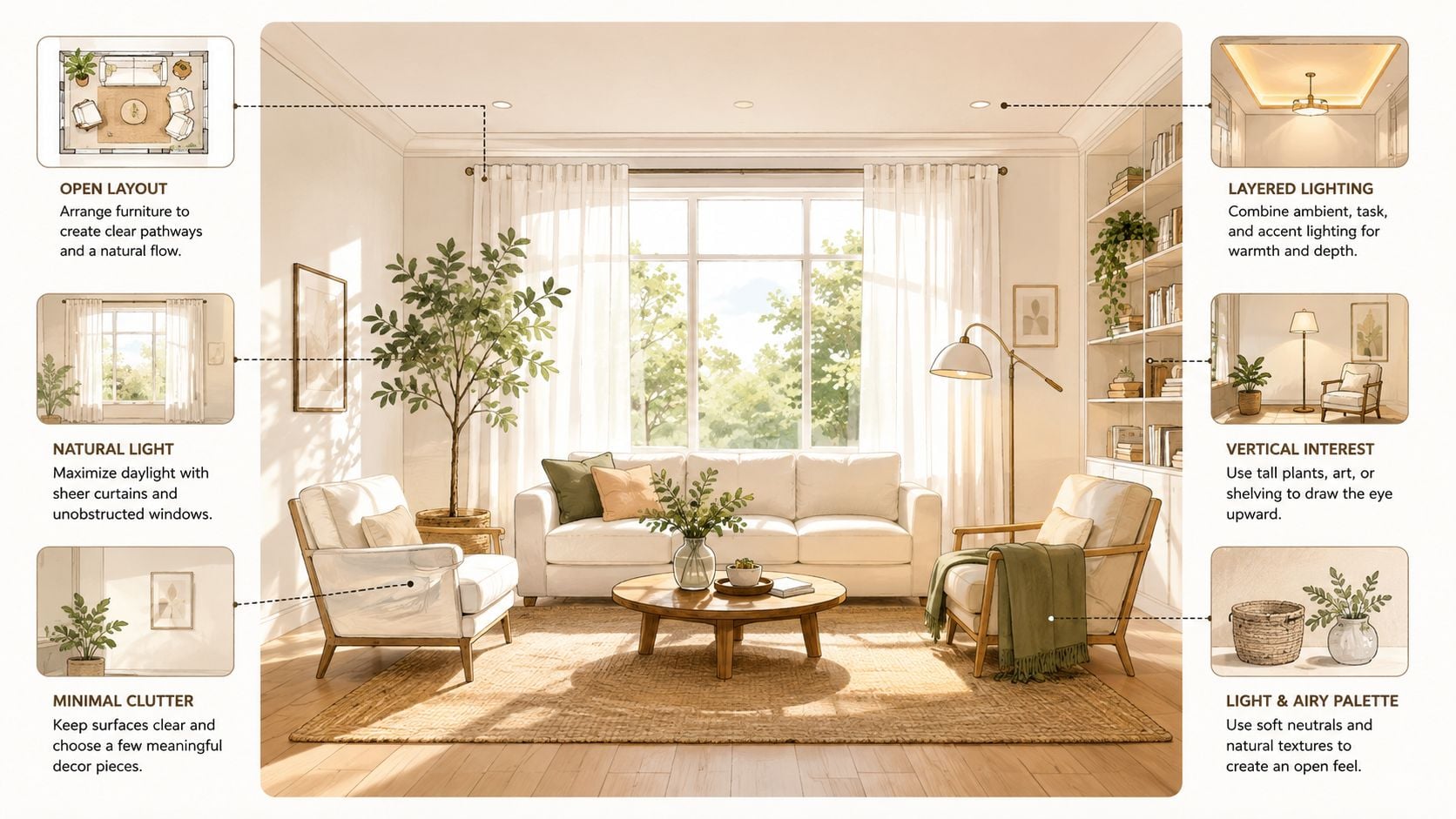
The room should move easily before it looks pretty. Main walkways need 30 to 36 inches of clearance, the sofa and coffee table should sit 14 to 18 inches apart, and the seating area should rest on an 8' x 10' rug or larger so the furniture reads as one zone instead of scattered parts (Remodelaholic). Those are the numbers that keep a coastal room from feeling cramped.
Sketch the room before buying anything
Furniture should float when the room allows, ideally 18 inches off the walls, because pushing everything to the perimeter usually makes the center feel empty and the edges feel cluttered. Seating should also sit roughly 4 to 10 feet apart for conversation, which keeps the room social without turning it into a waiting room.
The coffee table should run about one-half to two-thirds the length of the sofa, and the front legs of seating should land on the rug so the arrangement feels grounded. Slone Brothers' designing a living room layout resource is a strong starting point for getting those proportions right before shopping begins.
Light the room for evening, not just noon
Florida gives most homes plenty of daylight, but nighttime is where the room is won or lost. Warm white LEDs around 2700K soften edges and keep the room from looking stark after dark, especially when layered through overhead, floor, and table lamps (Remodelaholic).
For a darker inland room, the lighting plan should do more than decorate. It should make the room feel sunlit even after sunset.
- Overhead lighting: Use it for general brightness, not drama.
- Floor lamps: Place them near seating corners to soften shadows.
- Table lamps: Add warmth at eye level and reduce visual glare.
- Mirrors: Use them to bounce daylight deeper into the room.
A coastal living room should look calm at 2 p.m. and even better at 8 p.m. If the evening lighting feels cold or uneven, the room never quite settles.
Decor and Accessories That Finish the Look
A family moving into a new build in Lake Mary usually doesn't need more stuff, it needs better choices. The smart version of coastal style starts with performance seating, then adds a flat-weave rug, one or two textured pillows, and wall treatments that carry light without calling attention to themselves.
Keep the story quiet and layered
A woven grass-cloth wall, a lime-washed finish, or a soft abstract art piece can do the work of a dozen obvious beach props. That's the point. The room should suggest the shoreline through texture and atmosphere, not spell it out with anchors, starfish, and novelty signs.
A single driftwood object or coral-style sculpture can work if the rest of the room stays restrained. Any more than that, and the room starts to feel like a theme restaurant.
Use accessories to amplify daylight
Mirrors, glass lamps, pale ceramics, and lightly textured throws all help coastal rooms stay bright without feeling sterile. In a Florida home, those details matter because sun can be strong during the day and surprisingly flat once the light shifts.
For homeowners who like a scent layer in the room, the goal should still be restraint. A simple candle with a clean coastal profile can support the mood, but it should never become the main design event. A resource like ocean themed candles to shop can be useful for inspiration, as long as the room itself stays visually disciplined.
The best accessories in a coastal room don't announce the theme, they finish the sentence.
Slone Brothers' coastal assortment gives Central Florida homeowners a path to coordinate wall decor, lamps, and accent pieces without drifting into kitsch. The key is editing hard and choosing pieces that reinforce the palette already doing the work.
Budget Friendly and Investment Tiers for Every Home
A coastal living room doesn't need to be purchased all at once, but it does need to be prioritized correctly. Spend first on the sofa, the main rug, and the seating pieces that carry daily use. Save on accent tables and decorative extras that can be replaced later without redoing the room.
Compare the tiers before you buy
| Tier | Example Pieces | Best For | Construction Highlights | Lead Time |
|---|---|---|---|---|
| Entry | Clearance accent chair, small lamp, occasional table | Quick refreshes and starter rooms | Basic construction, lower commitment | Immediate to short |
| Mid | American-made sofa, performance rug, coordinated chair | Most family living rooms | Hardwood frames, better cushions, fabric choices | Custom or standard |
| Heirloom | Stickley or Simply Amish anchor piece, tailored upholstery, solid wood case pieces | Long-term homeowners who want lasting value | Higher-grade materials, stronger joinery, better finish quality | Custom to longer |
That progression is the cleanest way to think about cost. A better-built piece doesn't just cost more, it avoids replacement, sagging, and regret.
Where to splurge and where to stay disciplined
The sofa deserves the strongest investment because it takes the most wear. A signature table or heirloom wood piece can follow if the room needs one dominant anchor, especially in open-plan homes where the living room connects to dining and kitchen spaces.
Occasional chairs, pillows, and smaller decor can be handled more flexibly. That's where a custom-order program helps, because the right fabric or finish can make an affordable frame feel more intentional without stretching the budget too far.
For a Sanford homeowner furnishing a new living room, the smartest split is usually simple. Put the weight of the budget into seating and one quality wood piece, then use the rest on lighting, a rug, and a few carefully chosen accents. Slone Brothers' clearance outlet and financing options also give homeowners room to stage the purchase instead of compromising on the core pieces.
Your Local Shortcut to a Coastal Living Room Done Right
A coastal living room looks easy only when the proportions, materials, and lighting are right. In Central Florida, that takes local judgment because the room has to fit the house, the climate, and the way the family lives. A design plan that works in Longwood can look wrong two neighborhoods away if the light, layout, or ceiling height changes.
That's why a showroom consult beats guessing online. A local consultant can look at the architecture, talk through fabric choices, and steer the room toward durable, quiet-luxury pieces instead of decorative filler. Slone Brothers also offers complimentary in-home and in-house design help, white-glove delivery with order tracking, and a custom-order process that lets the room be built around the homeowner instead of forcing the homeowner around the furniture.
For a deeper look at the style language, the coastal style living room resource is a useful reference point, especially for homeowners trying to keep the room calm rather than themed. The right takeaway is simple, coastal should feel current, durable, and lived in, not temporary.
Ready to invest in furniture that lasts a lifetime? Skip the online guesswork and automated digital chatbots. Visit Slone Brothers Furniture in Longwood, FL today, and connect face-to-face with experienced design consultants who can help turn a coastal idea into a real Florida living room built for everyday life.