
Home Office Furniture for Sale in Longwood


A Lake Mary professional finishes school drop-off, opens a laptop at the dining table, and spends the first meeting shifting a coffee mug away from the keyboard. By afternoon, the chair has become uncomfortable, paperwork has spread across the table, and the brightest window in the house reflects directly into the screen. That improvised arrangement may have worked temporarily, but it isn't a considered home office.
The need for better workspaces is established and substantial. The U.S. Census Bureau reports that approximately 9 million U.S. workers, or 5.7% of all workers, usually worked from home in 2019. By 2021, the figure had reached about 27.6 million workers, or 17.9% of the workforce, adding roughly 19 million potential home-office users in only two years. Census data later showed that 13.8% of U.S. workers, more than 22 million people, usually worked from home in 2023, still well above the pre-pandemic share.
For homeowners in Longwood, Orlando, Lake Mary, Sanford, Winter Park, and Altamonte Springs, home office furniture for sale should therefore be evaluated as a lasting investment, not a temporary fix. A desk, chair, monitor support, and storage must work together, fit the room, and complement the rest of the home. That standard matters even more for discerning buyers furnishing a new Central Florida home, refining a guest room, or creating a professional workspace for a growing business.
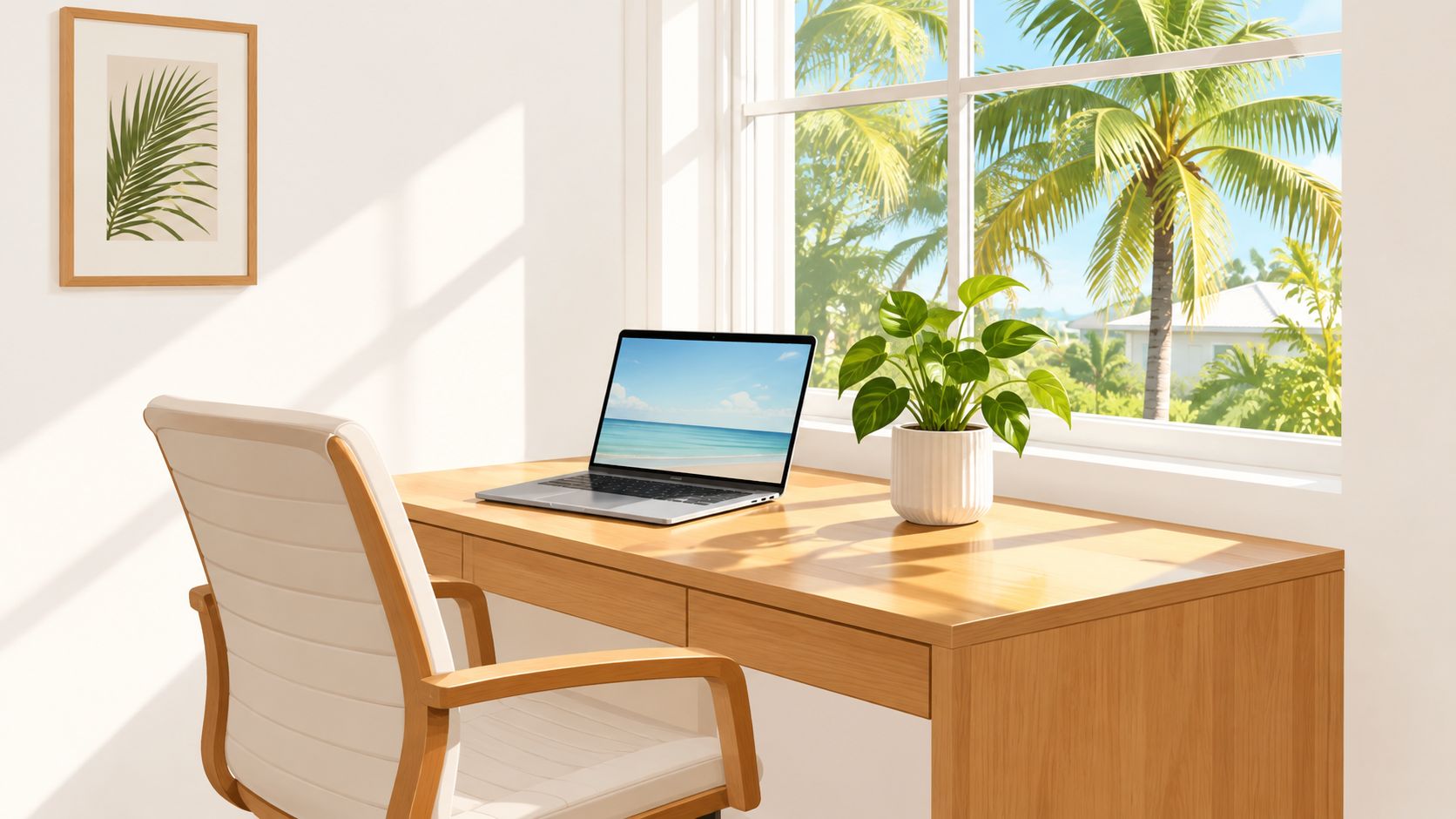
A complimentary interior design consultation for Florida homes can help translate those requirements into a room that feels intentional, comfortable, and distinctly personal.
Why Home Office Furniture Matters More Than Ever in Central Florida
A home office has become part of the architecture of daily life. It may be a dedicated room with built-in storage, a polished desk in a guest bedroom, or a carefully planned corner where work disappears behind closed doors once the day is done. The furniture must support concentration without making the home feel like a corporate suite.
The local workday has changed
Current labor data confirms that working from home remains relevant beyond the peak pandemic period. The Bureau of Labor Statistics reports that 35.5 million people teleworked or worked at home for pay in the first quarter of 2024, representing 22.9% of people at work. The figure was higher than the same quarter a year earlier, when the rate was 19.6%, and teleworkers averaged 27.2 hours worked from home per week.
That time commitment changes the buying question. A desk that looks attractive in a photograph may feel cramped after a full workday. A chair that feels acceptable for a short visit may fail to support the user through recurring meetings, focused work, and administrative tasks. Storage that seemed unnecessary can become the difference between a calm room and a visually noisy one.
The customer base is broad, too. Among workers age 25 and older, the BLS found that telework in early 2024 reached 43.6% for workers with advanced degrees and 38.4% for workers with bachelor's degrees, while it also included people with some college or an associate degree and those whose highest education was high school. Central Florida's home offices serve professionals, owners, consultants, educators, and hybrid employees with very different room sizes and routines.
Quality belongs in the calculation
High-quality furniture costs more because the buyer is paying for better materials, stronger construction, dependable finishes, and the ability to live with the piece for years. That investment becomes more defensible when the desk can move from a dedicated office to a guest room, or when a storage cabinet can remain useful through a change in technology and work style.
A Longwood homeowner shouldn't choose office furniture by price alone. The more useful questions are whether the piece supports the body, fits the architecture, conceals clutter, and has enough character to belong in the home.
Design principle: The best home office doesn't look temporary, and it doesn't force the rest of the room to look like an office.
How to Build a Truly Ergonomic Home Office System
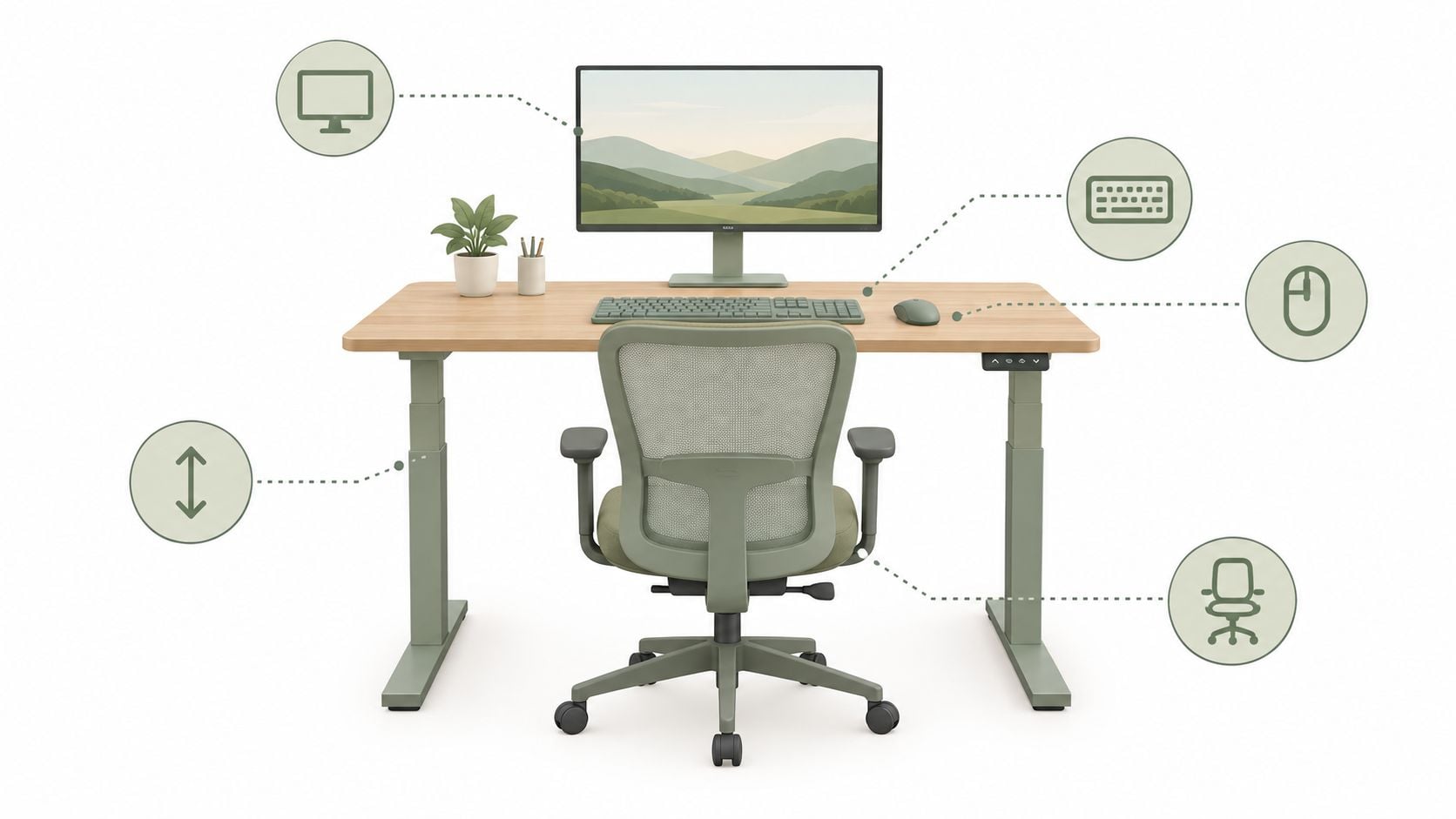
The desk, chair, monitor, keyboard, and storage should be selected as one coordinated ergonomic system. OSHA's workstation guidance supplies practical measurements that make showroom testing more meaningful, especially when standard furniture proportions don't suit the user or the room.
Start with the desk and monitor relationship
The OSHA guidance for computer workstation desks recommends placing the monitor roughly 20 to 40 inches from the eyes, directly in front of the user. The top of the screen should sit at or slightly below eye level, with the screen center generally 15 to 20 degrees below horizontal eye level.
That measurement immediately rules out many shallow writing desks for dual-monitor work. A desk must provide enough depth for the screens, keyboard, paperwork, and comfortable reach without forcing the user to lean forward. A height-adjustable monitor arm or riser can solve part of the problem, but it can't compensate for a desktop that leaves no room to position the equipment properly.
Desk structure matters beneath the surface as well. OSHA identifies approximately 20 to 28 inches of vertical leg clearance, while frequently used items should remain easy to reach. A decorative desk apron, oversized pedestal, or crowded cable area can make a beautiful desk surprisingly awkward.
Choose the chair for the actual user
OSHA's office-chair purchasing guide identifies an adjustable seat-height range of approximately 15 to 22 inches, a seat-pan length of 15 to 17 inches, a stable five-legged base, 360-degree swivel capability, resilient upholstery, and a backrest that can recline at least 15 degrees and lock into position.
The user should sit in the chair, not just inspect it. Seat depth that is too long can press behind the knees. Excessive seat height can prevent stable foot support. Arms that collide with the desk can push the shoulders upward or keep the chair too far from the keyboard.
Under-desk space deserves the same attention. OSHA recommends at least 17.6 inches of knee depth and 24 inches of foot depth, allowing the user to move close enough to the keyboard without trapping the thighs or rounding the shoulders.
Add storage that supports movement
Storage is part of ergonomics because it determines how often the user twists, reaches, or leaves the chair. A nearby file cabinet, credenza, or bookcase should hold essential materials without blocking circulation or competing with the monitor.
For households balancing work and family routines, a mobile setup can benefit from deliberate connectivity and placement. A practical guide to plan your mobile office can help coordinate the technology side while the furniture plan addresses posture, reach, and room flow.
Custom-order furniture becomes valuable when a user is tall, a room is narrow, multiple monitors are required, or storage must fit a specific wall. The best office chairs for a home office should be judged beside the desk and equipment, not in isolation.
Matching Office Furniture to Your Real Room
A home office should fit the room and the household, not force both to accommodate oversized furniture. In Longwood, a well-planned semi-dedicated workspace in a guest room, dining nook, or open living area can outperform a large office filled with mismatched pieces and poor lighting.
Dedicated offices need restraint
A spare bedroom can hold a substantial desk, shelving, and a supportive chair. That available space can still invite overfurnishing. An executive desk with generous storage may suit paperwork and video calls, but it can overwhelm a modest room when circulation becomes tight.
Map the working wall, door swing, windows, and camera view before choosing furniture. The desk should leave room to sit naturally, move the chair, and reach storage without creating a bottleneck. Choose a finished back when the desk faces the room rather than the wall.
The strongest setup works as a coordinated ergonomic system. The desk, chair, monitor position, task light, and storage should support one another, rather than being selected as unrelated products.
Guest rooms need furniture with a second life
A guest room in Lake Mary or Sanford often serves visitors, work, and household storage. A compact writing desk can provide a refined work surface without dominating the room. A credenza can conceal technology, papers, and chargers, while a coordinated bookcase adds storage without making the bed feel secondary.
Semi-dedicated workspaces deserve serious consideration. Anecdotal reports from remote workers suggest that separating work from household activity without claiming an entire room can support focus and productivity. The practical lesson is clear: square footage alone does not create better work.
A workspace succeeds when it supports the household's routines, not when it occupies the largest available room.
Open-plan rooms require visual discipline
In a Winter Park living area or dining nook near a bright window, furniture must transition cleanly between work and home life. A writing desk with drawers, a shallow credenza, or modular storage can define the work station while keeping the room calm after working hours.
Florida daylight creates practical concerns. Face screens away from direct glare, route cords deliberately, and choose a video-call background that looks intentional without exposing private household areas. Homeowners assessing how a room may appear before and after furnishing can browse virtual staging options as a visual planning aid, but actual measurements still determine whether the arrangement works.
A semi-dedicated configuration might include a writing desk, an upholstered ergonomic chair that complements nearby seating, a closed storage cabinet, and a small task light. That combination can outperform an oversized desk that leaves no space for guests, exercise, or household circulation. Choose the smallest coordinated system that supports the work, then let the room keep its other functions.
Materials, Construction, and the Difference Heirloom Quality Makes
In a home office used every day, quality shows up in the frame, joints, hardware, and finish long after the style catches your eye. Solid hardwood, dependable construction, and replaceable components help a coordinated desk, chair, monitor setup, and storage system remain useful as your work habits change.
Look beneath the finish
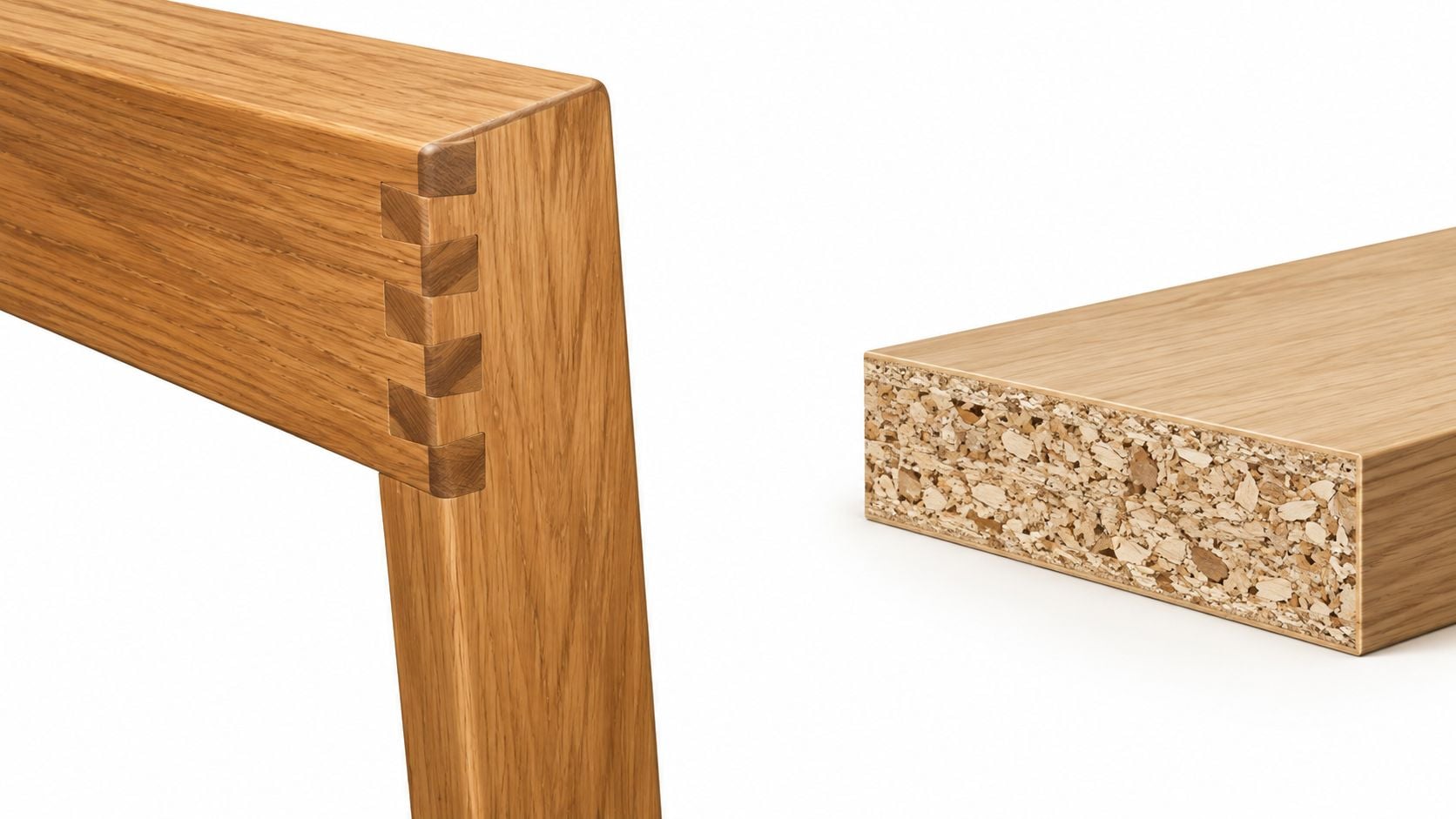
Solid wood usually provides more weight, structural strength, and repairability than low-quality particle board. Engineered panels can work well when properly specified, but inspect the construction. Thin, disposable components often swell, chip, or lose their grip around fasteners.
Joinery reveals how a piece was built. Dovetails, mortise-and-tenon joints, fitted drawers, and carefully finished edges support repeated daily use. Open every drawer and operate each door. Hardware should move smoothly, remain aligned, and match the weight of the component.
For Central Florida homes, finish quality deserves close attention. Humidity and strong daylight affect placement and care, so discuss direct sun, airflow, cleaning, and maintenance before choosing furniture. A local consultation can help protect the entire office system, not just the desk.
Upholstery and leather deserve inspection
The surface material affects the comfort and service life of an office chair or nearby reading chair. Top-grade leather has a natural feel and can develop character with care. Bonded alternatives may age differently and offer less resilience. Choose fabric by considering touch, light exposure, cleaning requirements, and the room's wider palette.
Cushion construction matters just as much. High-density foam gives structured support, while down-wrapped cushioning adds softness around a supportive core. A chair or sofa that feels plush in the showroom may still fail during extended use if its underlying construction lets posture collapse.
Use this guide to choosing hardwood for longevity and style to compare species, grain, finish, and intended use before selecting a desk, credenza, or storage piece.
Ask about recognized testing
Durability requires more than a convincing appearance. The ANSI/BIFMA X5.1 standard evaluates general-purpose office chairs for safety, durability, and structural adequacy. The ANSI/BIFMA X5.5 standard covers desks and tables, including structural integrity, stability, and durability.
A facilities specification from Queen's University (source) notes that its office-chair testing program was developed around an estimated ten-year product life under single-shift use. That figure describes a testing basis, not a promise that every chair will last that long in a home.
Ask these questions before buying:
- Construction: What materials form the frame, top, drawers, and joints?
- Testing: Has the chair or desk been tested to a recognized standard?
- Maintenance: Which finishes, leathers, and fabrics suit Central Florida conditions?
- Serviceability: Can mechanisms, components, or upholstery be repaired or replaced?
Heirloom pricing makes sense when the construction is clear. Longevity comes from material selection, engineering, workmanship, and consistent care. A well-made coordinated system can support your work for years without forcing you to replace the entire room when one piece fails.
Brands Worth Knowing Before You Shop
Brand heritage helps a homeowner match construction values with the way a room will be used. A Longwood showroom should present makers with distinct strengths, not a wall of interchangeable desks and chairs.
American and Amish craftsmanship
Stickley represents timeless Arts & Crafts heritage, heirloom solid wood construction, and handcrafted joinery. Its visual restraint suits a homeowner who wants a home office to feel connected to the rest of a traditionally furnished home.
Simply Amish uses hand-selected solid hardwoods, traditional joinery, and custom American craftsman furniture. The appeal is direct and practical, especially for a buyer who wants a desk or storage piece matched to a room rather than selected from a fixed mass-produced assortment.
Mavin offers precision solid wood dining and bedroom collections built by custom bench-carvers in Amish country. That craftsmanship can complement a broader whole-home plan when the office needs to coordinate with bedroom, dining, or living furnishings.
For upholstery, Smith Brothers brings custom bench-made comfort, premium frame construction, and extensive fabric and leather customization. Bassett and Craftmaster offer classic American-made quality, customizable upholstery, and accessible luxury, useful for a home office suite that includes a nearby sofa or reading chair.
Ergonomic and custom specialists
American Leather is known for high-performance luxury leather, precision engineering, and the industry-leading Comfort Sleeper®. Its emphasis on engineered comfort can serve a multifunctional room where seating must perform beyond the desk.
Stressless, from Norway, is recognized for Norwegian ergonomic engineering, patented Glide® systems, and strong lumbar support. It fits a buyer who prioritizes movement and support in a reading or recovery seat adjacent to the work area.
For dining or hybrid workspaces, Canadel provides hand-finished, solid birch custom dining furniture made to individual design specifications. Amisco produces modern, durable Canadian-made metal and wood dining and bar seating. Palliser specializes in contemporary North American leather and fabric home theater and sectional seating, valuable when an open-plan office shares space with entertainment.
These brands aren't interchangeable, and that's the point. A solid wood writing desk, a custom credenza, a Norwegian ergonomic chair, and a made-to-measure upholstered piece can create a coherent Central Florida room without forcing every item into one decorative style.
Why Buying Local Beats Buying Online Every Time
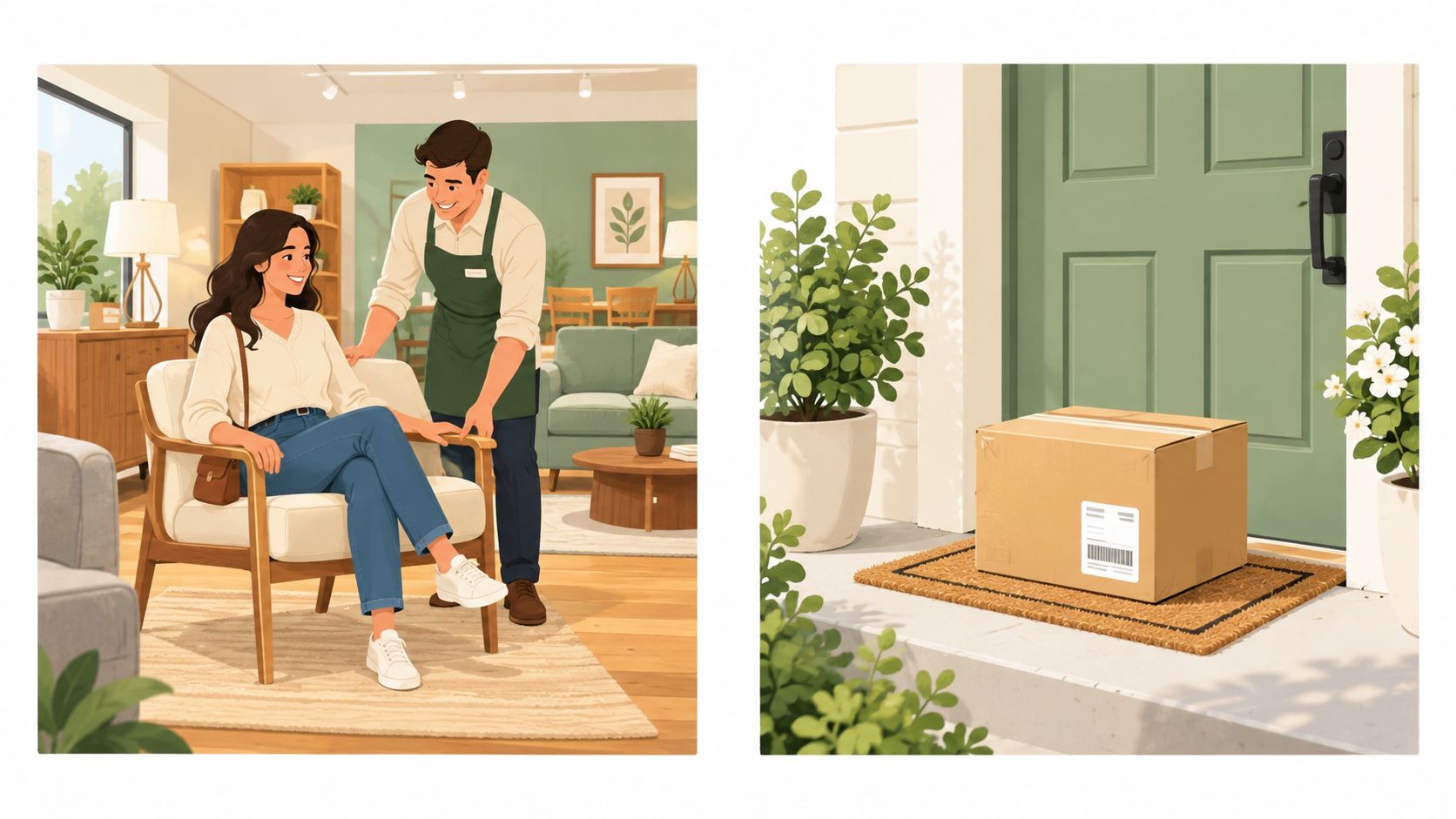
Online ordering removes the useful part of furniture buying, the part where a person sits in the chair, studies the finish, checks the scale, and considers how the piece will move through the home. For heirloom-quality home office furniture, those decisions shouldn't be left to a screen and a delivery box.
The risk is dimensional, not merely visual
A photograph can't reveal how a chair supports a particular back, how a drawer glides, or whether a desktop feels deep enough for two monitors. Color can shift between screens, leather texture may be difficult to judge, and a piece that appears compact can dominate a smaller room.
The practical risks include:
- Scale surprises: A desk may block a door, interrupt circulation, or sit too close to a window.
- Material mismatch: A finish or upholstery may look different from the surrounding furniture.
- Assembly frustration: Complex pieces can arrive with unclear instructions or missing coordination.
- Service uncertainty: Custom orders, warranty questions, and delivery issues may involve separate parties.
A local showroom lets the buyer test the furniture before committing. It also allows a design consultant to weigh desk depth against chair clearance, storage against circulation, and finish against Central Florida light.
Accountability has practical value
Slone Brothers Furniture is a family-owned Longwood showroom serving Central Florida since 1980, with a Low Price Promise, custom-order furniture, complimentary in-house design services, home delivery with order tracking, and commercial furnishings for local businesses. The benefits of shopping local become concrete when one team can coordinate selection, measurements, ordering, and delivery.
A local purchase doesn't eliminate every decision or lead time. It does create a clearer relationship. The buyer can return to the showroom, compare materials in person, and discuss a solution with an experienced design consultant rather than an automated system.
For a simple disposable item, convenience may outweigh those considerations. For solid wood construction, custom upholstery, or a coordinated office plan, in-person guidance is the safer choice.
How the Slone Brothers Showroom Experience Works
A thoughtful showroom process should feel collaborative rather than transactional. The purpose isn't to push a chair or desk. It is to understand the user, the room, the technology, and the desired relationship between the office and the rest of the home.
Begin with the room and the routine
The first visit should establish how the space functions. A design consultant may ask about screen count, work hours, storage needs, household traffic, video calls, existing furnishings, and whether the room must serve another purpose after working hours.
A homeowner benefits from bringing measurements, photographs, window locations, and a basic floor plan. Those details make it easier to compare an executive desk with a writing desk, or a large storage wall with a more discreet credenza.
The complimentary in-house design service can extend from simple space planning to a broader room plan. That human conversation is particularly useful for new homeowners in Longwood, Lake Mary, and Sanford furnishing several rooms at once.
Custom order when standard dimensions fail
A custom-order program can tailor materials, finishes, and configurations to the home. That may mean changing a wood finish, selecting a different fabric or leather, adapting storage, or specifying a desk that accommodates unusual dimensions.
The custom-order furniture process works best when the buyer understands that customization is a deliberate investment. American-made and Amish-crafted pieces may require patience, but the result can fit the room and the owner's standards more precisely than an immediate substitute.
Delivery and long-term support
Once the selection is made, flexible financing options can help make an investment purchase manageable, subject to applicable terms and approval. Home delivery with order tracking provides visibility through the process, while white-glove service helps protect the room and position the furniture properly.
The showroom also offers a dedicated clearance outlet for shoppers seeking immediate value without abandoning quality. Commercial furnishings support local businesses that need professional desks, seating, storage, and office environments beyond a residential workspace.
The important distinction is continuity. The buyer works with experienced design consultants rather than commission-driven order takers, and the relationship continues beyond the moment of purchase.
Common Questions From Greater Orlando Home Office Shoppers
Is a custom order different from an in-stock purchase?
Yes. In-stock furniture is selected for immediate availability, while a custom order can tailor materials, finishes, upholstery, and configuration. Buyers in Longwood or Orlando should decide whether speed or precise fit matters more.
How long do American-made and Amish-crafted pieces take?
Lead times vary by maker, construction, materials, and order details. A design consultant can provide the current expectation before the order is placed.
Can a guest room support a serious office?
Yes. A compact writing desk, closed credenza, supportive chair, and carefully planned storage can create a professional station without taking over the room.
Can local businesses furnish an office through the showroom?
Yes. Commercial furnishings can support professional office environments, including desks, seating, storage, and coordinated workspace planning.
Quick Comparison of Office Furniture Buying Options
| Buying Option | Material Inspection | Customization | Human Design Guidance | Delivery Support |
|---|---|---|---|---|
| Online purchase | Limited to images and descriptions | Varies | Usually limited | Varies by seller |
| Mass-market showroom | Available for selected pieces | Often limited | Basic assistance may be available | Varies |
| Local specialty showroom | In-person inspection across collections | Available through custom-order programs | Experienced consultation | Coordinated local support |
Ready to furnish a home office that feels as refined as the rest of the house? Visit Slone Brothers Furniture in Longwood, where Central Florida homeowners can compare materials in person, explore custom-order desks and storage, and work face-to-face with experienced design consultants on a coordinated office plan.