

Customize Office Chair: Your 2026 Ergonomics Guide

If an office chair leaves a dull ache in the lower back by midafternoon, the problem usually is not sitting too much. It usually means the chair and the body never matched well enough in the first place. For homeowners in Longwood, Orlando, and across Central Florida, learning how to customize an office chair turns that daily discomfort into a practical comfort upgrade, especially when humidity, long work sessions, and shifting posture all come into play.
A custom chair starts with fit, then moves to materials, then to the parts that shape how the chair feels hour after hour. Seat height, arm position, lumbar support, foam density, fabric choice, and base stability all affect whether the chair supports work or slowly wears the body down. For a clear starting point on ergonomics, see the guide to the best ergonomic office chairs.
A chair can look polished and still fail at the desk, the way a nice pair of shoes can pinch after a long walk. That is why a hands-on approach matters. Small changes in tilt, cushion support, and surface feel can solve the pressure points that a showroom test never reveals, while a local custom-order option from Slone Brothers Furniture can be the better path when the goal is a chair built around exact measurements and finish choices.
The market signals point in the same direction. One 2026 industry summary reports the global office chair market at USD 10.3 billion in 2023 with a projected 5.2% CAGR from 2024 to 2032, while also noting an average chair lifespan of 7–10 years and that 85% of premium office chairs in 2023 included ergonomic features (office chair industry statistics). In practical terms, buyers are not just replacing worn seats, they are choosing chairs that fit the way they work.
Getting Started with Custom Office Chair Projects
A chair that looks fine in the showroom can still feel wrong after a full day at a desk. The first signs are often quiet, a tight shoulder, a pressure point under one thigh, or a back that feels tired before dinner. A custom approach matters more than a cosmetic refresh, especially in Central Florida homes where the office chair often has to fit both work and daily living.
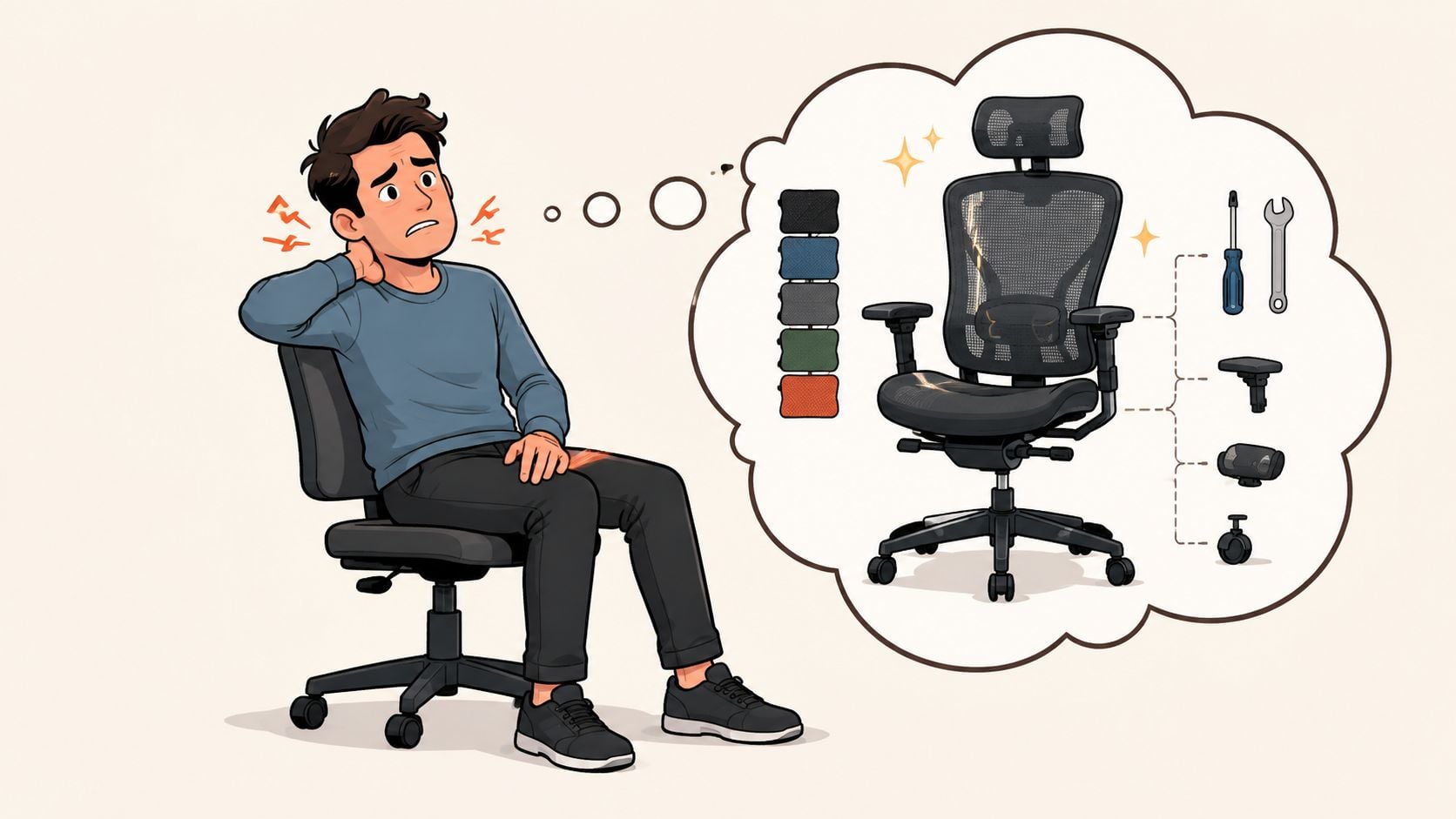
The best starting point is to name the discomfort clearly. Does it show up during long calls, while typing, or when leaning back after prolonged sitting? Those details matter because the right custom office chair is not only about style, it is about fit, support, and how the seat behaves hour after hour.
One useful benchmark comes from the broader market. A 2026 industry summary reports the global office chair market at USD 10.3 billion in 2023 with a projected 5.2% CAGR, and says an average chair lasts 7–10 years. That helps explain why so many homeowners treat chair upgrades as a long-term purchase, not a quick fix.
Practical rule: if the chair only feels good for ten minutes, it probably is not customized enough for real work.
A good project usually starts with a needs list, then moves to fit, then materials, then component upgrades or upholstery work. The chair should be treated like a fitted jacket, not a one-size piece of furniture. The frame, cushion, and finish all need to work together, or the result can look finished while still feeling off at the desk.
For a local starting point, some projects are handled best through a custom-order path. A helpful overview of that process is available through Slone Brothers' custom order page, which suits homeowners who want measurements, material choices, and finish decisions handled with more precision. For chair surfaces that need repainting or refinishing, professional wood painting advice can also help guide the finish stage when wood parts are part of the build.
Assess Needs and Ergonomics for Your Office Chair
A chair should match the body first, then the room. The Canadian Centre for Occupational Health and Safety recommends setting the optimal seat height at about one-quarter of the user's body height and testing chairs in real work conditions before finalizing the fit (CCOHS office chair guidance). That simple idea saves a lot of trial and error because posture problems often come from proportions, not from one obvious broken part.
The most useful way to evaluate fit is to watch where the body wants to move. If the knees angle up, the seat is too high. If the front edge digs into the thighs, the seat depth is off. If the backrest barely touches the spine, the chair isn't supporting the way the user sits.
What to check before changing anything
- Seat height: Feet should rest naturally, with the thighs supported and no reaching at the desk.
- Seat depth: There should be enough clearance behind the knees so circulation doesn't get pinched.
- Backrest contact: The back should meet the chair without the user leaning forward to “find” support.
- Work rhythm: People who alternate typing, calls, and reading need more dynamic adjustment than a fixed posture.
- Real-use testing: A chair that feels fine for a showroom moment may feel different after an hour of spreadsheets or design work.
A chair fit should be tested in the same way it'll be used, during actual work, not just a quick sit-down.
A smart homeowner can keep a simple note on what changes help and what changes irritate. That record makes later customization easier, because it shows whether the issue is the arm height, lumbar placement, seat depth, or the angle of recline. For readers comparing options, a curated overview on best ergonomic office chairs gives a useful framework for the kinds of adjustable features that usually matter most.
The bigger lesson is that ergonomics isn't one-and-done. A chair that works in the morning may feel different in the afternoon, especially during long Central Florida workdays. The best fit supports movement instead of locking the body into one posture.
How to Customize Office Chair Materials and Finishes
Material choice changes how a chair wears, cleans, and feels in a humid climate. The global customized furniture market reached USD 51.0 billion in 2026, which shows that more buyers are specifying dimensions, materials, and finishes instead of settling for one-size-fits-all pieces (customized furniture market). That trend makes sense in office seating, where the look of the chair matters, but the feel and upkeep matter even more.
For Central Florida homes, upholstery should be judged on more than color. Breathable fabrics can help with daily comfort, while smoother finishes are often easier to wipe down after long use. Leather can feel elegant and structured, but it should be chosen carefully for quality and maintenance habits, especially in homes where the chair sits near windows or warm rooms.
Comparing common material choices
A fabric seat can soften the visual weight of a work chair and blend into a home office. Leather can create a more refined appearance, but it should still be assessed for grain quality and durability rather than shine alone. Mesh is often chosen for airflow, though it needs a sturdy frame and a well-made support system to avoid feeling flimsy over time.
For homeowners thinking about painted or stained accents, a useful companion resource is professional wood painting advice, especially when a chair or desk base needs to coordinate with the rest of a room. That kind of finish planning matters in Longwood and Winter Park homes where the office sits inside a larger living space, not a separate commercial suite.
For deeper upholstery planning, Slone Brothers' upholstery material guide can help narrow down what feels right before any work begins. In practice, the best choice is the one that balances appearance, durability, and ease of care without forcing the room into a compromise.
Upgrading Components for Better Performance
A chair can feel dramatically different after the right mechanical parts are replaced. Armrests, casters, gas-lift cylinders, lumbar supports, and the base all affect stability, and they need to be aligned before final tightening if the chair is going to sit level and move smoothly. Assembly guides recommend setting the mechanism, armrests, and gas-lift interface before locking everything down, then hand-threading bolts, tightening in a diagonal pattern, leveling components, and load-testing for stability.
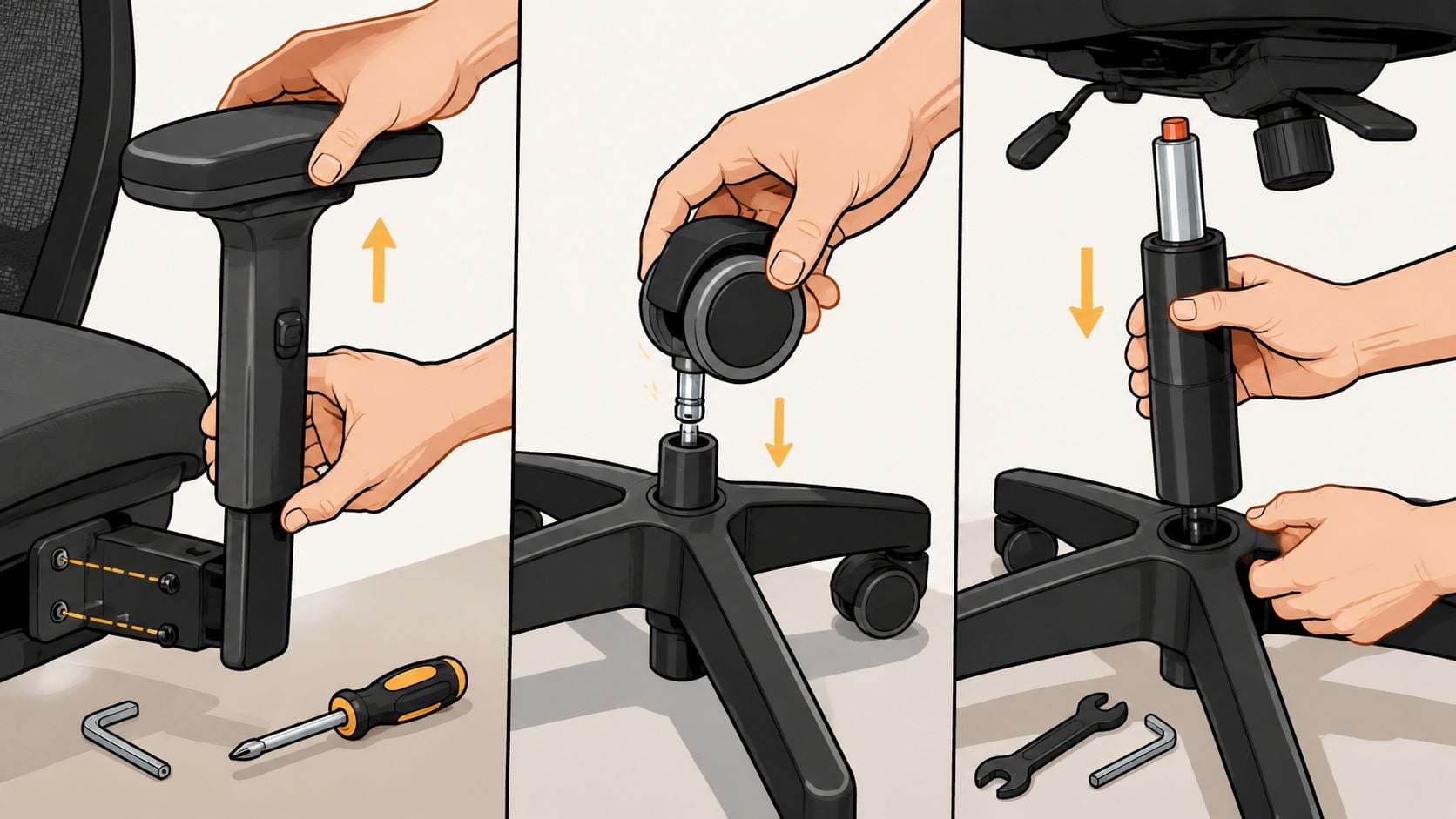
The order matters because a chair can look assembled before it is aligned. If one armrest sits higher, the body compensates. If the cylinder doesn't fully seat, the chair rocks. If the base is out of square, the whole frame feels off when weight shifts from one side to the other.
A sensible upgrade sequence
- Start with the seat mechanism. Fit the base hardware first, so the rest of the chair has a stable foundation.
- Set the armrests next. Level them carefully, since even a small mismatch can affect shoulder comfort.
- Check the gas-lift interface. The cylinder has to engage fully before the chair is used under load.
- Add lumbar support last. Support works best once the main frame is already aligned to the body.
- Sit-test before final tightening. A real load-bearing test catches rocking or binding that hand inspection can miss.
If the chair rocks, the armrests don't match, or the cylinder doesn't fully seat, the build isn't ready for daily use.
For readers who want a personalized seating path without rebuilding every part at home, personalized office chairs are a practical reference point. That kind of custom work becomes more compelling when the chair needs to support long hours, not just occasional desk time.
Brands with ergonomic reputations often shine here because their engineering already anticipates adjustment and support. A chair with the right structure can handle better components more cleanly, which is why thoughtful upgrades tend to feel more natural than random part swaps. The goal is simple, a chair that tracks the body, stays level, and doesn't fight the user during an ordinary workday.
DIY Upholstery Painting and Assembly Best Practices
A clean upholstery job starts before the first staple comes out. Expert DIY guides recommend taking full photo documentation, bagging screws by subassembly, preserving the old fabric as a cutting template, and adding 3 inches of seam allowance when tracing the new material. That workflow keeps the project organized and lowers the odds of a fabric cut that's too tight to wrap cleanly.
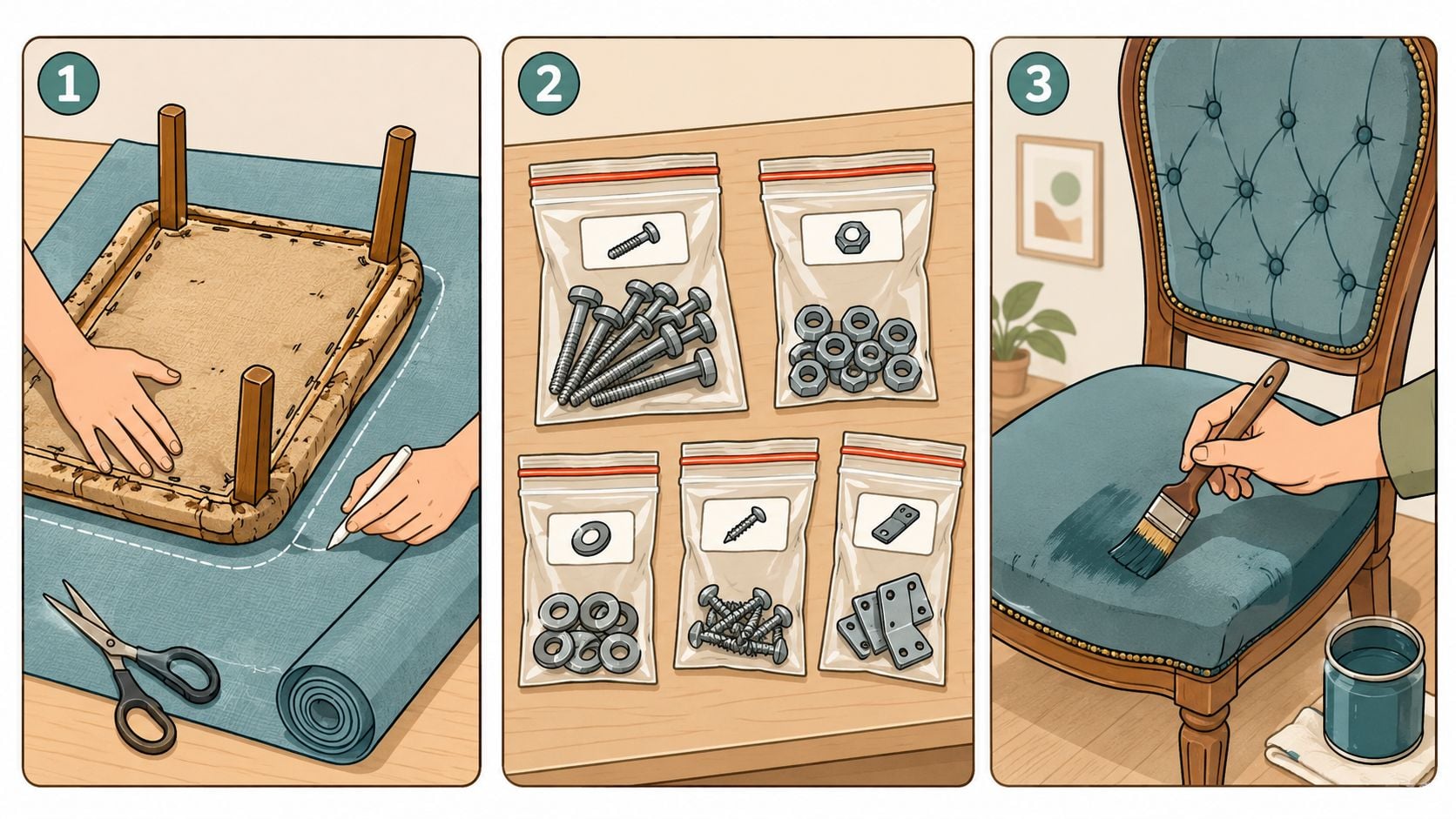
The old cover does more than protect the foam, it shows how the original maker solved the shape. Seams, darts, and stretch direction all reveal how the chair was meant to sit under tension. When that pattern is copied carefully, the new upholstery looks perfectly fitted instead of improvised.
Painting or refinishing wooden parts needs the same discipline. Clean the surface thoroughly, remove loose finish, and make sure the piece is fully dry before any new coating goes on. In Central Florida, moisture control matters because a rushed finish can telegraph brush marks, soften too slowly, or fail to cure evenly.
A simple assembly rhythm that keeps things square
- Document first: Photograph every side and every connection point before removal.
- Sort hardware by section: Keep screws, washers, and brackets separated by subassembly.
- Use the old cover as a template: Trace the shape before cutting new upholstery.
- Leave the seam allowance: That extra material gives room for stapling and clean edge folds.
- Reassemble finger-tight first: Let the structure find its shape before final torque.
A final sit-test should happen only after the chair is fully reassembled and all moving parts feel smooth. That last check is where hidden mistakes show up, especially if a side panel shifted or a bracket sat slightly crooked during tightening. For a chair intended for daily use in a Longwood home office, that final fit matters as much as the finish on the frame.
Safety Tools Checklist and Cost Time Estimates
A home workshop can handle a surprising amount of chair work, but only if the right tools are on hand before the first bolt comes off. The goal isn't to overbuy, it's to avoid stop-and-start work that leads to stripped hardware, uneven upholstery, or a finish that cures badly because the prep was rushed. A good setup keeps the project calm and controlled.
| Tool | Estimated Cost | Time to Use |
|---|---|---|
| Hex key set | Varies by quality | Used throughout disassembly and reassembly |
| Torque wrench | Varies by quality | Final tightening and stability checks |
| Screwdriver set | Varies by quality | Hardware removal and reinstallation |
| Fabric staple gun | Varies by quality | Upholstery attachment |
| Work gloves | Varies by quality | Throughout the project |
| Respirator | Varies by quality | During sanding or painting |
| Drop cloth or protective covering | Varies by quality | Surface protection during prep and finishing |
| Sanding block or sandpaper | Varies by quality | Surface prep before refinishing |
The safety gear matters as much as the tools. Gloves help with sharp staples and exposed hardware, while a respirator is a smart choice whenever sanding dust or finish fumes are involved. In a Florida garage or workshop, that protection is even more important because heat and humidity can make rushed work feel more tiring than it should.
For most homeowners, the main decision is whether the chair is a straightforward refresh or a project that calls for workshop-level precision. If the hardware is specialized, the fabric is delicate, or the finish has to coordinate with a whole room, the job can quickly move beyond a casual weekend task.
When to Engage Slone Brothers Design Services
Some chairs are worth restoring at home, but some deserve a fuller custom-order approach. If the piece needs specialty upholstery, exacting ergonomic changes, or a finish that has to sit comfortably beside the rest of a carefully designed room, a family-owned showroom can save time and prevent expensive missteps. Slone Brothers Furniture offers interior design consultation services for homeowners who want a more guided path in Longwood and Greater Orlando.
That matters when the chair isn't an isolated object. A home office often sits beside a guest room, a sitting area, or a primary bedroom, so the chair has to support the body and still look finished from every angle. For those projects, a custom-order process is often the more durable investment.
Ready to invest in furniture that lasts a lifetime? Skip the online guesswork and automated digital chatbots. Visit the Slone Brothers Furniture showroom in Longwood, FL today, and connect face-to-face with experienced design consultants who can help turn a single chair into a more comfortable, better-finished part of your home. Want to explore custom office seating with real human guidance and local service? Stop by in Central Florida and see how thoughtful craftsmanship changes the way a workspace feels every day.