
How Much Does Custom Furniture Cost? Prices Explained


How much does custom furniture cost? A practical benchmark for one made-to-order piece is $1,000 to $4,250, with an average near $2,600, according to Angi's custom furniture cost guide. The final quote depends on the specifications, so treat that range as a reference, not a guaranteed price.
A lower headline price does not necessarily mean better value. Compare each quote line by line: one may exclude freight, a finish upgrade, or the work involved in changing a dimension. For example, a household furnishing a living room and dining room after a move may need to compare more than the prices of two individual pieces.
Think of the quote as a project file. Dimensions, wood species, upholstery, stain, hardware, and construction details each affect the total. Reviewing those choices together helps clarify which features suit your needs and where the costs come from. The sections ahead explain typical per-piece benchmarks, quote components, material and craftsmanship choices, the effect of lead times and market changes, and how to weigh upfront cost against service life.
How Much Does Custom Furniture Cost by Piece?
| Piece or benchmark | Typical price | What sets the price |
|---|---|---|
| Basic customized furniture | $400 to $1,200 | Standard size with limited fabric and finish options |
| Mid-range customized residential furniture | $1,500 to $5,000 | Premium hardwood or upholstery and selectable configuration |
| Per-piece estimate from Angi | $1,000 to $4,250, average near $2,600 | Dimensions, wood species, upholstery grade and hardware |
| Complex built-to-measure work | About $200 to $500 per square foot | Multi-piece scope, unusual dimensions and installation |
| Skilled expert labor | $30 to $150 per hour | Joinery, upholstery and finishing hours |
The ranges are reference points, not fixed prices. Angi's custom furniture cost guide gives the per-piece and labor estimates, while Dataintelo reports the basic and mid-range customized furniture bands. Each describes a different scope, so the figures should not be treated as interchangeable. A complex built-to-measure project priced by square footage may include work that a simple per-piece estimate does not.
What pushes a piece toward the top of the range
Three choices often move a quote upward.
Size. A longer table or deeper sectional uses more lumber, foam, or fabric. A larger surface also takes more time to finish.
Material grade. Premium hardwoods and higher upholstery grades raise material costs. More material may also mean more waste during production.
Hand work. Joinery, unusual dimensions, and complex upholstery require additional labor beyond a standard cut list.
To compare quotes, first write down the piece, dimensions, and must-have features. Then check that each proposal prices the same specification. A low headline can leave out design changes, site measurement, freight, or a finish upgrade, making it a poor measure of value.
For built-ins, homeowners may also compare kitchen cabinet replacement prices. Use the full specification as the comparison point, not just the smallest figure on the page. Ask for an itemized quote that identifies dimensions, wood species or upholstery grade, finish system, hardware, delivery, installation, and revision allowances. Each line makes it easier to see whether a lower total reflects a simpler design or a cost that has not yet been included.
Why Does Custom Furniture Cost More Than Mass-Produced Pieces?
A custom sofa quote reflects how the piece is specified and produced. A standard sofa is made in set dimensions and options for many buyers. A custom order can be configured for a particular room, with choices such as upholstery, finish, and layout. Those decisions shape the quote line by line, much as a suit's fabric, fit, and details affect its final price.
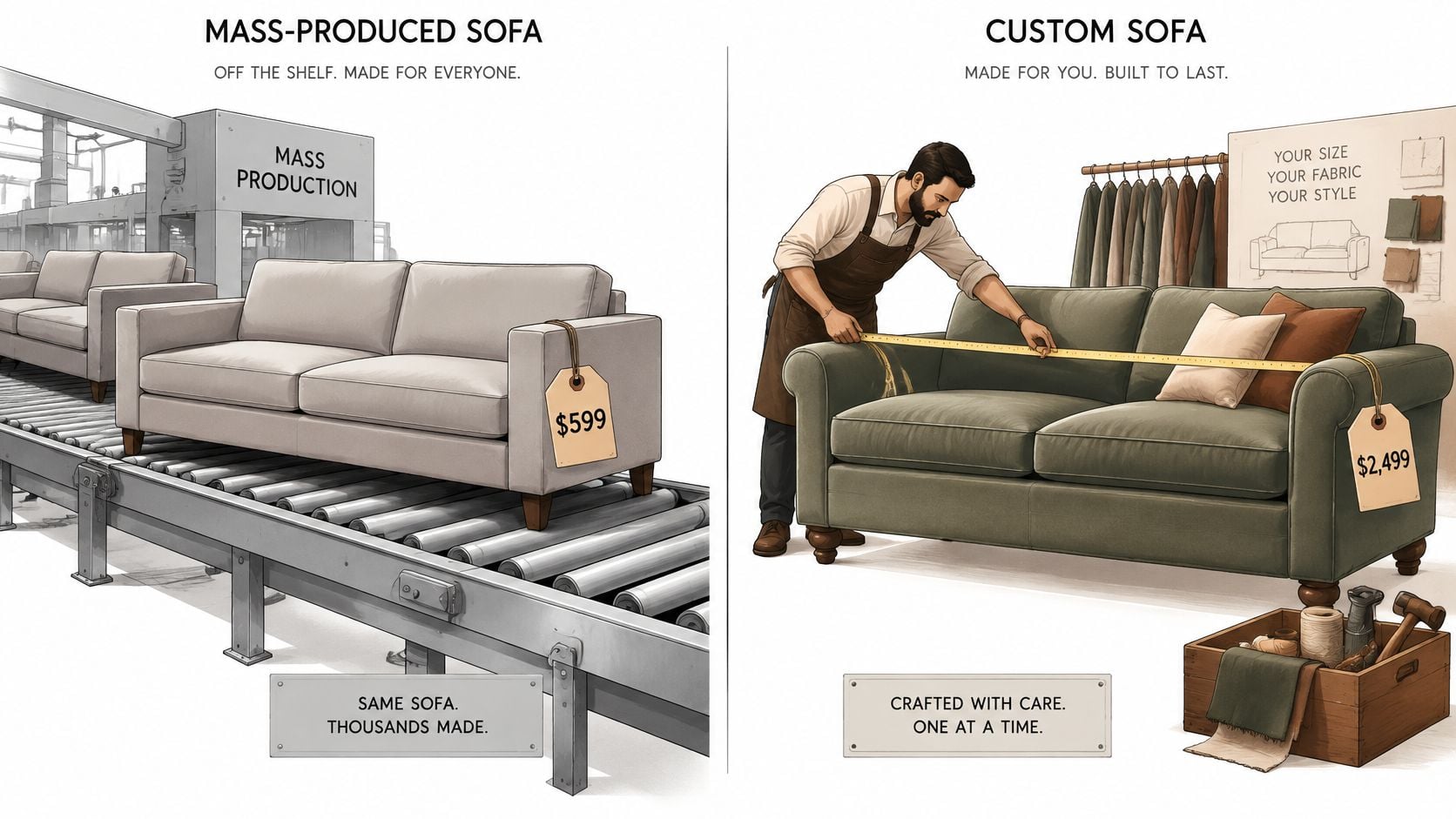
Older mass-market prices can be a misleading reference point. From 2012 to 2020, Home Furnishings Business retail metrics reported that consumer goods prices rose 13.5%, while furniture prices fell 3.3% as imported and standardized products expanded. The same article reports that in 2021 furniture prices rose approximately 17%, compared with a 7% increase for consumer goods overall. A current custom quote is best assessed against its own specifications, rather than an older price tag for a mass-produced item.
Individualized design, made-to-order production, skilled work, material selection, finishing, and smaller production runs all influence cost. For example, specifying a sofa's dimensions, upholstery, configuration, and finish means the maker is producing to those choices rather than drawing from standardized inventory. The options affect both the work involved and the time before the piece is ready.
Custom pricing follows the chosen materials, features, and production work, so each line of a quote helps explain the finished piece's value.
Slone Brothers Furniture welcomes custom orders, including custom dining furniture. Its Longwood showroom can help customers consider choices against a target budget, with options that include American-made and Amish-crafted furniture. Reviewing the specification alongside the price makes it easier to see what the quote includes and whether the chosen details fit the budget.
Where Does the Money Go in a Custom Furniture Quote?
A headline total is a poor map of the job. A typical casegoods or upholstered-furniture cost model, described in a furniture cost estimation guide, allocates about 45 to 60% to materials, 20 to 30% to direct labor, 8 to 15% to overhead, and 3 to 8% to packaging and freight preparation. A low number with one of those shares missing is an unfinished bill, not a better value.
| Cost Category | Typical Share of Cost | What It Covers |
|---|---|---|
| Materials | 45 to 60 percent | Lumber, veneer, fabric, foam and hardware |
| Direct labor | 20 to 30 percent | Milling, joinery, upholstery and finishing |
| Overhead | 8 to 15 percent | Facility, design time, administration and insurance |
| Packaging and freight preparation | 3 to 8 percent | Protective wrapping and delivery preparation |
How each line behaves on a custom order
Materials are not the shelf price of one board or one yard. The shop buys more than the finished piece contains, because cuts, defects, and pattern matching leave scrap. Treat that lost yield as a planning allowance. A bold fabric with a large repeat uses more cloth than a plain weave on the same sofa, even when the frame does not change.
Direct labor is a loaded hour, not a posted wage. Payroll taxes, benefits, and time away from the tool (setup, dry time, a second fit) sit in that rate. The hour covers milling, joinery, upholstery, and finish work. It works like a painter's day rate: brush time is only part of what you are buying.
Overhead is the shop around that hour: the building, design time, administration, and insurance. Packaging and freight preparation is the wrap and the readiness to move. A table wider than a standard doorway needs more of it.
One specification change hits several lines. Widening a dining table adds lumber, more finishing time, and a larger freight footprint. The increase does not stay on the raw-material line. Fabrics and finishes can be customized, and most pieces can be adapted to personal style and comfort, so each choice should have its own line.
Read a thin quote the way you would read a receipt with one item. The page says only "oak dining table" and one total. Species is named, so materials look settled. Labor is hidden inside the total, so you cannot tell whether the finish coats are included. There is no delivery line, so freight and placement are still unpaid. "Stain," with no sheen or coat count, leaves room for a later upgrade. With no written cap on revisions, an approved change can reopen the price.
A sound quote names material yield, hardware, standard labor hours, finishing, delivery, overhead, and margin. Commissioned work rewards the same discipline as project planning advice from Stobbe Design: write the scope before approving the number. For the wider price picture, see why quality furniture costs what it does. A design consultant in the Longwood showroom can walk each line with you before anything is ordered.
Which Material and Craftsmanship Choices Change the Price?
Material and labor are two major lines to examine in a custom furniture quote. A benchmark cited in this furniture-cost analysis puts red oak at about $8 per board foot, while figured walnut or spalted maple can cost more than $25 per board foot.
| Choice | Price Driver | Reference Value |
|---|---|---|
| Red oak solid wood | Premium hardwood | About $8 per board foot |
| Figured walnut or spalted maple | Premium figured hardwood | More than $25 per board foot |
| Solid-wood dining table lumber | Board-foot volume | 30 to 50 board feet, roughly $240 to $1,250 in lumber alone |
| Dining table labor | Milling, joinery, sanding and finish coats | 40 to 80 skilled hours |
A solid-wood dining table may use 30 to 50 board feet, putting lumber alone at roughly $240 to $1,250. Read that as a material benchmark, not a complete table price: milling, joinery, sanding, finishing, delivery, and design work are separate costs. The same analysis estimates 40 to 80 hours of skilled labor for milling, cutting joinery, sanding through multiple grits, and applying finish coats. That time helps explain why mortise-and-tenon construction appears in the labor line rather than as a free upgrade.
Upholstery has its own material and labor drivers. Fabric yardage, leather grade, and cushion construction affect material cost; pattern matching can increase fabric waste. Finish complexity affects labor. A simple oil finish takes fewer steps than a filled, stained, and top-coated surface that must cure between coats.
Central Florida sun, humidity, and where to spend
In Orlando's sun and humidity, choose wood and finish for the room's conditions as well as its appearance. If a table will sit in a sunroom or humid room in Sanford, Lake Mary, or Winter Park, ask which hardwood and finish suit that setting. Canadel bespoke styles offer thousands of custom combinations, so configuration and finish can change the price even when the piece's footprint stays the same. For a tight dining alcove, the fit may matter as much as the material, much like custom wardrobes for awkward spaces.
Spend on the parts someone feels every day, the seat, the tabletop, and the frame. A standard finish may suit surfaces that are rarely touched.
For a clearer comparison, ask the design team to price two or three wood species or fabric grades against the same specifications. That keeps dimensions and other choices constant, making the material difference easier to read line by line. If you phase the purchase, identify which pieces come first and have any revision allowance written into the quote, so an approved change has a clear price impact.
How Do Lead Times and Market Changes Affect Your Budget?
A custom quote is a snapshot of the price and options available when it is prepared. Furniture-market reports cited by Yahoo Finance point to costs such as freight, fuel, energy, labor, wood, foam, metal, and fabric as pressures on the U.S. furniture market. These changes can affect a quote before production begins, particularly when a chosen material needs to be reordered.
Lead time depends on the fabric, finish, and build. Typical lead time in the furniture industry for special-ordered furniture is anywhere from 6 to 8 weeks, and that estimate may not include delays caused by out-of-stock fabrics or components. Ask for an estimated delivery window and have the confirmed date recorded in the order. For seasonal timing, see this guide to when to buy furniture.
Before signing, read the quote line by line and ask:
- Is the price fixed? Confirm whether it holds after the deposit.
- Do substitutions need approval? Ask for approval before a different fabric or finish is used.
- How long does the quote stay valid? A quote that expires may be repriced.
- What happens if a material is unavailable? Get the replacement option and any price change in writing.
- Can delivery charges change? Confirm the delivery terms before placing the order.
Slone Brothers Furniture offers financing options. Ask the consultant how those options fit with the payment schedule in your quote, rather than assuming a particular deposit or payment percentage.
If you are furnishing several rooms after a move in Greater Orlando, set priorities with the consultant and review each charge before approving the order. A lower headline price is not necessarily better value if it leaves out a finish, delivery, or an agreed substitution. Written terms make those differences easier to compare.
Do Heirloom Pieces Save Money Over Time?
A higher purchase price can mean lower lifetime cost when a piece can be repaired, refinished, or renewed instead of replaced. A peer-reviewed life-cycle assessment in Scientific Reports of 25 household and office furniture pieces found that pre-production accounted for 42.25 to 99.98% of total life-cycle impact, averaging 76%, while production averaged 13%. The study includes repairs, replacement of damaged parts, and upgrades such as changing an upholstered cover in the use phase.
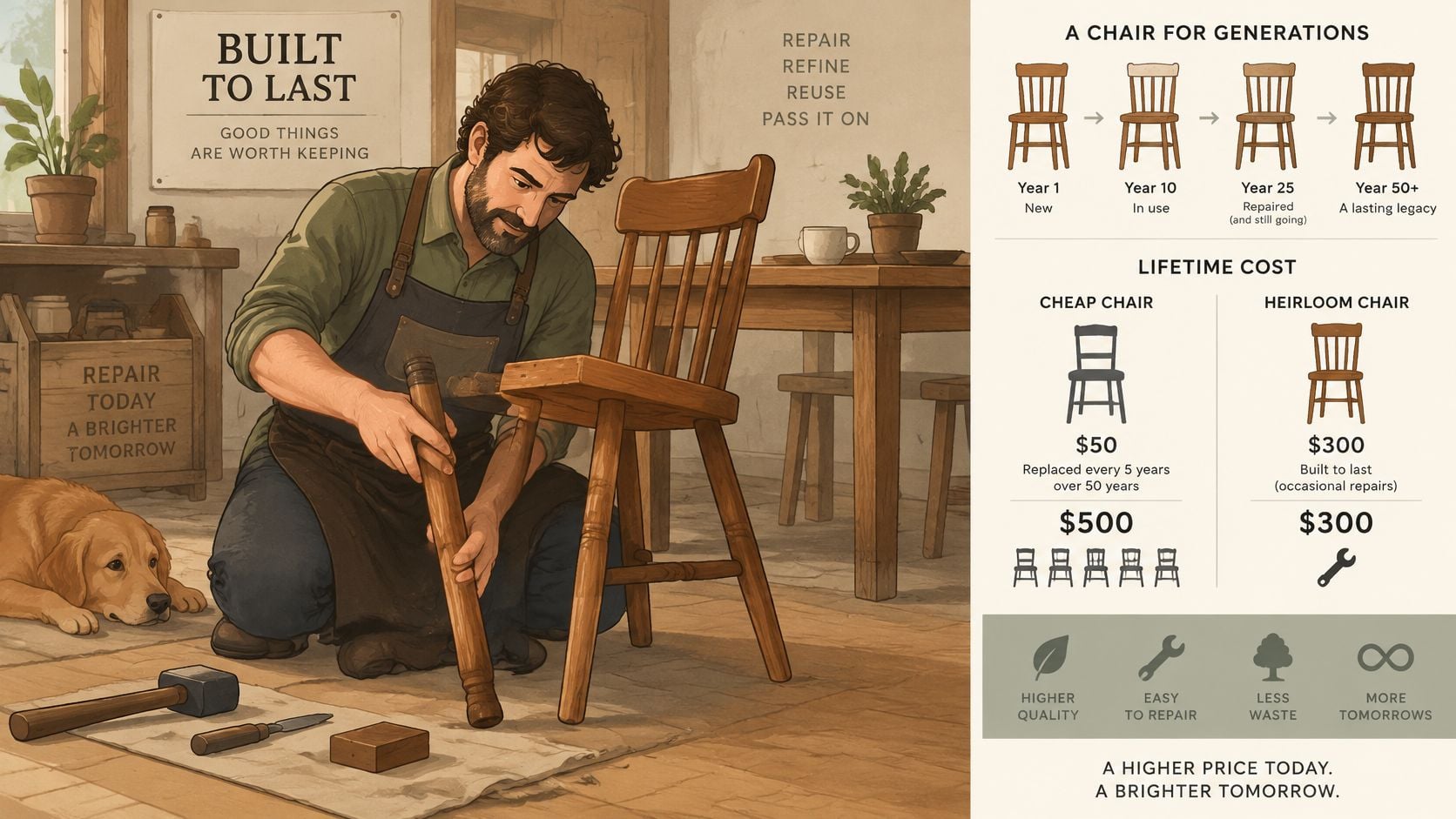
A table, cabinet, or upholstered piece that can be repaired may avoid the expense of replacing the entire item. To judge the value of a quote, compare its line items with the service the piece is designed to provide. A lower headline price does not tell you whether surfaces, hardware, or upholstery can be maintained later. The broader question of how long furniture should last helps put that expected service life in context.
Consider a dining table as a practical example. Read the quote for the top and finish first, then ask whether the surface can be refinished if it wears. Check whether the hardware can be replaced and whether the table can be taken apart for a move or repair. Those details help show what the opening price includes and what upkeep may be possible over time.
Research in the Journal of Industrial Ecology on cascading use of wood furniture concludes that reuse, repair, and refurbishment can extend the life of moderately durable wooden furniture. It also cautions that designing for extreme durability is not automatically the lowest-impact choice in every case. Repair and reuse systems may sometimes reduce impacts more effectively.
Slone Brothers Furniture carries Stickley among its furniture brands. MAVIN furniture is American made and produced in Ohio's Amish country, with cherry, oak, maple, walnut, or hickory trees hand-selected by a third generation of lumber specialists. These examples give context for comparing a quote's materials and expected upkeep, while the itemized specifications show where its price goes.
Plan Your Custom Order with a Longwood Design Team
A useful quote starts with the room and the choices you want to make. Bring measurements, a list of needed pieces, your budget, and any fabric samples or photos to Slone Brothers Furniture in Longwood. Complimentary space planning can help determine the right fit and placement before you settle on a configuration.
You can customize sofas, chairs, loveseats, sectionals, and other items through the online design tool on brand pages, in the store, or during a visit to your home. In-home design consultations cost $75 per hour. White glove delivery is available within 50 miles of the showroom for a nominal fee of $199.00.
Use these steps to compare quotes line by line:
- Book a visit to review options with a design consultant in the showroom.
- Bring room dimensions and your budget so the proposed pieces and their placement reflect both.
- Request an itemized quote showing the selected options, delivery, and any terms for substitutions, quote validity, or unavailable fabrics and finishes. Ask for the lead time in writing.
The custom furniture order process gives you a starting point. A clear specification makes it easier to compare the total cost of similar choices, rather than judging value by the headline price alone.
Slone Brothers Furniture is a family-owned Longwood showroom serving Greater Orlando since 1980. Visit the showroom to review a written quote and plan furniture that fits your room, budget, and preferred style. You can also visit Slone Brothers Furniture in Longwood to discuss your custom order.